The Best Interconnected Smoke Detectors
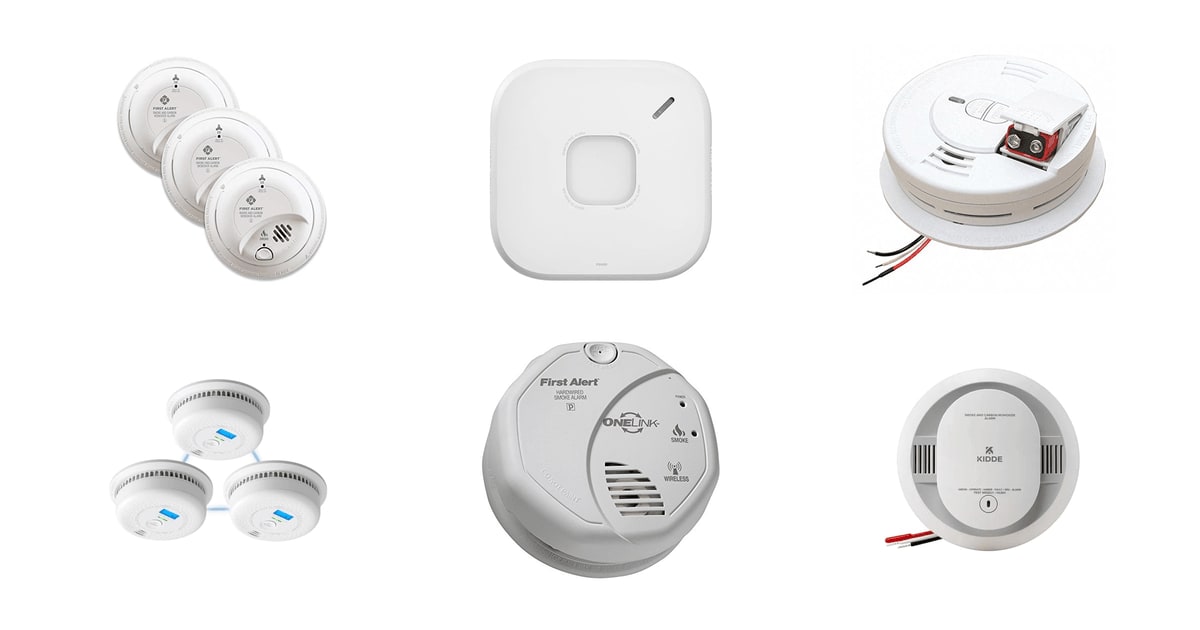
A smoke alarm does you no good if it's the one in the basement and you're asleep two floors up. That's the case for interconnection in a sentence: when one alarm sounds, they all sound. NFPA's analysis of home fire deaths found that three out of five deaths happened in homes with no smoke alarms or with alarms that weren't working. Working alarms cut the risk of dying in a home fire roughly in half. Linking them is what makes sure you hear the one that matters.
Here's the part nobody advertises. No alarm in this category is pleasant to live with — they chirp when a battery gets low, they go off when you sear a steak, and they eventually announce their own end of life in the middle of the night. Nuisance alarms are the leading reason people pull alarms off the ceiling, which is exactly how a home ends up unprotected. And brands mostly don't talk to each other. Mixing a Kidde and a First Alert on one interconnect circuit generally isn't supported.
Most homes land in one of two camps. If your ceilings already have three-wire interconnect wiring, you're shopping hardwired and you have plenty of choices. If they don't — and in older housing stock they usually don't — wireless RF alarms link the whole house without an electrician. SafeWise found that 62% of homeowners don't even know whether their alarms are interconnected. We think that the X-Sense Wireless Interconnected Combination Smoke & CO Alarm is the best interconnected smoke detector for most people, and that the First Alert BRK SC9120B-3 is the one to buy if your ceilings are already wired for interconnect.
Everything we recommend

Whole-home linking with no wiring and no batteries to swap
The wired-in choice if your ceilings are already set up for it

Bare-bones wired protection when you need a lot of units

Phone alerts and spoken warnings on a wired circuit

Wired power, wireless linking, and a photoelectric sensor
At a glance
| Product | Pack Count | Connection Type | Price | |
|---|---|---|---|---|
| FIRST ALERT BRK SC9120B-3 Hardwired Smoke andRunner-up | 3-Pack | Hardwired | $174.99 |
| First Alert SC5 Hardwire Smart Smoke &Upgrade pick | — | Hardwire | $128.83 |
| Kidde Hardwired Smoke Detector Alarm with FrontBudget pick | 1 Pack | Hardwired | $76.95 |
| X-Sense Wireless Interconnected Combination Smoke & COTop pick | 3 Pack | Wireless | $149.99 |
| FIRST ALERT Hardwired Wireless Smoke Alarm withAlso great | 1-Pack | Hardwired | $76.74 |
 | Kidde KN-COSM-IBA Hardwire Combination Smoke Carbon MonoxideAlso consider | 2-Pack | Hardwire | $154.13On sale |
 | Ring Sensors: Smoke & CO ListenerAlso in lineup | — | Sidewalk | $39.99 |
How we picked
How they link. We compared each alarm's interconnection method — three-wire hardwired, RF wireless, or WiFi — against the maximum number of units the manufacturer supports. Anything that couldn't cover a typical two-story house on one network didn't make the cut.
Sensor type. We weighed each sensor choice against U.S. Fire Administration guidance on ionization versus photoelectric response times. Photoelectric and dual-sensor designs got preference, since smoldering fires cause most overnight deaths.
Power and upkeep. We looked at whether an alarm runs on a sealed ten-year cell, a replaceable backup battery, or house power with a backup. Ten years of no maintenance is worth a lot, because dead and removed batteries are a documented failure point.
Nuisance alarms. Consumer Reports and recurring owner feedback both point to cooking-triggered false alarms as the reason households disable detectors. We favored sensors and hush features that make that less likely.
Codes and listings. We checked each listing for UL certification and for the interconnect behavior NFPA 72 requires in new one- and two-family construction. Sealed-battery designs matter more now that at least 38 states require them in some occupancies.
Top pick
Whole-home linking with no wiring and no batteries to swap
X-Sense Wireless Interconnected Combination Smoke & CO
This three-pack links up to 18 alarms wirelessly, so you can cover a whole house without running a single wire. Each unit pairs a photoelectric smoke sensor with an electrochemical CO sensor and runs on a sealed battery for a decade.
$149.99fromAmazonThe best interconnected alarm for most people is the one you'll actually install. These mount with a bracket and a couple of screws — no wiring, no electrician, no conversation with a landlord. Up to 18 units link wirelessly at ranges up to 820 feet, which is enough to pull a basement, a second story and a detached garage into one network. Start with three and add more later.
The sensor pairing matters more than the marketing does. U.S. Fire Administration data shows photoelectric alarms respond 15 to 50 minutes faster than ionization alarms to slow, smoldering fires — the kind that kill people in their sleep. Ionization wins by roughly 30 to 40 seconds on fast, flaming fires. If you have to pick one, photoelectric is the safer default, and that's what you get here.
A sealed battery sounds like a downgrade until you've climbed a ladder at midnight. There's nothing to replace for ten years: no chirps, no drawer full of 9-volts, no alarm sitting dead because someone borrowed the battery for a remote. At least 38 states now require sealed-battery alarms in some residential construction, so this design is where the codes are heading anyway.
Combination smoke and CO detection is worth having in the same unit. Carbon monoxide has no smell, and a separate set of CO alarms means a second set of ceilings to drill and a second replacement schedule to track. These cover both. When one unit trips, everything on the network sounds, so a CO problem near the furnace wakes the bedroom upstairs.
Flaws but not dealbreakers
When the battery reaches end of life, the alarm does too. You don't swap a cell, you replace the units, and that's a real cost worth planning for. The end-of-life chirp is easy to mistake for a low-battery warning, so read the manual once and learn the difference before it happens at 2 a.m.
The RF network is X-Sense's own. These won't link to First Alert, Kidde or anything else, so if you already have a system you'd be replacing it rather than extending it. There's also no app, which means no phone alert if the house goes off while you're at work.
That 820-foot figure is line of sight. Plaster, brick, foil-backed insulation and a couple of floors all eat into it, so a long ranch house or a stone-walled basement may need an extra unit in between to keep the chain intact.
Runner-up
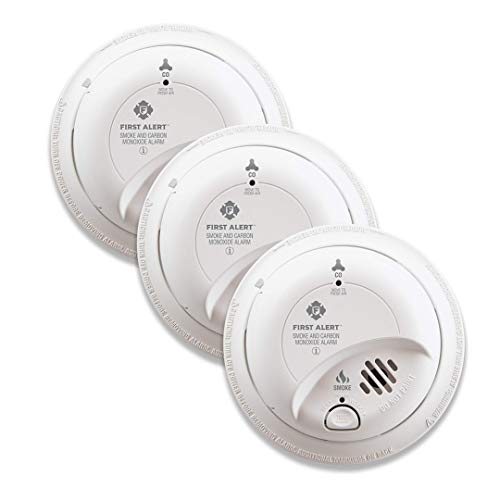
The wired-in choice if your ceilings are already set up for it
FIRST ALERT BRK SC9120B-3 Hardwired Smoke and
A hardwired smoke and CO alarm that ties into any compatible First Alert or BRK unit on the same three-wire circuit. You get an 85-decibel siren, battery backup for outages, and indicator lights that tell you which hazard set it off.
$174.99fromAmazonIf someone already ran three-wire to your ceiling boxes, use it. Hardwired interconnect doesn't lean on radio, batteries or a router, and First Alert's hardwired BRK line supports up to 18 devices on a single circuit. Swapping an old alarm for one of these is usually a short job with the breaker off, since the mounting bracket and wiring harness follow the same pattern the brand has used for decades.
Two hazards, one hole in the ceiling. This pairs an electrochemical CO sensor with an ionization smoke sensor, so you're not mounting a separate CO alarm in every hallway. Indicator lights on the face tell you which one tripped, which matters a lot when an 85-decibel siren is going off and you're trying to decide whether to open windows or get everyone outside.
The small stuff is thought through. The side-load battery compartment lets you change the backup battery without pulling the alarm off its bracket. Tamper-resistant locking brackets keep a curious kid from twisting one down. The included dust cover keeps drywall grit out of the sensing chamber during a remodel, and that grit is a common cause of phantom alarms in new construction.
Older BRK and First Alert hardwired alarms can stay on the circuit. The brand's hardwired units have shared an interconnect protocol for decades, so you can replace the alarms that are aging out and leave the newer ones in place. That makes a phased upgrade realistic instead of an all-or-nothing weekend.
Flaws but not dealbreakers
The smoke sensor is ionization only. Consumer Reports found ionization alarms produce noticeably more nuisance alarms from cooking, and they're slower than photoelectric on smoldering fires. If one of these goes at the top of a stairwell above the kitchen, expect to get familiar with the silence button.
It's hardwired, full stop. No interconnect wiring in the ceiling means an electrician or a different alarm entirely. The wireless models here exist precisely because fishing three-wire through a finished house is neither quick nor cheap.
Budget pick
Bare-bones wired protection when you need a lot of units
Kidde Hardwired Smoke Detector Alarm with Front
This is the plain hardwired alarm you buy when you have six ceilings to fill and a tight timeline. It's smoke-only ionization with a 9-volt backup, a front-load battery door, and a hush button for the nights dinner gets away from you.
$76.95fromAmazonSometimes you need six alarms, not one nice one. This is the simplest hardwired alarm here and the one that makes a whole-house replacement realistic when you're equipping a first home or a rental property. It interconnects with other Kidde devices — up to 24 on a system, 12 of which can be smoke alarms — so the linking side isn't where you're compromising.
The details that matter on installation day are all here. A pull tab keeps the backup battery from draining before you connect AC power, so a case of these can sit in a garage until the electrician shows up. The battery door loads from the front, which means no unmounting later. And the hush button quiets a cooking alarm for a few minutes instead of tempting you to yank the battery and forget it.
It's UL listed, which is the floor rather than a selling point — but worth confirming, because interconnected alarms in new construction have to satisfy an inspector as well as you. Kidde rates it for 40 to 100 degrees Fahrenheit. An uninsulated attic in July or an unheated garage in a cold snap falls outside that, so plan placement accordingly.
Flaws but not dealbreakers
Smoke only, ionization only. There's no CO sensor, so you'll need separate CO alarms somewhere in the house, and the ionization sensor is the one more prone to nuisance trips from cooking and shower steam. In a bedroom hallway that's fine. Directly outside a kitchen, it's asking for trouble.
The backup battery is replaceable, which sounds like a plus and mostly means one more annual chore times every alarm in the house. Skip it and the chirping starts, almost always at night.
Upgrade pick
Phone alerts and spoken warnings on a wired circuit
First Alert SC5 Hardwire Smart Smoke &
This wires into your existing circuit and adds two things the others lack: a push alert to your phone and a spoken warning naming the hazard and the room. It also works alongside Google's Nest Protect, which is unusual for a hardwired alarm.
$128.83fromAmazonYou install this like any other hardwired alarm, and then it does something the rest don't — it tells your phone. The First Alert app pushes an alert when smoke or CO is detected, so a fire that starts while you're at work or away for a weekend isn't something you hear about from a neighbor. For a house you leave empty regularly, that's the whole argument.
Voice alerts are the underrated part. Instead of a tone, you get a spoken warning that names the hazard and the location. Published reviews of voice-equipped alarms have noted that naming the room helps sleeping adults and kids react faster than a tone alone, because you know right away whether to head down the stairs or go out a window.
This is the rare hardwired alarm that plays well with a Nest Protect. If you already own Nest hardware, or you want smart alarms in the bedrooms and simpler ones elsewhere, that compatibility saves you from tearing out a system you've already paid for. First Alert's Precision Detection is aimed at cutting nuisance alarms, which is the single biggest reason people disable these things.
Ordinary interconnection still works the ordinary way. When one alarm goes, every compatible alarm in the house goes, and battery backup keeps it running through an outage. The app sits on top of that rather than replacing it, which is the right order of priorities for a device whose main job happens while your phone is in another room.
Flaws but not dealbreakers
Smart alarms run two to three times what a comparable hardwired unit does, and you'd need one in every location to get alerts from everywhere. Most people come out ahead putting smart alarms in a couple of key spots and plain interconnected alarms in the rest.
It leans on your WiFi and an app account. A weak signal in the basement still gets you a local siren, but the notification may not arrive. And app-connected alarms accumulate firmware updates and login prompts that a dumb alarm on the ceiling will never ask you for.
Also great
Wired power, wireless linking, and a photoelectric sensor
FIRST ALERT Hardwired Wireless Smoke Alarm with
A hardwired alarm that interconnects over RF instead of through a wire, so rooms that never got interconnect cable can still join the network. The photoelectric sensor is the right call if the alarm has to live anywhere near a kitchen.
$76.74fromAmazonThis is the bridge between a wired house and an unwired one. It draws power from your ceiling wiring but links to other alarms by radio rather than through an interconnect wire. So a bedroom addition, a finished basement or a converted garage that never got that third wire can join the same network as the rest of the house — up to 18 First Alert enabled alarms in total.
The sensor is photoelectric, which is what you want anywhere near cooking. It reacts to the larger smoke particles a smoldering fire produces and doesn't panic at the fine particulate coming off a hot pan the way ionization does. If you've been pulling the battery out of the hallway alarm every time you sear something, this is the fix for that specific problem.
Backup is two AA batteries behind a front access door, so an outage doesn't take the network down and you don't need to drop the unit to change them. Test and silence share one button, which means quieting a cooking alarm is a single push you can manage from the floor with a broom handle.
Flaws but not dealbreakers
There's no CO sensor. Most of the country requires CO detection somewhere in the home anyway, so budget for separate CO alarms — and know that they won't join this alarm's network or sound with it.
It's sold as a single alarm, and interconnection only means something once you own several. The wireless linking also stays inside First Alert's ecosystem, so a Kidde alarm down the hall will keep doing its own thing no matter what.
Who this is for
Buy now if your alarms aren't linked, or if you don't know whether they are — and most people don't. If your house was built before interconnection became standard, a single alarm in a closed basement can burn for a long time before anyone upstairs hears it. This guide is aimed at homeowners doing a full replacement, renters who can't run wire, and anyone adding alarms to a finished space that the original wiring skipped.
You can hold off if every alarm in your home already links and none is close to ten years old, since sensors drift and manufacturers set that replacement window for a reason. We're covering residential smoke and combination smoke/CO alarms that link to each other. We're not covering commercial panel systems, heat-only detectors, or standalone CO alarms with no smoke sensor. And a note on mixing: brands use proprietary interconnect protocols, so plan on picking one and staying with it.
How we picked
Interconnection: every pick has to link a whole house on one network, whether through three-wire, RF or WiFi, and we checked the manufacturer's stated device limit rather than trusting the box. Sensors: we leaned on U.S. Fire Administration response-time data and favored photoelectric or dual-sensor designs, because smoldering fires are what kill people in their sleep. Power: sealed ten-year cells beat replaceable batteries on real-world reliability, and hardwired alarms need a working backup. Nuisance alarms: cooking false alarms are the top reason people disable detectors, so hush buttons and forgiving sensors carried weight. Codes: UL listing and NFPA 72 interconnect behavior are the floor, not a bonus.
Other interconnected smoke detectors worth considering
If you want spoken hazard warnings on a Kidde circuit: The Kidde KN-COSM-IBA Hardwire Combination Smoke Carbon Monoxide ($154.13) — The KN-COSM-IBA is a hardwired combination smoke and CO alarm with a talking alarm that announces which hazard it found, and it ships as a two-pack so you can do a hallway and a bedroom level at once. It interconnects with other compatible Kidde devices and keeps a battery backup for outages, which makes it a sensible way to add CO coverage if your house is already on Kidde hardware. What you give up is the wireless flexibility of our top pick — this one needs interconnect wiring to link — and voice alerts here announce the hazard type rather than the specific room the way our upgrade pick does.
The competition
This is what our research surfaced, not a survey of everything sold. Plenty of capable alarms exist that we didn't have listing data for, and the products below are here because they came up alongside the picks and are worth explaining rather than ignoring.
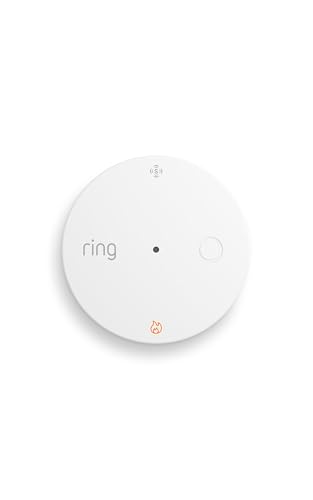
The Ring Sensors: Smoke & CO Listener ($39.99) — The Ring Smoke & CO Listener isn't a detector at all — Ring says so plainly. It mounts within six inches of an alarm you already own and listens for the standard T3 and T4 tones, then pushes a notification to the Ring app. That's a genuinely useful trick if your existing alarms are sound and reasonably new but you have no way to know they've gone off while you're away. It lost to our picks because it can't detect anything on its own, it rides on Amazon Sidewalk, and professional monitoring costs extra. Consider it a companion to good alarms, not a replacement for interconnecting them.
Installation and placement
Put an alarm inside every bedroom, one outside each sleeping area, and at least one on every level including the basement. Keep them at least ten feet from a stove and a few feet from bathroom doors, since steam and cooking particulate cause most nuisance trips. Ceiling mounts belong away from corners and vents, where air movement can push smoke around a sensor. Test every alarm monthly with the button, and vacuum the housing a couple of times a year — dust in the chamber is a quiet, common cause of both false alarms and misses. Replace every alarm at ten years no matter how healthy it seems. And if you add an alarm to an existing network, confirm the whole house sounds together afterward, not just the new one.
Questions we get
What is an interconnected smoke detector and how does it work?
It's an alarm that talks to the other alarms in your home, so when one detects smoke, all of them sound at once. The connection runs either through a third wire on a hardwired circuit or over radio between wireless units. NFPA 72 requires this behavior in all new one- and two-family construction in the US. The point is simple: you hear the alarm wherever you happen to be sleeping.
Do I need hardwired or wireless interconnected alarms?
Look in your ceiling box when you take an old alarm down. If there's a third wire beyond the black and white, your house is set up for hardwired interconnect and you should use it. If there isn't, wireless RF alarms like our top pick get you the same whole-home alerting without paying an electrician to fish cable through finished walls.
How many alarms can be interconnected in one system?
It depends on the brand, but the practical answer covers any normal house. First Alert's hardwired BRK line supports up to 18 devices on a circuit, our top pick links up to 18 wirelessly, and Kidde's hardwired system handles up to 24 devices with 12 of them being smoke alarms. Check the manual for your specific model before planning a large install.
Can I mix different brands on the same interconnect system?
Generally no. Manufacturers use proprietary interconnect signaling, so putting a Kidde and a First Alert on the same three-wire circuit isn't supported and can void the UL listing for the installation. Wireless systems are even stricter, since each brand runs its own radio protocol. Pick one brand family and stay in it.
What's the difference between ionization and photoelectric sensors?
Ionization sensors react to the tiny particles from fast, flaming fires, and U.S. Fire Administration data puts them roughly 30 to 40 seconds ahead on those. Photoelectric sensors respond to the larger particles from slow, smoldering fires — and they do it 15 to 50 minutes faster than ionization. Since smoldering fires cause most overnight deaths, photoelectric is the better single choice, and dual-sensor models cover both.
Do wireless interconnected alarms work during a power outage?
Yes. Sealed-battery wireless alarms like our top pick don't use house power at all, so an outage changes nothing. Hardwired alarms with wireless interconnect switch to their backup batteries and keep both detecting and linking. That's the reason every hardwired alarm here includes a backup — an alarm that dies with the lights isn't much of an alarm.
Why you should trust us
For this guide:
- We read the manufacturer specifications and installation documentation for every alarm in this guide, including stated interconnect limits, sensor types and backup power.
- We compared those claims against NFPA and U.S. Fire Administration guidance on sensor response times, interconnection requirements and sealed-battery legislation.
- We also weighed published buying guides and recurring themes in owner feedback, particularly around nuisance alarms from cooking and end-of-life chirping.
- We read owner reviews on every listing, weighted toward the critical ones, because that is where the recurring failures show up.
- We have a systematic way of automatically fetching the latest prices, so the numbers on this page stay current.
- This is a research-focused guide, so the team may not own every product listed — though we often do own the top winners, which gives us extra context for the recommendations.
- We don't accept free products, and the retailer commission never changes which product we recommend.
Sources
Best Smoke Detectors 2026 – Wirecutter (NYT), Wirecutter
Smoke Alarms in U.S. Home Fires – NFPA Research Report, NFPA
NFPA 72: National Fire Alarm and Signaling Code, NFPA
Smoke Detector Types: Ionization vs. Photoelectric – US Fire Administration, US Fire Administration (FEMA)
Smoke Detector Ratings & Buying Guide – Consumer Reports, Consumer Reports
Google Nest Protect Review – CNET, CNET
Best Interconnected Smoke Detectors – SafeWise, SafeWise
First Alert OneLink Safe & Sound Review – Tom's Guide, Tom's Guide
Best Wireless Interconnected Smoke Detectors – Bob Vila, Bob Vila
Smoke Alarm Legislation by State – NFPA Tracker, NFPA
Best Smart Smoke Detectors 2026 – PCMag, PCMag
Smoke Alarm Placement & Installation Guide – NFPA Home Fire Safety, NFPA
Amazon product listings and owner reviews for all 7 products
Manufacturer specification pages for each product
Some passages in this guide may be paraphrased with AI help. Prices are refreshed automatically.
More like this.
Continue exploring home reviews and recommendations.

The Best Smart Smoke Detectors
A smoke alarm sits quietly for years, then gets about ninety seconds that matter. Smart models don't sense fire any better than good ordinary ones. What…

The Best Carbon Monoxide Detectors
Carbon monoxide doesn't announce itself. It has no color, no smell, and no taste, and the CPSC warns that by the time you notice the headache and the…

The Best Radon Detectors and Test Kits
Radon is a gas you can't see, smell or taste, and it seeps up through foundation cracks, sump openings and construction joints in homes of every age. The…

The Best Smart Water Leak Detectors
A burst washing machine hose can put hundreds of gallons on your floor before you get home from work. That's the whole problem with water damage - it's…

The Best Metal Detectors for Finding Gold
Gold hides in ground that fights you. The dirt in most active goldfields is loaded with iron, and that iron talks back to a detector all day long - …

The Best Metal Detector Pinpointers for Gold Prospecting
A pinpointer is the small probe you pull out after your main detector says there's something down there. Without one, you widen the hole, sift the pile,…