The Best Smart Smoke Detectors
A smoke alarm sits quietly for years, then gets about ninety seconds that matter. Smart models don't sense fire any better than good ordinary ones. What they add is reach. Your phone buzzes while you're at work, on a plane, or asleep behind a closed door. The U.S. Fire Administration reports that most fatal home fires happen at night, when everyone's asleep. The National Fire Protection Association says roughly three out of five home fire deaths occur in homes with no working alarm. An alarm that texts you about its own dying battery is doing real work.
None of these are perfect. Every one leans on your Wi-Fi or an app, so a router reboot can mean no alerts for a while. Push notifications get swallowed by Do Not Disturb. The two listener devices here don't detect anything at all. They only hear your existing alarms and pass the warning along. And smart or not, the Consumer Product Safety Commission says you replace every smoke alarm after ten years. The chip doesn't make the sensor last longer.
So buy for the situation you actually live in. Renters and anyone who'd rather not touch a junction box should stay on batteries. If you're replacing hardwired alarms across a whole house, one smart unit on the circuit can cover the rest. We think that the First Alert SC5 Battery Smart Smoke & Carbon Monoxide Alarm is the best smart smoke detector for most people, and that the Kidde Hardwired App Enabled Smart Smoke and Carbon Monoxide Detector is the one to buy if your alarms are already hardwired together.
Everything we recommend

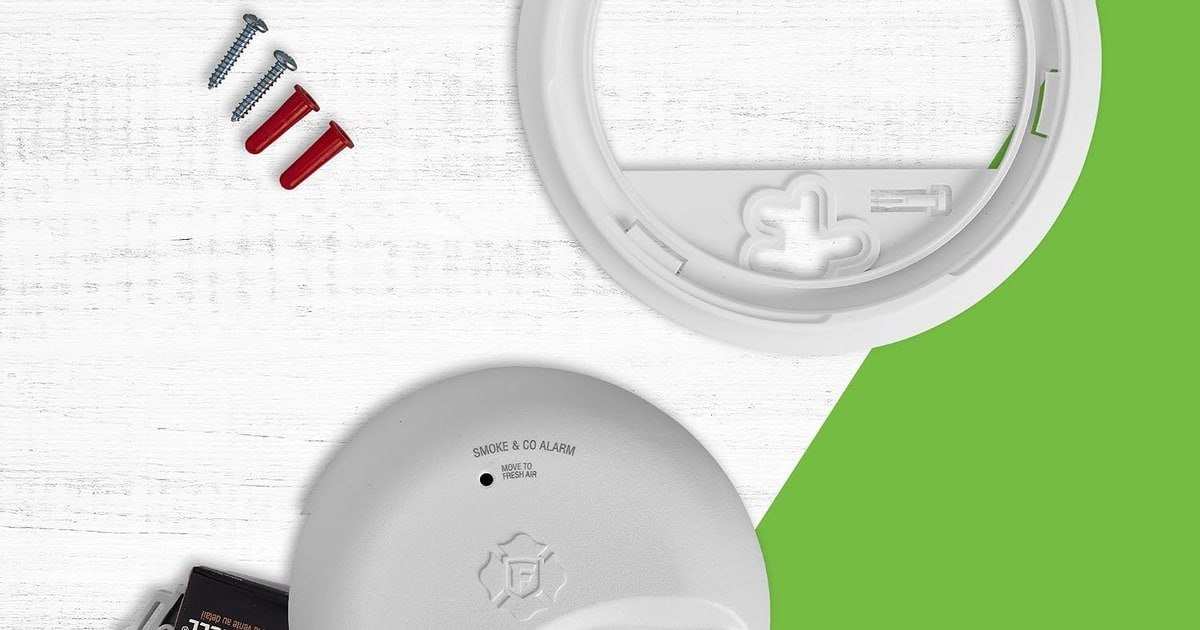
App alerts and spoken warnings, with no wiring to touch
One smart alarm can put a whole hardwired string on your phone

Ring app alerts on AA batteries, but no carbon monoxide

A monitoring agent can call for help when you can't
Prices as of Oct 24, 6:27 AM PT · Details
At a glance
| Product | Detects | Power | Price | |
|---|---|---|---|---|
 | First Alert Battery Combination Smoke & CarbonAlso in lineup | Smoke & Carbon Monoxide | Battery-operated | $36.99 |
 | X-Sense Interconnected Smoke and CO DetectorAlso consider | — | — | $42.74 |
| Kidde Hardwired Kidde App Enabled Smart SmokeRunner-up | Smoke + CO | Hardwired | $74.97 |
| Kidde Smart Smoke Detector with RingBudget pick | Smoke | 2 AA batteries | $49.98 |
 | Ring Sensors: Smoke & CO ListenerAlso consider | Smoke & CO Listener | — | $27.99 |
| First Alert SC5 Battery Smart Smoke &Top pick | Smoke & Carbon Monoxide | Battery | $121.07 |
| SimpliSafe Smoke & Carbon Monoxide Alarm ListenerAlso great | Alarm Listener | 3-year battery life | $44.99 |
Prices as of Oct 24, 6:27 AM PT · Details
How we picked
Smoke and CO coverage. We favored alarms that handle both hazards in one unit, since many jurisdictions now want detection for both in the same rooms. Spec sheets had to name a CO sensor, not just imply one.
Alerts that reach you. The point of a smart alarm is a notification that finds you away from home, so we required a working phone alert path through a named app. Voice announcements that identify the room counted extra, based on Wirecutter's coverage of talking alarms.
Nuisance-alarm tuning. We looked for listings that state compliance with the newer UL 217 cooking-smoke requirements, and we weighed owner feedback about kitchen false alarms. An alarm people disable is an alarm that protects nobody.
Interconnect. Consumer Reports notes that alarms sounding together cut evacuation time, so we prioritized units that link to others by wire or wirelessly. Standalone alarms with an app were a step down.
Install and upkeep. We checked what each one asks of you: a breaker and a harness, a bracket and two screws, or a bracket beside an existing alarm. Battery type and end-of-life warnings mattered too, since the CPSC says every alarm goes in the bin after ten years.
Top pick
App alerts and spoken warnings, with no wiring to touch
First Alert SC5 Battery Smart Smoke &
This battery alarm covers smoke and carbon monoxide, talks to your phone, and says out loud which room the trouble is in. It also links to other compatible alarms, so a basement fire wakes the whole house instead of just the basement.
$121.07fromAmazonPrices as of Oct 24, 6:27 AM PT · Details
You can put this one up with a screwdriver and be done. It runs on batteries, so there's no junction box, no breaker, and no landlord conversation. That matters if you rent, if the ceiling has no wiring, or if you'd rather not spend a Saturday on it. The NFPA wants an alarm in every bedroom, outside each sleeping area, and on every level of the house. Batteries make hitting that list realistic.
When this alarm goes off, it says what's wrong and where. A voice announcement beats a shriek at three in the morning, when you're half awake. It tells you whether to head downstairs or grab the kids. Wirecutter's reviewers found that First Alert's talking alarms, which name the room and the hazard, help households respond faster. Your phone gets the same message through the First Alert app, whether you're upstairs or three states away.
Alarms that talk to each other are the real upgrade here. Link it to other compatible First Alert units and they all sound together. A basement fire wakes the top-floor bedroom. Consumer Reports notes that interconnected alarms cut evacuation time compared with standalone units. It also works alongside Google's Nest Protect, which helps if you're adding to a system rather than starting over.
Cooking is the reason most people pull an alarm off the ceiling. First Alert builds in what it calls Precision Detection. It's the company's answer to newer UL 217 rules that ask alarms to tell a smoking pan from a real fire. That standard also added a tougher plastics fire test, so the tuning isn't only about ignoring smoke. Mount it away from the stove anyway, and dinner should stop setting it off.
Flaws but not dealbreakers
The batteries are replaceable rather than sealed for a decade, so you're still buying batteries at some point. The alarm warns you before it starts chirping at 2 a.m., which is the good version of that problem. Still, if you're covering a three-story house, that's a handful of swaps you wouldn't have with a sealed ten-year unit.
Everything smart about it depends on your Wi-Fi and the First Alert app. When the router's down, it's an ordinary alarm beeping in an empty house. Owners also find pairing several units fussier than the instructions suggest. And the listing doesn't claim Matter or Thread support, so plan on living in First Alert's app rather than a universal one.
Runner-up
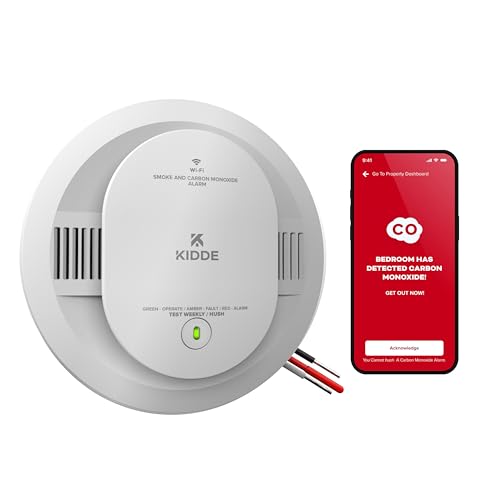
One smart alarm can put a whole hardwired string on your phone
Kidde Hardwired Kidde App Enabled Smart Smoke
This hardwired alarm covers smoke and CO, speaks its warnings, and lets you silence a cooking false alarm from your phone. Add one to an existing hardwired string and Kidde says every alarm on that circuit starts sending mobile alerts too.
$74.97fromAmazonPrices as of Oct 24, 6:27 AM PT · Details
Most houses built in the last few decades already have alarms wired together on a circuit. Pull one out, put this in its place, and the whole string gets a phone connection. You don't have to buy seven smart alarms to get alerts from seven locations. For a two-story house with a finished basement, that's the difference between one purchase and seven.
Hushing a false alarm from your phone is a genuinely good feature. Anyone who's stood on a kitchen chair waving a dish towel at the ceiling knows why. You open the app and it stops. That's especially useful in stairwells and vaulted rooms where the alarm sits well out of reach. Kidde also says its newer sensing cuts cooking nuisance alarms compared with its older generations, and the alarm is certified to UL 217 and UL 2034.
Kidde claims, based on its own internal comparison, that this alarm detects smoke over 25 percent faster than a leading competitor. Treat that as a manufacturer's number rather than an independent result. Easier to verify from the spec sheet is the AA battery backup, which keeps the alarm running through a power cut. That matters more than it sounds, because storms knock out power and start fires in the same hour.
Flaws but not dealbreakers
Owner feedback on this one runs rougher than on the rest of our picks, and the complaints cluster around setup. Pairing to the app, getting the whole hardwired group to appear, units that need a second attempt. If you want something you install once and never think about again, that's a real risk.
Installing it means shutting off a breaker and handling a wiring harness. That's straightforward if you've done it before and a good reason to call an electrician if you haven't. Renters should skip it.
Budget pick
Ring app alerts on AA batteries, but no carbon monoxide
Kidde Smart Smoke Detector with Ring
This one skips the wiring and the CO sensor and just does smoke, with alerts landing in the Ring app you may already have. Kidde's wire-free interconnect means one alarm going off sets the rest off, which cheaper alarms usually leave out.
$49.98fromAmazonPrices as of Oct 24, 6:27 AM PT · Details
If you already live in the Ring app, this is the easy add. Alerts show up beside your doorbell and cameras, and you don't need a subscription for the basic smoke and low-battery notifications. Two AA batteries and a bracket, and it's up. For a rental, a garage, or a spare bedroom you keep forgetting about, that's about as low-friction as smart smoke detection gets.
The wire-free interconnect is the feature to notice. Kidde alarms in the house link to each other without any wiring, so one sounding sets off the rest. Consumer Reports points out that alarms sounding together shorten how long it takes people to get out. Buying three of these is far less work than rewiring a house, and you get the same all-at-once behavior.
Ring sells an optional subscription that adds 24/7 smoke monitoring, so a real alarm can reach someone who calls for help. You don't need it for the alarm to work or for your phone to buzz. Kidde also says the sensing here reduces cooking nuisance alarms relative to its earlier generations. That's the usual reason a kitchen-adjacent alarm gets disabled and never put back.
Flaws but not dealbreakers
There's no carbon monoxide sensor. Plenty of jurisdictions now want smoke and CO coverage in the same rooms, and if yours does, this alarm doesn't finish the job alone. Pair it with a CO alarm, or buy one of the combo picks instead.
AA alkaline batteries mean an annual habit rather than a sealed decade of power. And the alerts run through a Ring account, so you're committing to one more app and one more login if you're not already there.
Also great
A monitoring agent can call for help when you can't
SimpliSafe Smoke & Carbon Monoxide Alarm Listener
This little box doesn't detect anything. It sits beside the alarms you already own, listens for their sound, and pings the SimpliSafe app, and with a monitoring plan it can get an agent to request emergency dispatch on your behalf.
$44.99fromAmazonPrices as of Oct 24, 6:27 AM PT · Details
Think of it as a microphone with a job. You mount it within about four inches of an existing smoke or CO alarm, and it recognizes that alarm's pattern. Nothing gets replaced and nothing gets rewired, so the alarms your inspection already approved stay right where they are. If your hardwired alarms all sound together, SimpliSafe says one listener covers the whole house.
The reason to buy this one is what happens when nobody answers. With a professional monitoring plan, SimpliSafe's agents can request emergency dispatch even if they can't reach you. That's the gap a phone notification leaves open. If you're on a plane or in a meeting, a push alert to a phone nobody's holding accomplishes nothing. Same goes for a parent living alone three states away.
The battery runs about three years, so you'll replace it once or twice over the device's life instead of every autumn. The app shows whether the listener is online, which is a small thing that matters a lot for a device whose whole purpose is being ready. Vacation homes are the obvious case. Something in the house stays awake even when nobody's there.
Flaws but not dealbreakers
It's only as good as the alarms it listens to. If the alarm on your ceiling has a dead battery, this hears nothing and reports nothing. Replace anything approaching ten years old before you rely on it, which the CPSC recommends anyway.
Emergency dispatch requires a monitoring plan, so this carries an ongoing cost the other picks don't. It also assumes you're in or entering SimpliSafe's world, since the alerts and the plan both live there. And it's a newer, narrower product, so there's less collected owner experience to lean on than with the big alarm brands.
Who this is for
Buy one of these if you want to know about a fire while you're out, or if someone in the house won't hear a ceiling alarm from another floor. That covers renters, second-home owners, families checking on an elderly parent, and anyone whose bedroom door stays shut at night. It also covers the mundane case: you're tired of a 3 a.m. chirp you can't locate, and you'd like the app to just tell you which alarm it is.
Skip the whole category if your existing alarms are recent, everyone in the house hears them, and you don't want another app. A basic alarm with a sealed battery does the actual detecting just as well. This guide covers alarms and alarm listeners that connect to a phone. It doesn't cover heat detectors, commercial systems, or the Z-Wave and Matter alarms you'd pair with a SmartThings or Hubitat hub, none of which showed up in this lineup.
How we picked
Coverage: We wanted smoke and carbon monoxide in one unit wherever possible, since many local codes now ask for both in the same rooms. Alerts: Each pick had to push a real notification to a named app, and voice warnings that identify the room earned extra credit. False alarms: We looked for listings claiming the newer UL 217 cooking-smoke requirements, then checked owner feedback for kitchen complaints. Interconnect: Alarms that sound together shorten evacuation time, per Consumer Reports, so linking matters more than raw sensor specs. Install: We weighed what each one demands, from a breaker and a wiring harness down to a bracket and two screws, along with battery type and end-of-life warnings.
Other smart smoke detectors worth considering
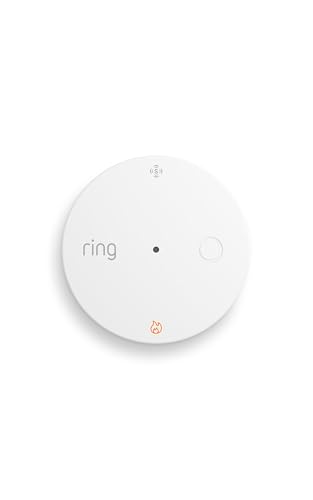
If you want the listener trick inside the Ring app: The Ring Sensors: Smoke & CO Listener — Ring's Smoke & CO Listener does what the SimpliSafe version does, in Ring's ecosystem. Mount it within six inches of an existing alarm and it relays the sound to your phone, with optional 24/7 professional monitoring if you add a subscription. The clever part is that it connects over Amazon Sidewalk with no base station, so a detached garage or a far bedroom can still report in. What it gives up is reliability of the alert itself. Owner feedback here runs noticeably rougher than for our picks, with recurring complaints about missed or delayed notifications. And like every listener, it detects nothing on its own.
If you want CO numbers on a screen and no app at all: The X-Sense Interconnected Smoke and CO Detector — The X-Sense SC07-W pairs a photoelectric smoke sensor with an electrochemical CO sensor and puts a live CO reading on an LCD, along with battery level and status. That's genuinely useful if you have a gas furnace or an attached garage and want to see a number rather than wait for a siren. It's ETL listed to UL 217 and UL 2034, it interconnects with other X-Sense units, and it needs no rewiring. What you give up is the whole premise of this guide. There's no phone alert, so if the house is empty, nobody hears it.
The competition
Here's what our research turned up beyond the picks. It isn't every smart alarm sold, and a product landing here doesn't make it bad.
The First Alert Battery Combination Smoke & Carbon — First Alert's Battery Combination Smoke & Carbon Monoxide Alarm is a solid ordinary alarm. It uses the same Precision Detection sensing as our top pick to cut cooking nuisance alarms, it warns you at end of life, and it goes up on batteries in a few minutes. It just isn't smart. There's no app, no phone alert, and no way to know it went off while you were at work. Buy it for a hallway where you want reliable detection and nothing else, or when you're filling out coverage around one smart alarm that already handles the notifications.
Placement and upkeep
Put an alarm in every bedroom, outside each sleeping area, and on every level including the basement, which is what the NFPA recommends. Keep them at least ten feet from the stove and away from bathroom doors, since steam and cooking smoke cause most of the false alarms people get angry about. Vacuum the vents a couple of times a year, because dust makes a sensor twitchy. Press the test button monthly, even on a model that self-tests, and use the app to confirm the alert actually lands on your phone. When an alarm chirps at night, it's usually the battery, not a fire. And no matter how new the technology is, the CPSC says replace every alarm after ten years.
Questions we get
Are smart smoke detectors worth it over standard alarms?
They detect fire about as well as good ordinary alarms, so you're paying for the alert, not the sensor. That's worth it if the house is often empty, if someone won't hear a ceiling siren, or if you want to know about a problem from the office. If everyone's home most of the time and hears the alarm fine, a plain sealed-battery unit does the job.
What should renters buy if they can't hardwire anything?
Go battery. Our top pick, the First Alert SC5, mounts with a bracket and covers both smoke and CO with app alerts. The Kidde smoke alarm with Ring runs on two AA batteries and links wirelessly to other Kidde alarms. Either one comes down with you when the lease ends.
Do smart smoke detectors work without Wi-Fi?
Yes, as alarms. The siren and the sensor don't need the internet, so a router outage doesn't leave you unprotected in the room. What you lose is the phone alert, the remote hush, and any professional monitoring. Listener devices are the exception, since relaying the alert is the only thing they do.
Can I make my existing alarms smart without replacing them?
That's exactly what an alarm listener does. The SimpliSafe and Ring listeners mount within a few inches of an alarm you already own, recognize its sound, and send a notification. It's the least disruptive route and the right one if your alarms are recent. It's the wrong one if they're near the end of their life.
Do these call the fire department automatically?
Only with a monitoring plan. The SimpliSafe Alarm Listener lets agents request emergency dispatch even if they can't reach you, and Ring offers 24/7 smoke monitoring as a paid add-on. Without a plan, a smart alarm just notifies your phone, and calling 911 is still on you.
How often do smart smoke detectors need replacing?
Every ten years, same as any other alarm. The CPSC is explicit that this applies to smart models and sealed-battery models alike, because the sensor degrades regardless of what the electronics can do. Check the manufacture date printed on the back before you assume you have time.
Why you should trust us
For this guide:
- We read every product listing and manufacturer spec sheet in this lineup, including the UL 217 and UL 2034 certification claims each one makes.
- We reviewed published coverage from Wirecutter, Consumer Reports and This Old House, along with safety guidance from the NFPA, the CPSC and the U.S. Fire Administration.
- We looked for recurring themes in owner feedback, particularly around app setup, pairing multiple alarms, and cooking-related false alarms.
- We read owner reviews on every listing, weighted toward the critical ones, because that is where the recurring failures show up.
- We have a systematic way of automatically fetching the latest prices, so the numbers on this page stay current.
- This is a research-focused guide, so the team may not own every product listed — though we often do own the top winners, which gives us extra context for the recommendations.
- We don't accept free products, and the retailer commission never changes which product we recommend.
Sources
Smoke Alarms - NFPA Fire Statistics, National Fire Protection Association (NFPA)
UL 217 Standard for Smoke Alarms (8th Edition), UL Solutions
Smoke Alarm Safety Information, U.S. Consumer Product Safety Commission (CPSC)
Best Smart Smoke Detectors, Wirecutter (NYT)
Best Smart Smoke Detectors Tested, CNET
Home Fires - Fire Statistics, U.S. Fire Administration (USFA)
Nest Protect Split-Spectrum Sensor Technology, Google Nest
Smoke Alarm Placement and Maintenance Guide, This Old House
Best Smoke Detectors of 2026, Consumer Reports
Matter Smart Home Standard Overview, Connectivity Standards Alliance (CSA)
Amazon product listings and owner reviews for all 7 products
Manufacturer specification pages for each product
Some passages in this guide may be paraphrased with AI help.
Product prices and availability are accurate as of the date/time indicated and are subject to change. Any price and availability information displayed on Amazon.com at the time of purchase will apply to the purchase of this product.
More like this.
Continue exploring electronics reviews and recommendations.

The Best Interconnected Smoke Detectors
A smoke alarm does you no good if it's the one in the basement and you're asleep two floors up. That's the case for interconnection in a sentence: when…

The Best Smart Water Leak Detectors
A burst washing machine hose can put hundreds of gallons on your floor before you get home from work. That's the whole problem with water damage - it's…

The Best Radar Detectors
A radar detector earns its keep in the few seconds before you spot the patrol car. On a long interstate run, a good one gives you a mile or more of…

The Best Carbon Monoxide Detectors
Carbon monoxide doesn't announce itself. It has no color, no smell, and no taste, and the CPSC warns that by the time you notice the headache and the…

The Best Radon Detectors and Test Kits
Radon is a gas you can't see, smell or taste, and it seeps up through foundation cracks, sump openings and construction joints in homes of every age. The…

The Best Metal Detectors for Finding Gold
Gold hides in ground that fights you. The dirt in most active goldfields is loaded with iron, and that iron talks back to a detector all day long - …