The Best Smart Water Leak Detectors
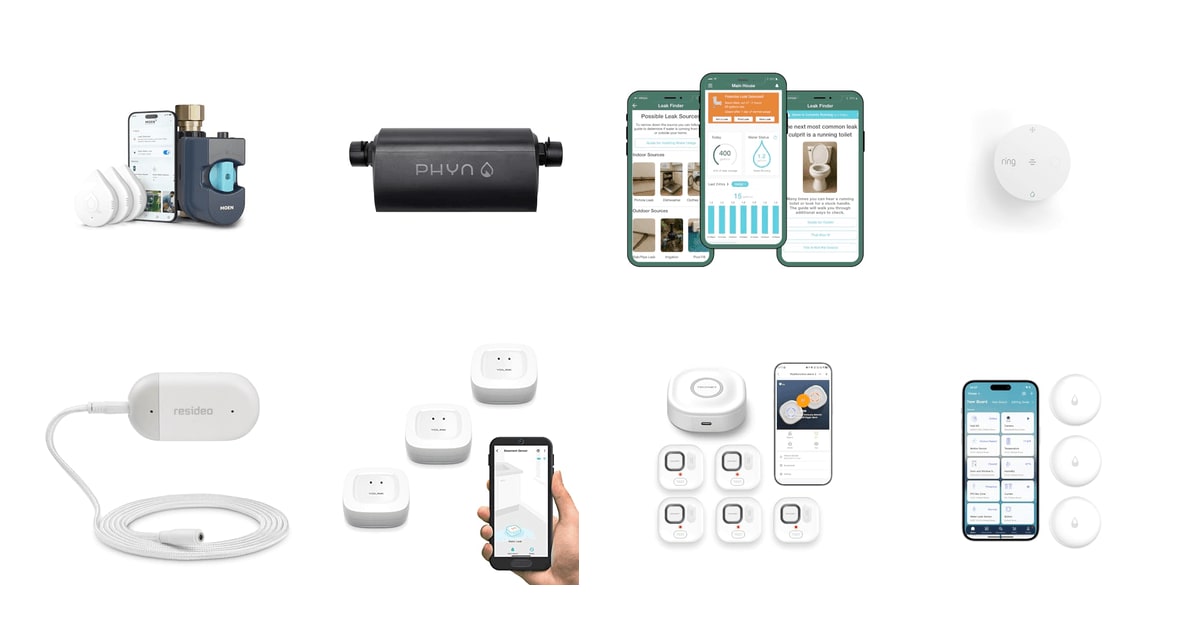
A burst washing machine hose can put hundreds of gallons on your floor before you get home from work. That's the whole problem with water damage — it's fast, it's expensive, and it usually starts somewhere you never look. A smart leak detector is a cheap hedge against that. The good ones scream at you locally within a second or two of getting wet, then push an alert to your phone. The best ones don't wait for you at all, and close the main valve themselves.
No single device covers everything, and the marketing rarely says so. Spot sensors only know about water that physically touches them, so a pinhole leak inside a wall can drip for months without tripping one. Whole-home monitors watch flow and pressure instead, which catches those hidden drips — but they miss nothing about a slow ice-maker line until enough water moves to register. Battery-powered sensors also go quiet when a battery dies, and plenty of owners find that out the hard way. Layering is the real answer, and layering costs more.
Your smart home platform matters more than you'd expect, too. A sensor that can't talk to the app you already use will get ignored, and ecosystems here are unusually walled off. So think about coverage first, then compatibility, then price. We think that the Moen 900-006 Flo bundle is the best smart water leak detector for most people, and that the Flume F2X is the one to buy if you rent, live in a condo, or don't want a plumber cutting into your pipes.
Everything we recommend

Whole-home monitoring plus a valve that closes itself
Whole-home monitoring without cutting into a pipe

The spot sensors that still work in a concrete basement

Five sensors and a gateway, loud enough to hear upstairs

Local automations that keep running when the internet doesn't
At a glance
| Product | Price | |
|---|---|---|
| Moen 900-006 Flo by Moen 1-Inch SmartTop pick | $747.98 |
 | Plus Smart Water Assistant & ShutoffAlso consider | $579.99 |
| Flume F2X Smart Home Water Monitor andRunner-up | $269 |
 | Ring Sensors: Flood & Freeze SensorAlso consider | $24.99On sale |
 | Resideo CHW3610W8001 WiFi Water Leak Detector ForAlso in lineup | $62.23On sale |
| YoLink Water Leak Sensor 3-PackAlso great | $49.99 |
| TECKNET Wi-Fi Water Leak Detector KitBudget pick | $35.99On sale |
| Aqara Water Leak Sensor 3 PackUpgrade pick | $44.99On sale |
How we picked
Detection coverage. We separated whole-home inline and meter-based monitors from floor-level spot sensors, since only the former can find a pinhole leak inside a wall. Products that claimed whole-home coverage had to back it with flow or pressure monitoring in their specifications.
Shutoff capability. We treated an integrated motorized valve as a distinct tier, not a bonus feature. Anything that only sends an alert got evaluated as a monitoring layer, and we said so plainly in each write-up.
Wireless reliability. We compared protocols against the places leaks actually happen — concrete basements, crawl spaces, detached garages — and weighted owner reports of devices dropping offline heavily. A sensor that silently disconnects is worse than no sensor.
Ecosystem fit. We checked published compatibility for Alexa, Google Home, Apple HomeKit, Matter and Home Assistant, and noted where a hub is required and sold separately. Switching platforms later usually means replacing hardware.
Alert redundancy. We looked for a loud onboard alarm plus more than one remote channel. Devices offering SMS and email alongside push notifications ranked higher, because cloud outages are common and silent.
Top pick
Whole-home monitoring plus a valve that closes itself
Moen 900-006 Flo by Moen 1-Inch Smart
This bundle pairs an inline flow monitor and motorized shutoff valve with three spot sensors for appliances. It's the only setup here that both catches hidden drips inside walls and stops the water on its own, without anyone home.
$747.98fromAmazonThe shutoff valve is the whole point. Every other product on this list can tell you about a leak. Only this one and the Phyn can do something about it. If a supply line lets go while you're at work, an alert just means you'll watch the damage happen from your phone. Moen's valve closes on a confirmed anomaly, which is the difference between a wet floor and a gutted ceiling.
Moen calls its detection layer MicroLeak, and the specs claim it flags leaks as small as a drop per minute anywhere in your plumbing — including behind drywall and under the slab. That's a category of leak no floor sensor can physically find. The system runs a daily pressure test to do it, and owners describe that test as the feature that gives them the most peace of mind day to day.
You also get three spot detectors in the box, which matters more than it sounds. Inline monitors watch the water coming in, so a leak downstream at the dishwasher can take a while to look abnormal. Put the included detectors under the washer, behind the water heater, and near the dishwasher, and they'll trigger the shutoff valve directly. That's a genuinely complete setup out of one purchase.
The app is better than most in this category. You get daily and monthly usage, so a running toilet flapper or a stuck sprinkler zone shows up as a weird line on a chart instead of a surprise on your water bill. Owners also report the system phoning them, not just pushing a notification, when usage spikes hard.
It needs a plumber, and that's not optional. The valve fits 1-inch to 1-1/4-inch pipe and goes inline on your main. Budget for labor on top of the device, and expect a bit of a learning period afterward.
Flaws but not dealbreakers
The learning period is real. Owners describe the system needing a few days to figure out what normal looks like in their house, and even after that it occasionally cuts water during genuinely long showers or an unusually heavy laundry day. You can override it from the app, but you need the app handy — and if you're the only one in the house who has it installed, everyone else just gets cold water and no explanation.
Reliability isn't perfect. Some owners report units that quit within days of installation, and others describe frustrating experiences with support after a failure. A few also mention leaks at the valve's own O-ring after install, which turns into a second plumber visit. Moen pushes an optional subscription for priority alerts and extended warranty coverage, which stings a little on a device that already costs the most here.
It's the most expensive option on this list before a plumber even shows up. If your home is small, your appliances are all easy to reach, and you're mostly worried about a washer hose, you're paying for coverage you may not need.
Moen offers extended warranty coverage through its optional Flo Protect subscription tier.
Runner-up
Whole-home monitoring without cutting into a pipe
Flume F2X Smart Home Water Monitor and
The Flume F2X straps onto your existing utility water meter and reads flow from its magnetic field. You get whole-home leak alerts and detailed usage tracking in about fifteen minutes, with no plumber and no pipe modification — but no shutoff valve either.
$269fromAmazonIf you can't or won't modify plumbing, this is your whole-home option. Renters, condo owners, and anyone who'd rather not pay a plumber get the same basic superpower as the Moen: visibility into every drop entering the house. It clamps to the meter, pairs in the app, and starts monitoring. Flume says it fits over 95% of home meters, and owners consistently describe setup as genuinely easy.
It's especially good at the leaks that don't flood anything. A running toilet, a dripping outdoor spigot, a sprinkler head that snapped off — these waste thousands of gallons and never touch a spot sensor. Owners regularly report finding a leak within the first day or two of installing it, usually one they had no idea existed. If your water bill has been creeping up, this is the device that explains why.
Flume built the newest version for weather. The parylene coating is the same kind used on medical and underwater gear, which matters because your meter box sits in the ground and fills with water. It runs on standard AA packs rather than a proprietary battery, so a replacement is a trip to the drugstore instead of a support ticket.
The alerts aren't instant, though. Flow-based detection needs to see an unusual pattern before it can call it a leak, so you're looking at minutes rather than the second or two a spot sensor's onboard alarm takes. For a slow drip that's fine. For a burst line, those minutes are real.
Flaws but not dealbreakers
There's no shutoff valve. That's the central limitation, and it's worth sitting with. If a pipe bursts while you're on vacation, the F2X will tell you — and then the water keeps running until a human turns it off. For an unoccupied property, treat this as a monitoring layer to pair with a shutoff valve, not a replacement for one.
Meter compatibility isn't universal. Some digital meters with built-in RF transmitters block the sensor, so check your meter type before you order. Owners also report battery packs failing after a couple of years, and some describe support as slow to help when hardware goes wrong past the warranty window.
The app can be fussy during setup. Several owners mention crashes while pairing, often traced to phone battery-saver modes. It's a five-minute annoyance, not a dealbreaker, but plan to install it with your phone plugged in.
Also great
The spot sensors that still work in a concrete basement
YoLink Water Leak Sensor 3-Pack
These use LoRa radio instead of Wi-Fi, so they reach a detached garage or a below-grade crawl space where 2.4GHz signal dies. They talk to a hub rather than your router, which keeps sensor-to-hub alerts alive during an internet outage.
$49.99fromAmazonWi-Fi is the weak link in most spot sensors, and basements are where leaks live. That's the whole argument here. LoRa is a sub-GHz industrial protocol built for warehouses and farm equipment, and it goes through poured concrete and cinderblock the way 2.4GHz simply doesn't. YoLink claims up to a quarter mile in open air. In practice, that means a sensor in a detached garage stays connected without a range extender.
The hub architecture is quietly the best feature. Sensors pair to the hub, not the internet, and YoLink's device-to-device pairing keeps them talking even when your router reboots or your ISP drops. You lose remote push during an outage, but local alarms and local automations keep running. If you've ever come home to find a smart device had been offline for a week, you'll appreciate the difference.
Installation takes about ten seconds per sensor. Peel the tab, set it under the water heater or behind the toilet, done. The included AAA batteries are rated for over five years, which means these are close to a place-and-forget purchase — unusual in a category where annual battery swaps are the norm.
Alert redundancy is better here than almost anywhere else. YoLink pushes SMS, email, and app notifications, so a single failing channel doesn't mean silence. It also works with Alexa, IFTTT, and Home Assistant, which makes it a reasonable choice if you'd rather not commit to one big-name ecosystem.
Flaws but not dealbreakers
The hub is required and sold separately, which changes the math. A three-pack looks inexpensive until you add the hub, and for someone buying their first sensors that's an awkward extra step. If you already run YoLink devices, though, adding sensors is about as cheap as this gets.
There's no shutoff capability in this pack. YoLink sells compatible motorized valves separately, and pairing them is the real endgame — but out of the box, these alert and nothing more. A handful of owners also report sensors dropping offline in furnace rooms, usually a hub placement issue rather than a range one.
Budget pickOn sale
Five sensors and a gateway, loud enough to hear upstairs
TECKNET Wi-Fi Water Leak Detector Kit
This kit covers five spots at once and includes the gateway, so there's no second purchase before it works. Each sensor has probes on top for drips from above and four on the bottom for pooling water, plus a 120-decibel alarm.
$35.99fromAmazonList priceCoverage is the thing you're actually buying, and this kit gives you the most of it. A three-bedroom house wants sensors under the kitchen sink, both bathrooms, the water heater, and the washer — that's five right there. Most competitors sell three and require a hub on top. Here the gateway is in the box, and you're covered on day one.
The dual-probe design is smarter than it looks. Two probes sit on top to catch drips falling from a pipe joint or a leaking drain overhead, and four sit underneath for water spreading across the floor. A slow leak from a P-trap above the sensor doesn't necessarily pool fast, so having both is the difference between a two-minute alert and a two-week one.
That 120-decibel alarm carries through a house. If you're home when the water heater lets go, you don't need your phone at all — you'll hear it from the second floor. Volume is adjustable across four levels, which matters if you're putting one in a bedroom closet near the plumbing chase. The housing is IP67 rated and the batteries are rated for over two years.
It runs through the Tuya Smart app, which is generic but competent, and it'll handle remote alerts fine as long as the gateway stays online.
Flaws but not dealbreakers
Wi-Fi is 2.4GHz only, and the gateway is a single point of failure. If it loses power or falls off the network, every sensor connected to it goes dark for remote alerts at once. The onboard sirens still work, but nobody's home to hear them — which is exactly when you want the notification. Some owners report the gateway simply refusing to connect during setup.
Signal reach is the other constraint. A concrete basement far from the router is the hardest environment for 2.4GHz, and it's also where a sump pump failure happens. For kitchens, bathrooms, and a laundry room on the same floor as your router, this kit is fine. For below-grade coverage, the YoLink sensors are a safer bet.
High-humidity spots can produce false alarms, so wipe the probes down occasionally if you're placing one near a shower or a dehumidifier.
Upgrade pickOn sale
Local automations that keep running when the internet doesn't
Aqara Water Leak Sensor 3 Pack
These Zigbee sensors work natively with Apple HomeKit and support Matter, so a leak can trigger a shutoff valve or a phone alert entirely on your local network. The probes register water as shallow as half a millimeter.
$44.99fromAmazonList priceIf you run Apple Home, these are the obvious choice. Native HomeKit support means the automation logic lives on your HomePod or Apple TV, not on someone's cloud server. Water hits a probe, your local hub fires the automation, and a compatible valve closes — no internet required. That independence is worth a lot in a device whose entire job is working during an emergency.
Sensitivity is genuinely high. Aqara rates the probes down to half a millimeter of water, which is a thin film rather than a puddle. In practice that means the alert comes before water has spread to the hardwood next to the dishwasher. Owners running these under every sink and appliance consistently describe getting notified from the smallest bit of water.
Zigbee sips power, and that shows up in the battery. A single CR2032 lasts around two years, versus annual replacements on most Wi-Fi-direct sensors. Zigbee also meshes, so each Aqara device you add strengthens the network for the others. Matter support means these should stay useful as the standards landscape shifts.
There's a well-documented enthusiast path here too. Plenty of owners run these through Home Assistant or SmartThings rather than Aqara's own app, and report them working well — even though Aqara doesn't officially support it.
Flaws but not dealbreakers
You need an Aqara hub, and it has to be an Aqara hub. Third-party Zigbee coordinators and USB dongles aren't supported, so leaving the ecosystem later means replacing sensors, not just the hub. The sensor also needs to stay within about ten meters of that hub, which is a real constraint in a larger or multi-story house.
Long-term reliability is the concern worth flagging. Some owners with large Aqara deployments report a meaningful share of devices failing after a year or so, with battery swaps and resets not bringing them back. If you're buying a dozen, plan on some attrition — and check them periodically rather than assuming silence means dry.
Who this is for
Buy one of these if you own or rent a place with plumbing you can't see all of — which is essentially everyone. The case is strongest if you have a finished basement, hardwood or high-value flooring, an aging water heater, or a property you leave empty for weeks at a time. If you're on a slab with a history of pinhole leaks, skip straight to a whole-home monitor. If your worry is a washing machine hose and everything is on one accessible floor, a handful of spot sensors is enough.
This guide covers consumer smart leak detectors and monitors that alert your phone. We're comparing spot sensors, meter-mounted monitors, and inline shutoff systems side by side, which means comparing products that don't do the same job — so we've been explicit about which tier each one sits in. We don't cover standalone shutoff valves sold without detection, hardwired commercial systems, dumb battery alarms with no app, or sump pump monitors. And we're not the right guide if you need something rated for a rental property you manage remotely at scale.
How we picked
Detection coverage: whole-home flow and pressure monitoring finds leaks inside walls; spot sensors only find water that touches them, and we ranked accordingly. Shutoff capability: an integrated motorized valve is its own tier, because an alert alone can't stop a burst line while you're at work. Wireless reliability: we weighted the environments where leaks actually happen — concrete basements, crawl spaces, detached garages — and treated owner reports of devices dropping offline as disqualifying at scale. Ecosystem fit: we checked published support for Alexa, Google Home, HomeKit, Matter and Home Assistant, and flagged every case where a hub is required and sold separately. Alert redundancy: a loud onboard siren plus SMS, email and push beats push alone, since cloud outages tend to be quiet.
Other smart water leak detectors worth considering
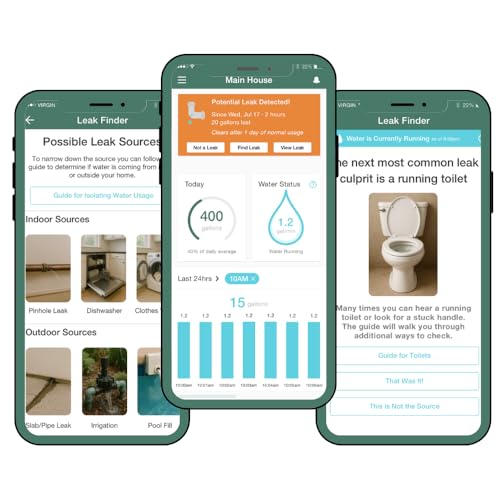
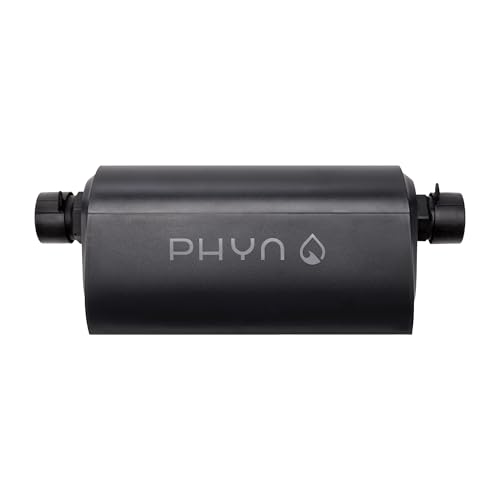
If you want the most detailed water analytics with a shutoff valve: The Plus Smart Water Assistant & Shutoff ($579.99) — The Phyn Plus 2nd Gen uses high-definition pressure wave analysis, taking hundreds of readings per second to build a fingerprint of your plumbing's normal behavior. It can tell a shower from a dishwasher cycle from a pinhole drip, all without a single floor sensor placed. There's no flow wheel, so there's no mechanical part to wear out. What it gives up is completeness: no spot sensors come in the box, and the device alone costs about what the Moen bundle does before you add appliance coverage. Owner feedback also raises real cautions — a cap of nine paired sensors that's tight for a four-bathroom house, reports of failures after roughly a year, and Android app problems serious enough that some owners couldn't get alerts at all. Choose it if pressure-wave precision is the thing you want and you're on iOS.
If you already have a Ring Alarm system: The Ring Sensors: Flood & Freeze Sensor ($24.99) — The Ring Flood & Freeze Sensor drops into an existing Ring setup with almost no effort, and it adds freeze warning below 40°F — genuinely useful near an exposed pipe in an unheated space. It runs over Amazon Sidewalk, so no base station is required for basic operation, and it's compact enough for a tight under-sink cabinet. The catch is that Sidewalk dependence: it's a public mesh, some owners object to it on principle, and coverage varies by neighborhood. Owner reports also include alerts that never arrived until app settings were sorted out, and at least one false trigger from a dry sensor sitting on a desk. It's the right pick inside Ring and a hard sell outside it.
The competition
This is what our research surfaced across published reviews, manufacturer specifications and owner feedback — not a census of everything sold. The leak detector market is enormous and turns over fast, and there are competent sensors from smaller brands we didn't look at. Here's the one remaining product from this lineup and where it landed.
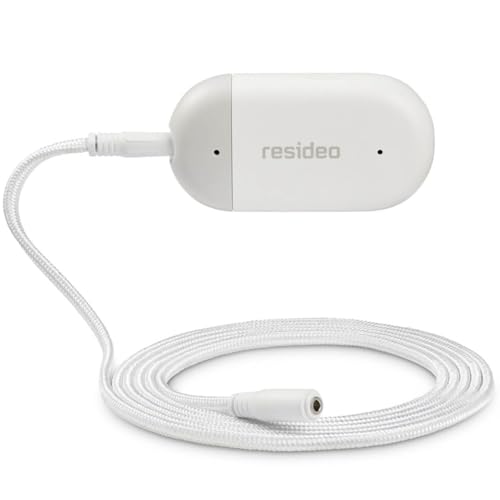
The Resideo CHW3610W8001 WiFi Water Leak Detector For ($62.23) — The Resideo CHW3610W8001 has one feature nothing else here matches: a five-foot cable sensor, extendable up to 500 feet, that detects water anywhere along its length. You can snake it along a basement wall or loop it around a utility room and cover an area instead of a point. It also monitors temperature and humidity, connects directly over Wi-Fi with no hub, sounds a 100-decibel local alarm, and is reusable after it dries out. What kept it out of the picks is connectivity. Owners repeatedly describe it dropping off Wi-Fi — sometimes daily — and needing a battery pull to reconnect, which almost always seems to happen while they're away. That's the failure mode that defeats the entire purpose. It costs more than most spot sensors without offering shutoff. Consider it if the cable-run coverage solves a problem you specifically have, your router reaches the space strongly, and you'll pair it with Resideo's separate shutoff valve.
Placement and maintenance
Put sensors on the floor at the lowest point near each water source: the dishwasher drain connection, both washing machine supply lines, the base of the water heater, under every sink, near the ice-maker line, and at the sump pit. Water follows gravity, so a sensor two inches up a cabinet wall is a sensor that won't trigger. Avoid spots that get condensation — near a dehumidifier or right outside a shower — unless the sensor lets you adjust sensitivity, since damp air causes false alarms. Wipe the probes with a dry cloth once or twice a year; mineral scale builds up and dulls them. Test each sensor with a wet fingertip on a schedule you'll actually keep, and replace batteries before the low-battery warning rather than after. A dead sensor and a dry basement look identical from your phone.
Questions we get
What's the difference between a spot sensor and a whole-home monitor?
A spot sensor sits on the floor and only alarms when water physically touches its probes. A whole-home monitor watches flow and pressure across your entire plumbing system, so it can flag a leak inside a wall or under a slab that never reaches a floor. Published testing has found that whole-home monitors catch slow drips that no spot sensor placement was able to detect. They solve different problems, which is why layering both is the strongest setup.
Can a leak detector shut off my water automatically?
Only inline devices with an integrated motorized valve can. In this lineup that's the Moen Flo bundle and the Phyn Plus 2nd Gen. Every spot sensor here — Ring, TECKNET, Aqara, YoLink, Resideo — sends alerts only, though several can trigger a compatible shutoff valve bought separately. If nobody's home for days at a time, that distinction is the most important one on this page.
Do these require a monthly subscription?
The spot sensors don't. Ring, TECKNET, Aqara and YoLink all provide full alerting with no recurring fee. Moen and Phyn both offer optional paid tiers for priority alerts and extended warranty coverage, but basic leak detection and automatic shutoff work without subscribing.
How many sensors do I actually need?
Plan on one per major water source: dishwasher, washing machine, water heater, refrigerator ice-maker line, and under each sink in the kitchen and every bathroom. For a typical three-bedroom, two-bathroom house that lands somewhere around eight to twelve. A whole-home monitor complements that rather than replacing it, since it catches what's hidden and the spot sensors catch what's downstream.
What happens if my internet goes down?
Wi-Fi-direct sensors like the TECKNET, Resideo and Ring lose remote notifications during a router or ISP outage, but their onboard alarms still sound if water hits them. Hub-based systems handle it better — YoLink's LoRa sensors keep talking to the hub, and Aqara's HomeKit automations run locally on your Apple hub. If outages are common where you live, prioritize a loud local siren plus a hub-based protocol.
Will one of these lower my homeowners insurance?
Possibly. Several insurers offer premium discounts in the range of 5 to 15 percent for a certified automatic water shutoff device, and some Flume owners report receiving a credit as well. Certification requirements vary by carrier and not every smart valve qualifies. Call your insurer before you buy and ask which specific models are on their list.
Why you should trust us
For this guide:
- We read manufacturer specifications and listing documentation for all eight products, comparing detection method, wireless protocol, hub requirements and stated battery life side by side.
- We reviewed published testing from outlets including Consumer Reports and PCMag on detection thresholds and notification latency, and we compared what those reports found about whole-home monitors versus spot sensors.
- We read through owner feedback for every product in this guide, weighting recurring themes — offline sensors, false triggers, hardware failures after a year — over individual complaints.
- We read owner reviews on every listing, weighted toward the critical ones, because that is where the recurring failures show up.
- We have a systematic way of automatically fetching the latest prices, so the numbers on this page stay current.
- This is a research-focused guide, so the team may not own every product listed — though we often do own the top winners, which gives us extra context for the recommendations.
- We don't accept free products, and the retailer commission never changes which product we recommend.
Sources
Best Water Leak Detectors of 2026 — Wirecutter, Wirecutter
Best Smart Water Leak Detectors Tested — CNET, CNET
Best Water Leak Detectors — PCMag, PCMag
Water Leak Detector Ratings & Reviews — Consumer Reports, Consumer Reports
Homeowners and Renters Insurance Facts & Statistics — Insurance Information Institute, Insurance Information Institute
Amazon product listings and owner reviews for all 8 products
Manufacturer specification pages for each product
Some passages in this guide may be paraphrased with AI help. Prices are refreshed automatically.
More like this.
Continue exploring home reviews and recommendations.

The Best Smart Smoke Detectors
A smoke alarm sits quietly for years, then gets about ninety seconds that matter. Smart models don't sense fire any better than good ordinary ones. What…

The Best Smart Water Bottles
Most of us know we should drink more water, and most of us don't. CDC analysis of NHANES data found that roughly 43% of U.S. adults drink fewer than four…

The Best Transmission Fluid Additives and Stop Leaks
A transmission that slips a beat before it grabs, or leaves a red spot on the driveway every morning, is a genuinely stressful thing to own. Most of the…

The Best Radon Detectors and Test Kits
Radon is a gas you can't see, smell or taste, and it seeps up through foundation cracks, sump openings and construction joints in homes of every age. The…

The Best Carbon Monoxide Detectors
Carbon monoxide doesn't announce itself. It has no color, no smell, and no taste, and the CPSC warns that by the time you notice the headache and the…

The Best Interconnected Smoke Detectors
A smoke alarm does you no good if it's the one in the basement and you're asleep two floors up. That's the case for interconnection in a sentence: when…