The Best Metal Detector Pinpointers for Gold Prospecting
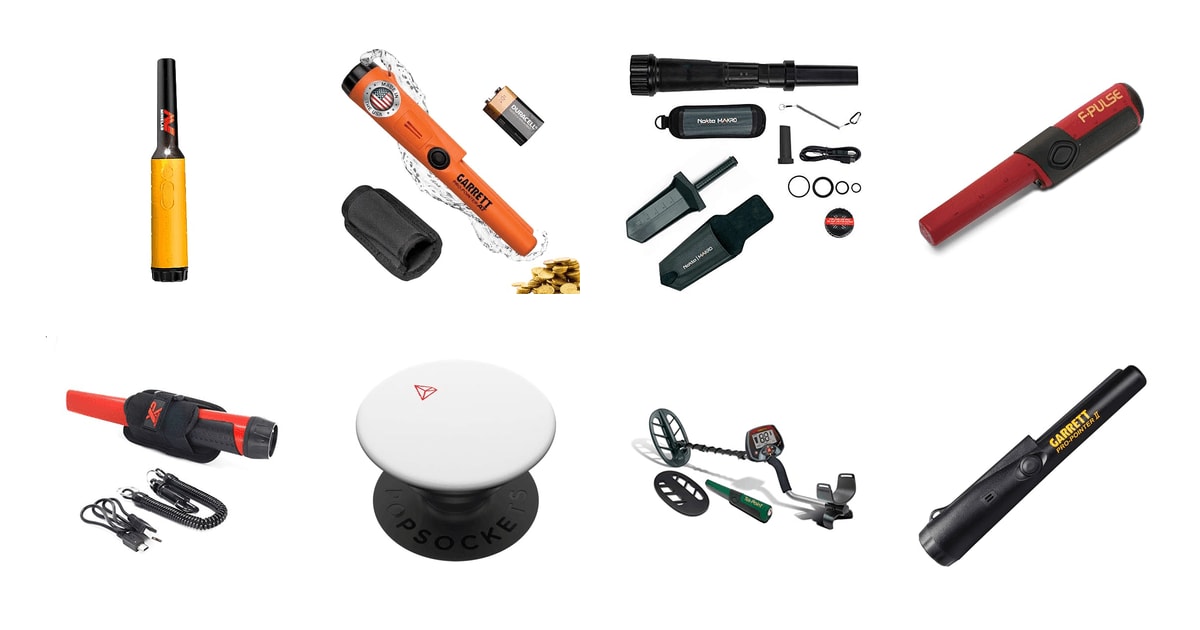
A pinpointer is the small probe you pull out after your main detector says there's something down there. Without one, you widen the hole, sift the pile, wave the coil over it again, and repeat. With a good one, you find the target in seconds. For gold hunting that speed matters more than it does for coin shooting, because the target is often a flake or a sub-gram nugget that disappears into a handful of gravel. Most placer gold sits in or beside creek beds, so your probe gets wet constantly.
Here's the honest part: no pinpointer finds gold on its own. These are recovery tools with detection ranges measured in inches, not search tools. They also can't fully escape their own physics. VLF probes, which is most of them, get noisy in the iron-heavy soil of Nevada, Arizona and the Western Australian goldfields. Pulse induction probes shrug that ground off but give you less information about whether the beep is a nail or a nugget. You pick which compromise you'd rather live with.
We read manufacturer specifications, published reviews and a lot of owner feedback to sort out which probes hold up in wet, mineralized, rocky ground and which ones just look good on a bullet list. We think that the Minelab PRO-FIND 35 is the best metal detector pinpointer for gold prospecting for most people, and that the Garrett Pro-Pointer AT is the one to buy if you hunt mixed relic and gold ground and want the most field-proven tool in the category.
Everything we recommend

Deep waterproofing and iron discrimination in one small probe

The proven all-terrain probe, with the deepest submersion here

For hot, iron-saturated ground where VLF probes go crazy
Worth it only if your main detector says XP on the side
At a glance
| Product | Waterproof Depth | Sensitivity Levels | Price | |
|---|---|---|---|---|
| Minelab PRO-FIND 35 Waterproof Pinpointer Metal DetectorTop pick | 10 ft (3m) | 5 levels | $99 |
| Garrett Pro-Pointer AT Waterproof Metal Detector -Runner-up | 20 ft | 3 levels | $109.99 |
| Fisher F-Pulse Waterproof Pinpointer Metal DetectorAlso great | 6 ft | — | $115.51 |
| XP Metal Detectors MI-6 PinpointerUpgrade pick | 20 ft (6m) | 3 (50 w/DEUS) | $179 |
 | Tron TRX Logo White Vintage Distressed CryptoAlso in lineup | — | — | $14.99 |
 | Teknetics Eurotek Pro Metal Detector with 11Also consider | — | — | $273 |
 | Garrett Pro-Pointer II Metal Detector PinpointerAlso in lineup | IP66 (tip only) | — | $99.99On sale |
How we picked
Ground handling. We compared how each probe's circuit design copes with iron-heavy soil, weighing pulse induction models against VLF models with retune or ground-cancel features. Published field comparisons and owner reports both point to PI as the more stable choice in genuinely hot ground.
Waterproofing. We treated full submersion as a baseline rather than a bonus, since most placer gold sits in or beside water. Anything rated only for rain or a wet tip lost ground against probes rated to 10 feet and beyond.
Tip sensitivity. We looked for adjustable sensitivity and a tight, tip-focused detection zone, since sub-gram flakes need precision more than raw depth. Specifications and owner accounts of recovering small nuggets informed which models cleared the bar.
Durability and carry. Prospecting terrain chews up tools, so we favored abrasion-resistant tips, secure holsters and lanyard loops. Owner feedback about tips wearing out or units getting lost in brush shaped this criterion more than any spec sheet did.
Alerts and power. Vibration alerts matter next to running water, and battery format matters on multi-day trips. We noted which probes offer both audio and vibration and which run on batteries you can replace anywhere.
Top pick
Deep waterproofing and iron discrimination in one small probe
Minelab PRO-FIND 35 Waterproof Pinpointer Metal Detector
The PRO-FIND 35 is a fully waterproof probe with five sensitivity levels and a two-tone response that separates iron from gold. It's the rare pinpointer that gives you both real submersion depth and useful information about what you're about to dig.
$99fromAmazonThe ferrous tone ID is the feature that saves you the most digging. Iron trash and non-ferrous targets produce different audio responses, so you learn whether that signal in the sidewall is a rusted nail or something worth chasing before you commit to enlarging the hole. In an iron-littered creek bank, that's the difference between recovering six targets an hour and recovering two. Owners describe using it to read a target before it ever comes out of the ground.
It's waterproof to 10 feet, which covers essentially everything a bank-and-shallows prospector does. You can work a submerged crevice, drop it in a pool, or hunt through a rainstorm without thinking about it. That's deeper than the Fisher F-Pulse and far beyond the Garrett Pro-Pointer II, both of which cost real attention in wet work.
Five sensitivity levels is more granularity than most probes in this class give you, and it matters for small gold. Turn it up and the tip picks up flake-sized non-ferrous targets in loose material. Turn it down when the ground gets hot and the probe starts chattering. Vibration comes along with the audio, so you can still read it over running water or wind.
DIF technology means you don't have to power down your main detector. Most probes will squeal if you wave them near a running coil, which forces an extra step into every recovery. The PRO-FIND 35 suppresses that crosstalk. It's a small thing that compounds over a long day, and it pairs naturally if you already run a Minelab GPX or GPZ as your primary machine.
The kit is complete out of the box: LED flashlight, holster, lanyard. You're not adding a holster purchase to get a probe you can carry on a belt while scrambling over rock. Owners consistently call out how easy it is to pick up, including people buying their first pinpointer.
Flaws but not dealbreakers
It's a VLF circuit, and VLF gets noisy in genuinely hot ground. If you hunt Nevada's gold country, the Arizona desert or Australian leases where the soil is saturated with iron, you'll fight false signals that a pulse induction probe simply ignores. The five sensitivity levels help you tune around it, but they don't eliminate it.
The button placement takes getting used to. More than one owner has noted that the power control isn't where their thumb naturally lands, which is mildly annoying for the first few outings and then stops mattering.
Minelab does not publish a warranty term in this listing.
Runner-up
The proven all-terrain probe, with the deepest submersion here
Garrett Pro-Pointer AT Waterproof Metal Detector -
The Pro-Pointer AT is submersible to 20 feet and runs on one button. It's the pinpointer most detectorists already own, and for mixed relic-and-gold hunting across creeks, banks and dry ground, it's very hard to argue with.
$109.99fromAmazonIf you want the safest possible purchase, this is it. Garrett has sold this probe by the million, which means every failure mode, quirk and workaround has been chewed over publicly for years. Owner feedback is overwhelmingly positive and remarkably consistent — durable, accurate, simple. When you're buying a tool you'll use on every single dig, boring reliability has real value.
It's submersible to 20 feet, deeper than anything else here except the PulseDive. That covers wading, working a submerged bedrock crack, or reaching into a pool up to your shoulder. One owner used it to recover a wedding ring in several feet of water after the main detector narrowed things down. That's exactly the job.
Three sensitivity levels and the Fast Retune button handle the ground-noise problem as well as VLF can. Hold Fast Retune and the detection field tightens instantly, which both tunes out wet sand or mineralized soil and gives you a sharper location on the target. In a plug the size of your fist, that precision saves minutes.
Everything runs off one button — power, retune, sensitivity, stealth mode. That sounds like a limitation and mostly isn't. You operate it by feel, with gloves on, without looking down. The molded ruler on the shaft is a small detail that turns out to be genuinely useful for logging how deep your finds sit.
Flaws but not dealbreakers
It's VLF, so the same hot-ground caveat applies as with the PRO-FIND 35. In heavily iron-mineralized desert soil, it'll chatter more than a pulse induction probe, and Fast Retune only gets you so far.
There's no ferrous tone discrimination. The Pro-Pointer AT tells you where the target is, not what it likely is, so you'll dig more nails than you would with the Minelab. And there's no wireless link to any detector, which matters only if you run an XP machine.
Garrett does not publish a warranty term in this listing.
Also great
For hot, iron-saturated ground where VLF probes go crazy
Fisher F-Pulse Waterproof Pinpointer Metal Detector
The F-Pulse uses pulse induction, so mineralized soil and saltwater barely register. It runs on two AA batteries instead of a 9V, which means one set can outlast a multi-day trip in the backcountry.
$115.51fromAmazonPulse induction is the reason to buy this probe. Instead of a continuous transmit-receive circuit that reacts to iron in the soil, the F-Pulse sends short pulses and reads what comes back — a design that's largely blind to ground mineralization. If you hunt Nevada, Arizona or Australian goldfields and you're tired of chasing signals that turn out to be dirt, this is the fix.
The AA batteries are a bigger deal than they sound. Fisher rates the F-Pulse at up to eight times the life of a 9V probe, and AAs are something you can buy at any gas station or throw a spare set of in a pocket. If you camp out for a few days on a claim, you stop thinking about power entirely.
The abrasion-resistant tip holds up better than the soft plastic on cheaper probes. You're jabbing this thing into gravel, decomposed granite and river cobble hundreds of times a day. Owners report daily use over a year without the tip giving out. There's also one-touch ground cancellation, frequency shift, and both beep and vibrate modes.
Ergonomics get consistent praise. The molded rubber grip is non-slip and the shape works with thick gloves on, which matters in cold creek water in early spring.
Flaws but not dealbreakers
The 6-foot waterproof rating is the shallowest among the fully submersible probes here. Bank work and wading are fine, but if you're diving crevices, the PulseDive or the Pro-Pointer AT give you far more headroom.
Some owners report interference between the F-Pulse and their main detector that they couldn't resolve with the frequency shift setting. It's not universal, but if you're running two machines in close quarters it's worth knowing about — the Minelab's DIF technology addresses this directly.
Pulse induction buys ground immunity at the cost of discrimination. The F-Pulse won't tell you iron from gold the way the PRO-FIND 35's tone ID does, so you'll dig more junk in trashy ground.
Fisher does not publish a warranty term in this listing.
Upgrade pick
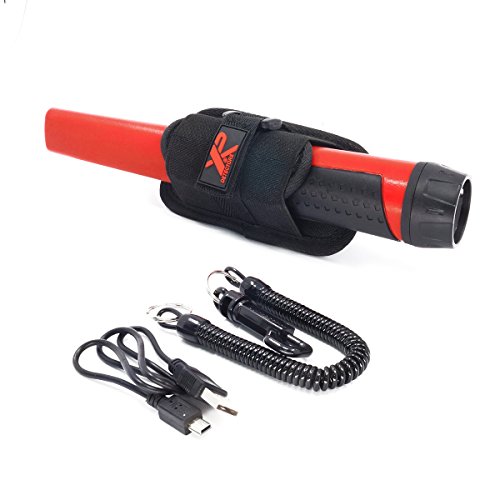
Worth it only if your main detector says XP on the side
XP Metal Detectors MI-6 Pinpointer
The MI-6 is the only pinpointer that talks wirelessly to an XP DEUS II, DEUS or ORX, sending audio straight to your headphones. Paired with a DEUS, its three sensitivity levels expand to fifty.
$179fromAmazonBuy this if you own an XP detector, and skip it if you don't. The MI-6 links to a DEUS II, DEUS or ORX over XP's own radio protocol — the company says it's ten times faster than low-latency Bluetooth, and owners report no perceptible lag. Turn the probe on and audio switches from the coil to the pinpointer through the same headphones. Turn it off and control goes back. No fumbling, no second set of ears.
Paired with a DEUS, sensitivity jumps from three levels to fifty. That's absurd granularity on paper and genuinely useful in practice when you're hunting sub-gram gold in a small hole and need to dial the field down to a fraction of an inch. You adjust it from the detector's remote, not by clicking through modes on the probe itself.
It's waterproof to 20 feet, matching the Garrett, and it's rechargeable rather than eating batteries. Owners who dive or work submerged report it holding up fine. There's also a lost-probe search mode that still works weeks after the unit was switched off — a real consideration when a red probe goes into leaf litter.
Even owners without an XP detector report liking it as a standalone probe, mostly because it detects strongly off the tip rather than the sides. In a narrow hole, tip-focused detection is more precise than a 360-degree field.
Flaws but not dealbreakers
It's the most expensive standalone probe here, and most of what you're paying for is the wireless link. If your main machine is a Minelab, Garrett, Fisher or anything else, that money buys you nothing you can use, and the Pro-Pointer AT does the same core job.
The stereo audio library, adjustable tones and four programs are a lot of configuration for a tool whose job is to say hot or cold. Some owners never touch any of it.
XP does not publish a warranty term in this listing.
Who this is for
This guide is for people who already own or are buying a primary metal detector and want a probe that speeds up target recovery in gold country — creek beds, river gravel, desert washes and mineralized ground. If you hunt parks and lawns for coins, most of these still work well, but you're paying for waterproofing and hot-ground handling you don't need. If you're hoping a pinpointer will replace a full-sized detector, it won't. These tools reach an inch or two on small gold and a few inches on coin-sized targets. Area coverage is the search coil's job.
We've kept the scope to handheld pinpointer probes, plus one complete starter kit for people who need a detector and a probe in the same purchase. We haven't covered full-sized gold machines, sluices, pans or dredges. If your ground is consistently iron-saturated, jump straight to a pulse induction model; if it's moderate, a VLF probe with ferrous tone ID will do more for you.
How we picked
We sorted these probes on five things. Ground handling: whether the circuit stays quiet in iron-heavy soil, which is where pulse induction pulls ahead of VLF. Waterproofing: full submersion, not a splash-resistant tip, because most placer gold is in or next to water. Tip sensitivity: adjustable levels and a tight detection zone at the tip, since sub-gram flakes need precision more than depth. Durability and carry: an abrasion-resistant tip, a holster that stays clipped on rock, and a lanyard loop so you don't leave the thing in the brush. Alerts and power: vibration as well as audio for noisy creeks, and a battery format you can actually replace in the field.
Other metal detector pinpointers for gold prospecting worth considering
If you need a full kit and don't own a detector yet: The Teknetics Eurotek Pro Metal Detector with 11 ($273) — The Teknetics Eurotek Pro bundle is the only listing here that includes a primary detector and a pinpointer together. You get an 11-inch DD waterproof coil that handles mineralized soil reasonably well for a beginner machine, an iron target indicator, adjustable Fe Tone iron audio, and the Tek-Point probe with three sensitivity levels and an LED light. For someone starting from zero, that's a sensible single purchase. The Eurotek Pro isn't as configurable as a mid-range machine, and owners note the target ID numbers can jump around on marginal targets. A minority report quality problems out of the box, so check the unit over when it arrives. Experienced prospectors who already have a main detector should buy a standalone probe instead.
The competition
This is what our research surfaced, not a census of the market. Pinpointers turn over slowly and plenty of respected models — older Whites and Nokta units among them — aren't represented in this lineup. Here's the remaining product we looked at and where it landed.
The Garrett Pro-Pointer II Metal Detector Pinpointer ($99.99) — The Garrett Pro-Pointer II is a genuinely good probe with one problem for this particular guide: it isn't submersible. Its IP66 rating covers rain and running water over the tip, not immersion in a creek. Everything else is solid — a 360-degree detection field that cuts down on repositioning, Fast Retune for mineralized ground, a Lost Alarm that beeps if you set it down and walk away, plus a flashlight, holster and battery in the box. Owners who've used Garrett probes for years praise the simplicity and build. But it also lacks adjustable sensitivity levels, and the Pro-Pointer AT sits close in price with 20 feet of submersion. If you hunt dry ground exclusively and want the simplest possible tool from a brand you trust, this is defensible. For gold prospecting, where you're in and around water constantly, it's the wrong trade.
Field care and setup
Rinse the probe in clean water at the end of every wet session, especially after saltwater or black sand — grit works its way into the seams and the button, and that's what kills these units. Check the tip for wear; a chewed-up tip loses precision before it loses function, and abrasion-resistant tips last longer but aren't permanent. Pull the batteries before storing a probe for the off season, since a leaked cell will end it. Clip it to the holster or the lanyard every single time you set it down. Losing a pinpointer in leaf litter or brush is the most common way people replace one. If you get interference between your probe and your main detector, try a frequency shift first, and consider a model with built-in interference suppression if it persists.
Questions we get
Do I need pulse induction, or will a VLF pinpointer work?
It depends entirely on your ground. In moderate mineralization — most Eastern soils, mild creek banks, lower-elevation Western sites — a VLF probe like the PRO-FIND 35 or the Pro-Pointer AT works fine and gives you better information about what you've found. In genuinely hot ground like Nevada gold country or the Arizona desert, VLF probes chatter and you'll waste time on false signals. If you specifically hunt regions with confirmed heavy iron mineralization, go pulse induction.
What's the best pinpointer for creek and river hunting?
The Nokta Makro PulseDive, rated to 200 feet, is the most waterproof option here by a wide margin, and its pulse induction circuit handles wet mineralized ground without adjustment. For surface and shallow work, the Garrett Pro-Pointer AT's 20 feet of submersion is more than enough and costs less. Treat full submersion as a hard requirement — a probe with only a water-resistant tip, like the Pro-Pointer II, won't survive sustained underwater recovery.
How deep can a pinpointer actually detect gold?
Not very, and that's by design. Most consumer probes reach one to three inches at the tip on coin-sized non-ferrous targets, and Fisher specifies four inches for the F-Pulse. On sub-gram gold, realistic tip range is closer to half an inch to an inch. A pinpointer's job is finding an already-detected target inside a hole or a pile of dirt. Ground coverage is what your main detector's coil is for.
Is the Garrett Pro-Pointer AT good enough for serious gold prospecting?
For most gold hunting, yes. The 20-foot submersion, three sensitivity levels and Fast Retune cover creek, river and mixed-terrain work well, and it's the most field-proven probe in the category by a large margin. Its two real limits are VLF behavior in severely mineralized soil and no wireless link for XP detector owners. If either describes your situation, look at the F-Pulse or the MI-6 instead.
How sensitive does a pinpointer need to be for sub-gram flakes?
You want adjustable sensitivity and a narrow, tip-focused detection zone that isolates a small target from the surrounding gravel. A fixed-sensitivity probe can't be dialed in when the ground gets noisy, which is exactly when flake-sized targets get lost. Ferrous tone ID helps too — it confirms the signal is non-ferrous before you sift through a whole scoop. Mid-range and better probes generally clear this bar; the simplest budget models often don't.
Can a pinpointer replace a main detector?
Technically you could hunt with one, but it's impractical. Detection ranges of one to four inches mean you'd cover a few square feet an hour. The PulseDive comes closest, since it functions as a limited standalone underwater detector, and even that's a niche use for working crevices you can reach by hand. For any real ground coverage you need a full-sized detector with a search coil.
Why you should trust us
For this guide:
- We compared manufacturer specifications across all eight listings, focusing on waterproof ratings, detection technology, sensitivity adjustment and alert modes.
- We read published reviews and field comparisons covering pulse induction versus VLF behavior in mineralized prospecting ground.
- We read through owner feedback for each probe, looking for recurring themes around durability, interference with primary detectors and real-world recovery of small targets.
- We read owner reviews on every listing, weighted toward the critical ones, because that is where the recurring failures show up.
- We have a systematic way of automatically fetching the latest prices, so the numbers on this page stay current.
- This is a research-focused guide, so the team may not own every product listed — though we often do own the top winners, which gives us extra context for the recommendations.
- We don't accept free products, and the retailer commission never changes which product we recommend.
Sources
Garrett Pro-Pointer AT Product Page — 20-foot submersibility, three sensitivity levels, and over one million units sold globally, Garrett Metal Detectors
Fisher F-Pulse Pinpointer Official Specifications — pulse induction technology, waterproof to 6 feet, AA battery life advantage over 9V models, Fisher Labs / First Texas
Best Pinpointers for Gold Prospecting — Kellyco Detectors; Teknetics Tek-Point rated 4.6/5 by verified buyers; Minelab PRO-FIND 35 top-seller among gold prospectors, Kellyco Detectors
XP MI-6 Pinpointer Official Product Page — wireless connectivity to DEUS II, DEUS, and ORX; 50 sensitivity levels when paired; XP patented radio protocol specifications, XP Metal Detectors
Garrett Pro-Pointer II Product Page — 360-degree detection field, IP66 waterproof tip, lost alarm feature, holster and battery included, Garrett Metal Detectors
Amazon product listings and owner reviews for all 7 products
Manufacturer specification pages for each product
Some passages in this guide may be paraphrased with AI help. Prices are refreshed automatically.
More like this.
Continue exploring lifestyle reviews and recommendations.

The Best Metal Detectors for Finding Gold
Gold hides in ground that fights you. The dirt in most active goldfields is loaded with iron, and that iron talks back to a detector all day long - …

The Best Backpacking Tents for Families
A four-person backpacking tent is a strange piece of gear. It has to be light enough that two adults can split it and still carry food, water and a kid's…

The Best Bullet Journals
A bullet journal is just a notebook you bring your own system to. But the notebook still matters, because you'll open it several times a day for months.…

The Best Mystery and Thriller Books
A mystery you love disappears in two nights. A mystery you don't love sits on the nightstand for a month, half-finished, quietly making you feel bad.…

The Best Cookbooks for Home Chefs
Most cookbooks get used a handful of times. They look great on the shelf, you cook the roast chicken and the brownies, and then the book goes quiet. The…

The Best Hydraulic Floor Jacks and Jack Stands
A floor jack and a pair of jack stands are the first real tools most home mechanics buy. Oil changes, tire rotations, brake jobs, swapping snow tires in…