The Best Fuzzy Logic Rice Cookers
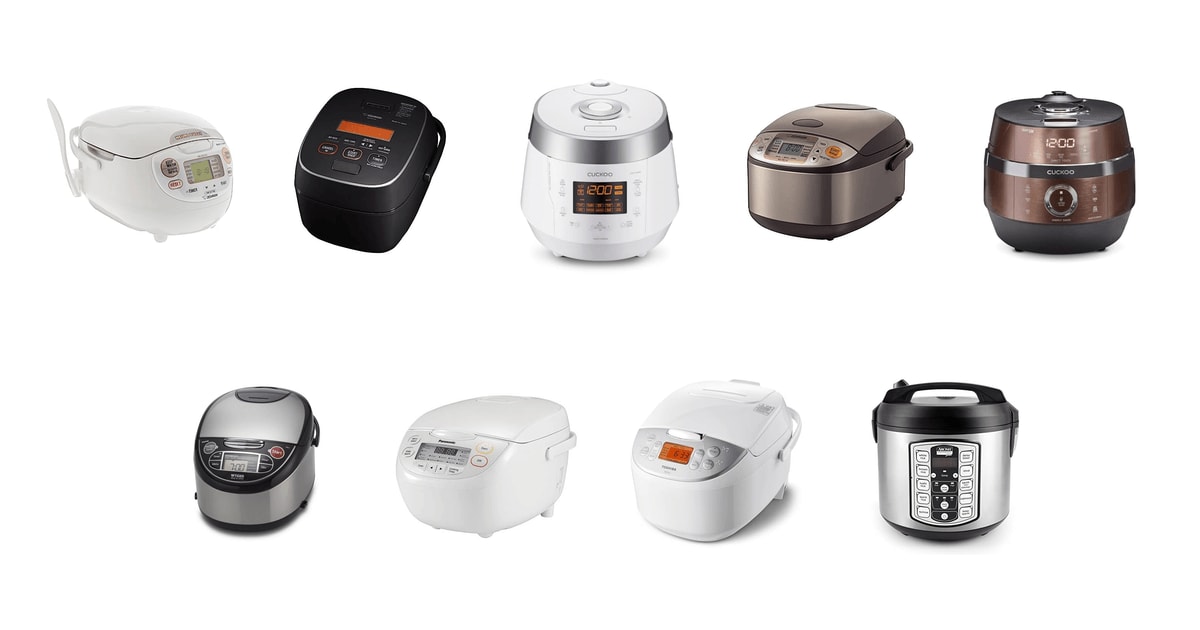
Rice is easy to cook badly. A cheap on/off cooker heats until a thermostat trips, which works fine for plain white rice on a good day and leaves you with a scorched bottom layer or gummy middle on a bad one. Fuzzy logic cookers use a small computer and temperature sensors to adjust as they go, correcting for how much water you added, how cold the kitchen is, and what grain you're using. You notice it most with brown rice, mixed grains, and short-grain varieties, where the margin for error is thin.
No rice cooker here is fast. Even the quick modes take half an hour, and the pressure models add ten to fifteen minutes at the end just venting steam. They also all take up real counter space and none of them are pretty. The inner pots are nonstick, which means they're consumable parts that scratch and dull over years of use, and almost none of them go in the dishwasher. If you cook rice once a month, a plain cooker or a pot on the stove is genuinely fine.
What you're really buying is consistency and the freedom to walk away. Set it, go do something else, come back to rice that's actually done. The models below cover everything from a single-person apartment to a household of eight, and from a basic upgrade over a two-button cooker to a machine that pressurizes rice to get a stickier grain. We think that the Zojirushi NS-ZCC10 is the best fuzzy logic rice cooker for most people, and that the Toshiba 6-Cup is the one to buy if you want most of the benefit for a lot less money.
Everything we recommend
The most consistent rice, and it holds it for hours

Most of the benefit, none of the premium markup

Induction and pressure, without a huge footprint

Cooks your rice and your protein in the same cycle
Prices as of Oct 22, 7:36 AM PT · Details
At a glance
| Product | Capacity | Cooking Tech | Price | |
|---|---|---|---|---|
| Zojirushi NS-ZCC10 5-1/2-Cup Neuro Fuzzy Rice CookerTop pick | 5.5-Cup Uncooked | Neuro Fuzzy | $223.98 |
 | Zojirushi NW-JEC10BA Pressure Induction HeatingAlso consider | 5.5-Cup / 1.0L | — | $685.60On sale |
 | CUCKOO High Pressure Rice Cooker 10-Cup UncookedAlso consider | 10-Cup / 20-Cup | High Pressure | $279.99 |
| Zojirushi NS-TSC10 5-1/2-CupAlso great | 5.5 Cups / 1.0L | Micom | $224.60 |
| CUCKOO High Pressure Rice Cooker 6-Cup UncookedUpgrade pick | 6-Cup / 12-Cup | Induction Heating | $375.99 |
 | Tiger JAX-T18U-K 10-CupAlso in lineup | 10-Cup Uncooked | Micom | $204.99 |
| Toshiba Rice Cooker 6 Cup UncookedBudget pick | 6 Cups | Fuzzy Logic | $159.99 |
 | Aroma Housewares Professional Plus ARC-5000SB 20 CupAlso in lineup | 10-Cup / 20-Cup | — | $55.99 |
Prices as of Oct 22, 7:36 AM PT · Details
How we picked
Rice quality first. We weighted published reviews and long-run owner feedback on texture — separated grains, no scorched bottom layer, brown rice that's actually soft. Feature counts didn't move a cooker up if the rice reports were mixed.
Real fuzzy logic. We checked spec sheets to confirm each cooker uses sensor-driven microcomputer control rather than a fixed timer with a menu overlay. Anything that only mimicked the feature set was out.
Keep-warm that holds. Owner reports on rice quality after four, eight, and twelve hours separate the tiers more than any spec does. We treated a cooker that dries rice out by dinnertime as a real strike against it.
Capacity honesty. We matched uncooked capacity to actual household sizes and noted where features like a tacook plate eat into usable volume. A 10-cup cooker is the wrong buy for two people.
Cleaning burden. We looked for removable inner lids, steam caps, and pressure valves, and read owner feedback on nonstick wear. A cooker you dread cleaning is one you stop using.
Top pick
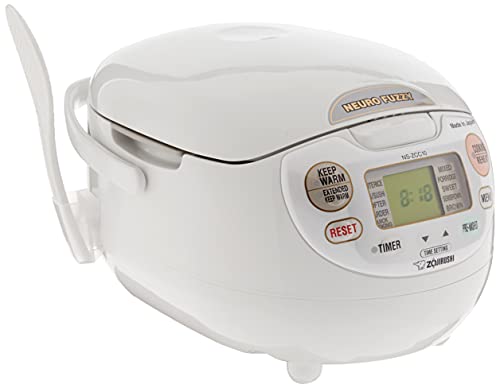
The most consistent rice, and it holds it for hours
Zojirushi NS-ZCC10 5-1/2-Cup Neuro Fuzzy Rice Cooker
The Zojirushi NS-ZCC10 is a 5.5-cup fuzzy logic cooker that handles white, brown, sushi, sweet, and porridge without you thinking about it. Its extended keep-warm holds rice for the better part of a day without turning the bottom layer into a crust.
$223.98fromAmazonPrices as of Oct 22, 7:36 AM PT · Details
This is the cooker most people should just buy and stop researching. Zojirushi's Neuro Fuzzy system has been in production for a long time, and the reason it hasn't changed much is that it works. Published reviews of this model land in the same place year after year: fluffy, well-separated white rice, and brown rice that's actually soft rather than chewy. You add rice, add water to the line, pick a menu setting, and walk away.
The menu list is deeper than most. White rice comes in regular, sushi, softer, and harder versions, and there are separate settings for mixed, sweet, semi-brown, brown, rinse-free, and quick cooking. That sounds like feature bloat until you actually cook brown rice on the brown setting and see the difference. The spherical inner pan heats the grain more evenly than a flat-bottomed pot, which is why you don't get a hard ring around the edge.
Keep-warm is where this one separates itself from the budget field. If your household eats at different times — someone's home at six, someone else at nine — rice from a cheap cooker will be dry and slightly off by the second seating. Owners of this one routinely leave rice in it all day and report it's still good. There's a reheat cycle too, which brings a cooled batch back without adding water.
It's small, which is easy to overlook. At roughly a foot deep and eight inches tall, it fits under most upper cabinets, and the cord retracts into the body so it isn't snaking across your counter. It's also wall mountable if you're desperate for space. For one to four people cooking rice a few times a week, the 5.5-cup capacity is right.
Flaws but not dealbreakers
It uses a conventional bottom heating element, not induction. In practice that means it's a step behind the pressure and IH models on the stickiest short-grain varieties and on GABA rice. For everyday white and brown rice, you won't notice. If premium Japanese short-grain is your daily staple, you might.
Cleaning is a small chore. The inner lid isn't dishwasher safe and needs to come off and get washed by hand after every use, and the same goes for the pot. Skip it a few times and the lid gasket area gets grimy. It's also priced well above what you'd expect for a cooker with no induction heating — you're paying for the tuning and the longevity, not the hardware spec.
The NS-ZCC10 comes with a one-year limited warranty.
Budget pick
Most of the benefit, none of the premium markup
Toshiba Rice Cooker 6 Cup Uncooked
The Toshiba 6-Cup is a fuzzy logic cooker with seven modes, two delay timers, and a nonstick pot, for a fraction of what Zojirushi charges. Rice comes out reliably good, if not quite as good, and it fits a household of three to five.
$159.99fromAmazonPrices as of Oct 22, 7:36 AM PT · Details
If the Zojirushi's price makes you wince, this is the one to get. It has genuine fuzzy logic — sensors that read moisture and adjust temperature and time — not just a timer pretending to be smart. Published comparisons and owner feedback both put its white rice in the same neighborhood as cookers costing several times more. You give up refinement at the edges, not basic competence.
Seven modes is more than most budget cookers offer, and they're the useful ones. White, brown, mixed, multi-grain, quick, porridge, and steel-cut oats. The oats setting is a nice surprise if you eat them — you can set the delay timer at night and wake up to breakfast. There are two delay timers, which matters if you cook rice for both lunch and dinner on different schedules.
The 6-cup uncooked capacity yields about 12 cups cooked, so it covers a family of four with leftovers. That's a better size match for most households than the 5.5-cup Zojirushi if you're feeding more than a couple of people. It's also reasonably compact for that capacity, at about eight inches tall.
Small safety and convenience touches add up here. The power cord detaches, so a passing hip doesn't drag a pot of boiling rice off the counter. The lid locks during cooking, there's a thermal fuse, and the unit shuts off automatically. Those aren't exciting features, but they're the kind of thing that quietly matters in a house with kids.
Flaws but not dealbreakers
Keep-warm is the clear weak point. Rice holds fine for a few hours, but past eight or so owners report it dries at the edges and picks up a stale taste. If you routinely leave rice warm all day, this isn't your cooker.
The fuzzy logic is less sophisticated than Zojirushi's or Cuckoo's, and it shows most on brown rice, which can come out firmer than you'd like depending on the variety. The exterior is plastic and doesn't feel expensive. The pot isn't dishwasher safe and the nonstick wants a soft cloth, not a scrubber.
Upgrade pick
Induction and pressure, without a huge footprint
CUCKOO High Pressure Rice Cooker 6-Cup Uncooked
The Cuckoo CRP-JHR0609F pairs induction heating with high-pressure cooking in a 6-cup body. If you want the stickiest, plumpest short-grain rice and you cook brown or GABA rice regularly, this is the meaningful step up.
$375.99fromAmazonPrices as of Oct 22, 7:36 AM PT · Details
Induction heating and pressure are two different upgrades and this cooker has both. Induction energizes the inner pot itself so heat comes from all around rather than just below. Pressure lets the water inside go above its normal boiling point, which breaks down starch more thoroughly. The result is rice that's stickier and plumper — a texture a conventional element genuinely can't reach.
Brown rice is the clearest reason to buy this. Conventional fuzzy logic cookers can leave brown rice a little tough at the center, because the bran layer resists water. Pressure solves that. If you've been disappointed by brown rice from a normal cooker, or you want to cook GABA rice, this is the tier where the difference stops being subtle. There are 16 modes, including nu rung ji for the crispy scorched rice at the bottom.
It's the compact option in the pressure category. Most high-pressure cookers are 10-cup boxes that dominate a counter; this one does 12 cups cooked in a smaller frame. It's still heavy at about fifteen pounds and taller than the Zojirushi, so measure your cabinet clearance. But for a couple or a small family who want IH results, the size is workable.
There's voice navigation in English and Korean, which is genuinely useful if you have trouble reading a small display. It also announces every step out loud by default, which most people find grating within a day. You can turn it off in the settings — just know you'll want to.
Flaws but not dealbreakers
Pressure cooking is slow. Between building pressure and the release cycle at the end, you're adding ten to fifteen minutes over a conventional cooker for the same batch. The release is quiet and automatic, but you can't rush it.
The pressure gasket and valve need cleaning after every use, and owners who skip that report smells and sealing problems down the line. It's a few extra minutes of maintenance you don't have with a plain cooker.
The price is high for six cups of capacity. You're paying for the technology, not the volume — the Cuckoo 10-cup model costs less per cup of rice.
Also great
Cooks your rice and your protein in the same cycle
Zojirushi NS-TSC10 5-1/2-Cup
The Zojirushi NS-TSC10 trades a little rice refinement for a tacook cooking plate that steams a main dish above the rice. If you want one appliance to make a weeknight dinner, it's the practical Zojirushi.
$224.60fromAmazonPrices as of Oct 22, 7:36 AM PT · Details
The tacook plate is the whole argument for this one. It sits above the rice and steams chicken, fish, or vegetables while the rice cooks below, timed to finish together. On a Tuesday when you don't want to run two burners, that's a real convenience. The steam menu setting also lets you use it as a straightforward steamer.
You're still getting Zojirushi's fuzzy logic, just a slightly less refined version. Micom handles white, sushi, mixed, sweet, brown, and porridge, and the results are dependable. Owners moving up from a basic cooker describe the same jump in quality you'd get from the NS-ZCC10. Side by side on plain white rice, the NS-ZCC10 has the edge — but you'd have to be looking for it.
The build is nicer than the NS-ZCC10's in one respect: the exterior is clear-coated stainless steel rather than plastic, so it wipes down easily and doesn't yellow. The cord retracts, there are two delay time settings, and you can switch the end-of-cycle chime from a melody to a plain beep. That last one sounds trivial until you've heard the melody for the four hundredth time.
Flaws but not dealbreakers
Using the tacook plate cuts into your rice capacity, so a 5.5-cup cooker becomes something less when you're cooking a full meal. For a household of four, that can mean choosing between enough rice and enough chicken.
It's a conventional heating element, and it costs about as much as the NS-ZCC10 without matching it on pure rice quality. If you're never going to use the tacook plate, buy the NS-ZCC10 instead. There's also no app or smart connectivity of any kind, which won't bother most people but is worth knowing.
Who this is for
Buy one of these if you cook rice at least a couple of times a week and you're tired of guessing. The jump from a basic on/off cooker is real — more consistent grain, far less scorching, and brown rice that doesn't fight you. It's also worth it if your household eats at staggered times, because good keep-warm turns rice into something you make once and serve twice.
Skip it if rice is an occasional thing for you; a pot with a lid does the job and costs nothing. This guide covers fuzzy logic and IH pressure rice cookers sold for home kitchens, from about five cups uncooked up to ten. We don't cover basic single-switch cookers, multicookers whose main job is pressure cooking other food, or commercial units.
How we picked
We built the list around a handful of things that actually change your experience. Rice quality: published reviews and long-run owner feedback on texture, evenness, and whether the bottom layer scorches — this outweighed everything else. Real fuzzy logic: spec-sheet confirmation of sensor-driven microcomputer control, not a timer with a fancy menu. Keep-warm: owner reports on how rice holds up at four, eight, and twelve hours, which separates the tiers more clearly than any listed feature. Capacity: uncooked capacity matched to household size, with a note where accessories like a tacook plate reduce usable volume. Cleaning: removable inner lids and steam caps, plus owner feedback on how the nonstick coating ages.
Other fuzzy logic rice cookers worth considering
If you cook for six or more: The CUCKOO High Pressure Rice Cooker 10-Cup Uncooked — The Cuckoo CRP-P1009SW does 10 cups uncooked — about 20 cooked — with the same high-pressure fuzzy logic approach as our upgrade pick, and it costs less per cup of capacity than any pressure cooker here. Thirteen modes cover GABA, brown, glutinous, white, nu rung ji, and multi-cook. It's a sixteen-pound machine that's nearly sixteen inches deep, so it needs a dedicated spot on the counter. The control panel is denser and less obvious than Zojirushi's, and like all pressure cookers, the valve needs cleaning every time.
If rice is the point of the meal: The Zojirushi NW-JEC10BA Pressure Induction Heating — The Zojirushi NW-JEC10BA is the most capable cooker here — pressure induction heating, four pressure settings, AI that adapts the cycle based on previous cooks, and it's made in Japan. For premium short-grain rice and GABA rice, nothing else on this list matches its texture. It's also by a wide margin the most expensive, the menu system takes real time to learn, and it's heavy and bulky. For most households that's more machine than the rice justifies, which is why it's here rather than as a pick.
The competition
This is what our research surfaced as the most commonly recommended fuzzy logic cookers, not a survey of everything sold. Rice cookers are a category where a handful of Japanese and Korean brands dominate the recommendations, and the rest of the field is mostly variations on the same conventional-element design. Here's what didn't make a pick and why.
The Tiger JAX-T18U-K 10-Cup — The Tiger JAX-T18U-K is a 10-cup Micom cooker that also steams and slow-cooks, with a tacook plate and Sync-Cook timing so the rice and the dish above it finish together. It's a genuinely versatile machine for a family of four to six, and the inner lid and steam cap pop out for washing. It lost to our picks on rice quality: it's a conventional element, and owner feedback on brown and GABA rice is noticeably less enthusiastic than for the Zojirushi and Cuckoo models. The exterior also feels a step down in build. If you want one appliance that does three jobs at 10-cup scale, it's still a reasonable buy.
The Aroma Housewares Professional Plus ARC-5000SB 20 Cup — The Aroma ARC-5000SB gives you 20 cups of cooked rice, a steam tray, a slow-cook function, and a sauté-capable pot for a fraction of what the Cuckoo 10-cup costs. For a big family on a tight budget, a dorm kitchen, or a group house, that's a hard combination to argue with. But the fuzzy logic is basic compared with the Japanese and Korean brands, the rice texture is a clear step below every pick here, and the inner pot coating is the most frequently raised durability complaint from owners. Buy it for capacity and price, not for the rice.
Care and maintenance
Wash the inner pot and the inner lid after every single use, by hand — almost none of these pots are dishwasher safe, and the detergent and heat will dull the nonstick fast. Use a soft cloth or sponge, never an abrasive pad, and don't leave a metal spoon sitting in the pot. The plastic rice paddle that comes in the box exists for a reason. If you have a pressure model, pull the gasket and the valve and rinse them too; owners who skip that step end up with odors and, eventually, sealing problems. Measure with the cup that came with the cooker, not a standard measuring cup — the water lines in the pot are calibrated to it, and using the wrong cup is the single most common reason rice comes out wrong. Wipe the steam vent area now and then so starch doesn't build up.
Questions we get
What is fuzzy logic in a rice cooker, and does it actually make a difference?
Fuzzy logic means a microcomputer reads temperature and moisture sensors and adjusts the cooking cycle as it goes, instead of running a fixed program until a thermostat trips. Yes, it makes a real difference. You get fluffier, more evenly cooked rice with much less room for user error, and the gap is widest on brown rice, mixed grains, and specialty varieties.
What's the difference between fuzzy logic and induction heating?
Fuzzy logic is the brain; induction heating is the muscle. Fuzzy logic decides how to adjust the cycle, while induction heating energizes the inner pot electromagnetically so heat comes from all sides rather than a single element underneath. The Zojirushi NW-JEC10BA and the Cuckoo 6-cup combine both, and adding pressure on top of that is what produces the stickiest, plumpest grain.
Can these cook brown rice and multigrain properly?
Every model here has a brown rice preset, but results vary a lot by heating method. Pressure models like the Cuckoo units and the Zojirushi NW-JEC10BA cook brown rice noticeably softer and more evenly, because the higher temperature gets water through the bran layer. Conventional cookers can leave brown rice a bit firm depending on the variety and how much water you use.
How long will one of these keep rice warm before it goes bad?
The premium Zojirushi and Cuckoo models cycle the temperature to hold moisture and can keep rice good for most of a day. Budget cookers generally give you four to eight hours before the edges dry and the flavor turns. If your household eats at scattered times, keep-warm quality is worth paying for.
Is a Zojirushi actually worth it compared with cheaper brands?
If you cook rice several times a week, yes. The texture is more consistent, the keep-warm is much better, and these machines have a long reputation for lasting. If rice is a once-a-week side dish, the Toshiba gets you most of the way there for a lot less.
Do I need pressure cooking, or is standard fuzzy logic enough?
Standard fuzzy logic is enough for white and long-grain rice, which is what most households cook most of the time. Pressure earns its keep if you regularly make brown rice, GABA rice, or premium Japanese short-grain, where the texture difference is obvious. It also adds ten to fifteen minutes to every batch, so it's a trade, not a pure upgrade.
Why you should trust us
For this guide:
- We read manufacturer spec sheets for every cooker here to confirm heating method, pressure capability, capacity, and which parts come out for cleaning.
- We compared published reviews and recurring themes in owner feedback, paying particular attention to brown rice results, keep-warm quality after many hours, and how the nonstick pots hold up over time.
- We read owner reviews on every listing, weighted toward the critical ones, because that is where the recurring failures show up.
- We have a systematic way of automatically fetching the latest prices, so the numbers on this page stay current.
- This is a research-focused guide, so the team may not own every product listed — though we often do own the top winners, which gives us extra context for the recommendations.
- We don't accept free products, and the retailer commission never changes which product we recommend.
Sources
Best Rice Cookers — Wirecutter / NYT Cooking, Wirecutter / NYT Cooking
Best Rice Cookers 2026 — Serious Eats, Serious Eats
Rice Cooker Reviews & Ratings — Consumer Reports, Consumer Reports
Zojirushi NS-ZCC10 Review — America's Test Kitchen, America's Test Kitchen
Cuckoo CRP-P1009SW Review — The Spruce Eats, The Spruce Eats
Best Rice Cookers — Good Housekeeping Institute, Good Housekeeping
Rice Cooker Comparison: Fuzzy Logic vs. Micom vs. IH — CNET, CNET
Zojirushi Rice Cooker Buying Guide — Zojirushi Official, Zojirushi Official
Amazon product listings and owner reviews for all 8 products
Manufacturer specification pages for each product
Some passages in this guide may be paraphrased with AI help.
Product prices and availability are accurate as of the date/time indicated and are subject to change. Any price and availability information displayed on Amazon.com at the time of purchase will apply to the purchase of this product.
More like this.
Continue exploring home reviews and recommendations.

The Best Rice Cookers for Home Use
Rice is the one thing you cook that nobody thanks you for until it goes wrong. Undercooked grains crunch, overcooked ones turn to paste, and the pot boils…

The Best Welding Helmets
A welding helmet is the one piece of gear you wear for every minute of arc time. If the lens is blurry or the tint is muddy, you squint. You chase the…

The Best Mattress Toppers for Back Pain
Back pain rarely announces itself at bedtime. It shows up at 6 a.m., when you roll over and your lower back feels like it's been clenched for hours. A lot…

The Best Storage Ottomans
A storage ottoman earns its spot by doing two jobs at once. It's a footrest when you're on the couch, a seat when a friend drops by, and a place to stuff…

The Best Inflatable Holiday Yard Decorations
An inflatable is the one decoration your neighbors can see from the street without slowing down. You plug in a cord, a fan spins up, and a flat nylon…

The Best Pocket Hole Jigs
Pocket hole joinery is the shortcut that actually works. You drill an angled hole, drive a screw, and you've got a joint strong enough for a bookcase, a…