The Best Welding Helmets
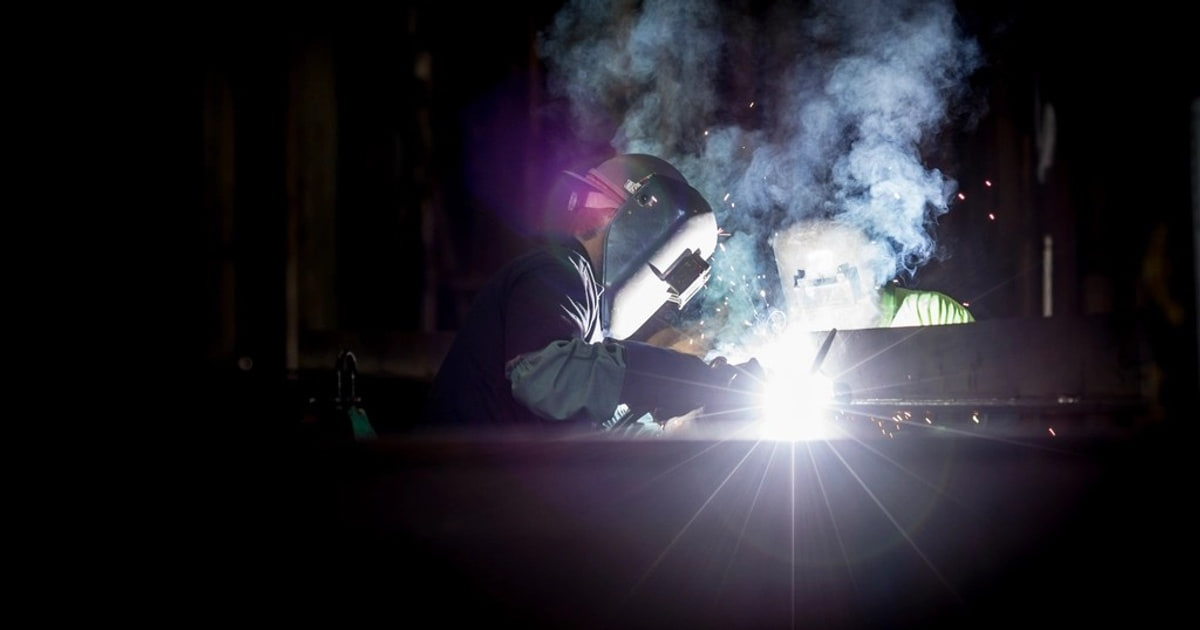
A welding helmet is the one piece of gear you wear for every minute of arc time. If the lens is blurry or the tint is muddy, you squint. You chase the puddle instead of reading it. By the end of a long session your eyes ache and your neck hurts. The specs that matter here aren't glamorous: how clear the glass is, how much of the joint you can see, how fast the lens darkens, and how the weight sits on your head.
Here's the honest part. No helmet in this category nails everything. The lightest, clearest shells cost the most by a wide margin, and the ones with the biggest windows tend to be the heaviest on your neck. Auto-darkening lenses still miss the occasional trigger when a sensor is buried against a pipe. True color glass helps you read a bead, but it won't fix bad technique. And every helmet here needs its sensitivity dialed in before low-amp TIG behaves.
Most people are choosing between a helmet that's good enough for weekend projects and one that'll survive a shop floor. That gap is real, but it's smaller than the price spread suggests. We looked at optical ratings, viewing area, sensor count, headgear design, and what owners say after a few hundred hours under the hood. We think that the Lincoln Electric VIKING 3350 is the best welding helmet for most people, and that the Miller Digital Elite is the one to buy if you weld a lot of low-amp TIG.
Everything we recommend
A huge, crystal-clear window in a helmet that isn't feather-light

Better low-amp TIG sensing, in a heavier shell

True color and a big window, with cheaper build quality

Add filtered air to top-tier optics, if your work demands it
Prices as of Oct 25, 6:48 AM PT · Details
At a glance
| Product | Lens type | Weight | Price | |
|---|---|---|---|---|
| 3M Speedglas Welding Helmet G5-01 with ADFUpgrade pick | — | 0.4 lb | $2,200 |
| Lincoln Electric K3034-4 VIKING 3350 Auto DarkeningTop pick | 4C lens, 1/1/1/1 | 1.41 lb | $495.24 |
| Miller Digital Elite™ Welding HelmetRunner-up | ClearLight 4X | 2 lb | $355 |
 | Optrel Crystal 2.0 Auto-Darkening Welding Helmet 1006.900Also consider | Crystal lens, shade 2.0 | — | $574 |
 | JACKSON SAFETYAlso in lineup | Fixed shade 10 | 1.53 lb | $83 |
| YESWELDER Large-View Welding HelmetBudget pick | True color, 1/1/1/1 | — | $49.99 |
Prices as of Oct 25, 6:48 AM PT · Details
How we picked
Optical clarity. We prioritized helmets with a 1/1/1/1 rating, the top score across the four ANSI Z87.1 and EN 379 measurements. Anything less means visible blur or shade shift somewhere in the window, usually toward the edges.
Viewing area. Manufacturer spec sheets gave us the window dimensions, and we treated roughly 3.5 square inches as the floor. Bigger windows matter most on pipe and structural work, where you can't just move your head.
Sensors and switching. We looked for four or more arc sensors and a quoted switching speed of at least 1/20,000 second. Fabrication-trade coverage points to four sensors as the threshold for reliable triggering in shadowed positions.
Comfort over a shift. We compared headgear design, adjustment range, and stated weight, then weighed those against owner feedback about pressure points and neck fatigue after long sessions.
Standards and parts. Every helmet had to meet ANSI Z87.1, which OSHA requires for welding eye and face protection. We also favored brands with easy access to cover lenses, grind shields, and replacement headgear.
Top pick
A huge, crystal-clear window in a helmet that isn't feather-light
Lincoln Electric K3034-4 VIKING 3350 Auto Darkening
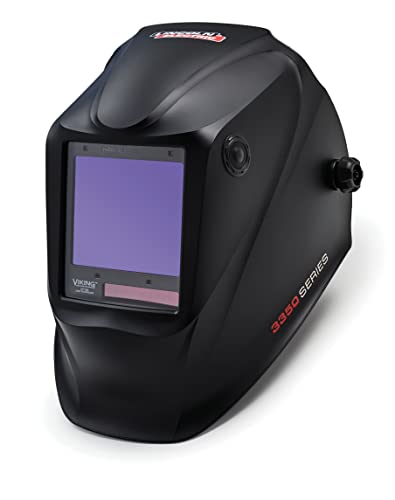
The VIKING 3350 pairs a perfect 1/1/1/1 optical rating with a 12.5-square-inch window, so you can see the joint and the puddle without moving your head. It's not the lightest helmet here, but the X6 headgear spreads the load better than anything near it.
$495.24fromAmazonPrices as of Oct 25, 6:48 AM PT · Details
The optics are the whole reason to buy this one. A 1/1/1/1 rating is the top score on the ANSI and EN scales, and it's earned across four separate measurements: blurriness, distortion, shade consistency, and angle uniformity. In practice that means the edges of the window look like the middle. You don't get that faint fishbowl warp that makes you second-guess where your tungsten is sitting.
Then there's the window itself. At 12.5 square inches, it's an extra-large lens even by professional standards, and the difference shows up most on long structural runs and pipe work. You can see the tack you're heading toward and the one behind you. If you've been welding through a small letterbox, the first few minutes in this thing feel strange.
Comfort is where a lot of good lenses get let down, and Lincoln's X6 headgear is the reason this one doesn't. It spreads weight across more of your skull instead of hanging it off your forehead. The hat-size range runs from 6 1/2 to 8, so it fits most heads without the ratchet bottoming out. Owners who wear it through full shifts consistently report that pressure points show up late, if at all.
The accessory ecosystem is the quiet advantage. Grind shields, magnifying cheaters, cover lenses, and headgear parts are all easy to find, which matters more than it sounds. A helmet you can keep feeding parts to lasts years longer than one you throw out when the outer lens crazes. Published reviews of this line keep landing on the same conclusion: it's the safe recommendation.
Flaws but not dealbreakers
It's a big helmet. At about a pound and a half it's heavier than the premium shells, and the extra-large shell sticks out further from your face. You'll notice that the first time you try to weld inside a tight corner. If most of your work happens in confined spaces, the standard-size version makes more sense.
The controls also sit inside the shell, so changing shade or sensitivity means flipping up and reaching in. Optrel and ESAB both let you do it from the outside. It's a minor annoyance, but it's a real one when you're switching between grinding and welding all afternoon.
Lincoln backs the VIKING 3350 with a five-year hassle-free warranty.
Runner-up
Better low-amp TIG sensing, in a heavier shell
Miller Digital Elite™ Welding Helmet
The Digital Elite's four sensors and X-Mode arc detection keep the lens dark when your sensors are blocked or the sun's in your face. If you run TIG under 10 amps or weld outdoors, that reliability matters more than a bigger window does.
$355fromAmazonPrices as of Oct 25, 6:48 AM PT · Details
Low-amp TIG is where auto-darkening helmets embarrass themselves. Below about 10 amps the arc puts out so little light that a lazy sensor just shrugs, and you get flashed. Miller built this helmet around that problem. Four independent sensors watch for the arc, and the sensitivity range reaches further down than most helmets in this class manage.
X-Mode is the feature that earns the gap over cheaper helmets. Instead of relying on light alone, it senses the weld electromagnetically. Cover the sensors with your hand, weld behind a flange, or step into direct summer sun, and the lens still darkens. Anyone who's had a helmet quit on them mid-bead while lying under a truck frame will understand why that's worth something.
ClearLight 4X is Miller's answer to the green-tint problem. The lens transmits more light in the dark state, so the puddle reads closer to its real color and the surrounding metal doesn't vanish into a murky wash. Miller frames it as increased light transmission over standard auto-darkening filters, and owner feedback lines up with that: less eye fatigue by the end of a shift.
AutoSense adjusts sensitivity on its own as you move between a bright bay and a dark corner, and InfoTrack logs arc time and arc count. If you bill by the job, that second one is genuinely useful for quoting. If you're a hobbyist, you'll switch it on once and then forget it exists.
Flaws but not dealbreakers
It's the heaviest of our top three at around two pounds, and the weight sits differently than the VIKING's does. Owners who switch between the two often mention more neck fatigue with the Miller by hour six.
The viewing window is smaller than the extra-large Lincoln's, which is a real trade-off on pipe. And the digital menu, while capable, buries settings a couple of layers deep. You'll want the manual nearby for the first week.
Budget pick
True color and a big window, with cheaper build quality
YESWELDER Large-View Welding Helmet
This YESWELDER gives you a 1/1/1/1 lens, true color glass, and a 3.94-by-3.66-inch window for a fraction of what the professional helmets cost. The shell and headgear feel like the compromise, but the optics you actually look through don't.
$49.99fromAmazonPrices as of Oct 25, 6:48 AM PT · Details
The lens punches far above what you'd expect at this end of the market. You get the same 1/1/1/1 optical rating as helmets costing several times more, plus true color technology that pulls the green cast off the puddle. Four sensors handle MIG and stick without drama, and the quoted switching speed of 1/30,000 second is faster than what most mid-range helmets claim.
The window is the other reason to look here. At 3.94 by 3.66 inches it's genuinely large, and the dark shades span 5 through 9 and 9 through 13, with a grind mode built in. That range covers plasma cutting, TIG, MIG, and stick, which is most of what a home shop throws at a helmet. You won't outgrow the specs quickly, and it takes magnifying lenses for close-up work.
Power comes from a solar panel up front feeding a lithium cell in back, which is the arrangement we'd want at any price. The panel carries part of the load while you weld, so the battery lasts longer than it would on its own. A spare CR2450, two replacement cover lenses, and a storage bag come in the box.
Flaws but not dealbreakers
The build is where the savings live. It's the heaviest helmet here at roughly two and a half pounds, and the polypropylene shell and headgear don't have the damped, solid feel of the Lincoln or the Miller. Owner feedback is more mixed than for the professional helmets, and the recurring complaints land on headgear adjustment and long-term durability rather than on the lens.
Support is thinner too. If something fails a couple of years in, parts and service are harder to come by than they are with the big welding brands.
Upgrade pick
Add filtered air to top-tier optics, if your work demands it
3M Speedglas Welding Helmet G5-01 with ADF
This is the full 3M kit: the G5-01 heavy-duty helmet, the variable-color ADF, and the Adflo powered air respirator that filters the fumes you'd otherwise be breathing. If you weld stainless or galvanized in a confined space, nothing else here comes close.
$2,200fromAmazonPrices as of Oct 25, 6:48 AM PT · Details
Buy this one for your lungs, not just your eyes. The Adflo powered air purifying respirator pushes filtered air into the shell, so you're not pulling hexavalent chromium out of a stainless weld all day. Fume exposure is the injury that shows up twenty years later, and no amount of lens clarity does anything about it. That's the case for the G5-01 in a sentence.
The filter is excellent on its own terms. Variable Color Technology gives you three color settings to choose from rather than one fixed tint, so you can tune the view to the process instead of living with whatever the factory picked. Dark shades run 5 and 8 through 13, with a dedicated tack-welding setting, and 3M rates the switch from light to dark at 1/20,000 second.
There's a phone app, which sounds like a gimmick and mostly isn't. You can program up to ten memory modes from your phone instead of poking at buttons with gloves on. It also logs hours on, hours in the dark state, hours in the light state, and on/off cycles. That's how a shop actually tracks maintenance on gear that gets shared between people.
Weight is the reason professionals tolerate the premium. Helmets in this tier are built to keep the head-worn portion under 500 grams, and that difference compounds across an eight-hour shift. Add the respirator belt and you're carrying more overall, but the load moves to your hips instead of your neck. Owners who spend full days in the hood describe that shift as significant.
Flaws but not dealbreakers
It's by far the most expensive setup here, and the gap isn't small. The respirator adds a blower, a belt, a battery, and filters you'll replace on a schedule, which means real ongoing cost and real ongoing maintenance.
3M sells this as industrial and occupational equipment rather than consumer gear, so buying it, servicing it, and sourcing parts can be less straightforward than walking into a welding supply. If you weld mild steel in an open garage, you're paying for protection you don't need.
Who this is for
If you're buying your first auto-darkening helmet, or replacing a fixed-shade hood you've been nodding down for years, any of our picks will be an upgrade you feel immediately. Students, hobbyists, and weekend fabricators should look hard at the budget pick first. Pros who spend most of a day under the hood should go straight to the top pick or the runner-up, because headgear comfort and parts availability start to outweigh everything else once you're welding full time.
This guide covers auto-darkening welding helmets for MIG, TIG, stick, and plasma cutting, plus one powered-air setup for people who weld stainless or galvanized in tight spaces. We don't cover fixed-shade hoods as a primary recommendation, standalone replacement lenses, or full supplied-air systems. And if you only run a few beads a year and never in a confined space, you don't need a respirator-integrated helmet.
How we picked
Optics: we started with the 1/1/1/1 rating, the best possible score across blur, distortion, shade consistency, and angle uniformity. Viewing area: bigger windows help most on pipe and structural work, so we favored large lenses over compact shells. Sensors and speed: four or more arc sensors and a switching speed of at least 1/20,000 second, since missed triggers are what actually flash you. Comfort: headgear design and weight distribution decided as much as raw grams, because a well-balanced pound and a half beats a badly hung pound. Standards: ANSI Z87.1 compliance is non-negotiable, and OSHA requires it for welding eye and face protection.
Other welding helmets worth considering
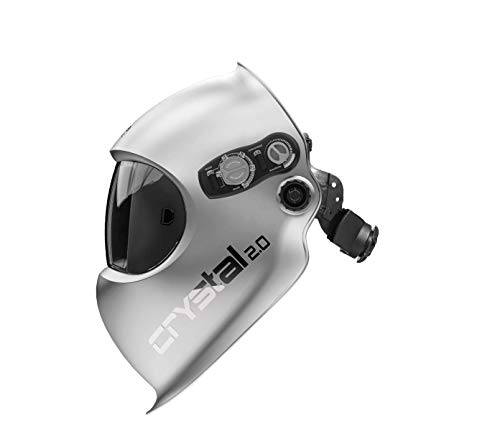
If you want the clearest light state and hands-off shade control: The Optrel Crystal 2.0 Auto-Darkening Welding Helmet 1006.900 — The Crystal 2.0's headline trick is a shade 2.0 light state, which is about as close to clear glass as an auto-darkening lens gets. You can see the joint, your filler, and your hands before the arc strikes. Autopilot then picks a dark shade anywhere from 4 to 12 on its own as the arc brightness changes, and the Twilight feature eases the lens back toward light instead of snapping, which softens the little jolt your eyes take between beads. External grind-mode controls mean you never lift the hood to switch. What you give up is a window that isn't as large as the Lincoln's, and a level of automation some welders simply don't want. If you like setting your own shade and leaving it there, you'll fight this helmet.
The competition
This is what our research surfaced, not a census of everything on the market. Welding helmets turn over constantly, and plenty of decent options never made this list because there wasn't enough independent coverage to judge them fairly.
The JACKSON SAFETY — The Jackson Safety HSL100 is a fixed shade 10 hood rather than an auto-darkening helmet, and this listing is a bulk case of ten. The narrow shell is genuinely good in tight spaces, the extended front adds throat protection, and it's hard-hat adaptable and ANSI Z87.1 compliant. Jackson sells auto-darkening filters that drop into it later, including the Insight, NexGen, and TrueSight II, and select configurations work with PAPR and supplied-air respirator systems. It lost to our picks because a fixed shade means nodding the hood down for every tack, and that gets old fast. But if you're outfitting a shop, a classroom, or a crew, buying ten shells now and adding filters later is a sensible way to do it.
Care and maintenance
Your outer cover lens is a consumable, so treat it like one. Spatter pits it, grinding dust hazes it, and a scratched cover lens will convince you the helmet's optics have gone bad when they haven't. Keep two or three spares on the bench and swap them the moment the view looks dull. Wipe the shell and lens with a soft dry cloth rather than solvents, which can craze polycarbonate. Wash the sweatband when it starts to smell, and check the headgear ratchet and pivots every few months, because loose pivots are the usual reason a helmet won't stay up. Store it lens-down in a bag or drawer, out of direct sun, with a spare cell in your toolbox.
Questions we get
What's the best welding helmet for beginners?
Start with an auto-darkening helmet that has four sensors and a 1/1/1/1 optical rating, and don't overspend on features you won't touch. Our budget pick hits both marks with a large window and a wide shade range. The one thing to learn early is sensitivity adjustment, because a helmet set too sensitive will darken every time someone strikes an arc across the shop.
Is a 1/1/1/1 optical rating worth paying extra for?
For most people, yes. The rating covers four separate measurements: optical clarity, diffusion of light, variation in luminous transmittance, and angular dependence. A lower score means blur, warp, or shade shift somewhere in the window, usually toward the edges. You won't spot it as an obvious defect. You'll feel it as eye strain after an hour.
What's the difference between true color and traditional green-tint lenses?
Standard auto-darkening filters wash everything in green, so you're reading the puddle by shape and brightness alone. True color and natural color lenses pass more of the visible spectrum, so the puddle and the metal around it look closer to their real colors. That makes it easier to tell when a bead is running hot or cold. It's a comfort and accuracy upgrade, not a safety one.
How many arc sensors should a welding helmet have?
Four is the number to aim for. Trade coverage points to four or more as the threshold for reliably catching the arc when a sensor sits in shadow, which happens constantly in pipe work and tight corners. Two-sensor helmets are fine for open bench work on flat plate. If you weld in awkward positions, the extra sensors are cheap insurance against a flash.
Can I use a welding helmet with a respirator or PAPR system?
Some helmets are built for it and most aren't. Our upgrade pick ships as a complete kit with a powered air purifying respirator integrated into the shell. The Jackson Safety HSL100 is compatible with select PAPR and supplied-air systems as well. Don't improvise, though: a half-mask worn under a helmet that wasn't designed for one usually breaks the seal, the fit, or both.
What shade should I use for MIG versus TIG?
Shade depends on amperage more than on process. As a rough guide, low-amp TIG under 50 amps sits around shade 8 to 10, while MIG and stick at higher currents want 10 to 13. Start one shade darker than you think you need, then step lighter until you can see the edge of the puddle clearly. A variable-shade helmet makes that a knob turn instead of a lens swap.
Why you should trust us
For this guide:
- We read manufacturer specification sheets from Lincoln Electric, Miller, 3M, ESAB, and Optrel, and compared their stated optical ratings, shade ranges, sensor counts, and switching speeds against the ANSI Z87.1 framework described by the International Safety Equipment Association.
- We reviewed published coverage from welding trade outlets alongside OSHA's eye and face protection requirements under 29 CFR 1926.102 to set our thresholds.
- We looked for recurring themes in owner feedback, especially around headgear comfort, long-term durability, and low-amp TIG triggering, rather than leaning on any individual account.
- We read owner reviews on every listing, weighted toward the critical ones, because that is where the recurring failures show up.
- We have a systematic way of automatically fetching the latest prices, so the numbers on this page stay current.
- This is a research-focused guide, so the team may not own every product listed — though we often do own the top winners, which gives us extra context for the recommendations.
- We don't accept free products, and the retailer commission never changes which product we recommend.
Sources
Speedglas G5-01 Welding Helmet Technical Data Sheet, 3M
VIKING 3350 Series Auto-Darkening Helmet Specifications, Lincoln Electric
Digital Elite Welding Helmet with ClearLight Lens, Miller Electric
Sentinel A50 Welding Helmet Product Page, ESAB
Crystal 2.0 Natural Color Welding Helmet, Optrel
OSHA Eye and Face Protection Standard 1926.102, OSHA
ANSI Z87.1 Eye and Face Protection Standard Overview, International Safety Equipment Association
Welding Helmet Reviews and Comparisons, Weld.com
How to Choose an Auto-Darkening Welding Helmet, Welding Tips and Tricks
Jackson Safety Insight Series Auto Darkening Filters, Jackson Safety
Best Welding Helmets for Home Shops, Family Handyman
Understanding Optical Clarity Ratings in Welding Lenses, Fabricating & Metalworking Magazine
Amazon product listings and owner reviews for all 6 products
Manufacturer specification pages for each product
Some passages in this guide may be paraphrased with AI help.
Product prices and availability are accurate as of the date/time indicated and are subject to change. Any price and availability information displayed on Amazon.com at the time of purchase will apply to the purchase of this product.
More like this.
Continue exploring home reviews and recommendations.

The Best Welders for Beginners
The first thing you learn about welding is that the machine matters less than the settings. Wire speed and voltage have to match the metal in front of…

The Best Enduro Mountain Bike Helmets
A full-face enduro helmet has one job on a rough descent: keep your face out of the rocks. Head injuries account for roughly 22 to 29 percent of mountain…

The Best Motorcycle Helmets
A helmet is the one piece of gear you wear on every ride, and it's the only one that matters in the half-second you can't control. NHTSA's crash analysis…

The Best Ski and Snowboard Helmets
A helmet earns its keep on ordinary days, not dramatic ones. You catch an edge on a flat traverse. Someone comes over a blind rollover behind you. Head…

The Best Wood Cutting Boards
A wood cutting board is the one tool on your counter that touches almost every meal. The good ones are heavy enough to stay put when you rock a knife…

The Best Pull-Down Kitchen Faucets
A kitchen faucet is the thing you touch most and think about least. You grab it with wet hands, greasy hands, a stockpot hooked in one arm. A pull-down…