The Best Motorcycle Helmets
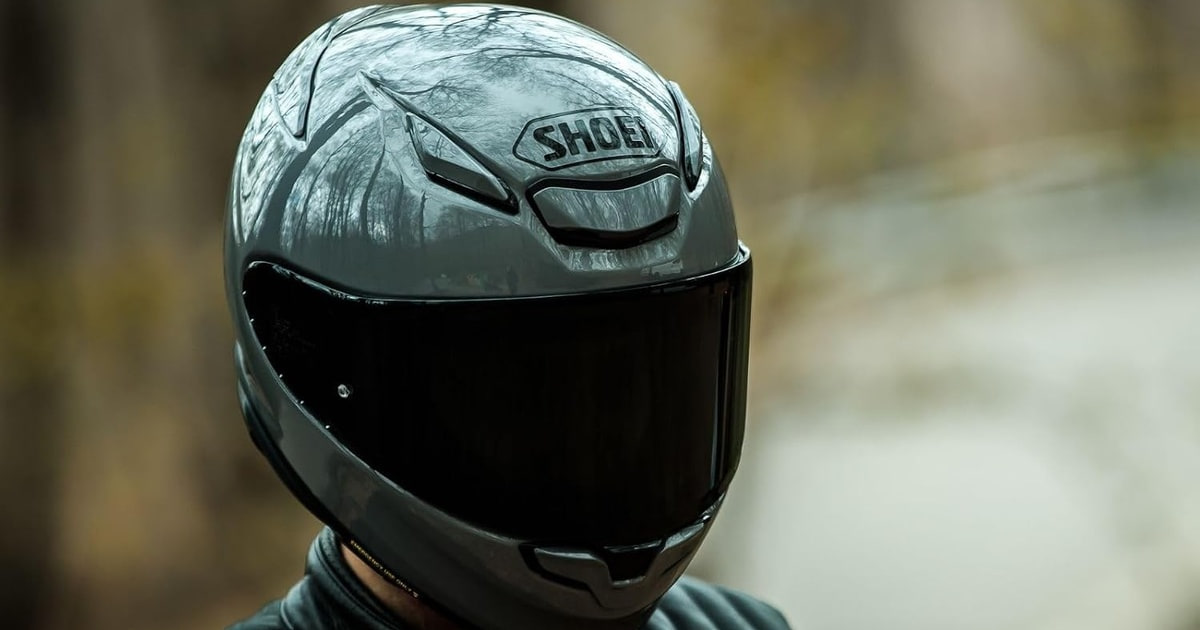
A helmet is the one piece of gear you wear on every ride, and it's the only one that matters in the half-second you can't control. NHTSA's crash analysis puts the numbers plainly: helmets cut rider fatality risk by 37% and brain injury risk by 67%. But you'll also live with this thing for hours at a stretch. A helmet that whistles at 70 mph, fogs at a stoplight, or presses a hot spot into your forehead by mile 40 is a helmet you'll ride less in. Protection and comfort aren't separate concerns here. They're the same concern.
Here's the honest caveat: no helmet on this list, or any list, can be fitted through a screen. Head shape is the whole ballgame. Some skulls are long and narrow, some are round, and a helmet engineered for one will pinch or float on the other. A properly fitted mid-range helmet protects you better in a real crash than a premium one that shifts when you check your blind spot. Certification labels tell you a helmet passed a lab test. They don't tell you it fits your head.
We also can't ignore that independent testing keeps finding gaps. The UK's SHARP program crash-tests helmets beyond what certification requires, and more than 30% of the helmets it rated between 2022 and 2024 scored just two stars out of five despite holding valid ECE approval. Certification is a floor, not a ranking. We think that the Shoei RF-1400 is the best motorcycle helmet for most people, and that the Schuberth C5 is the one to buy if you tour long distances and want the quietest ride you can get.
Everything we recommend

Quiet, aerodynamic, and it fits a wider range of heads

The quietest way to cover long miles, if you want a flip-up

Feathery on your neck, with the widest view of the road here
Flip-up convenience and rotational protection without the premium ask
At a glance
| Product | Safety Rating | Shell Material | Price | |
|---|---|---|---|---|
| Shoei RF-1400 Full Face Motorcycle HelmetTop pick | SNELL M2020, DOT | — | $549.99 |
 | Arai Corsair-X Black Helmet LargeAlso in lineup | DOT FMVSS 218 | PB SNC2 Super Fiber | $979.80 |
 | BELL Race Star DLX Flex HelmetAlso consider | DOT, ECE22.06 | 3K Carbon Fiber | $799.95On sale |
| AGV K6 S Full Face Motorcycle HelmetUpgrade pick | — | Carbon-Aramid Fiber | $639 |
| Schuberth C5 Modular Motorcycle HelmetAlso great | DOT FMVSS 218 | DFP Fiberglass | $899 |
 | HJC RPHA 1N Solid Motorcycle Helmet withAlso in lineup | DOT FMVSS 218 | P.I.M. Plus | $498.90 |
 | KLIM Krios Pro Adventure Motorcycle Helmet ECE/DOTAlso consider | ECE/DOT | Full Carbon Fiber | $749.99 |
| LS2 Helmets Strobe II Modular Motorcycle HelmetBudget pick | ECE 22.06, DOT | Kinetic Polymer Alloy | $169.98 |
How we picked
Certification tier. We treated DOT FMVSS 218 as the floor and gave real weight to ECE 22.06 and SNELL certification, since those standards test energy thresholds and impact angles that DOT does not. ECE 22.06's oblique impact protocol at 8.5 m/s was the single most important differentiator.
Shell and weight. We compared published shell constructions and manufacturer weight figures across carbon, carbon-aramid, fiberglass composite and polymer shells. Carbon-tier helmets land around 1,350 grams in medium, roughly a quarter lighter than polycarbonate at equivalent protection.
Noise at speed. We read published decibel measurements taken at 70 mph, where the class average sits between 91 and 96 dB. Anything meaningfully below that range signals real sound insulation rather than marketing copy.
Fit and head shape. We looked at how many shell sizes and liner sizes each manufacturer offers, and at owner feedback themes about which head shapes each brand suits. A helmet built in five shell sizes fits far more people well than one built in two.
Vision and venting. We compared stated horizontal fields of view and intake and exhaust counts from spec sheets. Wider apertures and front-to-back airflow paths consistently correlate with fewer fogging and heat complaints in published reviews.
Top pick
Quiet, aerodynamic, and it fits a wider range of heads
Shoei RF-1400 Full Face Motorcycle Helmet
The RF-1400 is a hand-laid fiberglass and organic-fiber full-face that meets both SNELL M2020 and DOT. Shoei's wind-tunnel work shows up where you notice it — less buffeting when you turn your head at speed, and a shell that stays settled behind a naked bike's windscreen.
$549.99fromAmazonIf you only buy one helmet, this is the one to start with. The RF-1400 doesn't win any single category outright. It's not the lightest, and it's not the quietest. What it does is finish near the top of every category at once, which is exactly what you want from a helmet you'll wear commuting on Tuesday and riding two hundred miles on Saturday. Most riders don't need a specialist. They need something that never gives them a reason to complain.
Shoei builds the shell from hand-laid interwoven fiberglass and lightweight organic fibers, and the company says it's their strongest and most elastic shell to date. Elasticity matters more than raw hardness. A shell that flexes slightly spreads impact energy across a wider area of the EPS liner underneath instead of concentrating it. That's the same principle behind the multi-density liners you'll find in every helmet on this list.
The aerodynamics came out of wind tunnel refinement of the previous RF-1200, and Shoei reduced both drag and lift in the process. In practice that means less neck strain on a long highway slog and less head-shake when a truck passes you. The CWR-F2 shield uses Vortex Generator shaping to break up turbulence at the visor edge, and the redesigned window bead seals tighter than the outgoing model.
Fit is where Shoei quietly earns its reputation. The multi-density EPS liner and in-shell fit system accommodate a wider spread of head shapes than most premium helmets, which are often tuned to one profile and unforgiving outside it. If you've bounced off Arai's rounder interior or found AGV too narrow, the RF-1400 is worth trying first. It's also SNELL M2020 certified, which requires a higher impact-energy threshold than DOT alone.
Flaws but not dealbreakers
This is a full-face with a fixed visor and no drop-down sun shade. If you ride into low sun on the commute home, you'll be swapping shields or wearing sunglasses under the helmet. Some riders don't care. Others find it a daily annoyance.
The RF-1400 carries SNELL M2020 rather than the newer M2024 or ECE 22.06, so it hasn't been through the oblique rotational impact protocol that the current European standard requires. That's not the same as saying it performs badly in angled impacts — the fiberglass shell and multi-density liner are built for energy spreading. But if a certification stamp for rotational testing is your dealbreaker, look at the Bell or the AGV instead.
There's no integrated communication system, and no dedicated recess for one either. You can fit an aftermarket unit, but the speaker pockets are shallower than what you'll find on helmets designed around Bluetooth from the start.
Also great
The quietest way to cover long miles, if you want a flip-up
Schuberth C5 Modular Motorcycle Helmet
The C5 is a German-engineered modular with a fiberglass shell reinforced with basalt, a drop-down sun visor, and a communication slot built for Sena's mesh system. WebBikeWorld's decibel testing put it around 85–87 dB at 70 mph, well under the 91–96 dB class average.
$899fromAmazonNoise is the thing touring riders complain about most, and it's cumulative. A helmet that's merely loud is fine for twenty minutes and exhausting after four hours. WebBikeWorld measured the C5 at roughly 85–87 dB at 70 mph with the visor closed — among the lowest readings recorded for any modular helmet, against a class average in the low-to-mid 90s. Decibels are logarithmic, so that gap is bigger than the numbers suggest.
The flip-up chin bar changes how you use a helmet, not just how it looks. Gas stops, tollbooths, ordering lunch, talking to your riding partner at a light — you do all of it without pulling the helmet off. If you wear glasses, the difference is bigger still. Modular helmets used to carry a real safety compromise for that convenience. ECE 22.06 now tests them in both the closed and open positions, which has largely closed that gap.
Schuberth uses Direct Fiber Processing to lay the fiberglass, reinforced with basalt fiber for shock absorption. XS through L come in around 3.9 pounds, XL and up around 4.2. That's heavier than the carbon helmets here, and it's the trade you make for a hinged chin bar and the sound insulation. The dual chin intakes run through a washable filter, and the rear spoiler channels exhaust air out the back.
The interior padding is adjustable in thickness at the sides, back and cheeks in M, L and XL, so you can tune the fit rather than accept it. The visor also has a memory function — crack it open at a light, close the chin bar, and it returns to where you left it. Small thing, but it's the kind of detail you notice a hundred times a season.
Flaws but not dealbreakers
It's the heaviest helmet in this guide by a clear margin, and on a naked bike with no fairing you'll feel that weight in your neck after a few hours. Riders on touring bikes with proper wind protection are the intended audience here.
The Amazon listing confirms DOT FMVSS 218 certification. Schuberth's ECE 22.06 homologation applies to its European-market helmets, so if the dual certification matters to you, verify it on the specific unit you're buying.
The communication system is a separate purchase, and the C5 is designed around a specific Sena module rather than accepting any generic kit. That's convenient if you buy into the ecosystem and limiting if you already own something else.
The C5 comes with a five-year manufacturer warranty.
Upgrade pick
Feathery on your neck, with the widest view of the road here
AGV K6 S Full Face Motorcycle Helmet
The K6 S pairs a carbon-aramid shell with a 190-degree horizontal visor opening, and AGV lists it around 1,350 grams in medium. That's roughly 25–30% lighter than a comparable polycarbonate helmet, which is the difference between a fresh neck and a sore one at hour four.
$639fromAmazonWeight is the spec that sneaks up on you. A few hundred grams sounds trivial in the store and feels like nothing on a short ride. Then you spend six hours in the saddle, and every head-check has been carrying that extra mass. AGV puts the K6 S at approximately 1,350 grams in size medium — roughly a quarter to a third lighter than a polycarbonate helmet offering equivalent protection. Your neck notices.
The 190-degree field of vision is the other reason to pick this one. Most full-face helmets frame the road like a letterbox, and you compensate by turning your whole head. The K6 S widens the aperture enough that peripheral movement — a car drifting into your lane, a dog at the shoulder — lands in your vision instead of your blind spot. For city riding, that's a safety feature disguised as a comfort feature.
The carbon-aramid composite gets its aerodynamics from AGV's MotoGP program, including an integrated rear spoiler that keeps the helmet stable across tucked and upright riding positions. Multiple front intakes and rear extractors run air through the shell, and the vents are big enough to work with gloves on. The interior is removable, washable and treated with a moisture-wicking dry fabric, with reflective inserts on the neck roll.
It's ECE 22.06 certified, which means it went through the oblique impact protocol at 8.5 m/s that the older 22.05 standard skipped entirely. Since most real crashes involve angled impacts rather than a clean perpendicular strike, that testing is more representative of what actually happens when a bike goes down.
Flaws but not dealbreakers
AGV interiors run narrow and long. If you have a round head shape, the K6 S will likely press at your temples in a way that no amount of pad swapping fixes. Try one on before committing, or buy from somewhere with a genuinely painless return policy.
Carbon-aramid costs money, and this sits at the expensive end of the lineup. The weight and visibility gains are real, but they're refinements over the Shoei rather than a different tier of protection.
Like the Shoei, there's no drop-down sun visor. On a helmet in this class, some riders expect one.
Budget pick
Flip-up convenience and rotational protection without the premium ask
LS2 Helmets Strobe II Modular Motorcycle Helmet
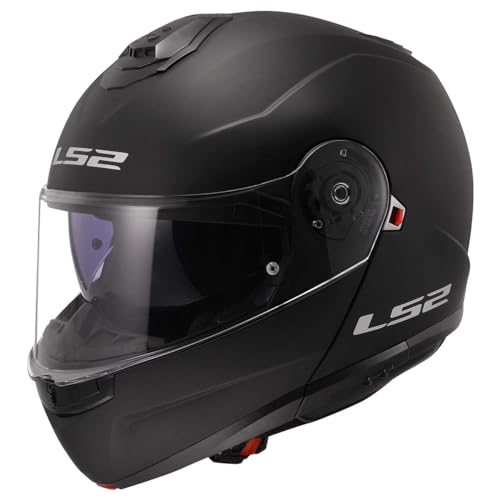
The Strobe II is a modular with a Kinetic Polymer Alloy shell, a built-in drop-down sun shield, and LS2's AREM rotational energy management. It meets ECE 22.06 rotational requirements and DOT FMVSS 218, which is unusual at this price level.
$169.98fromAmazonDual certification at this price is the whole argument for the Strobe II. It meets ECE 22.06's rotational energy management requirements through LS2's AREM system, and it's DOT FMVSS 218 approved. Most budget flip-ups clear DOT and stop there. Getting the newer European standard — the one that added oblique impact testing at 8.5 m/s specifically to measure rotational force on the brain — puts this helmet in a much smaller group.
The Kinetic Polymer Alloy shell flexes to manage energy rather than resisting it rigidly. It's heavier than fiberglass and considerably heavier than carbon, which is the honest trade for the price. At about five pounds you'll know it's there on a long day. For a commute, or weekend rides in the two-hour range, it's perfectly manageable.
The drop-down sun shield is the feature you'll use most and think about least. Flick it down for the glare on the westbound ride home, flick it up when you hit a tunnel. Neither the Shoei nor the AGV gives you that. The main shield is Pinlock-ready too, though the Pinlock insert itself is a separate purchase.
For a new rider, this is a sensible first helmet. The chin strap is a quick-release design rather than double D-rings, which is easier to get right with gloves on and harder to fumble. Helmet fit matters more than helmet price, and a well-fitting Strobe II beats a premium lid that floats on your head.
Flaws but not dealbreakers
It's a heavy helmet, and the weight distribution of any modular puts extra mass at the chin. Long highway days will tire your neck faster than the carbon options here.
Owner feedback on budget modulars consistently points to wind noise as the weak spot, and the hinge and chin bar seals are where that noise gets in. Plan on earplugs for highway riding — which, frankly, is good practice in any helmet.
The Pinlock anti-fog insert is sold separately. In cold or wet weather you'll want it, so budget for the add-on rather than assuming the shield alone handles fogging.
Who this is for
This guide is for anyone shopping for a street helmet — commuters, weekend riders, tourers and track-day riders on public roads. If your current helmet is more than five years old, buy now regardless of how it looks. Cycle World's long-term wear reporting found measurable EPS foam compression in helmets past 40,000 miles, which matches the standard advice to replace on a five-year cycle even without a crash. If you've dropped a helmet hard or crashed in one, replace it immediately. The liner is a one-use component.
We've stuck to full-face, modular and adventure helmets, since those cover the overwhelming majority of riders and offer the most protection. We haven't covered half-helmets or open-face designs, which leave your chin and jaw exposed. We also haven't covered dirt-only or race-only helmets that aren't street legal. And one caution: nothing here substitutes for trying a helmet on. Buy from a retailer with a return policy you're comfortable using, and send back anything that presses a hot spot or shifts when you shake your head.
How we picked
We built this guide from certification documents, manufacturer spec sheets, independent crash-test data and published review measurements, weighted by a handful of criteria. Certification: DOT is the floor; ECE 22.06 and SNELL matter because they test higher energy thresholds and, crucially, oblique rotational impacts. Shell and weight: carbon and carbon-aramid shells run about a quarter lighter than polycarbonate at equivalent protection, which shows up as less neck fatigue on long rides. Noise: published readings at 70 mph average 91–96 dB, so we flagged anything well below that. Fit: more shell sizes and liner sizes mean more riders get a genuinely close fit, and fit outranks price for real-world protection. Vision and venting: we compared field-of-view figures and intake and exhaust counts, since those drive fogging and heat complaints more than anything else.
Other motorcycle helmets worth considering
If you split your riding between pavement and dirt: The KLIM Krios Pro Adventure Motorcycle Helmet ECE/DOT ($749.99) — The KLIM Krios Pro is the adventure helmet to beat, and it's a genuinely different tool from the road helmets above. The shell is hand-laid full carbon fiber with resin distribution optimized for weight, and the liner uses Koroyd — a honeycomb structure that crushes uniformly on impact rather than compressing unevenly like standard EPS. It's ECE and DOT certified, and it takes a removable peak visor so you can run it goggle-and-peak in the dirt or strip it down for the highway slab. Klim also uses a Fidlock magnetic buckle instead of D-rings, and the company's own user research found that one-handed closure cut improper buckling by over 35%. What you give up is highway quietness — a peak visor catches wind, and no ADV helmet is as sealed as a dedicated road lid. If you never leave the pavement, the Shoei is the better buy.
If you want rotational protection in a sport helmet: The BELL Race Star DLX Flex Helmet ($799.95) — The Bell Race Star DLX Flex is one of the few street-legal helmets in this class with a genuine multi-layer approach to rotational energy. The Flex liner uses three separate impact layers tuned for low, mid and high-speed crashes, which is a more granular approach than the two-density liners most helmets use. The 3K carbon shell comes in five shell sizes with six liner sizes, so the fit lands closer to custom than almost anything else here. It meets DOT FMVSS 218 and ECE 22.06. The Ionic+ interior padding dries quickly and resists odor, which matters more than it sounds like it should in July. It loses to the Shoei mostly on everyday livability — it's a race-derived helmet with race-derived priorities, and the aggressive fit and ventilation bias suit a tucked riding position better than an upright commute.
The competition
These are the helmets our research surfaced alongside the picks, not a complete map of the market. Every one of them is a legitimate helmet from a serious manufacturer, and each lost out for specific reasons rather than because it's bad. If one of these fits your head better than our picks do, that's a good enough reason to buy it.
The Arai Corsair-X Black Helmet Large ($979.80) — The Arai Corsair-X is the helmet racers reach for, and there's real engineering behind the reputation. Arai's PB SNC2 shell is built from Super Fiber and other synthetic fibers, and the whole design philosophy is about glancing off a surface rather than resisting it — the smooth, round shell shape and the X Type 12 air diffusers exist to help the helmet roll away from an impact instead of catching and jerking your neck. The VAS face shield lowers the pivot point below the impact line for the same reason. It's DOT certified and ships with a clear anti-fog Pinlock insert. It didn't take the top spot because Arai's interior shape is famously round-oval and unforgiving of narrower heads, and because the Corsair-X sits at the very top of the price range in this guide. If you've worn Arai before and it fit, this is an easy recommendation.
The HJC RPHA 1N Solid Motorcycle Helmet with ($498.90) — The HJC RPHA 1N is the value play for sport riders, and it's close to the picks on paper. The P.I.M. Plus shell — HJC's premium integrated matrix — targets the same weight-to-strength territory as the carbon helmets here at a substantially lower price. Ventilation is the standout: five intakes and four exhausts running front to back, which is more airflow than anything else in this guide. It ships with the HJ-35 Pinlock-ready shield with 99% UV protection and a tool-less swap system, plus Bluetooth speaker pockets designed in rather than carved out. The listing confirms DOT FMVSS 218 approval. It lost to the Shoei on the strength of Shoei's fit range and Snell certification, but if you want race-helmet ventilation without the premium spend, this is the one to look at.
Fit, care and replacement
Fit first: a helmet should press evenly all the way around, with cheek pads snug enough that your cheeks squish. Shake your head hard — if the helmet moves independently of your scalp, it's too big. Nearly everyone buys a size too large the first time. Pressure that turns into a headache after twenty minutes means it's too small or the wrong head shape, and that's not something a break-in period fixes. For upkeep, pull the liner and wash it every few weeks in summer, since salt and sweat break down the fabric. Clean the shield with warm water and your fingers only — paper towels scratch the anti-fog coating, and solvents can craze polycarbonate. Never hang a helmet on a mirror or a handlebar, which dents the EPS where you can't see it. Replace it after any real impact, and replace it around five years regardless. The foam compresses with use even when nothing dramatic happens.
Questions we get
What's the difference between DOT, ECE 22.06, and SNELL certification?
DOT FMVSS 218 is the US legal minimum, and manufacturers self-certify against it. ECE 22.06 is the European standard, it requires batch testing by an accredited lab, and it added oblique impact testing at 8.5 m/s to measure rotational force on the brain — something the older ECE 22.05 skipped entirely. SNELL is a voluntary premium standard with higher impact energy thresholds; the M2024 cycle raised those roughly 10% over M2020 and added a flat-anvil crown impact test. More stamps generally means more testing, though none of them measure fit.
Are modular flip-up helmets as safe as full-face helmets?
The gap has largely closed. ECE 22.06 requires modular helmets to be tested in both the closed and open chin bar positions, so a certified flip-up has to hold up either way. Modulars are still heavier because of the hinge mechanism, and the extra mass sits forward at the chin. Ride with the chin bar locked down — the open position is for stoplights and gas stops, not the highway.
How long does a motorcycle helmet last before it needs replacing?
About five years from the date of manufacture, or immediately after any significant impact. The EPS foam liner is a single-use component that crushes to absorb energy and doesn't spring back. Cycle World's long-term wear reporting found measurable foam compression in helmets past 40,000 miles even without a crash, which lines up with the standard five-year guidance. A dropped helmet that landed hard on a hard surface should be replaced too, even if the shell looks fine.
Is a carbon fiber helmet worth it over fiberglass?
It depends on how long you ride at a stretch. Carbon and carbon-aramid shells run roughly 20–30% lighter than polycarbonate at equivalent protection levels — the AGV K6 S comes in around 1,350 grams in medium. Over a two-hour ride that's a modest difference. Over eight hours it's the reason your neck isn't aching. Carbon isn't inherently safer, though; it's the same protection with less mass.
How tight should a helmet fit?
Snug enough that it moves your scalp when you rotate it, with no gaps at the crown or temples and cheek pads that noticeably compress your cheeks. It should feel slightly too tight for the first fifteen minutes — the padding breaks in a bit, the shell and liner do not. If you can slide two fingers between your forehead and the liner, go down a size. If you get a sharp pressure point that turns into a headache, it's the wrong head shape rather than the wrong size.
Can I add Bluetooth to any helmet, or do I need a Bluetooth-ready model?
You can fit a universal kit to almost any helmet, but Bluetooth-ready models make it much cleaner. Helmets like the HJC RPHA 1N have molded speaker pockets that leave room for drivers without pressing on your ears. Others, like the Schuberth C5, are designed around a specific communication module that drops into a dedicated slot. On a helmet with no speaker recesses, thick speakers can create a pressure point over a long ride.
Why you should trust us
For this guide:
- We read manufacturer specification sheets, certification documentation from UNECE and the Snell Memorial Foundation, and independent crash-test results from the UK SHARP program.
- We compared published decibel measurements taken at highway speed, stated weights by size, shell and liner construction, and field-of-view figures across every helmet in this guide.
- We reviewed recurring themes in owner feedback — particularly around head shape fit, wind noise and fogging — to identify the flaws that show up after months of riding rather than in a spec sheet.
- We read owner reviews on every listing, weighted toward the critical ones, because that is where the recurring failures show up.
- We have a systematic way of automatically fetching the latest prices, so the numbers on this page stay current.
- This is a research-focused guide, so the team may not own every product listed — though we often do own the top winners, which gives us extra context for the recommendations.
- We don't accept free products, and the retailer commission never changes which product we recommend.
Sources
Best Motorcycle Helmets — RevZilla Common Tread, RevZilla
Motorcycle Helmet Reviews, Tests & Ratings — WebBikeWorld, WebBikeWorld
SHARP Helmet Safety Ratings — Full Database, SHARP (UK Department for Transport)
UN Regulation No. 22 — Protective Helmets for Motorcycles (ECE 22.06), UNECE
Snell M2024 Helmet Standard Overview, Snell Memorial Foundation
Motorcycle Safety — Helmet Effectiveness Data, NHTSA
Best Motorcycle Helmets of 2026 — Cycle World, Cycle World
Best Motorcycle Helmets Tested — Motorcyclist Magazine, Motorcyclist Magazine
MIPS Brain Protection Technology Explained, MIPS AB
Best Adventure Motorcycle Helmets — RideADV, RideApart
Motorcycle Helmet Noise Testing Methodology — WebBikeWorld, WebBikeWorld
How to Choose the Right Motorcycle Helmet — MSF, Motorcycle Safety Foundation
Amazon product listings and owner reviews for all 8 products
Manufacturer specification pages for each product
Some passages in this guide may be paraphrased with AI help. Prices are refreshed automatically.
More like this.
Continue exploring electronics reviews and recommendations.

The Best Enduro Mountain Bike Helmets
A full-face enduro helmet has one job on a rough descent: keep your face out of the rocks. Head injuries account for roughly 22 to 29 percent of mountain…

The Best Ski and Snowboard Helmets
A helmet earns its keep on ordinary days, not dramatic ones. You catch an edge on a flat traverse. Someone comes over a blind rollover behind you. Head…

The Best Welding Helmets
A welding helmet is the one piece of gear you wear for every minute of arc time. If the lens is blurry or the tint is muddy, you squint. You chase the…

The Best Motorcycle Jackets And Gloves
Gear is the part of riding you notice every day, long before you ever need it. A jacket that's too warm stays on the hook, and gloves that pinch turn a…

The Best Motorcycle GPS Navigation Devices
A phone in a handlebar clamp works right up until it doesn't. Then you're squinting at a washed-out screen in afternoon sun, or watching the map freeze…

The Best Heated Motorcycle Grips
Cold hands ruin a ride faster than anything else. Your fingers go numb, your grip gets sloppy, and you start planning stops around gas-station hand…