The Best Gifts for Birdwatchers
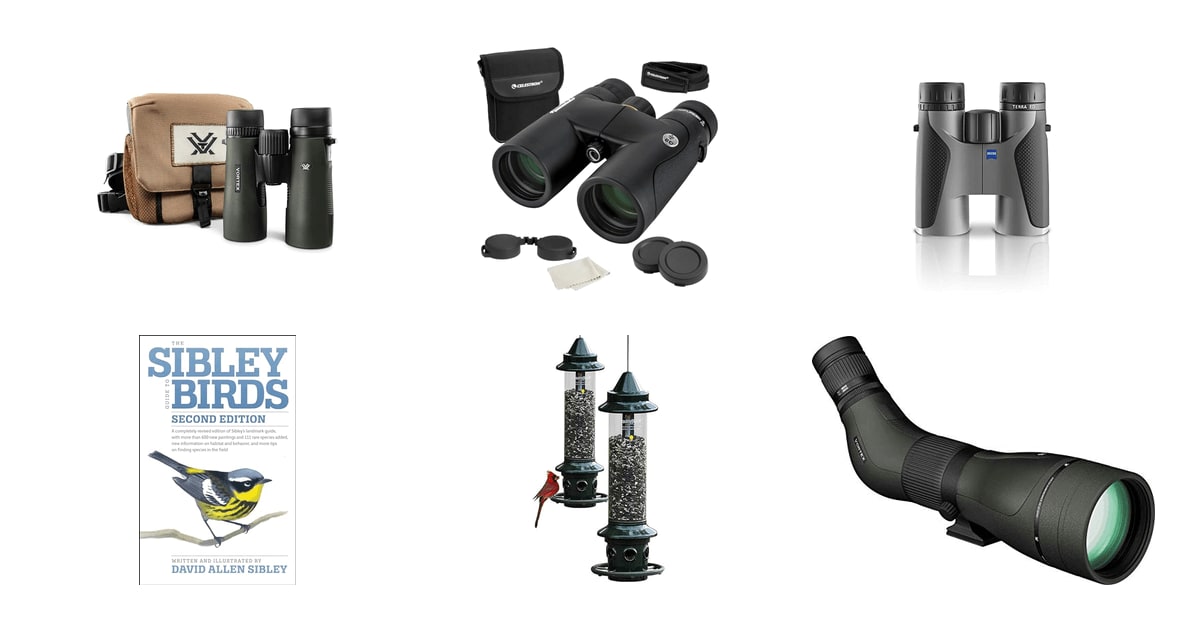
Birdwatching is a hobby with a low floor and no ceiling. Someone can start by noticing a cardinal at the kitchen window and end up driving four hours for a rare warbler. That makes it a wonderful hobby to shop for, because the right gift moves someone up a level. Better glass turns a brown smudge into a wren. A good field guide turns a sighting into a name. And a feeder turns a backyard into a daily show your recipient will text you about.
But birding gear is easy to get wrong. Binoculars are the most-wished-for gift in the category — a Birds & Blooms reader survey put them first by a wide margin — and they're also the item most likely to already be sitting in a closet. Serious birders have strong opinions about magnification, eye relief and glass. Feeders depend on a yard your recipient may not have. Nothing here works for everyone, so the trick is matching the gift to how they actually bird.
So think about where your person sits. A beginner needs their first real pair of binoculars and a book. A dedicated birder who already owns both needs range, or a splurge, or something unexpected. Our favorite gift here is the Vortex Diamondback HD 8x42, and the Sibley Guide to Birds is the safe choice when you're less sure of their taste or how much gear they already own.
Everything we recommend

Serious glass, a no-questions warranty, and it unwraps beautifully
For the birder who's still using a hand-me-down pair
$239 from Amazon
The one birding book almost nobody already regrets owning
For the birder who names everything but wants to be sure
$20.84 from Amazon
Real ED glass without the real-glass spending
For someone just discovering the birds in their own backyard
$185.99 from Amazon
German glass that makes gray mornings look bright
For the birder who's out at dawn no matter the weather
$469.86 from Amazon
Ends the squirrel problem without batteries or bother
For the person losing a daily war with backyard squirrels
$250 from Amazon
For the birder who chases shorebirds and distant raptors
$499 from Amazon
For the backyard watcher curious about the 3 a.m. visitors
$169.99 from AmazonHow we picked
The right binocular spec. We leaned on the American Birding Association and published optics reviews to settle on 8x42 as the configuration to prioritize, since it balances a steady handheld image against low-light performance. Anything with less light-gathering than a 42mm objective got deprioritized for a gift.
Glass quality. We looked for fully multi-coated optics at minimum and extra-low dispersion glass wherever the spec sheets listed it, because ED glass is what removes color fringing on birds seen against a bright sky. Reviewers consistently flag it as the single upgrade worth paying for.
Warranty and risk. Gifts get dropped, rained on and handed down, so we weighted manufacturer warranty terms heavily. An unconditional, transferable lifetime warranty is worth more on a gift than a small optical edge.
Comfort for glasses wearers. Bird Watcher's Digest recommends at least 15mm of eye relief for people who wear glasses, so we favored binoculars with adjustable twist-up eyecups. It's the spec most givers forget to check.
Range of recipients. We spread picks across optics, literature, backyard gear and long-range viewing so there's a match for a first-week beginner and for someone who already owns two pairs of binoculars.
Our favorite gift
Serious glass, a no-questions warranty, and it unwraps beautifully
Vortex Diamondback HD 8x42 Binoculars
For the birder who's still using a hand-me-down pair
These 8x42 binoculars hit the configuration experts recommend most, with ED-type glass that keeps colors honest. Vortex backs them with an unconditional lifetime warranty, so even if your recipient drops them off a boardwalk, they're covered.
$239fromAmazonIf you only give one birding gift, make it binoculars. The 8x42 setup is the one experts land on again and again, and for good reason. Eight-power magnification is steady enough to hold by hand without the image bouncing, and 42mm objective lenses pull in roughly 47% more light than 32mm compacts, per the American Birding Association. That means your recipient can still identify birds at dawn, in the woods, under a gray sky.
The optical part that matters here is the glass. Vortex uses select glass elements to cut chromatic aberration — the faint purple or green fringe that shows up when a bird is silhouetted against a bright sky. Wirecutter singled out this exact feature when it named the Diamondback HD a top pick in its binoculars guide. If your person birds in open country or watches hawks overhead, it's the difference between a clean edge and a smear.
The warranty is the real gift-giving advantage. Vortex's VIP warranty is unconditional and fully transferable: they repair or replace the binoculars regardless of what happened, with no receipt, no time limit and no cost. Accidental drops and water damage are covered. When you're spending real money on someone else's hobby gear, that removes almost all the risk from the purchase.
They're also comfortable to carry, which sounds minor until someone has them around their neck for four hours. The rubber armor grips well in wet hands. The eyecups twist up and down, so eyeglass wearers can dial in a workable view. And the included GlassPak harness spreads the weight across the shoulders instead of hanging off the neck — a small thing your recipient will notice on every long walk.
Flaws but not dealbreakers
Owners occasionally report that the objective lens covers arrive cracked or split, which is annoying on a gift you've wrapped. The warranty covers it, but you may want to open the box and check before it goes under the tree.
These aren't the brightest binoculars here. Step up to the Zeiss and you'll see a slightly cleaner, more contrasty image, especially in dim woods. For most birders the gap won't register. For someone who already owns nice glass, it might.
Vortex covers these with an unlimited, unconditional, fully transferable lifetime VIP warranty that excludes loss, theft and deliberate damage.
Safest bet
The one birding book almost nobody already regrets owning
The Sibley Guide to Birds
For the birder who names everything but wants to be sure
Sibley's second edition covers more than 800 North American species with over 6,600 original watercolor illustrations. It's the field guide most experienced birders point beginners toward, and it works as well on a coffee table as in a backpack.
$20.84fromAmazonThis is the gift you give when you're not sure what they already have. A field guide is personal but not risky — there's no sizing, no taste, no compatibility question. Sibley's second edition has stayed the top-selling North American guide for over a decade, and the American Birding Association keeps recommending it. If your recipient somehow owns a copy already, it's the kind of book people happily keep two of, one for the car and one for the shelf.
Illustrations beat photographs for identification, and this is the best-illustrated guide out there. Sibley painted more than 6,600 images himself, showing males, females, juveniles and seasonal plumages side by side. A photograph captures one bird in one light on one day. A painting can show the field marks that actually separate two look-alike sparrows. Owners who've used photo-based guides for years tend to say this one finally made the distinctions click.
It also holds up as an object. The watercolors are genuinely beautiful, which matters when the gift gets unwrapped in front of people. Artists buy this book too, not just birders. That gives it a second life on the shelf even for a recipient whose birding enthusiasm turns out to be seasonal.
Flaws but not dealbreakers
It's a heavy book — about three pounds and nearly ten inches tall. Plenty of birders leave it in the car rather than carry it on trails, and some prefer a regional guide for daily field use.
It covers North America only. If your recipient travels to bird elsewhere, this won't help them there.
Best budget giftOn sale
Real ED glass without the real-glass spending
Celestron Nature DX ED 8x42 Premium Waterproof
For someone just discovering the birds in their own backyard
The Nature DX ED puts extra-low dispersion glass and phase-coated BaK-4 prisms in an entry-level binocular. It's the pair reviewers and birding groups keep recommending to beginners who don't want to spend big on a hobby they just started.
$185.99fromAmazonList priceED glass at this level is genuinely unusual. Extra-low dispersion glass is the thing that stops color fringing at high-contrast edges, and it normally shows up in binoculars costing considerably more. Celestron put it in an entry-level pair. Combined with phase-coated BaK-4 prisms and 42mm objectives, the result is a sharper, more color-accurate view than beginners expect at this level.
This is the right call when you're testing the waters. Maybe your recipient mentioned the birds at their feeder twice and you're not sure it'll stick. Maybe it's a gift for a teenager, or a grandparent, or a housewarming. Spending less here doesn't mean handing over something disappointing — owners routinely describe being surprised by how clear these are compared to whatever they'd used before.
They're built for weather too. The housing is rubber-armored polycarbonate, waterproof and nitrogen-purged, so a walk in the rain or a cold-to-warm transition won't fog the view. That's a real spec, not marketing. Cheap binoculars fog and stay fogged, and it's the fastest way to make a new birder give up.
Flaws but not dealbreakers
The eyecups are the weak spot. A recurring complaint from owners is that they crack or break, and at least one person went through multiple replacement pairs with the same failure. That's a meaningful risk on a gift.
They're not as tightly built as the Vortex or the Zeiss, and Celestron's warranty support gets mixed reviews. If you want a pair that'll last decades, spend more.
Best splurge
German glass that makes gray mornings look bright
ZEISS Terra ED Binoculars 8x42 Compact
For the birder who's out at dawn no matter the weather
Zeiss builds the Terra ED around Schmidt-Pechan ED prisms and its T* anti-reflection coating, transmitting about 88% of available light. For a birder who's already committed, it's the pair that gets used every single morning for the next twenty years.
$469.86fromAmazonDawn is when birds are most active and light is worst. That's exactly where this pair separates itself. Zeiss says its T* anti-reflection coating transmits over 90% of light per lens surface, against roughly 75% for uncoated glass, and the finished binocular delivers about 88% overall. In practical terms, your recipient sees a brighter, higher-contrast image in the woods at 6 a.m. — the moment they actually care about.
The focus wheel is the underrated part. It's large, easy to grip, and your index finger lands on it naturally without hunting. Birding is a game of seconds: something flits into view and you have one chance to get it sharp. Owners consistently praise how fast this focuses, and several mention the close focus specifically for watching birds at a window feeder just a few feet away.
There's also the hydrophobic coating, which sheds water instead of beading it across the lens. Birders go out in drizzle. This is the pair that keeps working when the weather turns, and the fiberglass-reinforced housing takes the knocks that come with it.
And there's the name. Gifting is partly about the moment of opening the box, and Zeiss carries weight with anyone who knows optics. If you want the gift that registers as serious — the one your recipient tells other people about — this is it.
Flaws but not dealbreakers
It's the most expensive item here by a wide margin, and one thoughtful owner review notes that while these are excellent, they're not quite heirloom-tier compared with Zeiss's top lines. You're paying a premium for a very good pair, not the best pair Zeiss makes.
Precision optics and shipping don't always mix. Some buyers have received units knocked out of alignment in transit, so inspect before wrapping.
Most personal
Ends the squirrel problem without batteries or bother
Brome
For the person losing a daily war with backyard squirrels
The Squirrel Buster Plus uses a weight-triggered shroud that shuts the seed ports when a squirrel climbs on. This two-pack means one for the front yard and one for the back, and owners describe it as the feeder that finally ended the fight.
$250fromAmazonIf your recipient has complained about squirrels even once, this is the gift. The mechanism is purely mechanical: a squirrel's weight — as little as 0.9 pounds — pulls the shroud down and closes the ports. No batteries, no motor, no spinning. And the threshold is adjustable, so your person can also lock out grackles and starlings while still letting cardinals and woodpeckers feed. Owners describe the squirrels giving up within days.
It solves the other feeder annoyance too. The whole thing comes apart by hand for cleaning, no tools required, which matters because a dirty feeder spreads disease among birds. There's also a ventilation system that keeps seed from going stale and moldy in humid weather. Those are the details that separate a feeder people keep from one that ends up in the garage.
This is the rare gift that generates ongoing texts. Feeders create a daily habit — coffee, window, cardinals — and owners who've had these for years still hang them every season. You get two, so your recipient can set up a second viewing spot or keep a spare for down the road.
Flaws but not dealbreakers
It needs 18 inches of clearance on every side to work properly. If your recipient's only hanging spot is tight against a fence or a tree branch, squirrels will find a way in from above.
Raccoons are a different problem entirely — some owners bring these in at night. And a very committed starling can still feed if the tension is left at factory settings.
Who this is for
This guide is for anyone shopping for a birder — the parent who keeps a list on the fridge, the friend who stops mid-conversation to look up, the coworker whose desk background is a heron. We've covered a range that fits a close relative and an office gift exchange alike, from a book to a premium pair of binoculars. Most of these work as well for a curious beginner as for someone who's been at it for years, and we've flagged which is which.
A few situations this doesn't cover. If your recipient lives in an apartment with no outdoor space, skip the feeder. If they already own good binoculars, don't guess at an upgrade — the differences at that level are personal, and returning optics is a hassle. And this guide sticks to North American birding gear; we haven't covered international travel guides, bird photography lenses, or trip experiences.
How we picked
We built this list around the specs that separate gear a birder keeps from gear they replace. Configuration: 8x42 is the expert consensus, steady in the hands and bright enough for dawn woods, so it anchored our binocular picks. Glass: we prioritized fully multi-coated optics and extra-low dispersion glass, which is what stops the color fringing you see on a bird against a bright sky. Warranty: on a gift, an unconditional lifetime warranty is worth more than a small optical edge, so we weighted it heavily. Eye relief: Bird Watcher's Digest recommends 15mm or more for eyeglass wearers, and adjustable eyecups make that possible. Range: we picked across optics, books and backyard gear so there's something here for a first-week beginner and for a birder who already owns everything obvious.
Other gifts for birdwatchers worth considering
If you want a gift for someone who already owns great binoculars: The Vortex Diamondback HD Spotting Scope 20-60x85 Angled ($499) — A spotting scope is the next real step, and this one is the most ambitious gift here. The 20-60x zoom and 85mm objective let your recipient identify a shorebird across a mudflat or a hawk on a far ridge — birds binoculars simply can't resolve. It carries the same unconditional Vortex VIP warranty as our top pick, and it's Arca-Swiss compatible for easy tripod mounting. Two catches: it's heavy at nearly four pounds, and it needs a sturdy tripod your recipient may not own. Owners also note the image softens and the field of view narrows at maximum magnification, and a few report the focus ring getting sticky in hot weather. This is a gift for a committed birder, not a curious one.
More good gifts
Here's what else our research turned up. This isn't everything sold for birders — it's the products we could verify listing details and owner feedback for, framed by who each one actually suits.
The WOSODA Mini Trail Camera 4 Pack 30MP ($169.99) — These mini trail cameras are a fun, unexpected gift for someone who wonders what's raiding the feeder overnight. You get four of them, each shooting 30MP stills and 1080p video with a fast trigger and infrared night vision, plus cards and batteries in the box. Owners have used them to catch foxes, raccoons and birds of prey. But they're general wildlife cameras, not tuned specifically for small, fast birds, and the reliability is uneven — several owners report water getting inside within a few months, and some found the bundled SD cards held far less than advertised. Give these to a curious backyard naturalist with realistic expectations, not to a serious birder expecting field-grade equipment.
Giving optics well
A few things make binoculars land better as a gift. Open the box first and check the lens covers and eyecups, since those are the parts most likely to arrive damaged and you'd rather find out before it's wrapped. If your recipient wears glasses, mention that the eyecups twist down for them — plenty of new owners never discover this and assume the view is just bad. Point out the diopter ring on the right eyepiece too, which corrects for the difference between their eyes and needs setting once. Include a microfiber cloth if one isn't in the box. And if you're giving Vortex, tell them the warranty is unconditional and transferable, because that's the part they'll appreciate most in five years.
Questions we get
What magnification is best for birdwatching — 8x or 10x?
For most people, 8x. The image is steadier in your hands, the field of view is wider, and finding a bird in the trees is much easier. Go with 10x only if your recipient birds mostly in open country, like shorelines or grasslands, where birds sit farther away.
What's the best gift for a beginner birdwatcher?
A decent pair of 8x42 binoculars and a field guide covers almost everything a beginner needs. The Celestron Nature DX ED is a sensible starting binocular, and the Sibley Guide handles identification. Pair either with the free Merlin Bird ID app from the Cornell Lab, which identifies over 7,500 species from a photo, a sound recording or five simple questions.
What is ED glass, and does it actually matter?
ED stands for extra-low dispersion. It reduces chromatic aberration — the faint colored fringe that appears around a dark bird against a bright sky. It matters most in high-contrast situations, which describes a lot of birding: a hawk overhead, a warbler at the top of a backlit tree. Reviewers generally consider it the upgrade worth paying for.
How do I choose binoculars for someone who wears glasses?
Check eye relief, which is how far your eye can sit from the eyepiece and still see the full image. Bird Watcher's Digest recommends at least 15mm, with 16 to 18mm being ideal. Also look for twist-down eyecups, which every binocular in this guide has, so your recipient can collapse them and keep their glasses on.
Are spotting scopes worth it, or are binoculars enough?
Binoculars are enough for the vast majority of birding, and they should always come first. A scope only earns its place if your recipient regularly watches distant birds — shorebirds across a bay, raptors on a far ridge, waterfowl on a big lake. It also requires a tripod, so factor that in before you buy one as a gift.
Is a Cornell Lab membership a good gift for a birder?
It's a strong choice for someone who already owns the gear. A membership supports the leading institution in bird science and includes Living Bird magazine, nest cams and online courses. Just know that the tools most birders use daily — Merlin and eBird, which has logged over a billion sightings — are free to everyone, so you're gifting the extras and the cause rather than access.
Why you should trust us
For this guide:
- We compared manufacturer spec sheets across every binocular here, focusing on objective size, glass type, coatings and warranty terms.
- We read published guidance from the American Birding Association, Bird Watcher's Digest, Wirecutter and the Cornell Lab of Ornithology to establish what birders should look for.
- We reviewed owner feedback themes for each product to identify recurring durability complaints, including the eyecup failures and lens cover damage noted in the flaws sections.
- We read owner reviews on every listing, weighted toward the critical ones, because that is where the recurring failures show up.
- We have a systematic way of automatically fetching the latest prices, so the numbers on this page stay current.
- This is a research-focused guide, so the team may not own every product listed — though we often do own the top winners, which gives us extra context for the recommendations.
- We don't accept free products, and the retailer commission never changes which product we recommend.
Sources
Best Binoculars 2026 — Wirecutter (NYT), Wirecutter
Audubon Society Binoculars & Gear Guide, National Audubon Society
All About Birds — Cornell Lab of Ornithology, Cornell Lab of Ornithology
Bird Watcher's Digest: Best Binoculars for Birding, Bird Watcher's Digest
Outdoor Life: Best Binoculars for Bird Watching, Outdoor Life
Birds & Blooms: Best Binoculars for Birdwatching, Birds & Blooms
American Birding Association — Optics Recommendations, American Birding Association
Zeiss Terra ED Product Specifications, Zeiss Consumer Products
Brome Bird Care — Squirrel Buster Technology, Brome Bird Care
Merlin Bird ID App — Cornell Lab, Cornell Lab of Ornithology
U.S. Fish & Wildlife Service National Survey of Fishing, Hunting, and Wildlife-Associated Recreation, U.S. Fish & Wildlife Service
Sibley Guides — Official Site, Sibley Guides
Amazon product listings and owner reviews for all 7 products
Manufacturer specification pages for each product
Some passages in this guide may be paraphrased with AI help. Prices are refreshed automatically.
More like this.
Continue exploring lifestyle reviews and recommendations.

The Best Inflatable Kayaks and Paddleboards for Beginners
Getting on the water used to mean owning a roof rack, a garage and a free Saturday. Inflatable kayaks and paddleboards changed that. A good one packs into…

The Best Backyard Fire Pits
A fire pit is the rare backyard purchase that actually changes how you use your yard. It pulls people outside on a chilly evening, it stretches your patio…

The Best Hiking Daypacks
A daypack is the piece of hiking gear you notice most when it's wrong. A pack that rides badly turns a pleasant six-mile loop into a shoulder-ache you…

The Best Paddleboard Fishing Accessories
Paddleboard fishing works because the setup is simple. You stand, you spot fish before they spot you, and you slide into water a boat can't reach. But a…

The Best Heated Work Gloves
Cold hands make you slow and careless. You fumble the bolt, you drop the shovel, you pull a glove off to work your phone and lose ten minutes of warmth…

The Best Wireless Bluetooth Grill Thermometers
A wireless thermometer changes how you cook more than almost any other grill accessory. You stop lifting the lid every ten minutes. You stop cutting into…