The Best Hygrometers and Humidity Monitors
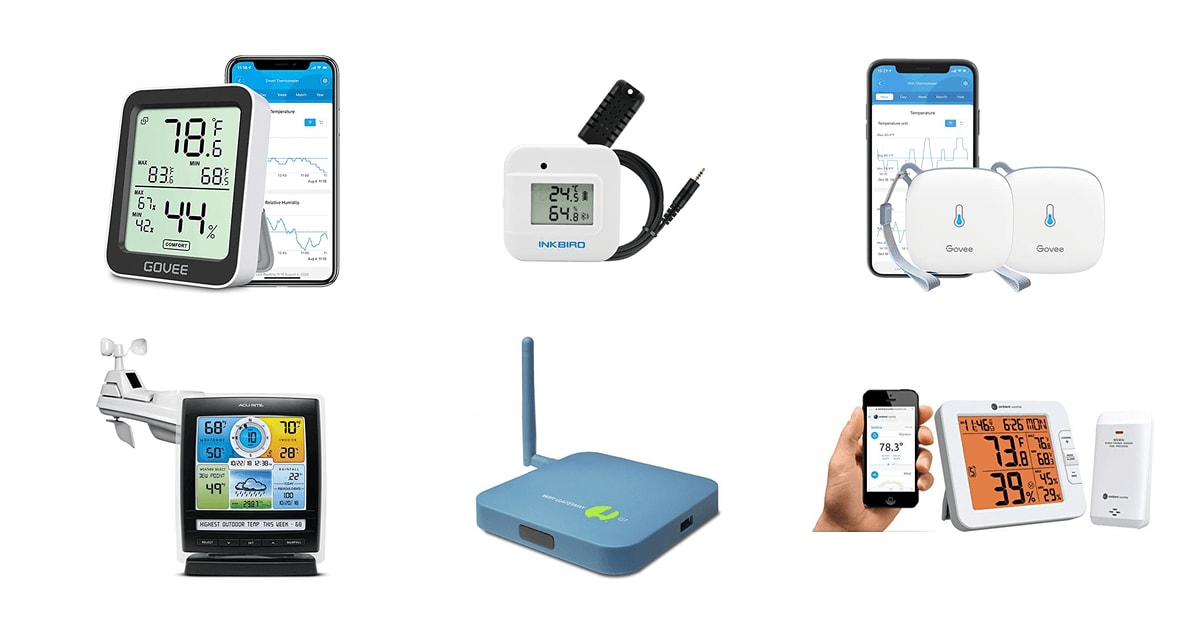
Indoor humidity is the thing you notice only when it's wrong. Too dry and you get static shocks off the doorknob, cracked window trim, and a scratchy throat every morning in January. Too damp and you get musty closets, warped drawers, and mold setting up on the cold outside wall behind your dresser. The EPA's guidance is to keep indoor relative humidity between 30% and 60%, and most people have no idea where their house actually sits. A hygrometer is how you find out.
Here's the honest caveat: no consumer hygrometer is a laboratory instrument. Nearly all of them are rated to about ±3% relative humidity, and capacitive sensors drift over time no matter whose logo is on the case. That's plenty for deciding whether to run a dehumidifier in the basement, but it's loose if you're guarding cigars or a wine collection. Every device here also relies on batteries and an app, so you're signing up for both a maintenance chore and a company's software.
We looked at Bluetooth sensors, WiFi sensors, a gateway for a precision ecosystem, and two full weather stations. They solve different problems, and the trap is buying more connectivity than you need — or discovering too late that you bought too little. We think that the Govee WiFi Thermometer Hygrometer H5179 2-Pack is the best hygrometer for most people, and that the Govee Indoor Hygrometer Thermometer H5075 is the one to buy if you only need readings while you're home.
Everything we recommend

Two rooms, real remote alerts, and no Bluetooth leash

The same sensor quality, minus the ability to check from work

Tighter accuracy and cloud history, if the contents are precious
Wind, rain, and dew point, if indoor humidity isn't the whole job
At a glance
| Product | Accuracy | Connectivity | Price | |
|---|---|---|---|---|
| Govee Indoor Hygrometer Thermometer H5075 with BluetoothBudget pick | ±3%RH | Bluetooth | $12.99 |
 | Inkbird Smart Thermometer Temperature and Humidity MonitorAlso consider | — | Bluetooth | $23.99 |
| Govee WiFi Thermometer Hygrometer H5179 with AppTop pick | ±3%RH | WiFi | $64.99On sale |
| AcuRite IrisAlso great | — | Wireless | $109.99On sale |
| SensorPush G1 WiFi Gateway for Temperature &Upgrade pick | — | WiFi | $99.95 |
 | Ambient Weather WS-8482 Wireless Internet Remote MonitoringAlso in lineup | ±2°F | Wireless Internet | $96.99 |
How we picked
Sensor accuracy. We compared published accuracy ratings and, where manufacturers disclose it, the actual sensor chip inside. Devices using Sensirion SHT-series parts hold calibration measurably better than generic capacitive sensors, which commonly drift 2–5% RH within a year or two of continuous use.
Connectivity that matches the job. We separated Bluetooth models from WiFi models rather than ranking them together, because they answer different questions. Anything meant to watch an unattended space — a cabin, a crawlspace, a storage unit — needed a real internet connection, not a 100-foot radio link.
Alerts and history. We looked for configurable high and low thresholds, and for more than one notification channel, since phone alerts get silenced. We also weighed how much data each device keeps and whether you can get it out as a spreadsheet.
Owner-reported reliability. We read through owner feedback for patterns rather than one-off complaints, watching for battery drain, sensor failures within months, probes that kill the unit, and support that goes quiet. Repeated failure reports pushed products down our list regardless of their spec sheets.
Display you can actually read. For any device meant to sit in a bedroom or basement, we favored large numerals and a comfort band over a bare number. Being able to read it from the doorway is the difference between checking it and ignoring it.
Top pickOn sale
Two rooms, real remote alerts, and no Bluetooth leash
Govee WiFi Thermometer Hygrometer H5179 with App
A pair of WiFi sensors that push readings to your phone from anywhere, with a Swiss-made Sensirion sensor rated to ±3% RH. You get a small local screen on each unit, threshold alerts by app and email, and Alexa or Google Home voice queries.
$64.99fromAmazonList priceWiFi is what separates a hygrometer from a data curiosity. Bluetooth sensors log faithfully, but you only learn what happened once you walk back into range. The H5179 uploads to Govee's cloud, so a humidity spike in the crawlspace reaches your phone while you're at the office. Owners describe exactly that pattern: attic moisture problems, crawlspace dehumidifiers, campers left with a pet inside. That's the whole point of monitoring something you can't see.
The sensor inside is the same class Govee uses across its better units — a Swiss-made Sensirion part rated to ±0.54°F and ±3% RH, refreshing every two seconds. That accuracy is fine for the decisions most people make with a hygrometer. Is the basement over 60%? Is the nursery drying out? You don't need lab precision to answer those, and you do need a sensor that holds its calibration for more than a year.
It comes as a two-pack, which changes how you use it. One sensor tells you about one room; two let you compare. Put one upstairs and one in the basement and you'll learn something about how your house actually moves air. Both show up on a single app dashboard with graphs side by side, so you can see whether that damp corner is a whole-house problem or a local one.
Each unit has its own small LCD, so you can read the room without pulling out your phone. Alerts are configurable per sensor, and you can get them as push notifications, email, or both. Email matters more than it sounds — phone notifications get silenced, buried, or swiped away, and a backup channel is the difference between catching a failed dehumidifier and finding out in the spring.
Flaws but not dealbreakers
It only joins 2.4 GHz networks, which is a real nuisance in a dual-band house where your phone auto-connects to 5 GHz. During setup you'll likely have to temporarily switch bands or split your SSIDs. Once it's paired the sensors reconnect on their own, so this is a one-evening annoyance, not a daily one. Setup also requires Bluetooth proximity first — you can't configure these from across the house.
Owner feedback on Govee's WiFi line includes a recurring thread about firmware and cloud reliability, and a smaller group who ran into slow support when a unit misbehaved. Govee has pushed fixes for past sync problems, but it's worth knowing you're depending on a company's servers staying up. If your monitoring can't have gaps, a system that logs locally is the safer bet.
Budget pick
The same sensor quality, minus the ability to check from work
Govee Indoor Hygrometer Thermometer H5075 with Bluetooth
A Bluetooth-only version of the same idea, with a bigger 3-inch screen and a dry/comfort/wet indicator you can read across a bedroom. It costs a fraction of the WiFi model and keeps logging locally even when your phone is gone.
$12.99fromAmazonIf you're monitoring a room you sleep in, Bluetooth is enough. The H5075 uses the same Swiss-made Sensirion sensor as our top pick, with the same ±0.54°F and ±3% RH ratings and the same two-second refresh. What you give up is remote access. What you keep is everything that matters when you're standing in the room: a clear reading, a trend graph, and a push alert the moment humidity crosses your line.
The screen is the best part. It's a 3-inch LCD with numerals large enough to read from the doorway, plus a dry/comfort/wet band that turns the number into a decision. Owners use these in bedrooms, basements, greenhouses, reptile enclosures, and egg incubators — places where a quick glance beats opening an app. There's a little kickstand, and battery life stretches to months.
The app keeps a rolling 20-day graph and lets you export up to two years of history to CSV. That's more data handling than most budget hygrometers offer, and it's useful if you're trying to prove to yourself that a humidifier is actually doing something. Setup takes a couple of minutes: install the app, pair over Bluetooth, done.
It's cheap enough to buy several, and that's how a lot of people end up using it. One per room turns a vague sense that the back bedroom is stuffy into a number you can act on. Owners also report it plays well with Home Assistant if you'd rather not live inside Govee's app at all.
Flaws but not dealbreakers
Bluetooth caps out around 164 feet with clear line of sight, and drywall eats into that fast. The device keeps logging locally while you're away, so you don't lose the record — but you won't get a notification. If the scenario you're worried about is a pipe freezing in a vacation cabin, this is the wrong tool.
There's no CSV export path that doesn't route through Govee's app, and no WiFi means no voice assistant integration. For a device this inexpensive those are reasonable omissions, but they're worth naming before you buy three of them.
Upgrade pick
Tighter accuracy and cloud history, if the contents are precious
SensorPush G1 WiFi Gateway for Temperature &
This is the WiFi bridge for SensorPush's Bluetooth sensors, not a hygrometer itself. Pair it with an HT1 sensor and you get ±1.5% RH accuracy, unlimited cloud storage with no subscription, and alerts that reach you anywhere.
$99.95fromAmazonCigars want 65–72% RH. Wine wants roughly 55–75% with stable temperature. In those windows, a ±3% sensor error is the difference between a humidor that's fine and one that's slowly ruining a collection. SensorPush's HT1 sensor uses a Sensirion SHT31 chip rated at ±1.5% RH and ±0.5°F — the tightest spec you'll find in a consumer device, and a genuine step past what Govee and Inkbird offer.
The G1 is the piece that makes the system worth owning. On its own a SensorPush sensor is Bluetooth-only, with the same walk-into-range limitation as any budget unit. Plug in the gateway and every paired sensor streams to the cloud, reachable from anywhere your phone has a connection. Owners use this for vacation homes, warehouses, barns, and incubators — places where a temperature excursion has a cost measured in more than discomfort.
Cloud storage is unlimited and there's no monthly fee, which is unusual. Govee caps online history at 20 days before you export. SensorPush just keeps everything, so you can audit a full year of a wine cellar's conditions without having remembered to download anything. The app looks and works identically whether you're standing next to the sensor or on another continent.
SensorPush is a small U.S. company, and owner feedback keeps circling back to support quality — people who've run these for years, people who got a real human when something went wrong. That's not a spec, but it's the sort of thing that matters when you're trusting a device to watch something irreplaceable.
Flaws but not dealbreakers
The gateway does nothing by itself. You need at least one SensorPush sensor, sold separately, so the real entry cost is meaningfully higher than the sticker on this listing suggests. For general home comfort monitoring, where ±3% RH is entirely adequate, that's money spent on precision you won't use.
Some owners needed several attempts to get the gateway onto their WiFi, and a few ended up adding an extender to cover an outbuilding. It's not difficult so much as occasionally fussy. Plan for a bit of patience during setup, especially if the sensors live far from your router.
Also greatOn sale
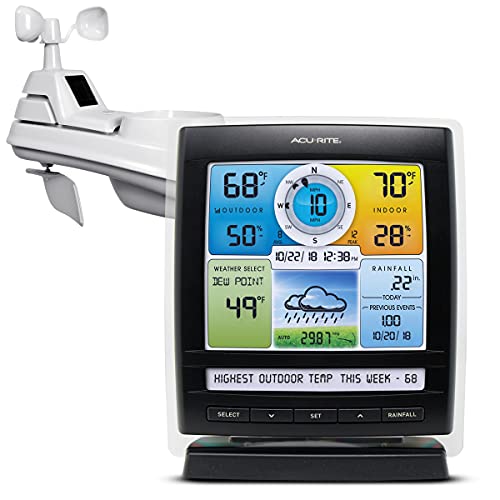
Wind, rain, and dew point, if indoor humidity isn't the whole job
AcuRite Iris
A full 5-in-1 weather station with a wireless outdoor sensor for wind speed, direction, rainfall, and outdoor temperature and humidity, feeding a color console that also reads indoor conditions. It's overkill for one room and perfect for a garden.
$109.99fromAmazonList priceThis isn't really a hygrometer, and we're including it because a lot of people searching for one actually want this. The outdoor sensor array measures wind speed and direction, rainfall, barometric pressure, and outdoor temperature and humidity. The indoor console reads your house at the same time and pulls it all together — over 55 data points, plus automatic heat index and dew point.
Dew point and pressure trends are what a standalone hygrometer can never give you. If you garden, that combination is genuinely useful: you can see a front coming in through the pressure arrow, know whether last night's rain actually hit your yard rather than the airport ten miles away, and decide about frost cover based on your own microclimate instead of a regional forecast.
Setup is simpler than it looks. Install batteries, bracket the outdoor sensor to a pole or post, and the console syncs itself within minutes. Owners consistently describe the install as a morning's work at most, with clear instructions, and several mention swapping a new unit onto the mounting hardware from an older AcuRite. The forecast function takes about a week of data before it settles down.
Flaws but not dealbreakers
The outdoor sensor reads warm in direct summer sun — owners in hot climates report readings several degrees above their other thermometers on bright afternoons. Siting it with some shade helps, but it's a known characteristic of the design rather than a defect you can fix.
It's a lot of product if your actual question is whether the nursery is too dry. It's the most expensive item here by a wide margin, it needs an outdoor mounting spot, and none of the wind or rain data does anything for indoor humidity. Buy it because you want a weather station, not because you want a better hygrometer.
A few owners note quirks in the rainfall totals, particularly around year-to-date tracking, where the console's numbers don't always reconcile with what it displayed earlier.
Who this is for
Buy one of these if you're trying to answer a specific question about your home: whether the basement is damp enough to grow mold, whether the bedroom is dry enough to explain the winter nosebleeds, whether the dehumidifier you bought is doing anything. A hygrometer only pays off if it changes a decision, so think about what you'll do with the reading before you buy. If you already know your house sits comfortably between 30% and 60% year-round, you probably don't need one.
This guide covers consumer hygrometers and humidity monitors for homes, plus the accessories and weather stations that came up alongside them. It doesn't cover humidifiers, dehumidifiers, air quality monitors that measure particulates or VOCs, or professional calibration equipment. If you're monitoring something valuable — cigars, wine, instruments — read the upgrade pick section carefully, because the accuracy gap between a general-purpose sensor and a precision one is the whole story there.
How we picked
We ranked these on five things. Accuracy: published RH tolerance and, where disclosed, the sensor chip inside, since Sensirion parts drift far less than generic capacitive sensors. Connectivity: whether the device can actually reach you where you'll be, with WiFi treated as mandatory for any unattended space and Bluetooth as sufficient for a room you occupy. Alerts and history: configurable thresholds, more than one notification channel, and data you can export rather than just glance at. Reliability: patterns in owner feedback around battery drain, early failures, and support responsiveness. Display: large numerals and a comfort band, because a hygrometer you have to squint at is one you stop reading.
Other hygrometers and humidity monitors worth considering
If you want an external probe and deep on-device logging: The Inkbird Smart Thermometer Temperature and Humidity Monitor ($23.99) — The Inkbird IBS-TH2 Plus is built for people who want data rather than a display — homebrewers tracking a fermentation curve, growers logging overnight humidity lows. It stores up to 30,000 readings on the device itself, so nothing depends on a cloud connection, and you can set the sampling interval anywhere from ten seconds to an hour and export the whole record as a CSV. The included waterproof probe reaches into a chest freezer or a sealed grow tent while the main unit stays outside. But it earns a spot here rather than among the picks because owner feedback is genuinely mixed: reports of batteries lasting only days, units going dark after a couple of months, and a probe that can shut the device off when connected. Inkbird's support does appear to replace failed units. Go in expecting that you might need to use that.
The competition
This is what our research surfaced, not a census of every hygrometer on the market. The category is enormous and full of unbranded devices with no disclosed sensor provenance, which is exactly the sort of thing we'd steer you away from anyway. Below is the remaining product we looked at and why it didn't make the cut.
The Ambient Weather WS-8482 Wireless Internet Remote Monitoring ($96.99) — The Ambient Weather WS-8482 is an internet-connected monitoring station whose real appeal is community data sharing — it feeds both the Ambient Weather Network and Weather Underground, so your readings land on public maps and your neighbors can see hyperlocal conditions. Owners also like it for IFTTT automations, like kicking on a basement dehumidifier when humidity crosses a line. Indoor temperature accuracy is rated at ±2°F across a 32–140°F range. What kept it out of the picks is a thin spec sheet compared to everything else here and an unsettling pattern in owner reports: sensors failing within a year, a unit that started reporting wildly high temperatures after three months, and WiFi setup that several people simply could not get through. If Weather Underground integration is the specific thing you want, it's the only option in this group that does it. For anything else, our picks are the safer buy.
Calibration and placement
Verify any new hygrometer with the salt test before you trust it for anything that matters. Mix table salt with just enough distilled water to make a damp paste — not a puddle — seal it in a zip bag or airtight container with the hygrometer, and wait eight to twelve hours at room temperature. The air inside settles at 75% RH. If your device reads outside 72–78%, use its calibration offset in the app or device menu to correct it, then repeat the test to confirm. Placement matters just as much. Keep sensors away from vents, exterior walls, direct sun, and doorways, all of which give you a reading of the microclimate rather than the room. Repeat the salt test yearly for anything guarding a collection.
Questions we get
What indoor humidity level is actually healthy?
The EPA recommends keeping indoor relative humidity between 30% and 60%, and ASHRAE Standard 55 specifies the same range for thermal comfort. Below 30% you get static, cracking wood, and dry sinuses. Above 60%, mold and dust mites take off. Most people find 40–50% is the sweet spot.
Is a Bluetooth or a WiFi hygrometer better?
It depends entirely on whether you'll be there. Bluetooth models are cheaper, simpler, and easier on batteries, and they're fine for a room you occupy — but they cap out around 100 to 165 feet and your phone has to be in range to sync or get an alert. WiFi models stay connected to the cloud, so you get notifications at work or on vacation. For any property you leave unattended, WiFi isn't optional.
How accurate are inexpensive digital hygrometers?
It comes down to the chip, not the price. Generic capacitive sensors typically land within ±3–5% RH when new and drift another 2–5% within a year or two of continuous use. Budget devices built around Sensirion sensors match the ±3% spec of much pricier units and hold it far longer. If a manufacturer won't say what sensor is inside, assume it's generic.
What should I use for a cigar humidor or wine cellar?
Something rated tighter than ±3% RH. Cigars need 65–72% and wine wants roughly 55–75% with stable temperature, and a general-purpose sensor's margin of error covers a meaningful slice of those windows. A SensorPush HT1 with the G1 gateway gets you ±1.5% RH plus alerts that reach you anywhere. Run the salt test before you trust any of it.
What's the best option for a grow tent or greenhouse?
The Inkbird IBS-TH2 Plus, if you can live with its reliability record. Its waterproof probe threads into a sealed tent while the main unit stays outside, it logs 30,000 points without needing a cloud connection, and CSV export lets you line humidity up against growth stages in a spreadsheet. If you'd rather have something more dependable and don't need the probe, put a Govee H5075 inside the tent instead.
Can a hygrometer warn me about mold?
Indirectly, and that's still useful. It can't detect spores, but mold growth accelerates sharply above 60% RH — and faster still on cold surfaces, where the local humidity right at the wall runs higher than the room reading. Set a 60% alert on any smart hygrometer here and you'll get warning before conditions turn favorable for mold.
Why you should trust us
For this guide:
- We compared manufacturer specification sheets across all six listings, paying particular attention to disclosed sensor chips, stated RH tolerances, connectivity limits, and data retention terms.
- We read published reviews and long-term reporting on sensor drift in consumer hygrometers, along with EPA and ASHRAE guidance on healthy indoor humidity ranges.
- We read owner feedback for each product looking for repeated failure modes — battery drain, early sensor death, setup problems and support experiences — rather than isolated complaints.
- We read owner reviews on every listing, weighted toward the critical ones, because that is where the recurring failures show up.
- We have a systematic way of automatically fetching the latest prices, so the numbers on this page stay current.
- This is a research-focused guide, so the team may not own every product listed — though we often do own the top winners, which gives us extra context for the recommendations.
- We don't accept free products, and the retailer commission never changes which product we recommend.
Sources
The Best Hygrometers — Wirecutter (New York Times), Wirecutter
Best Hygrometer Reviews — Bob Vila, Bob Vila
Indoor Air Quality — Controlling Moisture and Humidity, US Environmental Protection Agency
ASHRAE Standard 55: Thermal Environmental Conditions for Human Occupancy, ASHRAE
Best Hygrometers for Your Home — The Spruce, The Spruce
Amazon product listings and owner reviews for all 6 products
Manufacturer specification pages for each product
Some passages in this guide may be paraphrased with AI help. Prices are refreshed automatically.
More like this.
Continue exploring home reviews and recommendations.

The Best Indoor Air Quality Monitors
You can't see most of what you breathe at home. Cooking throws fine particles across the kitchen. A closed bedroom door pushes CO2 past the point where…

The Best Baby Monitors
A baby monitor is one of the few gadgets you'll use every single night for years. What matters isn't the spec sheet. It's whether you can glance at a…

The Best Smart Plugs With Energy Monitoring for Alexa
Most of us have no idea which appliance is quietly eating the electric bill. The fridge? The space heater in the basement? The old game console that never…

The Best Monitor Arms and Desk Mounts
Your monitor's factory stand puts the screen at one height, one angle, and one spot on the desk. That's fine until you actually work there all day. A…

The Best Portable Blood Pressure Monitors
If your doctor has asked you to track your blood pressure at home, the box on your nightstand matters more than you'd think. A reading taken with the…

The Best Golf Launch Monitors for Home Use
A launch monitor turns a bucket of balls into information. You stop guessing whether that 7-iron flew 150 or 165, and you start seeing the real gaps…