The Best Kettlebells for a Home Gym
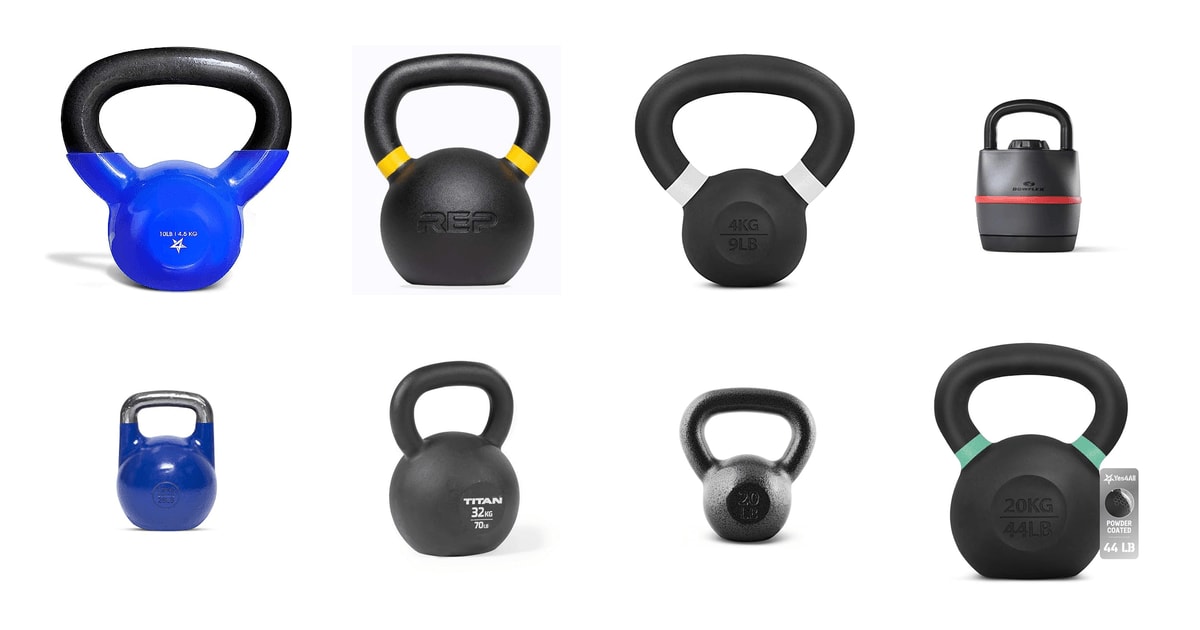
A kettlebell is one of the few pieces of gym equipment that earns its floor space. One bell, a corner of the living room, and twenty minutes gets you swings, goblet squats, presses, and get-ups. There's no assembly and nothing to plug in. What separates a good bell from a bad one is boring stuff you only notice with the thing in your hand: how the handle feels after fifty reps, whether the base sits flat, whether the casting seam scrapes your forearm on every clean.
Here's the honest part. No kettlebell does everything. Competition bells keep the same dimensions at every weight, which is great for technique and awkward if you just want something cheap for swings. Cast iron grows as it gets heavier, so the 16kg and the 32kg sit differently in the rack position. Adjustable bells save a ton of space but aren't built for explosive work. And almost nobody needs the full set they think they need — one well-chosen bell covers months of training.
We looked at fixed cast iron, powder-coated budget bells, competition-spec steel, and one adjustable unit, weighing handle quality, base flatness, casting consistency, and how much bell you get for the weight. We think that the REP Fitness Kettlebell is the best kettlebell for most people, and that the BowFlex SelectTech 840 is the one to buy if you're training in an apartment with no room for a rack of bells.
Everything we recommend

A gym-grade bell that holds up to high-rep swings

Six bells worth of weight in one small footprint

Powder-coat grip at close to bare-iron pricing

Identical dimensions at every weight, if you lift for sport
At a glance
| Product | Weight | Construction | Price | |
|---|---|---|---|---|
 | Yes4All KettlebellAlso in lineup | 10 lb | Vinyl Coated | $17.87 |
| REP Fitness KettlebellTop pick | 16 kg | Cast Iron | $74.99 |
| Yes4All Powder Coated KettlebellBudget pick | 9 lb | Powder Coated | $21.83On sale |
| BowFlex SelectTech 840 Adjustable KettlebellAlso great | 8-40 lb | Adjustable | $149 |
| Competition Kettlebells Bells of Steel - ProUpgrade pick | 12 kg | Gravity Cast | $119.99 |
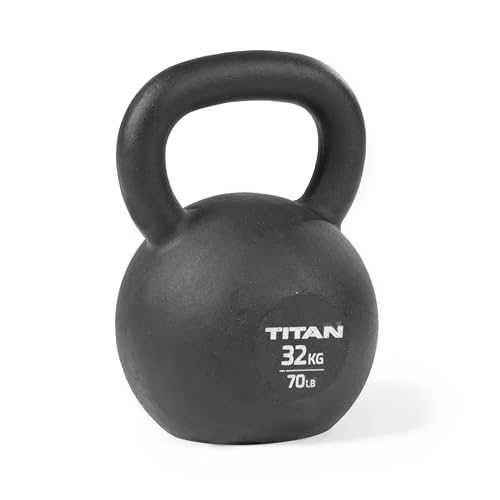 | Titan Fitness 32 KG Cast Iron KettlebellAlso consider | 32 kg | Drop Cast Iron | $129.99 |
 | CAP Barbell Black Cast Iron KettlebellAlso in lineup | 20 lb | Cast Iron | $48.99 |
 | Yes4All Color Code Cast Iron Powder CoatedAlso consider | 20 kg | Powder Coated | $60.71 |
How we picked
Handle and finish. We compared handle diameters and coatings across every listing, favoring 32–35mm handles with powder coat, e-coat, or a textured matte finish over glossy enamel. Published reviews and owner feedback both point to finish as the thing people notice first and complain about longest.
Casting and seams. We looked for one-piece gravity or drop casting with no welds and minimal seam. Wirecutter has documented budget bare cast iron needing 10 to 15 minutes of manual filing to remove sharp seams before safe use, which is a real cost at the bottom of the market.
Flat machined base. Any bell we recommend has to sit flat and stay upright, so you can do renegade rows or push-ups on the handles and store it against a wall. We confirmed this from spec sheets and listing details for every pick.
Weight accuracy. Garage Gym Reviews' accuracy testing found specialty powder-coat bells within about 1 percent of stated weight versus 3 to 5 percent for budget cast iron, and Fitness Lab cited lab verification of REP competition bells within 50 grams. We weighted this heavily for anything sold as competition spec.
Weights available. A brand is only useful if you can grow with it, so we favored lines spanning roughly 8kg through 32kg and beyond. NSCA guidance calls for 4kg progression steps on ballistic movements, which needs a full ladder of sizes.
Top pick
A gym-grade bell that holds up to high-rep swings
REP Fitness Kettlebell
The REP Fitness kettlebell is gravity cast in one piece with a textured matte finish that grips without shredding your palms. It comes in nearly every weight from 1kg to 48kg, so you can start light and add bells later without switching brands.
$74.99fromAmazonThis is the bell we'd hand a beginner and still recommend three years later. The 16kg version is the one most people should start with — Men's Health editors point to 16kg as the standard entry weight for men with some gym background, and the two most popular beginner programs, Simple & Sinister and StrongFirst, are both built around it. Women's Health and NSCA guidance puts women closer to 8kg for swings. REP sells both, plus everything in between.
The finish is the reason this one wins. It's a textured matte coating, not glossy enamel, so your hand stays put through a long set of swings without chalk. That matters more than it sounds. A slick handle means you grip harder than you need to, your forearms fatigue first, and the set ends before your legs are done. Owners who've moved over from other brands consistently single out the finish and grip as the upgrade they noticed.
Base flatness is the other quiet spec worth caring about. REP's bells sit flat and stay put, which means you can do renegade rows, push-ups on the handles, or just store them upright against a wall without one rolling into a doorframe. Each bell carries a color-coded ring at the base, so if you build up a small collection you can grab the right weight without squinting at debossed numbers.
REP also builds competition bells that independent lab verification cited by Fitness Lab confirmed within 50 grams of stated weight across a 12-bell sample spanning 8 to 48kg — tighter than the 100g IUKL tolerance. That's a different product from this cast iron line, but it tells you something about the company's quality control. If you later want matched-dimension competition bells, you can stay in the same catalog.
Flaws but not dealbreakers
This isn't the least expensive way to get weight into your house, and if all you plan to do is two-handed swings twice a week, you're paying for refinement you won't use. The gap between this and a basic cast iron bell is real but it's a matter of degree, not kind.
Cast iron bells grow physically as the weight goes up, and REP's are no exception. The 44lb and heavier sizes use a thicker handle than the lighter bells. That's comfortable for most people, but if you're learning cleans and snatches and want the exact same groove at every weight, you want competition-spec bells instead.
Also great
Six bells worth of weight in one small footprint
BowFlex SelectTech 840 Adjustable Kettlebell
The BowFlex SelectTech 840 dials from 8 to 40 pounds and replaces up to six separate kettlebells in a unit about 12.5 inches tall. If your gym is a closet or the space beside your couch, this is the pick that actually fits your life.
$149fromAmazonSpace is the whole argument here, and it's a good one. One 40-pound unit replaces bells at 8, 12, 20, 25, 35, and 40 pounds. Sports Illustrated Showcase reported a sub-two-second weight change with the dial mechanism, which matters more than it sounds — you can drop from a 35-pound goblet squat to a 12-pound halo between sets without walking anywhere. For anyone in an apartment, that's the difference between training and not training.
The adjustable range also solves the beginner's real problem, which is that you don't yet know your weight. Most people underestimate what they can swing and overestimate what they can press. With this bell you find out over a few weeks instead of committing to a guess. The 2-pound increments between the lower settings are gentler than NSCA's suggested 4kg jumps for ballistic work.
Owners describe the dial as smooth and the lock as secure, with the weight feeling stable at each setting. The plastic shell also means it won't chip your floor the way bare cast iron will, which is worth something if you're training on hardwood or above a downstairs neighbor.
We call this an also-great rather than a top pick because of what it can't do, not what it does. For goblet squats, presses, rows, halos, and slow controlled work, it's genuinely excellent. Ask it to absorb hundreds of hard swings and the calculus changes.
Flaws but not dealbreakers
The mechanism is the weak point under ballistic load. CNET's six-month durability review noted minor wobble developing with repeated explosive use, and recommended adjustable bells mainly for goblet squats, halos, and slow presses rather than heavy swings and snatches. If swings are your main lift, buy a fixed bell.
It tops out at 40 pounds. That's plenty for a year of two-handed work, but you'll outgrow it for swings and deadlifts, and there's no path upward within the product. The shape is also wider and boxier than a traditional bell, so the rack position sits a little differently against your forearm.
Budget pickOn sale
Powder-coat grip at close to bare-iron pricing
Yes4All Powder Coated Kettlebell
The Yes4All powder-coated bell gives you the textured, chalk-free grip that usually costs a lot more, plus a flat machined base and color-coded rings. Casting quality varies a bit between units, but the fundamentals are right.
$21.83fromAmazonList pricePowder coat is the single upgrade that most changes how a cheap bell feels. Glossy enamel gets slippery the moment your hands sweat, and you compensate by crushing the handle. The slightly textured powder coat here holds without chalk, which is the same reason it shows up on bells costing several times as much. For high-rep swings in a warm garage, that's the difference between finishing the set and dropping it.
The basics you should never compromise on are all present. It's solid cast iron with no welds or seams down the middle, the base is flat enough for renegade rows and upright storage, and each bell is marked in both pounds and kilograms with a color-coded ring. That last bit sounds trivial until you own four bells and want the 12kg without doing arithmetic mid-workout.
Yes4All sells this line across a wide weight range, so you can build a small collection cheaply. And you should build slowly. A single 16kg bell covers most beginner programming, and price per pound drops when you buy in sets — but only buy the set once you know which weights you actually reach for.
Flaws but not dealbreakers
Consistency between units is the trade-off. Owners who've bought several of these report the finish varies from batch to batch — some bells arrive with a smooth satin coat, others noticeably rougher on the hands. It's usable either way, but you can't count on two bells feeling identical.
Weight accuracy is looser than premium bells. Yes4All's own listings note actual weight can range a couple of pounds either side of stated for heavier sizes. Garage Gym Reviews' accuracy testing put budget cast iron at 3 to 5 percent variance generally, versus about 1 percent for specialty brands. For swings and squats, nobody will ever notice. For matched-pair work or careful progression, it's worth knowing.
Upgrade pick
Identical dimensions at every weight, if you lift for sport
Competition Kettlebells Bells of Steel - Pro
The Bells of Steel competition kettlebell is gravity cast as one piece to IUKL, GSU, and IKFF specs, with a 35mm handle and a uniform bell size across weights. If you're training long cycle or high-rep snatches, this is the shape your hands should learn.
$119.99fromAmazonUniform dimensions are the entire point of a competition bell, and it's a bigger deal than most beginners realize. Every weight in this line has the same bell size and the same handle, so moving from 12kg to 16kg to 20kg doesn't change the rack position or the path the bell travels on a snatch. IUKL standards mandate a 33mm handle within 1mm and a weight tolerance of 100 grams for certified bells. Bells of Steel builds to that world.
Gravity casting the bell as one piece with no welding gives you a clean surface and tight dimensional accuracy. That matters on your forearm. A rough seam is fine on a two-handed swing and miserable on a hundred snatches, where the bell rotates around your wrist every single rep. Owners who've used a pile of random bells describe this one as noticeably better for cleans and snatches specifically.
The lighter sizes make a smart concession. The 4, 6, and 8kg bells use a 34mm handle so smaller hands and newer lifters aren't wrestling a full-size competition handle before they're ready; 10kg through 32kg and the 48kg use the full 35mm. Bells are color-coded by weight, which is the standard the sport uses.
This one's the upgrade pick because it's built for a specific job. If you're doing goblet squats and swings three times a week, you don't need it. If you're chasing rep counts in long cycle or snatch, or you just want your technique to transfer cleanly as you add weight, it's the right tool.
Flaws but not dealbreakers
Steel competition bells are less forgiving of neglect than coated cast iron. The finish that makes them smooth on your hands also means you should keep them dry and wipe them down, especially in a humid garage.
It's the most expensive way to buy a given number of pounds here, and the value only shows up if you're doing the movements it's designed for. For swings and carries, a cast iron bell does the same work for less.
Who this is for
Buy a kettlebell if you want strength and conditioning work that fits in a corner and doesn't need a rack, a bench, or a spotter. The research behind that is unusually good: ACE-commissioned work found a kettlebell snatch protocol burned an average of 20.2 calories per minute, comparable in intensity to running a six-minute mile. A Journal of Strength and Conditioning Research study found six weeks of swing training improved VO2max by 6 percent and core strength scores by roughly 70 percent against a non-training control. And a study in the International Journal of Exercise Science found eight weeks of twice-weekly training improved grip strength by 17.6 percent along with balance and functional movement in adults over 55.
Skip the full set. Almost everyone buys too many bells too early — one 16kg for men or 8kg for women covers months of programming, and you'll learn what you actually need by using it. This guide covers single fixed bells and one adjustable unit for home use. It doesn't cover racks, storage, competition kettlebell sets sold as complete ladders, or the vinyl-coated bells aimed mainly at studio classes. If you're training exclusively for barbell sport, kettlebells are a supplement here, not a replacement.
How we picked
We built the shortlist around the specs that change how a bell feels in your hand and how long it lasts. Handle and finish: 32–35mm handles with powder coat, e-coat, or textured matte, since glossy enamel goes slick the moment you sweat and forces you to over-grip. Casting and seams: one-piece gravity or drop casting with no welds, because a sharp seam bruises forearms on every clean and Wirecutter has documented budget bells needing 10 to 15 minutes of filing before safe use. Flat machined base: non-negotiable, so the bell stores upright and supports renegade rows and push-ups. Weight accuracy: Garage Gym Reviews put specialty bells around 1 percent of stated weight versus 3 to 5 percent for budget cast iron, and we held competition-spec bells to the IUKL 100-gram tolerance. Weights available: a full ladder from roughly 8kg up, since NSCA guidance calls for 4kg steps on ballistic work.
Other kettlebells for a home gym worth considering
If you want heavy cast iron without the specialty-brand price: The Titan Fitness 32 KG Cast Iron Kettlebell ($129.99) — The Titan Fitness bell is a single-piece drop casting with a flat base, an extra-wide handle, and debossed markings in both kilograms and pounds. It's the sensible choice when you already know your weights and just need mass — the 32kg is a genuinely serious bell for swings and heavy deadlifts. Owners who've owned budget bells describe the finish and smoothness as a clear step up. What you give up versus our top pick is the textured matte coating and REP's much wider weight ladder, so building a full progression here is less straightforward.
If you want a heavy powder-coated bell for less: The Yes4All Color Code Cast Iron Powder Coated ($60.71) — This is the larger sibling of our budget pick — same Yes4All powder coat and flat non-slip base, sized at 20kg. It's a lot of bell for the money and a reasonable second purchase once your 16kg gets easy on two-handed swings. The catch is the same one that applies to the whole line: the listing itself notes actual weight can range roughly two pounds either side of stated, and owners report the coating's roughness varies between units. Fine for swings and squats, less ideal if you want a matched pair.
The competition
This is what our research surfaced among widely available bells, not a survey of everything on the market. Plenty of good kettlebells — including several brands cited in the reviews we read — aren't sold in a form that fits this guide. The bells below are worth knowing about, and one or two might still be right for you.
The CAP Barbell Black Cast Iron Kettlebell ($48.99) — The CAP Barbell cast iron bell is the default entry point for a lot of people, and it's honestly fine for what it is: one-piece cast iron, flat base, industrial enamel finish, sold nearly everywhere. It lost to our budget pick on grip. The enamel is smooth rather than textured, and owners consistently note it gets slippery without chalk or gloves. Wirecutter has also documented budget bare cast iron in this tier needing manual filing to knock down sharp seams. If you want the lowest-cost route to a bell for basic swings, goblet squats, and deadlifts, and you don't mind chalk, it still does the job.
The Yes4All Kettlebell ($17.87) — The vinyl-coated Yes4All bell is built for a different job than the rest of this lineup. The vinyl shell is quiet, protects floors, and wipes clean, which makes it a reasonable pick for a bedroom, a shared apartment, or physical therapy work where you're using light weights and don't want to gouge anything. It's not what you want for swings and snatches — the coating adds bulk without adding grip, and the light weights on offer top out well below useful swing loads for most adults. Buy it if quiet and floor-safe matter more than ballistic performance.
Care and setup
Kettlebells need almost nothing, which is part of the appeal. Wipe yours down after sweaty sessions — rust is the only real enemy, and it starts where sweat pools in the handle corners. Bare steel competition bells need this most; powder coat and e-coat are far more forgiving. If you buy a budget bare-iron bell, run your palm around the inside of the handle before your first session and file down any sharp casting seam you feel, because that ridge will find your forearm on the first clean. Train on a mat or over concrete, not directly on hardwood or tile, and set the bell down rather than dropping it. Store bells upright on their flat bases against a wall where nobody will find one with a bare toe in the dark.
Questions we get
What weight kettlebell should a beginner buy?
For men with some gym background, Men's Health editors point to 16kg, about 35 pounds, and the most popular beginner programs are built around that weight. Women's Health and NSCA guidance suggests 8kg for swings and a lighter 4 to 6kg for Turkish get-ups. Most beginners underestimate their swing weight — the swing is a hip movement, not an arm one, so it takes more load than you'd guess. Start with one bell and add later.
What's the difference between competition and cast iron kettlebells?
Competition bells keep identical dimensions at every weight, so a 12kg and a 24kg sit the same way in the rack position and travel the same path on a snatch. Cast iron bells grow physically as they get heavier, which subtly changes the movement each time you go up. Competition bells are also certified to a tighter weight tolerance — 100 grams under IUKL rules. If you're learning cleans and snatches seriously, that consistency is worth paying for; for swings and squats, cast iron is completely fine.
Are adjustable kettlebells worth it?
For apartments, yes — with a caveat. The BowFlex SelectTech 840 replaces six bells in a footprint about 12.5 inches tall, and Sports Illustrated Showcase reported weight changes in under two seconds. But CNET's six-month durability review found minor mechanism wobble under repeated ballistic loading and recommended adjustable bells mainly for goblet squats, halos, and slow presses. If swings and snatches are your main work, buy a fixed bell.
How many kettlebells do I actually need?
One, to start. A single 16kg covers swings, goblet squats, presses, rows, and get-ups for months of programming. Once you outgrow it, a second bell about 4kg heavier is the natural next step — NSCA guidance calls for roughly 4kg increments on ballistic movements to avoid disproportionate jumps. Two or three bells covers nearly everyone who isn't competing.
Can you build serious muscle with kettlebells alone?
You can build real strength, conditioning, and muscle, but there's a ceiling. Kettlebells are excellent for explosive hip work, unilateral pressing, and carries, and the research on conditioning is strong — one study found six weeks of swing training raised VO2max by 6 percent. For maximal strength in the squat, bench, and deadlift, you'll eventually need a barbell. Most people never hit the ceiling.
How long do cast iron kettlebells last?
Effectively forever if you keep them dry. A one-piece cast iron bell has no welds or moving parts to fail, so the only thing that degrades is the finish. Powder coat and e-coat resist chipping better than enamel paint — BarBend testers logged 1,000 reps of swings, cleans, and snatches on an e-coat bell and reported no handle finish degradation. Adjustable bells are the exception, since they have a mechanism that can wear.
Why you should trust us
For this guide:
- We compared manufacturer specifications for every bell in this guide against the buying criteria that published reviewers and coaches consistently flag: handle diameter, finish type, base flatness, casting method, and available weight range.
- We read weight-accuracy findings from Garage Gym Reviews and lab verification cited by Fitness Lab, durability reporting from BarBend and CNET, and starting-weight guidance from Men's Health, Women's Health, and the NSCA.
- We reviewed owner feedback across these listings for recurring themes — finish consistency, grip in sweaty hands, and how adjustable mechanisms hold up — and used those patterns to shape the flaws sections.
- We read owner reviews on every listing, weighted toward the critical ones, because that is where the recurring failures show up.
- We have a systematic way of automatically fetching the latest prices, so the numbers on this page stay current.
- This is a research-focused guide, so the team may not own every product listed — though we often do own the top winners, which gives us extra context for the recommendations.
- We don't accept free products, and the retailer commission never changes which product we recommend.
Sources
Best Kettlebells of 2026 — BarBend, BarBend
Best Kettlebells for Home Gyms — Garage Gym Reviews, Garage Gym Reviews
Best Kettlebells — Wirecutter (NYT), Wirecutter
Kettlebell Training Calorie Burn Study — American Council on Exercise, American Council on Exercise (ACE)
Kettlebell Buying Guide — Men's Health, Men's Health
Best Kettlebells — Women's Health, Women's Health
Kettlebell Sport Equipment Standards — International Union of Kettlebell Lifting (IUKL), IUKL
Effects of Kettlebell Training on Aerobic Capacity — Journal of Strength and Conditioning Research, Journal of Strength and Conditioning Research
Bowflex SelectTech 840 Review — CNET, CNET
REP Fitness Competition Kettlebell Review — Fitness Lab, Fitness Lab
How to Choose a Kettlebell — Certified Strength and Conditioning Specialist Guide, NSCA, NSCA (National Strength and Conditioning Association)
Best Adjustable Kettlebells — Sports Illustrated Showcase, Sports Illustrated Showcase
Amazon product listings and owner reviews for all 8 products
Manufacturer specification pages for each product
Some passages in this guide may be paraphrased with AI help. Prices are refreshed automatically.
More like this.
Continue exploring health reviews and recommendations.

The Best Kettlebells for Home Workouts
Most home gym gear ends up as a coat rack. A kettlebell doesn't. One bell sits in a corner, takes up less room than a laundry basket, and covers swings,…

The Best Rowing Machines for Home Gyms
A rowing machine is the rare piece of cardio gear that works nearly your whole body at once. Your legs push, your core braces, your back and arms finish…

The Best Smart Home Gym Systems
A home gym only works if you'll walk over to it on a Tuesday night when you're tired. That's the whole game. The best connected systems shrink the…

The Best Smart Home Gym Systems
The pitch for a smart home gym is simple: the equipment is already in your house, so the hardest part of working out - getting there - disappears. That's…

The Best Home Gym Equipment for Beginners
The gear that actually gets used is the gear that's already out. That's the whole game when you're starting out. A dumbbell pair sitting by the couch gets…

The Best Power Towers for Home Gyms
A power tower earns its floor space by doing three things you can't easily do anywhere else at home: pull-ups, dips, and hanging knee raises. Those three…