The Best Kneeling Chairs for Posture Correction

A kneeling chair does one simple thing: it opens the angle between your torso and thighs to roughly 60 to 90 degrees instead of the locked 90 you get in a standard desk chair. Spine-health describes the result as a pelvis that tips forward into a more neutral position, so you're less likely to collapse into a slouch. You feel it in your lower back within the first few minutes. Your shins take some weight, your core does more work, and the temptation to slump against a backrest simply isn't there.
Here's the honest part. No kneeling chair is a full-day replacement for a good ergonomic chair, and anyone selling you one is overpromising. Cleveland Clinic specialists warn against all-day use without breaks, and Healthline notes that physical therapists usually cap early sessions at 30 to 60 minutes. Shin and knee pressure is the near-universal complaint, and it shows up regardless of what you pay. If you have knee injuries, circulatory problems, or you're pregnant, talk to a doctor before you buy one at all.
So treat a kneeling chair as one posture in a rotation that also includes standing and a normal chair. That's what Mayo Clinic's ergonomics guidance actually recommends. We think that the Varier Variable Balans is the best kneeling chair for most people, and that the NYPOT Ergonomic Kneeling Chair is the one to buy if you want most of the rocking benefit without the Norwegian price tag.
Everything we recommend

The rocking original, and still the one to beat

Rocking motion and height adjustment for far less
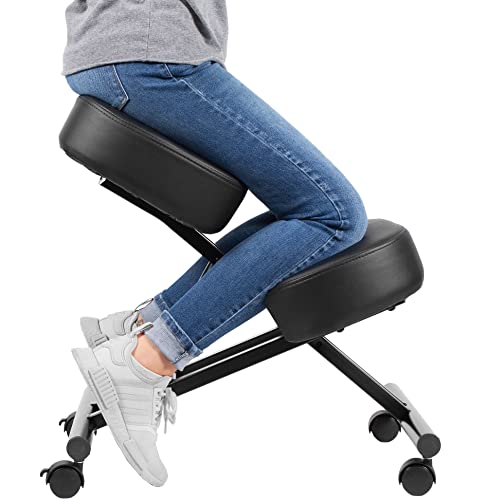
A cheap way to find out if kneeling works for you

Near-standing perch for a sit-stand desk rotation
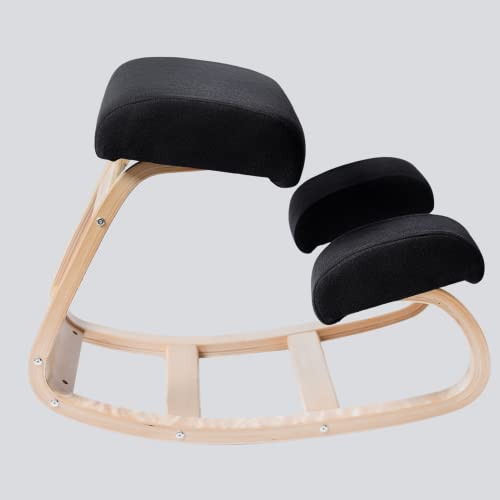
Thicker padding and a wide fit range for tall users
Prices as of Oct 24, 6:27 AM PT · Details
At a glance
| Product | Weight capacity | Base type | Price | |
|---|---|---|---|---|
| Varier Variable Balans Original Kneeling Chair DesignedTop pick | 243 lbs | — | Check price |
| Varier Move Tilting Saddle StoolUpgrade pick | — | — | $579 |
| NYPOT Ergonomic Kneeling Chair with Adjustable SeatsRunner-up | 250 lbs | — | $189.99 |
 | Kneeling Chair with Backrest Ergonomic Adjustable OfficeAlso consider | 250 lbs | — | $129.99 |
 | Flash Furniture Mobile Ergonomic Kneeling Office ChairAlso consider | — | — | $251.17 |
| Sleekform Austin Kneeling Chair - Ergonomic DeskAlso great | 265 lbs | — | $175.99 |
| DRAGONN by VIVO Black Ergonomic Kneeling ChairBudget pick | 250 lbs | Metal, 4 casters | $99.99 |
 | BestOffice Ergonomic Office ChairAlso in lineup | 250 lbs | — | $38.88 |
Prices as of Oct 24, 6:27 AM PT · Details
How we picked
Rocking vs. fixed base. We favored chairs with a curved rocker or tilting base, since ergonomics research from HFES and Mayo Clinic points to posture variation over static positions. Fixed-angle models still earned a place, but only as entry points.
Cushion thickness. Owner feedback across every model in this category converges on shin and knee pressure as the deal-breaker. We read seat and pad specs closely and gave weight to anything at three inches or more.
Adjustment range. Wirecutter's seating panel found adjustability, not price, best predicted comfort across body sizes. We checked stated height ranges against the 29-to-35-inch desks most people actually own.
Weight capacity. We compared listed capacities and flagged anything under 250 pounds, since kneeling chairs concentrate load on a small frame. Stated user height ranges mattered just as much for tall and petite buyers.
Warranty length. Warranty terms tell you what a company expects its frame to survive. We noted stated coverage from every manufacturer and treated a long term as a signal about joint and cushion durability.
Top pick
The rocking original, and still the one to beat
Varier Variable Balans Original Kneeling Chair Designed
The Variable Balans is the Norwegian chair that started the category, and its curved wooden runners let you rock forward and back all day without thinking about it. It's light, it's beautifully made, and it comes with a 10-year guarantee.
Check priceatAmazonPrices as of Oct 24, 6:27 AM PT · Details
The rocking base is the whole point. Varier patented this curved runner design in 1979, and it does something fixed-angle chairs can't. Instead of locking you into one seat angle, it lets you drift forward and back constantly. That matters because static muscle loading is what makes long sits hurt. The Human Factors and Ergonomics Society's seating research supports posture variation over any single fixed position, and this chair gives you variation without any conscious effort.
It's also the lightest chair here at just over 14 pounds, built from beech plywood with upholstery over the seat and knee pads. You can pick it up with one hand and move it to another room. There's no gas cylinder, no casters, no adjustment knobs. Some people find that limiting. We think the simplicity is why owners keep these for a decade.
The listing rates it for 243 pounds, which is lower than most of the competition. If you're near that number, look at the Sleekform or the NYPOT instead. For everyone else, the frame is over-engineered for the load, and there's nothing on it to strip, crack, or lose tension over time.
Nothing else here looks like furniture. That sounds shallow until you realize where this chair lives. It's in your living room, your bedroom corner, your open-plan office. The ash base and fabric seat read as a design object rather than a medical device, and that changes how often you actually sit in it.
Flaws but not dealbreakers
There's no height adjustment at all. The Variable Balans works with a desk in a fairly narrow range, and if your desk is unusually tall or short, you're stuck. Measure before you buy. Wirecutter's seating panel found adjustability range, not price, was the strongest predictor of comfort across body sizes, and this chair simply opts out of that conversation.
It's the most expensive option in this guide by a wide margin, and it's a fixed-position chair with no wheels. You can't roll from your monitor to your printer. You stand up and carry it. Owners who want to move around a desk should look at a caster-equipped model.
The Variable Balans comes with a 10-year guarantee.
Runner-up
Rocking motion and height adjustment for far less
NYPOT Ergonomic Kneeling Chair with Adjustable Seats
The NYPOT gives you a gentle rocking motion, an adjustable seat height, and thick high-density cushions on a wood frame rated to 250 pounds. It's the closest thing to the Varier experience at a fraction of the cost, and it carries a five-year warranty.
$189.99fromAmazonPrices as of Oct 24, 6:27 AM PT · Details
This is the sweet spot for most first-time buyers. You get the rocking motion that makes long sessions bearable, plus a seat height that adjusts to fit desks from 29 to 35 inches. That range covers almost every standard desk sold. The Varier makes you match your desk to the chair. The NYPOT works the other way around, which is what you want if you're not rebuilding your whole workspace.
The cushions are thick high-density foam, and that matters more than you'd guess. Knee and shin pressure is the number one reason people abandon kneeling chairs, and it's a cushioning problem far more than a price problem. NYPOT also puts a plain warning right in its own listing that shin discomfort can happen if the seat and desk heights don't match. We appreciate a company that tells you the hard part up front.
At just under 20 pounds on a wood frame, it's heavier than the Varier but still easy to shift between rooms. It doubles as a cross-legged or meditation seat, which sounds like marketing until you've used one and found yourself folding a leg up during a long call.
The five-year warranty is unusually long for a chair in this price range. Most budget kneeling chairs offer a year or nothing at all.
Flaws but not dealbreakers
The rocking motion is gentler than the Varier's curved runners. If you want a pronounced forward-and-back glide, you'll notice the difference. This is a softer version of the same idea.
At 33 inches long, it takes up real floor space. Small home offices and dorm rooms will feel it, especially if you're rotating between this and a standing desk.
NYPOT lists a five-year warranty.
Budget pick
A cheap way to find out if kneeling works for you
DRAGONN by VIVO Black Ergonomic Kneeling Chair
The DRAGONN is the entry ticket. It adjusts from 21 to 28 inches, rolls on four casters, holds 250 pounds on a metal base, and costs a small fraction of the premium options. The vinyl cushion is thin, but you'll learn quickly whether kneeling suits you.
$99.99fromAmazonPrices as of Oct 24, 6:27 AM PT · Details
Consumer Reports suggests buying a kneeling chair during a return-eligible window because the adjustment period runs weeks, not days. That advice fits the DRAGONN perfectly. Spend the least you can to answer one question: does kneeling posture actually help your back? If the answer's yes, you'll know what to look for in an upgrade. If it's no, you've lost very little.
The height range is the best thing about it. Twenty-one to twenty-eight inches is wider than most chairs here, including the Varier, which doesn't adjust at all. That flexibility means it fits a low writing desk and a tall standing-adjustable desk with the same chair. Wirecutter's panel found adjustability, not price, predicted comfort best across body sizes, and this cheap chair quietly gets that part right.
It rolls, too. Four casters let you move along a wide desk without standing up. That's a genuinely useful feature that the two most expensive chairs in this guide don't offer at all.
The metal base is rated to 250 pounds and feels solid under load. DRAGONN even prints an acclimation note in its own listing telling you to change positions during the day. That's honest, and it matches what Cleveland Clinic and the American Physical Therapy Association both recommend.
Flaws but not dealbreakers
The cushion is three inches of vinyl, and that's the compromise you're accepting. Owner feedback on this chair splits sharply along exactly that line: people who use it for short stretches are happy, and people who try to sit all day report sore shins within the first week. Build up slowly.
Vinyl gets warm and slippery. In a room without air conditioning in summer, you'll feel it. Fabric and memory foam models breathe better.
Assembly quality varies. This is the highest-volume chair in the guide, and reports of misaligned hardware come up often enough that you should check every bolt before your first sit.
Upgrade pick
Near-standing perch for a sit-stand desk rotation
Varier Move Tilting Saddle Stool
The Move isn't strictly a kneeling chair. It's a tilting saddle stool with a gas lift that raises you close to standing height, and it pairs with a height-adjustable desk better than anything else here. It carries a 10-year limited warranty.
$579fromAmazonPrices as of Oct 24, 6:27 AM PT · Details
Buy this if you already own a standing desk. The Move's gas lift takes you smoothly from seated all the way to a near-standing perch, which is the missing middle position in most sit-stand setups. You're not fully standing and not fully sitting. Your hips stay open, your feet stay on the floor, and you can switch in a second without leaving your desk.
The tilting seat keeps you making tiny balance corrections the whole time you're on it. Varier designed it that way deliberately, and it's the same active-sitting logic behind the Variable Balans, just delivered on a stool instead of a kneeling frame. Your core does more work than it would in a backed chair.
At 17 inches square, it's the smallest footprint in this guide by a wide margin. If your home office is a corner of a bedroom, that's not a small thing. It tucks under a desk completely when you're done.
It's made in Europe to the same standard as the Variable Balans and backed by the same 10-year term. That's a long time to stand behind a stool.
Flaws but not dealbreakers
It has no knee pads, so it doesn't open your hip angle as aggressively as a true kneeling chair. If your goal is specifically the 60-to-90-degree kneeling posture that Spine-health describes, this isn't quite that chair.
There's no back support and no armrests. Long sessions demand more from you than a conventional chair does, which is the point, but it also means it's a poor fit for anyone who needs to lean back and rest.
It's expensive, and it really only makes sense alongside a height-adjustable desk. On a fixed-height desk you're paying premium money for a stool.
The Move has a 10-year limited warranty.
Also great
Thicker padding and a wide fit range for tall users
Sleekform Austin Kneeling Chair - Ergonomic Desk
The Sleekform Austin has a four-inch seat cushion and memory foam knee pads, which addresses the single biggest complaint about kneeling chairs. It's rated for users from 5'2" to 6'6" and holds up to 265 pounds on a birchwood frame.
$175.99fromAmazonPrices as of Oct 24, 6:27 AM PT · Details
Four inches of cushion changes the math on shin pain. That's the thickest seat in this lineup, and the knee pads use memory foam rather than thin vinyl. If you've bounced off a cheap kneeling chair because your shins ached after twenty minutes, this is the specific fix. Cushion thickness matters more here than almost any other spec.
The stated fit range runs from 5'2" to 6'6", which is unusually generous. Tall users get squeezed out of most kneeling chairs because the knee pads sit too close to the seat. Sleekform's frame gives you more room to stretch your shins out, and the 265-pound capacity is the highest here.
It rocks gently, and it slides under a standard 29-inch desk without modification. Three reinforced crossbars and 20-ply birchwood make the frame stiffer than the metal-tube budget models, and at under 15 pounds it's nearly as portable as the Varier.
Owner feedback on comfort is generally strong, though the picture is more mixed on long-term frame noise. Wood joints on rocking chairs eventually creak.
Flaws but not dealbreakers
There's no height adjustment. Like the Varier, this is a fixed-height chair, so a nonstandard desk is a real problem. Sleekform designs around a 29-inch desk, and much outside that range is a gamble.
It doesn't roll. Stationary means stationary, and if you work across a wide desk you'll be standing up more than you expect.
The thick cushion compresses over time. Owners who use it daily report the seat softening, which changes your effective height slightly as the months pass.
Who this is for
Buy a kneeling chair if you work at a desk, your lower back aches by mid-afternoon, and you want a second position to rotate into. That's the realistic use case. Remote workers, students, and gamers who already stand for part of the day get the most from one. So do people who don't fit standard office chairs, since a kneeling frame sidesteps seat depth and backrest height entirely. Plan on 30 to 90 minutes at a stretch, not eight hours, and expect a few weeks of adjustment before it feels normal.
Skip it if you have knee injuries or circulatory problems. WebMD-consulted ergonomists specifically advise against kneeling chairs as a sole seating solution when there's existing knee damage, because the pressure on your shins and kneecaps never lets up. If you're pregnant or managing a herniated disc, get your doctor's read first. This guide covers kneeling and active-sitting chairs meant to open your hip angle. It doesn't cover conventional task chairs, exercise balls, or standing desk converters, and it isn't medical advice.
How we picked
We compared listing specs, published ergonomics guidance, and recurring themes in owner feedback across every chair here. Base design: rocking and tilting frames beat fixed angles, because HFES and Mayo Clinic guidance both favor posture variation over a locked position. Cushioning: shin and knee pressure ends more kneeling-chair experiments than anything else, so seat and pad thickness carried real weight. Adjustability: stated height ranges had to cover the 29-to-35-inch desks most people own, and Wirecutter's seating panel found range predicted comfort better than price did. Capacity and fit: we flagged anything rated under 250 pounds and noted stated user height ranges for tall and petite buyers. Warranty: a long stated term signals what a maker expects its joints and foam to survive.
Other kneeling chairs for posture correction worth considering
If you want a backrest and lockable wheels: The Kneeling Chair with Backrest Ergonomic Adjustable Office — The AYEASY is the only chair here that offers an optional backrest, and that's a real answer to the most common objection to kneeling chairs. It has hydraulic height adjustment from 21 to 26.5 inches, silent casters with a brake lock so it stays put while you work, and a choice of waterproof PU leather or breathable linen. It holds 250 pounds. What you give up is the rocking motion that makes the Varier and NYPOT so easy to sit in for long stretches, and at over 22 pounds with a 34-inch frame it's the bulkiest option in this guide. It's also the newest listing here, with the least owner history behind it.
If you want to roll around a desk on a budget: The Flash Furniture Mobile Ergonomic Kneeling Office Chair — The Flash Furniture mobile kneeling chair is a simple black fabric model on casters, and mobility is its whole pitch. Fabric breathes better than the DRAGONN's vinyl, which helps on warm days. But Flash publishes almost nothing about it. There's no stated height range, no weight capacity, no cushion thickness in the listing, and no meaningful owner feedback to fill those gaps. Buying it means accepting real uncertainty about fit. If your desk is a standard height and you want a rolling fabric option, it's worth a look during a return-eligible window. Otherwise the DRAGONN tells you more about what you're getting.
The competition
This is what our research surfaced, not a survey of every kneeling chair sold. The category is full of near-identical frames from small brands, and listings appear and vanish constantly. We focused on models with enough published specification detail and owner history to say something useful about them.
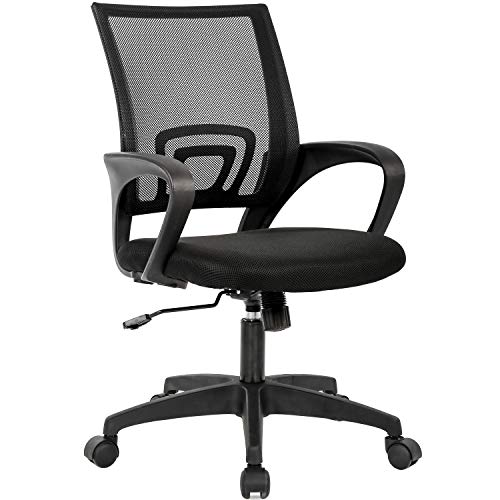
The BestOffice Ergonomic Office Chair — The BestOffice mid-back swivel chair is a conventional mesh task chair with armrests, a lumbar curve, and a swivel base. It's a perfectly reasonable desk chair, and it's by far the most widely bought product in this lineup. But it's not a kneeling chair, and it does the opposite of what one does. It holds your hips at roughly 90 degrees and gives you a backrest to lean into. If you want the chair you rotate into when your knees need a break from kneeling, this is a sensible and inexpensive one to own alongside a kneeling model. It just isn't a substitute for it.
Getting used to a kneeling chair
Start short. Physical therapists commonly cap early sessions at 30 to 60 minutes, and there's a good reason for that. Your core and lower back are doing stabilization work they haven't done before, and your shins are carrying weight they aren't used to. Sore muscles in week one are normal. Sharp knee pain isn't, and that's your signal to stop. Set the seat so your thighs sit at roughly a 60-to-70-degree angle to the floor, then check that your elbows land near desk height. If your shins hurt more than your back feels better, the seat is probably too low. APTA guidance recommends pairing kneeling with regular standing breaks rather than treating it as a full workday chair. Wipe fabric seats with a damp cloth, and check the bolts on any frame with a rocking base every few months.
Questions we get
Do kneeling chairs actually improve posture?
They change your posture while you're sitting in them, which isn't quite the same thing. A published ergonomics study in the National Library of Medicine found forward-tilting kneeling seats increased measured lumbar lordosis compared with flat conventional chairs. That means your lower back holds more of its natural inward curve. Whether that translates into better posture when you stand up depends on how much you use it and what else you're doing.
Are kneeling chairs bad for your knees?
They can be, if you already have knee problems. Ergonomists consulted by WebMD advise against kneeling chairs as your only seating when there's a pre-existing knee injury, because the pressure on your shins and kneecaps is constant. Most of your weight still rests on your buttocks, not your knees, but the shin contact never lets up. Talk to a doctor first if your knees are already a concern.
How long should you sit in a kneeling chair each day?
Start with 30 to 60 minutes at a time, which is what physical therapists typically recommend for new users. Build up gradually over a few weeks. Cleveland Clinic specialists caution against full-day use without breaks, and Mayo Clinic's ergonomics guidance suggests rotating between several sitting positions rather than staying in any one. Think of it as one chair in a rotation, not a replacement.
What's the difference between a rocking and a fixed-angle kneeling chair?
A rocking chair sits on curved runners that let you drift forward and back continuously. Varier patented that design in 1979, and the Variable Balans still uses it. A fixed-angle chair locks you into one seat position. The rocking version keeps your muscles making small adjustments, which HFES seating research suggests is better for reducing cumulative spinal disc pressure than staying static.
Are kneeling chairs good for tall people?
Some are. The Sleekform Austin states a fit range from 5'2" to 6'6", which is the widest here. The DRAGONN adjusts from 21 to 28 inches, so it can rise to meet a taller desk. Fixed-height models like the Varier Variable Balans are less forgiving, and if you're at either end of the height spectrum you should measure your desk before committing.
Is it normal for your shins to hurt at first?
Mild soreness in the first week or two is common, since your shins are supporting weight in a new way. Persistent or sharp pain usually means the seat height is wrong relative to your desk. Thicker cushioning helps a lot, which is why the Sleekform's four-inch seat and the NYPOT's high-density foam are worth the upgrade over thin vinyl pads. Consumer Reports suggests buying during a return-eligible period for exactly this reason.
Why you should trust us
For this guide:
- We read manufacturer specification sheets and listing details for every chair here, comparing stated height ranges, weight capacities, cushion thickness and warranty terms side by side.
- We reviewed published ergonomics guidance from Mayo Clinic, Cleveland Clinic, OSHA, Spine-health, Healthline, WebMD, APTA, Consumer Reports and the Human Factors and Ergonomics Society on kneeling posture and alternative seating.
- We looked at recurring themes in owner feedback across these models, particularly around shin pressure, assembly quality and the multi-week adjustment period.
- We read owner reviews on every listing, weighted toward the critical ones, because that is where the recurring failures show up.
- We have a systematic way of automatically fetching the latest prices, so the numbers on this page stay current.
- This is a research-focused guide, so the team may not own every product listed — though we often do own the top winners, which gives us extra context for the recommendations.
- We don't accept free products, and the retailer commission never changes which product we recommend.
Sources
Ergonomic Office: Kneeling Chairs and Posture, Spine-health.com
Office ergonomics: Your how-to guide, Mayo Clinic
Back Pain at Work: Ergonomic Solutions, Cleveland Clinic
The Best Office Chair for Every Kind of Butt, Wirecutter
What Is a Kneeling Chair and Does It Work?, Healthline
Ergonomic Seating and Musculoskeletal Health, National Library of Medicine (PMC)
Varier Variable Balans Official Product Page, Varier
Human Factors and Ergonomics Society: Seating Guidelines, Human Factors and Ergonomics Society (HFES)
How to Choose an Ergonomic Chair, WebMD
OSHA Computer Workstations eTool: Seating, OSHA
Consumer Reports: Home Office Furniture Buying Guide, Consumer Reports
Ergonomics for Students: Desk Setup Tips, American Physical Therapy Association (APTA)
Amazon product listings and owner reviews for all 8 products
Manufacturer specification pages for each product
Some passages in this guide may be paraphrased with AI help.
Product prices and availability are accurate as of the date/time indicated and are subject to change. Any price and availability information displayed on Amazon.com at the time of purchase will apply to the purchase of this product.
More like this.
Continue exploring home reviews and recommendations.

The Best Nursery Gliders and Rocking Chairs
You'll spend more hours in this chair than you expect. Newborn feeds come every two or three hours, day and night, and a slow one can run 40 minutes.…

The Best Ergonomic Office Chairs for Back Pain
Your chair decides how your lower back feels at 4 p.m. If you sit six to ten hours a day, that's not a small thing. The spine has a natural inward curve…

The Best Posture Correctors and Back Braces
Your back usually starts complaining at the worst time - hour six at a desk, the third trip up the stairs with boxes, the long drive home. A brace isn't a…

The Best Posture Correctors for Desk Workers
You feel it around three in the afternoon. Your shoulders have crept forward, your chin juts toward the monitor, and there's a hot band of tension between…

The Best Shower Chairs for Seniors
A shower chair is one of the simplest safety upgrades you can make to a home, and one of the few that changes a daily routine immediately. Standing on wet…

The Best Gaming Chairs
A gaming chair is the one piece of your setup you touch for every second you use it. Mice and keyboards get swapped on a whim, but the chair is what…