The Best Posture Correctors for Desk Workers
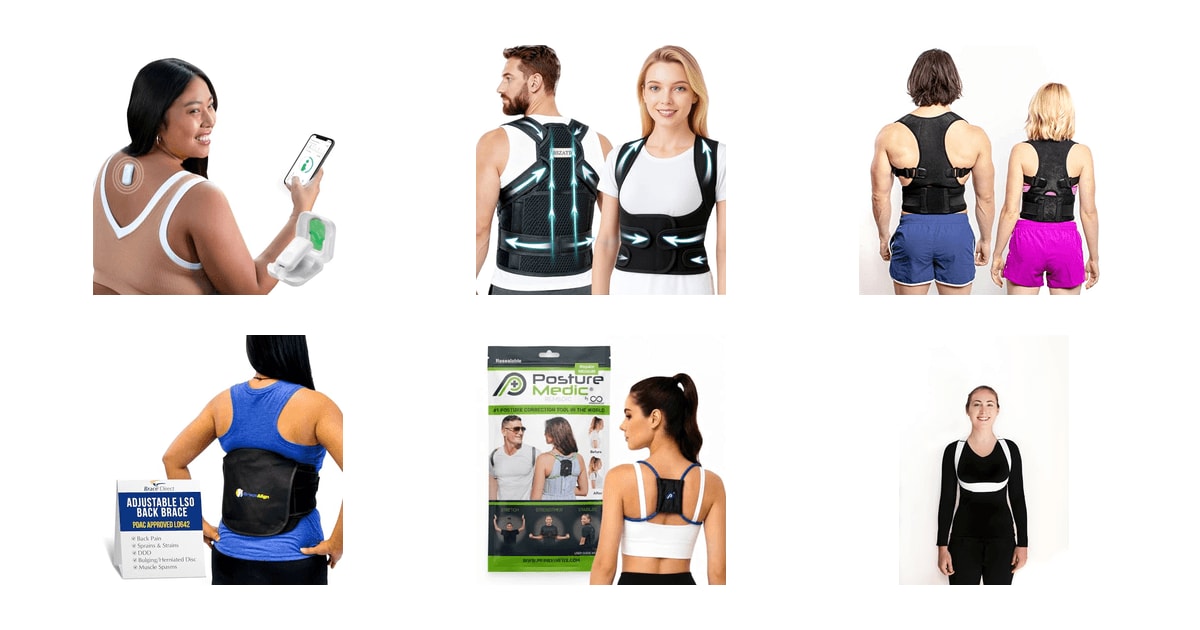
You feel it around three in the afternoon. Your shoulders have crept forward, your chin juts toward the monitor, and there's a hot band of tension between your shoulder blades. A survey of office workers found that 68% report upper-back or neck discomfort after a typical workday, ahead of wrist and eye strain. A posture corrector won't fix your desk setup or your habits. But it can interrupt the slouch often enough that you start catching yourself, which is really the whole point.
Here's the honest caveat: no corrector in this category makes your posture better by holding you upright. Physical therapists generally cap passive brace wear at a couple of hours a day, because a strap doing the work of your spinal stabilizers can let those muscles get lazy. Braces also chafe under the arms, ride up, and loosen over a long day. The research consistently points the same direction — the gains come from awareness, not from the fabric.
So we looked for correctors that build the habit rather than replace it, that stay comfortable through a real workday, and that you can actually get on by yourself. We think that the Upright GO 2 Premium is the best posture corrector for most desk workers, and that the FlexGuard Posture Corrector is the one to buy if you'd rather have a simple strap you can feel working the moment you put it on.
Everything we recommend

A nudge instead of a strap, and the habit tends to stick

A simple strap you feel working the second you cinch it

Full-back coverage when your lower back hurts too

Resistance training, not a strap that does the work for you
At a glance
| Product | Corrector Type | Size Range | Price | |
|---|---|---|---|---|
| Upright GO 2 PremiumTop pick | Trainer | — | $79.80On sale |
| BSZATB Posture Corrector for Women and MenAlso great | Brace | Waist 24-29in | $27.99 |
| FlexGuard Posture Corrector for Women and MenRunner-up | Brace | X-Large | $18.04 |
 | Brace Align LSO Back BraceAlso consider | Brace | Waist 23-50in | $68.99 |
| PostureMedic Plus Strength Dynamic Posture Corrector forUpgrade pick | Trainer | Medium | $42.95 |
 | BAX-U BAX000 Posture Support and Correction-Extra Small-BlackAlso in lineup | Brace | Extra Small | $69.95 |
How we picked
Habit versus holding. We favored designs that build posture awareness over ones that simply strap you in place. Published trials and clinical reporting both point to awareness training producing more durable results than passive bracing.
All-day comfort. We read owner feedback for the complaints that make people quit — armpit chafing, straps loosening, bulk showing through clothing. Anything with a pattern of these got marked down.
Fit range. We looked at how many sizes each maker offers and how clearly it publishes measurements. A corrector that only half-fits you won't get worn.
Discretion at work. For anyone on video calls or in an office, a visible brace is a non-starter. We checked profile, thickness and where the hardware sits relative to a collared shirt.
Solo on and off. We prioritized designs that one person can fasten without a mirror or a helper. Rear-buckling systems and complicated strap routing lost points.
Top pickOn sale
A nudge instead of a strap, and the habit tends to stick
Upright GO 2 Premium
The Upright GO 2 is a coin-sized sensor that sticks to your upper back and buzzes when you slump. It trains awareness instead of holding you in place, and the app turns your posture into a number you can actually watch improve week to week.
$79.80fromAmazonList priceThe buzz is the whole product, and it works because it's annoying in the right way. You calibrate an upright position, then go about your day. Slouch past that threshold and you get a small vibration between your shoulder blades. It's not painful, but it's impossible to ignore. Owners describe the effect the same way: they start correcting before the vibration even fires, which is the behavior change you're paying for.
Upright's own clinical study reports that users improved upright posture time by 91% after two weeks of daily training, and Tom's Guide found that 78% of its test users had less shoulder tension after three weeks. Treat the vendor number with appropriate skepticism. But Wirecutter's four-week user trial pointed the same way — smart trainers produced more durable posture awareness than passive braces, which showed backsliding once people took them off.
It disappears under clothing. The device weighs well under an ounce and sits flat against your skin, so nobody on a video call knows it's there. If you're the person who bought a brace, wore it twice, and stopped because it showed through a dress shirt, this solves that specific problem. The app runs on iOS 13 or Android 9 and later, and it hands you daily reports rather than a raw stream of data.
Training mode matters more than tracking mode. The GO 2 separates the two, and the sensible routine is short training blocks that ramp up over weeks rather than all-day buzzing. That structure also keeps this from becoming the thing you resent by Wednesday. The GO 2 adds an extra movement sensor, longer battery life and more feedback vibration patterns than the smaller GO S.
Flaws but not dealbreakers
The adhesives are the weak link, and they're consumable. Each pad is good for a few uses depending on your skin, and plenty of owners report the sensor peeling loose mid-day — especially if you're warm or sweaty. You'll be rebuying pads, or buying the necklace attachment separately, and that ongoing cost isn't obvious when you're looking at the box.
Setup frustrates people. Several owners describe fighting the app through pairing and calibration before anything worked, and reports of customer service problems come up more than we'd like. This is also a device you have to charge and remember to put on, which is a higher bar than pulling on a strap.
It gives you zero physical support. If your back hurts right now and you want something that holds your shoulders back today, this is the wrong tool. The GO 2 only reminds.
Runner-up
A simple strap you feel working the second you cinch it
FlexGuard Posture Corrector for Women and Men
The FlexGuard is a straightforward adjustable brace that pulls your shoulders back and stays hidden under a shirt. It won't retrain anything on its own, but for short sessions at a desk it's the most broadly wearable strap-style corrector we looked at.
$18.04fromAmazonThis is the one to get if the sensor approach sounds like homework. You put it on, tighten the straps, and your shoulders go where they should. Owners consistently describe it as easy to figure out and easy to adjust, and several note it's genuinely discreet under work clothes. There's no charging, no app, no pairing.
Four sizes is more than most competitors bother with. Fit is the single biggest predictor of whether a brace gets worn or shoved in a drawer, and a strap that's too big just slides around your ribs. Measure before you order, and read the chart rather than guessing from your shirt size — the most common complaint here is people landing between two sizes and picking wrong.
The evidence for this style is decent. A peer-reviewed study in the Journal of Physical Therapy Science found four weeks of brace wear significantly reduced thoracic kyphosis angles versus a control group. Good Housekeeping's testers evaluated a dozen correctors and rated figure-8 clavicle designs the most comfortable for full-workday wear, ahead of full-back and lumbar-only models. This sits squarely in that shoulder-retraction category.
Flaws but not dealbreakers
It's fabric and Velcro, and it feels like it. Owners who wanted rigid support — particularly after back surgery — are the ones writing the harshest reviews, and they're not wrong about what this is. It nudges your shoulders back. It doesn't stabilize a spine.
The straps rub under the arms. That's true of nearly every figure-8 brace, but it means a t-shirt underneath is basically mandatory. It also loosens over a few hours, so expect to re-cinch it. And it's a passive brace, which means the two-hour daily ceiling applies.
Also great
Full-back coverage when your lower back hurts too
BSZATB Posture Corrector for Women and Men
This BSZATB brace runs from your shoulders down over your lumbar spine, with four removable support bars and a wide waist belt. If your pain isn't only between the shoulder blades, it covers ground the shoulder-only straps don't.
$27.99fromAmazonMost desk workers need upper-back correction. Some need both. Sitting more than six hours a day makes you 1.37 times more likely to report chronic low-back pain than sitting fewer than three, and if that's you, a clavicle strap addresses half the problem. This brace wraps the waist and pulls the shoulders, so you're supporting the whole chain.
The removable bars are the useful part. Four flexible stays slide out, which lets you dial the rigidity down as your tolerance changes — or pull them all for a light day. The shoulder and waist straps adjust independently too, so you can crank lumbar compression without strangling your armpits. That's more control than a one-piece strap gives you.
The 3D mesh panels help on the comfort side, and the wide belt spreads pressure instead of digging a line into your waist. Sizing runs by waist measurement — small covers roughly 24 to 32 inches, medium 32 to 38 — so measure at the navel rather than trusting your pants size.
Flaws but not dealbreakers
It's a newer listing without much of a track record, so we can't tell you how the Velcro or the mesh holds up over a year. Judge it on construction rather than on a long history of owner reports.
Full-back braces are bulkier than clavicle straps, and the claim that it's invisible under clothing is optimistic — under a fitted shirt you'll see the waist belt. Good Housekeeping's testers also ranked full-back designs behind figure-8 styles for all-day comfort. The two-hour wear ceiling applies here as much as anywhere.
Upgrade pick
Resistance training, not a strap that does the work for you
PostureMedic Plus Strength Dynamic Posture Corrector for
The PostureMedic Plus is an elastic resistance system you wear for short sessions and also use for a set of stretching and strengthening drills. It's the one corrector here that actively works the muscles a passive brace lets go slack.
$42.95fromAmazonThis is the answer to the atrophy problem. The whole objection to posture braces is that they do your muscles' job. The PostureMedic inverts that — the tubing resists your shoulders as you hold position, so staying upright takes effort. The included program builds around stretch, strengthen and stabilize phases with drills rather than just telling you to wear the thing.
It's built for people who need real resistance. The Plus strength level is the heavier of the two, aimed at athletes and anyone with more muscle to work against. If you lift, or you're a larger person who has found other braces limp, this is the version that'll actually challenge you. Sports chiropractors and athletic trainers are the professional audience the design targets.
Sessions are short by design. Owners describe wearing it for well under half an hour and still feeling the shoulders-back cue afterward — which is exactly how a resistance trainer should behave. It's a workout tool that happens to look like a brace, and it comes with a lifetime warranty and US-based support.
Flaws but not dealbreakers
It gets uncomfortable fast. That's partly the point, but owners report the elastic digging into the armpits within minutes, and a few describe it as outright painful. This is not something you wear through a meeting.
Durability reports are mixed. At least one owner describes the system falling apart after a few months of light use, and had a rough time with the company afterward. Sizing also runs small, so size up if you're between numbers.
You have to actually do the drills. Worn passively for a few minutes a day, it doesn't do much that a cheaper strap wouldn't.
The PostureMedic Plus is backed by a lifetime warranty with US-based support.
Who this is for
Buy one of these if you sit at a computer most of the day and you've noticed your shoulders rounding forward, your neck aching by evening, or that band of tightness between the shoulder blades. Correctors help most as a cue — a reminder that interrupts a slouch you didn't notice you were in. Forward head posture at 60 degrees puts something like 60 pounds of effective load on your cervical spine, so the difference between chin-tucked and chin-forward isn't cosmetic. Give it two to four weeks before judging results.
Skip these if you have a diagnosed spinal condition, ongoing nerve pain, or you're recovering from surgery — that's a conversation with a physical therapist, not an Amazon purchase. This guide covers wearable correctors for desk work: shoulder-retraction braces, full-back braces, resistance trainers and sensor-based coaches. It doesn't cover chairs, standing desks, monitor arms or lumbar cushions, and it isn't about medical-grade orthotic bracing prescribed for a specific injury.
How we picked
We weighed five things. Habit versus holding: designs that train awareness beat designs that just hold you upright, because the published evidence says awareness sticks and bracing backslides. All-day comfort: we read owner feedback for the chafing, loosening and bulk complaints that make people abandon a corrector in week one. Fit range: more sizes and clearer measurement charts, since a poorly fitted brace is a useless brace. Discretion at work: low profile under a shirt, because a corrector you're embarrassed to wear on camera doesn't get worn. Solo on and off: you should be able to fasten it yourself, without a mirror or a second pair of hands.
Other posture correctors for desk workers worth considering
If your problem is really your lower back: The Brace Align LSO Back Brace ($68.99) — The Brace Align LSO is a lumbar support rather than a posture corrector, and it's a serious one — rigid panels, a pulley compression system and PDAC L0642 certification that may make it eligible for insurance coverage. Owners describe surgeons and physical therapists pointing them toward this style of brace for sitting pain and sciatica. It does nothing for rounded shoulders or forward head posture, which is the main thing desk work does to you, so it isn't a substitute for our picks. But if sitting through a workday hurts low and central rather than up between the shoulder blades, it addresses the right region. Brace Direct also offers a free video fitting session, which is unusual and genuinely useful for a brace this adjustable.
The competition
This is what our research surfaced in this category, not a census of everything for sale. Posture correctors are a crowded, fast-churning shelf, and plenty of near-identical straps come and go under different brand names. Here's the one product we looked at closely that didn't earn a spot above.
The BAX-U BAX000 Posture Support and Correction-Extra Small-Black ($69.95) — The BAX-U is a thin figure-8 shoulder-retraction brace developed with chiropractors, and on paper it's exactly the style Good Housekeeping's testers rated most comfortable for full-day wear. It's genuinely slim — about an inch thick — and it won an industry retail product award for its design. But the listing has almost no owner history behind it, and the little feedback that exists splits hard between people who love it and people who found the sizing badly off. The extra-small in particular drew a complaint about running far smaller than the chart suggests. If your physical therapist specifically recommends it, or you've worn one before and know your size, it's a reasonable pick. For everyone else, the FlexGuard offers the same shoulder-retraction approach with a much larger body of feedback to judge fit against.
How to wear one without making things worse
Start short. Twenty to thirty minutes a session is the standard recommendation, and physical therapists generally cap passive brace wear at about two hours a day — worn longer, a brace does the work your spinal stabilizers should be doing, and those muscles get weaker. Wear a thin shirt underneath any strap-style corrector; bare skin under elastic means chafed armpits by lunch. Check your tension after an hour, since Velcro creeps and most braces loosen. Wash fabric braces by hand and air-dry them, because a hot dryer kills elastic and Velcro alike. For the Upright GO 2, wipe your skin with the alcohol pad before applying an adhesive and give it a minute to cure. Finally, none of this substitutes for raising your monitor to eye level and standing up every half hour.
Questions we get
Do posture correctors actually work, or are they a gimmick?
They work, but not the way most people expect. A peer-reviewed study in the Journal of Physical Therapy Science found four weeks of brace wear significantly reduced thoracic kyphosis angles against a control group. The catch is that the benefit comes largely from the reminder — Wirecutter's four-week user trial found vibration trainers produced more durable posture awareness than passive braces, which backslid once removed.
How long should I wear one each day?
Start with 20 to 30 minute sessions, and don't exceed about two hours a day with a passive brace. That ceiling comes from physical therapists worried about your spinal stabilizer muscles weakening when a strap does their job. Sensor-based trainers like the Upright GO 2 don't carry the same restriction, since they cue you rather than hold you.
Can wearing one make my back muscles weaker?
It can, if you overdo it. The concern is real enough that it drives the standard time limits — muscles that are consistently relieved of a job tend to stop doing it. Stick to short sessions, and pair the brace with strengthening work rather than treating it as a permanent fix. A resistance system like the PostureMedic Plus sidesteps the issue by making your muscles work against tension.
What's the difference between a posture corrector and a back brace?
A posture corrector pulls your shoulders back and cues alignment; it's usually soft and light. A back brace — like the Brace Align LSO — uses rigid panels and compression to stabilize an injured or painful lower back. Different jobs. Most desk workers with rounded shoulders and neck tension want the corrector.
Is a smart trainer worth it over a simple brace?
If you want lasting change, probably yes. The evidence favoring awareness training over passive support is fairly consistent, and the app data makes progress visible in a way a strap never will. But a sensor demands charging, pairing and consumable adhesives. If you want relief today with no setup, a strap is the easier answer.
How long before I see results?
Give it two to four weeks of consistent use. Clinical work on posture training points to measurable changes in that window, and Upright's own study reports gains after two weeks of daily sessions. If a month goes by with no change in how your back feels at 4 p.m., the corrector probably isn't the missing piece — look at monitor height and how often you stand up.
Why you should trust us
For this guide:
- We read manufacturer specifications and size charts for every corrector here, alongside published evaluations from Good Housekeeping, Tom's Guide, Forbes Health and Wirecutter.
- We reviewed peer-reviewed findings from the Journal of Physical Therapy Science and Preventive Medicine Reports, plus guidance from the American Chiropractic Association and the Cleveland Clinic.
- We compared recurring themes in owner feedback — chafing, sizing accuracy, strap slippage and adhesive failure — across all of these listings.
- We read owner reviews on every listing, weighted toward the critical ones, because that is where the recurring failures show up.
- We have a systematic way of automatically fetching the latest prices, so the numbers on this page stay current.
- This is a research-focused guide, so the team may not own every product listed — though we often do own the top winners, which gives us extra context for the recommendations.
- We don't accept free products, and the retailer commission never changes which product we recommend.
Sources
Best Posture Correctors – Wirecutter / New York Times, Wirecutter
Best Posture Correctors of 2026 – Forbes Health, Forbes Health
Do Posture Correctors Actually Work? – Healthline, Healthline
Posture Corrector Clinical Review – Cleveland Clinic, Cleveland Clinic
Work-Related Musculoskeletal Disorders Data – Bureau of Labor Statistics, Bureau of Labor Statistics
Upright GO 2 Clinical Study, Upright (peer-reviewed study cited by manufacturer)
Best Posture Correctors – Good Housekeeping, Good Housekeeping
Posture and Musculoskeletal Health – Mayo Clinic, Mayo Clinic
Effect of Posture Braces on Thoracic Kyphosis – Journal of Physical Therapy Science, Journal of Physical Therapy Science / PubMed
Best Posture Correctors – Verywell Health, Verywell Health
Sedentary Behavior and Musculoskeletal Pain – Preventive Medicine Reports, Preventive Medicine Reports / PubMed
Posture Corrector Buying Guide – Tom's Guide, Tom's Guide
Amazon product listings and owner reviews for all 6 products
Manufacturer specification pages for each product
Some passages in this guide may be paraphrased with AI help. Prices are refreshed automatically.
More like this.
Continue exploring health reviews and recommendations.

The Best Posture Correctors and Back Braces
Most of us slouch without noticing. You lean toward a monitor, your shoulders round forward, and by mid-afternoon your neck and upper back ache. A posture…

The Best Kneeling Chairs for Posture Correction
A kneeling chair does one simple thing: it opens the angle between your torso and thighs to roughly 60 to 90 degrees instead of the locked 90 you get in a…

The Best Under Desk Ellipticals
You sit more than you think. Between email, meetings and the occasional doomscroll, most desk days pass with your legs completely still. An under-desk…

The Best Under-Desk Treadmills
Sitting still for eight hours is the default of desk work, and most of us feel it by mid-afternoon. An under-desk treadmill is a way out that doesn't…

The Best Height-Adjustable Standing Desks
A standing desk earns its keep in the small moments. It's the mid-afternoon slump when your lower back starts complaining and you'd rather not sit through…

The Best Noise-Cancelling Headphones for Focus and Deep Work
Most of us don't get to pick where we work. The open-plan office hums, the espresso machine shrieks, and the guy two desks over takes every call on…