The Best Lumbar Support Cushions
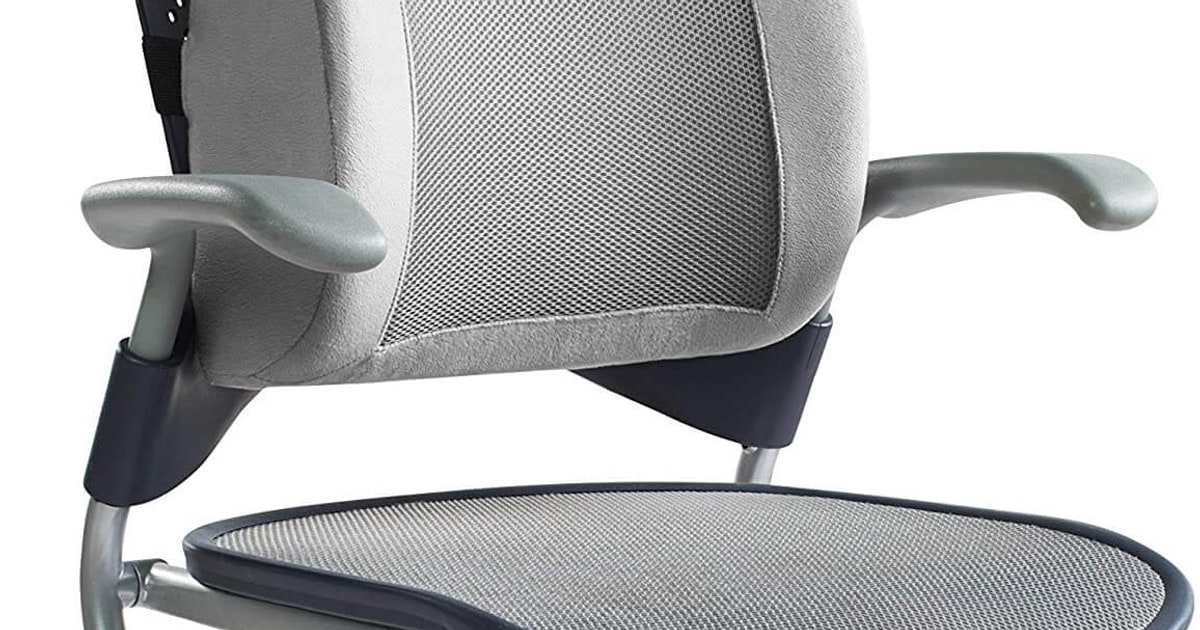
Your chair's backrest is flat. Your lower back isn't. A lumbar cushion fills that hollow just above your beltline so your spine keeps its natural inward curve instead of slumping into a C by mid-afternoon. If you sit for six or eight hours a day, you notice the difference as less aching before dinner, fewer stretch breaks, and less of that stiff, seized-up walk to the kitchen. The good ones do this quietly and stay exactly where you put them.
Here's the honest part: no cushion fixes a bad setup. If your feet dangle or your monitor sits too low, a pillow just moves the strain around. Every foam cushion also softens over time, and almost no brand discloses foam density, so you're trusting a listing. Straps are the other weak link. Elastic loosens, buckles creep down the chair back, and a cushion that drifts two inches too low supports your tailbone instead of your lumbar curve.
So the question isn't which cushion has the fanciest contour. It's which one holds its position and its shape while you fidget through a workday, and whether it suits your back, your chair, and how warm you run. We think that the QUTOOL Lumbar Support Pillow is the best lumbar support cushion for most people, and that the ComfiLife Lumbar Support Back Pillow is the one to buy if you have a diagnosed back problem and want a slimmer, cooler-running cushion.
Everything we recommend

Stays put all day, and it's firm enough to still help by five
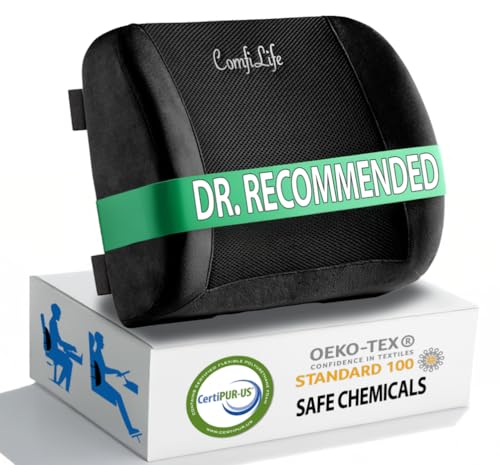
A slimmer, cooler cushion for chronic or diagnosed back pain

A slim, secure cushion if you're not sure this will help yet

Dense, packable foam for flights and hotel chairs
At a glance
| Product | Price | |
|---|---|---|
 | Everlasting Comfort Lumbar Support Pillow for OfficeAlso in lineup | $49.99 |
| ComfiLife Lumbar Support Back Pillow Office ChairRunner-up | $37.45 |
| Lumbar Support Pillow for Office ChairTop pick | $26.99On sale |
| Tempur-Pedic All-Purpose Memory Foam Travel PillowAlso great | $37 |
 | SAIREIDER Seat Cushion and Lumbar Support PillowAlso consider | $29.95 |
| LOVEHOME Lumbar Pillow for Chair and CarBudget pick | $22.99 |
 | AUVON Lumbar Support Pillow for Office ChairAlso consider | $23.99 |
 | Ergonomic Lumbar Support Pillow for Office ChairAlso consider | $34.99 |
How we picked
Foam that holds up. We favored cushions where the listing states high-density molded memory foam and where owner feedback after months of use still describes firm support. Cushions that owners describe going flat were out.
Straps that hold position. Sliding is the most-reported failure in owner feedback across this whole category. We gave clear preference to dual-strap designs and to straps long enough for a wide chair back without extra hardware.
Heat and washability. Mesh and honeycomb covers move more air than solid fabric, and a removable cover is what keeps a cushion in use rather than replaced for hygiene. We checked listings for both.
Fit across body sizes. We compared listed height and depth against the complaints tall and broad owners raise most often — coverage stopping too low, and straps that won't stretch around a large chair.
Contour that suits real backs. Published ergonomic guidance points to broad support across the lumbar curve rather than pressure at one point. We weighted moderate contours over aggressive bulges, which owner feedback shows are polarizing.
Top pickOn sale
Stays put all day, and it's firm enough to still help by five
Lumbar Support Pillow for Office Chair
The QUTOOL is a firm, generously sized memory-foam cushion held on by two long straps instead of one. It's the cushion we'd hand to someone who keeps having to reach behind their back and shove a pillow up again, because this one mostly doesn't move.
$26.99fromAmazonList priceThe single most common complaint about lumbar cushions isn't comfort — it's that they slide. One elastic strap around a chair back is a loose promise. QUTOOL uses two adjustable straps, and the company lengthened them rather than shipping separate extenders, so they reach around wide task chairs and truck seats. Owners who fidget, swivel and get up constantly report the cushion is still in place when they sit back down.
The foam is firm, and that's deliberate. Soft cushions feel great for ten minutes and then flatten under your weight, which is when the support quietly disappears. QUTOOL's molded high-density core pushes back steadily instead. Several owners mention the first day or two feeling almost too firm before their back adjusted, then not wanting to go back. If you're used to a squashy throw pillow behind you, expect a short adjustment period.
The cover is 3D mesh, removable and machine washable. That matters more than it sounds. A cushion your back leans on for eight hours a day gets sweaty, and the ones with sewn-in covers get retired for hygiene long before the foam gives out. The mesh also keeps air moving against your shirt, which is the difference between a comfortable afternoon and a damp one in a warm room.
It's a big cushion — roughly 16 inches tall and wide, with wings that wrap slightly around your sides. On a standard office chair that's a plus, because it covers the whole lower back rather than poking one vertebra. Owners driving long distances say it works well against a car seat too, particularly if a tilted headrest has been shoving their neck forward.
Flaws but not dealbreakers
It's thick. In a small car, that extra depth pushes you noticeably closer to the wheel, and a few owners found the wing shape genuinely too bulky against a bucket seat. Measure the space you actually have before you commit.
Firm and large also means warm. The mesh helps, but there's a lot of foam against your back, and people who run hot report the contact area heating up over a long session. And the contour is a medium arch rather than a deep one — if you want a pronounced bulge pressing into your lumbar curve, this isn't it.
Runner-up
A slimmer, cooler cushion for chronic or diagnosed back pain
ComfiLife Lumbar Support Back Pillow Office Chair
The ComfiLife is a slim contoured memory-foam cushion with a breathable 3D mesh cover, marketed with chiropractor backing. It's the one to get if you have a real diagnosis, run warm, or found the QUTOOL simply too thick for your chair.
$37.45fromAmazonThis is the cushion people with degenerative discs and long-standing lower back trouble keep coming back to. Owner feedback skews heavily toward folks who've already tried three or four other cushions. The contour is anatomical rather than aggressive: it fills the curve from your sacrum up to about the bottom of your ribs, spreading support across the whole lumbar region instead of jabbing at one spot.
It's the better pick if your chair or car seat can't take a thick cushion. The ComfiLife is noticeably slimmer than our top pick, so it fits under a contoured gaming chair, a recliner or a driver's seat without shoving you forward. The trade-off is less wrap-around coverage. But for a small frame, or a chair that already has a shallow built-in curve, less bulk is the whole point.
The 3D mesh cover is the other reason to choose it. Foam traps heat against your back, and a mesh face lets some of that escape. The cover is removable and washable, which is what keeps a cushion in service for years rather than months.
One thing to plan for: this foam is genuinely temperature-responsive. In a cold office or a car in winter it feels stiff for the first ten or fifteen minutes, then softens as it warms to your body. That's normal memory foam behavior, not a defect, but it surprises people who sit down expecting immediate give.
Flaws but not dealbreakers
There's one strap, not two, and it's elastic. On a wide executive chair or a strongly contoured car seat, owners report it working its way down over a day. Check it when you sit down, the way you'd check a seat belt.
It's also a genuinely modest cushion. If you're tall or broad, the coverage stops lower on your back than you might want, and there's no thoracic support at all. And it can only do so much: it eases pain while you're sitting, and it won't touch whatever is causing the pain in the first place.
Budget pick
A slim, secure cushion if you're not sure this will help yet
LOVEHOME Lumbar Pillow for Chair and Car
The LOVEHOME is a compact memory-foam cushion with two adjustable straps, extension straps and a washable mesh cover. It costs a fraction of what the premium options do, which makes it the sensible way to find out whether a lumbar cushion helps you at all.
$22.99fromAmazonPlenty of people aren't sure a pillow behind their back will do anything. Fair enough. The LOVEHOME is the low-commitment answer: it has the two things that actually matter — a real memory-foam core and dual straps with extenders — without the premium price. Owners describe it as firm but not hard, and it's held up well enough that people buy a second one for the car.
Its slimness is the reason to choose it, not a compromise. At a little over four inches deep, it slots into the gap in a desk chair without tipping you forward. Owners with a broken seat adjuster or a too-deep car seat use it mainly to stop themselves sliding into a slouch, and that's exactly the job it does best. A thicker cushion in the same chair would just feel like a wedge.
The washable mesh cover comes off and goes in the machine, and multiple owners specifically call out not getting sweaty against it during long sits. On a cushion at this price, a removable cover is the feature that decides whether you still own it in two years.
Flaws but not dealbreakers
It's short. Vertical coverage runs about 13 inches, so if you're over six feet the support stops well below where you want it. Taller people should look at the QUTOOL or the Givanlee instead.
It doesn't play well with bucket seats — owners report the straps holding it a couple of inches off a curved car seat rather than flat against it. And LOVEHOME doesn't publish a foam density, so there's no way to know how it'll hold up compared with cushions that do.
Also great
Dense, packable foam for flights and hotel chairs
Tempur-Pedic All-Purpose Memory Foam Travel Pillow
The Tempur-Pedic peanut-shaped pillow uses the same TEMPUR foam as the company's mattresses in a small, portable form. It has no strap, so it's a travel and couch cushion first — but the foam quality is a clear step up from anything else here.
$37fromAmazonThis is the one to throw in a carry-on. It weighs half a pound, holds its shape indefinitely, and the peanut profile lets you use it three ways: horizontal as a lumbar roll, vertical behind your neck, or between your knees on a red-eye. Owners with disc problems say it's what finally made long flights and long drives tolerable, which is a narrow but real job.
The foam is the reason to pay more. TEMPUR material is denser and slower to rebound than the generic memory foam in most cushions, so it molds to your back and then stays molded rather than compressing flat. That's the failure mode that kills cheap cushions within months. This one won't collapse.
The cover zips off and machine washes. Interestingly, several owners prefer using the pillow without its cover, which loosens the feel slightly — worth trying if the pillow strikes you as too firm out of the box.
Flaws but not dealbreakers
There's no strap. None. On an office chair it migrates within an hour of normal fidgeting, which is why we don't recommend it as your everyday desk cushion.
It's also small. The peanut covers a narrow band of your lower back, so taller people get support at roughly one level rather than across the whole lumbar curve. And opinions on firmness split sharply — some owners find it perfect, others find it hard enough to be uncomfortable against a bony spine. It's the most you can spend here for the least coverage.
Who this is for
Buy one of these if you sit for long stretches — at a desk, in a truck cab, in a wheelchair — and your chair's backrest leaves an obvious gap behind your lower back. A cushion is also a cheap experiment before you spend serious money on an ergonomic chair. If you're pregnant and your center of gravity has shifted forward, a strapped contoured cushion helps hold alignment your chair can't.
Skip it if your setup is the actual problem. Feet dangling, knees higher than hips, monitor down near the desk — fix those first, or the cushion works against you. This guide covers portable lumbar cushions for chairs and car seats. It doesn't cover chairs with built-in lumbar systems, seat cushions on their own, or any medical treatment. If you have a diagnosed disc, scoliosis or nerve condition, talk to your specialist before relying on a cushion.
How we picked
We compared listing specifications, published reviews and recurring themes in owner feedback against five things. Foam: high-density molded memory foam that owners still describe as supportive months in, not softened polyfoam. Attachment: dual adjustable straps beat a single elastic loop, and long straps beat separate extenders. Heat: mesh or honeycomb covers over solid fabric, because foam traps warmth against your back. Cleaning: a removable, machine-washable cover, since hygiene retires more cushions than worn-out foam does. Fit: listed height and depth checked against what tall, broad and small-framed owners report — coverage that stops too low, or bulk that pushes you toward the steering wheel.
Other lumbar support cushions worth considering
If you want a cushion that targets one precise spot: The AUVON Lumbar Support Pillow for Office Chair ($23.99) — The AUVON has a patented bulge, developed with physical therapists, sitting in a four-zone layout that wraps from your upper back down to your pelvis. Owners recovering from a slipped disc are unusually enthusiastic about it, and the honeycomb fabric breathes well. It's more opinionated than our picks, though. If your lumbar curve is shallow, that bulge can feel like a lump in the wrong place, and several owners report the straps barely stretching around a large office chair.
If your tailbone hurts as much as your lower back: The SAIREIDER Seat Cushion and Lumbar Support Pillow ($29.95) — The SAIREIDER is the only two-piece set here, pairing a lumbar pillow with a U-shaped seat cushion that suspends your tailbone above the hard seat. For sciatica and coccyx pain, relieving pressure from both directions makes more sense than a lumbar cushion alone. The catch is that neither piece is as substantial as a dedicated one, the seat cushion has no straps and shifts when you stand, and the extra seat height may mean re-adjusting your desk or monitor.
If you want support from your tailbone to your neck: The Ergonomic Lumbar Support Pillow for Office Chair ($34.99) — The Givanlee is a tall column cushion — six semicircular sections, nearly 28 inches of coverage — that works as lumbar support, back cushion and neck pillow at once. Tall people and anyone who slides down their chair find it does what short cushions can't, and the cover is washable. But it's sponge rather than high-density memory foam, so it'll compress sooner, and the strap is a separate loose belt. Owners consistently report having to fuss with it to stop it wandering.
The competition
This is what our research surfaced in a crowded category, not a map of everything for sale. New cushions appear constantly, most of them near-identical foam wedges under different brand names. Here's the one we looked at closely and didn't pick.
The Everlasting Comfort Lumbar Support Pillow for Office ($49.99) — The Everlasting Comfort Lumbar Support Pillow is a well-shaped cushion with a genuinely good high-density core and a gentle contour that doesn't over-arch your back. Plenty of owners are happy with it, particularly for wheelchair and dining chair use. But it's the most expensive single cushion here, and the recurring theme in owner feedback is straps that unlatch or creep down mid-session — the exact problem our top pick solves with two lengthened straps. If it fits your chair securely and you like the softer contour, it's a fine cushion; we just wouldn't bet on the attachment.
Placement and care
Placement decides whether any of this works. The cushion should sit about two to four inches above the seat pan, filling the inward curve of your lower back — not down against your tailbone, which is where most people put it and which can make things worse. Get your chair right first: feet flat, knees near 90 degrees, hips level with or just above your knees. If the cushion feels like it's pushing you forward without easing anything, slide it up an inch or two and sit again. Cinch the straps snug, then re-check them every few days, because elastic loosens. Take the cover off and machine wash it every couple of weeks. Don't wash the foam itself — spot clean it and let it dry fully.
Questions we get
Do lumbar cushions actually help with lower back pain?
For a lot of desk workers, yes — but only when positioned correctly. The cushion has to fill the natural inward curve of your lower back, two to four inches above the seat pan. Placed too low it supports your sacrum instead, which can increase strain rather than relieve it. Owners who report the biggest difference are almost always people who also fixed their chair height.
How do I position a lumbar cushion on my office chair?
Set up the chair first: feet flat on the floor, knees around 90 degrees, hips level with or slightly above your knees. Then strap the cushion so its thickest part sits in the hollow of your lower back, roughly at belt height. If it feels like it's shoving your torso forward without relieving tension, move it up about two inches and try again.
What foam should I look for?
High-density molded memory foam. It conforms to your curve, spreads pressure across the whole lumbar region and keeps its shape far longer than soft polyfoam, which flattens within a few months of daily use. Gel-infused foam runs slightly cooler but doesn't support any better. Most brands don't publish a density number, so owner reports after six months or more are the more useful signal.
Can a lumbar cushion help with sciatica?
It can ease sitting-related sciatic pain by reducing compression in the lower spine. The most effective arrangement pairs a lumbar cushion with a coccyx-cutout seat cushion, which is why the SAIREIDER set is worth a look if that's your situation. It isn't a treatment, though. For diagnosed sciatica, follow your doctor's plan and treat the cushion as comfort support during recovery.
What's the best option if I'm over six feet tall?
Most lumbar cushions are sized for average heights, so on a tall frame they end up sitting too low and supporting your sacrum. The Givanlee is the tallest option here at nearly 28 inches, covering everything up to your neck. The QUTOOL is the better standard-shaped choice, since it's larger than typical and its long dual straps hold it high on a tall chair back.
Should I use one if my chair already has built-in lumbar support?
It depends on whether that built-in curve actually matches your spine. Most factory lumbar systems are fixed at one height and one depth, and they commonly sit lower than they should. A strapped cushion lets you fine-tune the position to your body. If your chair's support genuinely fills your curve without pushing you forward, you probably don't need one.
Why you should trust us
For this guide:
- We read the manufacturer specifications and listing details for every cushion in this guide, comparing foam type, dimensions, strap design and cover materials side by side.
- We reviewed published ergonomic guidance on lumbar support placement and matched it against how each cushion is shaped and sized.
- We read through owner feedback for each product, looking for repeated themes — sliding straps, foam that softened, heat buildup, coverage that stopped too low — rather than isolated complaints.
- We read owner reviews on every listing, weighted toward the critical ones, because that is where the recurring failures show up.
- We have a systematic way of automatically fetching the latest prices, so the numbers on this page stay current.
- This is a research-focused guide, so the team may not own every product listed — though we often do own the top winners, which gives us extra context for the recommendations.
- We don't accept free products, and the retailer commission never changes which product we recommend.
Sources
Best Lumbar Support Pillows, According to Physical Therapists – Good Housekeeping physical therapy panel rated ergonomic cushions for spinal curvature alignment, Good Housekeeping
Amazon product listings and owner reviews for all 8 products
Manufacturer specification pages for each product
Some passages in this guide may be paraphrased with AI help. Prices are refreshed automatically.
More like this.
Continue exploring health reviews and recommendations.

The Best Pickleball Shoes for Court Support
Pickleball punishes your feet in a way running never does. You're not going forward - you're shuffling sideways, stopping hard at the kitchen line, and…

The Best Meditation Cushions
A meditation cushion does one simple thing: it lifts your hips above your knees so your spine can stack up without effort. That sounds minor until you've…

The Best Heated Car Seat Cushions
A cold car seat in January is its own kind of misery. Your factory seat heaters, if you have them, take a few minutes to do anything useful - and plenty…

The Best Travel Pillows for Neck Support
A travel pillow has one job: keep your head from falling forward while you doze upright. That sounds simple, but the physics are brutal. The American…

The Best Running Shoes for Men and Women
A running shoe is the only piece of gear that touches you on every single stride. Over an hour-long run that's thousands of landings, and a shoe that's…

The Best Toilet Safety Rails and Grab Bars
Getting on and off the toilet is one of the most repeated movements in anyone's day, and it's also one of the riskiest. AARP identifies the toilet…