The Best Running Shoes for Men and Women
A running shoe is the only piece of gear that touches you on every single stride. Over an hour-long run that's thousands of landings, and a shoe that's slightly too narrow or too firm will tell you about it by mile four. What you're really buying is a midsole foam, an upper that holds your foot without pinching, and a last shaped like your particular foot. Everything else — the colorway, the marketing, the plate — matters far less than most brands would like you to believe.
Here's the frustrating part: nobody can tell you which shoe is right from a description, including us. Foot shape, weight, gait and stride all change the answer, and two runners the same size can hate and love the same trainer. No shoe on this list will fix bad training habits or prevent every injury. And all of them wear out — foam compresses somewhere between 300 and 500 miles, per American College of Sports Medicine guidance, whether or not the outsole still looks fine. Buying online means you're guessing at fit, so keep the box.
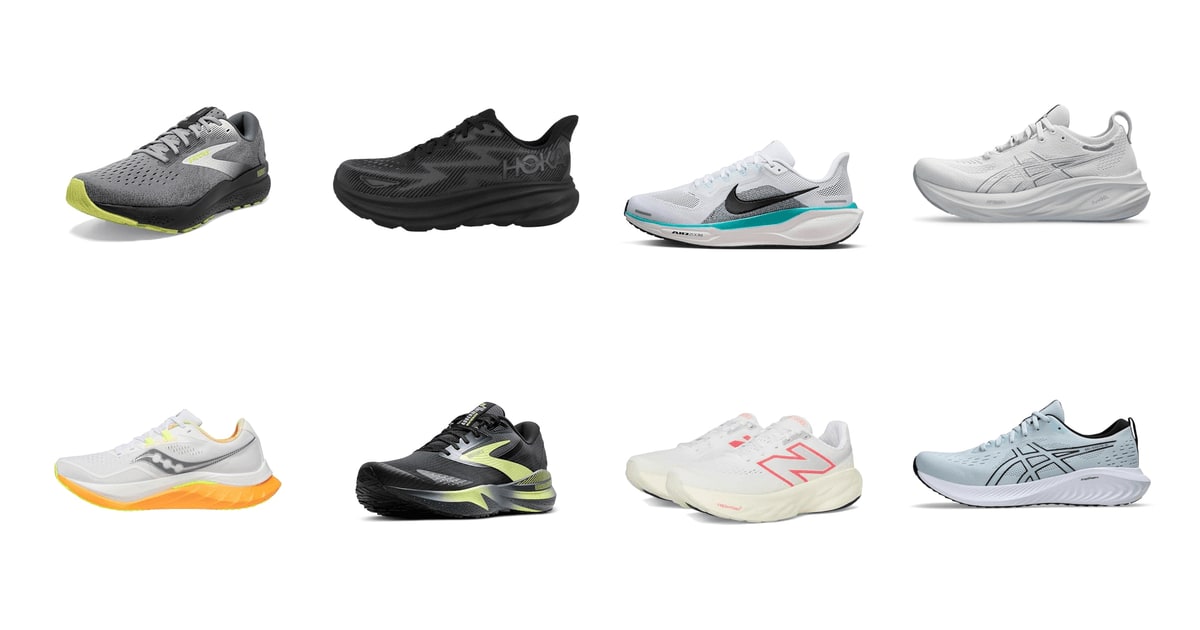
We looked at published reviews, brand spec sheets and the patterns in owner feedback for eight widely sold trainers. The picture that emerged is that most runners want a cushioned neutral daily trainer, not a specialized one. We think that the Brooks Ghost 16 is the best running shoe for most people, and that the HOKA Clifton 9 is the one to buy if you want the softest possible landing under your knees and hips.
Everything we recommend

A smooth, forgiving daily trainer that suits almost any foot

The softest landing here, if your joints need one

Firmer and quicker than most trainers, without a race-day price

Support that guides your stride instead of blocking it
Real cushioning and a decent ride at entry-level money
At a glance
| Product | Weight | Cushioning | Price | |
|---|---|---|---|---|
| Brooks Men’s Ghost 16 Neutral Running ShoeTop pick | 3 lbs | DNA Loft v3 | $130.87On sale |
| Hoka Men's Clifton 9 Black/Black 10 MediumAlso great | 0.555625 lbs | — | $169.90 |
| Nike Pegasus 41 Men's Road Running ShoesRunner-up | 1.6 lbs | — | $155 |
 | ASICS Women's Gel-Nimbus 26 Running ShoeAlso in lineup | 2.12 lbs | FF Blast Plus Eco | $97.48 |
 | Saucony Men's Endorphin Speed 4 SneakerAlso consider | 1.79 lbs | PWRRUN PB | $149.95 |
| Brooks Men’s Adrenaline GTS 24 Weatherized SupportiveAlso great | — | DNA Loft v3 | $99.95 |
| ASICS Men's Gel-Excite 10 Running ShoesBudget pick | 0.0125 lbs | Amplifoam Plus | $83 |
How we picked
Cushioning and stack. We compared published stack heights and midsole foam specs across neutral, maximalist and performance categories. Every pick needed enough foam to handle a runner's longest weekly run without going flat underfoot.
Fit and width options. We looked at last shape, upper construction and available widths, then weighed those against the fit complaints that came up repeatedly in owner feedback. Shoes with only one width available had to fit a broad range of feet to stay in the running.
Support type. We separated true stability shoes from neutral trainers rather than blending them, because the two aren't interchangeable. Only runners with a confirmed overpronation pattern should be shopping the stability category.
Expected mileage. We favored shoes with meaningful outsole rubber coverage and premium midsole compounds, using durometer testing and long-term owner reports as evidence. Foam that softens by 15 to 20% within 150 miles doesn't clear the bar for a daily trainer.
Range of use. We prioritized shoes that cover easy days, long runs and the occasional faster session, since most runners buy one pair at a time. Purely specialized racing shoes were set aside for that reason.
Top pickOn sale
A smooth, forgiving daily trainer that suits almost any foot
Brooks Men’s Ghost 16 Neutral Running Shoe
The Ghost 16 is a neutral daily trainer with nitrogen-infused DNA Loft v3 foam and a segmented crash pad that smooths the roll from heel to toe. It does easy miles, long runs and treadmill work without asking you to adapt to it.
$130.87fromAmazonList priceIf you only own one pair of running shoes, this is the one to own. The Ghost line has been the default recommendation at running specialty shops for years, and Brooks has held the top spot in U.S. running store sales by revenue for multiple consecutive years largely on the strength of the Ghost and Adrenaline. That kind of staying power isn't an accident. It's what happens when a shoe fits a wide range of feet and doesn't do anything weird.
The ride is the selling point. Nitrogen-infused DNA Loft v3 is soft without being mushy, and the segmented crash pad under the heel breaks up the landing so the transition to toe-off feels continuous rather than clunky. You won't feel bounced forward the way you do in a plated shoe. You'll just stop noticing your feet, which on a Tuesday recovery run is exactly the point.
Fit is where the Ghost quietly wins. The 3D Fit Print upper is engineered air mesh with structure built in, and it holds a midfoot without the lace pressure that plagues thinner uppers. Brooks offers it in wide and extra-wide, and owners with genuinely broad feet report finding room here that they can't find elsewhere. It's also a certified PDAC A5500 diabetic shoe and carries the APMA Seal, which matters if you need footwear that clears a medical bar.
It's versatile in the boring, useful way. Brooks positions the Ghost for road running, walking, cross training and gym work, and owner feedback backs that up — plenty of people buy it and end up wearing it for eight-hour shifts on their feet. If you're a beginner who isn't yet sure whether you'll run three miles a week or thirty, a shoe that handles all of it is worth more than a specialized one.
Flaws but not dealbreakers
Durability is the recurring complaint. Owners who've bought several generations of the Ghost say the 16 doesn't hold up quite as long as older versions, with the outsole and upper showing wear sooner than they'd like. The RoadTack compound is lighter and uses recycled silica, and that trade seems to cost a little rubber life. Plan on the shorter end of the 300-to-500-mile window if you're heavy or run mostly on rough pavement.
It's also not a fast shoe. There's no plate and no snap, so if you're doing intervals or chasing a 5K PR, the Ghost feels flat and a bit dull under you. That's a fine trade for a daily trainer, but don't buy it expecting it to be your race day shoe.
Also great
The softest landing here, if your joints need one
Hoka Men's Clifton 9 Black/Black 10 Medium
The Clifton 9 is HOKA's flagship max-cushion road shoe, with a tall stack that soaks up impact better than anything else on this list. It's the pick for high-mileage weeks, recovery days, and anyone whose knees complain after a run.
$169.90fromAmazonBuy this if impact is your problem. The Clifton's whole design premise is a thick, soft midsole that spreads out the force of each landing, and that's the thing runners with knee, hip or general joint pain notice first. Published reviews and owner feedback converge on the same description — it feels plush at footstrike in a way that firmer trainers don't. If you're returning from injury or logging back-to-back long days, that cushion buys you something real.
It's also strangely light for how much shoe it is. HOKA has kept the Clifton line notably lighter than its stack height suggests, so you get the protection of a maximalist shoe without the leaden feeling that usually comes with it. The rockered geometry helps too. Your foot rolls through the stride rather than levering off the ground, which takes some load off the calves and Achilles.
Worth knowing: a 2023 systematic review in the British Journal of Sports Medicine found no significant difference in lower-limb injury rates between maximalist shoes with 30mm or more of stack and traditional trainers, as long as runners transitioned gradually over six or more weeks. So the Clifton isn't riskier than a normal shoe. But it's also not a magic injury shield, and the transition period is real — don't make your first run in these a long one.
The Clifton has a second life as an all-day shoe. Nurses, teachers and anyone else standing on concrete for eight hours gravitate to it, and owners consistently describe it as the shoe that ended their foot pain at work. If you want one pair that runs in the morning and survives a shift, this is the more comfortable choice of the two top picks.
Flaws but not dealbreakers
Sizing runs snug. Enough owners flag this that we'd treat it as the default — if you're between sizes or have a high-volume foot, go up a half size. The upper is fairly close-fitting through the midfoot, and there's less give than the mesh appearance suggests.
All that foam costs you feedback. The Clifton is vague underfoot compared with the Ghost or the Pegasus, and if you like knowing what the road is doing, you'll find it numbing. It's also not a shoe for picking up the pace — the soft stack absorbs the push you're trying to put into it.
Runner-up
Firmer and quicker than most trainers, without a race-day price
Nike Pegasus 41 Men's Road Running Shoes
The Pegasus 41 is Nike's long-running workhorse, with React foam and a Zoom Air unit that give it a bit more pop than a typical daily trainer. It handles easy miles fine but comes alive when you speed up.
$155fromAmazonThe Pegasus has been in continuous production since 1983, which makes it Nike's longest-running shoe franchise and one of the top-selling road trainers in the country. Forty-plus years of iteration produces a shoe with very few sharp edges. It's not the softest or the lightest option here, but almost nothing about it will actively annoy you, and that's harder to engineer than it sounds.
Where it separates from the Ghost is pace. The Zoom Air unit and firmer React platform give the Pegasus a snappier feel when you push, so it doubles as a tempo shoe in a way our top pick doesn't. Owners who race in it — including at half-marathon distance — describe it as light and responsive underfoot. If your week includes one hard session and you don't want a second pair of shoes for it, this is the efficient answer.
It also has a higher heel-to-toe drop than most of this list, which some runners find easier on the Achilles. If you're coming from a traditional trainer and have no interest in a low-drop transition, the Pegasus keeps you in familiar territory. And the fit is on the narrower, more secure side, which suits runners whose foot slides around in roomier shoes.
One practical note on the listing: this Nike page is a men's shoe sold in men's sizing, with an equivalence of roughly a men's 8.5 to a women's 10. Women buying it should convert carefully. It's not built on a women's-specific last, which is a real consideration if you have a narrow heel.
Flaws but not dealbreakers
It's firm, and that firmness is the thing people either like or bail on. Owners report that the Pegasus is great once you're moving but uncomfortable for standing around or all-day wear. It's a running shoe first and a lifestyle shoe a distant second, whatever the colorways suggest.
There's no wide version in this particular listing, and the fit through the forefoot is snugger than the Ghost's. If your feet are broad, start elsewhere.
Also great
Support that guides your stride instead of blocking it
Brooks Men’s Adrenaline GTS 24 Weatherized Supportive
The Adrenaline GTS 24 uses Brooks' GuideRails system to limit excess side-to-side motion without the rigid medial post older stability shoes relied on. This weatherized version adds a DWR-treated upper and grippier wet-weather traction.
$99.95fromAmazonStability shoes have a reputation for feeling like a splint, and GuideRails is Brooks' answer to that. Rather than jamming a hard wedge under your arch, the system sits along the sides of the heel and only engages when your foot moves further than it should. Most of the time you don't feel it. When you fatigue at the end of a long run and your form starts to fall apart, you do.
You should only buy this if you've actually been told you overpronate. A gait analysis at a running specialty store is the reliable way to find that out, and it's worth doing — a review in Springer's Sports Medicine found gait-analysis-based shoe prescription cut running-related injury rates by up to 43% in novice runners compared with self-selected footwear. If your gait is neutral, a stability shoe just adds structure you don't need.
The midsole is the same nitrogen-infused DNA Loft v3 as the Ghost, so the cushioning is soft and familiar rather than punishingly firm the way old-school stability trainers were. Heavier runners in particular report that it holds up under load without bottoming out. Owners north of 200 pounds who found max-cushion shoes too mushy tend to land here.
This specific version is the Weatherized model, and that's a genuine difference. The knit DWR mesh upper sheds light rain and holds temperature better than standard mesh, the outsole is tuned for wet and dry traction, and there are reflective elements for early-morning and evening runs. If you train through fall and winter in the dark, that package is worth more than another colorway.
Flaws but not dealbreakers
The fit runs snug and the laces are short. Owners with high arches or higher-volume feet report needing to size up or swap laces, and the weatherized upper is less stretchy than a plain mesh version. It comes in wide and extra-wide, and if you're between options, take the wider one.
A DWR-treated upper is also warmer and less breathable. In July, in a humid climate, this is the wrong shoe. The standard Adrenaline exists for a reason.
Budget pick
Real cushioning and a decent ride at entry-level money
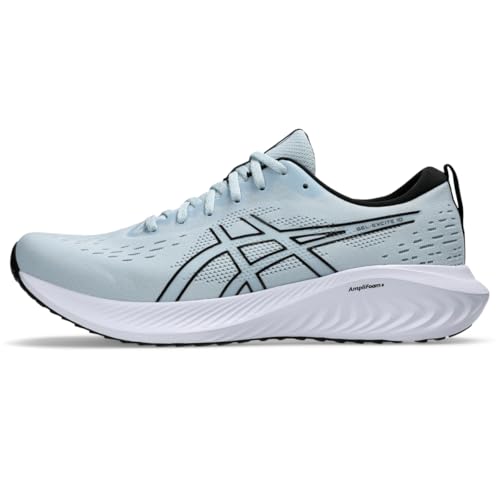
ASICS Men's Gel-Excite 10 Running Shoes
The Gel-Excite 10 gives you ASICS rearfoot GEL and AMPLIFOAM PLUS in a straightforward neutral trainer that costs a fraction of the premium picks. It's the right starting point if you're not yet sure running will stick.
$83fromAmazonNobody should spend flagship money on their first pair of running shoes. If you're four weeks into a couch-to-5K habit and running three miles at a time, the Excite 10 covers you completely. It has rearfoot GEL for impact absorption at the heel, AMPLIFOAM PLUS in the midsole for a softer footstrike, and an OrthoLite sockliner — genuine cushioning technology, just a generation or two behind the Nimbus.
Owner feedback on this one skews unusually positive for a budget shoe, and the common thread is comfort out of the box. People with feet that hurt in everything report being able to wear these all day. There's no break-in period and no adjustment curve, which is exactly what you want when you're still deciding whether you like running.
The upper is engineered jacquard mesh, which breathes well and feels soft against the foot, and it's available in a wide fit whose extra room is concentrated in the toe box. That's a useful detail: if your foot is broad at the toes but normal through the midfoot, this works. If you're wide the whole length, you'll get some spillover.
It's vegan-friendly by design, with no animal-derived yarns, glues or adhesives, though ASICS notes it isn't third-party certified. Minor for most people, decisive for some.
Flaws but not dealbreakers
Budget foam wears out faster, and there's data on this. Durometer testing from Believe in the Run found entry-tier foam compounds lose 15 to 20% of their firmness after roughly 150 miles, versus 8 to 10% for premium compounds like ASICS' own FF Blast+ or New Balance's Fresh Foam X. If you're running 30 miles a week, the price advantage narrows fast.
It's also heavier and less lively than everything else here. Easy runs feel fine; anything quick feels like work. And owners note it stains easily, so the lighter colorways won't stay pretty.
Who this is for
This guide is for anyone running on roads, sidewalks and treadmills — beginners building a habit, recreational runners logging 15 to 40 miles a week, and people training for a 5K through a half marathon. It's also for runners dealing with knee or hip discomfort who want more cushioning under them, and for heavier runners who need a midsole that doesn't collapse. If you weigh over 185 pounds, the durability notes in each pick matter more to you than to most readers.
This isn't a trail running guide, and none of these shoes have the lugs or rock protection for technical dirt. We also skipped dedicated carbon-plated racers: they improve running economy by roughly 2.6 to 4.2% according to peer-reviewed work in the British Journal of Sports Medicine, but they're overkill for daily training and can aggravate the calves and Achilles if you run in them too often. And if you already know from a gait analysis that you need a specific category, trust that over anything here.
How we picked
We compared spec sheets, published reviews and recurring themes in owner feedback against five things. Cushioning: enough stack and enough quality foam to survive your longest run of the week without going flat. Fit: a last and upper that hold the foot without pinching, with wide options wherever the brand offers them. Support: true stability construction kept separate from neutral, because a medial post or guide rail only helps runners who actually overpronate. Mileage: premium midsole compounds and real outsole rubber, since budget foams can lose 15 to 20% of their firmness inside 150 miles. Range: shoes that handle easy days, long days and an occasional faster session, because most people buy one pair at a time.
Other running shoes for men and women worth considering
If you want a plated shoe for tempo days: The Saucony Men's Endorphin Speed 4 Sneaker ($149.95) — The Saucony Endorphin Speed 4 uses a winged nylon plate rather than carbon, paired with PWRRUN PB foam and Saucony's SPEEDROLL rocker geometry. You get most of the forward-tipping propulsion of a super shoe for training runs, at meaningfully less than full carbon alternatives cost. Owners describe it as bouncy and light, and several report using it for everything from a 10K to long training days. What you give up is forgiveness — it's firm early on and reportedly takes 30 to 40 miles to soften, it runs narrow, and the plate makes it a poor choice for slow recovery jogs. Buy it as a second shoe in a rotation, not as your only pair.
The competition
These are the shoes our research surfaced alongside the picks — not a survey of everything on the market. Running shoe lineups turn over constantly, and a model that misses here may still be the right shoe for your particular foot.
The ASICS Women's Gel-Nimbus 26 Running Shoe ($97.48) — The ASICS Gel-Nimbus 26 is the plushest long-run trainer ASICS makes, with FF Blast+ Eco foam, PureGEL units and a knit upper that's largely recycled content. Owners who love it really love it — one reports over 600 miles with the outsole still intact — and it's a common favorite among people standing all day. It didn't make the picks because the knit upper draws consistent durability complaints, with holes appearing in the toe box area for some owners well before the midsole gives out, and because a few runners find the cushioning so soft it costs them stability. Fit also runs a touch small, since the foot sits forward. Consider it if you want maximum plushness for marathon training and you're willing to treat the upper gently.
Fit, mileage and rotation
Track your miles, not your outsole. Running shoes are done somewhere between 300 and 500 miles, and American College of Sports Medicine guidance notes that midsole compression past that point can increase ground-reaction forces reaching the knee by as much as 25% — long before the shoe looks worn out. If you can afford it, rotate two pairs: recreational runners who alternated between two or more models had a 39% lower injury rate than those training in one shoe, per Malisoux and colleagues in the Journal of Sports Science & Medicine. On fit, most runners want about a thumbnail of room at the toe, since feet swell on long runs. And if you're moving from a high-drop shoe to a low-drop one, ease into it over six weeks or more to spare your Achilles.
Questions we get
What's the difference between stability and neutral running shoes?
A neutral shoe just cushions your foot and lets it move however it naturally moves. A stability shoe adds structure — either a firm medial post under the arch or, in the Brooks Adrenaline, GuideRails along the heel — to limit excess inward roll. Most runners do fine in neutral shoes. Stability construction only helps if you actually overpronate.
How do I know if I overpronate?
You mostly can't tell on your own, and the wet-footprint test you'll find online isn't reliable. Get a gait analysis at a running specialty store, where someone watches you run and looks at how your foot lands. It's worth the trip: a review in Springer's Sports Medicine found gait-analysis-based shoe prescription reduced injury rates in novice runners by up to 43% compared with picking shoes yourself.
How often should I replace my running shoes?
Every 300 to 500 miles, based on American College of Sports Medicine guidance. The foam compresses and stops absorbing impact long before the shoe looks beat up, so go by mileage rather than appearance. Write the date and your starting odometer inside the tongue if you won't otherwise remember.
Do I need carbon plate shoes if I'm not racing?
No. Peer-reviewed work in the British Journal of Sports Medicine puts the running economy gain from carbon-plated racers at roughly 2.6 to 4.2%, which is meaningful in a race and irrelevant on a Tuesday jog. The stiff plate also loads your calves and Achilles differently, which can aggravate things if you run in them daily. If you want some of the propulsion for training, a nylon-plated shoe like the Endorphin Speed 4 is the more sensible route.
Can women just buy a smaller men's size?
It's a bad substitute. Women's lasts are typically 8 to 12% narrower at the heel with lower instep volume, not just scaled-down men's shoes. Research in the Journal of Foot and Ankle Research found women fitted in properly lasted shoes reported significantly fewer blisters and black toenails at half-marathon distances and beyond. If a model comes in a women's version, buy that one.
Can I run on light gravel in road shoes?
Yes, for packed gravel paths and crushed limestone. Any of these shoes will handle that fine, though the outsole rubber will wear a bit faster. Once you're on loose rock, roots or mud, you want a trail shoe with real lugs — road outsoles are smooth by design and will slide.
Why you should trust us
For this guide:
- We compared manufacturer spec sheets, published reviews and peer-reviewed biomechanics research covering cushioning, drop, plate technology and injury rates across these eight shoes.
- We read through owner feedback for each model to identify recurring themes around fit, sizing and how the uppers and midsoles hold up over time.
- We read owner reviews on every listing, weighted toward the critical ones, because that is where the recurring failures show up.
- We have a systematic way of automatically fetching the latest prices, so the numbers on this page stay current.
- This is a research-focused guide, so the team may not own every product listed — though we often do own the top winners, which gives us extra context for the recommendations.
- We don't accept free products, and the retailer commission never changes which product we recommend.
Sources
Best Running Shoes 2026 — Runner's World, Runner's World
The Best Running Shoes — Wirecutter (NYT), Wirecutter
Best Running Shoes 2026 — Outside Magazine, Outside Magazine
Running Shoe Reviews and Specifications — Running Warehouse, Running Warehouse
Best Running Shoes for Women — Women's Health, Women's Health
Carbon-Plated Running Shoes: Biomechanics and Performance — British Journal of Sports Medicine, British Journal of Sports Medicine
World Athletics Technical Rules — Shoe Regulations (TR5), World Athletics
Running Shoe Replacement and Injury Prevention — American College of Sports Medicine, American College of Sports Medicine
Shoe Rotation and Injury Rates in Recreational Runners — Journal of Sports Science & Medicine, Journal of Sports Science & Medicine
Gait Analysis and Running Shoe Prescription — Sports Medicine (Springer), Sports Medicine (Springer)
Independent Running Shoe Reviews — Believe in the Run, Believe in the Run
Running Footwear Market Size and Forecast — Grand View Research, Grand View Research
Amazon product listings and owner reviews for all 7 products
Manufacturer specification pages for each product
Some passages in this guide may be paraphrased with AI help. Prices are refreshed automatically.
More like this.
Continue exploring health reviews and recommendations.

The Best Running Shoes for Plantar Fasciitis
Plantar fasciitis announces itself the same way for almost everyone: those first few steps out of bed feel like stepping on a stone. The band of tissue…

The Best Running Shoes for Flat Feet
If your arches collapse when you stand, you already know what mile 18 feels like. The inside edge of your foot rolls in, your knee follows, and by the end…

The Best Hiking Boots and Trail Running Shoes
Footwear is the one piece of hiking gear you feel with every single step. A boot that rubs at mile two can ruin a whole weekend, and a sole that slides…

The Best Electric Shavers for Men
Shaving with an electric razor is a daily habit, so the small things compound. A shaver that tugs at your neck, needs three passes over your jawline, or…

The Best Luxury Perfumes for Women
Perfume is a strange thing to shop for. You can't smell it through a screen, and the same bottle can go warm and powdery on a friend and sharp on you.…

The Best Stocking Stuffers for Men
A stocking is a strange gifting format. You're filling a sock with six or seven small things, and most of them get glanced at once and shoved in a drawer…