The Best Meat Grinders And Sausage Stuffers
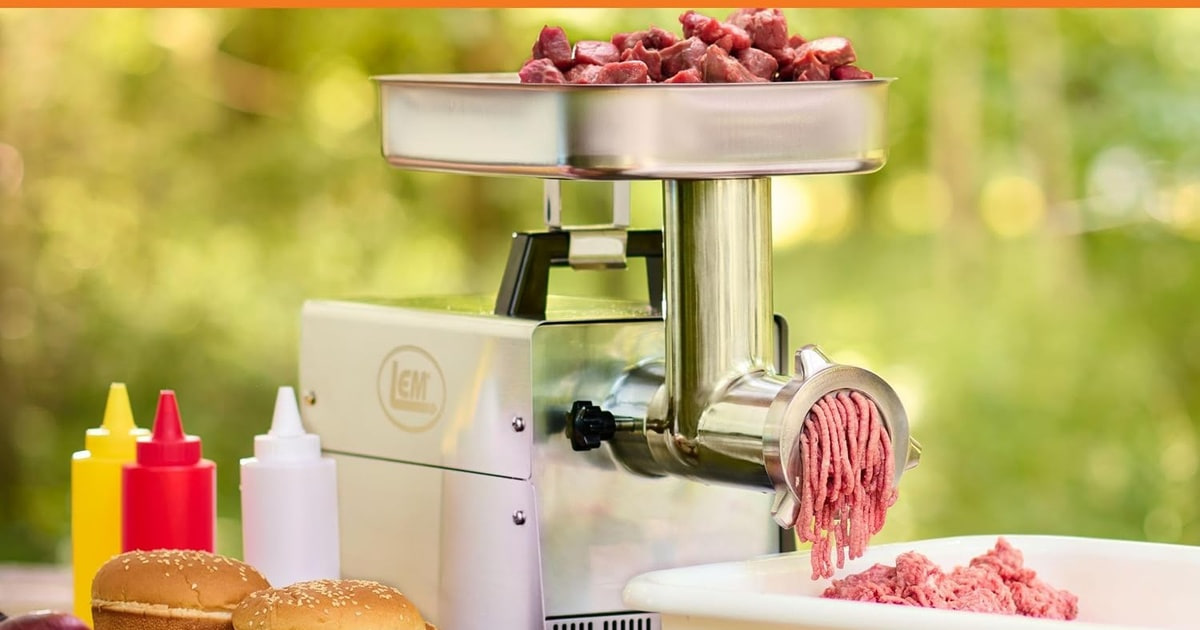
Grinding your own meat is one of the few kitchen upgrades where the difference shows up on the first bite. You pick the cut, you pick the fat ratio, and you know exactly what went in. A chuck-and-brisket burger blend you ground an hour ago tastes nothing like the tray from the meat case. If you hunt, the math is even simpler: a season's worth of venison costs you a weekend instead of a processing fee. The machine just has to keep up without stalling, smearing fat, or dying in year two.
Here's the part nobody advertises. Every grinder on this list is a pain to clean. You'll break down the head, wash six or seven metal parts by hand, and dry them right away so they don't spot. Wattage claims are just as slippery — a lot of the numbers on the box describe a momentary peak, not what the motor holds under load. And no home machine handles sinew-heavy cuts gracefully. You still have to trim, cube, and chill the meat before it ever reaches the auger.
So the choice comes down to how much meat you actually run and how much abuse the gears can take. A weekly two-pound burger habit needs almost nothing. Three deer a season needs a real motor, metal gears, and a throat wide enough that you're not feeding it slivers. We think that the LEM BigBite #8 is the best meat grinder for most people, and that the Weston Pro Series 750-watt grinder is the one to buy if you process wild game every fall.
Everything we recommend

Metal gears and real torque, without the commercial footprint

More power and a wider throat, if game is your main job

The most gear in the box, with softer internals to match

Twice the throughput and a throat that swallows whole cuts
For anyone who's fought a grinder tube and lost
At a glance
| Product | Power | Capacity | Price | |
|---|---|---|---|---|
| LEM Products BigBite #8 Meat GrinderTop pick | 0.5 HP | 7 lbs/min | $395.99 |
| LEM Products BigBite #22 Meat GrinderUpgrade pick | 1.0 HP | 13 lbs/min | $683.99 |
| Weston Pro Series Electric Meat GrinderRunner-up | 750W, 1 HP | 6-9 lbs/min | $499.99On sale |
 | Weston Pro Series Electric Meat Grinder 7Also in lineup | 1500W, 2 HP | 21 lbs/min | $799.99 |
| STX International Turboforce 3000 Series 5-in-1 ElectricBudget pick | 3000W Max | 3 lb hopper | $179.75 |
 | KitchenAid Stand Mixer AttachmentAlso consider | — | — | $79.88 |
 | Cuisinart Electric Meat GrinderAlso in lineup | 300W | 3 lbs/min | $129.95 |
 | VEVOR Commercial Meat GrinderAlso in lineup | 1100W | 550 lb/h | $244.90 |
| Hakka 15 Pound Sausage Stuffer 2 SpeedAlso great | — | 15 lb | $189.99 |
 | Weston Stainless Steel Vertical Sausage StufferAlso consider | — | 11 lbs | $179.99 |
How we picked
Continuous power. We compared manufacturer spec sheets for continuous-duty motor ratings rather than the peak or locked-motor wattage printed on the box. A machine had to state a genuine sustained figure to be considered for game processing.
Gear material. Published reviews and owner reports agree on the failure mode: plastic intermediate gears strip under sustained load. We favored all-metal gear trains and flagged plainly where plastic sits in the drive path.
Head and throat size. We looked at head numbers and feed throat width, because throat size decides how much knife work you do before anything gets ground. Anything smaller than a #8 didn't make the cut.
Cleanup and teardown. Owner feedback about cleaning was more consistent than any published spec, so we weighted tool-free disassembly, stainless food paths and dishwasher-safe parts heavily.
Parts and warranty. We checked whether the manufacturer still sells plates, knives, augers and bushings for older models, and what the warranty actually covers. A grinder you can't get parts for is disposable.
Top pick
Metal gears and real torque, without the commercial footprint
LEM Products BigBite #8 Meat Grinder
A half-horsepower induction motor, an all-metal gear train, and roughly seven pounds a minute of throughput — enough for a few deer a season or a Sunday burger blend. It's heavy and it costs more than similarly powered rivals, but it's the grinder owners are still running five years later.
$395.99fromAmazonThe gear train is the whole argument for this machine. Plenty of grinders in its power class run a plastic intermediate gear that gives up after a season or two of hard use. LEM's is metal throughout, and it's the reason people who process three to five deer a year keep pointing each other toward it. A stripped gear turns a grinder into a boat anchor. This one doesn't strip.
The numbers look modest on paper. Half a horsepower, about seven pounds a minute, a #8 head. But that's a continuous induction motor rating, not a peak draw, and it's what the machine actually holds while you feed it cubed chuck. Twenty-five pounds of venison goes through in a few minutes. Owners who grind a hundred pounds in a sitting describe the motor as unbothered.
Parts matter more than people expect on a machine like this. LEM sells replacement plates, knives, augers and bushings for current and discontinued models, and the #8 head size is common enough that other plates fit. If you dull a knife or lose a bushing four years from now, you're ordering a part, not a new grinder.
It comes ready to work. The box includes 4.5mm and 10mm stainless plates, a stuffing plate, a knife, a meat stomper, three plastic stuffing tubes and a bushing removal tool. That's enough to grind burger, coarse-grind sausage meat, and stuff a batch of links without buying anything else. The stuffing tubes are a compromise rather than a substitute for a real stuffer, but they'll get you through your first few batches.
Flaws but not dealbreakers
It's heavy. At roughly thirty-three pounds it doesn't live on a countertop unless you have space to spare, and owners tend to park it on a low shelf or a cart because hoisting it up to counter height gets old fast. Budget a shelf about two feet tall.
The #8 head is the real ceiling. The feed throat is narrow enough that you'll cut meat into strips before it goes in, which adds prep time on big batches. And cleanup is a hand-wash job — several metal parts, right after you finish, before anything dries on. Owners who ran a whole lamb through it describe that first cleaning as the longest part of the day.
LEM covers the grinder with a five-year factory warranty and offers lifetime customer support.
Runner-upOn sale
More power and a wider throat, if game is your main job
Weston Pro Series Electric Meat Grinder
A 1-horsepower, 750-watt air-cooled motor with a rifled head and an offset throat, rated at six to nine pounds a minute. It costs more than the LEM #8 and weighs more too, but it swallows bone-in chicken and sinew-heavy game without slowing down.
$499.99fromAmazonList priceWild game isn't beef. Venison and elk are lean, dense and full of silverskin, and that's exactly where an underpowered grinder bogs down and starts smearing instead of cutting. This motor is air-cooled and built to run continuously rather than in short bursts, so a long processing session doesn't end in a thermal cutoff halfway through the second deer.
The offset, rifled head is the underrated part. The rifling grips meat and pulls it toward the auger instead of letting it spin in place, and the offset throat drops chunks straight onto the screw. Owners feeding it whole chicken leg quarters — bones included — for raw pet diets say it takes them without hesitating. That's a harder job than any burger blend.
Cleanup is better than the weight suggests. Everything in the food path is stainless, so it doesn't hold game odors or stain from blood the way plated parts can, and the head comes apart without tools. Weston includes a covered storage tray, which sounds trivial until you're trying to keep a dozen small parts together between seasons.
It arrives ready for sausage, too. The kit includes an adapter, a spacer and four funnels from 10mm up to 40mm, which covers snack sticks through kielbasa. Stuffing through a grinder is still a compromise — you're pushing meat past a spinning auger — but for a few batches a year it works, and it saves you buying a second machine right away.
Flaws but not dealbreakers
It's the heaviest thing here at forty-two pounds, and it doesn't tuck away. You need a dedicated spot for it, and hauling it in and out of a closet twice a season is a two-handed job.
Fit and finish can be inconsistent. Some owners open the box to surface rust on the plates and knife — usually cosmetic and scrubbable, but not what you want from a premium machine. Wipe the bare metal with food-safe oil after washing and it mostly stays away. Accessory selection is thinner than LEM's, as well.
Budget pick
The most gear in the box, with softer internals to match
STX International Turboforce 3000 Series 5-in-1 Electric
A #12 head, three speeds, five grinding plates, three stainless blades, sausage tubes and a kubbe attachment — the fullest accessory kit here. The motor draws 800 to 1,200 watts under load despite the 3,000-watt number on the box, so pace your longer sessions.
$179.75fromAmazonRead that wattage claim carefully. The 3,000-watt figure is a locked-motor rating — what the motor pulls at the instant it stalls, not what it makes while grinding. STX says so plainly in its own listing: normal draw under load runs 800 to 1,200 watts. That's still real power for a home machine, and the honesty is more than most budget brands bother with.
What you get here is breadth. Five plates cover everything from a fine pâté grind to a coarse chili grind, three blades mean you're not sharpening mid-project, and the stuffing tubes and kubbe attachment let you try things you'd never buy a separate machine for. Bought individually for another grinder, those accessories usually cost more than the gap between the two machines.
It also lasts longer than its class suggests. Owners routinely report six and eight years of regular use, including people who moved up from a stand mixer attachment and never needed anything bigger. The #12 head splits the difference between a #8 and a #22 — a throat over two inches wide and a hopper holding about three pounds, so you're not feeding it one cube at a time.
It grinds better than it stuffs. That's the consistent theme in owner feedback: happy with the grind, lukewarm about pushing meat through the sausage tubes. Which is normal for any grinder-based stuffer. If sausage is the whole point rather than a side project, plan on a dedicated stuffer eventually.
Flaws but not dealbreakers
The internals are the compromise. There's plastic in the drive path, and it's what gives out first if you push through frozen chunks, tendon or bone — all things STX explicitly tells you not to grind. Stick to trimmed, cubed, partly chilled meat and it holds up. Get careless and you'll be ordering a gear.
It needs rest. On long sessions the motor heats up, and running it hard for an hour straight is how people cook one. Grind twenty pounds, take ten minutes, keep going.
STX backs the Turboforce 3000 with a three-year warranty.
Upgrade pick
Twice the throughput and a throat that swallows whole cuts
LEM Products BigBite #22 Meat Grinder
The same all-metal platform as the #8, scaled up: a full horsepower, a #22 head, and about thirteen pounds a minute. If you process whole animals or run a hundred pounds at a time, it cuts your session roughly in half.
$683.99fromAmazonThe jump from a #8 to a #22 is less about horsepower than geometry. The feed throat is dramatically wider, so large muscle cuts go in whole or in thick strips instead of narrow fingers. That means less knife work at the counter, less connective tissue wrapping the auger, and fewer stops to clear it. On a hundred-pound day, the prep time you save dwarfs the grinding time you save.
Continuous duty is the specification that matters. The motor is rated at a full horsepower, permanently lubricated, with a built-in circuit breaker instead of a fuse you have to replace. Small-scale processors running deer, hogs and cattle through it year-round are the people who report back most enthusiastically, and that's a far harder duty cycle than your kitchen will ever ask for.
It carries over everything good about the #8. Same metal gear train, same stainless body, same five-year warranty, same deep parts catalog. You're paying for capacity, not a different quality tier — which is why stepping up feels straightforward for anyone who has already outgrown a smaller machine.
The accessory kit is identical too: 4.5mm and 10mm plates, a stuffing plate, knife, stomper, three stuffing tubes and a bushing removal tool. Realistically, if you're grinding at this volume you'll want more plate sizes, and LEM sells them. Start with the coarse-then-fine double grind the included plates give you.
Flaws but not dealbreakers
It's a lot of machine. Nearly fifty pounds, and big enough that it needs a permanent home — a rolling cart, a garage bench, a basement shelf. Very few kitchens absorb it gracefully.
And it's genuine overkill below about fifty pounds a session. If you grind a few pounds of chuck most weekends, the #8 does the same job with the same internals for less money and less counter drama. Buy the #22 because your batches demand it, not because more power sounds better.
LEM gives it the same five-year factory warranty and lifetime customer support as the #8.
Also great
For anyone who's fought a grinder tube and lost
Hakka 15 Pound Sausage Stuffer 2 Speed
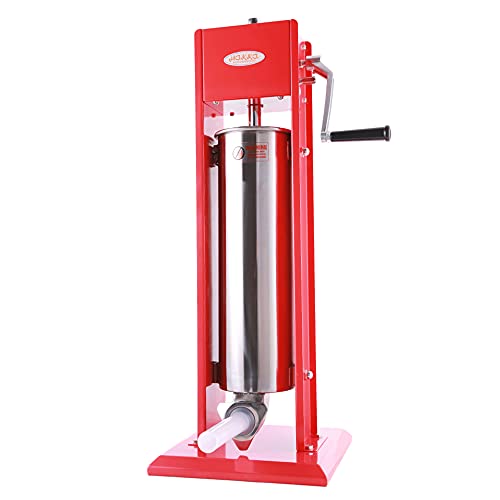
A hand-cranked vertical stuffer with a two-speed gearbox, a 15-pound cylinder that tilts for filling, and four funnels from 10mm to 40mm. It gives you steady, controllable pressure over the whole batch — the one thing a grinder tube can never give you.
$189.99fromAmazonStuffing and grinding are different jobs. A grinder shoves meat past a spinning auger, which smears fat, traps air and hands you pressure you can't modulate. A piston stuffer just presses. You turn the crank, the meat goes in at the rate you choose, and you stop instantly when a casing starts to balloon. The first batch you make on one is usually the moment this clicks.
Two speeds sound like a gimmick until you use them. The slow gear is for the actual stuffing — delicate natural casings, small snack sticks, anything where a sudden surge splits the skin. The fast gear just runs the piston back up so you can reload without cranking for a minute. Simple, and it's the difference between a pleasant afternoon and a tedious one.
The cylinder holds fifteen pounds and tilts ninety degrees for filling and cleaning, so a full batch of brats or Italian links goes in and out in one go. An air release valve at the top lets trapped air escape upward instead of pushing into the casing, which is where blowouts start. Four funnel diameters cover snack sticks through summer sausage.
Flaws but not dealbreakers
It's a hand crank, and there's no motorized version. Fifteen pounds of meat is a real workout for one arm, and you'll want a second person tending the casing while you turn. Clamping or bolting it to the bench isn't optional either — it walks otherwise.
It's also tall and it doesn't collapse. Over two and a half feet with the crank, so it lives in a corner of the garage or basement between projects. And it's single-purpose: if you make sausage twice a year, the tubes that came with your grinder are honestly enough.
Who this is for
Buy a grinder if you already cook enough meat that the fat ratio matters to you — burger blends, sausage, meatballs, dumpling filling — or if you hunt and are tired of paying a processor. It pays off fastest for people buying whole primals: a chuck roll or a pork shoulder becomes exactly the grind you want, for a fraction of what ground meat costs by the pound. Grinding for raw pet diets is the other case where these machines earn their keep quickly, and it's the job owners bring up most often.
Skip it if you grind a few pounds a year — a good butcher will grind a cut to order for you. This guide covers electric countertop grinders, one stand mixer attachment, and vertical piston stuffers meant for home kitchens and garages. It doesn't cover commercial floor-standing units, hand-crank clamp-on grinders, jerky guns, or the food processors people sometimes use as a substitute. And no machine here is rated for bones unless its manufacturer says so, so check before you feed it a chicken quarter.
How we picked
Power: we cared about continuous-duty ratings, not the locked-motor wattage printed on the box, because only the first number predicts what happens forty pounds into a session. Gears: metal throughout, or a clear warning where they aren't, since a stripped intermediate gear is how most budget grinders die. Throat size: the wider the feed opening, the less time you spend cutting meat into fingers, so head size drove a lot of the ranking. Cleanup: tool-free teardown and a stainless food path, because cleaning is what decides whether you use the thing twice a year or twice a month. Parts and warranty: we favored brands that still sell plates, knives and bushings for models they stopped making years ago.
Other meat grinders and sausage stuffers worth considering
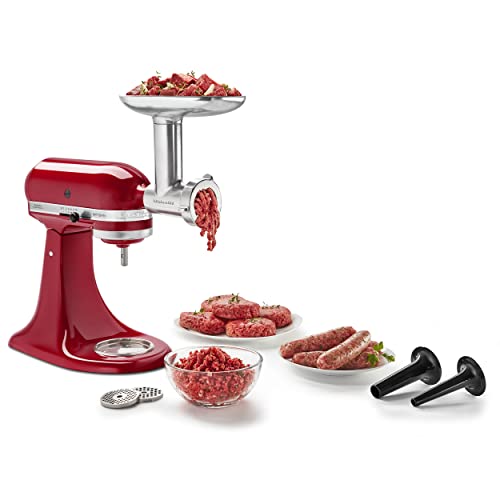
If you already own a KitchenAid stand mixer: The KitchenAid Stand Mixer Attachment ($79.88) — This is the easiest way into grinding you'll find. The metal grinder attachment runs off the mixer's power hub, comes apart in seconds, stores in its own case in a drawer, and includes fine, medium and coarse plates plus two sausage tubes. Owners have put well over a hundred pounds through one. What you give up is stamina: the mixer's motor sets the ceiling, so you're working in one- to four-pound batches and you'll feel it heat up past that. Chill the attachment in the freezer first — KitchenAid recommends it, and it makes a visible difference in the grind.
If you want an all-metal stuffer with a US parts network behind it: The Weston Stainless Steel Vertical Sausage Stuffer ($179.99) — The Weston holds eleven pounds instead of the Hakka's fifteen and costs more per pound of capacity, but it's built around a two-speed all-metal gearbox, a stainless cylinder that tilts for filling, and a notched piston rod that handles the pressure small casings need. The low gear stuffs, the high gear runs the piston back up to reload. Four funnels cover snack sticks at 13mm through luncheon meat at 40mm, and everything comes apart for sanitizing. Choose it over the Hakka if brand support and a metal gear train matter more to you than four extra pounds per load.
The competition
This is what our research surfaced, not a census of everything for sale. Grinders and stuffers turn over constantly, and plenty of capable machines never make a roundup. These are the ones we looked at hard and set aside.
The Weston Pro Series Electric Meat Grinder 7 ($799.99) — The biggest machine in this lineup on paper: 1,500 watts, 2 horsepower, twelve to eighteen pounds a minute, with an integrated seven-pound stuffer and an offset head. It's genuinely capable, and owners grinding whole chicken for raw pet diets are enthusiastic about it. But owner feedback is more mixed here than anywhere else on this list — units arriving with shipping damage, at least one with the auger turning the wrong way, and complaints that the feed neck is narrower than the product photos suggest. That's a lot of risk for a flagship machine. If you want #22-class power from a known brand, the LEM #22 has the steadier track record.
The Cuisinart Electric Meat Grinder ($129.95) — A 300-watt, three-pounds-a-minute grinder with two speeds, a reverse button, two metal cutting plates and two sausage attachments. It's the easiest thing here to buy and to learn: you'll find it on shelves at big-box stores, the controls explain themselves, and it breaks down in a couple of minutes. But it's built light, with plastic where the LEM has metal, and owners pushing more than a pound or two at a time describe it bogging down. One recurring gripe: liquid can work past the output shaft seal into the housing while you're stuffing, which is miserable to clean. Fine for meatloaf and burger blends, wrong for a deer.
The VEVOR Commercial Meat Grinder ($244.90) — 1,100 watts, a rated 550 pounds an hour, ETL approval for North American electrical safety, and a stainless body owners describe as absurdly solid for what it costs. It handles bone-in chicken and a pile of venison without complaint. Two things kept it out of the picks. Cleaning is a chore — three bolts come off before you can reach the auger housing — and there's no support network behind it comparable to LEM's or Weston's parts catalogs. Owner feedback is more polarized than for the established brands, too. If you want raw power and can live with those trade-offs, it's a real option.
Care and cleanup
Chill everything before you grind. Thirty to forty-five minutes in the freezer gets the meat firm but not solid, and cold parts keep fat from smearing into paste — plenty of owners chill the grinder head too. Cut into strips that drop into the throat without shoving. When you're done, run a slice of bread or a few cubes through to push out what's left, then take the head apart right away. Hand-wash the plates, knife and auger, dry them immediately, and wipe the bare steel with a little food-safe mineral oil before it goes in the drawer. Carbon-steel plates will rust overnight in a wet dish rack. Keep the small parts in one bag so bushings don't wander.
Questions we get
Which grinder should I buy first?
For most first-timers, the STX Turboforce 3000 makes the most sense — it ships with five plates, three blades, sausage tubes and a kubbe attachment, so you can figure out what you actually like doing before committing to anything bigger. If you already own a KitchenAid stand mixer, start with the metal grinder attachment instead. It costs less than any standalone machine and takes up no counter space at all.
LEM or Weston?
Both build serious equipment, and they lean slightly different ways. LEM has the deeper accessory and parts ecosystem, plus a five-year warranty, which is why the BigBite #8 is our top pick. Weston tends to win with hunters for its offset rifled head and fully stainless food path, which shrugs off game odors and sinew. If you split your time between burger blends and venison, either will serve you.
Can I stuff sausage with a grinder, or do I need a separate stuffer?
You can, and the tubes included with most grinders here work fine for a few batches a year. But a grinder pushes meat past a spinning auger, which traps air and gives you pressure you can't control, so you get blowouts and air pockets. A piston stuffer like the Hakka or the Weston presses steadily and lets you stop on a dime. If you make sausage more than a handful of times a year, get the dedicated machine.
What's the difference between a #8, #12 and #22 grinder?
The number describes the head size, which sets the feed throat diameter and the practical throughput. A #8 like the LEM BigBite handles about seven pounds a minute and suits most home cooking. A #12, like the STX, sits in the middle with a throat over two inches wide. A #22 takes large whole-muscle cuts without much pre-cutting and roughly doubles your rate — the right call if you're processing whole animals.
How much power do I need to grind deer?
Look for a true continuous rating around 750 watts or a full horsepower, and ignore peak wattage figures entirely. Game is leaner, denser and far more sinew-heavy than beef, so an underpowered motor smears fat instead of cutting and can shut down on heat partway through. The Weston Pro 750-watt and the LEM BigBite #22 both state genuine sustained numbers, which is why they're the two we point hunters toward.
Is a KitchenAid grinder attachment worth buying?
Yes, if you already own the mixer and your batches are small. It's all metal in the food path, stores in its own case, and handles one to four pounds at a time comfortably — burger blends, meatloaf, dumpling filling. Chill it before you use it. It's the wrong tool for a deer or for anything over about five pounds in a sitting.
Why you should trust us
For this guide:
- We read the manufacturer spec sheets for every machine here and compared the stated continuous-duty ratings against the peak wattage figures printed on the boxes.
- We worked through published roundups from kitchen and outdoor publications alongside owner feedback, looking for failure modes that come up repeatedly rather than once.
- We paid particular attention to what owners say about cleanup and parts availability, since those complaints tend to surface long after a review is published.
- We read owner reviews on every listing, weighted toward the critical ones, because that is where the recurring failures show up.
- We have a systematic way of automatically fetching the latest prices, so the numbers on this page stay current.
- This is a research-focused guide, so the team may not own every product listed — though we often do own the top winners, which gives us extra context for the recommendations.
- We don't accept free products, and the retailer commission never changes which product we recommend.
Sources
The Best Meat Grinders, Tested and Reviewed, Serious Eats
The Best Meat Grinder of 2026, The Spruce Eats
The Best Meat Grinder, Wirecutter (New York Times)
Best Meat Grinders Tested in the Field, Outdoor Life
The Best Meat Grinders of 2026, Allrecipes
The Best Meat Grinders, Tested by Good Housekeeping Lab, Good Housekeeping
Best Meat Grinder 2026, Bob Vila
Best Sausage Stuffers, Tested and Reviewed, The Spruce Eats
Amazon product listings and owner reviews for all 10 products
Manufacturer specification pages for each product
Some passages in this guide may be paraphrased with AI help. Prices are refreshed automatically.
More like this.
Continue exploring home reviews and recommendations.

The Best Wireless Meat Thermometers
Cooking meat by time is guessing. A thick pork shoulder and a thin one look the same from across the yard, and the difference between juicy and dry is…

The Best Meat Thermometers for Grilling
A grill lies to you. The outside of a steak looks done long before the middle gets there, and chicken thighs stay pink near the bone even when they're…

The Best Stocking Stuffers for Men
A stocking is a strange gifting format. You're filling a sock with six or seven small things, and most of them get glanced at once and shoved in a drawer…

The Best Angle Grinders
An angle grinder is what you reach for when metal needs to be cut, smoothed, or stripped away. It takes a rusted hinge off a gate, cuts through a seized…

The Best Dog Nail Grinders and Trimmers
If you can hear your dog's nails clicking across the kitchen floor, they're already too long. Overgrown nails push the toes out of alignment, change how a…

The Best Coffee Grinders
Your grinder shapes your coffee more than your brewer does. Grind size and evenness control how fast water pulls flavor out of the beans, so a pile of…