The Best NutriBullet Blenders
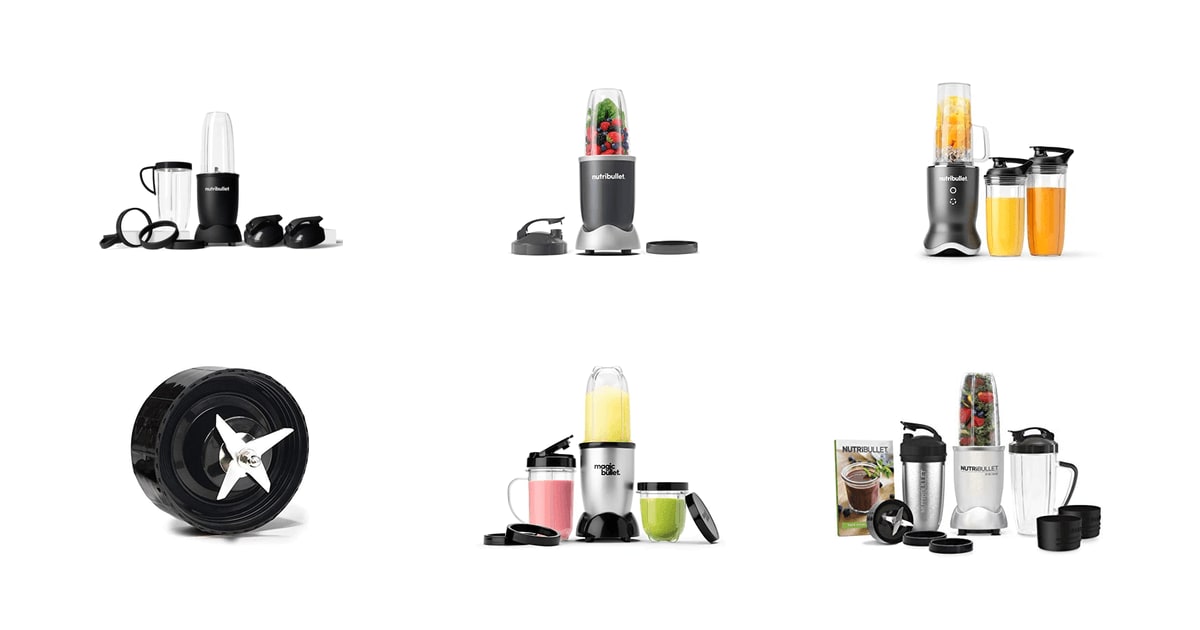
A personal blender earns its counter space by being fast. You dump in frozen berries, a scoop of protein powder and some spinach, twist on the blade, press down, and you're drinking it ninety seconds later. That's the whole appeal of the NutriBullet line. There's no pitcher to wrestle, no lid to seat, and no wide base to scrub out afterward — you blend in the same cup you drink from. If you make one smoothie most mornings, that workflow matters more than any spec on the box.
The honest caveat: no personal blender is a full-size blender. Wirecutter's reviewers point out that the whole bullet-style category is built for single servings and gets awkward the moment you want to blend soup for four or a pitcher of frozen drinks. These machines are also loud — owners bring it up constantly, even about the models NutriBullet markets as quiet. And the cups are plastic, the seals wear, and blade assemblies are the part people replace first. Go in expecting a fast daily tool, not an heirloom appliance.
The good news is that picking one is simpler than the model names suggest. Wattage sets what you can throw in, cup size sets how much you get out, and everything else is packaging. We think that the NutriBullet Pro 900 is the best NutriBullet blender for most people, and that the NutriBullet Ultra is the one to buy if you blend a lot of ice and want the quieter, more powerful machine.
Everything we recommend
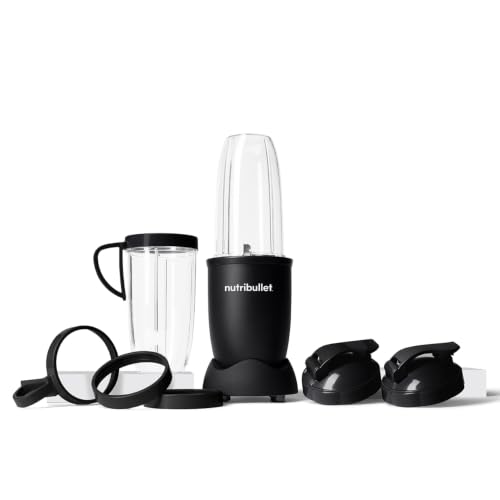
Enough power for daily frozen smoothies, without the bulk

More power and less racket, if you'll pay for both
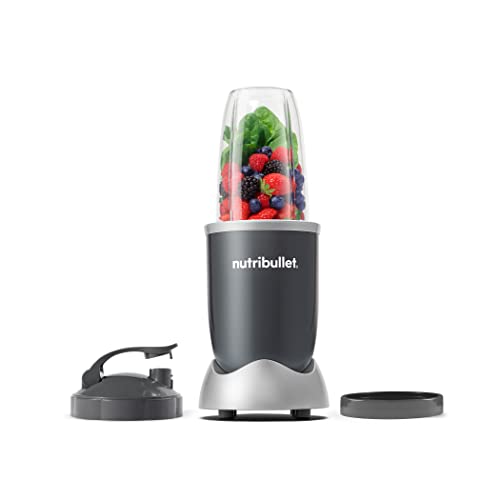
Enough blender for soft fruit and shakes, and nothing more

A stainless cup that keeps your shake cold all morning

Tiny, cheap and fine for dips, dressings and one small shake
How we picked
Motor and ice. We compared manufacturer wattage ratings against what NutriBullet actually clears each base to do. Any model we recommend for frozen fruit and ice had to be rated for it by the manufacturer and backed by published reviews, like Tom's Guide's frozen-smoothie comparisons.
Cup size and lids. We looked at what each kit includes and whether the cups match how people drink. A daily smoothie needs a 24- to 32-ounce vessel with a sealing to-go lid, not a decorative party mug.
Cleaning reality. We checked which parts are dishwasher-safe against Real Simple's guidance and NutriBullet's own instructions, which agree that cups and lids go on the top rack while blade assemblies should be hand-washed. Owner feedback about residue trapped in threads and collars shaped our flaws.
Noise. Consumer Reports treats decibel level as one of three core metrics for personal blenders, alongside ice crushing and smoothie consistency. We weighted manufacturer claims about sound design against the volume complaints that recur across owner feedback for every model here.
Durability signals. We read owner feedback for patterns rather than one-off failures, watching for repeated mentions of gasket leaks, base failures and support difficulty. We also noted where NutriBullet extends warranty coverage beyond its standard one-year term.
Top pick
Enough power for daily frozen smoothies, without the bulk
NutriBullet Special Edition NutriBullet Pro 900 -
The Pro 900 pairs a 900-watt motor with NutriBullet's stainless extractor blade and a 32-ounce cup, which is the combination most daily smoothie drinkers actually need. It handles frozen fruit and spinach, cleans up in about a minute, and takes up roughly one square foot of counter.
$78fromAmazonThe 900-watt motor is the real dividing line in this lineup. NutriBullet doesn't recommend its 600-series base for crushing ice cubes, but it does clear the 900 for that job. Tom's Guide's reviewers found the same thing in practice: the 900-watt-and-up models left noticeably fewer ice chunks in frozen smoothies than the 600. If your morning routine involves a handful of ice or rock-hard frozen mango, that difference shows up in the first sip.
You get a 32-ounce colossal cup plus two 24-ounce tall cups and three flip-top to-go lids. That's enough vessels that you can blend, cap and leave without washing anything until you're home. The 24-ounce cups suit a standard protein shake; the 32-ounce one handles a greens-heavy smoothie with room for the liquid to move, which is what actually keeps the blend smooth.
Cleaning is the part people underrate. You twist off the blade, rinse the cup, and the cups and lids go on the dishwasher's top rack. Real Simple's protocol notes the same split NutriBullet does: cups and to-go lids are dishwasher-safe up top, but the blade assembly should be washed by hand so the seal doesn't degrade. Thirty seconds at the sink and you're done.
Good Housekeeping Institute's lab found that personal blenders in this class produced smoother spinach-and-berry smoothies than several full-size blenders in the same price range. That's the counterintuitive thing about bullet blenders — the narrow cup forces ingredients back into the blade instead of letting them ride up the walls. For a single serving, the small vessel is an advantage, not a compromise.
It's the model that survives contact with a real routine. Owners who've cycled through several NutriBullets keep coming back to the 900 as the one they use every day, often alongside a much more expensive full-size blender that mostly sits idle. Simple push-and-twist operation, no menus, no timer to set. You use what's easy.
Flaws but not dealbreakers
It's loud. Owners bring this up more than any other complaint, and there's no speed control or pulse to soften it — you push the cup down and it runs flat out until you let go. It's a short burst, but it's not a quiet appliance and it will wake a light sleeper down the hall.
The design collects residue. Protein shake mix works its way into the crevices around the blade collar and the cup threads, and getting it fully clean takes more than a rinse. A bottle brush helps. So does rinsing right after you drink instead of letting it sit.
Longevity is uneven. Some owners report years of daily use, others report a base that quit inside a year. Blade gaskets are the usual first casualty, and they're a wear part on every model in this line.
Upgrade pick
More power and less racket, if you'll pay for both
nutribullet® Ultra Personal Blender
The Ultra runs a 1200-watt motor, the brand's most powerful single-serve base, and NutriBullet designed it to produce lower-frequency sound. It adds an automated smoothie cycle with auto-stop, a pulse option, and a 5-year warranty on the titanium-coated blade.
$140.99fromAmazonNoise is the complaint that follows every bullet blender, and this is the one NutriBullet built to answer. The company calls it their quietest single-serve blender, with a design tuned to produce lower-frequency sound rather than the high whine of the older bases. It's still a blender. But if you make smoothies at 5:30 a.m. in an apartment with thin walls, that shift in pitch is worth something.
The automated cycle is the feature you'll actually use. A glow interface lights up the moment your cup meets the base, offering a full circle for the hands-off smoothie cycle or a pulse circle when you want control. Set it and walk away to find the mug; it stops itself. On the Pro 900 you stand there holding the cup down and guessing when it's done.
The 1200-watt motor and the Rapid Extractor Blade — stainless platform, titanium coating — are built for the ingredients that stall lesser machines. Frozen banana chunks, ice, almonds, fibrous kale stems. NutriBullet backs that blade with a 5-year limited warranty, which is unusual in a lineup where one year is the norm and tells you where they expect wear to happen.
The footprint is genuinely small: under 8 inches tall and about 5 inches wide at the base. It fits under a standard upper cabinet without ducking, and it comes with three BPA-free Tritan Renew cups (a 32-ounce and 24-ounce pair) plus to-go lids, all dishwasher-safe. For a machine with this much motor, it hides well.
Flaws but not dealbreakers
Reliability reports are the most mixed in this lineup. A meaningful share of owners describe units that failed within months, and several of those describe frustrating attempts to reach customer support. That's a real risk on the most expensive personal blender here, and it's why we don't lead with it.
It's heavy — around 10 pounds — so it's not the model to toss in a suitcase or move between a dorm and home. It's a machine you set down and leave.
You pay a clear premium over the Pro 900 for power most smoothie drinkers won't need. If you're blending soft fruit and protein powder, the extra 300 watts is headroom you'll rarely reach.
The Ultra's Rapid Extractor Blade carries a 5-year limited warranty.
Budget pick
Enough blender for soft fruit and shakes, and nothing more
Nutribullet Personal Blender
The original 600-watt NutriBullet is the model most people picture when they hear the name. It blends bananas, berries, spinach and protein powder into a 24-ounce cup in under a minute, and it's the least demanding one here to store and clean.
$59.96fromAmazonThis is the most-bought blender in the lineup by a wide margin, and the reason is simple: it does the common job well for very little money. Fruit, greens, liquid, powder — twist and press. If your smoothie starts with a banana and ends with almond milk, the extra wattage in the Pro and Ultra buys you headroom you'll never touch.
Know its limit before you buy it. NutriBullet rates this base for soft and frozen fruit but doesn't recommend it for crushing ice cubes, and that's not marketing caution — Tom's Guide found the 600 left noticeably more ice chunks than the higher-wattage models. Plenty of owners blend frozen fruit in it happily. Ice cubes are where you'll feel the ceiling.
The package is deliberately minimal: the 600-watt base, one extractor blade, a 24-ounce cup, a to-go lid, a lip ring and a recipe book. Fewer parts means less to store and less to lose. If you live alone, or you're the only person in the house who drinks smoothies, one cup is genuinely enough.
Cleanup follows the same routine as the rest of the line. Twist off the blade, rinse it by hand, put the cup and lid on the dishwasher's top rack. The cup doubles as the travel cup, so a lot of days the only thing you wash is the blade.
Flaws but not dealbreakers
It's loud for its size. Owners who hoped a smaller motor would mean a quieter machine consistently report otherwise — it's less punishing than a full-size blender, but it's not quiet.
Fibrous ingredients and seeds are where 600 watts shows. Kale stems, dates and chia can leave grit that the 900 would take care of. If your smoothies lean green and thick, spend up.
There's one cup and one blade. Any second serving means washing between rounds.
Also great
A stainless cup that keeps your shake cold all morning
NutriBullet 1000 Watt PRIME Edition
The 1000-watt PRIME Edition is a 12-piece kit built around a 28-ounce insulated stainless steel cup that keeps a smoothie cold for up to eight hours. It adds auto shut-off and two 32-ounce colossal cups to a motor a step above the Pro 900.
$129.87fromAmazonAlmost every personal blender cup is plastic, and plastic sweats, absorbs odors and goes warm on a commute. The insulated stainless cup here is the reason to pick this model. It holds 28 ounces and keeps a shake cold for up to eight hours, so you can blend at seven and drink at noon without it separating into warm sludge.
The 1000-watt motor sits between the Pro 900 and the Ultra, and the auto shut-off changes how you use it. The base runs its cycle and stops on its own rather than making you hold the cup down and guess. If you blend while packing lunches or getting kids out the door, being able to walk away for forty seconds is the practical difference.
The kit is generous: the base, the insulated cup, two 32-ounce colossal cups (one with a handle, one with a vessel grip), the extractor blade, two comfort lip rings and flip-top lids. That's enough for a household where two people each want a shake without anyone washing between rounds.
Owners who came from the 900-watt models describe this one as the step up they wanted for seed-heavy blends — frozen berries with their seeds, protein powder, whatever greens are in the drawer. It's also found its way into RV and small-kitchen setups, where the compact base and the fact that everything's dishwasher-safe both count.
Flaws but not dealbreakers
The blade gasket is a known weak point. Several owners describe the rubber seal working loose from the blade assembly during use, which means leaks and a re-seat mid-blend. Check that the gasket is fully seated before each use.
It's a larger, heavier kit than the Pro 900 — closer to 10 pounds with a wider footprint — so it eats more counter and cabinet space for a motor that's only modestly stronger.
This is an exclusive edition, and availability has been spotty. If the insulated cup is why you want it, that's a real consideration.
Also greatOn sale
Tiny, cheap and fine for dips, dressings and one small shake
Magic Bullet Blender
The Magic Bullet is the original 11-piece bullet set with a 250-watt motor and a base about four inches square. It chops pico de gallo, whips a milkshake and mixes protein powder, and it fits in a dorm cabinet with room to spare.
$29.98fromAmazonList priceThe Spruce Eats calls this one of the most compact personal blenders you can buy, with a base small enough to live on a single cabinet shelf. At roughly four inches square, that's not an exaggeration. For a dorm room, a studio kitchen, an office or an RV, the size is the entire argument — and it's been the argument for well over a decade.
At 250 watts, this is a chopper first and a blender second. It's genuinely good at salsa, guacamole, salad dressing, a quick milkshake and lumps in protein powder. It's not the machine for a spinach-and-frozen-berry smoothie, and owners note that small ice chips can survive a run. Buy it knowing that and you'll like it. Buy it as a NutriBullet substitute and you won't.
The 11-piece set covers more use cases than the personal blenders do: a cross blade, a tall cup, a short cup, a party mug, two lip rings, two resealable Stay-Fresh lids and a to-go lid. That short cup and the resealable lids make it a legitimate small-batch prep tool — dressing goes straight into the fridge in the cup you made it in.
It's also the one people replace with another one. Owners routinely describe a decade or more out of a single base, and older cups and blades often still fit the current model. For an inexpensive appliance, that's an unusually good record.
Flaws but not dealbreakers
Two hundred fifty watts is a hard ceiling. Frozen fruit, ice and fibrous greens are outside what it does well, and pushing it there is how these motors die.
The cups are small. The tall cup handles one modest drink; there's no colossal-cup option, so batch blending isn't on the table.
There's no speed control and no auto-stop — you hold it down and listen for when the sound smooths out.
The Magic Bullet comes with a 1-year limited warranty.
Who this is for
This guide is for you if you make one or two blended drinks a day and want the fastest possible path from fridge to cup. Smoothie drinkers, protein-shake people, anyone with a small kitchen and no room for a pitcher blender — these machines are built around your routine. They're also a sane first blender if you've never owned one, because there's nothing to learn beyond twist and press.
They're the wrong tool if you blend for a family, make soup in batches, or want a machine that handles hot liquids and big frozen pitchers. That's a full-size blender's job, and Wirecutter's reviewers are direct about the limits of the bullet-style category for larger recipes. We're also only covering NutriBullet and its sibling Magic Bullet here — this is a brand roundup, not a comparison against Ninja, Vitamix or the rest of the field.
How we picked
Power: we matched manufacturer wattage ratings to what each base is actually cleared to blend, and leaned on Tom's Guide's frozen-fruit comparisons to separate the 600 from the 900 and up. Capacity: we favored kits with 24- to 32-ounce cups and sealing to-go lids over piece counts padded with accessories. Cleaning: we followed Real Simple's and NutriBullet's guidance that cups and lids are top-rack dishwasher-safe while blades want a hand wash, and we read owner feedback about where residue hides. Noise: Consumer Reports treats decibels as a core personal-blender metric, so we weighed the brand's sound-design claims against the volume complaints that show up for every model. Durability: we looked for repeated patterns in owner feedback — gasket leaks, early base failures, support experiences — rather than isolated bad units.
More from NutriBullet
Here's what our research surfaced across the NutriBullet and Magic Bullet lines, not everything the brand has ever made. The models below fill narrower roles than the picks above — each one suits a specific kind of shopper better than it suits everyone.
The nutribullet Rx Cross Blade & Brush ($19.99) — The Rx Cross Blade and Brush is a replacement part, not a blender, and it's here for a specific person: you already own a NutriBullet Rx and your blade has started to leak, wobble or lose its bite. NutriBullet suggests swapping the extractor blade about every six months under regular use, and owners who've run an Rx for years describe a clear before-and-after once they install a fresh one. Order it from a seller you trust — fit and seal quality are the two things owners flag — and hand-wash it rather than running it through the dishwasher, which is what shortens gasket life in the first place.
Is NutriBullet worth it?
NutriBullet built its reputation on one idea: a narrow cup and a stainless extractor blade get a single-serving smoothie smoother than a big pitcher does, and the brand says those blades — not just wattage — are what separate its machines from generic bullet blenders. Good Housekeeping Institute's lab work lends that some support, finding personal blenders in this class beat several similarly priced full-size blenders on spinach-and-berry texture. The trade-off is coverage. NutriBullet blenders typically ship with a one-year limited warranty, shorter than the multi-year coverage some rival brands put on their premium machines, though the Ultra's blade is an exception at five years. Owner feedback splits along predictable lines: people love how fast and easy these are, and the failures they report cluster around gaskets, leaks and bases that quit early. Support experiences are hit or miss. Buy a NutriBullet for the daily-use convenience, not because you expect a decade of service — though plenty of Magic Bullet owners get exactly that.
Not set on NutriBullet?
If you're open to other brands, that guide compares personal and full-size machines specifically on how well they handle protein powder and frozen fruit. our guide to blenders for smoothies and protein shakes →
Worth reading if you've decided a single-serve cup is too small and you want a pitcher that can handle soup, batch smoothies and frozen drinks. our countertop blender guide →
Care and cleaning
Rinse the cup and blade right after you drink, not after the dishes pile up. Dried protein powder and fruit fiber cement themselves into the blade collar and the cup threads, and that's the residue owners complain about. The cups, lip rings and to-go lids all go on the dishwasher's top rack, but wash the blade assembly by hand — both NutriBullet and Real Simple's guidance agree the dishwasher degrades the rubber seal, which is what eventually leaks. For a deep clean, fill the cup halfway with warm water and a drop of dish soap, run it for ten seconds, then rinse. Check that the gasket sits flush in the blade before every use; a seal that's crept out of its groove is the most common cause of a leak mid-blend. Expect to replace blades periodically — NutriBullet suggests about every six months with regular use.
Questions we get
Which NutriBullet model is best for smoothies?
The Pro 900 hits the sweet spot for most people. Its 900-watt motor is rated for ice, unlike the 600-series base, and the 32-ounce cup gives frozen fruit and greens room to circulate. If you blend a lot of ice or want the machine to stop itself, the 1200-watt Ultra is the step up.
Is the Pro 900 worth the extra cost over the 600 Series?
If you use ice or frozen fruit, yes. NutriBullet doesn't recommend the 600 base for crushing ice cubes, and Tom's Guide found the higher-wattage models left noticeably fewer chunks in frozen smoothies. If your smoothies are soft fruit, yogurt and protein powder, the 600 is plenty and you can save the money.
Can NutriBullet blenders crush ice?
The 900-watt and higher models can — that's the Pro 900, the 1000-watt PRIME and the 1200-watt Ultra. The 600 Series is rated for soft and frozen fruit but the manufacturer doesn't recommend it for ice cubes. The 250-watt Magic Bullet is a chopper, and owners report it leaves small ice chips behind.
What's the best NutriBullet for a dorm room or small kitchen?
The Magic Bullet, on size alone. Its base is about four inches square and fits on a single cabinet shelf, which is why it's been a dorm staple for years. If you want real smoothie power in a small footprint, the Ultra is under eight inches tall and clears a standard upper cabinet.
What's the difference between the Magic Bullet and a NutriBullet?
Power and purpose. The Magic Bullet runs a 250-watt motor with a cross blade, built for salsa, dips, dressings and milkshakes. NutriBullet models start at 600 watts and use extractor blades designed to break down fiber and seeds, which is what you need for a greens-and-frozen-fruit smoothie.
Are NutriBullet parts dishwasher safe?
The cups, lip rings and to-go lids are, on the top rack. The blade assembly is not — both NutriBullet and Real Simple recommend hand-washing it to preserve the rubber seal. A dishwasher-cycled blade is much more likely to start leaking.
Why you should trust us
For this guide:
- We compared NutriBullet's own specifications and blending recommendations across every model in this lineup, including which bases the manufacturer clears for ice.
- We read published evaluations from Good Housekeeping Institute, Consumer Reports, Tom's Guide, Wirecutter, Real Simple, Food & Wine and The Spruce Eats on personal blender performance, noise and cleaning.
- We reviewed recurring themes in owner feedback — noise, gasket leaks, residue in the blade collar and support experiences — to shape the flaws in each pick.
- We read owner reviews on every listing, weighted toward the critical ones, because that is where the recurring failures show up.
- We have a systematic way of automatically fetching the latest prices, so the numbers on this page stay current.
- This is a research-focused guide, so the team may not own every product listed — though we often do own the top winners, which gives us extra context for the recommendations.
- We don't accept free products, and the retailer commission never changes which product we recommend.
Sources
NutriBullet Pro 900 Series Review, Consumer Reports
Best Personal Blenders of 2026, Tested, Good Housekeeping Institute
We Tested the NutriBullet Ultra and Pro Models Side by Side, Wirecutter
NutriBullet Official Product Specifications, NutriBullet (Manufacturer)
Blender Buying Guide: Wattage, Blades, and What Actually Matters, CNET
NutriBullet Rx Review: Does the Heated Soup Cycle Work?, Food & Wine
Personal Blender vs. Full-Size Blender: Which Do You Need?, Epicurious
NutriBullet Blender Combo 1200 Testing Notes, Tom's Guide
How We Test Blenders: Ice Crush, Smoothness, and Noise Metrics, Real Simple
NutriBullet vs. Ninja: Which Personal Blender Brand Wins in 2026?, The Spruce Eats
Amazon product listings and owner reviews for all 6 products
Manufacturer specification pages for each product
Some passages in this guide may be paraphrased with AI help. Prices are refreshed automatically.
More like this.
Continue exploring appliances reviews and recommendations.

The Best Instant Pot Appliances
An Instant Pot earns its counter space on the nights you don't want to cook. You drop in dried beans, frozen chicken thighs, or a tough chuck roast, press…

The Best Slow Cookers
A slow cooker is the rare appliance that does its best work while you're gone. You put a chuck roast, some onions and a can of tomatoes in the pot before…

The Best Ninja Kitchen Appliances
Ninja makes a lot of machines that all promise to be the only one you need. In practice, the question isn't which is best - it's which one fits your…

The Best Multi-Cookers and Pressure Cookers
A good multi-cooker changes what a Tuesday night looks like. You throw in dried beans you forgot to soak, a chuck roast straight from the fridge, or rice…

The Best Countertop Blenders for Smoothies
A good blender disappears into your morning. You dump in frozen mango, a fistful of spinach, a banana and some almond milk, and 45 seconds later you're…

The Best Robot Vacuum Mop Combos
A robot vacuum mop combo earns its keep in the boring middle of the week. You're not deep-cleaning. You're dealing with cereal under the high chair, dog…