The Best Slow Cookers
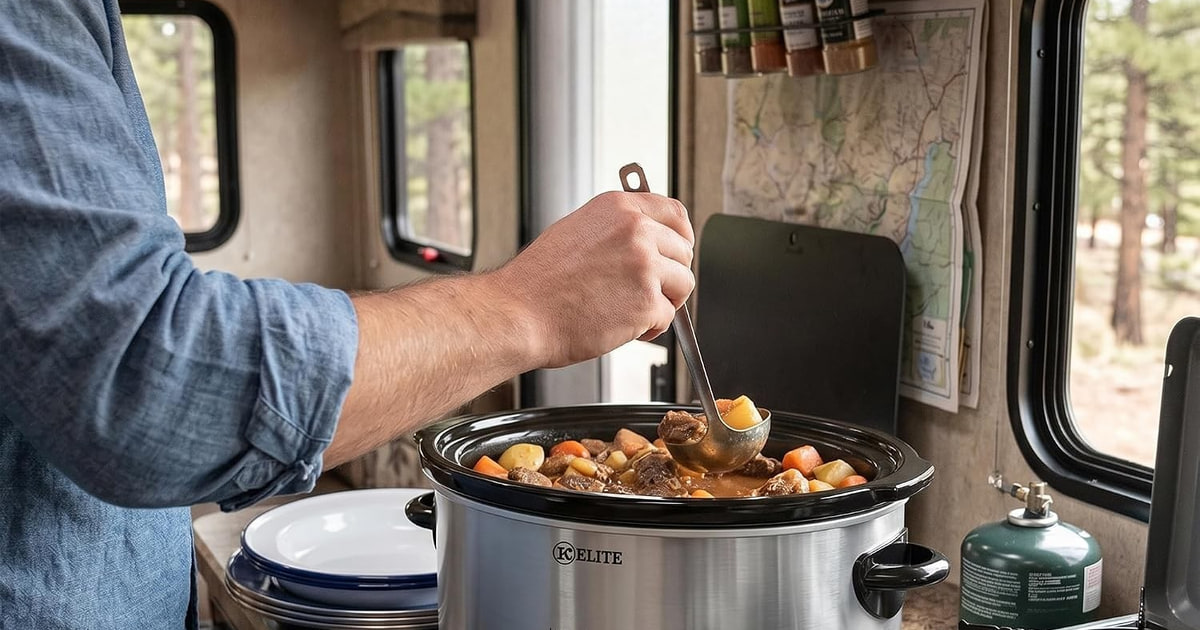
A slow cooker is the rare appliance that does its best work while you're gone. You put a chuck roast, some onions and a can of tomatoes in the pot before work, and eight hours later dinner is done and the house smells like a restaurant. It's cheap cooking, too, since the cuts that turn tender over a long afternoon are the ones nobody fights over at the meat counter. And it doesn't heat up your kitchen in July the way the oven does.
But no slow cooker is a magic box. Everything cooked in one arrives at roughly the same place: soft, moist, deeply savory, and a little uniform. Sauces come out thinner than you expect, because none of that steam escapes. Almost none of these machines can brown meat, so you'll still dirty a skillet if you want real depth. And a cooker without a timer keeps going long after dinner is ready, which is how a good stew turns to mush by the time you're home.
So the features that matter most are boring ones: a timer that shifts to warm on its own, a pot the right size for your household, and a lid you can trust in the car. We think that the Crock-Pot 6 Quart Cook & Carry is the best slow cooker for most people, and that the Hamilton Beach Set & Forget is the one to buy if you cook whole roasts and want a probe to tell you when they're done.
Everything we recommend
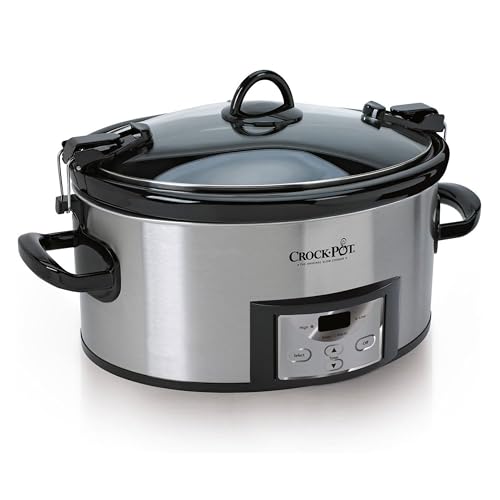
A real timer, auto-warm, and a lid that survives the car

A probe that tells you when the roast is actually done
The basics of slow cooking, with nothing extra to break

Sear, braise, and finish in the oven without changing pots
A PFAS-free ceramic pot, if that matters to you
At a glance
| Product | Capacity | Cook Settings | Price | |
|---|---|---|---|---|
 | Crock-Pot 7 Quart Oval Manual Slow CookerAlso consider | 7 Qt | — | $44.99On sale |
| Crock-Pot 6 Quart Cook & Carry ProgrammableTop pick | 6 Quarts | Digital Timer | $76.61On sale |
| Hamilton Beach Portable 6 Quart Set &Runner-up | 6 Quarts | Three Smart Settings | $69.99 |
| Ninja MC1001 Foodi PossibleCooker PRO 8.5 QuartUpgrade pick | 8.5 Quarts | 8-in-1 | $169.95 |
| Kitchen Elite 6 Quart Slow Cooker forBudget pick | 6 Quarts | 3 Simple Heat Settings | $44.99 |
 | All-Clad Stainless Steel Electric Slow Cooker 7-QuartAlso in lineup | 7 Quarts | 4 Preset Modes | $247.88On sale |
 | Cuisinart PSC-650 Stainless Steel 6-1/2-Quart Programmable SlowAlso in lineup | 6.5 Quarts | Programmable | $129.95 |
| GreenLife 6QT Slow CookerAlso great | 6 Quarts | Low/Medium/High | $69.25 |
 | Crock-Pot 3-Quart Manual Slow CookerAlso consider | 3 Qt | High/Low Cook Settings | $24.99On sale |
 | Breville Fast Slow Pro Pressure Cooker BPR700BSSAlso in lineup | 6 Quarts | 11 Pressure Settings | $329.95 |
 | Hamilton Beach Slow CookerAlso consider | 10 Quarts | 3 Heat Settings | $79.99 |
How we picked
Unattended cooking. We treated a programmable timer with automatic keep-warm as the single most important feature, since most people run a slow cooker while they're out. Manual dial models had to earn their place on capacity or simplicity instead.
Capacity and shape. We compared stated capacities and interior dimensions against what people actually cook, from dips for two to a 12-pound roast. Oval pots got preference at six quarts and up, because round ones don't fit a whole chicken cleanly.
Insert material. We read spec sheets for what the pot is made of and where it can go: stoneware, cast aluminum with ceramic coating, or nonstick. Inserts rated for the oven, stovetop or dishwasher counted for more, and we noted which coatings are PFAS-free.
Transport and sealing. We looked for gasketed or clip-tight lids, since a slow cooker that can't leave the counter is only half an appliance for anyone who does potlucks. Owner feedback about spills in the car helped separate real seals from marketing.
Reliability signals. We weighed published reviews and recurring themes in owner feedback, watching for repeat complaints about control panels failing, coatings wearing, or crocks cracking. Patterns across many owners mattered more than any single account.
Top pickOn sale
A real timer, auto-warm, and a lid that survives the car
Crock-Pot 6 Quart Cook & Carry Programmable
This is the plain, programmable six-quart Crock-Pot that most households should own. You set a cook time up to 20 hours, it drops to warm on its own when the time runs out, and the gasketed lid locks down so you can carry chili to a potluck without wearing it.
$76.61fromAmazonList priceThe timer is the whole reason to buy this one. You can program anywhere from 30 minutes to 20 hours, and when the cycle ends the cooker shifts itself to warm. That's the difference between coming home to pot roast and coming home to shredded, dried-out disappointment. If your commute runs long or your kids' practice schedule moves, the food just waits at a safe serving temperature instead of cooking another two hours.
The locking lid makes it the one slow cooker you'd actually put in your car. A rubber gasket seals the rim and the latches clamp it to the handles. Owners who haul food to church suppers, tailgates and family gatherings consistently point to this as the reason they bought it. Most slow cookers are strictly counter appliances. This one goes places, and it doesn't leave a puddle of gravy in your trunk.
Six quarts is the size most families should buy. It serves seven or more, and the oval shape swallows a whole chicken or a pork shoulder without you trimming anything to make it fit. A round pot forces you to cut big cuts in half. Fill this one somewhere between half and two-thirds and you'll get even, steady cooking, which is what the shape and size are really for.
Cleanup is about as easy as it gets. The stoneware lifts out and goes in the dishwasher, and it's rated for the oven up to 400°F and the microwave, so leftovers can be reheated in the same crock you cooked in. That matters more than it sounds. The nights you don't want to cook are the same nights you don't want to scrub a burned-on ring off a fixed metal pot.
Flaws but not dealbreakers
There's no temperature probe, so doneness is a guess. For stews and beans that's fine, since they're forgiving. For a pork loin or a whole bird, you're either lifting the lid to check with a thermometer or trusting the clock. Every lid lift lets out steam and adds real time to the cycle. If you cook big cuts often, our runner-up handles this better.
The stainless exterior is a fingerprint magnet. In a busy kitchen it looks smudged within a day, and owners note that the finish shows heat marks near the base over time. It's cosmetic, not a dealbreaker. But if you leave your slow cooker out on the counter, know that you'll be wiping it down more than you'd like.
Runner-up
A probe that tells you when the roast is actually done
Hamilton Beach Portable 6 Quart Set &
Hamilton Beach's Set & Forget does everything our top pick does and adds a temperature probe. You stick it in a pork loin or a leg of lamb, set a target temperature, and the cooker holds off switching to warm until the meat actually hits that number.
$69.99fromAmazonThe probe turns guesswork into a number you can read. Set 165°F for chicken or 145°F for pork, and the panel shows the meat's actual temperature as it climbs. When it arrives, the cooker switches to warm. That's more useful than a timer for anything thick, because a five-pound roast and a seven-pound roast don't finish at the same hour no matter what the recipe claims.
You get three ways to cook, which covers everything. Probe mode cooks to a temperature, program mode cooks to a time, and manual mode is just High, Low or Warm for up to 24 hours. So it works as a dumb dial cooker on chili night and as a precision tool on Sunday. Most cookers pick one of those personalities and stick with it.
The clip-tight lid travels as well as our top pick's. The lid clamps to the handles and seals against a gasket, which is the whole reason this thing is called portable. If you take food to potlucks, this and the Crock-Pot are the two six-quart options here that won't slosh. Both crock and glass lid go in the dishwasher afterward, which is not a given at this size.
Six quarts fits the cuts most people actually cook. Hamilton Beach rates it for a six-pound chicken or a four-pound roast, which is a normal Sunday for a family of four with leftovers for Monday's lunch. The proportions are wide and shallow rather than tall, so a whole bird sits flat and cooks evenly instead of poking into the lid.
Flaws but not dealbreakers
The probe is a loose part, and loose parts wander. It's a cord and a metal spike that has to live somewhere between uses, and it isn't stowed inside the machine. Owners report losing track of it in a drawer. If the probe disappears, you've paid for a feature you can't use.
The control panel is hard to read from above. The display sits at an angle that works if you're eye level with the counter and less well if you're looking down at it. In a bright kitchen, checking the temperature can mean crouching. Minor, but you'll notice it every time you walk by wondering how the roast is doing.
Budget pick
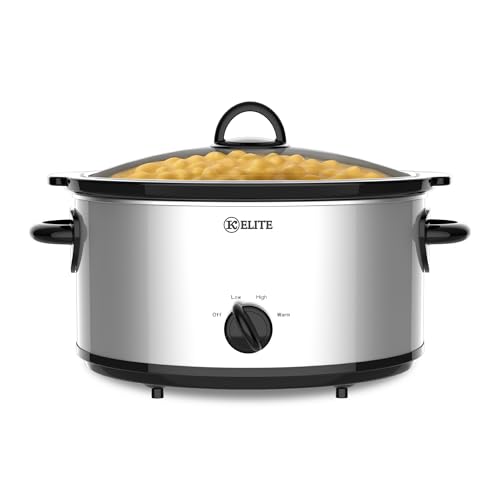
The basics of slow cooking, with nothing extra to break
Kitchen Elite 6 Quart Slow Cooker for
The Kitchen Elite is a plain six-quart cooker with a Low, High and Keep Warm dial and a removable ceramic pot. It's the one to buy if you're not sure you'll use a slow cooker often, or you want a second pot for the holidays.
$44.99fromAmazonIt does the one thing a slow cooker has to do. Three heat settings, a ceramic insert, a glass lid. That's enough for chili, pulled pork, bean soup and a pot roast, which is what most people make in these anyway. There's no display to go dark and no touchpad to stop responding, and a dial is the part of a cheap appliance least likely to fail.
Six quarts is a lot of pot for a budget machine. It handles a full batch of chili or a roast big enough for a family dinner with leftovers. If you're buying a second cooker so you can run mashed potatoes alongside the ham at Thanksgiving, this is the sensible one to double up on rather than buying two of something fancier.
The ceramic insert lifts out and goes in the oven or the dishwasher. So you can brown a casserole top under the broiler, carry the insert to the table on a trivet, then put it straight in the dishwasher. Cool-touch handles on the base mean you're not hunting for a towel when it's time to move the whole thing off the counter.
The glass lid lets you check without cheating. Every time you lift a slow cooker lid, you dump the steam and add 20 to 30 minutes to the cook. Being able to look through the lid instead of raising it is a small thing that saves you real time on a long braise, especially the first few times you cook a new recipe and want reassurance.
Flaws but not dealbreakers
There's no timer and no auto-warm. It runs on whatever setting you left it on until you come turn it off. For an eight-hour workday that's a problem, because a nine-hour recipe on Low will overshoot. If you want to start it in the morning and leave, buy one of the programmable picks instead.
Kitchen Elite doesn't have much of a track record. It's a newer name without the decades of field history behind Crock-Pot or Hamilton Beach, and owner feedback is thinner as a result. Parts and service are less certain if something goes wrong. That's the trade you're making for the low entry cost, and it's a reasonable one on a simple machine.
Upgrade pick
Sear, braise, and finish in the oven without changing pots
Ninja MC1001 Foodi PossibleCooker PRO 8.5 Quart
Ninja's PossibleCooker Pro is a big 8.5-quart pot that gets hot enough to brown meat before it slow cooks it. The pot then goes in the oven up to 500°F, so a cassoulet or a French onion soup can get a real crust without touching another dish.
$169.95fromAmazonIt browns meat, which almost no slow cooker can do. Bottom heating elements get the pot hot enough for actual searing, so you build fond and then deglaze right there. Every other cooker here asks you to dirty a skillet first, and most people skip that step. Skipping it costs you a lot of flavor in a stew, which is exactly the problem this design solves.
The pot goes in the oven to 500°F. Start a short rib braise on the counter, then slide the whole thing into the oven to caramelize the top. That opens up dishes a conventional slow cooker just can't finish, like gratins and anything you want crisp. The pot works on a stovetop burner too, so you can reduce a thin sauce at the end instead of living with it.
At 8.5 quarts, it cooks for a crowd without a second pot. Ninja rates it for chili for 20 people or pulled pork for 30 sliders, and it swallows a seven-pound chicken easily. For weekly batch cooking, that's the difference between one session and two. The nonstick interior means sticky, sugary braises come off with a sponge rather than a scouring pad.
Small design touches make it pleasant to use daily. The glass lid has a rest built into the handle for the included ladle-and-pasta-fork utensil, so you're not laying a dripping spoon on the counter. Side and steam heat combine with the bottom element, which Ninja says cooks faster than a conventional oven. In practice it means less waiting when you use it as a Dutch oven on a weeknight.
Flaws but not dealbreakers
There's no countdown timer that shifts to warm. That's a strange omission on the most capable machine here, and it's the main reason it isn't our top pick. You can't set it in the morning and trust it to stop cooking at 4 p.m. If unattended all-day cooking is your main use, a plain programmable Crock-Pot serves you better.
It's big, and it costs several times what a basic dial cooker does. The footprint eats real counter space and it's awkward to store on a high shelf. If you already own a good Dutch oven and just want something to run while you're at work, you're paying for overlap you don't need.
Nonstick is a wear item. Owners report scratches and coating wear where metal utensils get used, and the surface won't outlast glazed stoneware. Stick to wood or silicone and don't stack anything inside the pot. Treated carefully it's fine, but it's a less permanent surface than the ceramic crocks elsewhere in this guide.
Also great
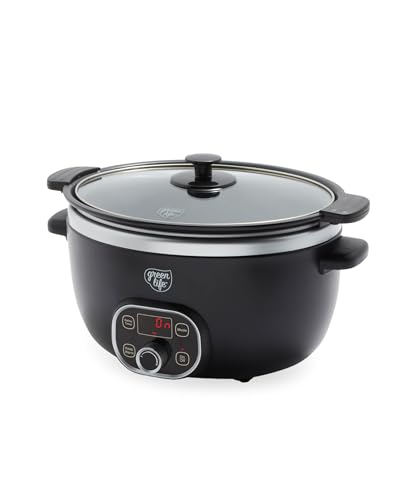
A PFAS-free ceramic pot, if that matters to you
GreenLife 6QT Slow Cooker
The GreenLife is a programmable six-quart cooker whose ceramic nonstick coating is certified free of PFAS, PFOA, lead and cadmium. The pot is light enough to lift easily and works on a stovetop burner, so you can brown meat before the long cook.
$69.25fromAmazonIt's the one here built around avoiding forever chemicals. GreenLife's sand-derived ceramic coating is free of PFAS, PFOA, lead and cadmium. If you've been replacing nonstick pans in your kitchen for that reason, this is the slow cooker that matches. Whether you find the concern urgent or not, it's a concrete, specific claim rather than vague wellness marketing.
The pot is removable and goes on a burner. So you can sear onions and beef on the stove, then drop the same pot back into the base for eight hours. That's the trick the Ninja does with heating elements, done the low-tech way. It also means one less pan in the sink, which is usually why people skip browning in the first place.
The scheduling is more flexible than the simple controls suggest. You can cook anywhere from 30 minutes to 20 hours, delay the start by up to 10 hours, and it holds at warm for four hours after. The delay start is genuinely useful if you want to load the pot the night before and have it begin cooking mid-morning while you're out.
It cleans up quickly and you can see inside. The ceramic surface releases stuck-on food with a rinse most of the time, and both the pot and the glass lid go in the dishwasher. Six quarts fits a six-pound chicken, a four-pound roast, or dinner for seven and up, so you're not giving up capacity to get the coating.
Flaws but not dealbreakers
Low, Medium and High is coarser control than the timer suggests. There's no probe and no fine temperature setting, so on long cooks you're picking a lane and living with it. That's fine for stew. It's less good for anything you want held right at a specific temperature.
Keep-warm runs out after four hours. Our top pick will hold dinner longer. If your evenings run unpredictably late, that four-hour window can close before you walk in. Plan around it or pick a cooker with a longer hold.
Who this is for
Buy a slow cooker if you leave the house for most of the day and want dinner ready when you get back, or if you cook tough, cheap cuts like chuck, shoulder and shank. It's also the right tool if you feed a crowd a few times a year and don't want to babysit a pot. Skip it if you mostly cook fast food like fish, stir-fries or fresh pasta. Nothing here browns, crisps or reduces well, and a slow cooker will make almost anything soft.
This guide covers plug-in slow cookers and multi-cookers that include a genuine slow-cook mode, from three quarts up to ten. We don't cover pressure cookers as a category, stovetop Dutch ovens, or sous vide gear, though one pressure cooker here made the list because its slow-cook range is real. If you want one machine to replace both a slow cooker and a pressure cooker, look at the competition section rather than the picks.
How we picked
We weighed five things. Unattended cooking: a programmable timer that shifts to warm on its own, because that's what makes an eight-hour workday survivable. Capacity and shape: enough room for what you cook, in an oval when a whole chicken is involved. Insert material: stoneware, coated aluminum or ceramic, and whether the pot can go on a burner, in an oven or in the dishwasher. Transport: a gasketed or clip-tight lid, since a lot of slow cooking ends at somebody else's table. Reliability: recurring themes in published reviews and owner feedback about panels, coatings and cracked crocks.
Other slow cookers worth considering
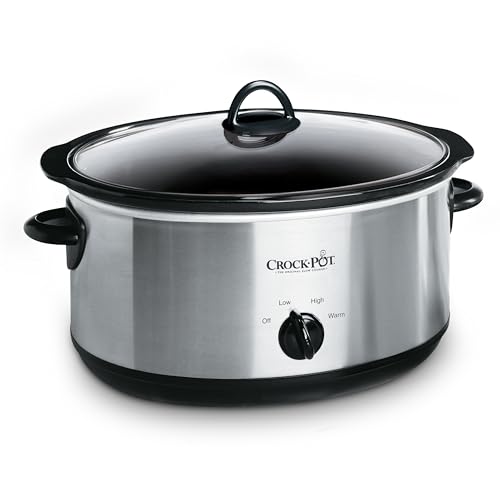
If you want a big pot with nothing to program: The Crock-Pot 7 Quart Oval Manual Slow Cooker ($44.99) — The seven-quart Crock-Pot Oval Manual is slow cooking with the electronics removed. A dial, three settings, and a stoneware crock that serves nine or more and takes a seven-pound roast without complaint. The stoneware goes in the microwave and the oven to 400°F, and both it and the lid are dishwasher safe. What you give up is real: no countdown, no auto-shutoff, no locking lid. It runs until you turn it off, so it's best if you're home while dinner cooks or you're comfortable using an outlet timer.
If you cook for a dozen people: The Hamilton Beach Slow Cooker ($79.99) — Hamilton Beach's 10-quart Stay or Go is the only cooker here that takes a 10-pound turkey or a 12-pound roast. The lid clips to the handles for the drive, and full-grip handles make a full pot manageable, which matters when it's this heavy. Controls are a plain dial with Low, High and Warm, so there's no timer to lean on. It's also enormous, and too big for a Tuesday. Buy it as a second cooker for holidays and reunions, not as your only one.
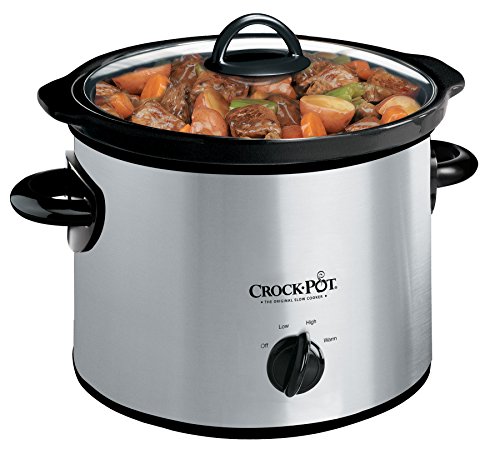
If you cook for one or two: The Crock-Pot 3-Quart Manual Slow Cooker ($24.99) — The three-quart Crock-Pot is the right size for a couple, a small apartment, or a queso dip you want to keep hot through a party. It's round, has High, Low and Warm settings, and the stoneware is oven and dishwasher safe. It stores in a cabinet instead of living on the counter. Three quarts tops out around three servings, so it's not a family cooker, and there's no timer. But the low entry cost makes it easy to justify even if you use it a handful of times a year.
The competition
This is what our research surfaced in this category, not a census of every slow cooker sold. Each of these is a competent machine that lost to a pick for a specific reason, and each one still makes sense for somebody.
The All-Clad Stainless Steel Electric Slow Cooker 7-Quart ($247.88) — The All-Clad 7-Quart is the most carefully built dedicated slow cooker here. Its cast aluminum insert with ceramic nonstick spreads heat more evenly than stoneware, which is the fix for the scorched edges you sometimes get on a long braise, and the insert works on a cooktop, in the oven and as a serving dish. A High/Low preset starts hot and drops to finish gently. It costs many times what an equally large Crock-Pot does, and the aluminum insert is heavy. For bone broth, delicate stews and heavy weekly use, it's a defensible splurge. For a few soups a month, it isn't.
The Breville Fast Slow Pro Pressure Cooker BPR700BSS ($329.95) — The Breville Fast Slow Pro is really a pressure cooker with a good slow-cook range attached. Dual sensors at the top and bottom of the bowl track temperature and pressure and adjust automatically, and the auto steam release picks quick, pulse or natural venting so you're not standing over a hissing valve. The ceramic-coated bowl is PFOA and PTFE free and doubles as a serving dish. It's the most expensive machine here, the six-quart bowl is smaller than the big dedicated cookers, and the controls take some learning. Choose it only if you want it to replace both appliances.
The Cuisinart PSC-650 Stainless Steel 6-1/2-Quart Programmable Slow ($129.95) — The Cuisinart PSC-650 is a solid programmable slow cooker that doesn't do anything the Crock-Pot Cook & Carry doesn't. It's a half quart bigger at 6.5 quarts, wrapped in brushed stainless, backed by a brand with reliable service and easy returns at most retailers. But there's no locking lid, so it stays on the counter, and no probe. It's also priced above our top pick for the same core job. If you're already a Cuisinart household and want the slightly larger pot, it's a reasonable buy.
Care and maintenance
Fill the pot between half and two-thirds full. Less than that and the food scorches in the first hour; more and it heats unevenly and can boil over. Thaw meat in the refrigerator overnight, never straight from the freezer, because frozen protein lingers too long in the range where bacteria multiply. Resist lifting the lid, since every peek costs you 20 to 30 minutes. Cut liquid by about a third from an oven recipe, because nothing evaporates in a sealed pot. Add dairy, seafood, fresh herbs and quick vegetables in the last half hour. Let a hot stoneware crock cool before it hits cold water, or it can crack. Most crocks and glass lids are dishwasher safe, but the base never is; wipe it with a damp cloth.
Questions we get
What size slow cooker do I need?
For one or two people, three quarts is plenty. For a family of three to five, six or seven quarts is the sweet spot, since it's big enough for batch cooking and still fits in a cabinet. Step up to eight quarts or more only if you regularly feed ten or more. Whatever size you get, fill it between half and two-thirds full.
Can I leave a slow cooker running all day while I'm at work?
Yes, that's what they're built for. But get a programmable model with auto-warm if your day runs eight or nine hours, because a manual cooker keeps cooking until you turn it off and most eight-hour recipes suffer badly at ten. With auto-warm, the food just sits at a safe serving temperature. That one feature is the main reason to spend a little more.
Is it safe to put frozen meat straight into a slow cooker?
No. The USDA advises against it, because frozen meat spends too long between 40°F and 140°F, where bacteria multiply fast. Thaw it in the refrigerator overnight instead. If you're stuck, thaw it in the microwave or oven first rather than dropping it in frozen and walking away.
What's the difference between Low and High?
Both settings end up around the same temperature, roughly 190°F to 210°F. Low just takes 8 to 10 hours to get there, and High takes 4 to 5. Low is better for tough cuts like brisket, chuck and pork shoulder, since the long, gentle heat breaks collagen down into gelatin more completely. Use High when you're short on time.
Can I brown meat in a slow cooker?
Almost never. Most cookers can't get hot enough for real browning, so you'll want a skillet over high heat first. The Ninja PossibleCooker Pro is the exception here, since its bottom elements sear right in the pot. The GreenLife and All-Clad inserts can also go on a stovetop burner, which accomplishes the same thing with one extra step.
How do I keep slow cooker meals from turning out watery?
Cut the liquid by about a third compared with a stovetop or oven recipe, since nothing evaporates under the lid. Use stock, wine or tomato instead of water, because they have more body. To thicken at the end, stir a tablespoon of cornstarch mixed with two tablespoons of cold water into the pot and run it on High for the last half hour. Leaving the lid slightly ajar for the final 15 minutes helps too.
Why you should trust us
For this guide:
- We read manufacturer spec sheets and listing details for all eleven cookers, comparing capacity, insert material, oven and stovetop ratings, and how each one handles timing and keep-warm.
- We reviewed published coverage of the category alongside recurring themes in owner feedback, paying particular attention to complaints about control panels, coating wear, cracked crocks and lids that leak in transit.
- We did not cook with any of these machines; every claim here traces back to a specification, a published review, or a pattern in what owners report.
- We read owner reviews on every listing, weighted toward the critical ones, because that is where the recurring failures show up.
- We have a systematic way of automatically fetching the latest prices, so the numbers on this page stay current.
- This is a research-focused guide, so the team may not own every product listed — though we often do own the top winners, which gives us extra context for the recommendations.
- We don't accept free products, and the retailer commission never changes which product we recommend.
Sources
The Best Slow Cookers of 2026 — Wirecutter/NYT, Wirecutter
Best Slow Cookers Tested by Food Network Kitchen, Food Network
Best Slow Cookers 2026 — Good Housekeeping Institute, Good Housekeeping
Slow Cooker Reviews & Ratings — Consumer Reports, Consumer Reports
Best Slow Cookers Reviewed — America's Test Kitchen, America's Test Kitchen
Amazon product listings and owner reviews for all 11 products
Manufacturer specification pages for each product
Some passages in this guide may be paraphrased with AI help. Prices are refreshed automatically.
More like this.
Continue exploring appliances reviews and recommendations.

The Best Dutch Ovens for Slow Cooking
A Dutch oven earns its shelf space by doing one thing better than anything else in your kitchen: it turns cheap, tough cuts into something worth serving.…

The Best Slow Feeder Dog Bowls
If your dog inhales a meal in twenty seconds, you already know the sound: a frantic clatter, then silence, then maybe a puddle on the rug. Fast eating…

The Best Gifts for Vegans and Plant-Based Cooks
Plant-based cooking asks a lot of a kitchen. Almonds have to become milk, chickpeas have to become hummus, and tofu has to come out of something crisp…

The Best Stocking Stuffers for Home Cooks
A stocking stuffer for a cook has exactly one job: get used. The small stuff that earns its drawer space fixes a problem the person hits every week - eggs…

The Best Instant Pots and Pressure Cookers
An electric pressure cooker earns its counter space by collapsing time. A pot roast that needs three hours on the stove is done in under an hour,…

The Best Woks for High-Heat Cooking
A wok does one thing no skillet can: it gets brutally hot and stays hot while you keep the food moving. That's how green beans blister at the edges and…