The Best Instant Pot Appliances
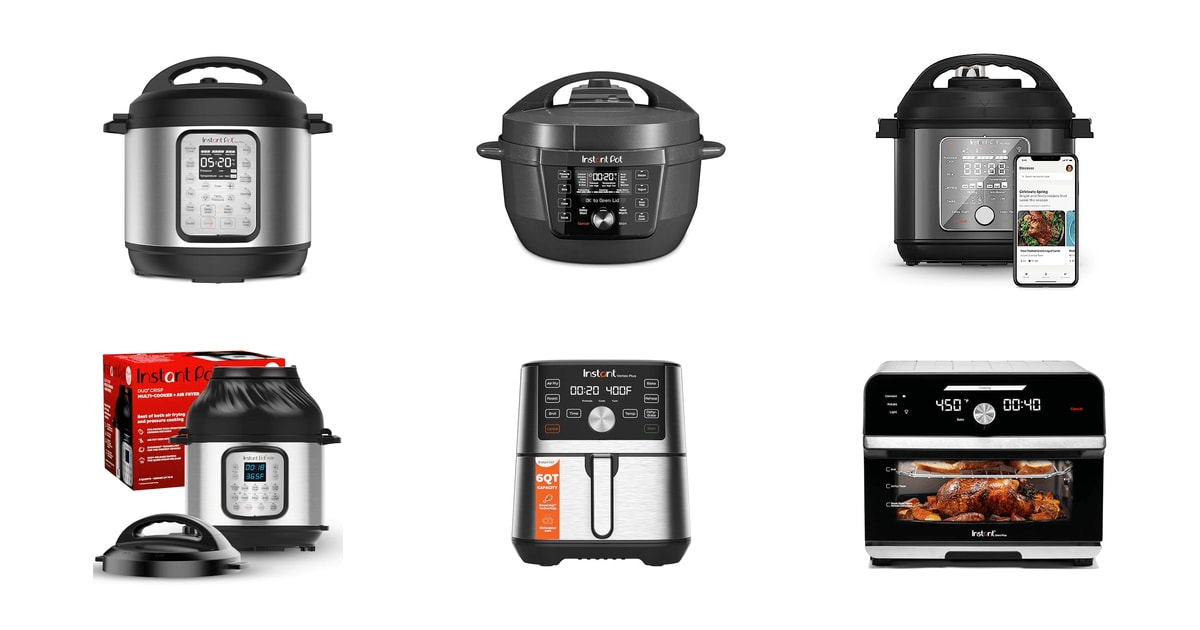
An Instant Pot earns its counter space on the nights you don't want to cook. You drop in dried beans, frozen chicken thighs, or a tough chuck roast, press a button, and walk away. Pressure cooking turns an afternoon stew into a weeknight one. Air frying gets wings and fries crisp without a pot of oil. The brand's lineup splits into two families now — pressure cookers and air fryers — and the trick is working out which one solves the problem you actually have.
No Instant appliance does everything well. The slow-cook setting on a pressure cooker runs cooler than a real slow cooker, so your old recipes need tweaking. Crisping lids and baskets add parts to wash, and every model here takes a real bite out of your counter. Pressure cooking has a learning curve too: the pot needs time to come up to pressure, so a five-minute cook time isn't a five-minute dinner. Lids and sealing rings are also the parts owners most often report failing.
So buy for the cooking you actually do. If weeknight stews, rice, and batch beans are the point, get a pressure cooker and skip the crisping extras. If you mostly want crunchy food fast, a standalone air fryer does that better than any lid attachment. And if you're short on counter and want both, one hybrid can cover you. We think that the Instant Pot Duo Plus is the best Instant Pot appliance for most people, and that the Instant Pot RIO Wide Plus is the one to buy if you cook for a bigger household.
Everything we recommend

The safest first multi-cooker, if you don't need app control

A wider pot and quieter venting, without the flagship extras
App control and quieter venting, if you'll actually use them

Crisp fries and wings, if you don't need pressure cooking
How we picked
Cooking consistency. We leaned on published lab results from Consumer Reports, RTINGS, and Good Housekeeping for crisping evenness, temperature accuracy, and rice reliability. A model had to show consistent results across repeated trials, not one good run.
Right-sized capacity. We matched each pot or basket to a realistic household using Instant's own serving ratings and published capacity tests. Six quarts covers most families; anything larger has to justify the counter space it takes.
Steam release and safety. We favored models with switch- or button-operated releases over loose valves, and confirmed that current lids use the redesigned locking hardware that followed the brand's earlier CPSC recall. Noise came from published measurements, not guesswork.
Living with it. We read owner feedback for recurring themes around cleaning, sealing rings, lid durability, and app setup. A model with a pattern of hardware failures got flagged even when its overall reception was warm.
Worth the extras. We asked whether WiFi, dual baskets, or a crisping lid actually changes how you cook, or just adds parts. Extras had to earn their keep against a simpler model that costs less.
Top pick
The safest first multi-cooker, if you don't need app control
Instant Pot Duo Plus 6 Qt 9-in-1
This is the multi-cooker most people should start with. You get nine functions, a 6-quart pot that covers about six servings, and a steam-release switch you flip without reaching over the vent. There's no WiFi and no crisping lid, and for most kitchens that's fine.
$159.67fromAmazonThe Duo Plus does the boring things reliably, and that's the whole job. Good Housekeeping's testing found it cooked rice perfectly in nine out of ten trials. Wirecutter's long-term testers reported that it held consistent pressure across more than 100 cooks over years of ownership. That's the pattern you want from an appliance you'll use on a Tuesday when you're tired. It gets beans, rice, and pot roast right without you babysitting it.
Six quarts is the size that fits the most households. Instant rates it for about six servings, which in practice means a whole chicken, a double batch of chili, or enough shredded pork for a week of lunches. If you're cooking for one or two, you'll still use it — you just freeze half. Step up only if you regularly cook for a crowd, because the bigger pots need more liquid and more counter.
The steam release is the part first-timers worry about, and this is where the Duo Plus reassures. The Easy-Release switch sits on the lid, so you're not flicking a loose valve with a wooden spoon while a jet of steam comes at your hand. Current models also use the redesigned lid-locking hardware that followed the brand's earlier recall. It's still loud when it vents, but it's predictable, and predictable is what you want here.
Cleanup is straightforward. The inner pot is 18/8 stainless with a tri-ply bottom, so you can scrub it hard without worrying about a nonstick coating flaking. Deglazing after a sauté lifts most of the fond right off. The power cord detaches, which sounds trivial until you're wedging the pot into a cabinet with a pan of leftovers in your other hand.
Flaws but not dealbreakers
The sauté function is underpowered for browning meat. Owners consistently report that anything more than a medium onion or a small batch of stew meat steams instead of searing, because the heating element only warms the base of a fairly narrow pot. Brown your beef in a skillet first if you care about that crust. It's an extra pan to wash, but it makes a real difference to the finished stew.
Slow cooking is the weakest of the nine functions. The pot runs cooler than a dedicated slow cooker, so recipes written for one often come out underdone on the low setting. And there's no air frying here at all — if crisping matters to you, look at the Duo Crisp or one of the Vortex models instead.
Budget pick
A wider pot and quieter venting, without the flagship extras
Instant Pot RIO Wide Plus
The RIO Wide Plus trades the tall, narrow shape of older Instant Pots for a broad 7.5-quart pot. Instant says the searing surface is 35% larger than other leading 8-quart multi-cookers, and the wider base makes stirring and browning easier. It costs less than the Pro Plus and skips the app.
$199.95fromAmazonShape matters more than most spec sheets let on. A wide, shallow pot gives you room to spread stew meat in something close to a single layer, so it browns instead of stewing in its own juices. You can get a spoon in there without knocking your knuckles on the rim, and lifting the hot inner pot out is less awkward. Long-time Instant Pot owners who've moved to this design consistently point to that width as the upgrade they actually notice.
Seven and a half quarts is genuinely a lot of food. Instant rates it for about seven servings, which covers a Sunday batch-cook session, a big pot of soup for the freezer, or dinner for a full table with leftovers. If you meal prep in bulk, this is the pot to get. The flip side is that big pots need enough liquid to build steam, so small weeknight jobs can feel like overkill.
The control panel is angled up toward you with a progress bar and 25 recipe presets that walk you through steps. That's more useful than it sounds if you're new to pressure cooking, because the display tells you what stage you're in rather than leaving you to guess whether the thing is heating, cooking, or venting. The WhisperQuiet release also spits far less liquid onto your cabinets than older Duo-style valves.
Flaws but not dealbreakers
It's big. At roughly 16.6 by 17.5 inches, this one hogs counter and won't slide under most upper cabinets with the lid on. Measure before you buy, especially in an apartment kitchen.
Lid durability is the recurring worry in owner feedback. Some owners report the lid mechanism failing after a year or so, and describe unsatisfying outcomes when they asked for a replacement part. That's a minority complaint against a lot of happy owners, but it's the reason we'd register the product with Instant directly rather than relying on retail support. There's no air fryer lid and no app here either.
Upgrade pickOn sale
App control and quieter venting, if you'll actually use them
Instant Pot Pro Plus 6 Qt 10-in-1
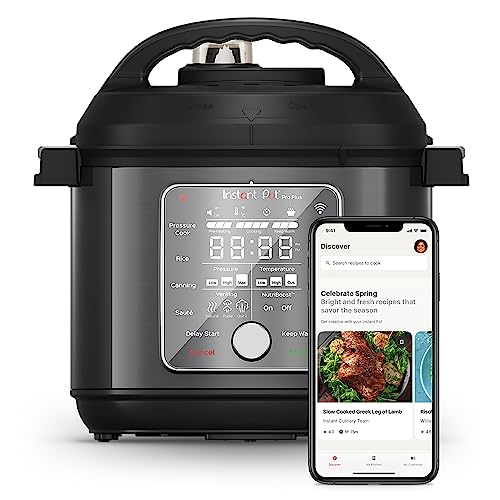
The Pro Plus is the flagship multi-cooker: a touchscreen, ten functions including canning, NutriBoost pulsing for rice and risotto, and a WiFi app with more than 2,000 guided recipes. CNET measured its steam release as roughly 15 to 20% quieter than the original Duo line.
$169.95fromAmazonList priceThe quiet venting is the upgrade you'll notice every single cook. The original Duo's release is a startling hiss, the kind that wakes a napping kid and makes guests jump. CNET found this one runs meaningfully quieter. You can also trigger the release from the app, which means you can start venting from the couch instead of standing over the pot with a towel in your hand. That's a small thing that changes how often you use it.
The app is a real feature, not a novelty, if you like guided cooking. It walks you through recipes step by step, shows remaining time on your phone, and lets you switch functions mid-cook. Owners who cook from recipes rather than habit tend to love it. Owners who just want beans in an hour will use it once and forget it — which is exactly why we call this an upgrade pick, not the pick for most people.
Canning is the sleeper function. The Pro Plus holds pressure steadily enough for tested altitude-adjusted canning of high-acid foods, and owners who put up beans and tomatoes are some of its most enthusiastic buyers. NutriBoost, which gently pulses the pot while it cooks, is the other genuine difference — it stirs broths and risotto in a way a static pressure cooker can't.
Flaws but not dealbreakers
App setup is where the complaints cluster. A meaningful share of owners report trouble getting the pot onto their WiFi, needing multiple attempts, or waiting on a firmware fix before a feature worked as advertised. Most get there eventually. But if you'd be frustrated by an appliance that needs troubleshooting, buy the Duo Plus and spend the difference on groceries.
This is the most expensive multi-cooker in Instant's lineup, and the core pressure cooking isn't better than the Duo Plus. You're paying for quiet, canning, and connectivity. If none of those three matter to you, the extra money buys nothing you'll taste.
Also greatOn sale
Crisp fries and wings, if you don't need pressure cooking
Instant Pot 6QT VORTEX Plus Air Fryer
If crunchy food is your actual goal, skip the hybrid lids and get the Vortex Plus. It's a straightforward 6-quart basket air fryer with six functions, a dishwasher-safe basket, and a temperature range from 95 to 400°F. It does one job, and it does it well.
$119.99fromAmazonList priceConsumer Reports' lab testing scored the Vortex Plus above 8 out of 10 for even crisping on french fries, and RTINGS measured its temperature accuracy within 5°F of the set point. That combination is the whole game with an air fryer. Wings come out evenly browned instead of pale on one side, and a recipe that says 375°F actually cooks at something close to 375°F.
A basket is easier to live with than a lid. You pull the drawer out, shake it, slide it back — no lifting a hot attachment off and finding somewhere to park it. The basket goes in the dishwasher, and the interior wipes down without a wire mesh to fight. Owners who use theirs several times a week keep coming back to how simple the cleanup is.
Six quarts sounds like a lot, and it isn't quite. Instant rates it for up to six portions, but that assumes you're comfortable crowding the basket, and crowding is what makes air-fried food soggy. Figure on a solid dinner for two to four with room for the air to move. For a bigger household, you'll cook in two rounds — or look at a dual-basket or oven-style model.
Flaws but not dealbreakers
New units give off a plastic smell for the first few uses. Owners mention it often. It fades, and running the unit empty at a high temperature for a cycle or two speeds that along, but the first batch of food can pick up a hint of it.
It cooks faster than most published recipe times, so your first few attempts will likely overshoot. Check early. And it only air fries — there's no pressure cooking, no slow cooking, and nothing that replaces a stew pot.
Who this is for
This guide is for anyone shopping the Instant Pot family specifically — a first-time buyer replacing a slow cooker, a family that wants one-pot weeknight dinners, a meal prepper batching beans and shredded chicken, or an apartment dweller who can only justify one appliance on the counter. If you already own a working Duo and you're eyeing the Pro Plus, the honest answer is that you'll notice quieter venting and an app, not better food. That's worth it to some people and pointless to others.
It's not for you if you want a serious searing appliance — every electric pressure cooker here browns meat poorly compared with a skillet, and no software fixes that. We cover Instant's current pressure cookers, air fryers, and countertop ovens. We don't cover its blenders, coffee gear, or accessories here, and we don't compare Instant against Ninja, Cosori, or other brands model by model.
How we picked
We built the list around a handful of things that actually change your dinner. Cooking consistency: we leaned on published lab results on crisping evenness, temperature accuracy, and rice reliability rather than marketing claims. Capacity: each pot or basket had to match a realistic household, since an oversized cooker just eats counter and needs more liquid. Steam release and safety: we favored switch- or button-operated venting, and confirmed current lids use the redesigned locking hardware. Cleaning: removable, washable parts and a stainless pot you can scrub beat a coated surface you have to baby. Extras: WiFi, dual baskets, and crisping lids had to change how you cook, not just add parts to store.
Other instant pot appliances worth considering
If you want one appliance that pressure cooks and air fries: The Instant Pot Duo Crisp 8 Qt 11-in-1 ($219.99) — The Duo Crisp comes with two lids — a pressure lid and an air-fry lid — and an 8-quart stainless pot that's stovetop- and oven-safe. Serious Eats found the air-fry lid hit 400°F in under five minutes of preheating, so it's genuinely quick. For a small kitchen, replacing two appliances with one is a real win, and owners who came from separate machines rarely regret it. What you give up: the crisping isn't as good as a dedicated basket, you have to store a second bulky lid somewhere, and at over 22 pounds this is not something you'll move around. Buy it for the consolidation, not for the best fries.
More from Instant Pot
Here's the rest of what our research turned up across Instant's current lineup. It isn't every model the brand sells, and none of these are bad — they're built for a narrower shopper than the picks above.
The Instant Pot Omni Plus 19 Qt 10-in-1 ($157.74) — The Omni Plus is a 19-quart countertop oven with ten functions, including toast, rotisserie, dehydrate, and convection bake, plus quartz infrared heating and a double-layer glass door. The Spruce Eats found it could take a 12-inch pizza or a four-pound chicken, the largest capacity in its group of air-fryer ovens, and it holds six slices of bread. That makes it the right pick if you're replacing a dying toaster oven and an air fryer at once, and you have the counter for something that weighs nearly 30 pounds. Go in knowing two things owners flag repeatedly: it cooks noticeably faster than standard recipe times, so watch your first few batches, and the wire racks draw more complaints than any other part. Reception is more mixed here than for the Vortex Plus, so it suits a shopper who wants the oven functions specifically, not someone who just wants crispy fries.
Is Instant Pot worth it?
Instant Brands says its pressure cookers have sold more than 100 million units worldwide since the original Instant Pot launched, and that scale shows up in ways that matter to you: a huge library of recipes written for these exact pots, cheap replacement sealing rings, and a community that has already solved whatever problem you're about to have. The company went through a Chapter 11 restructuring and came out under its lenders' ownership as a private business, per Reuters. It's still shipping products and still supporting them, but retail warranty handling can vary, and some owners describe frustrating outcomes when a lid fails. Register your appliance with Instant directly and keep your receipt. On safety, CPSC records show a recall of roughly 106,000 pressure cookers for a lid-locking defect; that hardware was redesigned, and current models use the updated locking mechanism. Against rivals like Ninja and Cosori, Instant generally wins on pressure cooking and parts availability, and trades blows on air frying.
Not set on Instant Pot?
If you're not set on Instant, this one weighs its pressure cookers against Ninja, Zavor, and other brands on browning power, lid design, and long-term reliability. our full multi-cooker guide →
Worth a look before you commit to the Omni Plus, since it compares countertop ovens across brands on toasting quality, rack design, and how much counter they really need. our toaster oven air fryer combo guide →
Care and maintenance
Most Instant Pot problems trace back to the lid. Pull the silicone sealing ring after every cook, wash it, and let it air out — it holds onto curry and chili smells, and a stretched or torn ring is the usual reason a pot won't come up to pressure. Keep a spare in the drawer. Check the float valve and the anti-block shield for stuck bits of food before each use, since a blocked valve is a safety issue, not a nuisance. Wipe the condensation cup and the rim of the base, where liquid pools. On the air fryers, wash the basket and crisping plate while they're still warm, because grease sets hard once it cools. And never submerge the cooker base — there's electronics under that housing.
Questions we get
Which Instant Pot should you buy first?
For most first-time buyers, the Duo Plus 6-quart. It handles the jobs people actually buy a pressure cooker for — beans, rice, stew, shredded chicken — and it's the model the largest number of recipes are written around. Move up to the Pro Plus only if you want app-guided cooking, canning, or quieter venting.
Is Instant Brands still in business after its bankruptcy?
Yes. Reuters reported that the company emerged from Chapter 11 with its lenders taking ownership, and it operates now as a private business still selling and supporting these appliances. The practical takeaway for you is about service, not survival: register your product directly with Instant, keep the receipt, and don't assume a retailer will handle a warranty claim for you.
What's the difference between the Duo Plus and the Pro Plus?
The core pressure cooking is much the same. The Pro Plus adds a WiFi app with guided recipes, a canning function, NutriBoost pulsing for rice and risotto, and a much quieter steam release — CNET measured it as roughly 15 to 20% quieter than the original Duo line. If none of those change your cooking, the Duo Plus makes the same pot roast for less.
Is the Duo Crisp worth it over buying a separate air fryer?
It depends on your counter, not your cooking. If you only have room for one appliance, the Duo Crisp genuinely covers both jobs and its air-fry lid heats fast. If you have room for two, a dedicated basket fryer like the Vortex Plus crisps better and is easier to clean, and you won't have a second lid to store.
Are Instant Pots safe after the lid-locking recall?
CPSC records show a recall of roughly 106,000 pressure cookers over a lid-locking defect, and that hardware was redesigned. Current models use the updated locking mechanism, and the lid physically won't open while the pot is under pressure. Follow the basics anyway: don't overfill past the max line, keep the float valve clear, and keep your hands away from the vent during a quick release.
What size do you need for meal prep?
Cooking for one or two, a 6-quart pot is still the right call — you just cook full batches and freeze half. For a family of four, 6 quarts is comfortable. If you batch-cook for a week or feed six-plus regularly, the 7.5-quart RIO Wide Plus or the 8-quart Duo Crisp gives you the headroom, at the cost of a much bigger footprint.
Why you should trust us
For this guide:
- We read published lab results from Consumer Reports, RTINGS, and Good Housekeeping, along with reviews from Serious Eats, CNET, The Spruce Eats, Tom's Guide, and Wirecutter.
- We compared Instant's own specification sheets for every model here, function by function and quart by quart.
- We read owner feedback looking for repeated themes rather than one-off complaints, especially around lid durability, app setup, and the plastic smell new air fryers give off.
- We read owner reviews on every listing, weighted toward the critical ones, because that is where the recurring failures show up.
- We have a systematic way of automatically fetching the latest prices, so the numbers on this page stay current.
- This is a research-focused guide, so the team may not own every product listed — though we often do own the top winners, which gives us extra context for the recommendations.
- We don't accept free products, and the retailer commission never changes which product we recommend.
Sources
Instant Pot Duo Plus Review, Wirecutter
Best Air Fryers of 2026, Consumer Reports
Instant Pot Pro Plus Review, CNET
Instant Pot Statistics and Company History, Instant Brands
Best Multi-Cookers Tested, Good Housekeeping
Instant Pot Duo Crisp Review, Serious Eats
Best Toaster Ovens and Air Fryer Ovens, The Spruce Eats
Instant Brands Bankruptcy and Restructuring Coverage, Reuters
Ninja vs. Instant Air Fryer Comparison, RTINGS.com
Instant Pot Recall and Safety Records, U.S. Consumer Product Safety Commission
Best Blenders Under $100, Epicurious
Dual Basket Air Fryer Roundup, Tom's Guide
Amazon product listings and owner reviews for all 6 products
Manufacturer specification pages for each product
Some passages in this guide may be paraphrased with AI help. Prices are refreshed automatically.
More like this.
Continue exploring appliances reviews and recommendations.

The Best Silicone Oven Mitts
An oven mitt is the one kitchen tool you grab without thinking, usually while holding something heavy and very hot. Silicone changed what you can ask of…

The Best Whole-House Humidifiers
Winter air inside a heated house gets dry fast. Once it's below about 20°F outside, indoor humidity can slide into the teens, and you feel it everywhere:…

The Best Stand Mixers for Baking
A stand mixer earns its counter space by doing the work your arms don't want to do. Creaming butter and sugar for cookies, whipping egg whites into stiff…

The Best Coffee Makers
Your coffee maker is the appliance you use most and think about least. It runs every single morning, usually before you're awake enough to troubleshoot…

The Best Portable Air Conditioners for Small Spaces
A portable air conditioner is what you buy when a window unit isn't an option. Maybe your lease forbids anything hanging outside. Maybe your windows slide…

The Best Indoor and Countertop Composters
A kitchen composter solves a small, daily annoyance: the coffee grounds, onion skins and half-eaten banana that sit in your trash can getting riper by the…