The Best Paper Shredders for Home Offices
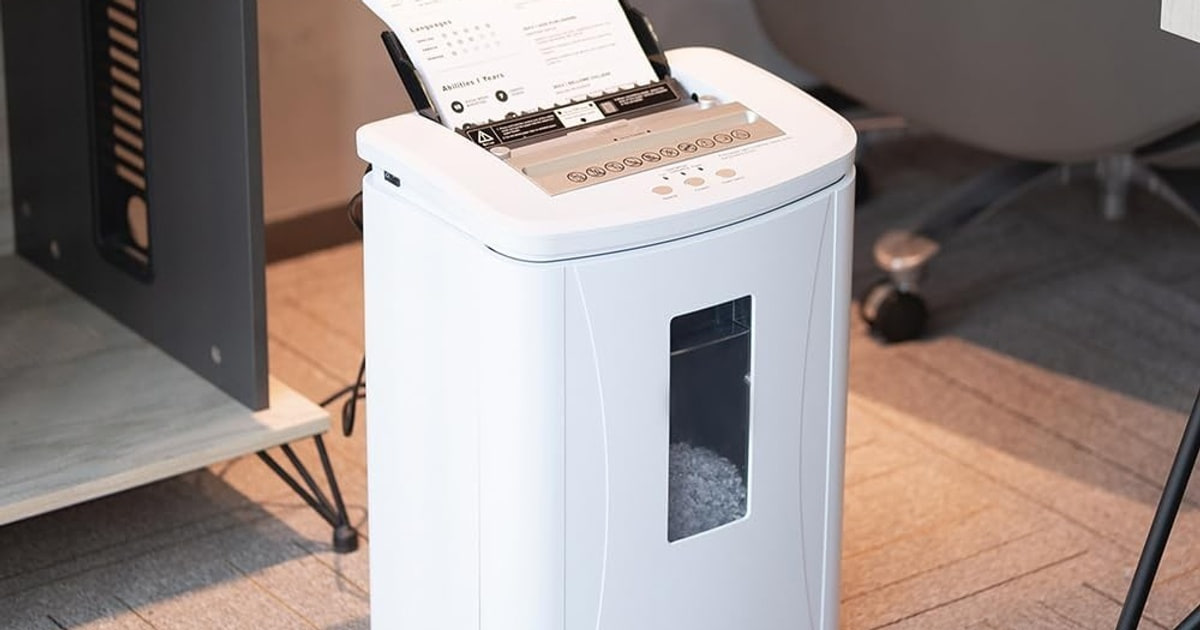
A paper shredder spends most of its life doing nothing, then has to work hard for twenty minutes when a filing box finally gets opened. That pattern is what separates the good ones from the frustrating ones. The specifications that matter are how many sheets go through in a single pass, how long the motor runs before it has to cool, how small the particles come out, and how the machine behaves when a folded receipt or a stapled statement goes in sideways. Bin size decides how often you have to stop.
No shredder at this size is pleasant to live with. All of them are loud enough to interrupt a phone call, all of them want lubricant every thirty minutes of cumulative run time, and all of them eventually stop for a cool-down cycle. Micro-cut cutting heads buy real security but move paper more slowly; the Good Housekeeping Institute puts the penalty at roughly 15 to 20 percent longer per page against a cross-cut model of the same rated capacity. Auto-feed trays remove the manual feeding and cost two to three times as much.
Most home offices are destroying tax returns, medical statements, and mail with account numbers printed on it, and the FTC and i-SIGMA's NAID standards both treat cross-cut P-4 as the floor for that material. Strip-cut is below the floor: security researchers have shown that P-2 output can be reassembled in under fifteen minutes with commercially available reconstruction software. Everything we recommend here meets P-4 or better. We think that the Fellowes Powershred 79Ci is the best paper shredder for a home office for most people, and that the Fellowes Powershred 99Ci is the one to buy if you shred in long sessions and hate emptying the bin.
Everything we recommend

Jam-proof, quiet enough, and sized for a real filing backlog

More run time and a bigger bin, if you have the floor space

Enough shredder for the mail pile, and not much more

A continuous-duty motor for people who shred nearly every day

Smaller particles and an hour of running, on casters
At a glance
| Product | Sheet Capacity | Run Time | Price | |
|---|---|---|---|---|
| Fellowes Powershred 79Ci 16-Sheet 100% Jam-Proof HeavyTop pick | 16 Sheets | 20 min | $269.99 |
| Amazon Basics 8-Sheet High Security Cross CutBudget pick | 8 Sheets | 3 min | $37.02 |
| Bonsaii 16-Sheet Micro-Cut 60-Min Run Paper ShredderAlso great | 16 Sheets | 60 min | $189.99 |
 | Aurora Professional Grade High Security 14-Sheet Micro-CutAlso consider | 14 Sheets | 30 min | $180.99 |
 | Kitnery 150-Sheet Auto Feed Paper Shredder forAlso consider | 150 Sheets Auto | 30 min | $209 |
| Fellowes Powershred 99Ci 18-Sheet 100% Jam-Proof HeavyRunner-up | 18 Sheets | 30 min | $299.99 |
 | HSM shredstar Autofeed X200-4 x 12 mmAlso in lineup | — | — | $730.50 |
| Fellowes Powershred 225Ci 22-Sheet 100% Jam-Proof CrosscutUpgrade pick | 22 Sheets | Continuous | $1,153.29 |
How we picked
Cut size and security. We treated cross-cut P-4 under DIN 66399 as the minimum, matching FTC and NAID guidance for documents containing account numbers or Social Security numbers. Anything rated P-2 strip-cut was out, because reconstruction software can reassemble that output quickly.
Sheets per pass. We looked for at least eight sheets per pass and favored machines rated in the teens, since a low ceiling forces you to split stapled statements. Manufacturer capacity ratings assume 20-pound bond paper, so we compared them on that basis.
Run time and cool-down. We compared published continuous run times and cool-down periods, and weighted anything at five minutes or less as a serious limitation. Owner feedback across the category consistently points to overheating, not cutting performance, as the source of frustration.
Jam behavior. We prioritized models whose specifications describe automatic reverse or jam-proof detection, and we gave weight to published reviews that assessed how those mechanisms behave under load. Manual jam clearing is the failure mode that makes people stop using a shredder.
Bin size and footprint. We compared bin capacity in gallons against the machine's overall dimensions, because cross-cut waste is bulky and a small drawer means constant interruptions. We also noted weight and height, since most of these live permanently under a desk.
Top pick
Jam-proof, quiet enough, and sized for a real filing backlog
Fellowes Powershred 79Ci 16-Sheet 100% Jam-Proof Heavy
The Powershred 79Ci takes 16 sheets at a pass, cuts to P-4 cross-cut particles, and runs for 20 minutes before it needs a cool-down. Its jam-proof mechanism and SafeSense hand detection make it the least demanding machine here to actually live with.
$269.99fromAmazonSixteen sheets per pass is the number that makes a shredder stop feeling like a chore. Fellowes rates the 79Ci for 16 sheets at a time, which means a stapled multi-page statement or a folded bank letter goes in whole instead of being split across two or three feeds. The listing also covers staples, paper clips, credit cards, CDs and DVDs, so the sorting step before shredding mostly disappears.
Jam handling is the reason this model keeps winning independent rankings. PCMag gave the 79Ci a top score and an Editors' Choice designation, singling out the jam-proof mechanism for automatically reversing and clearing rather than making you pull a wad of paper back out by hand. Fellowes describes the same behavior as automatic detection that powers through heavy loads before a jam has a chance to form.
A 20-minute continuous run time covers most of what a home office actually needs to destroy. Entry-level shredders commonly quit after two or three minutes and then sit out a 30-minute cool-down, which turns one filing box into a weekend project. The 79Ci's rating means a normal session — a year of statements, a stack of old tax paperwork — finishes in a single sitting.
The 6-gallon pull-out bin and its LED full indicator keep interruptions rare. For a household shredding mail and the occasional file, a bin that size generally runs three to four weeks between emptyings. The pull-out design matters more than it sounds, because lift-off shredder heads are where cross-cut confetti reliably ends up on the floor.
SafeSense shuts the cutters down when skin reaches the feed slot. Fellowes builds a sensor into the paper opening that disables the shredder when hands or paws touch it, which is the single feature most worth having if the machine lives somewhere a child or a dog can reach it. It is passive protection that does not depend on anyone remembering a rule.
Flaws but not dealbreakers
This is a floor-standing machine, not a desk accessory. At roughly 23 inches tall and 28 pounds, the 79Ci needs a permanent home under a desk or in a closet, and it is heavy enough that moving it between rooms is a two-hand job. If your shredding happens in a small apartment or a shared space, the footprint is a real constraint.
P-4 cross-cut is a floor, not a ceiling. The 79Ci cuts to particles measuring about 5/32 by 1-1/2 inches, which satisfies the FTC and NAID guidance for documents containing account numbers and Social Security numbers but is visibly larger than what a micro-cut head produces. For medical files or anything you would consider genuinely high-risk, smaller particles are worth the slower feed rate.
Ultra-quiet is a relative claim. Fellowes describes the 79Ci as quiet enough for shared workspaces but publishes no decibel figure for it, and cross-cut shredders in this class generally sit close to normal conversational volume while running. Expect to pause a call rather than shred through one.
Runner-up
More run time and a bigger bin, if you have the floor space
Fellowes Powershred 99Ci 18-Sheet 100% Jam-Proof Heavy
The Powershred 99Ci is the 79Ci scaled up: 18 sheets per pass, a 30-minute continuous run time, and a 9-gallon bin. It is the right choice if your shredding arrives in large batches a few times a year rather than a few sheets a day.
$299.99fromAmazonA 30-minute run time is the practical difference between this and the top pick. Fellowes rates the 99Ci for half an hour of continuous shredding before it needs to cool, which is long enough to clear a full banker's box without a forced break. That endurance is the specification most buyers underestimate, and it is the reason this model shows up on shortlists for periodic purges rather than daily use.
Eighteen sheets per pass shortens every batch. The extra capacity over the 79Ci sounds marginal on paper, but it changes how you handle a stack: you feed by handful instead of counting. Like the 79Ci, it takes staples, paper clips, credit cards, CDs and DVDs, so mixed piles go straight in.
The 9-gallon bin means far fewer trips to the recycling bin. Cross-cut output is bulky and fills a container faster than the page count suggests. Half again the capacity of the 79Ci's bin, with the same pull-out drawer and LED full indicator, translates to noticeably longer stretches of not thinking about the machine at all.
It carries the same jam-proof and SafeSense protections as the top pick. Fellowes uses the same automatic jam detection that powers through dense loads and the same sensor that disables the cutters when hands or paws touch the opening. You are paying for endurance and capacity here, not for a different set of safety behaviors.
Flaws but not dealbreakers
It is genuinely large and heavy. At about 25 inches tall and 36 pounds, the 99Ci is furniture. Getting it into position is a real lift, and a narrow home office may not have a spot where the pull-out bin can open freely.
The security level does not improve over the top pick. The 99Ci cuts the same 5/32-by-1-1/2-inch P-4 cross-cut particles as the 79Ci. If your reason for upgrading is sensitive material rather than volume, a smaller-particle machine is the better spend.
Budget pick
Enough shredder for the mail pile, and not much more
Amazon Basics 8-Sheet High Security Cross Cut
The Amazon Basics 8-sheet cross-cut model hits P-4 security in a compact, lightweight body and handles credit cards, staples and small paper clips. It is built for the weekly mail pile, not for clearing out a file cabinet.
$37.02fromAmazonIt clears the security bar that matters, which most inexpensive shredders do not. Amazon rates this model at P-4, cutting paper into roughly 0.2-by-0.7-inch pieces. That is the level the FTC and NAID name as the minimum for documents carrying account numbers, birth dates or Social Security numbers, and it puts this well ahead of the strip-cut machines that occupy the same shelf.
The footprint and weight make it easy to put away. At about 14 inches tall and under nine pounds, it fits beside a desk or on a closet shelf and can be carried one-handed to wherever the paperwork is. Every other shredder here is a fixed installation by comparison.
The controls tell you what is happening. A four-mode switch covers auto/on, off, reverse and forward, and separate LED indicators flag power, overheat and overload conditions. When something goes wrong, you get reverse and a diagnosis rather than guesswork, which is more than most entry-level machines offer.
Auto shut-off protects the motor from the most common budget-shredder failure. If the unit runs past its rated time, it cuts power on its own rather than cooking the motor. That is the mechanism that lets a small machine survive being used enthusiastically by someone who did not read the specifications.
Flaws but not dealbreakers
The three-minute run time is the compromise you are accepting. After three minutes of shredding, this model needs a 30-minute cool-down. That is fine for a stack of envelopes and completely impractical for a filing box — if you have a backlog, this is the wrong machine and you will resent it within an hour.
The bin is small and the media support is limited. The 3.7-gallon drawer fills quickly with cross-cut waste, and the listing covers credit cards, staples and small paper clips but makes no claim about CDs or DVDs. Amazon also warns specifically against metal credit cards and against using aerosols near the unit.
Eight sheets per pass means more feeding. Stapled documents and folded statements often need to be split before they go in, which adds handling time to every batch and makes the low run-time ceiling arrive sooner than the page count suggests.
Upgrade pick
A continuous-duty motor for people who shred nearly every day
Fellowes Powershred 225Ci 22-Sheet 100% Jam-Proof Crosscut
The Powershred 225Ci is commercial-grade equipment: 22 sheets per pass, a continuous-duty motor with no cool-down cycle, and a 16-gallon bin. It is the answer for a home-based business with a daily destruction routine.
$1,153.29fromAmazonThe continuous-duty motor removes the constraint every other shredder here has. Fellowes builds this one for non-stop shredding rather than a rated window followed by a cool-down. If your bottleneck is that the machine keeps stopping before the work does, this is the specification that fixes it, and nothing else in this lineup matches it.
Twenty-two sheets per pass changes how you handle a stack. You feed a small sheaf at a time instead of a few pages, and the listing covers staples, paper clips, credit cards, CDs, DVDs and junk mail, so mixed material does not need pre-sorting. For a small business clearing client files on a schedule, that throughput compounds quickly.
The 16-gallon bin matches the motor. A machine that never stops shredding will bury a small container fast, and this one pairs the continuous motor with a pull-out bin nearly three times the size of the top pick's, plus an LED full indicator. Emptying becomes an occasional task instead of part of every session.
Commercial grade does not mean fewer protections. Fellowes fits the same patented SafeSense sensor that stops the cutters when hands touch the opening, along with the 100% jam-proof system that detects and powers through heavy loads. The safety and jam behavior of the top pick carry over unchanged.
Flaws but not dealbreakers
It weighs about 93 pounds and stands roughly 32 inches tall. This is a piece of office equipment that gets delivered, positioned once, and stays there. In a spare-bedroom home office, it will dominate the room, and moving it later is a job for two people.
The security level is still P-4. Despite the commercial motor and the price positioning, the 225Ci produces the same 5/32-by-1-1/2-inch cross-cut particles as the far smaller 79Ci. You are buying volume and endurance, not a higher tier of document destruction.
Most home offices will never use what it offers. If you shred in bursts a few times a year, a continuous-duty motor is capacity you pay for and leave idle. The 79Ci or 99Ci does that job in a fraction of the space.
Also great
Smaller particles and an hour of running, on casters
Bonsaii 16-Sheet Micro-Cut 60-Min Run Paper Shredder
The Bonsaii C149-D takes 16 sheets and cuts them into 5-by-12-millimeter micro-cut particles, with a 60-minute continuous run time and wheels underneath. It is the security-minded choice for anyone who wants output much finer than standard cross-cut confetti.
$189.99fromAmazonThe particle size is the point. At 5 by 12 millimeters, this shredder's output is a small fraction of the area of a standard cross-cut particle and well under the DIN 66399 P-4 ceiling of 160 square millimeters. Reconstruction difficulty scales with how many pieces a page becomes, so a finer head is the most direct way to raise the security of what leaves your house.
A 60-minute continuous run time is the longest rating in this lineup outside the commercial model. Bonsaii credits an active cooling system for it, and the practical effect is that a micro-cut machine — normally the slower option per page — still finishes a large batch in one session. That combination of fine cutting and long endurance is unusual at this size.
Sixteen sheets per pass keeps the micro-cut speed penalty manageable. Good Housekeeping's lab work found micro-cut heads run roughly 15 to 20 percent slower per page than cross-cut heads of equal capacity. Matching the top pick's sheet rating largely offsets that, so you are not trading away throughput to get smaller particles.
Casters and a 6-gallon pull-out bin make it livable. Four wheels mean you can roll it out for a session and roll it back against a wall, which is not true of anything else here at this weight. The bin holds more than 400 sheets' worth of waste and has a transparent window so you can see when it is filling.
Flaws but not dealbreakers
The 60-decibel rating is honest, not quiet. Bonsaii publishes the figure, which puts it around conversational volume — reasonable for a shredder, but not something to run during a call. The Fellowes models publish no comparable number, so this is one of the few direct noise comparisons available.
Media support is narrower than the Fellowes machines. The listing names paper, credit cards and staples, with no claim about CDs, DVDs or paper clips. If disc destruction is part of your routine, this is not the machine for it.
There is less independent review coverage to lean on. The major publications that put the Fellowes models through structured comparisons have not given this one the same treatment, so the case for it rests more heavily on published specifications and owner feedback than on outside evaluation.
Bonsaii covers this shredder with a one-year warranty.
Who this is for
This guide is for people running a home office who regularly handle documents they should not simply throw away: bank and brokerage statements, tax paperwork, medical records, HR files, and mail carrying account numbers. The FTC's most recent Consumer Sentinel reporting counts more than a million identity theft complaints, with credit card and government-benefits fraud at the top, and the agency names document destruction as a primary defense against the mail-based version of it. If you are a small business owner with PCI-DSS or HIPAA obligations, a shredder is part of your compliance posture rather than a convenience purchase.
It is not for everyone. If you shred a few envelopes a month, the budget pick is already more machine than you need. This guide covers plug-in home office shredders rated roughly 8 to 22 sheets per pass, and it excludes commercial floor-standing units, office-wide equipment, and shred-service subscriptions. One limitation worth naming up front: none of these machines is rated P-5. If your requirement is specifically for micro-cut particles no larger than 30 square millimeters, the models here that come closest still sit inside the P-4 band, and you should shop against that specification directly.
How we picked
We built the shortlist around five criteria. Security level: cross-cut P-4 under DIN 66399 was the floor, since the FTC and NAID both treat it as the minimum for personally identifiable information, and finer particles earned extra credit. Capacity: at least eight sheets per pass, with a strong preference for ratings in the teens so stapled documents feed whole. Endurance: published continuous run time and cool-down period, where five minutes or less counts as a real limitation. Jam handling: automatic reverse or jam-proof detection described in the specifications and corroborated by published reviews. Bin and footprint: capacity in gallons weighed against height and weight, because cross-cut waste is bulky and these machines rarely move once placed.
Other paper shredders for home offices worth considering
If you want to load a stack and walk away: The Kitnery 150-Sheet Auto Feed Paper Shredder for ($209) — The Kitnery auto-feed model holds up to 150 sheets in its tray and works through them unattended, with a manual slot that takes 10 sheets for one-off pages. It cuts to 3-by-10-millimeter P-4 particles — finer than the Fellowes cross-cut output — runs about 30 minutes in auto mode and five in manual, and pairs a 6.6-gallon bin with removable casters at a published 60 decibels. What you give up is the depth of independent review coverage the Fellowes machines have, and a manual capacity well below every other shredder here, which matters on the days you only have a few pages to feed.
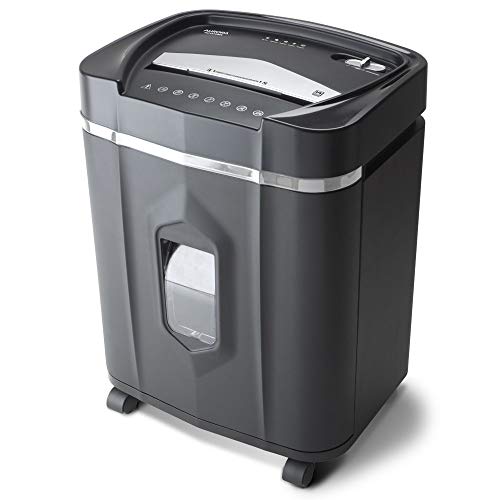
If you want finer particles in a smaller machine: The Aurora Professional Grade High Security 14-Sheet Micro-Cut ($180.99) — The Aurora AU1410MA takes 14 sheets and cuts to 5/32 by 15/32 inches — meaningfully smaller pieces than the Fellowes cross-cut head produces, still within P-4 — with a 30-minute continuous run time and anti-jam auto-reverse. It also handles CDs, DVDs, credit cards and small paper clips, and its LED panel breaks out standby, overheat, bin-full, overload and door-open states. Against the top pick it gives up two sheets of capacity, a gallon of bin volume, and the SafeSense hand sensor, but it stands about four inches shorter, which is a real advantage in a tight office.
The competition
This is the field our research surfaced, not a survey of everything sold. Plenty of shredders exist that we could not evaluate against published specifications and outside review coverage, and a model's absence here is not a verdict on it. The one machine below fell short of a recommendation for reasons of evidence rather than performance.
The HSM shredstar Autofeed X200-4 x 12 mm ($730.50) — The HSM shredstar Autofeed X200 is an auto-feed shredder that cuts to 4-by-12-millimeter particles, which would place it among the finer output in this group. HSM has a strong reputation for build quality, and an auto-feed tray paired with small particles is an appealing combination on paper. The problem is that its listing publishes almost nothing else: no sheet capacity, no run time, no bin size, no weight or usable dimensions. Without those figures we cannot compare it against the picks on the criteria that decided this guide, so it stays here rather than in the recommendations. If you already trust HSM and can get the full specification sheet from the manufacturer before ordering, it may well be worth a look.
Care and maintenance
Fellowes and HSM both recommend oiling the cutting head every 30 minutes of cumulative run time, or simply each time you empty the bin, which is the easier habit to keep. Use shredder lubricant made for the purpose — never a general-purpose aerosol, which Amazon warns against explicitly for its own model — and run the machine in reverse for a few seconds afterward to spread it across the blades. Empty the bin before it packs solid, because compressed waste backs up into the cutters and causes most of the jams people blame on the paper. If something does bind, use the reverse setting rather than pulling paper out by hand. Regular oiling is the single maintenance step that most extends blade life and reduces jam frequency.
Questions we get
What is the difference between cross-cut and micro-cut paper shredders?
Cross-cut heads slice paper in two directions and produce confetti-sized particles, typically up to 160 square millimeters under DIN 66399 P-4. Micro-cut heads produce much smaller pieces, with the P-5 tier capped at 30 square millimeters. Smaller particles mean more pieces per page and far greater difficulty in reassembling a document, at the cost of roughly 15 to 20 percent slower feeding per page according to the Good Housekeeping Institute.
What security level do I need for tax documents and financial records at home?
Cross-cut P-4 is the minimum the FTC and i-SIGMA's NAID standards recommend for anything containing personally identifiable information — account numbers, Social Security numbers, birth dates. Strip-cut P-2 is not adequate; researchers have demonstrated that P-2 output can be reconstructed in under fifteen minutes with commercially available software. For medical records and legal files, finer particles within or below the P-4 band are worth the slower feed rate.
How many sheets per pass do I need for a home office shredder?
Eight to fifteen sheets covers most home office needs. Ratings assume 20-pound bond paper, so glossy stock and folded mail effectively count for more than one sheet. The practical benefit of a higher rating is that stapled multi-page documents go in whole instead of being separated first, which saves more time than the raw number suggests.
Can paper shredders handle staples and paper clips without jamming?
Most home office models rated for them can. All three Fellowes machines here list staples, paper clips, credit cards and optical discs as supported media, and the Bonsaii lists staples and credit cards. Small paper clips are generally fine on machines that name them; binder clips are not, and metal credit cards are explicitly excluded by some manufacturers. Check the listing rather than assuming.
How long can a paper shredder run before it overheats?
It varies enormously. Entry-level machines commonly stop after three minutes and then need a 30-minute cool-down, while mid-range models run 20 to 60 minutes and commercial-duty motors run continuously. Continuous run time is the specification most buyers underestimate, and it is what determines whether a filing box is one session or several.
How often should I oil my paper shredder and what oil should I use?
Fellowes and HSM both advise lubricating every 30 minutes of cumulative run time, or each time you empty the waste bin. Use oil formulated for shredders rather than a general-purpose spray lubricant, and avoid aerosols near the machine entirely — at least one manufacturer here warns against them by name. Running the shredder briefly in reverse after oiling distributes it across the cutting head.
Why you should trust us
For this guide:
- We read the manufacturer specification sheets and full Amazon listings for every shredder in this guide, comparing sheet capacity, particle size, continuous run time, cool-down period and bin volume on the same basis.
- We reviewed published evaluations from PCMag, the Good Housekeeping Institute and Wirecutter, along with the DIN 66399 security standard and FTC and i-SIGMA NAID guidance on document destruction.
- We drew on recurring themes in owner feedback — overheating, jam clearing and bin capacity — to shape the flaws and caveats rather than to make performance claims.
- We read owner reviews on every listing, weighted toward the critical ones, because that is where the recurring failures show up.
- We have a systematic way of automatically fetching the latest prices, so the numbers on this page stay current.
- This is a research-focused guide, so the team may not own every product listed — though we often do own the top winners, which gives us extra context for the recommendations.
- We don't accept free products, and the retailer commission never changes which product we recommend.
Sources
Best Paper Shredders — Wirecutter (NYT), Wirecutter
The Best Paper Shredders for 2026 — PCMag, PCMag
Best Paper Shredders Tested by Our Lab — Good Housekeeping, Good Housekeeping Institute
Best Paper Shredders 2026 — Tom's Guide, Tom's Guide
Paper Shredder Ratings & Reviews — Consumer Reports, Consumer Reports
Best Paper Shredder 2026 — CNET, CNET
DIN 66399 — International Standard for Document Destruction Security Levels, DIN (Deutsches Institut für Normung)
Consumer Sentinel Network Data Book 2023 — Identity Theft Reports, Federal Trade Commission (FTC)
Disposing of Personal Information — FTC Consumer Advice, Federal Trade Commission (FTC)
NAID AAA Certification Standards for Secure Destruction, i-SIGMA / NAID
How to Care for and Maintain Your Paper Shredder — Lifehacker, Lifehacker
Amazon product listings and owner reviews for all 8 products
Manufacturer specification pages for each product
Some passages in this guide may be paraphrased with AI help. Prices are refreshed automatically.
More like this.
Continue exploring home reviews and recommendations.

The Best Wood Chippers and Shredders
A wood chipper earns its keep on one specific afternoon: the one where you'd otherwise be dragging a brush pile to the curb or paying someone to haul it.…

The Best Ceramic Heaters for Home Offices
A home office gets cold in ways the rest of the house doesn't. You're sitting still for hours, often in a converted bedroom or a garage corner the furnace…

The Best Document Scanners for Home Offices
A document scanner earns its space on your desk in the boring moments. You come home with a folder of school forms, a year of receipts, or the closing…

The Best Electric Standing Desks
A standing desk earns its keep in small moments. You take a call on your feet, you stretch out your lower back between meetings, you drop the surface an…

The Best Smart Garden Systems for Fresh Herbs
Fresh herbs go bad fast. You buy a clamshell of basil for one recipe, use a third of it, and find the rest slimy in the crisper a week later. A smart…

The Best Kneeling Chairs for Posture Correction
A kneeling chair does one simple thing: it opens the angle between your torso and thighs to roughly 60 to 90 degrees instead of the locked 90 you get in a…