The Best Portable Camping Stoves
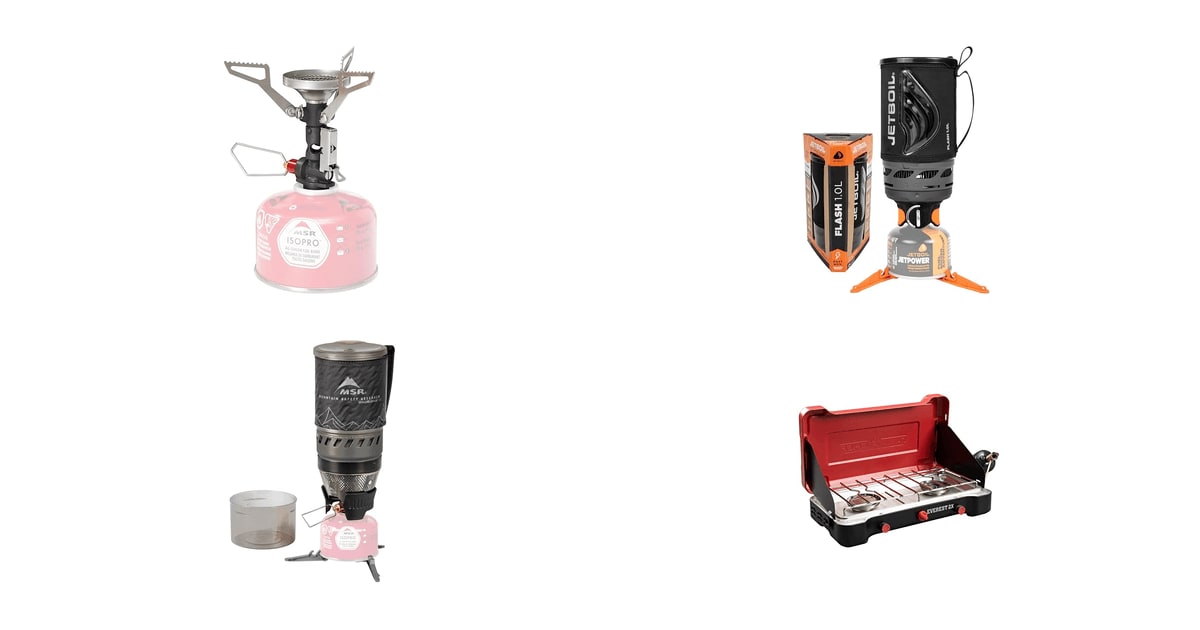
A camping stove is the difference between a hot dinner and a cold bag of trail mix. It's also one of the few pieces of gear you'll use every single day of a trip, usually twice. What matters isn't the number on the box — it's whether the thing lights when your hands are cold, whether it holds a pot steady on uneven ground, and whether it can hold a low flame without scorching your rice. Weight matters too, but only in proportion to how far you're carrying it from the car.
Here's the honest part: no single stove does everything. The ones light enough to disappear in your pack can't feed four people. The ones that cook like a home range weigh as much as a toddler. Integrated systems boil water astonishingly fast but fight you the moment you want to stir something. And every canister stove loses steam in real cold, some more gracefully than others. You're picking a set of compromises, not a winner.
So the right question isn't which stove is best — it's which trip you're actually taking. Solo overnights and thru-hikes push you toward tiny canister burners. Family weekends at a drive-up site push you toward a propane rig with two or three burners and room for a skillet. We think that the MSR PocketRocket Deluxe is the best portable camping stove for most people, and that the Camp Chef Everest 2X is the one to buy if you're cooking for a group and never carrying the stove more than a few steps from your trunk.
Everything we recommend

Tiny, regulated, and it actually simmers

The fastest way to hot water, if that's all you need

A real kitchen at camp, if you can drive to it

Three burners and decades of proof, for less money
At a glance
| Product | Stove Type | BTU Output | Price | |
|---|---|---|---|---|
| MSR PocketRocket Deluxe Ultralight Camping and BackpackingTop pick | Canister | — | $83.95 |
| Jetboil Flash 1.0L Portable Fast Boil StoveAlso great | Canister | — | $144.99 |
 | MSR WindBurner Personal Windproof Camping and BackpackingAlso consider | Canister | — | $199.95 |
| Camp Chef Everest 2X 2-Burner Portable CampingUpgrade pick | 2-Burner | 40,000 BTU | $213.76On sale |
| Coleman Classic 3-Burner Propane Camping Stove withBudget pick | 3-Burner | 28,000 BTU | $188.16On sale |
How we picked
Real cooking, not just boiling. We looked past boil-time claims to whether a stove can hold a low flame without scorching, drawing on published reviews and owner reports of cooking eggs and rice rather than just heating water. Stoves that only do a full blast got ranked as water boilers, not kitchens.
Cold and wind behavior. Manufacturer specs told us which stoves carry a pressure regulator, and owner feedback told us whether it shows up in practice at altitude and on cold mornings. Any stove without regulation had to be clearly positioned as a fair-weather choice.
Weight versus trip type. We separated the carry-it-on-your-back category from the drive-to-it category rather than ranking them against each other. Within each, we compared listed weights and packed dimensions against what the stove actually includes.
Ignition and reliability. We weighted owner reports of igniters that keep firing after a season of use, since that's the most common failure point and the one spec sheets never predict. Recurring reports of breakage or unanswered warranty claims counted against a stove.
Fuel you can actually find. We favored stoves running standard threaded isobutane-propane canisters or 1-pound propane cylinders, both stocked widely. Proprietary or hard-to-source fuel was a mark against a stove regardless of how well it performed.
Top pick
Tiny, regulated, and it actually simmers
MSR PocketRocket Deluxe Ultralight Camping and Backpacking
The PocketRocket Deluxe is a 2.9-ounce canister burner with a pressure regulator and a built-in igniter. It holds steady output as the canister drains and temperatures drop, and it throttles low enough to cook rather than just boil.
$83.95fromAmazonA pressure regulator is the feature that separates this from every cheap canister burner. As a canister empties, or as the air gets cold, pressure inside drops and an unregulated stove quietly loses power. The regulator here compensates, so MSR rates it to boil a liter in about three and a half minutes even in cold weather and on a low canister. In practice that means your last dinner of the trip cooks about as fast as your first.
Weight is the other half of the story. At 2.9 ounces it's less than a granola bar, and it folds down into the included stuff sack small enough to live inside a 700ml pot. You'll stop thinking about it. That's the highest compliment you can pay a piece of backpacking gear — it's the stove you don't have to plan around.
Owners keep coming back to the simmer. The broad burner spreads the flame instead of firing a jet at one spot on your pot, and several report cooking hash browns and eggs in a thin titanium pan without a scorched ring in the middle. If you want to make actual food on the trail instead of pouring boiling water into a foil pouch, this is the one on our list that lets you.
The piezo igniter sits protected inside the burner rather than sticking out where it can get bent. Owners describe it as reliable trip after trip, which is not something you can say about every push-start stove. Still, carry a lighter. Igniters are the part that eventually fails on any stove, and the backup weighs almost nothing.
It runs on any standard threaded isobutane-propane canister — MSR, Jetboil, Primus, whatever the outfitter had in stock. That matters more than it sounds. On a long trail you buy whatever the resupply town carries, and a stove that's picky about fuel becomes a problem 40 miles from anywhere.
Flaws but not dealbreakers
It's one burner, and a small one. Cooking for three or more people turns into a relay of sequential pots, and everyone's food gets cold in shifts. If your group is bigger than two, look at the propane stoves below.
The pot supports handle a standard 1L to 1.5L pot fine, but they flex a little under wide cookware. Owners note that wind protection is the weak spot too — the broad burner helps, but there's no shield, so a stiff crosswind will slow your boil noticeably. A small windscreen or a well-chosen rock solves most of it.
You get the stove and nothing else. No pot, no fuel canister, no heat exchanger. If you're starting from zero, budget for cookware and fuel on top.
The PocketRocket Deluxe comes with a three-year limited manufacturer's warranty.
Also great
The fastest way to hot water, if that's all you need
Jetboil Flash 1.0L Portable Fast Boil Stove
The Jetboil Flash is a sealed system: burner, 1-liter cup with a built-in heat exchanger, and a click-to-light igniter. Jetboil rates it at two minutes for 16 ounces of water, and everything packs inside the cup with a fuel canister.
$144.99fromAmazonIf your camp menu is freeze-dried meals and coffee, the Flash is the smarter tool. The corrugated heat exchanger welded to the bottom of the cup grabs heat that would otherwise stream up the outside of a normal pot. You boil faster and you burn less fuel doing it, which compounds over a week when canisters are heavy and resupply is uncertain.
The new igniter works like a knob on a home range — turn and click, flame on. No fumbling with a lighter in the wind while gas escapes. Rubberized safe-touch zones let you pick up the cup without a pot grabber, and the locking system gives you three points of engagement so the pot doesn't wobble off the burner mid-boil.
Everything nests. The burner, the stabilizer legs, and a 100g canister all drop inside the cup, and the bottom cup doubles as a measuring cup or a bowl. Owners consistently mention this as the reason it stays in the pack — it's one tidy cylinder instead of four loose pieces rattling around.
But it's a water boiler, not a kitchen. The cup is tall and narrow, which makes stirring awkward and folding in ingredients close to impossible. The flame adjustment is coarser than the PocketRocket's. And it caps out around 1.25 liters of usable volume, so if you're heating water for more than yourself, you're doing it in rounds.
Flaws but not dealbreakers
At about 13 ounces it's roughly four times the weight of our top pick — though that number includes a pot, which the PocketRocket doesn't come with. Compare honestly before you decide it's heavy.
You're buying into an ecosystem. Other pots won't sit on this burner without an adapter, so your cookware options narrow to what Jetboil sells.
Several owners were surprised by the capacity limit. The cup is labeled 1 liter and won't safely boil much more than that, which catches people out when they're cooking for a partner.
Upgrade pickOn sale
A real kitchen at camp, if you can drive to it
Camp Chef Everest 2X 2-Burner Portable Camping
The Everest 2X puts 20,000 BTUs under each of two burners, with matchless ignition, a folding windscreen lid, and 215 square inches of cooking surface. It handles cast iron and big stock pots the way a home range does.
$213.76fromAmazonList priceThis is the stove that stops feeling like camping equipment and starts feeling like a stove. Two 20,000-BTU burners is genuinely more heat than most home ranges put out, so a large pot of water comes up fast and a cast-iron skillet holds a sear instead of sulking when you drop cold meat on it. Owners who upgraded from budget stoves describe the jump in output as the thing they notice first.
The surface fits two full-size pans side by side, which is the practical difference between cooking a family breakfast and staging one. You can run eggs on one burner and hold coffee or beans low on the other. The controls dial down far enough for a real simmer, so the second burner isn't just a warming shelf.
The folding lid doubles as a three-sided windscreen, and that's not decoration — an unshielded burner in a breeze wastes a startling amount of its output. Matchless ignition on both burners matters more than it sounds too. On a cold, damp morning with stiff fingers, a push-button that fires first time is worth real money.
Cleanup is a drip tray and a wipe-down. The whole thing latches shut with a carry handle for the drive home. Owners repeatedly describe it as well built in a way the budget stoves aren't — heavier gauge, better hinges, controls that don't feel like an afterthought.
Flaws but not dealbreakers
It's around 15 pounds and a bit over two feet wide. That's a dedicated camp table or a very sturdy tailgate, and it's car camping only. Don't buy this thinking you'll grow into backpacking with it.
All that heat drinks propane. Owners running 1-pound canisters go through them quickly at full output, and most end up buying a hose adapter to run off a 20-pound tank instead. Factor that in.
A few owners report the fuel connection isn't compatible with common aftermarket regulator hoses, so you're limited to Camp Chef's own adapter. Minor, but annoying to discover at the campsite.
Budget pickOn sale
Three burners and decades of proof, for less money
Coleman Classic 3-Burner Propane Camping Stove with
The Coleman Classic gives you three adjustable burners, 28,000 total BTUs, push-button ignition, and fold-down wind panels that double as side tables. It's the default first camp stove for good reason.
$188.16fromAmazonList priceThree burners is the headline. Most stoves at this level give you two, and the third is genuinely useful — owners describe parking a cast-iron skillet on it while eggs and coffee run alongside. The cooking area fits two 12-inch pans or three 8-inch pans, which covers a family breakfast without staging.
Coleman includes a pressure regulator, which is unusual at this end of the market. That's the component that keeps output steady as a canister drains and temperatures fall. It's why this stove doesn't wilt on a cool morning the way unregulated budget stoves do, and it's the main reason we picked it over the alternatives in this tier.
The wind-blocking panels fold down flat and become side tables, which is a genuinely clever bit of design when your only other surface is a picnic table covered in gear. InstaStart push-button ignition means no matches. The whole thing folds into a briefcase shape with a handle.
It runs on standard 1-pound propane canisters, and those are stocked at essentially every hardware store, grocery store, and gas station in the country. On a road trip that's worth a lot. You'll never be stranded looking for the right fuel.
Flaws but not dealbreakers
At 28,000 BTUs across three burners, each one puts out meaningfully less heat than a single burner on the Camp Chef. Big pots take longer, and a heavy skillet takes a while to recover after you add cold food.
The build reflects the price. Owners describe it as functional but light-gauge, and a recurring complaint is the regulator connection sitting at the rear right corner, which makes hose routing awkward on a narrow table. Several also mention the flame controls feel coarse, though owners of older models say this generation adjusts better than the last.
The wind panels help but don't enclose much. In a steady breeze on an exposed site you'll notice the burners struggling, and there's no fixing that with the stove alone.
Who this is for
This guide is for anyone buying their first camping stove, or replacing one that's finally quit. It covers canister stoves for backpacking and propane stoves for car camping — the two categories that account for nearly all real-world camp cooking. If you're carrying your gear more than a few hundred yards, you want one of the canister stoves. If you're cooking within sight of your car for a group, you want propane and more than one burner.
We don't cover alcohol stoves, solid-fuel tablet burners, wood gasifier stoves, or liquid-fuel white gas systems here. Those are real categories with real uses — white gas in particular is what serious expedition cooks carry into deep cold — but they involve tradeoffs in speed, mess, and fire-regulation compliance that put them outside what most campers should be shopping for. If you already own a stove that works and lights reliably, there's no urgent reason to replace it. Upgrade when you outgrow it: a bigger group, colder trips, or higher elevation are the three things that actually justify buying again.
How we picked
Simmer control: we looked for stoves that can hold a low, even flame, since that's what separates cooking from boiling. Cold and altitude: a pressure regulator is what keeps output steady as a canister drains and the air gets cold, so we treated it as close to a requirement. Weight: we judged backpacking and car camping stoves on separate scales rather than pretending they compete, and compared listed weights against what each system actually includes. Ignition: owner reports on igniters surviving a full season carried real weight, because that's the failure nobody sees coming. Fuel availability: standard threaded canisters and 1-pound propane cylinders are stocked nearly everywhere, and we favored stoves that use them.
Other portable camping stoves worth considering
If you camp where the wind never stops: The MSR WindBurner Personal Windproof Camping and Backpacking ($199.95) — The MSR WindBurner takes a different approach from every other canister stove here. Instead of shielding an open flame, it uses an enclosed radiant burner inside a sealed chamber, so wind can't physically reach the fire. Pair that with a pressure regulator and it's the one canister system that stays predictable on an exposed ridge or a cold alpine morning. Everything nests inside the 1-liter pot, and the pot locks onto the stove and canister to resist tipping. What you give up is weight — it's the heaviest stove you'd carry on your back — plus cooking flexibility, since it only works with WindBurner cookware. Owner feedback is more mixed than the rest of this list: several report a poorly designed plastic bottom bowl, and a few describe units failing after modest use with slow warranty response. It's a specialist's tool, and worth it if wind and cold are your normal conditions.
The competition
This is what our research surfaced in this category, not a census of every stove sold. The camping stove market is enormous, and plenty of good options — liquid-fuel expedition burners, alcohol setups, wood stoves — sit outside the scope of this guide entirely. Everything we looked at closely is either a pick above or covered here.
Setup and safety notes
Never run any fuel-burning stove inside a tent, vestibule, or vehicle. Carbon monoxide is odorless and builds fast in enclosed space, and the fire risk near tent fabric is immediate. Cook in open air, positioned so the breeze carries exhaust away from where you sleep. Before a trip that matters, run the stove at home: check the igniter, inspect the valve O-ring for cracks, confirm the canister threads on cleanly, and do a full boil. Carry a lighter or waterproof matches no matter what ignition your stove has, because piezo igniters are the part that eventually quits. On propane stoves, wipe the drip tray after each trip so grease doesn't bake on. Store canisters upright, out of the sun, and never in a hot car.
Questions we get
What's the best camping stove for backpacking?
The MSR PocketRocket Deluxe, for most people. It weighs 2.9 ounces, has a pressure regulator that keeps output steady as the canister empties and the air cools, and it simmers well enough to cook real food. If your trips involve constant wind or genuinely cold nights, the MSR WindBurner is the more reliable choice despite the weight penalty.
Is an integrated system like the Jetboil worth it over a bare stove?
It depends entirely on what you cook. If you're pouring boiling water into freeze-dried pouches and making coffee, the Flash's heat exchanger boils faster and stretches your fuel further, and everything packs into one cup. If you want to sauté, simmer a sauce, or cook rice, the narrow cup and coarse flame control will frustrate you — a bare stove with your own pot is better.
How long does one fuel canister last?
A standard 100g isobutane-propane canister gives you somewhere around 45 to 60 minutes of continuous full-flame burn on a typical backpacking stove. That's roughly a dozen half-liter boils on an efficient integrated system, fewer on an open burner. Cold weather and altitude cut that noticeably, so plan on about one 100g canister per person for every four or five days of boil-only cooking.
Can I use a camping stove inside a tent?
No, and this isn't a cautious hedge — it's a hard rule. Every combustion stove produces carbon monoxide, which is odorless and can reach dangerous concentrations inside a sealed tent within minutes. Open flame near nylon is also an immediate fire risk. Cook outside in open air, with the wind carrying exhaust away from your sleeping area.
Do I really need a pressure regulator?
If you camp in summer at low elevation, no. If you camp on cold mornings, in shoulder season, or above about 7,000 feet, yes. Without regulation, output drops as canister pressure falls, and that's precisely when you most want a hot meal quickly. The PocketRocket Deluxe, WindBurner, Camp Chef Everest 2X, and Coleman Classic all include one.
How many burners do I need?
One is fine for one or two people eating simple one-pot meals. Two or three burners start to matter around four people, or any time you want to cook a course while something else stays warm. The tradeoff is weight and bulk — multi-burner propane stoves weigh 15 pounds or more and are strictly car camping gear.
Why you should trust us
For this guide:
- We read manufacturer specifications and listing details for every stove here, comparing rated output, weight, packed dimensions, and whether each includes a pressure regulator.
- We reviewed published gear coverage of these models alongside owner feedback, looking for patterns in igniter reliability, simmer quality, wind behavior, and cold-weather performance rather than isolated complaints.
- We weighed recurring owner reports of build problems and warranty experience when deciding which stoves earned an award and which belong in a narrower role.
- We read owner reviews on every listing, weighted toward the critical ones, because that is where the recurring failures show up.
- We have a systematic way of automatically fetching the latest prices, so the numbers on this page stay current.
- This is a research-focused guide, so the team may not own every product listed — though we often do own the top winners, which gives us extra context for the recommendations.
- We don't accept free products, and the retailer commission never changes which product we recommend.
Sources
Best Backpacking Stoves 2026, Outdoor Gear Lab
Best Camping Stoves — REI Expert Advice, REI
Best Camping Stoves 2026, Wirecutter (NYT)
Best Camping Stoves Tested 2026, GearJunkie
Best Backpacking Stoves, Backpacker Magazine
Camping Stove Reviews & Ratings, Consumer Reports
Best Camping Stoves 2026, Field & Stream
Camping Stove Fuel Guide, Leave No Trace Center
Amazon product listings and owner reviews for all 5 products
Manufacturer specification pages for each product
Some passages in this guide may be paraphrased with AI help. Prices are refreshed automatically.
More like this.
Continue exploring lifestyle reviews and recommendations.

The Best Portable Camping Toilets
A camping toilet earns its keep at 2 a.m., when it's raining and the campground bathroom is a quarter mile away. That's really the whole pitch. You want…

The Best Portable Grills for Camping and Tailgating
A portable grill lives a hard life. It rides in a trunk, gets set up on a picnic table that wobbles, and has to make dinner before everyone gets cranky.…

The Best Portable Camping Chairs
A camping chair is one of those things you don't think about until you're standing around a fire with nowhere to sit. Then it's the best thing in your…

The Best Portable Power Stations for Camping
A power station is the quiet fix for the two things that actually annoy you at a campsite: a cooler that has to keep working, and phones that die by…

The Best Ultralight Backpacking Stoves
A backpacking stove is the one piece of gear you use every single day on trail, usually twice. It's the first thing you reach for at 6 a.m. when your…

The Best Pellet Stoves
Heating with pellets is a daily habit, not a set-and-forget system. You fill a hopper with bagged wood pellets, set a burn level or a temperature, and the…