The Best Rabbit Hutches
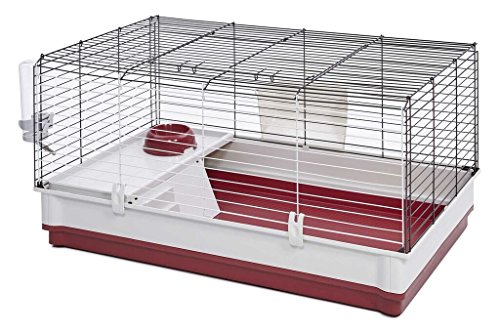
A rabbit hutch isn't a cage you fill and forget. It's where your rabbit sleeps, eats, hides when the neighbor's dog barks, and spends most of the hours you're not home. That means floor space matters more than looks, and what's under your rabbit's feet matters more than either. The House Rabbit Society asks for at least 8 square feet of enclosed living space plus 24 square feet of daily exercise room for one average rabbit. Read that number, then go measure the hutch you were about to buy.
Here's the uncomfortable part: almost nothing sold online actually clears that bar. The biggest hutches here get close for one rabbit and fall short for two, and the compact ones aren't in the conversation at all. Wooden hutches also age badly — soft fir splits when you overtighten a screw, stain goes on splotchy, and urine finds the seam between tray and wood. Plan on a playpen, an exercise room, or a fenced yard as part of the setup. No hutch on this list replaces that.
So we sorted these by what they actually do well: which ones give a bonded pair room to stretch, which clean up in two minutes instead of twenty, which survive a wet winter on a patio, and which are honest starter setups for an apartment. Solid floors, real roofing, and trays you'll actually pull out every day did most of the sorting. We think that the PawHut Rabbit Hutch Outdoor 85" is the best rabbit hutch for most people, and that the MidWest Wabbitat Deluxe is the one to buy if your rabbit lives indoors and you want a base camp rather than a backyard house.
Everything we recommend

The most usable space here, with a roof that earns it
The easiest indoor setup, and the one you can grow

A small, tidy patio hutch that cleans in a minute

Nicer joinery and a hinged roof, in a smaller package
Prices as of Oct 22, 7:36 AM PT · Details
At a glance
| Product | Overall Dimensions | Indoor Or Outdoor Use | Price | |
|---|---|---|---|---|
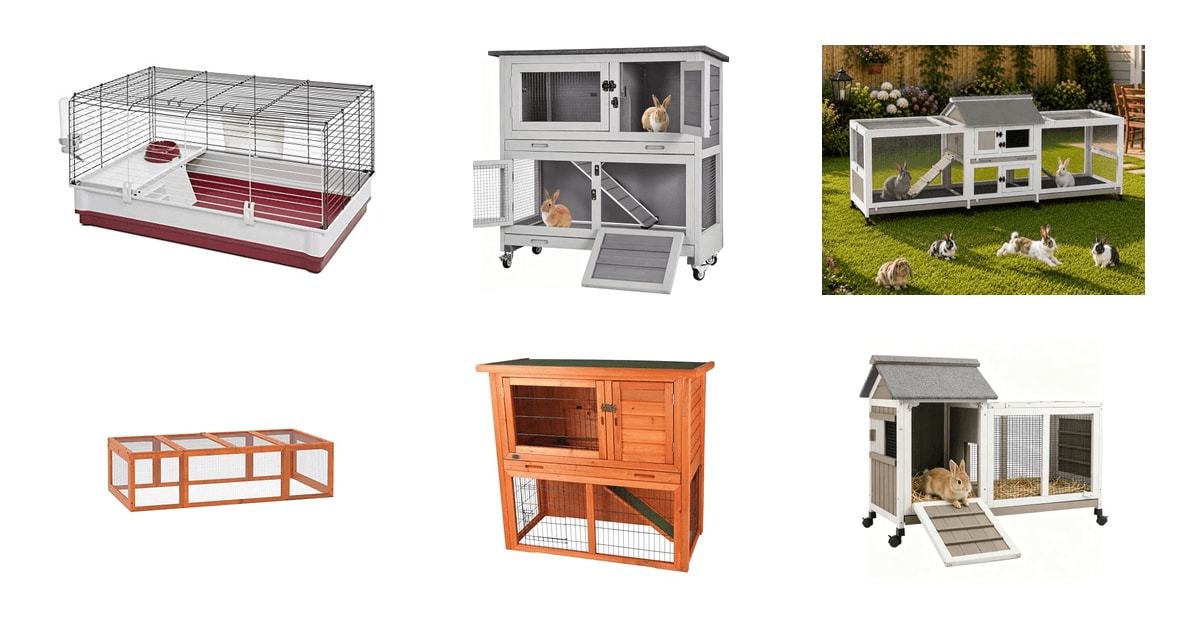
| MidWest Homes for Pets 158 Wabbitat DeluxeAlso great | 39.5L x 23.75W x 19.75H | — | $84.99 |
 | Aivituvin Rabbit Hutch Indoor Bunny Cage OutdoorAlso consider | 36.02L x 17.72W x 36.22H | Indoor/Outdoor | $104.99 |
 | Extra Large 2-Story Rabbit Hutch Indoor andAlso in lineup | 93.1L x 18.7W x 35.4H | Indoor and Outdoor | $129.99 |
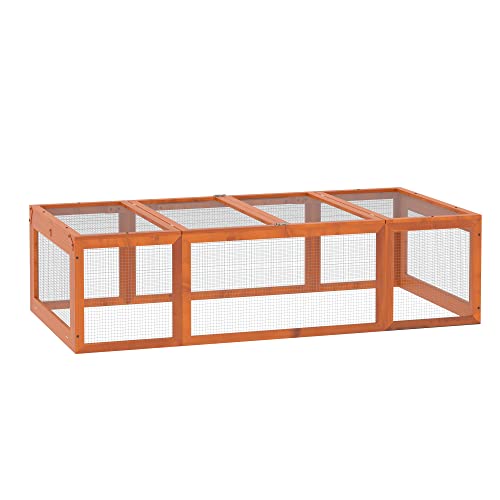 | PawHut Large Wooden Rabbit Hutch Bunny HutchAlso consider | 70.75L x 35.5W x 19H | Outdoor | $77.99 |
| TRIXIE natura Outdoor Rabbit Hutch with RunRunner-up | 40.75L x 20.25W x 38H | Outdoor | $98.99 |
| Gowoodhut Outdoor Rabbit Hutch 2-Story Indoor BunnyBudget pick | 38.2L x 17.7W x 29.5H | — | $69.99 |
| PawHut Rabbit Hutch Outdoor 85" Large withTop pick | 85.4L x 20.9W x 33.9H | Outdoor | $199.99 |
Prices as of Oct 22, 7:36 AM PT · Details
How we picked
Real usable space. We compared every listing's stated interior dimensions against the House Rabbit Society's 8-square-foot living and 24-square-foot exercise benchmark. Nothing here clears it outright, so we ranked by how close a hutch gets and whether it leaves room for a pen.
Flooring underfoot. Wire mesh flooring is the leading environmental cause of pododermatitis, or sore hocks, which starts as hair loss on the foot pad and can progress to ulceration. We required solid wood or plastic under the sleeping area on every pick.
Roof and weather. Published guidance from The Spruce Pets puts asphalt-shingled roofs at three to five times the service life of felt-covered flat roofs in wet climates. We treated roofing material as the main durability signal on outdoor wooden hutches.
Security hardware. The American Rabbit Breeders Association recommends 14-gauge or heavier galvanized wire for outdoor enclosures, and dual-action latches are the recommended minimum against raccoons. We read spec sheets for wire and latch details and noted where owners report weak closures.
Daily cleaning. We compared tray depth, tray count, door placement and roof access across listings, weighting designs where the whole enclosure can be serviced without disassembly. Owner feedback about urine reaching bare wood was a strong negative signal.
Top pick
The most usable space here, with a roof that earns it
PawHut Rabbit Hutch Outdoor 85" Large with
This is a fir-and-steel hutch that runs about seven feet long, pairing a small enclosed sleeping box with a big covered metal run. It gets closer to real rabbit space guidelines than anything else in this lineup without asking you to buy a separate pen.
$199.99fromAmazonPrices as of Oct 22, 7:36 AM PT · Details
Space is the whole reason to buy this one. PawHut lists roughly three square feet in the enclosed house and ten in the steel run. That's still under the House Rabbit Society's combined benchmark, but it's the closest any hutch here gets, and it means your rabbit can actually run a few hops instead of turning in place. If you've only ever seen a standard pet-store hutch, the difference in how a rabbit uses this is obvious.
The asphalt roof is doing quiet work. Felt-covered flat roofs are the usual shortcut at this size, and in a wet climate they tend to fail years earlier — asphalt shingles typically outlast them several times over. Combine that with the fir frame and the steel run panels, and this is the unit in the lineup we'd feel best about leaving outside through a rainy fall.
Cleaning is a removable plastic tray under the house, plus multiple doors so you can reach in without dismantling anything. It's not the slickest system here. But you can scoop the sleeping area in under a minute, and the run floor is open, which means less standing mess than the closed-tray designs.
Owners consistently flag two things, and you should plan for both. The ramp between levels is the weak point — the wood is thin and the mounting hardware is light, so several owners report it degrading early. And the advertised length runs optimistic; measure your patio before you commit. Neither is a dealbreaker, but a sturdier ramp board and a set of longer screws are cheap insurance.
Flaws but not dealbreakers
The enclosed house is genuinely small — about three square feet. That's fine as a sleeping and hiding box, but if you keep two or three rabbits in here as advertised, they're sharing a tight shelter and relying on the run for everything else. For a bonded pair we'd treat this as a one-rabbit house with a good run attached.
At 53 pounds it's the heaviest unit here and it does not move once assembled. There are no wheels. Pick your spot with shade and drainage in mind before you build it, because relocating it means a second person and some regret.
PawHut doesn't state a warranty term in its listing information.
Also great
The easiest indoor setup, and the one you can grow
MidWest Homes for Pets 158 Wabbitat Deluxe
This is a wire indoor cage with a deep plastic base, an elevated feeding shelf, and a hay feeder, bottle and bowl included. It assembles without tools and connects to matching extensions, which makes it the sanest starting point for an apartment rabbit.
$84.99fromAmazonPrices as of Oct 22, 7:36 AM PT · Details
If your rabbit lives inside, this is a base camp, not a home. At about 39 by 24 inches it's nowhere near the House Rabbit Society's living-space number on its own, and we wouldn't pretend otherwise. What it does well is anchor a setup: your rabbit sleeps and eats here, and gets the run of a bunny-proofed room or an attached pen the rest of the day. Used that way, it works.
The deep base is the detail that separates it from cheaper wire cages. It's about five and a half inches tall, which means litter and hay stay inside rather than on your floor — a real difference if you've ever swept around a shallow-pan cage. The floor is solid plastic, not mesh, so you're not risking the sore hocks that wire flooring causes.
Access is genuinely good. The top opens and so does the full side door, which matters more than it sounds: catching a rabbit through a small hatch is stressful for both of you. Owners with senior and arthritic rabbits repeatedly point to the flat plastic floor and the wide door as the reasons they switched to this one.
It's also expandable. MidWest sells both a wire extension and a wooden hutch extension that clip on, so if you start here and decide your rabbit needs more room, you don't start over. That upgrade path is rare at this end of the market.
Flaws but not dealbreakers
Assembly is advertised as tool-free and mostly is, but the plastic base pegs are the sticking point. A number of owners describe fighting the base together, and a few resorted to trimming pegs. Budget more patience than the box implies.
The included hay feeder is the weak accessory. Owners report it arriving cracked or simply getting in the way, and plenty end up removing it and using a separate rack. Treat the accessories as a bonus, not a reason to buy.
It's an indoor cage. There's no roof, no weather sealing and no predator security, so this never goes outside unsupervised.
MidWest includes a one-year manufacturer's warranty.
Budget pick
A small, tidy patio hutch that cleans in a minute
Gowoodhut Outdoor Rabbit Hutch 2-Story Indoor Bunny
This compact two-story hutch pairs a wood-floored sleeping loft with a raised mesh run and a pull-out tray underneath. Wheels let you roll it from a porch to a shady corner, and you can connect a second unit later if your rabbit needs more room.
$69.99fromAmazonPrices as of Oct 22, 7:36 AM PT · Details
The footprint is the point. At about 38 by 18 inches it fits on a balcony, a porch, or the corner of a sunroom where nothing else here would. If you're working with a small outdoor space and want your rabbit to have real air and light rather than a spot by the window, this is the practical answer.
The two-layer base is smarter than it looks. Your rabbit rests on a solid wood floor upstairs, the run area sits on raised mesh, and a tray slides out underneath to catch everything. That separation keeps your rabbit off the day's mess without putting mesh under the sleeping area, which is where wire flooring actually causes damage. Cleaning is one pull and a wipe.
The sloped asphalt roof over the sleeping house sheds rain properly, and the run has an acrylic top cover that lets light in while keeping weather out. Four wheels mean you can chase shade in July — which matters, because rabbits can't pant or sweat, and anything above about 85°F can turn fatal within hours.
Gowoodhut sells this as connectable, so a second unit clips on to make a larger setup. That's a reasonable way to buy in small: start with one, add on if you bond a second rabbit.
Flaws but not dealbreakers
This is a small hutch, and no arrangement of it approaches the space a rabbit needs. It's an overnight house and a daytime perch, and it only works if your rabbit gets substantial exercise time elsewhere. Owners with larger breeds say as much.
It's also new enough that owner feedback is thin. We can read the construction and the materials, but there's not much long-term evidence yet on how the wood and the wheels hold up over a couple of wet seasons.
Runner-up
Nicer joinery and a hinged roof, in a smaller package
TRIXIE natura Outdoor Rabbit Hutch with Run
Trixie's two-story hutch has a private upper sleeping compartment, a wire run below, a non-slip ramp and a full hinged roof. It's better built than most wooden hutches at its size, and the roof access makes daily chores fast.
$98.99fromAmazonPrices as of Oct 22, 7:36 AM PT · Details
The hinged roof changes the daily routine. Instead of reaching through a door, you lift the whole top and the interior is right there — refilling water, spot-cleaning, or coaxing out a rabbit who doesn't want to come out. Combined with the pull-out tray, this is a hutch you can actually service in a few minutes rather than putting off until the weekend.
Build quality is a step above the generic wooden hutches. Owners consistently describe it as attractive and solid, easy to assemble, and pleasant to have on a patio. The wood carries a weather-resistant finish and the run wire is coated. If you care that the thing in your yard looks like furniture rather than a crate, that's a real consideration.
The two-story layout also gives a single rabbit somewhere to go. Up is private and enclosed; down is open to the run. The ramp is non-slip and can be locked in the raised position, which turns the sleeping level into a secure overnight box.
It's elevated on legs, which does more than it seems. Ground-contact hutch bases wick moisture out of soil and rot from the bottom up, and rodents nest underneath. Four to six inches of clearance is the usual recommendation, and this clears it.
Flaws but not dealbreakers
It's smaller in person than the photos suggest, and that's the most common complaint by far. Several owners say it's fine for one rabbit and cramped for two, despite the listing's suggestion. Measure the stated dimensions against your rabbit rather than trusting the marketing photos.
Security is adequate, not great. Owners have flagged latches and access panels as the weak spots, and we wouldn't leave this unattended overnight in an area with raccoons or foxes without adding a second closure. Dual-mechanism latches are the recommended minimum outdoors for a reason — raccoons learn single latches.
Some units ship with missing pilot holes, so keep a drill nearby during assembly.
Who this is for
Buy one of these if you're setting up a rabbit's primary home and you already have a plan for exercise space — a bunny-proofed room, an attached playpen, or a fenced run. That caveat isn't a formality. Rabbit Welfare Association & Fund research found rabbits in combined enclosures under 60 square feet showed noticeably more bar-chewing and repetitive circling than rabbits given more room, and every hutch sold at this scale sits well below that. Think of the hutch as the bedroom, not the house.
Skip this category if you want a single purchase that fully houses two rabbits outdoors year-round. That's a shed conversion or a custom-built aviary-style enclosure, not a flat-packed hutch. We're also not covering indoor exercise pens, hutch covers, or heated water systems here — just the enclosures themselves, indoor and outdoor, in the size range most people actually shop.
How we picked
Space: we compared stated interior dimensions against the House Rabbit Society's 8-square-foot living and 24-square-foot exercise guidance and ranked by how close each hutch gets. Flooring: solid wood or plastic under the sleeping area, never wire mesh, because mesh floors are the main environmental cause of sore hocks. Weather: asphalt or corrugated roofing over felt, elevated legs over ground contact, since ground-contact bases rot from the soil up. Security: heavier galvanized wire and dual-action latches, because raccoons learn to defeat single closures. Cleaning: deep pull-out trays, multiple doors, and hinged roofs that let you service the whole enclosure without taking anything apart.
Other rabbit hutches worth considering
If you want a hutch that rolls between indoors and out: The Aivituvin Rabbit Hutch Indoor Bunny Cage Outdoor — Aivituvin's two-story unit is built for movement — four casters, two of them lockable, so you can wheel it onto the patio in the morning and back inside at night. The aluminum-wrapped ramp is a genuinely good idea if you have a chewer, and five lockable doors plus separate trays on each level make cleaning straightforward. The catch is the wood: owners describe it as soft, with splotchy stain, chipped edges and a chemical smell out of the box. One recurring complaint matters more than the cosmetics — the tray walls aren't tall enough, so urine can reach bare wood in a corner and stay there. If you're diligent about daily tray changes, it's a flexible little hutch. If you're not, it'll smell.
If you want a large ground-level run more than a proper house: The PawHut Large Wooden Rabbit Hutch Bunny Hutch — This PawHut is essentially a big low wire enclosure — nearly six feet long and three feet wide, but only 19 inches tall. That shape is great for daytime grazing on grass and terrible as a permanent home, since your rabbit can't stand fully upright and there's no enclosed weatherproof sleeping box. The galvanized wire and fir frame are decent, and the openable top panels make reaching in easy. But it sits on the ground, so anything can dig under it, and owners are split on the wood quality and the wordless instructions. Buy it as a supervised daytime run to pair with a real hutch, not as the hutch itself.
The competition
This is what our research surfaced in this category, not a survey of everything for sale. Rabbit housing is a crowded, fast-turning market, and plenty of hutches — including shed conversions and custom builds that genuinely meet welfare guidelines — sit outside what's available as a single boxed purchase. Here's where the remaining option in our lineup landed.
The Extra Large 2-Story Rabbit Hutch Indoor and — Gowoodhut's extra-large dual-run hutch is the biggest thing here on paper — over seven and a half feet long, two stories, four pull-out trays, two anti-chew ramps, an asphalt roof and eight lockable wheels. On specifications it should have been our top pick for bonded pairs. Owner feedback is what stopped us: reports of panels arriving with holes and blemishes, wood that strips when screws are tightened, missing assembly hardware, and wheels breaking early. The reviews are few and sharply divided, with as many people calling it excellent as calling it poorly made, which reads like inconsistent manufacturing rather than a bad design. If you're handy, willing to reinforce joints and replace casters, the layout is the best-conceived one in this group. Most people should choose a hutch that doesn't require that gamble.
Placement and upkeep
Put the hutch somewhere shaded for most of the afternoon, and raise it four to six inches off the ground if it isn't already on legs — soil and grass wick moisture into a wooden base and rot it from underneath, and rodents will nest in the gap you don't leave. Heat is the bigger danger than cold: rabbits can't pant or sweat, and sustained temperatures above 85°F can be fatal within hours, so ventilation and shade aren't optional in summer. Pull the trays daily and do a full strip-out weekly, paying attention to corners where urine meets bare wood. In winter, PDSA veterinarians warn that uninsulated outdoor housing below 50°F raises the risk of GI stasis, so add insulated covers, deep bedding and a windbreak, or bring your rabbit inside.
Questions we get
What size rabbit hutch do I need for one rabbit?
The House Rabbit Society asks for at least 8 square feet of enclosed living space plus 24 square feet of daily exercise area for one average-sized rabbit. RSPCA guidance is similar, setting a combined minimum of roughly 10 by 6.5 by 3.3 feet. Very few boxed hutches meet either standard on their own, which is why we treat a hutch as the sleeping and feeding base and assume you'll add a pen or supervised room time.
Are wire-floor rabbit hutches bad for rabbits?
Yes, and it's not a minor issue. Wire mesh flooring is the primary environmental cause of pododermatitis, better known as sore hocks — it starts as hair loss on the foot pad and can progress to deep ulceration and bone infection if the flooring isn't changed. Always choose a hutch with solid wood or plastic under the resting area. A raised mesh section over a waste tray in a run area is a different thing, as long as your rabbit has a solid surface to sleep and sit on.
How do I predator-proof an outdoor hutch?
Start with the wire. The American Rabbit Breeders Association recommends 14-gauge or heavier galvanized mesh, because lighter gauges can be torn or bent by raccoons, foxes and loose dogs. Then upgrade the latches — dual-mechanism closures that need two simultaneous actions are the recommended minimum, since raccoons learn to work a single latch. Finally, block the ground: a hutch sitting flat on soil can be dug under, so elevate it or add a buried wire skirt.
Can rabbits live outdoors in a hutch year-round in winter?
In mild climates, yes, with preparation. PDSA veterinarians warn that rabbits in uninsulated outdoor housing below 50°F face raised risk of GI stasis, a potentially fatal shutdown of gut movement, especially when cold stress cuts food and water intake. None of the hutches here are insulated, so you'd need weatherproof covers, deep straw bedding, a sheltered position out of wind, and daily checks that water hasn't frozen. If your winters run well below freezing, bring your rabbit indoors.
How often should I clean a rabbit hutch?
Pull the trays and remove soiled bedding and leftover food every day — that's the single habit that keeps a wooden hutch from absorbing urine and smelling permanently. Do a full strip-and-scrub weekly, including the corners and any seam where a tray meets bare wood. Hutches with deep one-piece trays and hinged roofs make this a two-minute job instead of a chore you postpone.
Do rabbits need an exercise run attached to the hutch?
They need the exercise space; attached is just the most convenient way to provide it. Rabbit Welfare Association & Fund research found that rabbits in combined enclosures under 60 square feet showed significantly more stereotypic behavior — bar-chewing, repetitive circling — than rabbits with more room. An attached run means your rabbit gets that space without waiting on you. A separate playpen or a bunny-proofed room works just as well if you're consistent about it.
Why you should trust us
For this guide:
- We compared manufacturer specifications for every hutch in this lineup — stated interior dimensions, wood species, roofing material, wire and latch details, and tray design.
- We read welfare guidance from the House Rabbit Society, the RSPCA, the Rabbit Welfare Association & Fund, PDSA, PetMD and the American Rabbit Breeders Association on space, flooring, temperature and predator-proofing.
- We reviewed recurring themes in owner feedback, particularly reports about assembly hardware, wood quality, tray depth and ramp durability.
- We read owner reviews on every listing, weighted toward the critical ones, because that is where the recurring failures show up.
- We have a systematic way of automatically fetching the latest prices, so the numbers on this page stay current.
- This is a research-focused guide, so the team may not own every product listed — though we often do own the top winners, which gives us extra context for the recommendations.
- We don't accept free products, and the retailer commission never changes which product we recommend.
Sources
Rabbit Housing — House Rabbit Society, House Rabbit Society
Rabbit Environment and Housing — RSPCA, RSPCA
Rabbit Housing and Accommodation — Rabbit Welfare Association & Fund, Rabbit Welfare Association & Fund (RWAF)
Pododermatitis (Sore Hocks) in Rabbits — PetMD, PetMD
Rabbit Care Guide — American Rabbit Breeders Association, American Rabbit Breeders Association (ARBA)
Heat Stroke in Rabbits — House Rabbit Society, House Rabbit Society
GI Stasis in Rabbits — PDSA, PDSA (People's Dispensary for Sick Animals)
Eglu Go Rabbit Hutch Product Page — Omlet, Omlet
Best Rabbit Hutches — The Spruce Pets, The Spruce Pets
U.S. Pet Ownership Statistics — American Veterinary Medical Association, American Veterinary Medical Association (AVMA)
Amazon product listings and owner reviews for all 7 products
Manufacturer specification pages for each product
Some passages in this guide may be paraphrased with AI help.
Product prices and availability are accurate as of the date/time indicated and are subject to change. Any price and availability information displayed on Amazon.com at the time of purchase will apply to the purchase of this product.
More like this.
Continue exploring pet reviews and recommendations.

The Best Cold-Weather Dog Coats
Cold hits some dogs much harder than others. A husky can nap in the snow. A whippet starts shivering on a 40-degree sidewalk, and a 12-year-old terrier…

The Best Pet Carriers for Car Travel
Most of us drive with a pet the way we did as kids: the dog loose on the back seat, the cat yowling in a box on the floor. That works right up until it…

The Best Chicken Coop Heaters and Heated Waterers
Winter in a backyard coop isn't really about temperature. It's about water. A laying hen drinks close to a pint a day, and when her waterer turns into a…

The Best Automatic Pet Feeders
Feeding on a schedule sounds like a small thing until you're the one doing it. A cat who wakes you at five. A dog who needs a midday meal you're never…

The Best Dog Gates
A dog gate does one small job over and over. It keeps the puppy out of the kitchen while you cook. It keeps the older dog off the stairs at night. It…

The Best Dog Cooling Vests
Heat sneaks up on dogs. They can't sweat through their skin the way you do, so panting is most of what they've got, and panting stops working well once…