The Best Resistance Bands for Home Workouts

Resistance bands do something a rack of dumbbells can't: they fold into a drawer. That's most of the appeal. You can train your chest, back, legs and shoulders in a hotel room, a spare bedroom or a corner of the garage, and the whole kit weighs less than a gallon of milk. But bands aren't one product. Loops, tubes with handles, flat therapy strips and fabric hip bands all do different jobs, and buying the wrong shape is the most common way people waste money here.
Here's the part nobody advertises. Latex wears out, and when it fails it fails all at once — a cracked band under tension can snap back at your face. Every set here needs a look before you use it, and none of them last forever. Bands also load your muscles unevenly, with the most tension at full stretch and the least at the bottom of a rep. That's fine for building muscle and staying strong. It's a real limit if you're chasing a heavy one-rep max.
So think about what you'll actually do with them. If you want a home setup that stands in for a cable machine, you need tubes, handles and a door anchor. If you mostly want glute work and warm-ups, you want loops or fabric. And if you're chasing your first pull-up, you want one wide, thick band and nothing else. We think that the WHATAFIT Resistance Bands Set is the best resistance band set for most people, and that the Bodylastics Stackable Resistance Bands are the ones to buy if you already own handles and want the safest tubes.
Everything we recommend

A cable machine in a bag, if you skip the extreme loads

Safer tubes and a bigger stack, if you'll buy handles too

Barely any money, barely any weight, and no handles at all

The thing to buy if you're chasing your first pull-up
At a glance
| Product | Resistance Level | Band Type | Price | |
|---|---|---|---|---|
| Fit Simplify Resistance Loop Exercise Bands withBudget pick | 5 Levels | — | $9.98 |
| Bodylastics Stackable Resistance BandsRunner-up | 190 Lbs | Tube | $26.97 |
 | THERABAND Professional Latex Resistance BandsAlso consider | Level 4 | — | $15.19 |
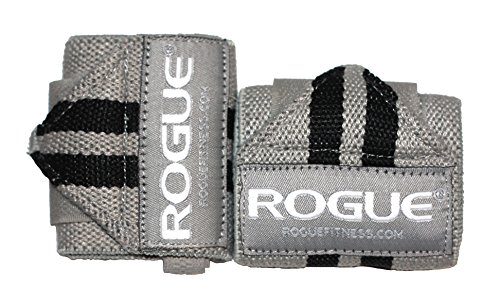 | Rogue Fitness Wrist WrapsAlso in lineup | — | Wrist Wrap | $23.40 |
 | Resistance Loop Exercise Bands for Home FitnessAlso in lineup | 5-40 LBS | Loop Band | $5.39On sale |
| WODFitters Pull-Up Assistance BandsAlso great | 10-125 LBS | Loop Band | $74.99 |
 | Perform Better Mini Band Resistance Loop ExerciseAlso consider | — | Mini Band | $19.95 |
 | Black Mountain Products Resistance Band SetAlso in lineup | — | — | $32.99 |
| WHATAFIT Resistance BandsTop pick | 5-125 LBS | — | $29.99 |
 | KUTIZE Ankle Resistance Bands with Cuffs &Also consider | — | Ankle Cuff | $20.59On sale |
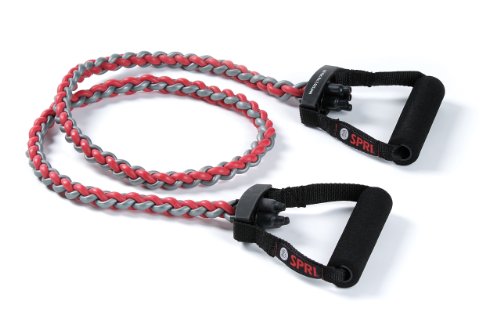 | SPRI Braided Xertube Resistance BandsAlso in lineup | Medium | Xertube | $31.15 |
 | Iron InfideI Resistance Band Handles - CableAlso in lineup | — | Handles | $34.99 |
How we picked
Band type first. We sorted the field into tubes with handles, loops, flat therapy bands and fabric hip bands, because those categories don't compete with each other. A set only made the picks if it's clearly the best answer for one of those jobs.
Resistance range. We compared stated resistance levels across each set's specifications, looking for a spread you won't outgrow in a season. A beginner set needs roughly 5 to 35 pounds; a tube kit meant to replace a cable station needs to stack past 100.
Snap safety. Published reviews and owner feedback both keep returning to the same failure: latex tearing under load. We gave weight to inner safety cords and braided construction, since those are the only design answers to it.
What's in the box. Handles, a door anchor and straps are what unlock most upper-body exercises on a tube set. We checked the listing contents rather than the marketing copy, because several sets here ship with less than the photos suggest.
Durability signals. We looked for thicker-wall or braided construction, metal rather than plastic clips, and owner reports of sets surviving heavy use rather than a few months. Thin latex and plastic hooks were the two clearest warning signs.
Top pick
A cable machine in a bag, if you skip the extreme loads
WHATAFIT Resistance Bands
The WHATAFIT set gives you five stackable tubes, detachable handles, a door anchor and grip pads, so you can press, row, curl and pull down without buying anything else. It's the rare kit where the accessories are as usable as the bands themselves.
$29.99fromAmazonThe door anchor is what turns this from a band set into a home gym. Slip the anchor under a closed door at chest height and you can do rows, chest flyes and face pulls. Move it high and you've got lat pulldowns and tricep pushdowns. Move it low and you get curls and upright rows. That's most of what people queue for at a commercial gym, run out of a doorway in your apartment.
The five bands stack, so one set covers you for a long time. Each tube is color-coded and rated separately, and the carabiners let you clip two or three onto the same handle. WHATAFIT rates the full stack at up to 125 pounds. In practice that means you start with one light tube for shoulder work and add tubes as your presses and rows get easy, instead of replacing the whole set every few months.
Detachable handles make the kit worth keeping. Cheap sets fuse the handle to the tube, so you're stuck with whatever grip you got. Here the handles clip on and off, so you can run one band or three through the same grip, or clip a band straight to the anchor for pull-aparts. The two non-slip grip pads help once your palms get sweaty halfway through a set of rows.
It travels better than a tube kit has any right to. Bands, handles, anchor and pads all pack into the carry bag, and the whole thing weighs about two pounds. That fits in a carry-on with room left over. If your routine falls apart every time you leave home for work, this is the set that takes away the excuse.
Flaws but not dealbreakers
The 125-pound stack figure is optimistic. That number assumes you've clipped every band onto one handle at once, which is awkward and hard to control. What you'll really use is one or two tubes at a time, and that working ceiling is a lot lower. Treat the headline number as a maximum, not something you'll train at.
Latex tubes wear faster than solid loops. Tubes bend at the same spots near the clips over and over, and that's where surface cracks turn up first. Owners of budget tube kits commonly report one band giving out well before the rest of the set does. Check the ends before every session and retire anything that's gone chalky or cracked.
Runner-up
Safer tubes and a bigger stack, if you'll buy handles too
Bodylastics Stackable Resistance Bands
Bodylastics runs a braided cord inside every latex tube, so a torn band can't whip back at you. The five-band pack stacks up to 190 pounds, which is more than most home lifters will use. But it's bands only, and you'll need handles and straps on top.
$26.97fromAmazonThe inner safety cord is the reason to pay attention here. Every tube has a braided cord running through the latex. If the outer tube tears mid-rep, that cord catches it instead of letting the band recoil into your face. Snap injuries are the one genuinely scary thing about band training, and this is the most direct fix anyone sells at this level.
The resistance range goes higher than you'll probably need. Bodylastics rates the pack from about 10 pounds on the lightest band up to 190 pounds with all five stacked. That covers rotator-cuff warm-ups at one end and heavy pressing at the other. If you've outgrown a light loop set and want room to keep adding load, this range is hard to beat without buying more gear.
The clips are the part that usually fails, and these are better than most. The carabiners are nickel-plated iron, not the thin hooks you get on cheaper sets. That matters when you clip three tubes to one handle and load them hard. Published reviews of stackable kits consistently flag the clips as the first component to wear out, so starting with better ones buys you time.
The tension labels are more trustworthy than the category norm. Bodylastics inspects bands individually and rates them against free-weight equivalents. That sounds like marketing until you try to program a workout with a set whose medium band feels heavier than its heavy one. If you like knowing roughly what you're pulling, this is the pack that lets you.
Flaws but not dealbreakers
Handles aren't included, and that's a real cost. This is a bands-only pack. To do anything resembling a cable workout you'll need handles, ankle straps and a door anchor on top, which pushes your total spend past a complete kit. If you already own accessories from an old set, that's a non-issue. If you're starting from nothing, it isn't.
Stacking gets fiddly. Clipping and unclipping tubes between exercises eats time, and the more you stack, the more the bands twist around each other mid-set. It's manageable once you settle into a routine. But if you want to move fast through a circuit, one heavier tube is simpler than three light ones.
Budget pick
Barely any money, barely any weight, and no handles at all
Fit Simplify Resistance Loop Exercise Bands with
Five color-coded latex loops, a carry bag and an illustrated booklet — enough for warm-ups, glute work, mobility and beginner circuits. Nothing here stands in for a cable machine, but it fits in a jacket pocket and costs a fraction of what a tube kit does.
$9.98fromAmazonThis is the least you can spend and still own something useful. Five bands, five resistance levels, one small bag. The lightest is gentle enough for shoulder rehab, and the heaviest makes lateral walks burn. For a lot of people the honest answer is that this set covers everything they'll actually do, and the full tube kit would end up in a closet.
Loops are the right tool for hips and glutes. Clamshells, monster walks, glute bridges, banded squats — these are the exercises physical therapists hand out constantly, and they all want a loop, not a handle. Two sets of lateral walks before you squat wakes up the hip stabilizers that keep your knees tracking properly. That's five minutes, and it's the best use of this set.
It's the travel set. The whole thing weighs about a third of a pound. Throw it in a laptop bag and you'll forget it's there. If your training falls apart the moment you leave home, this is a small enough purchase that there's no reason not to keep one permanently packed alongside your charger.
The included booklet is genuinely useful if you're new. Fit Simplify ships an illustrated guide with dozens of exercises, which sounds like filler and isn't. The hardest part of starting with bands is not knowing what to do with them. A printed list of movements with pictures gets you through the first few weeks until you've built a routine of your own.
Flaws but not dealbreakers
Thin latex loops roll up on your thighs. This is the recurring complaint with smooth loops, and it's real. Partway through a set of squats or hip thrusts the band bunches into a narrow rope, digs in and stops doing its job. Fabric bands fix it. If lower-body work is your main goal, buy those instead.
The ceiling is low. The heaviest band tops out around 30 pounds of pull, which is fine for warm-ups and rehab and not enough to build real strength in your chest or back. You can't stack these into more resistance, either. Once the black band feels easy, you're shopping for a different product.
Also great
The thing to buy if you're chasing your first pull-up
WODFitters Pull-Up Assistance Bands
Four wide loops, from a half-inch to 1.75 inches across, sized specifically for hanging your bodyweight in. Step or kneel into one at the bar and it gives back enough lift to get you through full-range reps while you build the strength to drop it.
$74.99fromAmazonPull-up assistance is the job loop bands do better than anything else. Hook one end over the bar, put a knee or a foot in the other, and the band pushes hardest at the bottom of the rep where you're weakest. As you rise it gives back less, which mirrors how your strength actually behaves. No machine at a commercial gym reproduces that curve as cleanly.
The four sizes let you step down gradually. The set runs red at 10 to 35 pounds, black at 30 to 60, purple at 40 to 80 and green at 50 to 125. The overlap is the point. Pick the heaviest band that gets you 10 to 12 honest reps, work until that's easy, then move down one — and you can double up two bands for an in-between step.
They're wide enough not to hurt. The thickest band is 1.75 inches across, which spreads the load over your whole foot instead of cutting a line across your instep. Thin loops used this way pinch badly. That sounds minor until you're eight reps in and thinking about your foot instead of your back.
The same bands do more than pull-ups. At 41 inches each, they're long enough for banded ring rows, dip assistance, muscle-up progressions and shoulder dislocates. Anchor one low and you've got a workable pull-apart or a banded good morning. They won't replace a handled tube kit, but they earn their shelf space.
Flaws but not dealbreakers
Away from the bar, they're clumsy. A wide continuous loop is awkward for pressing, curling or anything that wants a handle. You end up wrapping the band around your hands, which is uncomfortable and imprecise. If assisted pull-ups aren't part of your plan, skip this and buy a tube kit.
Heavy loops are the ones that hurt when they fail. A band loaded with your full bodyweight stores a lot of energy, and if the latex has cracked it lets go all at once. Look over the whole loop for surface cracks and discoloration before every session, and never load one that's been sitting in a sunny garage.
Who this is for
Buy bands if you want to train at home without giving up a room to it, if you travel and keep losing your routine on the road, or if you need a way to load your hips and shoulders for rehab and warm-ups. They work well for general strength, muscle building and staying mobile. They're also the simplest honest path to your first pull-up. If you already have a decent dumbbell rack and just want to add glute work, a single loop set is all you need — you can stop reading after the budget pick.
Skip them if your goal is a heavier squat or bench max, where bands supplement a barbell rather than replace one. This guide covers loop bands, stackable tube kits, flat therapy bands and fabric hip bands sold for home use. It doesn't cover barbells, adjustable dumbbells, band handles and anchors bought on their own, or lifting accessories like wrist wraps and belts.
How we picked
We started by splitting the category, because these products don't really compete with each other. Band type: tubes with handles for cable-style upper-body work, loops for hips and pull-up assistance, flat bands for rehab, fabric for anything that sits on your thighs. Resistance range: a spread wide enough that you won't outgrow it in a few months, checked against each set's stated levels. Snap safety: inner cords and braided construction, since a torn latex band is the one real injury risk here. What's in the box: handles, anchor and straps, verified from the listing rather than the photos. Durability signals: metal clips over plastic, thick or braided walls over thin latex, and owner reports of sets lasting rather than cracking.
Other resistance bands for home workouts worth considering
If you want the band your physical therapist actually hands out: The THERABAND Professional Latex Resistance Bands ($15.19) — THERABAND's flat green band is the fourth of eight color-coded levels, rated at 4.6 pounds of pull at full stretch and 6.7 pounds at double that. Those numbers are the whole point — clinics have used this color system for decades precisely because progress can be written down instead of guessed at. The flat, six-foot format also handles shoulder internal and external rotation better than any loop, since you can hold both ends at any width you like. What you give up is convenience. There's no handle, so you're tying loops or stepping on one end, and it's sold one band at a time rather than as a progression.
If you want lower-body bands that don't roll: The KUTIZE Ankle Resistance Bands with Cuffs & ($20.59) — The KUTIZE set pairs fabric hip bands with ankle cuffs on adjustable straps, and it solves the single most annoying thing about latex loops. Woven fabric with a non-slip lining stays put on bare skin and on leggings, so hip thrusts, kickbacks and sumo squats don't turn into a wrestling match with a band that's crawled up your thighs. The ankle cuffs with D-rings open up cable-style leg work you can't do with a plain loop. The catch is that fabric bands are single-purpose. They're stiff, fixed at one resistance each, and useless for overhead pressing or anything you'd pull. Treat this as an addition to a loop or tube set, not a replacement.
If you want mini bands purely for warm-ups: The Perform Better Mini Band Resistance Loop Exercise ($19.95) — Perform Better's mini bands are nine inches by two, which is small enough to live in a laptop bag permanently. The set of four covers gentle activation through something that genuinely burns. They're the standard in athletic training rooms for one reason: most people's gluteus medius is weak even when their glutes look fine, and two sets of lateral walks before you squat wakes it up. That's the whole use case. The short loop limits your range too much for compound movements, and latex still creeps on bare skin over a long session. Buy these as a supplement to a bigger set, not as your only bands.
The competition
This is what the research turned up, not a census of the market. Resistance bands are one of the easiest products to manufacture and rebrand, so hundreds of near-identical sets exist under names you'll never see twice. The ones below are the credible alternatives we looked at and didn't pick.
The Resistance Loop Exercise Bands for Home Fitness ($5.39) — The WSAKOUE loop set is the same idea as our budget pick, with five natural-latex loops labeled from 5 to 15 pounds up to 30 to 40. The top band goes slightly heavier than Fit Simplify's, and the bands are a touch wider, which helps a little with rolling. It's a perfectly reasonable set. It lost mainly on track record — Fit Simplify has years of sustained owner feedback behind it, and there's no instructional material here beyond a manual. If the color assortment appeals to you, you're not making a mistake.
The Black Mountain Products Resistance Band Set ($32.99) — Black Mountain has been the default beginner tube kit for a long time, and the five-band set still arrives ready to use. Where it falls behind is safety and hardware: there's no inner safety cord in the tubes, and owner feedback repeatedly flags the ankle-strap velcro loosening and resistance labels feeling inconsistent from band to band. Our top pick gives you a better accessory set and Bodylastics gives you better tubes. Choose this one if you find it and want a complete kit today rather than the best one.
The SPRI Braided Xertube Resistance Bands ($31.15) — The SPRI Braided Xertube is a single tube, sold one resistance level at a time, built from three tubes braided together like rope. That construction resists abrasion and tearing far better than a single-wall tube, and the reinforced handle and grommet are the sturdiest on this list. It's the right buy if you keep destroying ordinary tube bands. It didn't make the picks because assembling a full progression means buying four or five of them, which costs more than a complete kit and gives you no door anchor or straps to go with it.
Care and storage
Latex dies from heat, sunlight and chlorine, so where you keep your bands matters more than how you use them. A drawer or a closed bin indoors is fine. A sunny garage window or the trunk of your car will age a band in a season. Before every session, run the whole band through your hands and look for surface cracks, chalky patches, discoloration or fraying at the edges — any of those means retire it, not baby it. Don't stretch a band past about two and a half times its resting length, and check that your door anchor is seated on a door that opens away from you before you load it. Fabric bands need none of this; they wear out gradually instead of failing all at once.
Questions we get
Are resistance bands as effective as weights for building muscle?
For general strength and muscle building, they're close enough that most people won't notice a difference. Research summarized by the American Council on Exercise shows comparable muscle activation when the resistance levels match. The mechanical difference is where the tension peaks — bands are hardest at full stretch, weights are constant throughout. For maximal strength work, a barbell still has the edge.
What resistance level should a beginner start with?
Lighter than you think. Start with the extra-light or light loop, or one or two stacked tubes for upper-body work. The calibration test is simple: if you can do 10 to 12 reps with clean form and the last two are genuinely hard, that's your band. A five-level set builds the whole progression in from the start.
How long do resistance bands last?
Quality latex loops hold up for a year or two of daily use, and thick heavy loops can go several years. Storage does most of the work — keep them out of sunlight, away from heat and away from chlorine, and don't overstretch them. Braided tubes outlast single-wall tubes by a wide margin. Fabric bands generally outlive latex because they can't snap.
Can a band snap and hurt you?
Yes, and it's the one real risk here. Degraded latex under tension can recoil hard enough to cause eye injuries, cuts and welts. Inspect before every session and throw out anything cracked or discolored, don't stretch past about 2.5 times resting length, and check your anchor points before loading. Tubes with an inner safety cord, like Bodylastics, are the most direct protection.
What's the difference between loop bands, tube bands and therapy bands?
Loops are continuous rubber circles for circuits, hip work and pull-up assistance, and they need no accessories. Tubes are hollow latex with handles, straps and a door anchor, and they reproduce cable-machine movements for your upper body. Flat therapy bands are wide handleless strips with precisely calibrated resistance, built for rehab. Most serious home setups end up with at least two of the three.
Can you build a full workout using only bands?
Yes, for general fitness. A tube set with a door anchor covers presses, flyes, rows, pulldowns, curls, pushdowns and face pulls. Add loops and you get squats, hip thrusts, lateral walks and pull-up assistance. The only real gap versus a weight room is the very heavy absolute loads that competitive strength sports demand.
Why you should trust us
For this guide:
- We read the manufacturer specifications and listing contents for every set here, comparing stated resistance ranges, band dimensions, materials and what accessories actually ship in the box rather than what the marketing photos imply.
- We leaned on published reviews and recurring themes in owner feedback — loops rolling on thighs, clips wearing out, latex cracking near the ends — to decide which flaws were worth flagging and which were noise.
- We compared these against the categories home lifters actually shop by, so tube kits, loops, flat therapy bands and fabric hip bands are judged on their own terms instead of ranked on one scale.
- We read owner reviews on every listing, weighted toward the critical ones, because that is where the recurring failures show up.
- We have a systematic way of automatically fetching the latest prices, so the numbers on this page stay current.
- This is a research-focused guide, so the team may not own every product listed — though we often do own the top winners, which gives us extra context for the recommendations.
- We don't accept free products, and the retailer commission never changes which product we recommend.
Sources
Best Resistance Bands 2026 — Comprehensive Testing and Review, Wirecutter
Best Resistance Bands Tested by Personal Trainers and Fitness Editors, Good Housekeeping
Best Resistance Bands for Working Out at Home — Expert Review, Verywell Fit
Resistance Band Training: Evidence-Based Review and Exercise Library, American Council on Exercise
Best Resistance Bands for Every Workout — Expert Tested, Men's Health
Amazon product listings and owner reviews for all 12 products
Manufacturer specification pages for each product
Some passages in this guide may be paraphrased with AI help. Prices are refreshed automatically.
More like this.
Continue exploring health reviews and recommendations.

The Best Resistance Bands for Strength Training
A resistance band is the rare piece of gym gear you'll actually use. It weighs a couple of pounds, lives in a drawer, and turns a doorway or a pull-up bar…

The Best Portable Resistance Band Sets
A resistance band set is the only strength equipment that fits in a carry-on. That's the whole appeal. A stackable tube kit adding up to a hundred pounds…

The Best Magnetic Resistance Rowing Machines
A rowing machine is one of the few pieces of home cardio gear that works your legs, back, core and arms in the same motion. Rowing engages up to 86% of…

The Best Fitness Trackers and Activity Bands
A fitness tracker earns its keep in the small moments. You glance down and see you've been sitting for three hours. You wake up and find out why you feel…

The Best Pre-Workout Supplements
Pre-workout is mostly caffeine, and that's fine. What separates a good tub from a bad one is whether the rest of the label does anything. The ingredients…

The Best Kettlebells for Home Workouts
Most home gym gear ends up as a coat rack. A kettlebell doesn't. One bell sits in a corner, takes up less room than a laundry basket, and covers swings,…