The Best Resistance Bands for Strength Training
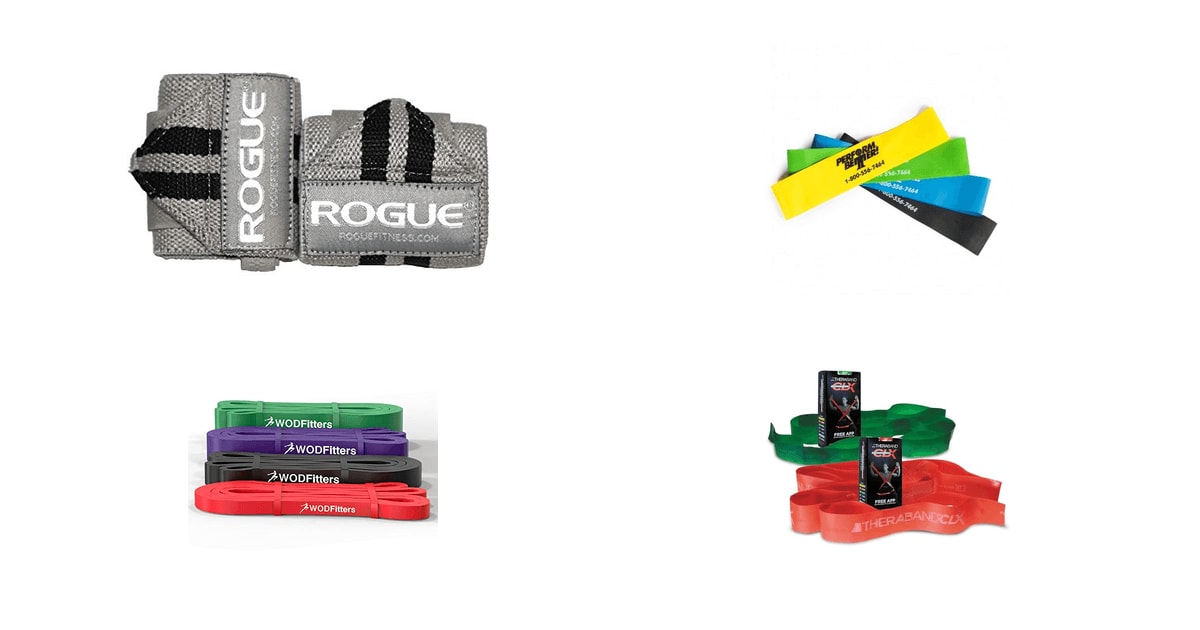
A resistance band is the rare piece of gym gear you'll actually use. It weighs a couple of pounds, lives in a drawer, and turns a doorway or a pull-up bar into a real workout. Bands also do something dumbbells can't: they get harder the further you stretch them, so the hardest part of a rep lands where you're strongest. For assisted pull-ups, hip and glute work, or training in a hotel room, one good set covers most of what you need.
Here's the honest part. No band lasts forever, and none of them is precise. Labeled resistance is a range, not a number — what you feel depends on how far you stretch the band and where you hold it. Owners of nearly every set here eventually report one that snaps, usually after months of being stepped on, dragged over shoes, or left in a hot car. And every band has a ceiling. Once you're pressing serious weight, bands supplement barbells instead of replacing them.
So buy for the format you'll actually use, not for the biggest number on the package. Large loops handle pull-up assistance and barbell work. Mini loops are for hips and glutes. Flat looped bands suit rehab and anyone easing back in after surgery. Heavy tubes stand in for a cable machine. We think that the WODFitters Pull-Up Assistance Bands are the best resistance bands for most people, and that the THERABAND CLX 2-Pack is the one to buy if you're rehabbing an injury or starting from zero.
Everything we recommend

One set that covers pull-ups, mobility and heavy accessory work

Gentle, hardware-free resistance for rehab and first workouts

Small loops that make hip and glute work land where it should
At a glance
| Product | Resistance Level | Band Length | Price | |
|---|---|---|---|---|
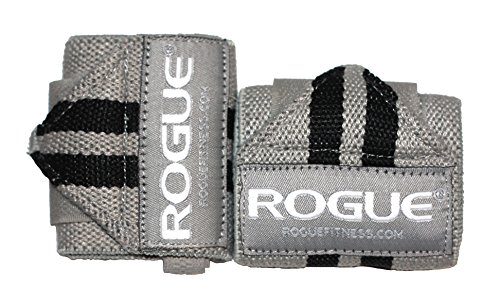 | Rogue Fitness Wrist WrapsAlso in lineup | — | 12" | $21.99On sale |
| Perform Better Mini Band Resistance Loop ExerciseAlso great | — | 9" x 2" | $19.95 |
| WODFitters Pull-Up Assistance BandsTop pick | 10-125 lbs | 41" | $74.99 |
| THERABAND CLX Resistance Band 2-PackBudget pick | Medium & Heavy | 5 ft | $9.99 |
 | Bodylastics Orange and Grey 120lb and 160lbAlso in lineup | 120lb & 160lb | — | $27.97 |
How we picked
Format over specs. We started with what each band can physically do, because a 9-inch mini loop and a 41-inch loop aren't substitutes for each other. Listed dimensions and manufacturer specs settled that before anything else.
Usable resistance. We compared labeled ranges against how owners describe the actual pull. Sets that consistently come in lighter than the label implies got marked down.
How they fail. Published reviews and owner feedback point at the same failure modes: snapped bands, quiet tension loss, and damaged sleeves on tube sets. We favored products where failures arrive late and safely.
Comfort in contact. Width and edge finish decide whether a band pinches your thigh or your foot arch. We weighted recurring owner complaints about rolling and digging heavily.
Packed size. We looked at length, weight and how small each set rolls up. A band you can throw in a carry-on gets used; one that lives in a bin doesn't.
Top pick
One set that covers pull-ups, mobility and heavy accessory work
WODFitters Pull-Up Assistance Bands
Four looped bands, from a half-inch red to a thick green, spanning roughly 10 to 125 pounds of pull between them. They're the most useful bands here because a single set handles assisted pull-ups, warm-ups, stretching and barbell work without any extra hardware.
$74.99fromAmazonIf you buy one set of bands, make it this one. The four loops run from a half-inch red up to a 1.75-inch green, and together they cover light warm-up tension through enough pull to take real weight off a pull-up. That spread is the whole point. You're not buying four bands, you're buying a ladder you can climb for a couple of years.
Start with assisted pull-ups, since that's what most people buy these for. You hang one over the bar, put a knee or a foot in the bottom, and the band helps most at the bottom of the rep where you're weakest. Coaches who run group classes lean on this set for exactly that reason. A client who's close to a strict pull-up can drop to a thinner band and keep the same movement.
Each band is 41 inches long, so it works well away from the bar too. Owners describe using them for shoulder warm-ups, pull-aparts, stretching and squats when a gym isn't an option. You can also double up: a thick band plus a thin one gives you a level in between, which is how most people bridge the jump from the black to the purple.
Durability is where this set separates itself. Owners who've had them for years report the same thing — the latex keeps its snap and the surface stays smooth, as long as the bands stay out of the sun and off rough concrete. That matters more than it sounds. A band that quietly loses tension makes your workouts easier without ever telling you.
Flaws but not dealbreakers
Labeled resistance is a range, and it behaves like one. How much pull you feel depends entirely on how far you stretch the band and where you anchor it, and owners regularly point out that the printed numbers are a rough guide rather than a measurement. If you want repeatable load increments, bands aren't the tool.
This is also the most expensive option here, and the green band is bulky rolled up. Like all latex, these degrade with sunlight, heat and contact with lotion or sunscreen. Leave them baking in a parked car and you're shortening their life, even if nothing looks wrong yet.
Budget pick
Gentle, hardware-free resistance for rehab and first workouts
THERABAND CLX Resistance Band 2-Pack
A pair of five-foot non-latex bands, red and green, with loops built along the entire length so you don't need handles or an anchor. They're the gentlest option here and the easiest place to start if you're rebuilding a shoulder or a knee.
$9.99fromAmazonPhysical therapists hand these out for a reason. The CLX is a five-foot band with loops running down its whole length, so you can step into one end, grab another loop, and skip handles, knots and door anchors entirely. If your grip is weak after surgery, or your hands just don't enjoy squeezing a band for twenty reps, the design does that work for you.
This is the least intimidating way to start. The two-pack gives you red and green — medium and heavy on THERABAND's scale — which is where most beginner and rehab programs live. You're not picking between eight resistance levels on day one. Use the red for shoulders and arms, the green for hips and legs, and get on with it.
These are non-latex, which matters if anyone in the house reacts to latex, since most of the other bands here are natural rubber. The trade-off is feel. The material stretches easily and can seem thin in your hand. Owners who expected something stiff usually say so, then report it holding up fine through months of clinic-style exercises.
Flaws but not dealbreakers
The resistance is lighter than the words medium and heavy suggest. On THERABAND's own scale, red and green sit near the bottom, and buyers who came in expecting serious load have been let down. For rehab, mobility and early strength work, that's appropriate. For anything approaching heavy training, it isn't enough.
The flat format also limits you. It isn't made to hang from a pull-up bar or loop around a loaded barbell, and nothing is included to anchor it, so most exercises rely on a door, a post or your own foot.
Also great
Small loops that make hip and glute work land where it should
Perform Better Mini Band Resistance Loop Exercise
A four-band set of 9-by-2-inch latex loops in light through heavy, the kind physical therapists and college weight rooms buy in bulk. They're built for work above the knee or around the ankles, and the whole set fits in a jacket pocket.
$19.95fromAmazonThese are 9 inches long and 2 inches wide, which sounds like a trivial detail and isn't. That size sits above the knee or around both ankles without sliding around. A 41-inch loop does the same job badly — too much slack, and it rolls up on itself the moment you start moving sideways.
Nothing else here builds hips and glutes as efficiently. Lateral walks, clamshells, banded bridges and monster walks all want light, steady tension you can hold for thirty seconds at a time. Four resistance levels give you room to progress from rehab-light to a band that makes a set of side steps genuinely unpleasant.
They also travel better than anything else in this guide. The set disappears into a bag or a coat pocket, which is why people who live in hotel rooms end up using them more than the equipment at home. Owners report the tension staying honest across dozens of sessions, which is the part cheap mini bands get wrong.
Flaws but not dealbreakers
Two inches is narrow, and narrow bands dig. On bare skin during a long circuit they roll into a cord and pinch, though leggings or a sock pulled over the band solves it. Getting them over thick-soled shoes is a fight, and gyms that run them through group classes go through sets quickly.
They're natural latex, so skip them if you have an allergy. The colors also don't map onto THERABAND's system, so don't assume green means the same thing from one brand to the next. Expect the heaviest band to be the first one that eventually gives out.
Who this is for
Buy bands if you train at home, travel often, are rebuilding after an injury, or want assisted pull-ups without a machine. They're also cheap insurance for anyone whose gym time is unreliable, since ten minutes with a band beats a skipped session. If you already own a rack and a full set of plates, treat bands as an accessory rather than an upgrade.
This guide covers large loop bands, mini loops, flat looped therapy bands and heavy tube packs for general strength and rehab work. It doesn't cover fabric booty bands, bands bundled with app subscriptions, or the very heavy single loops competitive powerlifters buy in matched pairs for accommodating resistance on the platform. If that last one is you, source those individually and by rated tension.
How we picked
Format: we matched each band to the exercises it can physically do, since a 9-inch mini loop and a 41-inch loop aren't interchangeable. Resistance: we compared labeled ranges with how owners describe the real pull, and discounted sets that arrive lighter than the label suggests. Failure modes: we read owner feedback for snapping, tension loss and sleeve damage, and favored bands that fail late and safely rather than suddenly. Comfort: width and edge finish decide whether a band pinches, so complaints about rolling and digging counted against a set. Packed size: length and weight matter, because the band you can drop in a bag is the one you'll actually use.
The competition
This is what our research surfaced, not a census of everything on the market. New band sets appear constantly and plenty of them are fine. The product below is worth knowing about, but it lost to a pick for reasons that will matter to most people.
The Bodylastics Orange and Grey 120lb and 160lb ($27.97) — The Bodylastics pack is a pair of heavy tubes, rated at 120 and 160 pounds, with clip ends and the company's anti-snap sleeve, which is meant to keep a broken tube from whipping back at you. It's aimed squarely at people who already own a Bodylastics system and have outgrown it, and that's how owners describe using it: added onto a mid-range set to make rows and standing chest presses hard again. That's also the problem as a first purchase. It isn't a complete kit, and heavy tubes on their own give you nothing at the light end where most training starts. There's also an owner report of a band failing and cutting a hand, which is exactly the failure the sleeve exists to prevent. If you're already on this system and want more load, it makes sense. Otherwise, start with a loop set.
Care and storage
Latex dies from heat, sunlight and oil, roughly in that order. Keep bands in a drawer or a bag rather than on a hook by a window, and keep them away from lotion, sunscreen and greasy hands. Wipe them with a damp cloth and let them dry flat. Before each session, stretch every band out and actually look at it. White stress lines, fine surface cracks, or a spot that feels thinner than the rest all mean it's finished — throw it out rather than discovering the problem mid-rep. Never anchor a band over a sharp edge, a rough concrete lip or a cut metal bar. On tube sets, retire anything where the sleeve is fraying or pulling away from the end fitting.
Questions we get
Can you build real muscle with resistance bands alone?
Yes, within limits. Muscle responds to tension and progressive overload, and a band supplies both, so bands grow muscle the same way weights do. The ceiling is total load: most band setups top out somewhere around 150 to 200 pounds of combined pull, which is plenty for beginners through solid intermediates. Past that, bands work better as a supplement to barbells than a replacement for them.
What resistance should a beginner start with?
Pick the level that lets you do 12 to 15 clean reps while the last three or four genuinely burn. For most adults that means a medium band for arms and shoulders and a heavier one for hips and legs, which is exactly what the THERABAND CLX two-pack gives you. With a large loop set like the WODFitters bands, start on the thinnest band for any compound movement and move up once 15 controlled reps feel easy.
What's the difference between loop bands and tube bands?
Loop bands are continuous rubber rings. They hang off a pull-up bar, wrap around a barbell and need no hardware, which makes them the choice for assisted pull-ups and full-range compound work. Tube bands are hollow cylinders with clip ends that take handles, ankle cuffs and door anchors, so they feel more like a cable machine for presses, curls and rows. If you can only own one type, own loops.
How long do resistance bands last?
A good latex band gives you months to years of regular use, but storage decides which end of that range you land on. Sunlight, heat above roughly 100°F, oil-based products and rough anchor points all speed up the breakdown. Cheaper bands often lose a noticeable chunk of their tension long before they look worn, which quietly makes your training easier. Inspect before each session and replace anything with cracks, white stress marks or a soft spot.
Are bands enough to replace dumbbells and a barbell?
For general fitness, mostly yes. A large loop set plus a heavy tube pack covers squatting, hinging, pushing and pulling in both directions, which is a complete program for most people. The catch is peak load — even stacked tubes cap out well below what an intermediate lifter can squat or deadlift. If you're training near your structural limits, bands become an addition rather than the whole plan.
Do I need to worry about latex allergies?
If you have a latex allergy, yes, and it narrows your options fast. Both the WODFitters loop set and the Perform Better mini bands are natural latex. The THERABAND CLX pack is explicitly non-latex, which is why clinics reach for it when a patient can't tolerate rubber. Check the listing every time you reorder, since brands change materials between versions.
Why you should trust us
For this guide:
- We read the manufacturer specifications and listing details for every band here, including length, width, material and stated resistance ranges.
- We compared those claims against published reviews and recurring themes in owner feedback, paying particular attention to reports of snapping, tension loss and skin discomfort.
- We leaned on those owner themes when writing the flaws in each pick, rather than relying on the marketing copy.
- We read owner reviews on every listing, weighted toward the critical ones, because that is where the recurring failures show up.
- We have a systematic way of automatically fetching the latest prices, so the numbers on this page stay current.
- This is a research-focused guide, so the team may not own every product listed — though we often do own the top winners, which gives us extra context for the recommendations.
- We don't accept free products, and the retailer commission never changes which product we recommend.
Sources
Best Resistance Bands 2026 – Garage Gym Reviews, Garage Gym Reviews
Elastic Resistance Training to Improve Muscular Fitness – Journal of Strength and Conditioning Research, Journal of Strength and Conditioning Research
Best Resistance Bands – Wirecutter, The New York Times, Wirecutter / New York Times
Best Resistance Bands for 2026 – Healthline, Healthline
Resistance Band Training Science Review – Strength and Conditioning Journal, Strength and Conditioning Journal
Best Resistance Bands – Men's Health 2026, Men's Health
Best Resistance Bands – Forbes Health 2026, Forbes Health
Elastic Resistance Training Effects on Muscle Hypertrophy – European Journal of Applied Physiology, European Journal of Applied Physiology
Amazon product listings and owner reviews for all 5 products
Manufacturer specification pages for each product
Some passages in this guide may be paraphrased with AI help. Prices are refreshed automatically.
More like this.
Continue exploring health reviews and recommendations.

The Best Resistance Bands for Home Workouts
Resistance bands do something a rack of dumbbells can't: they fold into a drawer. That's most of the appeal. You can train your chest, back, legs and…

The Best Portable Resistance Band Sets
A resistance band set is the only strength equipment that fits in a carry-on. That's the whole appeal. A stackable tube kit adding up to a hundred pounds…

The Best Fitness Trackers and Activity Bands
A fitness tracker earns its keep in the small moments. You glance down and see you've been sitting for three hours. You wake up and find out why you feel…

The Best Magnetic Resistance Rowing Machines
A rowing machine is one of the few pieces of home cardio gear that works your legs, back, core and arms in the same motion. Rowing engages up to 86% of…

The Best Soccer Rebounders for Backyard Training
A rebounder turns a patch of grass into a training partner that never gets tired. You strike the ball, it comes back at a predictable angle, and you touch…

The Best Balance Boards for Core Training
A balance board works because it never lets you settle. Stand on one and your feet make dozens of small corrections a minute, and the muscles doing that…