The Best Retinol Products
Retinol is the rare skin-care ingredient with decades of research behind it that you can still buy off a shelf. It speeds up how quickly your skin sheds and replaces cells, nudges collagen production along, and slowly fades the dark marks left by sun and old breakouts. But you don't get any of that in a week. You get it by putting a pea-sized amount on your face a few nights a week for months, and not quitting when your cheeks start flaking.
Here's the part the box won't tell you. Every retinoid, including the gentle ones, can leave your skin red, tight and peeling for the first month or two, and no formula removes that risk completely. None of these match prescription tretinoin, either. They all make you more sun-sensitive, so daily sunscreen stops being optional the day you start. If your skin is already irritated, or you're pregnant or nursing, skip this category and talk to a doctor first.
What separates a good retinol from a mediocre one is fairly boring: how much active is actually in the bottle, whether the formula includes anything to calm your barrier while the retinoid works, and whether the packaging keeps light and air away from a molecule that degrades in both. Strength matters too, but only if your skin can take it. We think that the Paula's Choice CLINICAL 1% Retinol Face Treatment is the best retinol product for most people, and that the La Roche-Posay Redermic R Anti Aging Retinol Cream is the one to buy if your skin flares easily.
Everything we recommend

The strongest formula here, in a base that won't fight you
Gentler and slower, for skin that reacts to almost everything

Modern retinoid chemistry with much less sting

Faster visible change, if your skin already handles retinol

The pick if breakouts, not wrinkles, are the real problem
At a glance
| Product | Retinol % | Format | Price | |
|---|---|---|---|---|
| Paula's Choice CLINICAL 1% Retinol Face TreatmentTop pick | 1% Retinol | Serum | $48.75On sale |
 | CeraVe Skin Renewing Nightly Exfoliating TreatmentAlso in lineup | — | Gel | $23.86On sale |
 | Obagi Medical Retinol + PHA Refining NightAlso consider | — | Cream | $135 |
| La Roche-Posay Redermic R Anti Aging RetinolRunner-up | — | Cream | $54.97 |
| Differin Adapalene Gel 0.1% Acne TreatmentAlso great | 0.1% Adapalene | Gel | $47.98 |
| The Ordinary Granactive Retinoid 2% EmulsionBudget pick | 2% Retinoid | Emulsion | $12.10 |
| Medik8 Crystal Retinal 6 - FirmingUpgrade pick | 0.06% Retinaldehyde | Serum | $87 |
 | Sunday Riley Good Genes All-in-One Lactic AcidAlso in lineup | — | Serum | $85 |
 | Drunk Elephant A-Passioni Retinol Cream - 30Also consider | 1.0% Retinol | Cream | $76 |
 | Neutrogena Rapid Wrinkle Repair Retinol Face SerumAlso in lineup | — | Serum | $21.40 |
How we picked
Retinoid form and strength. We looked at which vitamin A derivative each product uses and how many conversion steps it needs, since that drives both speed and sting. Products that hide the form or the concentration entirely had to earn their place another way.
Barrier support. A retinoid without ceramides, peptides, hyaluronic acid or a proper soothing agent is harder to stay consistent with. We gave weight to formulas that pair the active with something that calms skin down.
Packaging and stability. Retinoids degrade in light and air, so we favored airless pumps, opaque tubes and encapsulation over open jars. Published reviews and owner feedback both flag jar packaging as a weak point at high concentrations.
Irritation in real use. We read owner feedback for the failure modes that show up again and again — flaking in week two, stinging around the nose, a purge that scares people off. Those patterns shaped the flaws we call out.
Fragrance and additives. Fragrance is a common contact irritant, and combining it with an active that already disrupts your barrier is a bad idea. Fragrance-free formulas got preference, especially for sensitive skin.
Top pickOn sale
The strongest formula here, in a base that won't fight you
Paula's Choice CLINICAL 1% Retinol Face Treatment
This is a full 1% retinol serum with vitamin C, vitamin E, hyaluronic acid and peptides mixed in, and no fragrance at all. If your skin has handled a lower-strength retinol without drama, it's the most direct route to visible change.
$48.75fromAmazonList priceAt 1%, this is about as strong as retinol gets without a prescription. Most drugstore serums won't even print a number on the label. Paula's Choice does, and the number is at the top of the over-the-counter range. That matters because retinol works on a dose curve — more active, applied consistently, gets you to smoother texture and softer lines faster. You're not paying for a trace amount buried in a moisturizer.
The rest of the formula is built to keep that strength tolerable. Vitamin C and vitamin E work alongside the retinol as antioxidants, hyaluronic acid holds water in skin that a retinoid tends to dry out, and peptides support firmness. There are soothing agents in there specifically to blunt the dryness that comes with a dose this high. It's a real formula, not 1% retinol floating in filler.
Nothing in it is there to make it smell nice. No fragrance, no essential oils. Fragrance is one of the most common contact irritants in skin care, and adding it to a high-strength retinol is asking for trouble. If you've reacted to a scented serum before and couldn't work out which ingredient did it, this removes a whole category of suspects.
It absorbs fast and layers well with the rest of your routine. The texture is thin enough to go under a night cream without pilling, and it's meant for normal, combination, dry and oily skin alike. If you find it too intense on its own, mixing a couple of drops into a facial oil or moisturizer is a standard way to soften the first few weeks.
The airless pump keeps the active from dying in the bottle. Retinol breaks down when it meets light and air, which is why a jar you dip your fingers into is a bad container for it. A pump dispenses what you need and keeps the rest sealed, so the last application should be close to as potent as the first.
Flaws but not dealbreakers
If you've never used a retinoid, this is the wrong place to start. A full 1% will very likely give you redness, tightness and flaking in the first few weeks, and plenty of people quit before their skin adjusts. Start two nights a week, buffer it with moisturizer, and build up slowly. Or begin with something gentler and graduate to this.
It can sit a little tacky if your skin runs oily. Give it a few minutes to sink in before you put anything on top. Owners with oily skin more often mention the finish than the results.
It costs noticeably more than a drugstore retinol serum. You're getting a disclosed concentration, a considered formula and packaging that protects it, which is a fair trade. But if you're not sure you'll stick with a nightly retinoid, that's a lot to commit to on a first try.
Runner-up
Gentler and slower, for skin that reacts to almost everything
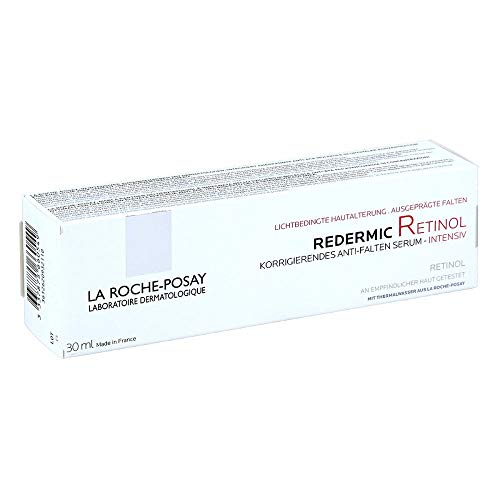
La Roche-Posay Redermic R Anti Aging Retinol
La Roche-Posay pairs pure retinol with a booster complex meant to keep the sting down, in a light cream base. It works more gradually than a high-strength serum, but it's the option reactive skin is most likely to tolerate long enough to see a difference.
$54.97fromAmazonThis is the one to try if other retinols have already burned you. The formula uses pure retinol alongside an exclusive booster complex designed to improve how well it works while cutting the discomfort retinoids usually cause. That's the entire pitch, and it's the right pitch for reactive skin. Slower results you actually stick with beat fast results you abandon in week three.
It's tested for the people most likely to have a problem. The brand runs its formulas through allergy and ophthalmologist testing, and this one is gentle enough to be used around the eye area, where skin is thinnest and most easily provoked. Crow's feet and upper-lip lines are exactly the spots a stronger serum forces you to avoid.
A micro-exfoliating acid handles the surface while retinol works underneath. Lipo-hydroxy acid loosens dead cells at the very top layer, which is why skin looks brighter well before the retinol's slower remodeling shows up. You get an early payoff, which makes the long wait easier to sit through.
The texture is light and non-greasy for a cream. It sinks in without leaving a film, and the base is hydrating enough that you may not need a separate moisturizer on top. For dry or winter-cracked skin, that's one less step to get wrong.
Flaws but not dealbreakers
It doesn't say how much retinol is in it, and it isn't much. The whole design leans gentle, so expect to wait longer for visible change than you would with a 1% serum. If your skin is tough and you want speed, you'll find this underpowered.
A cream is a nuisance under daytime makeup. It's meant for nighttime use anyway, and if you do apply it in the morning you need sunscreen over it. Treat it as a night-only step and the texture stops being an issue.
Budget pick
Modern retinoid chemistry with much less sting
The Ordinary Granactive Retinoid 2% Emulsion
The Ordinary's emulsion uses hydroxypinacolone retinoate, a retinoid that binds to skin receptors directly instead of converting in two steps like retinol. It's a good deal gentler than an equivalent retinol, and it costs a fraction of what the luxury serums do.
$12.10fromAmazonThe active here skips the conversion steps that cause most retinol irritation. Retinol has to be converted twice by your skin before it does anything. Hydroxypinacolone retinoate binds to retinoid receptors as-is. In practice that means you get retinoid effects with far less of the redness and peeling, which is why it's such a sensible first retinoid.
There's a dedicated anti-irritant in the formula. Tasmannia lanceolata extract is included specifically to calm the skin down, and the emulsion base is light rather than rich. If your last attempt at a retinoid ended with you peeling around your nose, this is a much softer landing.
The light texture suits oily and combination skin. It's an emulsion, not a heavy cream, so it doesn't leave a greasy layer or slide around under a moisturizer. Apply it at night after cleansing and before your creams, and it disappears into the routine.
DECIEM tells you exactly what's in it and at what strength. The 2% figure refers to the granactive retinoid complex, not raw retinoic acid, and the brand is unusually straight about that distinction. When you're comparing retinoids, that kind of labeling is worth more than marketing names.
Flaws but not dealbreakers
The long-term evidence isn't as deep as it is for plain retinol. Retinol has decades of peer-reviewed study behind it. This newer molecule has less. It's promising and well liked, but if you want the most heavily documented option, that's still retinol or adapalene.
There's almost nothing in here to support your barrier. No ceramides, minimal hydration. Layer a proper moisturizer over it, especially in the first month.
The dropper bottle lets air in every time you open it. Retinoids degrade with air and light exposure, so keep it somewhere dark and don't buy a backup to sit in a drawer for a year.
Upgrade pick
Faster visible change, if your skin already handles retinol
Medik8 Crystal Retinal 6 - Firming
Crystal Retinal 6 uses 0.06% retinaldehyde, which sits one conversion step from active retinoic acid instead of retinol's two. Medik8 encapsulates it for stability, and the numbered range gives you an obvious path up in strength as your skin adapts.
$87fromAmazonRetinaldehyde is a shortcut your skin doesn't have to work as hard for. Retinol needs two conversions to become active. Retinaldehyde needs one. Medik8 puts the difference at up to 11 times faster than retinol, and that's the reason a 0.06% concentration here isn't the small number it looks like. People typically report firmer, smoother skin sooner than the usual three-month retinol timeline.
Encapsulation keeps a fragile active alive and releases it slowly. Retinaldehyde is notoriously unstable, so wrapping it protects it in the bottle and doles it out gradually on your skin. That slower release is also what keeps something this potent from feeling like sandpaper on night two.
The formula hydrates while it works. Hyaluronic acid and glycerin pull water in, and vitamin E backs up the antioxidant side. Strong retinoids strip moisture, so having the counterweight built into the same serum saves you from chasing it with extra products.
The numbered range takes the guesswork out of stepping up. Crystal Retinal runs from 1 to 10, and 6 is the level Medik8 points experienced users toward once they've finished a lower number or already use another retinoid. When your skin stops reacting, you know exactly which bottle comes next.
Flaws but not dealbreakers
This is the wrong first retinoid, full stop. If you're new, start at a lower number in the range or with a gentler product entirely. Going straight to 6 is how people end up with a flaking chin and a serum they never touch again.
It's the priciest way to buy a retinoid here. You're paying for the encapsulation technology and the strength. If your skin is happy at a modest retinol, there's no reason to trade up.
You won't find it on a pharmacy shelf. It's a specialty and online purchase, so replacing it isn't a quick errand.
Also great
The pick if breakouts, not wrinkles, are the real problem
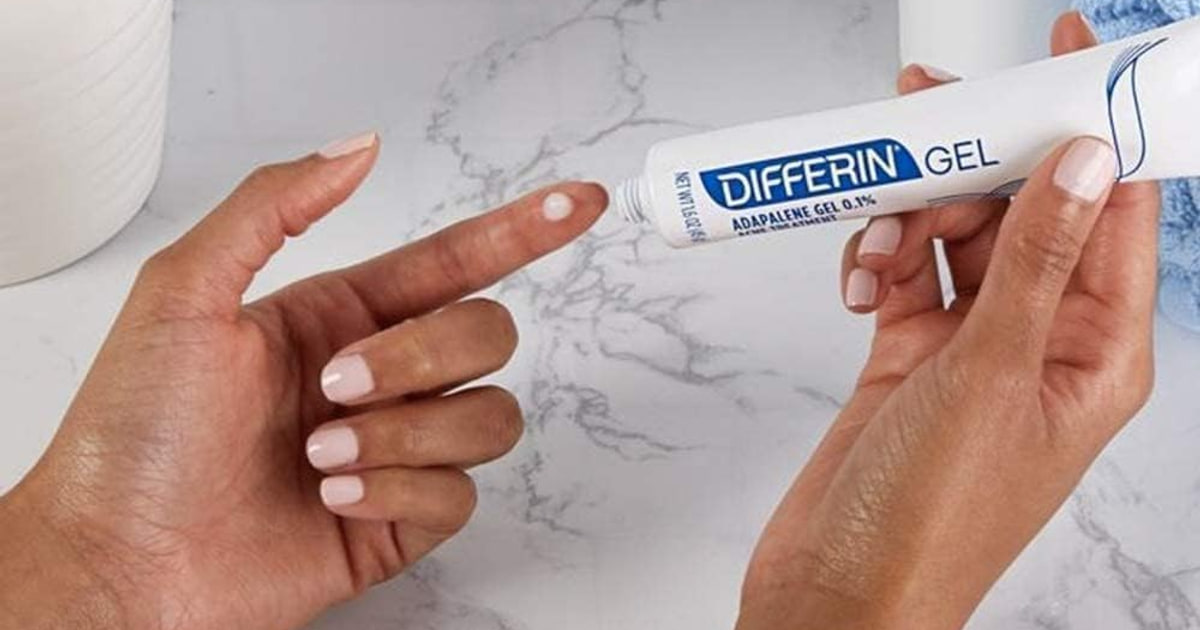
Differin Adapalene Gel 0.1% Acne Treatment
Adapalene is a prescription-strength retinoid that's now sold over the counter, and it targets the causes of acne rather than just drying out what's already there. The two-tube pack lasts roughly six months, and it does the anti-aging work in the background.
$47.98fromAmazonThis is a genuine prescription-grade retinoid you can buy without seeing anyone. Adapalene regulates skin-cell turnover and calms inflammation deep in the pore, which is why it clears existing pimples and stops new ones forming instead of just treating today's spot. Galderma's clinical data points to a reduction of up to 87% of acne over 12 weeks.
It's less harsh than the prescription retinoid people usually compare it to. Adapalene binds selectively to certain retinoid receptors, and the practical result is retinoid benefits with noticeably less irritation than tretinoin. That makes it workable for teenagers and for adults dealing with acne and early lines at the same time.
One purchase lasts about half a year. The listing is a 180-day supply, and a pea-sized amount really does cover a whole face. Since retinoids only pay off with months of consistency, a tube that outlasts your motivation is a genuine advantage.
It's oil-free and non-comedogenic, which matters here more than usual. If you're treating acne, the last thing you want is a rich cream undoing the work. The gel base sits cleanly under a light moisturizer and doesn't clog anything.
Flaws but not dealbreakers
The purge is real and it lasts six to eight weeks. Your skin often gets worse before it gets better as everything under the surface comes up at once. Owners who quit at week four almost always quit during this window. Know it's coming and ride it out.
There's no moisturizer in it at all. This is a treatment gel, nothing more. You need your own hydrating moisturizer alongside it, and if your skin is dry or already flaking, apply that first as a buffer.
Who this is for
This guide is for anyone who wants to start or upgrade a nightly vitamin A routine without a dermatologist appointment. If you're bothered by fine lines, uneven texture, dull skin or the dark marks old breakouts left behind, a retinoid is the single most researched thing you can put on your face. It's also worth starting before you think you need it, since retinoids prevent more readily than they repair.
Skip it for now if your skin is currently irritated, sunburned or mid-flare from eczema or rosacea, and talk to a doctor if you're pregnant or nursing. We only cover over-the-counter products here, so prescription tretinoin and in-office treatments are out of scope, and so are pure acid exfoliants that work by a different mechanism. If you can't commit to daily sunscreen, this isn't the right category to spend money in.
How we picked
Retinoid form and strength: we tracked which vitamin A derivative each product uses and how far it sits from active retinoic acid, because that determines both how fast it works and how much it stings. Barrier support: formulas that include ceramides, peptides, hyaluronic acid or a named anti-irritant get you through the rough first month. Packaging and stability: airless pumps, opaque tubes and encapsulation protect an active that dies in light and air, and open jars don't. Irritation in real use: we leaned on owner feedback for the flaws that keep recurring rather than the ones that sound plausible. Fragrance and additives: fragrance-free wins, particularly for reactive skin.
Other retinol products worth considering
If you want a rich night cream rather than a serum: The Obagi Medical Retinol + PHA Refining Night ($135) — Obagi's Retinol + PHA Refining Night Cream does two jobs in one step, pairing retinol with a polyhydroxy acid that exfoliates the surface gently. Obagi is a medical-grade brand you'll see in aesthetic practices, and the clinically proven claim is central to how it's sold. The thick cream base suits dry or mature skin that appreciates something occlusive overnight. It gives up versatility, though: it's heavy for oily or acne-prone skin, it's among the most expensive options here, and having an acid built in means you have to be careful about layering anything else exfoliating on the same night.
If you want 1% retinol in a clean-formulated cream: The Drunk Elephant A-Passioni Retinol Cream - 30 ($76) — Drunk Elephant's A-Passioni matches our top pick's 1% strength with vegan retinol, and adds vitamin F fatty acids and a triple-peptide blend to firm skin and take the edge off. The brand's Suspicious 6 list rules out essential oils, drying alcohols, silicones, chemical sunscreens, fragrances and SLS, so it's the strongest option here for people who care about that. The catch is the container. A 30ml jar exposes an unstable active to light and air every time you open it, and that's a real compromise at this concentration and this price.
The competition
This is what our research surfaced, not a census of every retinoid sold. The category turns over constantly, brands rename formulas without changing much inside, and plenty of good products never make it onto a shortlist. Here's the remaining option we looked at and where it landed.
The Neutrogena Rapid Wrinkle Repair Retinol Face Serum ($21.40) — Neutrogena's Rapid Wrinkle Repair Retinol Face Serum is the easiest retinol in the country to actually buy — it's on the shelf at essentially every pharmacy and supermarket, and it costs a fraction of what our top pick does. The Retinol SA system pairs retinol with a glucose complex meant to speed delivery, and hyaluronic acid keeps the light serum from drying skin out. Two things kept it off the picks list: the concentration isn't disclosed anywhere, and the formula contains fragrance, which is a poor match for skin that's about to go through a retinoid adjustment. If you want to try retinol tonight without ordering anything, it's a perfectly reasonable place to start.
How to start retinol without wrecking your skin
Go slower than you want to. Two nights a week for the first month, then three, adding a night every few weeks only if your skin stays calm. Use a pea-sized amount for your whole face, on dry skin, and keep it off the corners of your nose and mouth where flaking starts. If you sting, try the sandwich: a thin layer of unscented moisturizer, then your retinoid, then moisturizer again. It buffers the irritation without meaningfully blunting results, and dermatologists routinely recommend it through the six-to-eight-week adjustment period. Wear sunscreen every morning, no exceptions. And don't stack an acid exfoliant on the same night — alternate evenings instead.
Questions we get
What strength should I start with if I've never used retinol?
Start somewhere between 0.025% and 0.1%, two or three nights a week. Most people can work up to around 0.5% within about three months by increasing frequency first, then concentration. Rushing this is the main reason people give up on retinol entirely.
What's the difference between retinol, retinoid, retinaldehyde and tretinoin?
They're all vitamin A derivatives, and retinoid is the umbrella term for the family. Retinol is the over-the-counter standard and needs two conversions in your skin before it's active. Retinaldehyde needs only one, so it works faster at lower concentrations. Tretinoin is retinoic acid itself — prescription only, most effective, and most irritating.
Can I use retinol every night?
Eventually, but not at first. Build from two or three nights a week up to nightly over six to twelve weeks. Even people with well-adapted skin often stay at five or six nights a week to give the barrier time to recover.
Which of these is the gentlest option for sensitive skin?
La Roche-Posay Redermic R is our pick for reactive skin, thanks to a booster complex built to reduce retinoid discomfort and allergy and ophthalmologist testing behind it. The Ordinary Granactive Retinoid 2% Emulsion is the other low-irritation route, since its active binds to receptors directly and skips the conversion steps that cause most of the stinging.
Can I use retinol with vitamin C, niacinamide or acid exfoliants?
Niacinamide layers fine with retinol in the same evening and may even help with the redness. Save vitamin C for the morning and keep retinol at night. Don't use AHAs or BHAs on the same night as your retinoid — alternate evenings, or you'll over-exfoliate and end up with a barrier that never recovers.
How long before I see anything?
Surface brightness and smoothness can show up in a few weeks, especially with formulas that include an exfoliating acid. Real change in fine lines and firmness takes roughly twelve weeks with retinol, and often sooner with retinaldehyde. If you're treating acne with adapalene, expect things to look worse for six to eight weeks first.
Why you should trust us
For this guide:
- We compared manufacturer specifications and ingredient lists across every product here, paying particular attention to which retinoid form each one uses and whether the concentration is disclosed.
- We read published dermatology commentary and the clinical claims each brand makes, and we noted where independent evidence for a proprietary delivery system is thin.
- We reviewed recurring themes in owner feedback — flaking timelines, purge periods, texture complaints and packaging problems — to decide which drawbacks were worth flagging.
- We read owner reviews on every listing, weighted toward the critical ones, because that is where the recurring failures show up.
- We have a systematic way of automatically fetching the latest prices, so the numbers on this page stay current.
- This is a research-focused guide, so the team may not own every product listed — though we often do own the top winners, which gives us extra context for the recommendations.
- We don't accept free products, and the retailer commission never changes which product we recommend.
Sources
Best Retinol Creams and Serums, According to Dermatologists, Allure
The Best Retinol Serums and Creams, Tested, Byrdie
Retinoids: What They Are and How to Use Them, American Academy of Dermatology
Best Retinol Products of 2026, Tested by Beauty Editors, SELF
Best Retinol Products, Reviewed — Good Housekeeping Beauty Lab, Good Housekeeping Beauty Lab
Retinol vs. Retinoid: What's the Difference?, Healthline
Best Retinol Products for Every Skin Type and Concern, Cosmopolitan
Topical Retinoids in Skin Aging: A Focused Update with Reference to Sun-Exposed Skin, NCBI / Journal of Cosmetic Dermatology
Amazon product listings and owner reviews for all 10 products
Manufacturer specification pages for each product
Some passages in this guide may be paraphrased with AI help. Prices are refreshed automatically.
More like this.
Continue exploring beauty reviews and recommendations.
The Best Retinol Creams and Night Serums
Retinol is the closest thing over-the-counter skincare has to a sure thing. It speeds up how fast your skin sheds and rebuilds itself, which softens fine…

The Best Retinol Creams for Sensitive Skin
Retinol is the rare skincare ingredient with decades of clinical evidence behind it. It speeds up cell turnover, softens fine lines, and evens out tone…

The Best Retinol Creams
Retinol is one of the few skincare ingredients with decades of real research behind it. It speeds up how fast your skin sheds and rebuilds itself, and…

The Best Retinol Serums
Retinol is the rare skincare ingredient with decades of published research behind it. It speeds up how fast your skin sheds and replaces cells, and over…

The Best Retinol Creams
Retinol is one of the few skincare ingredients with decades of published research behind it. It speeds up how fast your skin sheds and rebuilds itself,…

The Best Eyeshadow Palettes
An eyeshadow palette is one of the few beauty products you'll touch nearly every morning, so the one you own shapes how fast you get out the door. The…