The Best Retinol Serums
Retinol is the rare skincare ingredient with decades of published research behind it. It speeds up how fast your skin sheds and replaces cells, and over months it nudges your skin into making more collagen. That's why dermatologists keep recommending it for fine lines, rough texture and the brown spots left behind by sun and old breakouts. But it isn't a moisturizer you slap on and forget. The concentration, the base it's suspended in and the packaging all change how well it works and how much your face hates you for the first month.
Here's the honest part: every retinol on this list will irritate you at first. Redness, flaking around the nose, a tight feeling after cleansing — that's the adjustment period, and no formula skips it entirely. The gentler ones just make it shorter. You also won't see much for a while. Texture and tone usually shift around the two-month mark, and real wrinkle improvement takes half a year of consistent nights. Anything promising more than that is selling you a story, not a serum.
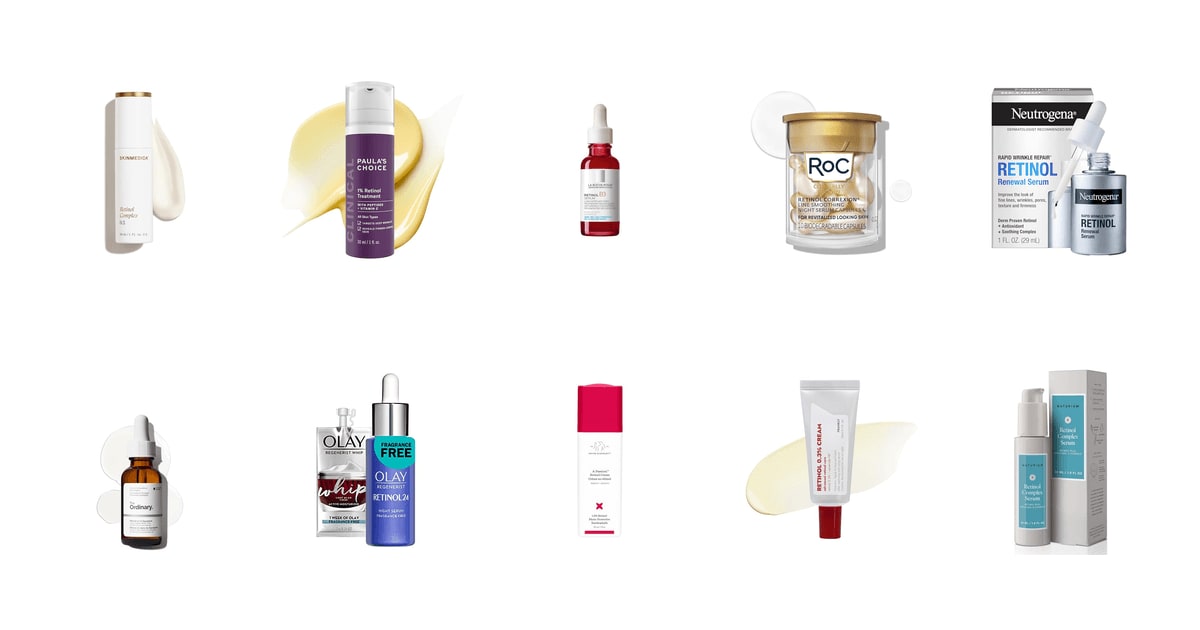
We looked at ten retinol serums and creams, from a bare-bones 1% in an oil base to physician-grade formulas with a stack of supporting ingredients. We think that the SkinMedica Retinol 0.5 Complex is the best retinol serum for most people, and that the La Roche-Posay Pure Retinol Face Serum is the one to buy if your skin turns red at the slightest provocation.
Everything we recommend
Prescription-adjacent results without the prescription

The gentlest way in if your skin flushes easily

A gentle, widely available start that costs very little

Maximum strength, if your skin has earned it

Bare-bones 1% in an oil base, for people who know what they're doing
Prices as of Oct 22, 7:36 AM PT · Details
At a glance
| Product | Retinol Concentration | Size / Price per oz | Price | |
|---|---|---|---|---|
| SkinMedica Retinol 0.5 Complex - Serum forTop pick | 0.5 | 1 Fl Oz | $80 |
| Paula's Choice CLINICAL 1% Retinol Face TreatmentUpgrade pick | — | 1 Fl Oz | $48.75 |
| La Roche-Posay Pure Retinol Face Serum withRunner-up | — | 1.01 Fl Oz | $44.99 |
 | RoC Retinol Correxion Line Smoothing Night SerumAlso consider | — | 10 Count | $12.99 |
| Neutrogena Rapid Wrinkle Repair Retinol Renewal SerumBudget pick | — | 1.7 Fl Oz | $13.90 |
| The Ordinary Retinol 1% in SqualaneAlso great | — | 1 Fl Oz | $11.90 |
 | Olay Regenerist Retinol Face SerumAlso in lineup | — | 1.3oz | $41.99 |
 | Drunk Elephant A-Passioni Retinol Cream - 30Also consider | 1.0% | 1 Fl Oz | $53.20 |
 | FRANKLY Retinol 0.3% CreamAlso in lineup | 0.3% | 0.67 Fl Oz | $18.90 |
 | Naturium Retinol Complex SerumAlso consider | — | 1 Fl Oz | $16.79 |
Prices as of Oct 22, 7:36 AM PT · Details
How we picked
Concentration and strength. We looked for formulas that state their retinol percentage where possible, and we weighted the range dermatologists actually recommend — roughly 0.3% to 1%, matched to experience level. Products that hide the number had to earn their place another way.
Irritation management. We read owner feedback for patterns in redness, peeling and purging, and we favored formulas with buffering ingredients like niacinamide, squalane or ceramides. A retinol you abandon in week three is worth nothing.
Packaging and stability. Retinol breaks down on contact with air and light. We gave credit to airless pumps, opaque bottles and single-use capsules, and we flagged clear droppers as a weakness even on formulas we otherwise like.
Supporting ingredients. Niacinamide, hyaluronic acid, peptides and ceramides all reduce barrier disruption and speed up tolerance. We checked ingredient lists rather than taking front-of-package claims at face value.
Fragrance and sensitivity. For reactive skin, fragrance is a compounding irritant on top of an already irritating active. We noted which formulas are fragrance-free and steered sensitive-skin recommendations accordingly.
Top pick
Prescription-adjacent results without the prescription
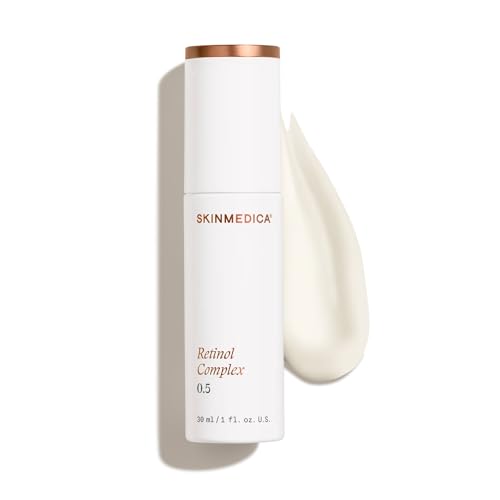
SkinMedica Retinol 0.5 Complex - Serum for
A 0.5% retinol built around a slow-release delivery system, from a brand that sells mainly through dermatologists' offices. It lands in the sweet spot: strong enough to actually change your skin, gentle enough that you can stay on it.
$80fromAmazonPrices as of Oct 22, 7:36 AM PT · Details
The 0.5% concentration is the one that does real work without wrecking you. Below 0.3%, you're waiting a long time for modest changes. At 1%, a lot of people flake, get red and quit by week three. SkinMedica sits between those, and its delivery system releases the retinol gradually instead of dumping it all at once. Owners who've cycled through drugstore retinols consistently describe this as the first one that visibly changed their skin.
This is a physician-dispensed product, which used to mean you had to book an appointment to buy it. That's no longer true, but the formulation philosophy carried over. Alongside the retinol you get antioxidants and moisturizing agents, so it functions as a treatment step rather than something you have to layer three things over. If your routine is cleanser, this, moisturizer, you're set.
You still need to ease in. Owner feedback is clear on this point — people who go straight to nightly use report dryness and minor peeling in the first weeks. Twice a week for a month, then every other night, then nightly if your face cooperates. Some experienced users start at a lower strength in the same line before moving up. The gradual approach isn't caution for its own sake; it's the difference between staying on retinol and abandoning it.
It's a one-ounce bottle, and that's genuinely all you need — a pea-sized amount covers your whole face. A few owners report the bottle arriving less full than expected, which is worth watching for when yours shows up. If you use it as directed rather than slathering it on, one bottle should carry you through the months it takes to see results.
Flaws but not dealbreakers
It costs considerably more than anything you'll find at a drugstore, and there's no getting around that. You're paying for the delivery system and the clinical positioning. Whether that's worth it depends on how much irritation has derailed your retinol attempts before — if cheaper formulas have made you quit twice already, the math changes.
Like every retinol here, it can trigger a purge. Congestion that was sitting under the surface comes up faster, so your skin may look worse before it looks better. That usually resolves in four to six weeks. If it hasn't by then, you're irritated, not purging, and you should back off the frequency.
Runner-up
The gentlest way in if your skin flushes easily
La Roche-Posay Pure Retinol Face Serum with
A 0.3% pure retinol buffered with niacinamide and hyaluronic acid, from a brand dermatologists reach for by default. It's the formula most often recommended to people who've tried retinol before and had to stop.
$44.99fromAmazonPrices as of Oct 22, 7:36 AM PT · Details
If retinol has previously left you red for days, this is where to start. La Roche-Posay pairs a modest 0.3% concentration with niacinamide and hyaluronic acid, which support the skin barrier while the retinol works against it. The result is a formula that a lot of people with reactive or rosacea-prone skin can actually stay on. That matters more than raw strength, because retinol only works if you keep using it.
It's fragrance-free, and for sensitive skin that's not a nice-to-have. Fragrance is one of the most common triggers for contact irritation, and adding it to a product that's already thinning your stratum corneum is asking for trouble. Owners with reactive skin repeatedly single this out as the retinol that didn't make their face sting. Several describe it as their first retinol, which tells you something about how it's positioned and how it performs.
The texture is light and slightly hydrating, so it layers well under a night cream without pilling. That sounds minor until you've used a retinol that balls up under moisturizer. You get a full ounce, and at 0.3% you can use it more liberally than a high-strength formula, so the bottle lasts a reasonable stretch.
Flaws but not dealbreakers
At 0.3%, results take longer. Expect texture changes around eight weeks and to keep waiting for anything dramatic on deeper lines. If you've already built tolerance at 0.5% or higher, this will feel like a step backward.
It isn't cheap for its concentration. Several drugstore options here cost less and deliver comparable or higher potency. What you're paying for is the buffering system and the reliability, which is a fair trade for reactive skin and a poor one if your skin has never given you trouble.
A handful of owners note bottles arriving underfilled. Check the fill level when yours arrives.
Budget pick
A gentle, widely available start that costs very little
Neutrogena Rapid Wrinkle Repair Retinol Renewal Serum
Neutrogena's pure retinol serum pairs a modest dose with antioxidants and a soothing complex, in a lightweight formula that suits oily and combination skin. It's the low-commitment way to find out whether retinol agrees with you.
$13.90fromAmazonPrices as of Oct 22, 7:36 AM PT · Details
Buy this one if you're not sure retinol is for you. It costs a fraction of the picks above, you can find it in nearly any drugstore, and the formula is deliberately mild. Beginners in the owner feedback describe it as surprisingly gentle, including people who'd braced for irritation. If it works out, you can graduate to something stronger later. If it doesn't, you've lost very little.
The texture is thin and absorbs fast, which makes it a better fit for oily and combination skin than the richer creams in this guide. Neutrogena includes carnosine, an antioxidant, and a soothing complex intended to blunt the initial sting. The formula skips parabens, mineral oil and dyes. It isn't a stripped-down product just because it's inexpensive.
A caveat worth knowing: the retinol percentage isn't printed on the label. Owners guess it's on the lower side based on how gentle it feels, and that's consistent with the beginner positioning. If you want to know exactly what you're putting on your face, this isn't the formula for you. If you just want something that works and doesn't burn, the missing number matters less.
Flaws but not dealbreakers
It contains fragrance components, which is a real problem if your skin is reactive. That's the main reason we'd point sensitive-skin readers to La Roche-Posay instead, even though it costs more.
Results tend to plateau. At this strength, you'll get smoother texture and some brightening, but you may stall out before the deeper lines shift. That's the trade for the mildness, and it's the natural moment to step up to a higher concentration.
Upgrade pick
Maximum strength, if your skin has earned it
Paula's Choice CLINICAL 1% Retinol Face Treatment
A 1% retinol stacked with peptides, vitamin C and licorice extract, aimed at people who've already spent months at lower concentrations. It attacks lines, tone and pore appearance at once — and it's far too much for a beginner.
$48.75fromAmazonPrices as of Oct 22, 7:36 AM PT · Details
This is the top of the over-the-counter range. One percent is the highest concentration you'll reliably find without a prescription, and Paula's Choice surrounds it with peptides for firmness, vitamin C for brightness and licorice extract for tone. If you've been at 0.5% for six months and your skin has stopped reacting, this is the logical next step. It's fragrance-free, and the ingredient list is fully disclosed.
The irritation risk here is genuine, not theoretical. Owner feedback splits sharply along experience lines. People who ramped up slowly and kept a heavy moisturizer nearby describe smoother, brighter skin within a month. People who jumped in cold report redness, peeling and burning, and in a few cases breakouts that hadn't happened before. Read that as a scheduling problem, not a formula problem — but take it seriously.
A pea-sized amount covers the entire face, so the one-ounce bottle lasts. The texture is light and absorbs without leaving a film, which is unusual at this concentration. If you already use a vitamin C serum in the morning, note that this one includes vitamin C too — you may be doubling up more than you intend.
Flaws but not dealbreakers
It's the wrong product for anyone new to retinol. Starting here almost guarantees a rough few weeks, and the most common outcome of a rough few weeks is quitting.
The supporting actives add cost. If you only want the retinol, The Ordinary delivers the same 1% for far less. What you're buying here is the surrounding formula and the buffering, which is worth it only if you'll actually use those extras.
Purging can be severe. Some owners with no history of acne report breakouts after starting, which is an unwelcome surprise when you bought the product for wrinkles.
Also great
Bare-bones 1% in an oil base, for people who know what they're doing
The Ordinary Retinol 1% in Squalane
The Ordinary suspends pure 1% retinol in squalane, with essentially nothing else in the bottle. It costs a small fraction of comparable concentrations and works just as hard — provided your skin can already handle that much.
$11.90fromAmazonPrices as of Oct 22, 7:36 AM PT · Details
The active concentration is identical to formulas costing many times more. That's the entire pitch, and it holds up. You get 1% retinol in squalane, a lightweight emollient that cushions some of the irritation and helps with the dryness retinol causes. No fragrance, no fillers, no marketing budget baked into the price. Experienced users in the owner feedback describe it as one of the stronger over-the-counter options they've used.
The squalane base is a genuine functional choice, not just a cheap carrier. It gives the retinol something oily to sit in, which slows absorption slightly and keeps the skin from drying out as fast. The trade-off is texture. Several owners describe the finish as greasy, and if you have oily skin, it can sit on top rather than sinking in.
It ships in a standard dropper bottle, which is the weak point. Retinol degrades when it meets air and light, and a dropper lets in both every time you open it. The Ordinary tells you to refrigerate it after opening, and that's advice worth following rather than ignoring.
Flaws but not dealbreakers
It's genuinely too strong for beginners. There's no buffering system and no soothing complex — just retinol and oil. If you haven't built tolerance, start elsewhere and come back.
The oily finish causes problems for some. Owners with congestion-prone skin report breakouts where the product pools, and a few keep it away from certain areas of the face for that reason. It's not a universal complaint, but it's a consistent one.
There's nothing else in here. No niacinamide, no peptides, no hydrating actives. If you want a single product to handle multiple concerns, this isn't it.
Who this is for
Buy a retinol if you're seeing fine lines, rough texture, dullness or lingering dark spots and you're willing to commit for at least three months. That last part is the real requirement. Retinol rewards consistency and punishes impatience, and most people who conclude it doesn't work quit before it had a chance. If you're pregnant or nursing, skip retinol entirely and talk to your doctor about alternatives. If your skin is currently compromised — actively peeling, sunburned, mid-flare — heal first.
This guide covers over-the-counter retinol serums and night creams. It doesn't cover prescription tretinoin, which is stronger and requires a doctor, and it doesn't cover retinol body lotions, eye creams or cleansers. We also don't cover bakuchiol-only products, though one pick here combines the two. If you already use a prescription retinoid, none of these will add anything — you're already past what any of them can do.
How we picked
We built this guide around five things. Concentration: we favored formulas in the 0.3% to 1% range that state their strength, matched to how much retinol experience a buyer already has. Irritation management: we read owner feedback for patterns in redness and peeling, and gave credit to buffering ingredients like niacinamide, squalane and ceramides. Packaging: retinol degrades in air and light, so airless pumps and sealed capsules beat clear droppers. Supporting ingredients: niacinamide, hyaluronic acid and peptides speed up tolerance and reduce barrier damage, so we read the actual ingredient lists. Fragrance: for reactive skin it's a compounding irritant, and we routed sensitive-skin picks toward fragrance-free formulas only.
Other retinol serums worth considering
If you want the best protection against oxidation: The RoC Retinol Correxion Line Smoothing Night Serum — RoC seals each dose in an individual capsule, which is the most effective packaging solution here. Air never touches the product until you twist it open, so the retinol you apply is as potent as the day it was made. Owners describe the fluid as silky and moisturizing, and several use it as a low-commitment way to test retinol without buying a full bottle. The downsides are real, though: the capsules generate a lot of single-use plastic, the retinol percentage isn't disclosed, and a ten-count pack doesn't last long if you're using it more than a couple of nights a week.
If you want a gentler dual-ingredient approach: The Naturium Retinol Complex Serum — Naturium combines encapsulated retinol with bakuchiol, a plant-derived compound with its own published evidence for retinol-like effects at lower irritation. The encapsulation slows the release, and the bakuchiol adds a second pathway without adding sting. It's suitable for blemish-prone and combination skin, and the brand recommends three to five nights a week rather than nightly. What you give up is certainty — the retinol percentage isn't stated, and if you're already tolerant of higher strengths, the bakuchiol isn't adding much you can't get from more retinol.
If you have dry skin and want 1% in a rich base: The Drunk Elephant A-Passioni Retinol Cream - 30 — Drunk Elephant puts 1% vegan retinol in a cream loaded with fatty acids and peptides, and skips fragrance, essential oils, silicones and dyes entirely. For dry or mature skin that struggles with the tightness retinol causes, that base does a lot of work — owners with dry skin describe it as the rare high-strength retinol that leaves their face feeling soft. It's expensive for thirty milliliters, the cream texture is wrong for oily skin, and a few owners find the smell off-putting. But the formulation standards are strict, which matters if fragrance has burned you before.
The competition
These are the products our research turned up alongside the picks, not a survey of everything sold. Retinol is a crowded category and new formulas launch constantly. What follows is why each of these didn't make the cut, and who might still reasonably choose one.
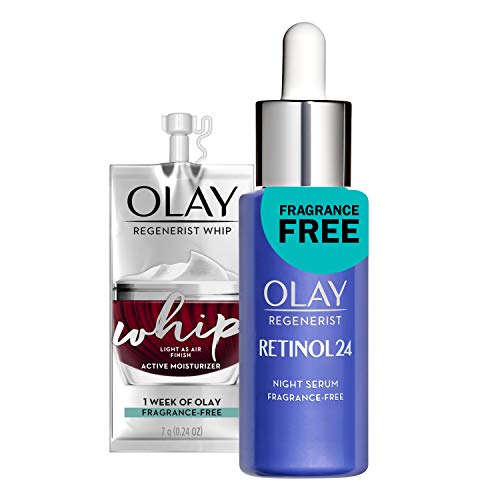
The Olay Regenerist Retinol Face Serum — Olay's Retinol 24 pairs retinol with niacinamide in a fragrance-free formula, and the combination is well supported — niacinamide reduces the barrier disruption retinol causes while adding its own brightening effect. This listing bundles the serum with a trial-size Whip moisturizer, which is useful if you need a moisturizer and redundant if you don't. It lost to the picks on transparency: the retinol percentage isn't stated, and owner feedback splits on texture, with several oily-skin users reporting it made things worse. Choose it if you want a fragrance-free, niacinamide-buffered option from a brand you can find anywhere.
The FRANKLY Retinol 0.3% Cream — FRANKLY's 0.3% cream approaches retinol the way Korean skincare usually does — pair the active with ceramides and ginseng extract, and let the hydration carry the load. It's unscented, vegan and paraben-free, and 0.3% is the right starting concentration for most beginners. It didn't make the picks because there's less published evidence behind it than the established brands, and the 0.7-ounce size runs small for the price. Still a reasonable choice if you're already committed to K-beauty routines and want a retinol that fits the rest of your shelf.
How to start without wrecking your face
Start slower than you think you need to. One or two nights a week for the first month, then every other night, then nightly only if your skin stays calm. Apply to dry skin — damp skin absorbs more and irritates faster. A pea-sized amount covers your whole face, and more does not work better. If you flake anyway, try the sandwich method: moisturizer first, retinol on top, then a second thin layer of moisturizer. That slows absorption and takes the edge off the first six weeks. Retinol makes you more sun-sensitive, so daily sunscreen isn't optional. And don't layer it with exfoliating acids or another retinoid on the same night — that's how mild irritation turns into a compromised barrier.
Questions we get
What's the best retinol serum for beginners?
The Neutrogena Rapid Wrinkle Repair serum and the La Roche-Posay Pure Retinol serum are both good starting points. Neutrogena costs the least and is deliberately mild, while La Roche-Posay's 0.3% is buffered with niacinamide and hyaluronic acid for reactive skin. Either one lets you build tolerance before moving up.
What concentration should I start with if my skin is sensitive?
Most dermatologists point sensitive skin toward 0.025% to 0.1%, and 0.3% for typical first-time users. The La Roche-Posay formula at 0.3% is the one most often recommended for rosacea-prone and reactive skin because of its buffering ingredients. Start twice a week and go up only if nothing happens.
Can I use retinol every night?
Eventually, but not at first. Begin with one or two nights a week for four to six weeks, move to every other night, and go nightly only once your skin tolerates it without redness. Going nightly from day one is the fastest route to retinol dermatitis and a long peeling phase — which is why so many people quit before seeing anything.
Is pure retinol better than retinyl palmitate?
Yes, for results. Pure retinol converts to retinoic acid far more efficiently than retinyl palmitate, which is an ester and several conversion steps further away. Retinyl palmitate is gentler, but you'll need much longer to see comparable changes. Every product in this guide uses retinol or an encapsulated form of it.
How long before I see results?
Texture and tone usually start shifting between four and eight weeks. Meaningful wrinkle improvement takes three to six months of consistent use, and collagen changes keep developing past the one-year mark. If you're checking the mirror at week two, you'll be disappointed by a product that's working exactly as expected.
Does retinol make you break out?
It can, temporarily. Faster cell turnover pushes existing congestion to the surface, so things can look worse for four to six weeks before improving. That's purging, and it settles. If you're still breaking out after two months, or if you're red and stinging rather than just spotty, that's irritation — cut back the frequency or switch to a gentler formula.
Why you should trust us
For this guide:
- We compared the published ingredient lists, stated retinol concentrations and packaging formats for every product in this guide.
- We read dermatologist guidance on starting concentrations and tolerance-building schedules, and applied it to how we matched products to experience levels.
- We reviewed owner feedback across all ten listings for recurring themes in irritation, texture, purging and packaging complaints.
- We read owner reviews on every listing, weighted toward the critical ones, because that is where the recurring failures show up.
- We have a systematic way of automatically fetching the latest prices, so the numbers on this page stay current.
- This is a research-focused guide, so the team may not own every product listed — though we often do own the top winners, which gives us extra context for the recommendations.
- We don't accept free products, and the retailer commission never changes which product we recommend.
Sources
Best Retinol Products of 2025, Tested by Real People – Good Housekeeping, Good Housekeeping
Best Retinol Serums of 2025, According to Dermatologists – Allure, Allure
The 16 Best Retinol Serums Tested and Reviewed 2025 – Glamour, Glamour
Best Retinol Serums 2025 – Forbes Health, Forbes Health
Best Retinol Serums 2025 – Cosmopolitan, Cosmopolitan
The 11 Best Retinol Serums Tested & Reviewed for 2025 – Healthline, Healthline
These Are the Best Retinol Creams and Serums for 2025 – Vogue, Vogue
9 Best Retinol Serums for Anti-Aging Skin Care in 2025 – Byrdie, Byrdie
Amazon product listings and owner reviews for all 10 products
Manufacturer specification pages for each product
Some passages in this guide may be paraphrased with AI help.
Product prices and availability are accurate as of the date/time indicated and are subject to change. Any price and availability information displayed on Amazon.com at the time of purchase will apply to the purchase of this product.
More like this.
Continue exploring beauty reviews and recommendations.
The Best Retinol Creams and Night Serums
Retinol is the closest thing over-the-counter skincare has to a sure thing. It speeds up how fast your skin sheds and rebuilds itself, which softens fine…

The Best Retinol Products
Retinol is the rare skin-care ingredient with decades of research behind it that you can still buy off a shelf. It speeds up how quickly your skin sheds…

The Best Retinol Creams
Retinol is one of the few skincare ingredients with decades of real research behind it. It speeds up how fast your skin sheds and rebuilds itself, and…

The Best Retinol Creams
Retinol is one of the few skincare ingredients with decades of published research behind it. It speeds up how fast your skin sheds and rebuilds itself,…

The Best Retinol Creams for Sensitive Skin
Retinol is the rare skincare ingredient with decades of clinical evidence behind it. It speeds up cell turnover, softens fine lines, and evens out tone…

The Best Hair Growth Serums For Thinning Hair
Thinning hair rarely announces itself. You notice a wider part in a bathroom mirror, or a ponytail that's gone slack, or more strands than usual circling…