The Best Retinol Creams
Retinol is one of the few skincare ingredients with decades of published research behind it. It speeds up how fast your skin sheds and rebuilds itself, which softens fine lines, fades dark spots and smooths rough patches over months of use. The shopping experience, though, is a mess. Bottles list percentages that aren't comparable, and plenty of them hide the number behind a phrase like "retinol complex." What you actually need is a formula strong enough to do something, gentle enough that you'll keep using it, and packaged so it doesn't go stale on your shelf.
Here's the part no brand puts on the box: retinol is slow, and the first month or two can look worse than where you started. Peeling, tightness, a little redness — that's the normal adjustment, and it's why so many people quit. Nothing in this category erases deep wrinkles, and no over-the-counter formula matches prescription tretinoin for raw potency. You also have to wear sunscreen every morning, no exceptions. Retinol makes your skin more sun-sensitive, so skipping SPF quietly cancels the progress you're paying for.
So choose based on how your skin actually behaves, not on the biggest number you can find. If you're new to this, a moderate strength you use four nights a week beats a 1% serum that scares you off in ten days. If you've been at it a year and stopped seeing change, that's a different problem with a different answer. We think that the Neutrogena Rapid Wrinkle Repair Retinol Face Moisturizer is the best retinol cream for most people, and that the CeraVe Resurfacing Retinol Serum is the one to buy if your skin reacts to almost everything.
Everything we recommend

Moderate strength, hydrating enough for nightly use

Much gentler on reactive skin, but slower to show change
The gentlest way in, if you'd rather ease than push
Advanced strength with far less of the usual sting

A true retinoid, if you can ride out the purge
At a glance
| Product | Retinol % | Volume | Price | |
|---|---|---|---|---|
| Neutrogena Rapid Wrinkle Repair Retinol Face MoisturizerTop pick | — | 1.7 oz | $24.97On sale |
 | RoC Retinol Correxion Line Smoothing Night SerumAlso consider | — | 10 Count | $12.99 |
| CeraVe Resurfacing Retinol Serum For Post AcneRunner-up | — | 1 Fl Oz | $16.49On sale |
| Olay Retinol Night Cream for WomenBudget pick | — | 1.7 Fl Oz | $29.94 |
 | La Roche-Posay Pure Retinol Face Serum withAlso consider | — | 1.0 Fl Oz | $35.24On sale |
| Differin Acne Treatment GelAlso great | 0.1% | 45g | $23.97 |
 | Paula's Choice CLINICAL 1% Retinol Face TreatmentAlso consider | — | 1 Fl Oz | $48.75On sale |
| SkinMedica Retinol 0.5 ComplexUpgrade pick | — | 1 oz | $80 |
 | Drunk Elephant A-Passioni Retinol Cream - 30Also in lineup | 1.0% | 1 Fl Oz | $76 |
 | Peter Thomas RothAlso in lineup | 1.5% | 1 Fl Oz | $65 |
 | Sunday Riley A+ High-Dose Retinoid Serum 0.5ozAlso in lineup | 6.5% | 0.5 oz | $50 |
 | TATCHA Indigo Overnight RepairAlso in lineup | — | 1.7 oz | $94 |
How we picked
Disclosed strength. We favored products that tell you what's in them, since a named percentage is the only way to compare two bottles or plan a step up. Where a brand only says "retinol complex," we leaned on owner reports of irritation to place it on the ladder.
Delivery and tolerance. Free retinol, encapsulated retinol and precursors behave very differently on skin at the same concentration. We looked for formulas whose delivery matches the strength they claim, because irritation is what makes people quit.
Packaging that protects it. Retinol breaks down in air and light, so airless pumps and sealed single doses hold potency better than jars and clear bottles. We treated jar packaging as a real strike, not a nitpick, and weighed it against how much a formula otherwise had going for it.
What's in the bottle with it. Ceramides, niacinamide and hyaluronic acid offset the barrier damage and dehydration retinol causes. Fragrance and stacked exfoliating acids do the opposite, so formulas that piled on irritants dropped out quickly.
How owners fare later. We read owner feedback for what happens after the honeymoon: who's still using it months in, who broke out, whose bottle ran dry in two weeks. Recurring themes told us more than any single account.
Top pickOn sale
Moderate strength, hydrating enough for nightly use
Neutrogena Rapid Wrinkle Repair Retinol Face Moisturizer
This is the drugstore retinol dermatologists keep naming, and it works as a straight swap for your night moisturizer. The hyaluronic acid takes the edge off the dryness that makes most people abandon retinol somewhere around week two.
$24.97fromAmazonList priceFor most people, one product that does both jobs beats a two-step routine. This is a moisturizer with retinol in it, not a serum you layer under something else. You wash your face, you put this on, you're done. That simplicity matters more than it sounds, because retinol only pays off after months of consistent use, and the complicated routine is the first thing to go on a tired weeknight.
The formula pairs an accelerated retinol complex with hyaluronic acid, and the hydration does real work. Retinol strips moisture from the surface faster than your skin replaces it — that's the tight, papery feeling new users describe. The hyaluronic acid puts some of it back. You're less likely to wake up flaking, which means you're more likely to use it again the next night.
Owners who've stayed with it for months are the most convincing part of the record. They describe softer texture and a more even tone rather than dramatic line erasure, which is roughly what you'd expect at this strength. A few report stinging and peeling early on. That's the adjustment phase, and it usually settles within a month if you drop back to every other night for a while.
It's also the easiest one here to replace. You can grab it at the grocery store, which sounds trivial until you run out mid-routine and lose three weeks waiting on a shipment. Retinol rewards boring consistency far more than it rewards potency. A cream you can restock in ten minutes is a cream you'll still be using a year from now.
Flaws but not dealbreakers
The jar is the real weakness. Retinol degrades when it meets air and light, and a wide-mouth jar gives it both every night you open it. By the time you're scraping the bottom, the last of it isn't as strong as the first. Keep the lid tight, store it somewhere other than a steamy bathroom, and don't stockpile three at a time.
Strength is the other limit. If you've already spent a year on a 0.5% serum, this will feel like a step backward, and the cream runs rich for oily skin in humid weather. Some owners say months of use never visibly changed their wrinkles. Neutrogena doesn't disclose a percentage either, so you're trusting the brand rather than reading the label.
Runner-upOn sale
Much gentler on reactive skin, but slower to show change
CeraVe Resurfacing Retinol Serum For Post Acne
CeraVe wraps its retinol in a slow-release shell and surrounds it with ceramides and niacinamide, so your barrier gets rebuilt while the active does its work. If retinol has burned you before, this is the one to try next.
$16.49fromAmazonList priceMost retinol failures aren't about strength. They're about speed of delivery. Free retinol hits the surface all at once, your barrier gives way faster than it can repair itself, and by the fifth night you're red and peeling. Encapsulation slows that release down. You still get the turnover — you just don't take the whole dose in one hit.
The supporting cast is what makes this formula smart. Ceramides are the lipids that hold your skin barrier together, and retinol depletes them. CeraVe puts three of them back in the same bottle. Niacinamide calms redness, and licorice root goes after dark marks. Nothing here is exotic, but the combination means you're repairing and treating at once instead of running damage control in a separate step.
It's marketed for post-acne marks, which confuses people shopping for wrinkles. Ignore the framing. The mechanism is the same either way — faster turnover, more even tone, smoother texture — and owners who bought it for old acne scarring describe fading freckles and softer lines as a bonus. If you're in your thirties and still getting the occasional breakout alongside early lines, this hits both.
This is also what you hand a nervous first-timer. Owners who wrecked their barrier on something stronger describe coming back to this and getting through the adjustment without drama. Start two nights a week, put a moisturizer over it, and give it a month before you add a third night. Slow is not the same as ineffective.
Flaws but not dealbreakers
Gentle cuts both ways. The concentration is low and the release is gradual, so if you're chasing visible change in established lines, you'll wait longer here than with a 0.5% serum — and you may top out before you get there. It's a thin serum, too, so dry skin needs a cream layered over it.
It isn't universally tolerated. A fair number of owners report breaking out in the first few weeks, which is typical of anything that accelerates turnover but unpleasant if you bought this specifically to avoid drama. Give it six weeks before you decide it's the wrong product for you.
Budget pick
The gentlest way in, if you'd rather ease than push
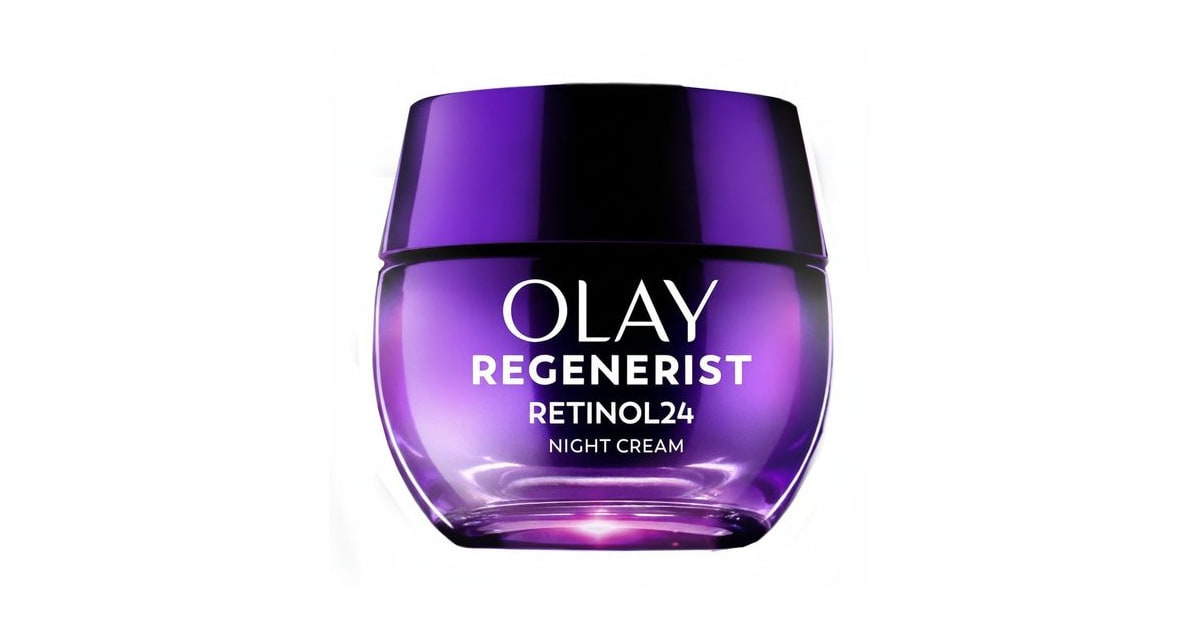
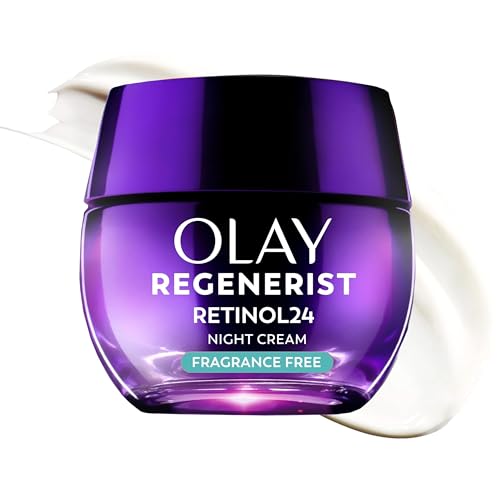
Olay Retinol Night Cream for Women
Olay uses a retinol precursor rather than pure retinol, so the adjustment phase is mild to nonexistent. You trade speed for comfort, which is the right trade if the peeling stage is exactly what's kept you away until now.
$29.94fromAmazonThis is the retinol for people who've been scared off retinol. Pro-retinol has to convert in your skin before it does anything, and that extra step blunts the irritation considerably. Owners describe soft, hydrated skin and no peeling, which is the whole point. A product you tolerate for six months does more for your face than a stronger one you abandon after six nights.
The rest of the formula leans on niacinamide and peptides instead of raw strength. Niacinamide is the ingredient that keeps redness down, and it gets along with almost everything else in a routine. It's fragrance-free and it doesn't sit greasy, so it can be your only night cream. Long-term owners often say they've used it for years and never felt a need to move up.
Olay promises smoother skin overnight and better dark spots in a month, which is optimistic even by industry standards. What the formula plausibly does is hydrate immediately and nudge tone and texture over several months. Judge it on the second thing. If you want the overnight result, you're shopping for makeup, not skincare.
Flaws but not dealbreakers
Pro-retinol is weaker than pure retinol, full stop. If you've already built tolerance elsewhere, you'll plateau here fast and wonder what the point was. The Triple Collagen Peptide branding also oversells what topical collagen can do, since collagen molecules are too large to travel far into skin. Peptides are useful. The name is doing more work than the ingredient.
Upgrade pick
Advanced strength with far less of the usual sting
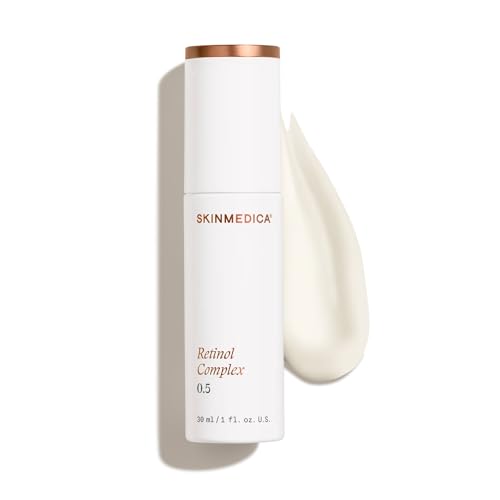
SkinMedica Retinol 0.5 Complex
SkinMedica sells a 0.5% retinol mostly through dermatology offices, and its buffered delivery is the reason people pay up for it. If you've outgrown drugstore formulas but 1% leaves you raw, this is the step in between.
$80fromAmazonThere's a gap in the retinol ladder that trips up a lot of people. You've been on a gentle cream for a year, it's stopped doing much, and the obvious next move is a 1% serum. Then the 1% serum peels your face off and you're back where you started. A well-buffered 0.5% is the bridge, and this is the one dermatology practices tend to reach for.
The delivery system is what you're actually paying for. The formula releases its retinol gradually rather than dumping it on the surface, and owners consistently describe advanced-strength results without the standard two weeks of misery. Several say it's the first strong retinol their sensitive skin has tolerated at all. At this concentration, that's a meaningful thing to be able to say.
It also has a quieter public record than anything else here, because SkinMedica barely markets to shoppers. You won't find it on a drugstore endcap. What you'll find instead is a long history of use in medspas and dermatology offices, including after procedures, where irritating a patient's freshly treated skin isn't an option.
If you're going to spend more on one step of your routine, this is the step where spending more actually changes the outcome. Cleansers and toners are largely interchangeable. Delivery technology on an active ingredient is not — it's the difference between a product that works on your skin and one that sits in a drawer after week two.
Flaws but not dealbreakers
It's the most expensive per ounce of our main picks, and the bottle is small. Several owners say theirs ran out much faster than expected, and a few felt it arrived underfilled. You still have to ramp up carefully at this strength — once or twice a week to start, with a moisturizer on top — so the bottle should last longer than a nightly cream would.
Because it sells largely through professional channels, it pays to be careful about where you buy it. And the lack of consumer marketing cuts both ways: there's no clear guidance on the box for someone who doesn't already know how to work up to a 0.5%.
Also great
A true retinoid, if you can ride out the purge
Differin Acne Treatment Gel
Adapalene isn't retinol — it's a retinoid that binds directly to your skin's receptors with no conversion needed. It's the most potent active in this guide, and the airless pump keeps the last dose as strong as the first.
$23.97fromAmazonIf you're fighting breakouts and lines at the same time, start here. Adapalene was prescription-only for a long stretch before the FDA cleared it for over-the-counter sale, and it treats both problems through one mechanism: it normalizes how fast your skin cells turn over. Owners in their forties routinely describe clearer skin and better texture from a single tube, which is a rare two-for-one.
The packaging deserves credit. It's an airless pump holding a three-month supply, so nothing oxidizes on your counter the way it does in a jar. The gel is thin and dries quickly, which makes it easy to layer a real moisturizer over the top. You'll want that moisturizer — dryness is the near-universal owner complaint, and the fix is that simple.
Adapalene is easier to tolerate than tretinoin at comparable results, which is why it cleared the over-the-counter bar in the first place. That doesn't make it mild. Owners describe stinging on application and a burn when moisturizer goes on during the first few weeks. Most of that settles. If it doesn't, that's your cue to drop to every third night rather than push through.
Flaws but not dealbreakers
The purge is the real barrier. Adapalene moves existing congestion to the surface faster than retinol does, so weeks two through six can bring more breakouts than you started with. If you're acne-prone, that's the treatment working. If you came for wrinkles on otherwise clear skin, it's alarming — and it's the main reason this isn't our top pick.
The branding doesn't help. Everything on the box says acne, so people shopping for aging skin walk right past it. It's also genuinely not a beginner product. If you've never used a retinoid, the adaptation here is steeper than anything else we looked at.
Who this is for
This guide is for anyone who wants smoother texture, fewer dark spots and softer fine lines, and who's willing to give a product three months before judging it. That last part is not optional. Texture and tone usually shift in about four to six weeks; anything meaningful on wrinkles takes closer to twelve, and it keeps building for a year or more. If you want a visible change by the weekend, no retinol here will deliver it, and you'll be happier with a hydrating serum and better sleep.
You should skip this category entirely if you're pregnant, nursing or trying to conceive — every vitamin A derivative is off the table, and that includes the over-the-counter ones. Talk to your doctor about bakuchiol instead. We also stuck to over-the-counter formulas here, so prescription tretinoin is out of scope even though it's stronger than everything on this list. And if your skin is currently compromised, raw and peeling from something else, repair the barrier first. Starting retinol on damaged skin is how people end up convinced they're allergic to it.
How we picked
Disclosed strength: we preferred products that name a percentage, because a vague "retinol complex" makes it impossible to compare bottles or plan your next step up. Delivery: encapsulated, free and precursor retinols feel completely different at the same number, so we matched delivery against claimed potency and against how owners describe the first month. Packaging: retinol dies in air and light, so airless pumps and sealed doses scored well and open jars took a real hit. Supporting ingredients: ceramides, niacinamide and hyaluronic acid earn their place by offsetting the dryness and redness retinol causes, while fragrance and piled-on acids do the reverse. Long-run owner experience: we looked for recurring themes months in, not first impressions.
Other retinol creams worth considering
If you want pure retinol that sensitive skin can handle: The La Roche-Posay Pure Retinol Face Serum with ($35.24) — La Roche-Posay's serum uses stabilized pure retinol rather than a weaker ester, paired with niacinamide to keep redness in check. It sits a rung above CeraVe on the strength ladder while keeping the sensitive-skin credentials the brand is known for, and owners with reactive, easily flushed skin describe it as their first retinol that didn't backfire. The catch is volume and format: it's a small bottle of thin serum, so it runs out faster than a jar of cream and you'll need a moisturizer over it. For the price per ounce you're paying partly for the brand's dermatology reputation, which is either worth it to you or isn't.
If you want to try a retinol serum before committing to a bottle: The RoC Retinol Correxion Line Smoothing Night Serum ($12.99) — RoC seals each night's dose in its own capsule, which neatly solves the oxidation problem — the last capsule is as fresh as the first, and there's nothing to leave open on a bathroom shelf. It's also the easiest thing here to throw in a carry-on. Owners describe silky skin the morning after and no irritation, and a ten-capsule pack is exactly enough to learn whether a serum texture suits you. But ten nights isn't a course of treatment, it's a sample. The per-dose cost is high compared with a full-size bottle, and the individual shells generate a lot of packaging for what you get.
If you want the strongest straight retinol sold without a prescription: The Paula's Choice CLINICAL 1% Retinol Face Treatment ($48.75) — Paula's Choice puts 1% retinol alongside vitamins C and E, peptides and hyaluronic acid, and the brand's whole identity is ingredient transparency — you always know what you're getting. Owners who came to it after a year on gentler formulas describe smoother, brighter skin and a fast-absorbing texture with no grease. It's also the pick most likely to go wrong. Owner reports skew harder here than for our picks, with several describing serious breakouts and weeks of redness after jumping in too fast. Come to it with tolerance already built, expect four to six weeks of adjustment, and don't make it your first retinol.
The competition
These are the other formulas our research turned up, not a census of the category — retinol is one of the most crowded aisles in skincare and new bottles land constantly. Each of these has a real argument for it. None of them beat a pick for the person we think is doing the shopping.
The Drunk Elephant A-Passioni Retinol Cream - 30 ($76) — Drunk Elephant's A-Passioni is a full 1% vegan retinol with no fragrance, silicones or essential oils, plus vitamin F fatty acids and a peptide blend to steady the barrier. If you've been let down by clean-beauty formulas that were gentle because they were weak, this isn't one of those. It lost on volume and audience: it's a small tube at a high price per ounce, the texture is rich enough to feel heavy on oily skin, and 1% is the wrong starting point for most people reading a guide like this. If your buying rules rule out most ingredient lists and you already tolerate strong retinol, it's the obvious choice.
The Peter Thomas Roth ($65) — Peter Thomas Roth's Retinol Fusion PM runs 1.5% microencapsulated retinol, the highest concentration on this list. The encapsulation is what makes that number survivable — a free retinol at 1.5% would be punishing. It's a serum, so dry skin needs a cream over it, and there's no world in which this is a reasonable first or second retinol. We kept it out of the picks because very few people need to go past 1%, and the ones who do are usually better served by a prescription conversation than by climbing further up the over-the-counter ladder. If you've genuinely plateaued at 1% and don't want a doctor's visit, this is the next rung.
The Sunday Riley A+ High-Dose Retinoid Serum 0.5oz ($50) — Sunday Riley's A+ takes a blended approach: a 6.5% solution of stabilized retinoid esters and botanical retinol alternatives rather than a single high-strength active. That smooths out the spike you get from pure retinol, and the blue tansy and banana extract genuinely soothe. Two things kept it out of the picks. The headline 6.5% describes a blend, not retinol content, so it's easy to misread as far stronger than it is. And the bottle is the smallest here, which makes the cost per ounce steep for a formula whose esters have to convert in your skin before doing much. Worth a look if you want a luxury texture and a soft landing.
How to start without wrecking your skin
Start slower than you think you need to: two or three nights a week for the first month, then every other night, then nightly only if your skin stays calm. Use the sandwich method while you adapt — a thin layer of fragrance-free moisturizer, then your retinol, then moisturizer again. It buffers the contact without blocking the active. Skip acids and vitamin C on retinol nights while you're adjusting; save them for the morning. Some peeling and tightness in the first few weeks is expected and passes. Raw, stinging, angry skin isn't, and the answer is to back off frequency rather than quit. And wear SPF every morning, all year. Retinol makes you more sun-sensitive, and sun damage undoes exactly what you're working on.
Questions we get
What's the difference between retinol, a retinoid and tretinoin?
Retinoid is the umbrella term for every vitamin A derivative. Retinol is the over-the-counter version, and your skin has to convert it in two enzymatic steps before it becomes active. Tretinoin is already in that active form, which makes it faster and stronger but prescription-only. Roughly, the ladder from mildest to strongest runs retinyl palmitate, retinol, retinaldehyde, then adapalene and tretinoin.
What strength should I start with?
If you've never used a retinoid, start somewhere between 0.025% and 0.1%, or with a precursor formula like Olay's. Gentle products with niacinamide and ceramides are built for exactly this stage. Use it two or three nights a week and work up to nightly over six to eight weeks. Consistency at a moderate strength beats a high concentration you can only manage occasionally.
How long until I see results?
Texture and pore appearance usually improve first, around four to six weeks in. Fine lines take about twelve weeks of steady use, and deeper lines and sun damage keep improving over six to twelve months. If you quit at week three because nothing happened, you quit before the product started.
Can I use retinol around my eyes and on my neck?
Yes, carefully. The skin around your eyes and on your neck is thinner and reacts sooner, so use a lower strength there and go every other night until it's clearly fine. Your neck actually benefits a lot, since it ages visibly and most people ignore it. Extending whatever you use on your face down the neck is common dermatologist advice.
Can I use retinol with vitamin C, niacinamide or acids?
Niacinamide is a good partner — it calms redness and doesn't fight with retinol. Vitamin C is best in the morning and retinol at night, which avoids any conflict between the two. Glycolic and lactic acids shouldn't share a night with retinol while you're still adapting, because the combined exfoliation is what pushes people over the edge into raw, peeling skin.
Is retinol safe during pregnancy or breastfeeding?
No. Every vitamin A derivative, including over-the-counter retinol and adapalene, is off-limits during pregnancy and nursing because of birth-defect risk. Bakuchiol is the usual substitute — it's plant-derived, has comparable if slower results in controlled trials, and carries no known reproductive risk. Talk to your OB-GYN before adding or resuming any active.
Why you should trust us
For this guide:
- We read the manufacturer specifications, ingredient disclosures and clinical claims for every product in this guide, alongside published dermatology guidance on retinol strength, tolerance and adaptation.
- We compared how each formula delivers its active — free retinol, encapsulated retinol, a precursor or a true retinoid — and how its packaging protects that active over a full bottle.
- We read through owner feedback looking for recurring themes rather than standout accounts: who peels, who breaks out, whose bottle runs dry early, and who's still using the product months later.
- We read owner reviews on every listing, weighted toward the critical ones, because that is where the recurring failures show up.
- We have a systematic way of automatically fetching the latest prices, so the numbers on this page stay current.
- This is a research-focused guide, so the team may not own every product listed — though we often do own the top winners, which gives us extra context for the recommendations.
- We don't accept free products, and the retailer commission never changes which product we recommend.
Sources
Best Retinol Creams 2026 — Wirecutter, Wirecutter
Retinoids in the Treatment of Skin Aging — NIH / PubMed, PubMed / NIH
Best Retinol Creams, Tested by Editors — Good Housekeeping, Good Housekeeping
Dermatologists' Guide to Retinol — American Academy of Dermatology, AAD
Best Retinol Products 2026 — Allure, Allure
Amazon product listings and owner reviews for all 12 products
Manufacturer specification pages for each product
Some passages in this guide may be paraphrased with AI help. Prices are refreshed automatically.
More like this.
Continue exploring beauty reviews and recommendations.

The Best Retinol Creams
Retinol is one of the few skincare ingredients with decades of real research behind it. It speeds up how fast your skin sheds and rebuilds itself, and…

The Best Retinol Creams for Sensitive Skin
Retinol is the rare skincare ingredient with decades of clinical evidence behind it. It speeds up cell turnover, softens fine lines, and evens out tone…
The Best Retinol Creams and Night Serums
Retinol is the closest thing over-the-counter skincare has to a sure thing. It speeds up how fast your skin sheds and rebuilds itself, which softens fine…

The Best Retinol Serums
Retinol is the rare skincare ingredient with decades of published research behind it. It speeds up how fast your skin sheds and replaces cells, and over…

The Best Eye Creams
The skin around your eyes is thinner than anywhere else on your face, and it has fewer oil glands. That's why it creases first, why it looks tired after a…

The Best Retinol Products
Retinol is the rare skin-care ingredient with decades of research behind it that you can still buy off a shelf. It speeds up how quickly your skin sheds…