The Best Eye Creams
The skin around your eyes is thinner than anywhere else on your face, and it has fewer oil glands. That's why it creases first, why it looks tired after a short night, and why it goes flaky in dry air before your cheeks do. A good eye cream isn't magic. It hydrates that thin skin, and if it contains retinol or niacinamide, it slowly changes how the area looks over months. You'll use a rice-grain amount twice a day, more or less forever. So it has to feel good and be easy to rebuy.
No eye cream fixes everything, and the limits are worth knowing up front. If your dark circles are really shadows cast by hollowing under the orbital bone, no cream reaches that. Puffiness responds to caffeine, but only for a few hours. Retinol works, though it works on the calendar of collagen, which means months of nightly use before crow's feet look different. Most of these creams come in small pots you'll finish quickly. Anyone promising a week-long transformation is selling you the packaging.
The choice mostly comes down to fit. Some of you want the strongest anti-aging ingredient available without a prescription. Others need the gentlest formula that won't sting by day three. We read published reviews, brand claims and owner feedback across these five creams, and they sort cleanly along that line. We think that the Neutrogena Rapid Wrinkle Repair Retinol Pro+ Eye Cream is the best eye cream for most people, and that the CeraVe Eye Repair Cream is the one to buy if fragrance and strong actives tend to irritate your skin.
Everything we recommend

Real retinol results without the fragrance, if you go slowly

Calm, fragrance-free hydration when actives make you flinch

A gentler retinoid aimed squarely at crow's feet
At a glance
| Product | Key Ingredient | Net Wt | Price | |
|---|---|---|---|---|
| Neutrogena Rapid Wrinkle Repair Retinol Pro+ Anti-WrinkleTop pick | Retinol | 0.5 oz | $24 |
| CeraVe Eye Repair CreamRunner-up | Hyaluronic Acid | 0.5 oz | $12.72On sale |
 | RoC Retinol Correxion Eye Cream Mini forAlso in lineup | Retinol | 0.25 fl oz | $12.99 |
| Olay Eyes Pro Retinol Eye Cream Anti-WrinkleAlso great | Retinyl Propionate | 0.5 fl oz | $74.99 |
 | Kiehl's Avocado Eye TreatmentAlso consider | Avocado Oil | 0.5 fl oz | $40 |
How we picked
Evidence behind actives. We favored creams with named, well-studied ingredients — retinol, retinoid esters, niacinamide, ceramides — over vague complexes. Published dermatology coverage and the brands' own ingredient lists had to agree on what's actually in the tube.
Irritation and tolerance. Thin under-eye skin reacts easily, so fragrance-free formulas and ophthalmologist testing counted heavily. Owner feedback about stinging, flaking and milia decided several close calls.
Packaging and potency. Retinol degrades in air and light, so we noted which formats protect it and which don't. A jar isn't disqualifying, but it changes how you should store and replace the cream.
Feel under makeup. A cream that pills under concealer or leaves a film gets abandoned within a month. We looked for fast-absorbing textures that owners describe as invisible under SPF and foundation.
Easy to restock. Results depend on months of steady use, so widely stocked creams beat hard-to-find ones. Sizes that run out in weeks were a mark against a product.
Top pick
Real retinol results without the fragrance, if you go slowly
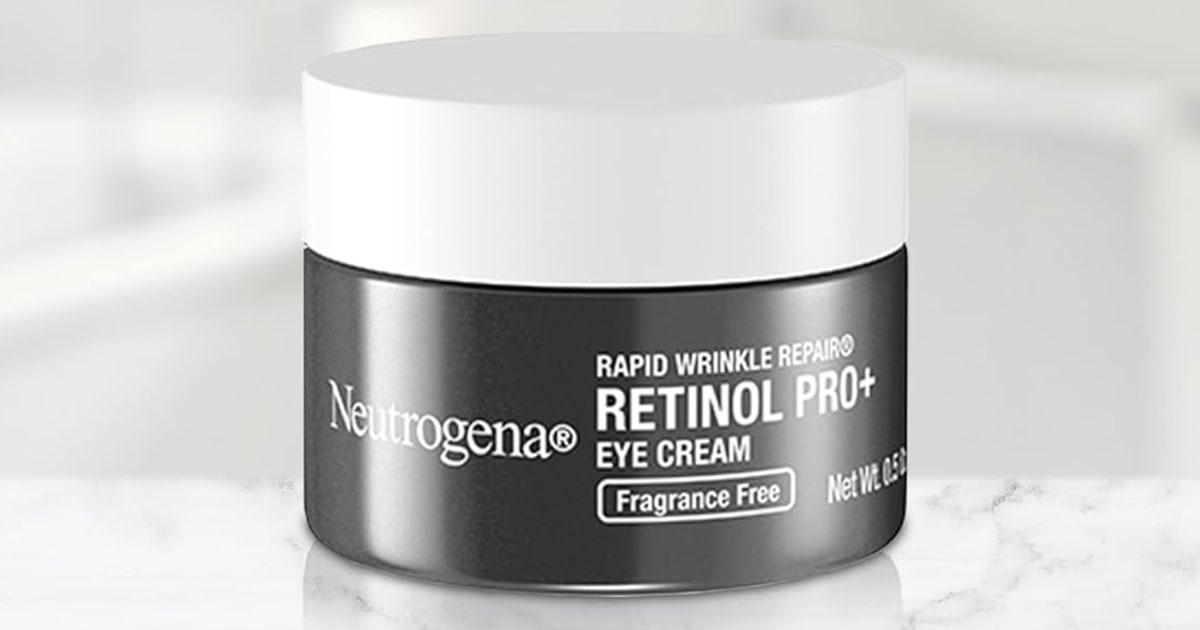
Neutrogena Rapid Wrinkle Repair Retinol Pro+ Anti-Wrinkle
This pairs pure retinol with a micropeptide, and it's made without fragrance, dyes, parabens or phthalates, so it suits more people than most retinol formulas do. Neutrogena says crow's feet look smoother in a week and dark circles improve in four, but plan on months.
$24fromAmazonRetinol is the one anti-aging ingredient with a real body of evidence behind it. It prompts skin to build collagen and speeds up surface turnover, which is why dermatologists keep coming back to it for crow's feet. This cream uses pure retinol with a micropeptide rather than a weaker ester. Neutrogena's own claim is improved crow's feet in a week and improved dark circles in four. Treat those numbers as the brand's, not ours. The ingredient itself is legitimate.
It's fragrance-free, and around the eyes that matters more than people expect. The formula skips fragrance, dyes, parabens, mineral oil and phthalates, and Neutrogena lists it as hypoallergenic and suitable for all skin tones. Retinol already asks a lot of thin under-eye skin. Adding perfume on top is how you end up with stinging you can't trace to anything. If you've reacted to eye creams before but still want retinol, this is the shortest path.
It layers well, so you'll actually keep using it. The cream sinks in fast and doesn't leave a slick film. Concealer sits on top instead of sliding around, and sunscreen goes on without pilling. That sounds like a cosmetic detail. It isn't. The eye cream that feels greasy in the morning is the one that ends up unopened in a drawer, and a retinol you don't use does nothing at all.
It also costs a fraction of what prestige eye creams do, which is the whole point with retinol. The payoff comes over months, not days, so the cream you can restock without thinking about it beats the one you ration. This is a mass-market product stocked almost everywhere, in a half-ounce size most people finish in a couple of months. You can commit to it for a year without flinching.
Flaws but not dealbreakers
The jar is the weak point. Retinol degrades when it meets air and light, and a wide-mouth pot exposes the formula every time you open it. Keep it in a cool, dark drawer rather than a sunny bathroom shelf, and finish it within a few months of opening. Sealed tubes and airless pumps protect actives better. It's a real drawback, just not enough to cost this cream the top spot.
Your skin will probably complain at first. Retinol-naive skin often goes dry, tight or flaky around the eyes for the first two to four weeks, and owners describe exactly that. Start every other night, use a rice-grain amount along the orbital bone, and build up as your skin settles. There's no sunscreen here either, so you need a separate broad-spectrum SPF each morning. Retinol makes skin more sun-sensitive, not less.
Runner-upOn sale
Calm, fragrance-free hydration when actives make you flinch
CeraVe Eye Repair Cream
A fragrance-free, oil-free cream built on three ceramides, niacinamide and hyaluronic acid, developed with dermatologists and accepted by the National Eczema Association. It's the safe first move if eye creams have burned, itched or bumped up your under-eyes before.
$12.72fromAmazonList priceIt's built to repair the barrier, not to challenge it. Ceramides 1, 3 and 6-II are the same lipids your skin already uses to hold water in, and CeraVe's delivery system releases them gradually rather than all at once. Hyaluronic acid pulls in moisture on top of that. If your under-eyes look crepey and dull because they're dehydrated rather than genuinely lined, this is the fix, and you'll notice it inside a couple of weeks.
Niacinamide does quiet, useful work on brown-toned dark circles. It's one of the gentlest brightening ingredients available, and it doesn't sting the way vitamin C sometimes does. It calms redness too. If your circles are the pigmented kind, more brown than blue and common in medium and deep skin tones, this is the ingredient to look for. You don't pay any irritation tax for it.
There's no adjustment period, so you can start twice a day from the beginning. No flaking, no photosensitivity to plan around, no every-other-night ramp. Pat a pea-sized amount around the eye and brow bone morning and night. The texture is light and oil-free, so it doesn't pill under concealer, and it's tested for use around the eye area. For reactive, eczema-prone or rosacea-prone skin, that combination is hard to beat.
Flaws but not dealbreakers
It won't do structural anti-aging work. There's no retinol and no peptide complex here, so established crow's feet stay where they are. What you get is hydration, barrier repair and a slow evening-out of pigment. If lines are your main complaint, the sensible move is to use this in the morning and put a retinol cream on at night.
The depuffing is modest. The listing leans hard on bags and puffiness, and owner feedback generally describes under-eyes that look smoother and less tired rather than transformed. Morning swelling from salt, poor sleep or allergies responds better to a cold compress. Expect gradual brightening over a month or two, not a visible change by tomorrow.
Also great
A gentler retinoid aimed squarely at crow's feet
Olay Eyes Pro Retinol Eye Cream Anti-Wrinkle
Olay's eye cream uses retinyl propionate, a milder relative of retinol, and the brand says crow's feet look reduced in four weeks. The texture stays light enough for oily and combination skin, which rules out most of the richer eye creams.
$74.99fromAmazonRetinyl propionate sits at the gentler end of the retinoid family. It converts to the active form more slowly than pure retinol, which usually means less stinging and less flaking through the first few weeks. You give up some speed in exchange. If you've tried retinol around your eyes before and quit because it hurt, that's a trade worth making rather than giving up on retinoids entirely.
It's aimed at crow's feet specifically, not at every under-eye complaint at once. Olay's claim is a visible reduction in crow's feet in four weeks, with the skin surface renewing over longer stretches. The lateral lines that fan out when you smile are exactly what retinoids handle best. Deep-set creases soften rather than disappear. Judge it around the two-month mark, not the two-week mark.
The light texture suits oily and combination skin. Rich, buttery eye creams are the usual cause of milia, those tiny hard bumps that surface under the eye, and if you're prone to them most nourishing formulas are off the table. This one absorbs quickly and doesn't fight foundation. The half-ounce size lasts a couple of months at a rice-grain per application.
Flaws but not dealbreakers
It's milder than our top pick, and you'll feel that in the results. Retinyl propionate isn't as potent as pure retinol, so if your skin handles the stronger stuff you're leaving results on the table. Some owners report a mild warmth or tingle in the first week or two as well. That's normal for a retinoid, but it's worth knowing before you start.
There's no sun protection, and retinoids need it. You'll want a separate broad-spectrum sunscreen every morning, applied carefully up to the orbital bone. Skipping it quietly undoes the collagen work you're paying for, since UV exposure is the main driver of aging around the eyes in the first place.
Who this is for
Buy an eye cream if your under-eyes look dry, crepey, faintly lined or dull, or if you want to start slowing down crow's feet before they set in. Retinol formulas make sense once fine lines are visible in neutral light, not just when you smile. If your skin is reactive, eczema-prone or has bumped up from past eye creams, start with a barrier formula and add actives later. And if you're already using a prescription retinoid on your face, ask your dermatologist before layering another retinoid around the eyes.
Skip it if your main concern is a hollow shadow that deepens when you tilt your head. That's structure — fat pad loss or bone change — and no topical product reaches it, so a dermatologist consultation is a better use of your money. This guide covers over-the-counter creams for the eye area only. It doesn't cover prescription tretinoin, eye serums, patches, masks or in-office treatments, and it doesn't cover concealers, which fix the look of dark circles today without changing anything underneath.
How we picked
Evidence: we favored creams built on named, well-studied actives — retinol, retinoid esters, niacinamide, ceramides — and cross-checked the brands' claims against published dermatology coverage rather than taking marketing at face value. Tolerance: fragrance-free formulas and ophthalmologist testing counted heavily, since thin under-eye skin reacts to things the rest of your face shrugs off, and recurring owner complaints about stinging or milia broke the ties. Packaging: retinol dies in air and light, so we noted which formats protect it. Feel: anything that pills under concealer gets abandoned, so fast-absorbing textures won. Availability: results take months, so a cream you can restock without hunting beats a boutique one.
Other eye creams worth considering
If you want a richer cream for dry, crepey under-eyes: The Kiehl's Avocado Eye Treatment ($40) — Kiehl's Avocado Eye Treatment is the nourishing option here, and it's the one to reach for if your under-eyes go tight and flaky rather than lined. Avocado oil and sodium PCA do the heavy hydrating, caffeine takes the edge off morning puffiness, and beta-carotene adds antioxidant cover — the formula is 99% naturally derived, paraben-free and silicone-free. It's also the priciest cream in this guide by a wide margin, and its whole appeal is a thick, occlusive texture. That's the trade: it seals moisture in overnight, but it gives you nothing structural for crow's feet, and if you're prone to milia or your skin runs oily, a cream this rich is exactly what triggers them. Use it as a nighttime layer over a retinol cream and it earns its place.
The competition
This is what our research surfaced, not a census of the eye cream aisle. Hundreds of formulas make near-identical promises, so we concentrated on widely sold creams with named actives and enough published coverage and owner feedback to judge honestly.
The RoC Retinol Correxion Eye Cream Mini for ($12.99) — The RoC Retinol Correxion Eye Cream Mini covers the same ground as our top pick — pure retinol plus RoC's mineral complex and glycerin, hypoallergenic, aimed at wrinkles, dark circles and puffiness, with the brand claiming brighter, depuffed eyes in four weeks. RoC has been the drugstore retinol name for decades, and the sealed mini format shields the formula from air and light better than a wide pot does. The catch is size. At a quarter of an ounce, this holds half of what our top pick does, so daily use means restocking constantly. Buy it to travel with, or to find out whether your eyes tolerate retinol before you commit to a full jar.
Application and storage
Use your ring finger — it's the weakest one, so you press more gently — and pat a rice-grain amount along the orbital bone, working from the inner corner outward. Don't rub, and don't apply it to the lid or right against your lash line, where product migrates into the eye and clogs follicles. More cream isn't better. That thin skin absorbs only so much, and the excess just sits there looking puffy. Storage matters if there's retinol in the formula: keep the jar in a cool, dark drawer instead of a steamy, sunlit bathroom shelf, and replace it a few months after opening. Heat, light and air are what turn an active retinol into an expensive moisturizer.
Questions we get
Do eye creams actually work, or is it marketing?
Some work, most don't. Formulas built on retinol, retinoid esters, peptides or niacinamide have peer-reviewed support for softening fine lines and evening out pigment over sustained use. Creams that promise an anti-aging complex without naming an ingredient are usually a moisturizer with a story attached. If a product can't tell you which ingredient does what, be skeptical.
What causes dark circles, and can a cream fix them?
There are three causes and only two respond to creams. Vascular circles look blue or purple because blood vessels show through thin skin, and retinol helps by thickening that skin over months while caffeine constricts vessels for a few hours. Pigmented circles look brown and respond to niacinamide or vitamin C. Structural circles are shadows from hollowing, and no topical product touches those — that's a conversation for a dermatologist.
Is retinol safe to use around the eyes?
Yes, if you introduce it gradually. Under-eye skin is much thinner than the rest of your face with fewer oil glands, so it dries and flakes faster during the adjustment period. Start every other night, keep to a rice-grain amount on the orbital bone, and move to nightly once a few weeks pass without redness or stinging. Never put it on the eyelid itself, and always wear broad-spectrum sunscreen during the day.
How long before I see results?
It depends entirely on the ingredient. Caffeine takes down morning puffiness within half an hour, and hyaluronic acid plumps dehydration lines within a day. Niacinamide needs four to eight weeks to visibly brighten pigment. Retinol needs eight to twelve weeks for crow's feet, with collagen changes continuing well past that — most people who decide an eye cream doesn't work quit around week five, right before anything shows.
Which eye cream is safest for sensitive skin or milia?
CeraVe Eye Repair Cream is the one to start with. It's fragrance-free, oil-free, ophthalmologist-tested, developed with dermatologists and accepted by the National Eczema Association, and it has no retinol to trigger an adjustment period. If milia are your issue, stay with light gel-creams and avoid rich, buttery formulas like the Kiehl's treatment around the eye. Test any new cream behind your ear for a day first.
Can I use an eye cream and a face moisturizer with retinol at the same time?
You can, but stacking retinoids on that thin skin is how irritation starts. If your face retinoid already reaches the orbital bone, a second retinol eye cream is redundant and likely too much. A simpler routine is a barrier cream around the eyes at night with the retinoid on the rest of your face. If you're on prescription tretinoin, ask your dermatologist before adding anything.
Why you should trust us
For this guide:
- We read the ingredient lists, size and claim language for all five creams and compared what each one contains against what it advertises.
- We reviewed published beauty-press and dermatologist commentary on how retinol, retinoid esters, niacinamide and ceramides behave on periorbital skin.
- We read owner feedback for recurring themes — stinging during the first weeks, milia from heavy textures, packaging that lets retinol degrade — and used those patterns to write the flaws sections.
- We read owner reviews on every listing, weighted toward the critical ones, because that is where the recurring failures show up.
- We have a systematic way of automatically fetching the latest prices, so the numbers on this page stay current.
- This is a research-focused guide, so the team may not own every product listed — though we often do own the top winners, which gives us extra context for the recommendations.
- We don't accept free products, and the retailer commission never changes which product we recommend.
Sources
Best Eye Creams of 2026 – Good Housekeeping Institute Testing, Good Housekeeping
Best Eye Creams, Tested by Allure Editors, Allure
The Best Eye Creams for Dark Circles and Wrinkles – Byrdie, Byrdie
Eye Cream Ingredient Guide – Paula's Choice Research, Paula's Choice
Retinoids in the Treatment of Skin Aging – Clinical Interventions in Aging (NIH/PMC), NIH / Clinical Interventions in Aging
Periorbital Hyperpigmentation: A Review of Etiology and Treatment Options – Journal of Clinical and Aesthetic Dermatology, Journal of Clinical and Aesthetic Dermatology
Best Eye Creams Recommended by Dermatologists – Forbes Health, Forbes Health
Best Eye Creams for Dark Circles – Healthline, Healthline
Amazon product listings and owner reviews for all 5 products
Manufacturer specification pages for each product
Some passages in this guide may be paraphrased with AI help. Prices are refreshed automatically.
More like this.
Continue exploring beauty reviews and recommendations.

The Best LED Desk Lamps for Studying and Eye Comfort
If you read or work at a desk for hours, your lamp does more for your eyes than almost anything else on the desk. The problem isn't usually brightness.…
The Best Retinol Creams and Night Serums
Retinol is the closest thing over-the-counter skincare has to a sure thing. It speeds up how fast your skin sheds and rebuilds itself, which softens fine…

The Best Retinol Creams
Retinol is one of the few skincare ingredients with decades of published research behind it. It speeds up how fast your skin sheds and rebuilds itself,…

The Best Retinol Creams for Sensitive Skin
Retinol is the rare skincare ingredient with decades of clinical evidence behind it. It speeds up cell turnover, softens fine lines, and evens out tone…

The Best Retinol Creams
Retinol is one of the few skincare ingredients with decades of real research behind it. It speeds up how fast your skin sheds and rebuilds itself, and…

The Best Ice Cream Makers
Homemade ice cream is mostly a texture problem. The base is easy - cream, sugar, maybe egg yolks - but turning it into something scoopable instead of a…