The Best Retinol Creams for Sensitive Skin
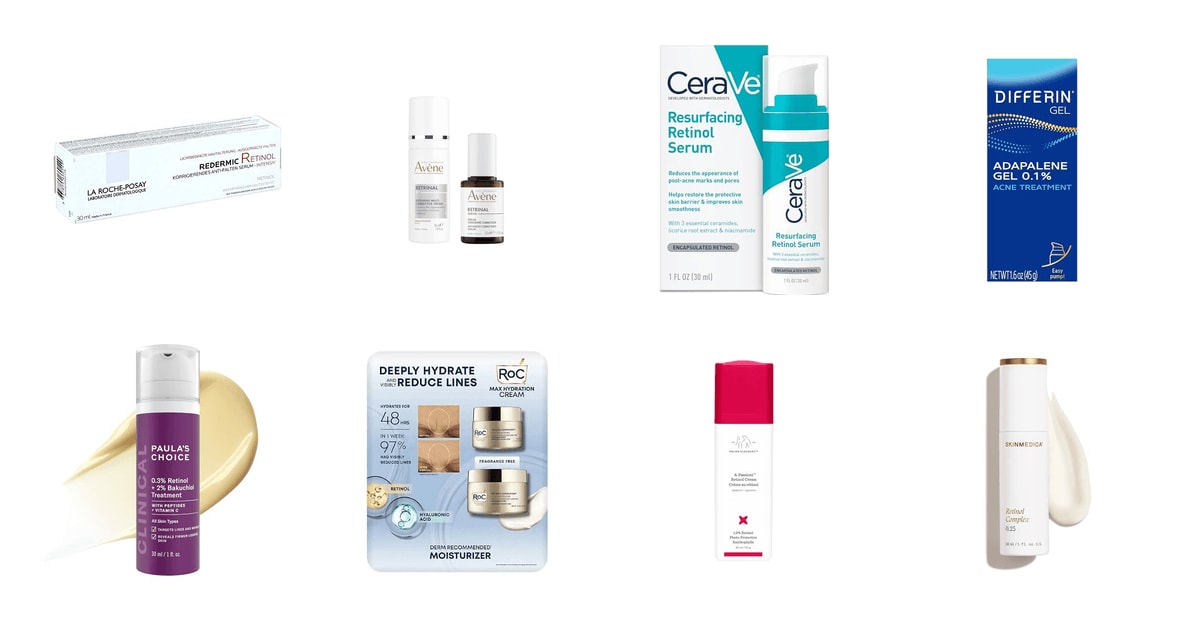
Retinol is the rare skincare ingredient with decades of clinical evidence behind it. It speeds up cell turnover, softens fine lines, and evens out tone over months of steady use. But if your skin flushes easily, the standard advice — slather it on nightly and push through the peeling — is how most people quit. The right product for reactive skin isn't the strongest one. It's the one you'll still be using in six months, at two or three nights a week, without a raw patch around your nose.
Here's the honest catch: nothing in this category is gentle on night one and dramatic by night ten. Every retinoid asks for a break-in period, and even the mildest formulas can sting or flake while your skin adjusts. Published trials generally run 12 to 24 weeks before measuring meaningful wrinkle improvement. You'll also need daily SPF 30 or higher, because retinoids raise photosensitivity and sun exposure undoes the progress. If you want overnight results, this isn't the ingredient.
We looked at retinoid form, concentration, barrier-supporting co-ingredients, fragrance, and packaging, and we leaned on dermatology guidance and published trial data rather than marketing claims. We think that the La Roche-Posay Redermic R is the best retinol cream for sensitive skin for most people, and that the Avène RetrinAL set is the one to buy if your skin is genuinely reactive or you're managing rosacea.
Everything we recommend
Real retinol strength with a formula built to calm the sting

The gentlest real retinoid, for skin that flushes at everything

Encapsulated retinol plus barrier ingredients, at drugstore reach

The best-studied retinoid here, if breakouts are your main issue

A stronger dose, cushioned by bakuchiol and peptides
At a glance
| Product | Active % | Net Contents | Price | |
|---|---|---|---|---|
| La Roche-Posay Redermic R Retinol Face CreamTop pick | Pure Retinol | 1 oz | $43.49On sale |
| Avène RetrinAL Advanced Correcting SerumAlso great | 0.1% Retinaldehyde | — | $125.60On sale |
| CeraVe Resurfacing Retinol Face Serum with NiacinamideBudget pick | Encapsulated | 1 fl oz | $16.49On sale |
| Differin Acne Retinoid Treatment GelRunner-up | 0.1% Adapalene | 45g | $23.97 |
| Paula's Choice CLINICAL 0.3% Retinol + 2%Upgrade pick | 0.3% Retinol | 1 fl oz | $65 |
 | RoC Retinol Correxion Line Smoothing Max HydrationAlso in lineup | — | 5.1 oz total | $58.95 |
 | Drunk Elephant A-Passioni Retinol Cream - 30Also consider | 1.0% Retinol | 1 fl oz (30 ml) | $76 |
 | SkinMedica Retinol Serum 0.25 Complex - SerumAlso consider | 0.25 Complex | 1 fl oz | $64 |
How we picked
Retinoid form and strength. We favored products in the 0.025%–0.1% range the American Academy of Dermatology recommends for sensitive beginners, and gave credit to retinaldehyde and adapalene, both of which show lower irritation rates than comparable retinol or tretinoin in published trials.
Barrier support. We looked for niacinamide, ceramides, peptides, or fatty acids in the formula, since a Journal of Cosmetic Dermatology study found niacinamide cut retinol-related barrier water loss by roughly 29%.
Fragrance and allergens. Fragrance and essential oils are among the leading contact allergens for reactive skin, so we prioritized formulas that leave both out and said so on the label.
Packaging integrity. Retinol degrades badly in light and air — up to 85% potency loss in eight weeks in an open jar, per the International Journal of Cosmetic Science. We favored airless pumps and sealed opaque tubes.
Dermatologist standing. We weighted brands with repeated top-three placement in independent dermatologist surveys from the Skin Health Alliance and DermScope, particularly for sensitive-skin retinoid formulas.
Top pickOn sale
Real retinol strength with a formula built to calm the sting
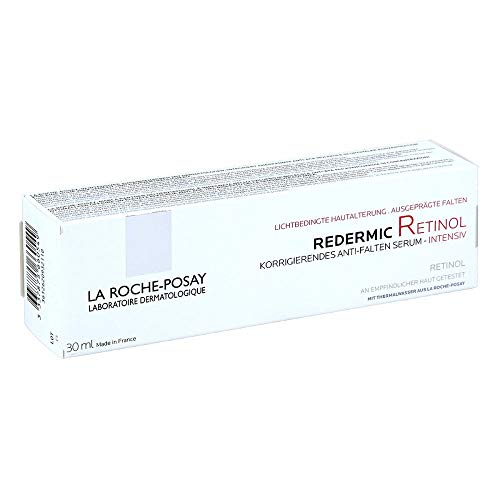
La Roche-Posay Redermic R Retinol Face Cream
Redermic R pairs 0.1% pure retinol with a booster complex and gentle exfoliating acid, in a light cream that sinks in fast. It's the concentration dermatology groups actually recommend for sensitive beginners, from a brand those same dermatologists keep naming.
$43.49fromAmazonList priceThis is the concentration the American Academy of Dermatology points sensitive skin toward. The AAD suggests starting between 0.025% and 0.1%, two or three nights a week, and only increasing frequency after four to six weeks of tolerance. At 0.1% pure retinol, Redermic R sits right at the top of that starter range. You get enough active to matter without the jump to 0.5% or 1% that sends reactive skin into a peeling cycle.
La Roche-Posay's whole line is built around thermal spring water and low-irritant formulation, and it shows up in how dermatologists rank the brand. Independent surveys from the Skin Health Alliance and DermScope have put La Roche-Posay among the top three most-recommended skincare brands by U.S. and European board-certified dermatologists for three or more consecutive years, with specific praise for sensitive-skin retinoid formulas.
The formula adds a retinol booster complex meant to improve efficacy while cutting the discomfort retinol usually brings, plus lipo-hydroxy acid for very gradual surface exfoliation. That combination is why owners with a history of wrecked barriers keep landing here after other retinols failed them. The texture helps too — it's light and velvety, not the heavy occlusive cream that clogs some people up.
Allure's reader panel and dermatologist assessment ranked Redermic R first among sensitive-skin retinol products, judged on tolerability, efficacy, and packaging together. That's the right set of criteria. A product that works beautifully but oxidizes in an open jar, or one that's gentle because it barely contains anything, would fail on the other two.
Flaws but not dealbreakers
It comes in a tube rather than an airless pump, so you're relying on the seal and the opaque packaging to protect the retinol. Research in the International Journal of Cosmetic Science documents that retinol can lose up to 85% of its potency within eight weeks in an open-jar format, and while a sealed tube is far better than a jar, an airless pump is better still.
Redermic R doesn't lead with barrier ingredients the way some competitors do. There's no niacinamide headlining the formula, and a Journal of Cosmetic Dermatology study found that co-applying 4% niacinamide with retinol cut the rise in transepidermal water loss by roughly 29%. You can layer your own, but it's an extra step.
This is the pricier end of drugstore, and it's a small tube. If you're treating your neck and chest along with your face, it goes quickly.
Also greatOn sale
The gentlest real retinoid, for skin that flushes at everything
Avène RetrinAL Advanced Correcting Serum
This pairs a 0.1% retinaldehyde cream with a bakuchiol-based serum, both fragrance-free. Retinaldehyde converts to active retinoic acid in one fewer step than retinol, which is why it tends to work as well with noticeably less redness.
$125.60fromAmazonList priceIf your skin goes red at the mention of an active, retinaldehyde is the form to try. It sits one conversion step closer to retinoic acid than retinol does, so less of it needs to happen on your skin to get the same effect. A peer-reviewed JEADV study found 0.05% retinaldehyde produced photoaging improvements statistically comparable to retinol at the same strength, with meaningfully less erythema over an 18-week trial.
The set includes a bakuchiol serum alongside the retinaldehyde cream, and that matters more than it sounds. A randomized controlled trial in the British Journal of Dermatology found 0.5% bakuchiol matched 0.5% retinol for improvement in fine lines, pigmentation, and elasticity across 12 weeks, with significantly less stinging, scaling, and photosensitivity. On nights when your skin needs a break, the serum gives you something to use instead of nothing.
Avène built its reputation on thermal spring water and formulas for reactive skin, and it lands alongside La Roche-Posay in those same dermatologist-recommendation surveys. The Allure panel put RetrinAL second only to Redermic R for sensitive-skin users. If you have rosacea and you've been told to avoid retinoids entirely, this is the one worth raising with your dermatologist.
The formula is fragrance-free, which is not a small detail. Fragrance and essential oils are two of the leading contact allergens for reactive skin, and plenty of otherwise-good retinol creams include one or both. Avène leaves both out and uses a dropper for the serum, so you're not dipping fingers into a pot.
Flaws but not dealbreakers
Buying a two-product set costs more than buying one cream, and you may not want both. If you're only after the retinaldehyde, you're paying for a serum you might use twice a week.
Retinaldehyde is less common than retinol, which means fewer head-to-head studies and fewer formulations to switch between if this one doesn't agree with you.
The serum instructions call for twice-daily use, and daytime application of any retinoid-adjacent routine means you absolutely cannot skip sunscreen.
Budget pickOn sale
Encapsulated retinol plus barrier ingredients, at drugstore reach
CeraVe Resurfacing Retinol Face Serum with Niacinamide
CeraVe's serum wraps its retinol in time-release encapsulation and pairs it with niacinamide and three ceramides. That combination — active plus barrier support in one bottle — is exactly what the research says reactive skin needs, and you can buy it at any drugstore.
$16.49fromAmazonList priceEncapsulation is the reason this one is tolerable for so many people. CeraVe's MVE technology releases retinol gradually rather than dumping it on your skin at once. L'Oréal, CeraVe's parent company, points to that lower peak surface concentration as the mechanism behind the reduced irritation compared with non-encapsulated formats. For skin that reacts to a sudden hit of active, spreading the dose out over hours is the whole trick.
Then there's the niacinamide. A Journal of Cosmetic Dermatology study found that co-applying 4% niacinamide with retinol reduced the increase in transepidermal water loss — a direct marker of barrier disruption — by about 29% versus retinol alone. Niacinamide is the most evidence-backed co-ingredient for buffering retinol sensitivity, and here it's in the same bottle. Add the three ceramides and licorice root extract and you have a formula that resurfaces and repairs at once.
It's fragrance-free, paraben-free, and non-comedogenic, and it comes in a sealed opaque tube with a narrow opening rather than a jar. That last part is a real formulation decision, not packaging trivia — retinol degrades badly with light and air exposure.
This is also the easiest product here to actually keep buying. It's stocked at drugstores and mass retail everywhere, so restocking never involves waiting on a shipment or a dermatology office visit. Consistency over 12 to 24 weeks is what produces results, and a product you can grab on a Tuesday afternoon is a product you'll stay consistent with.
Flaws but not dealbreakers
Owner feedback includes a recurring theme of breakouts in the first weeks, particularly on the forehead and around the nose. Retinoids commonly cause an initial purge as turnover speeds up, but if you're acne-prone, expect a rough stretch before it settles.
CeraVe doesn't state its retinol concentration, so you're trusting the encapsulation and the brand rather than a number you can compare against the AAD's starting range.
It's a serum, not a cream. If your skin is dry as well as sensitive, you'll need a moisturizer over it — which is also the right way to use it anyway.
Runner-up
The best-studied retinoid here, if breakouts are your main issue
Differin Acne Retinoid Treatment Gel
Differin is FDA-approved adapalene at 0.1%, the strength that used to require a prescription. It has more rigorous trial data behind it than any OTC retinol, and studies consistently show less irritation than tretinoin at comparable effectiveness.
$23.97fromAmazonAdapalene isn't retinol — it's a third-generation synthetic retinoid, and it's the only product in this guide with FDA approval behind its claims. That distinction matters when you're deciding what to put on reactive skin. Multiple randomized controlled trials comparing adapalene at 0.1%–0.3% with tretinoin at 0.025%–0.05% report 30–50% lower rates of erythema, dryness, and peeling with adapalene, at comparable efficacy for both acne and photodamage at 12-week endpoints.
If your sensitive skin also breaks out, start here. Differin normalizes cell turnover and targets clogged pores and inflammation directly. Galderma cites a clinical study showing up to 87% reduction in breakouts after 12 weeks. That's a narrower job than a general anti-aging cream, but it's the job most thoroughly documented, and the same turnover mechanism produces gradual texture and tone benefits over longer use.
The formula is water-based, oil-free, alcohol-free, fragrance-free, and non-comedogenic — a short list of things not in it, which is what you want on reactive skin. The 45g pump dispenses a consistent amount and keeps the product sealed from air, and it's sized as roughly a 90-day supply at pea-sized nightly use.
It's a targeted acne treatment first and an anti-aging product second, which is why it sits behind our top pick rather than ahead of it. If lines and tone are your concern and your skin is clear, Redermic R is the better fit. If you're dealing with both, adapalene handles more of the problem at once.
Flaws but not dealbreakers
Dryness is the most consistent complaint in owner feedback, and some people report stinging when moisturizer goes on over it. Applying it over a plain moisturizer instead of bare skin helps, and so does dropping to every third night at the start.
It's a gel, and gels can feel tight on already-dry skin. Pair it with a richer moisturizer than you think you need.
Adapalene has a real purge period. Breakouts often get worse before they get better, typically for the first four to six weeks, and that's the point where most people give up.
Upgrade pick
A stronger dose, cushioned by bakuchiol and peptides
Paula's Choice CLINICAL 0.3% Retinol + 2%
Paula's Choice combines 0.3% retinol with 2% bakuchiol and peptides in one fragrance-free serum. It's the sensible step up once your skin handles a starter concentration, and the bakuchiol softens the transition instead of leaving you to tough it out.
$65fromAmazonThe pairing here is smarter than the retinol number alone suggests. Bakuchiol is a plant-derived compound that behaves like a retinoid without the same irritation profile. The British Journal of Dermatology trial found 0.5% bakuchiol matched 0.5% retinol on fine lines, pigmentation, and elasticity across 12 weeks, with significantly less stinging and scaling. Stacking it with 0.3% retinol means part of the work happens through a gentler pathway.
Peptides round it out. Paula's Choice reports panel results in which 94% of users agreed the serum improved elasticity and 90% agreed it improved texture. Those are self-reported panel figures rather than a controlled trial, so weigh them accordingly. But the ingredient logic is sound and the brand has a long record of publishing what's in its formulas and why.
At 0.3%, this is a step above the AAD's recommended starting range for sensitive skin. That's why we call it an upgrade rather than a starting point. If you've spent a few months at 0.1% and your skin has stopped complaining, this is a reasonable place to go next without leaping to 1%.
No fragrance, no silicones, no fluff — Paula's Choice keeps the ingredient list tight, which is what you want when you're trying to isolate what your skin does and doesn't tolerate.
Flaws but not dealbreakers
Some owners describe an immediate flushing reaction on application and a faint earthy scent from the bakuchiol, along with suspected breakouts on the forehead and nose. It's not universal, but it's a recurring enough theme that you should patch test.
This is one of the more expensive options here, and owner feedback includes people who felt one bottle wasn't enough to judge results. At 12 to 24 weeks for visible change, you're committing to more than one purchase.
At 0.3%, it's too strong a first retinol for genuinely reactive skin. Build tolerance elsewhere first.
Who this is for
This guide is for anyone whose skin turns red, tight, or flaky the moment an active shows up — retinol beginners with reactive skin, people managing rosacea who still want anti-aging ingredients, eczema-prone skin looking for gentle resurfacing, and adults in their 30s through 50s building a first anti-aging routine. If you already tolerate a prescription tretinoin without complaint, you don't need this guide. If your barrier is actively compromised — cracked, weeping, or stinging with plain water — repair it first and come back to retinoids in a few weeks.
We cover over-the-counter retinoid creams, serums, and gels you can buy without a prescription. We don't cover prescription tretinoin, in-office procedures, or retinol body lotions. We also don't cover pregnancy-safe alternatives, though it's worth saying plainly: retinoids are generally not recommended during pregnancy or breastfeeding, and that's a conversation for your doctor, not a product page.
How we picked
Form and strength: we favored the 0.025%–0.1% range the AAD recommends for sensitive beginners, plus retinaldehyde and adapalene, which show lower irritation rates than comparable retinol and tretinoin in published trials. Barrier support: niacinamide, ceramides, peptides, or fatty acids in the same formula, since niacinamide alone cuts retinol-related barrier water loss by roughly 29% in one Journal of Cosmetic Dermatology study. Allergens: fragrance-free and essential-oil-free, because both are leading contact allergens for reactive skin. Packaging: sealed opaque tubes and airless pumps over jars, since open-jar retinol can lose up to 85% of its potency in eight weeks. Dermatologist standing: repeated top placement in independent surveys, weighted toward sensitive-skin formulations.
Other retinol creams for sensitive skin worth considering
If you want a physician-grade starter formula: The SkinMedica Retinol Serum 0.25 Complex - Serum ($64) — SkinMedica's Retinol Complex 0.25 uses encapsulated retinol at 0.25% with an antioxidant complex, and it's typically sold through dermatology offices rather than drugstore shelves. That's part of the appeal — it's designed as an on-ramp toward prescription retinoids with professional guidance behind it, and the encapsulation serves the same slow-release purpose CeraVe's does. Owner feedback is broadly positive on results but repeatedly flags the price relative to the bottle size, and some people report dryness and light peeling with daily use. If you're already working with a dermatologist and want a formula in that ecosystem, it's a solid choice. If you're shopping on your own, our picks give you similar chemistry for less.
If you want a high-strength retinol with nothing else in it to react to: The Drunk Elephant A-Passioni Retinol Cream - 30 ($76) — Drunk Elephant's A-Passioni runs 1% vegan retinol — high-strength by dermatology standards — but strips out essential oils, silicones, drying alcohols, fragrance, and SLS entirely. That's an unusual combination, and it's why the brand shows up in sensitive-skin conversations despite the concentration. Vitamin F fatty acids, marula oil, and a triple-peptide blend cushion the active. Drunk Elephant's own clinical data reports visible pore refinement and fine-line improvement in over 90% of participants after eight weeks of twice-weekly use. But 1% is ten times our top pick's concentration, and it's the wrong starting point for reactive skin. Some owners also note a strong chemical smell. Consider it a destination, not a beginning.
The competition
Here's what our research surfaced among widely available over-the-counter retinoids for sensitive skin — not everything on the market. The category is enormous, and a product's absence here isn't a verdict against it. These are the remaining options we looked at closely enough to have an opinion about.
The RoC Retinol Correxion Line Smoothing Max Hydration ($58.95) — RoC's Retinol Correxion Line Smoothing Max Hydration Cream has the longest track record in this group — RoC was among the first brands to stabilize OTC retinol, and it's been iterating for over three decades. The Max Hydration version adds glycerin and hyaluronic acid, and RoC reports that 100% of testers saw reduced fine lines and wrinkles after eight weeks. Its sealed tube protects retinol from light and air better than most mass-market packaging. The problem for this guide is fragrance: owners specifically mention the scent, and fragrance is one of the two ingredients we screened hardest against for reactive skin. If your skin is merely dry rather than genuinely sensitive, RoC is a reasonable and well-proven pick — and this two-pack bundle is a lot of product. For rosacea, eczema, or easily triggered skin, we'd stay with the fragrance-free options.
How to use retinol without wrecking your skin
Start at two or three nights a week and stay there for at least four to six weeks before adding a night. Use a pea-sized amount for your whole face — more doesn't work faster, it just irritates. Try the sandwich method: apply a plain moisturizer first, then your retinoid, then moisturizer again. Dermatologist consensus in the Journal of Drugs in Dermatology supports it as a way to cut initial sensitivity without giving up long-term results, and one skin contact study found barrier hydration stayed 18% higher two hours after application versus bare-skin use. Avoid layering with high-pH products like baking soda toners, which degrade retinol. And wear SPF 30 or higher every single day — photosensitivity rises measurably, and sun exposure will undo the progress you're paying for.
Questions we get
What percentage of retinol should a beginner with sensitive skin start with?
The American Academy of Dermatology recommends starting between 0.025% and 0.1%, applied just two or three nights a week. Only increase frequency after four to six weeks of your skin tolerating it without redness or flaking. Going higher faster doesn't speed up results — it usually just means you stop using it.
What's the difference between retinol and retinaldehyde for sensitive skin?
Retinaldehyde sits one conversion step closer to retinoic acid, the form your skin actually uses, so less chemistry has to happen on your face. A JEADV study found 0.05% retinaldehyde matched retinol at the same concentration for photoaging improvement, with meaningfully less erythema over 18 weeks. It's an underrated option if retinol has burned you before.
Is adapalene (Differin) better than retinol for sensitive skin?
It's better studied, which counts for a lot. Adapalene is FDA-approved and multiple randomized trials show 30–50% lower rates of redness, dryness, and peeling than tretinoin at comparable effectiveness. It's aimed at acne first, so if your main concern is fine lines on clear skin, a low-strength retinol is a closer fit.
Can I use retinol and niacinamide together if I have sensitive skin?
Yes, and you probably should. Niacinamide is the most evidence-backed co-ingredient for reducing retinol sensitivity — one Journal of Cosmetic Dermatology study found that co-applying 4% niacinamide cut the increase in transepidermal water loss by about 29%. The old advice about not mixing them has largely been set aside.
How long does retinol take to show results on sensitive skin?
Plan on 12 to 24 weeks of consistent use before you see meaningful change in fine lines and texture. Kafi et al. in Archives of Dermatology measured significant improvement in fine wrinkling at 24 weeks with 0.4% retinol. Quitting early because of first-month irritation is the single most common reason people conclude retinol doesn't work for them.
Can I use retinol if I have rosacea or eczema?
Talk to your dermatologist first — but it isn't automatically off the table. Retinaldehyde formulas and low-concentration encapsulated retinol are the gentlest entry points, and buffering over moisturizer helps a lot. If your barrier is currently damaged, repair it with plain moisturizer for a few weeks before introducing any active.
Why you should trust us
For this guide:
- We read the ingredient lists, concentration disclosures, and packaging details for every product in this guide against manufacturer specifications and Amazon listing information.
- We reviewed published dermatology research on retinoid tolerability, including randomized controlled trials on bakuchiol, retinaldehyde, and adapalene, along with American Academy of Dermatology guidance on starting concentrations.
- We read through owner feedback across these listings for recurring themes around irritation, purging, texture, and scent, and used those patterns to shape the flaws and caveats above.
- We read owner reviews on every listing, weighted toward the critical ones, because that is where the recurring failures show up.
- We have a systematic way of automatically fetching the latest prices, so the numbers on this page stay current.
- This is a research-focused guide, so the team may not own every product listed — though we often do own the top winners, which gives us extra context for the recommendations.
- We don't accept free products, and the retailer commission never changes which product we recommend.
Sources
Topical Retinoids in Skin Aging — Clinical Interventions in Aging (PMC), PubMed / Clinical Interventions in Aging — comprehensive review establishing retinol's OTC efficacy and tolerability thresholds
Bakuchiol vs. Retinol for Facial Photoageing — British Journal of Dermatology (Dhaliwal et al., 2019), British Journal of Dermatology — randomized trial showing bakuchiol 0.5% twice daily produced equivalent fine-line and pigmentation improvement to retinol 0.5% with significantly less stinging and scaling
Niacinamide as an Adjunct to Retinol — Journal of Cosmetic Dermatology, Journal of Cosmetic Dermatology — study showing niacinamide co-application reduced retinol-related barrier disruption by approximately 29%
Retinol: Skin Benefits and How to Use It — American Academy of Dermatology, American Academy of Dermatology — official patient-facing guidance recommending 0.025%–0.1% starting concentration and twice-weekly application for sensitive skin
Retinaldehyde vs. Retinol: Comparative Efficacy and Tolerability — JEADV, Journal of the European Academy of Dermatology and Venereology — head-to-head study finding retinaldehyde produced comparable photoaging improvement with statistically lower erythema incidence than retinol at matched concentrations
Best Retinol Creams for Sensitive Skin — Allure, Allure — editorial and dermatologist-sourced rankings updated annually; La Roche-Posay and Avène consistently recognized in Best of Beauty
Best Retinol for Sensitive Skin, According to Dermatologists — SELF, SELF — editor and board-certified dermatologist panel review; highlights adaptation strategies and ingredient layering for reactive skin
Best Retinol Creams — Good Housekeeping Institute Beauty Lab, Good Housekeeping Institute — in-house panel and lab testing with quantified efficacy and irritation data across 12-week trials
Best Retinol for Sensitive Skin 2026 — Byrdie, Byrdie — dermatologist-sourced roundup with ingredient-level analysis and product vetting for reactive skin types
Retinol Stability and Packaging Impact — International Journal of Cosmetic Science, International Journal of Cosmetic Science — documents up to 85% retinol degradation in open-jar formats exposed to air and light within 8 weeks
Kafi R, et al. — Improvement of Naturally Aged Skin with Vitamin A (Retinol) — Archives of Dermatology, 2007, Archives of Dermatology — foundational study showing 0.4% retinol lotion significantly improved fine wrinkles and skin roughness in photoaged skin over 24 weeks with acceptable tolerability
Amazon product listings and owner reviews for all 8 products
Manufacturer specification pages for each product
Some passages in this guide may be paraphrased with AI help. Prices are refreshed automatically.
More like this.
Continue exploring beauty reviews and recommendations.

The Best Moisturizers for Dry, Sensitive Skin
Dry, sensitive skin doesn't need a complicated routine. It needs the same boring cream, twice a day, especially right after a shower. A good moisturizer…

The Best Retinol Creams
Retinol is one of the few skincare ingredients with decades of published research behind it. It speeds up how fast your skin sheds and rebuilds itself,…
The Best Retinol Creams and Night Serums
Retinol is the closest thing over-the-counter skincare has to a sure thing. It speeds up how fast your skin sheds and rebuilds itself, which softens fine…

The Best Retinol Creams
Retinol is one of the few skincare ingredients with decades of real research behind it. It speeds up how fast your skin sheds and rebuilds itself, and…

The Best Sunscreens for Sensitive Skin
If your skin flares at the wrong moisturizer, sunscreen is the hardest product to get right. You have to wear it every day, on the most reactive skin you…

The Best Body Lotions for Dry Skin
Dry skin isn't just a winter annoyance. It itches, it flakes on your shins, it cracks at the knuckles, and it turns black leggings into a lint trap. The…