The Best Moisturizers for Dry, Sensitive Skin
Dry, sensitive skin doesn't need a complicated routine. It needs the same boring cream, twice a day, especially right after a shower. A good moisturizer does three jobs at once: it pulls water into the skin, seals that water in, and rebuilds the fatty layer that keeps irritants out. Get it right and the tightness after you wash your face fades, the winter itch on your shins settles, and you stop scratching in your sleep. Get it wrong and one hidden fragrance undoes weeks of progress.
Here's the honest part. No cream here treats eczema, rosacea or dermatitis. They manage symptoms and protect the barrier while your skin does the healing, and none of that happens overnight — barrier repair takes weeks of steady use. "Gentle" isn't a regulated word, either. Hypoallergenic, natural and clean mean nothing on a label in the US, so the ingredient list is the only part of the package worth reading. Expect a slow, unglamorous improvement rather than a fix.
So the real work is narrowing the field to formulas without the usual triggers, then choosing by texture and by how much skin you're covering. That's what we did here. We compared full ingredient lists, manufacturer claims, third-party certifications and the complaints owners keep repeating. We think that the CeraVe Moisturizing Cream is the best moisturizer for dry, sensitive skin for most people, and that the Vanicream Moisturizing Skin Cream is the one to buy if your skin reacts to nearly everything you put on it.
Everything we recommend
Ceramide-rich, fragrance-free, and easy to find anywhere

The one to try when everything else makes you itch

Whipped, oatmeal-based comfort for skin that's flaring

A fast-absorbing face cream that takes the redness down
At a glance
| Product | Key Ingredient | Fragrance Free | Price | |
|---|---|---|---|---|
| CeraVe Moisturizing CreamTop pick | Hyaluronic Acid | — | $13.52On sale |
| Vanicream Moisturizing Skin Cream with Pump DispenserRunner-up | — | — | $13.56On sale |
| La Roche-Posay Toleriane Double Repair Face MoisturizerAlso great | — | Fragrance Free | $24.99 |
 | Cetaphil Moisturizing Cream - 3 ozAlso consider | — | Fragrance Free | $11.99 |
| First Aid Beauty - Ultra Repair CreamUpgrade pick | Colloidal Oatmeal 0.5% | Fragrance-Free | $42.61 |
How we picked
Fragrance and irritants. We read every full ingredient list and ruled out anything with added fragrance, masking fragrance, drying alcohols or formaldehyde-releasing preservatives. Front-of-package claims like "unscented" didn't count on their own.
Barrier ingredients. We looked for the three-part combination that dermatology guidance keeps pointing to: humectants like glycerin and hyaluronic acid, occlusives like petrolatum or shea butter, and emollients like ceramides. Formulas that only did one of the three didn't make it.
Certifications and evidence. We gave weight to the National Eczema Association Seal of Acceptance and to FDA-recognized skin protectants such as colloidal oatmeal. We also checked whether manufacturer claims were tested on sensitive or reactive skin rather than on normal skin.
Texture and wearability. Published reviews and owner feedback agree that the best cream is the one you'll actually keep using, so we noted which formulas feel greasy, which pill under sunscreen and which are too heavy for humid weather.
Format and coverage. We preferred pumps over jars for hygiene and sized the recommendation to the job — a small face bottle versus something you can use head to toe twice a day without watching the level drop.
Top pickOn sale
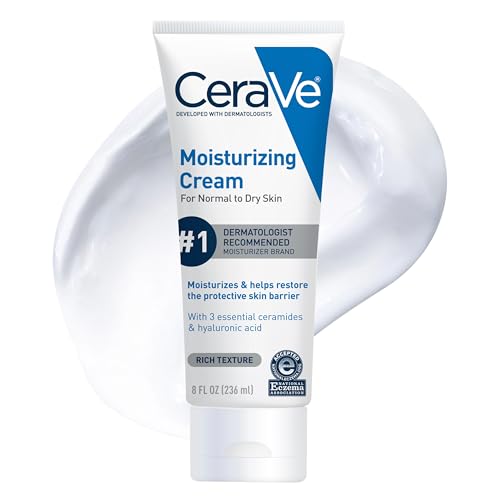
Ceramide-rich, fragrance-free, and easy to find anywhere
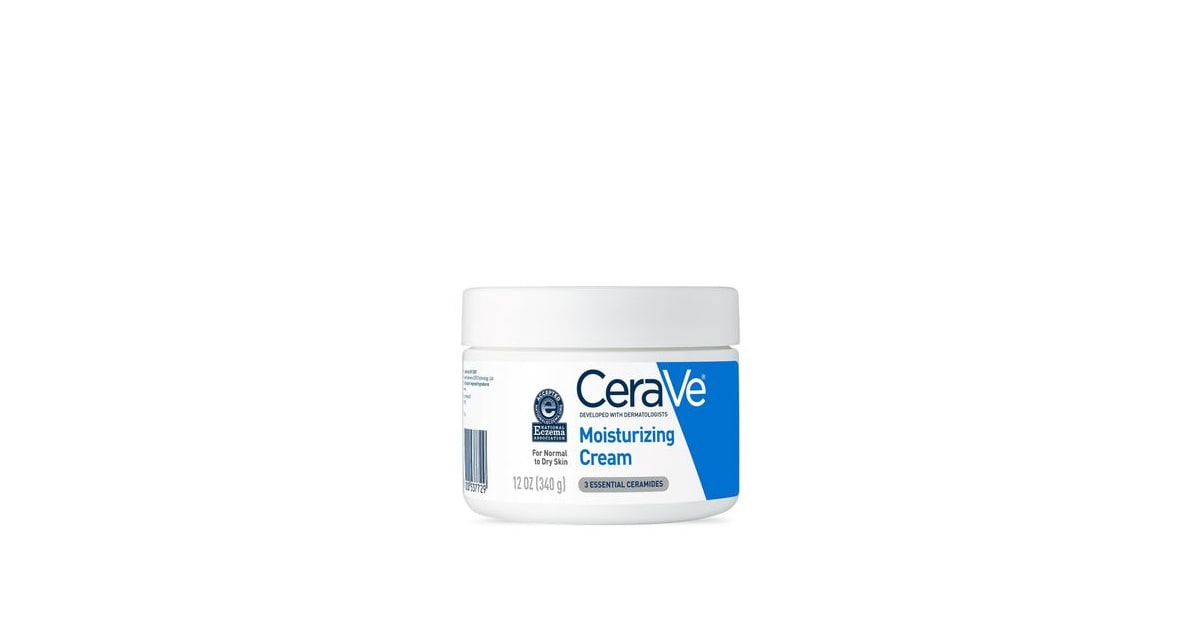
CeraVe Moisturizing Cream
This thick, fragrance-free cream pairs three ceramides with hyaluronic acid and a time-release delivery system, so hydration keeps working long after you rub it in. It's approved for face and body, which keeps both your routine and your ingredient exposure simple.
$13.52fromAmazonList priceCeramides are the whole point. Your skin barrier is built from fatty molecules, and dry or eczema-prone skin tends to run short on them. This cream puts three of them back — ceramides 1, 3 and 6-II — alongside hyaluronic acid, which draws water up into the surface layers. That's the difference between softening the top of your skin and repairing the part that's actually leaking moisture. Owners with chronically cracked hands and shins describe the change over weeks, not days.
The time-release delivery keeps working after you've forgotten about it. CeraVe's patented MVE technology wraps the moisturizing ingredients in layers that break down gradually, so hydration trickles out through the day instead of flashing off by mid-morning. In practice, you can put it on after your morning shower and not think about your legs again until bed. If you've been reapplying lotion three times a day just to stay comfortable, that alone is a real change.
One tub covers your face and your body. It's non-comedogenic and free of fragrance and oil, so you can use it on your cheeks and then your elbows without keeping two products around. For reactive skin, that isn't only convenience. Every extra product is another set of ingredients that could set you off, and fewer bottles means fewer suspects when something does go wrong.
You can buy it almost anywhere. It's stocked at essentially every drugstore and big-box retailer in the country, which matters more than it sounds. A cream that works is useless if you run out and have to wait days for a delivery while your skin backslides. Owner feedback is deep and skews strongly positive across years of repeat purchases, so you're not betting on a formula nobody has lived with yet.
Flaws but not dealbreakers
It's thick, and in warm weather you'll feel it. This is a rich cream that sits on the skin for a minute or two before it sinks in. In humidity, or on an oilier face, that can feel like a film you're wearing. Plenty of owners in hot climates keep the lighter lotion version for the sticky stretch of the year and save the cream for cold, dry weather.
The jar means fingers in the product. Every scoop introduces whatever's on your hands into the tub. That's not a real risk for most people, but if you're managing broken or weeping skin, decant some into a smaller container or use a clean spoon. A pump would be more hygienic, and two other creams here have one.
It doesn't carry the National Eczema Association seal. Dermatologists recommend it for atopic dermatitis constantly, and the formula is built for exactly that job. But if you want a third-party eczema certification printed on the package, this one doesn't have it and other picks here do.
Runner-upOn sale
The one to try when everything else makes you itch
Vanicream Moisturizing Skin Cream with Pump Dispenser
Vanicream strips out the ingredients that cause the most trouble — dyes, fragrance, masking fragrance, lanolin, parabens and formaldehyde releasers — and leaves a plain, effective cream behind. The big pump bottle carries the National Eczema Association seal and works on face and body.
$13.56fromAmazonList priceIt's defined by what's missing. Most sensitive-skin creams advertise an active ingredient. Vanicream advertises an exclusion list: no dyes, no fragrance, no masking fragrance, no lanolin, no parabens, no formaldehyde-releasing preservatives. Those are the usual suspects behind allergic contact dermatitis. If you've been through a patch-test panel with a dermatologist and reacted to several products already, this is the sensible place to start over.
The formula itself is simple and well understood. Glycerin and sorbitol pull water into the surface of your skin, and petrolatum seals it in. Nothing clever is happening. But petrolatum is about as reliable an occlusive as exists, and simplicity is often the right call for skin that reacts unpredictably. It holds the National Eczema Association Seal of Acceptance, and the brand is a common recommendation from allergists as well as dermatologists.
The pump bottle is the format you actually want. It's a big bottle, so you're not rationing when you moisturize head to toe twice a day. The pump also keeps your hands out of the product, which matters if you're applying to broken skin. Owners who go through cream fast point to the size and the dispenser as the reason they keep rebuying instead of shopping around.
One bottle can cover the household. The directions are as broad as they get — face, hands, feet, body, as often as you need it. If your kid has dry patches and you're already fighting your own, you don't need two products on the counter. That's genuinely useful when more than one person in the house has skin that flares.
Flaws but not dealbreakers
There are no ceramides in it. This cream hydrates and protects, but it doesn't put barrier lipids back the way the CeraVe does. For most people that gap is small. If your skin is badly compromised — cracked, flaking, mid-flare — you may want a ceramide cream layered over it or used on alternating days.
It's thinner than it looks, and completely charmless. The consistency is lighter than the CeraVe cream, so very dry skin sometimes needs a second pass or an occlusive on top at night. The packaging is clinical and the texture is forgettable. The brand also notes the aroma can vary slightly batch to batch even though nothing scented goes in, which throws some people the first time.
Upgrade pick
Whipped, oatmeal-based comfort for skin that's flaring
First Aid Beauty - Ultra Repair Cream
This whipped cream is built around colloidal oatmeal, the skin protectant with FDA recognition for temporarily relieving eczema itch and irritation. It's rich but absorbs cleanly, so you can wear it under clothes without feeling coated in grease all day.
$42.61fromAmazonColloidal oatmeal does real work on an angry flare. The FDA recognizes it as a skin protectant for temporary relief of itching and irritation from eczema, and almost no cosmetic ingredient can claim that. It works several ways at once: it forms a water-loving film on the surface, contributes mild anti-inflammatory activity from compounds unique to oats, and adds a little humectant pull through its beta-glucans. That's an intervention, not a nice-to-have.
It carries the National Eczema Association seal. That's the most meaningful US certification for eczema-appropriate skincare, and it's a useful shortcut when you can't evaluate an ingredient list yourself. First Aid Beauty also cites clinical work showing a stronger barrier within a week of daily use and a large jump in hydration. The formula is steroid-free, alcohol-free and free of artificial fragrance, so it's safe to use during a flare rather than only after one.
The whipped texture is the surprise here. Rich creams usually leave a tacky film that grabs at your sleeves. This one sinks in and stays put. If you've avoided heavy creams because you don't want them transferring to your shirt, this is the one to try. Shea butter and allantoin round it out — the first for deep emolliency, the second for calming the itch that starts the scratching.
It comes set up for travel. The listing pairs the main jar with a small tube, so one can live in a bag or a desk drawer. That's more practical than it sounds when a flare hits at work and the alternative is scratching until you get home. It's rated for face and body, including areas that are already inflamed.
Flaws but not dealbreakers
It's a specialty-beauty product, not a drugstore one. You'll mostly find it at beauty retailers rather than in the pharmacy aisle, and it costs several times what the drugstore creams do per ounce. For everyday, all-over maintenance that's hard to justify. Keep the CeraVe or the Vanicream for daily use and reach for this when your skin genuinely needs calming.
The light texture cuts both ways. On badly cracked winter skin — split heels, knuckles that bleed — a whipped cream can be too airy, and a thick ointment does more. Use this on inflamed, itchy, reactive skin, and use something heavier where the skin is physically broken.
Also great
A fast-absorbing face cream that takes the redness down
La Roche-Posay Toleriane Double Repair Face Moisturizer
This lightweight face cream combines ceramide-3, niacinamide and glycerin, so it rebuilds the barrier while calming visible redness. It's oil-free and sinks in quickly, which makes it the one to get if you wear sunscreen or makeup over your moisturizer.
$24.99fromAmazonNiacinamide is the ingredient worth having on your face. It's among the most studied topicals in dermatology, with solid evidence for reducing water loss through the skin, softening visible redness and nudging your own ceramide production upward. If your dryness comes with pink cheeks, flushing or early rosacea, that's a more targeted fix than a plain occlusive cream. Ceramide-3 and glycerin handle the rest of the job.
It disappears under everything else you put on. Thick creams pill and slide once sunscreen goes over them. This one absorbs fast and leaves nothing behind, so your morning routine doesn't fall apart. La Roche-Posay says the barrier starts restoring within an hour and hydration holds for two days. It's oil-free and non-comedogenic, so dry-but-breakout-prone skin has a real shot at tolerating it.
The prebiotic thermal water is the brand's signature, and it's not just marketing gloss. The idea is to support a balanced skin microbiome rather than scrub it down, which fits how dermatology now thinks about reactive skin. The formula is fragrance-free and tested specifically on sensitive skin types, not on normal skin with a "dermatologist tested" sticker attached afterward.
Flaws but not dealbreakers
The bottle is small and it's a face product. Using this on your arms and legs would drain it in no time, so you'll still need a body cream alongside it. Per ounce it's the most demanding pick here for anyone covering large areas, and it makes sense only if your problem is mainly on your face and neck.
Niacinamide isn't universally tolerated. A small share of very reactive people get flushing or warmth from it, especially at first. If that's you, start every other night on a small area and build up. If the redness keeps climbing rather than settling, this isn't your cream.
Who this is for
This guide is for anyone whose skin is dry and reacts easily — the tight, stinging feeling after washing your face, the itch on your shins in winter, the patches of eczema that come back every time the heat kicks on. It's also for parents dealing with the same thing on a kid. Every product here is fragrance-free and safe to use daily, and most work on face and body, so you can simplify down to one or two containers instead of a shelf full of half-used tubes.
It's not for you if your skin is oily and you just want something light — none of these are that, and a gel would serve you better. It also isn't a substitute for treatment. If your eczema is widespread, weeping, infected or not responding, a moisturizer is supportive care and you need a board-certified dermatologist, not a shopping guide. We've stuck to over-the-counter creams and lotions here; no prescription barrier repair products, no cleansers, no serums, and nothing with exfoliating acids or retinoids in it.
How we picked
We started from the label and worked inward. Irritants: anything with added fragrance, masking fragrance, lanolin, drying alcohols or formaldehyde-releasing preservatives was out, no matter how good the marketing was. Barrier ingredients: we wanted the full trio — a humectant to pull water in, an occlusive to seal it, and emollients like ceramides to rebuild the lipid layer. Evidence: we favored the National Eczema Association seal, FDA-recognized skin protectants, and claims tested on sensitive skin rather than on normal skin. Texture: the cream you'll keep using beats the one that's technically better and feels awful under a shirt. Format: pumps over jars where possible, and a size that matches whether you're treating your face or your whole body.
Other moisturizers for dry, sensitive skin worth considering
If you want the formula with the longest track record on babies' skin: The Cetaphil Moisturizing Cream - 3 oz ($11.99) — Cetaphil Moisturizing Cream has been in dermatology offices for more than 70 years, and that tenure is the strongest thing about it. It leans on glycerin to draw water in, petrolatum and fatty-acid emollients to hold it there, and panthenol to calm things down, which makes it a sensible choice for post-flare recovery on very young skin. Pediatric dermatologists have recommended it for generations, and it's fragrance-free and non-comedogenic. Two catches: there are no ceramides, so barrier repair is less targeted than the CeraVe, and this particular listing is a small jar that'll disappear fast if you're covering a whole body. Some owners also find the texture slightly waxy next to newer formulas. For a child's face or a diaper bag it's fine; for daily full-body use, the brand's larger pump bottles make far more sense.
The competition
This is a deliberately short lineup — the fragrance-free creams that turn up again and again in published sensitive-skin roundups and in dermatologist recommendations, not a survey of everything on the shelf. Plenty of decent moisturizers aren't here, and the sensitive-skin aisle changes constantly. What's above is what the research kept pointing back to, and each one earned a place either as a pick or as an alternative worth a look.
Application and patch testing
Timing matters as much as which cream you buy. Put moisturizer on within about three minutes of getting out of the shower, while your skin is still damp — that traps the surface water instead of letting it evaporate, and it beats applying to bone-dry skin. Wash with lukewarm water, never hot, since hot water strips the oils you're trying to replace. For cracked heels or knuckles, layer something petrolatum-heavy at night and cover with socks or cotton gloves. And patch test anything new on your inner forearm for two or three days before it goes near your face. Brief warmth on already-irritated skin is normal. Burning, stinging or spreading redness isn't — stop and call a dermatologist.
Questions we get
What ingredients should I look for if I have sensitive skin?
Three categories, working together. Humectants — hyaluronic acid, glycerin, panthenol, sorbitol — pull water into the surface of your skin. Occlusives like petrolatum and dimethicone seal it in, and emollients like ceramides, fatty acids and shea butter smooth and rebuild the barrier. Beyond that, niacinamide has strong evidence for reducing visible redness, and colloidal oatmeal is FDA-recognized for temporarily relieving eczema itch.
What should I avoid?
Synthetic fragrance and parfum are the most common triggers in cosmetics, including blends labeled natural fragrance. Skip alcohol denat and SD alcohol, lanolin, and formaldehyde-releasing preservatives like DMDM hydantoin and quaternium-15. Leave out strong exfoliants — glycolic and salicylic acid, retinoids — unless a doctor prescribed them. Essential oils are the sneaky one: lavender, tea tree, peppermint and eucalyptus are all documented sensitizers.
Is CeraVe actually good for sensitive skin, or is it hype?
It's good, and the reasoning holds up. Ceramides 1, 3 and 6-II are the exact lipids most depleted in atopic dermatitis and chronic dry skin, and putting them back topically has documented benefit in the peer-reviewed literature. Published roundups from major review outlets have ranked it at or near the top of sensitive-skin comparisons repeatedly. Its rise came mostly from dermatologists recommending it, not from paid marketing, which is a decent signal on its own.
Can I use a body moisturizer on my face?
Often yes, but check three things first: that it's labeled non-comedogenic, that there's no added fragrance, and that it doesn't lead with heavily pore-clogging oils like coconut oil or isopropyl myristate. The CeraVe, the Vanicream and the Cetaphil are all formulated for face and body and clear those checks. A fragranced body lotion with acids in it does not — keep that below the neck. Patch test on your jawline for a couple of days when you're unsure.
Which one should I use during an eczema flare?
The First Aid Beauty Ultra Repair Cream is the most purposeful choice when skin is actively itchy and inflamed, because colloidal oatmeal is FDA-recognized as a skin protectant for eczema and the cream carries the National Eczema Association seal. The Vanicream also holds that seal and is the better daily maintenance option between flares, especially if you react to a lot of products. If a flare is severe, spreading or not improving, see a dermatologist — moisturizer is support, not treatment.
How often do I need to apply it?
Twice a day is the standard for dry or eczema-prone skin, and one of those applications should come right after you bathe. During a flare or in cold, dry weather, more is fine — these formulas are gentle enough to reapply whenever your skin feels tight. Consistency beats intensity here. A cheap cream used twice daily will do more for you than an expensive one you remember on weekends.
Why you should trust us
For this guide:
- We read the complete ingredient list for every product here and checked it against the sensitizers dermatology and allergy groups flag most often.
- We compared manufacturer claims, published sensitive-skin roundups and third-party certifications, including the National Eczema Association Seal of Acceptance and FDA skin-protectant recognition.
- We went through owner feedback for each listing looking for recurring themes — texture complaints, packaging problems and reports of irritation — rather than isolated opinions.
- We read owner reviews on every listing, weighted toward the critical ones, because that is where the recurring failures show up.
- We have a systematic way of automatically fetching the latest prices, so the numbers on this page stay current.
- This is a research-focused guide, so the team may not own every product listed — though we often do own the top winners, which gives us extra context for the recommendations.
- We don't accept free products, and the retailer commission never changes which product we recommend.
Sources
Best Face Moisturizers — Wirecutter / The New York Times, Wirecutter / The New York Times
Best Moisturizers for Dry Skin — Good Housekeeping Institute, Good Housekeeping
Best Moisturizers for Sensitive Skin — Allure, Allure
Best Moisturizers for Dry, Sensitive Skin — Byrdie, Byrdie
Dry Skin: Diagnosis and Treatment — American Academy of Dermatology, American Academy of Dermatology
How to Select a Moisturizer — American Academy of Dermatology, American Academy of Dermatology
NEA Seal of Acceptance Product Directory — National Eczema Association, National Eczema Association
Best Moisturizers for Dry Skin — SELF, SELF
Amazon product listings and owner reviews for all 5 products
Manufacturer specification pages for each product
Some passages in this guide may be paraphrased with AI help. Prices are refreshed automatically.
More like this.
Continue exploring beauty reviews and recommendations.

The Best Retinol Creams for Sensitive Skin
Retinol is the rare skincare ingredient with decades of clinical evidence behind it. It speeds up cell turnover, softens fine lines, and evens out tone…

The Best Sunscreens for Sensitive Skin
If your skin flares at the wrong moisturizer, sunscreen is the hardest product to get right. You have to wear it every day, on the most reactive skin you…

The Best Body Lotions for Dry Skin
Dry skin isn't just a winter annoyance. It itches, it flakes on your shins, it cracks at the knuckles, and it turns black leggings into a lint trap. The…

The Best Tinted Moisturizers With SPF
A tinted moisturizer with SPF is the shortcut most people actually want on a weekday morning. One pump handles hydration, a little color correction, and…

The Best Anti-Aging Face Moisturizers
An anti-aging moisturizer does two jobs at once. It keeps your face comfortable all day, and it carries actives - retinol, peptides, niacinamide - that…

The Best Sunscreens for Every Skin Type
Sunscreen only works if you actually wear it. That sounds obvious, but it's the whole ballgame. The American Academy of Dermatology says SPF 30 filters…