The Best Hair Growth Serums for Thinning Hair
Hair thinning shows up in ordinary moments. You notice more strands in the shower drain, or your part looks wider under bathroom lighting. Maybe your ponytail feels thinner in your hand than it did a year ago. Roughly half of women deal with this at some point, and the causes range widely — genetics, a postpartum hormone drop, perimenopause, stress, or years of bleaching. A serum can help, but only if it matches what's actually going on with your scalp. That's the part most product marketing skips.
Here's the honest part: no serum in this category works fast, and none of them work forever on their own. You're looking at three to six months of daily application before you can fairly judge anything. Minoxidil users often shed more in the first two months, which feels like failure but isn't. And the moment you stop, the clock resets — regrowth fades within a few months. Botanical and peptide formulas have thinner evidence behind them than minoxidil does. Nobody's serum is a cure.
We read through clinical literature, manufacturer specifications and owner feedback to sort out which formulas earn the commitment they ask for. The picks here cover different root causes, because a serum built for hormone-driven miniaturization won't do much for breakage from bleach. We think that the Women's Rogaine 5% Minoxidil Foam is the best hair growth serum for most people, and that The Ordinary Multi-Peptide Serum for Hair Density is the one to buy if you can't use minoxidil or want to spend far less.
Everything we recommend

The one with real clinical evidence, if you can commit to it

Serious actives without the minoxidil, for a fraction of the cost

Built for hormone- and stress-driven thinning, at a premium

For thinning that's really breakage from bleach and heat
At a glance
| Product | Active Ingredient | Application Frequency | Price | |
|---|---|---|---|---|
| Women's Rogaine Hair Growth FoamTop pick | 5% Minoxidil | Daily | $44.97 |
| The Ordinary Multi-Peptide Serum for Hair DensityBudget pick | Multi-Peptide | Once Daily | $24On sale |
 | VEGAMOUR GRO Hair Serum for Hair ThinningAlso consider | Turmeric Stem Cells | Daily | $64 |
| Nutrafol Women's Hair SerumUpgrade pick | Ashwagandha Exosomes | Once Daily | $69 |
| KERASTASE Initialiste Advanced Scalp and Hair ConcentrateAlso great | — | 3x A Week | $66 |
How we picked
Evidence quality. We ranked FDA approval and independent peer-reviewed research above brand-funded consumer studies, and both above ingredient marketing. A formula had to have something real behind its active ingredients, not just a proprietary name.
Root-cause match. We looked at which mechanism each serum actually targets — follicle blood flow, DHT blocking, cortisol, or fiber repair. A guide that recommends one serum for every kind of thinning is a guide that fails most readers.
Daily friction. We compared application methods from manufacturer instructions and owner feedback, because a serum you skip doesn't work. Foam that dries in two minutes beats a dropper you dread on a busy morning.
Scalp compatibility. We checked formulations for fragrance, silicones, alcohol and residue, since fine or oily scalps and fragrance-sensitive skin rule out otherwise good products. Owner feedback about greasiness and irritation carried weight here.
Safety limits. We noted which formulas are off-limits during pregnancy or breastfeeding and which carry documented side effects. A serum that's excellent but contraindicated for you isn't a recommendation.
Top pick
The one with real clinical evidence, if you can commit to it
Women's Rogaine Hair Growth Foam
Rogaine's 5% minoxidil foam is the only over-the-counter topical the FDA has approved specifically for female pattern hair loss. It dries fast, doesn't leave your scalp greasy, and comes in a four-month supply so you're not reordering constantly.
$44.97fromAmazonNothing else here has this much evidence behind it. Minoxidil has been studied for more than three decades, and the 5% foam formulation for women has cleared FDA review — a bar no botanical or peptide serum in this guide comes close to meeting. It works by widening the blood vessels around your follicles and stretching out the active growth phase of the hair cycle. That's a known mechanism, not a marketing story.
The foam format matters more than you'd think. Liquid minoxidil runs, drips onto your forehead and transfers to your pillowcase overnight. This one dissolves into the scalp in about two minutes and stays put. If you apply it in the morning before styling, it won't interfere with a blow-dry, and the unscented version doesn't fight with whatever else you're using.
Two 2.11-ounce canisters give you four months, which is roughly the minimum window before you can judge whether it's doing anything. That's convenient, but it's also a fair reflection of how this drug works. Dermatologists generally want a six-month trial before calling it. Buying a single small bottle and quitting at week eight is the most common way people waste money on minoxidil.
You have to keep using it, indefinitely. Stop, and your hair returns to its pre-treatment density within three or four months. This isn't a course of treatment you finish. It's closer to a daily habit like flossing — one that costs money every month for as long as you want the result. Go in knowing that, or you'll feel misled later.
Flaws but not dealbreakers
The shedding thing catches people off guard. Somewhere in weeks two through eight, many users see more hair coming out, not less. That's the drug pushing resting follicles into a new cycle, and it passes — but it's genuinely unsettling if nobody warned you, and it's the single most common reason people abandon minoxidil early.
Minoxidil is off the table if you're pregnant, planning to be, or breastfeeding. And if the foam migrates onto your face — from your hairline, or from hands you didn't wash — it can grow hair where you don't want it. That's uncommon with careful application, but it's a real reported side effect, not a theoretical one. Some users also report scalp dryness and flaking in the early weeks.
Rogaine does not state a warranty term for this product.
Budget pickOn sale
Serious actives without the minoxidil, for a fraction of the cost
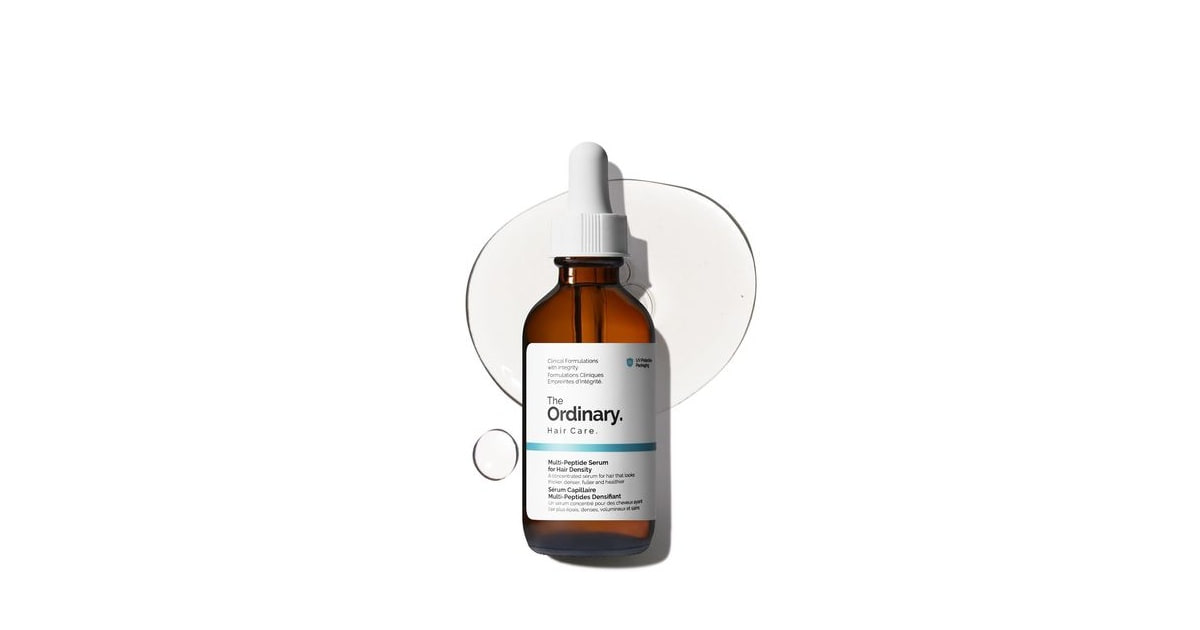
The Ordinary Multi-Peptide Serum for Hair Density
The Ordinary stacks six peptide and botanical complexes — Redensyl, Procapil, CAPIXYL, BAICAPIL, AnaGain and caffeine — into a lightweight leave-in serum. It costs a small fraction of what the premium botanical serums here ask, and it's the strongest minoxidil-free option we found.
$24fromAmazonList priceIf you can't use minoxidil or don't want to, this is where we'd send you. Redensyl has independent research behind it showing density improvement over about twelve weeks. Procapil targets the DHT-driven follicle shrinking that sits at the heart of female pattern loss. AnaGain, from pea sprout extract, nudges resting follicles back into growth. These are researched ingredients, not filler botanicals with a nice name.
The price-to-actives ratio is the real story. You get a two-ounce bottle with six named complexes, and it costs a small fraction of what the premium serums in this guide charge for fewer researched ingredients. The Ordinary's whole model is skipping the packaging and the celebrity campaign. Here that translates into a formula you can actually afford to use every night for six months straight — which is the only way any of this works.
The texture suits fine and oily scalps well. It's alcohol-free, silicone-free and vegan, absorbs in roughly a minute, and leaves nothing visible. If you wash your hair every other day or use heat tools regularly, that matters. It's also fragrance-free and safe on color-treated hair, so it won't accelerate fade on a fresh balayage.
The instructions say to apply a few drops to a clean, dry scalp once daily, ideally at bedtime. Overnight application is the easier habit for most people — you're not fitting it around a styling routine, and the serum gets hours of undisturbed contact.
Flaws but not dealbreakers
The dropper is slower than foam. You have to part your hair into sections to get the serum onto your scalp instead of your hair shaft, which adds a couple of minutes each night. If you're the kind of person who skips steps when tired, that friction matters more than it sounds.
The individual ingredients have research behind them, but this specific combination doesn't have a large independent trial supporting it. That's a meaningful gap compared with minoxidil. Some users also report mild tingling in the first week or two, and expect four to six months before anything looks different.
Upgrade pick
Built for hormone- and stress-driven thinning, at a premium
Nutrafol Women's Hair Serum
Nutrafol's serum targets several drivers of hair loss at once — DHT, cortisol and oxidative stress — using ashwagandha exosome technology, Irish moss peptides and pea sprout extract. It's the most expensive option here, and it's aimed squarely at perimenopausal and stress-related thinning.
$69fromAmazonHair loss in women rarely has one cause. Estrogen drops, androgen sensitivity rises, sleep gets worse, cortisol stays elevated — and all of it lands on the same follicles at once. Nutrafol's formula is built around that idea rather than around a single mechanism, which is why it appeals to women going through perimenopause who've already tried a one-note serum and gotten nowhere.
The patent-pending ashwagandha exosome delivery is the part that distinguishes it on paper. Exosome carriers are meant to get compounds into the scalp more efficiently than a standard topical suspension. Nutrafol pairs that with Irish moss peptides and pea sprout extract, and the whole thing is vegan and free of parabens and synthetic fragrance.
The texture is genuinely good, and that isn't trivial. It's water-based, fast-absorbing and leaves nothing on your hands or your pillow. If you're managing fragility and breakage alongside shedding — common after fifty — you can apply this and go straight into heat styling without the serum turning your roots limp. Daily compliance is the whole ballgame with these products, and a pleasant texture is what keeps you consistent.
Nutrafol designs the serum to work alongside its oral supplements, addressing the follicle from inside and out. You don't have to buy both. But the brand's clinical claims and its 90-day results timeline lean on the combined protocol, and that's worth knowing before you judge the topical alone.
Flaws but not dealbreakers
It's the priciest serum in this guide by a wide margin, and the full Nutrafol system — serum plus supplements — turns into a substantial recurring monthly expense. The results timeline is roughly three to six months, which is the same window the far cheaper peptide serums ask for.
For confirmed moderate-to-severe androgenetic alopecia, this isn't a substitute for minoxidil. It supports the scalp environment; it doesn't have the FDA-reviewed regrowth evidence Rogaine does. If your dermatologist has diagnosed pattern loss, treat this as something you add, not something you swap in.
Also great
For thinning that's really breakage from bleach and heat
KERASTASE Initialiste Advanced Scalp and Hair Concentrate
Kérastase Initialiste is a ceramide-and-amino-acid concentrate that repairs the hair fiber rather than reactivating follicles. If your hair looks thin because it's snapping off mid-strand after years of coloring, this addresses the actual problem.
$66fromAmazonNot all thinning starts at the follicle. If you've been lightening your hair for years, or flat-ironing it most days, what you're seeing may be breakage — strands snapping partway down and never reaching full length. A growth serum won't fix that, because the follicles are fine. The fiber is what's failing.
Initialiste works on the strand itself, and that's why it's here. The ceramide complex fills micro-gaps in the cuticle that open up from bleach and heat, while amino acids reinforce the cortex from inside. Panthenol pulls in moisture so strands look fuller right away. Professional colorists reach for it before lightening services for exactly this reason — it's the strengthening step, not the growth step.
You use it three times a week, not daily, applied to a cleansed and towel-dried scalp from front to back. That's a lighter commitment than the daily serums here. And unlike most growth treatments, the visual payoff arrives in weeks rather than months, because shine and smoothness are immediate cosmetic effects rather than biological ones.
It layers well. The finish isn't sticky, so a blowout after application behaves normally. If you're already using a growth serum and want your existing hair to look better while you wait for that serum to do its slow work, running the two together makes sense.
Flaws but not dealbreakers
This is a conditioning and strengthening treatment, not a regrowth treatment. There's no meaningful independent evidence that it reactivates dormant follicles. If your thinning is hormonal or genetic, Initialiste will make your remaining hair look better while the underlying loss continues.
It contains fragrance, which rules it out if your scalp reacts to scented products. And it's expensive for what it does — you're paying salon-brand prices for fiber repair when a good bond-building conditioner covers some of the same ground.
Who this is for
This guide is for women who've noticed real thinning — a wider part, a thinner ponytail, more shedding than usual — and want to know which serum is worth six months of daily effort. It's most useful if your loss is gradual and diffuse: female pattern thinning, postpartum shedding, perimenopausal changes, or breakage from years of color and heat. We cover topical over-the-counter serums only, not oral supplements, prescription treatments, transplants or laser devices.
Skip the serum aisle and call a dermatologist first if your hair loss came on suddenly, appears in patches, or comes with scalp pain, redness or persistent flaking. Same if you're losing eyebrow or body hair, if shedding started after a new medication, or if it's paired with fatigue, weight changes or nail changes. Those patterns point toward alopecia areata, scarring alopecia, thyroid problems or iron deficiency — conditions where an over-the-counter serum just delays the diagnosis you need.
How we picked
Evidence quality: we weighted FDA approval and independent peer-reviewed research above company-run consumer studies, and both above a clever ingredient name. Root-cause match: we mapped each formula to what it actually targets, because minoxidil, DHT blockers, cortisol modulators and fiber repair solve genuinely different problems. Daily friction: we compared application methods and dry times, since a serum you skip three nights a week is a serum that doesn't work. Scalp compatibility: we screened for fragrance, alcohol, silicones and residue, which decide whether a formula suits a fine, oily or sensitive scalp. Safety limits: we flagged contraindications during pregnancy and breastfeeding and the side effects owners actually report, so you know what you're signing up for.
Other hair growth serums for thinning hair worth considering
If you want a vegan, minoxidil-free formula and don't mind paying for it: The VEGAMOUR GRO Hair Serum for Hair Thinning ($64) — VEGAMOUR GRO is the clean-beauty option here — vegan, cruelty-free, and free of minoxidil, hormones, parabens and silicones. It uses turmeric stem cells, peptides and phytoactives, and it's genuinely non-greasy, so it won't flatten fine hair. The company's own study reports a substantial drop in shedding over ninety days. That's the catch, though: the efficacy data is company-funded rather than independent, and you're paying a premium for botanicals without FDA-level backing. It's a reasonable choice for postpartum or stress-related shedding, where you want something gentle and minoxidil is off the table. For confirmed pattern loss, The Ordinary gives you more researched actives for far less, and the bottle here is only a one-month supply.
The competition
This guide covers the five serums our research surfaced as the strongest and most widely discussed options for female hair thinning. It isn't the whole market — new formulas launch constantly, and prescription routes like oral minoxidil or spironolactone sit outside our scope entirely. Every product in the lineup earned a spot as a pick or an also-consider, so there's nothing here we looked at and set aside. If a serum you're considering isn't listed, that's a gap in our research rather than a verdict on the product.
How to use a hair growth serum
Apply serums to a clean, dry scalp, not to your hair. That distinction matters more than anything else: actives sitting on the hair shaft do nothing. Part your hair into sections about a quarter-inch apart and work across your scalp so the product reaches skin. Foam goes on with your fingertips and gets massaged in; droppers go directly onto the parted line. Wash your hands afterward, especially with minoxidil, so you don't transfer it to your face. Pick a time you'll actually keep — bedtime works well for droppers, mornings for fast-drying foam. Then give it six months before you judge. Take a photo of your part in the same lighting every month, because gradual change is nearly impossible to see day to day.
Questions we get
How long before a hair growth serum actually works?
Plan on three to six months of daily use before you can fairly judge any of these. Minoxidil needs four to six months, and increased shedding in weeks two through eight is normal rather than a sign it's failing. Peptide serums like The Ordinary typically show density changes around the three-to-four-month mark. Nothing in this category produces visible results in under eight weeks, no matter what the packaging says.
What's best for postpartum hair loss?
Minoxidil is contraindicated while breastfeeding, so Rogaine is out. VEGAMOUR GRO or The Ordinary Multi-Peptide Serum are the reasonable options to raise with your doctor. But set expectations first: postpartum shedding is a response to the estrogen drop after delivery, and it usually resolves on its own within six to twelve months regardless of what you apply. Talk to your OB-GYN before starting anything.
Is minoxidil safe to use long-term?
Yes, for most women. Topical 5% minoxidil has been studied for more than three decades and is considered safe for ongoing use as directed. The common side effects — scalp dryness, mild irritation, early shedding — usually settle within the first couple of months. It's contraindicated during pregnancy and breastfeeding, and annual check-ins with a dermatologist are a good idea if you're using it indefinitely.
Can I use these on color-treated or bleached hair?
Yes. The Ordinary, Nutrafol and VEGAMOUR are all silicone-free and safe on processed hair, so they won't speed up color fade or leave buildup. Kérastase Initialiste is specifically built for chemically treated hair and is what many colorists reach for before a lightening service. Rogaine foam is fine too — apply it to a fully dry scalp after styling.
What's the best option if I can't use minoxidil?
The Ordinary Multi-Peptide Serum for Hair Density. Redensyl, Procapil, AnaGain and CAPIXYL each have research behind them at the ingredient level, and no other minoxidil-free serum here packs that many into one bottle at anywhere near the cost. If your thinning is clearly hormonal or stress-driven and budget isn't the constraint, Nutrafol's multi-pathway formula is the other one to consider.
What should I use for menopausal thinning?
Nutrafol Women's Hair Serum is built for it, targeting DHT-driven follicle shrinking, cortisol and oxidative stress together — the three factors that tend to converge during the menopause transition. If a dermatologist has confirmed moderate-to-severe pattern loss, Rogaine remains the stronger regrowth option and can be used alongside Nutrafol with medical oversight. Getting your ferritin and thyroid checked is worth doing before you spend months on any serum.
Why you should trust us
For this guide:
- We compared manufacturer ingredient disclosures and product specifications across all five serums, along with published clinical literature on minoxidil, Redensyl, Procapil and AnaGain.
- We read owner feedback themes for each product, paying particular attention to reports of scalp irritation, greasiness and how long people stuck with the routine.
- We did not use, apply or evaluate any of these serums ourselves — every claim here traces to specifications, published research or owner reports.
- We read owner reviews on every listing, weighted toward the critical ones, because that is where the recurring failures show up.
- We have a systematic way of automatically fetching the latest prices, so the numbers on this page stay current.
- This is a research-focused guide, so the team may not own every product listed — though we often do own the top winners, which gives us extra context for the recommendations.
- We don't accept free products, and the retailer commission never changes which product we recommend.
Sources
Female Pattern Hair Loss — American Academy of Dermatology, American Academy of Dermatology
Best Hair Growth Serums, Tested and Reviewed — Byrdie, Byrdie
Best Hair Growth Products for Thinning Hair — Good Housekeeping, Good Housekeeping
Best Hair Serums for Thinning Hair — Allure, Allure
Rosemary Oil vs. Minoxidil 2% for Hair Regrowth — PubMed / Skinmed Journal, PubMed / Skinmed Journal
Minoxidil for Women: Efficacy, Safety, and Alternatives — Verywell Health, Verywell Health
Women and Hair Loss — American Hair Loss Association, American Hair Loss Association
Hair Loss in Women — WebMD, WebMD
Amazon product listings and owner reviews for all 5 products
Manufacturer specification pages for each product
Some passages in this guide may be paraphrased with AI help. Prices are refreshed automatically.
More like this.
Continue exploring beauty reviews and recommendations.

The Best Hair Growth Serums For Thinning Hair
Thinning hair rarely announces itself. You notice a wider part in a bathroom mirror, or a ponytail that's gone slack, or more strands than usual circling…

The Best Hair Growth Products and Treatments
Hair loss is common enough to be unremarkable and personal enough to feel like a crisis. Roughly 50 million men and 30 million women in the United States…

The Best Hyaluronic Acid Serums
Hyaluronic acid is a humectant, which is a roundabout way of saying it pulls water toward your skin and holds it there. That's the whole job. When it…

The Best Vitamin C Serums
Vitamin C serum is the skincare step that pays you back slowly. You put it on in the morning, you follow it with sunscreen, and a couple of months later…

The Best Anti-Aging Face Serums
A serum is the step in a routine where the actual chemistry happens. Cleanser, moisturizer and sunscreen mostly support the work a serum does. A good one…

The Best Retinol Serums
Retinol is the rare skincare ingredient with decades of published research behind it. It speeds up how fast your skin sheds and replaces cells, and over…