The Best Vitamin C Serums
Vitamin C serum is the skincare step that pays you back slowly. You put it on in the morning, you follow it with sunscreen, and a couple of months later you notice your skin looks more even. Old acne marks fade. The dullness lifts. It won't erase melasma or stand in for a dermatologist's prescription, but as a daily antioxidant habit it's one of the few drugstore-shelf products with serious research behind it.
Here's the annoying part. Vitamin C is chemically fragile. L-ascorbic acid, the most studied form, only penetrates skin at a low pH, and it starts breaking down the moment air and light reach it. Every serum here will eventually turn orange, and once it does it's finished — you throw it out. Nobody has solved this. Brands slow it down with opaque bottles, or use gentler derivatives that last longer and work slower, or make you mix the thing yourself.
So the question isn't which formula is strongest. It's which one you'll actually finish before it goes bad, on the skin you actually have. A stinging 20% serum you skip half the week does less for you than a mild one you use every morning. We think the Paula's Choice BOOST C15 Super Booster is the best vitamin C serum for most people, and that the Timeless Skin Care Vitamin C Serum with Vitamin E & Ferulic Acid is the one to buy if you want a bigger bottle of the benchmark formula and don't mind storing it carefully.
Everything we recommend

A well-rounded 15% formula most skin types can handle

The benchmark formula in a bigger bottle, if you'll baby it

Gentler chemistry that trades speed for staying power

Clinic-counter potency for skin that tolerates a low pH
At a glance
| Product | Vitamin C % | Volume | Price | |
|---|---|---|---|---|
 | Vitamin C Face Serum with Vitamin EAlso in lineup | 15% | 2 Fl Oz | $54.95 |
| TruSkin Brightening Vitamin C Serum for FaceBudget pick | — | 2 Fl Oz | $34.99On sale |
| Paula's Choice BOOST C15 Super Booster 15%Top pick | 15% | 0.67 Fl Oz | $44.25On sale |
 | Drunk Elephant C-Firma Fresh Day Serum -Also consider | 15% | 0.94 Fl Oz | $71.10On sale |
 | Bundle of La Roche-Posay Pure 10% VitaminAlso consider | 10% | 2.02 Fl Oz | $70.48On sale |
| Timeless Skin Care Vitamin C Serum withRunner-up | 20% | 1 Fl Oz | $24.56On sale |
 | AZAZ Klairs Freshly Juiced Vitamin C serumAlso in lineup | — | 35 ml | $29.99 |
| Obagi Medical OBAGI PROFESSIONAL-C SERUMUpgrade pick | 15% | 1 Fl Oz | $130 |
How we picked
Form of vitamin C. We separated L-ascorbic acid formulas from stable derivatives like sodium ascorbyl phosphate, because they behave completely differently in the bottle and on your face. Both belong in a guide like this, but they suit different people.
Concentration and pH. Published research puts the useful L-ascorbic acid range at 10 to 20 percent, at a pH below 3.5. We looked for serums whose spec sheets land inside that window rather than chasing the highest number on the label.
Supporting antioxidants. Duke research found that vitamin C paired with vitamin E and ferulic acid gives roughly eight times the antioxidant protection of vitamin C alone. Formulas with that trio got priority.
Stability and packaging. We favored opaque or airtight bottles, sizes you can realistically finish, and mixing systems that keep the formula inert until you open it. We also read owner feedback for recurring complaints about serums turning orange early.
Skin-type fit. We checked ingredient lists for fragrance, essential oils and heavy occlusives, and we tracked how often owners with sensitive or acne-prone skin reported stinging, redness or breakouts.
Top pickOn sale
A well-rounded 15% formula most skin types can handle
Paula's Choice BOOST C15 Super Booster 15%
This is 15% pure L-ascorbic acid with ferulic acid and ergothioneine, packed in an opaque bottle small enough that you'll finish it before it turns. It's formulated for all skin types, sensitive included, and it disappears under moisturizer and sunscreen without pilling.
$44.25fromAmazonList priceThis is the formula the research supports, without extras that muddy it. Published work on topical L-ascorbic acid puts the useful range at 10 to 20 percent, with measurable fading of hyperpigmentation showing up around the twelve-week mark. At 15%, this sits in the middle of that window. Paula's Choice research also found that pushing past 20% mostly buys you redness and water loss, not results.
The ferulic acid isn't decoration. Duke research published in the Journal of Investigative Dermatology found that pairing L-ascorbic acid with vitamin E and ferulic acid gave roughly eight times the antioxidant protection of vitamin C on its own. That combination is why this style of formula became the reference point for the whole category. You're getting the same architecture in a much smaller, more manageable bottle.
Paula's Choice calls this a booster, and that's genuinely how it acts. It's water-thin, closer to a liquid than a gel, so you can press a few drops straight onto clean skin or stir it into your morning moisturizer. It sinks in fast and doesn't leave a tacky film, which matters if you layer sunscreen and makeup on top.
The packaging is quietly one of the best things here. The bottle is opaque, so light isn't cooking your serum on the counter, and the size is small enough that you'll use it up in a couple of months of daily use. That's the whole game with L-ascorbic acid. A big bottle you're still working through six months later is a bottle you're rubbing oxidized vitamin C into your face.
Flaws but not dealbreakers
The texture is so runny it's genuinely wasteful. Owners report drops sliding through their fingers and off their jawline before they can spread anything, and with a bottle this small that stings. Tip it slowly and work over a small area.
A minority of buyers say they've gone through several bottles and seen nothing at all. That's true of every vitamin C serum, but it's worth knowing before you commit. And because this is a genuinely low-pH formula, it can tingle if you've just exfoliated or if your barrier is already unhappy.
Runner-upOn sale
The benchmark formula in a bigger bottle, if you'll baby it
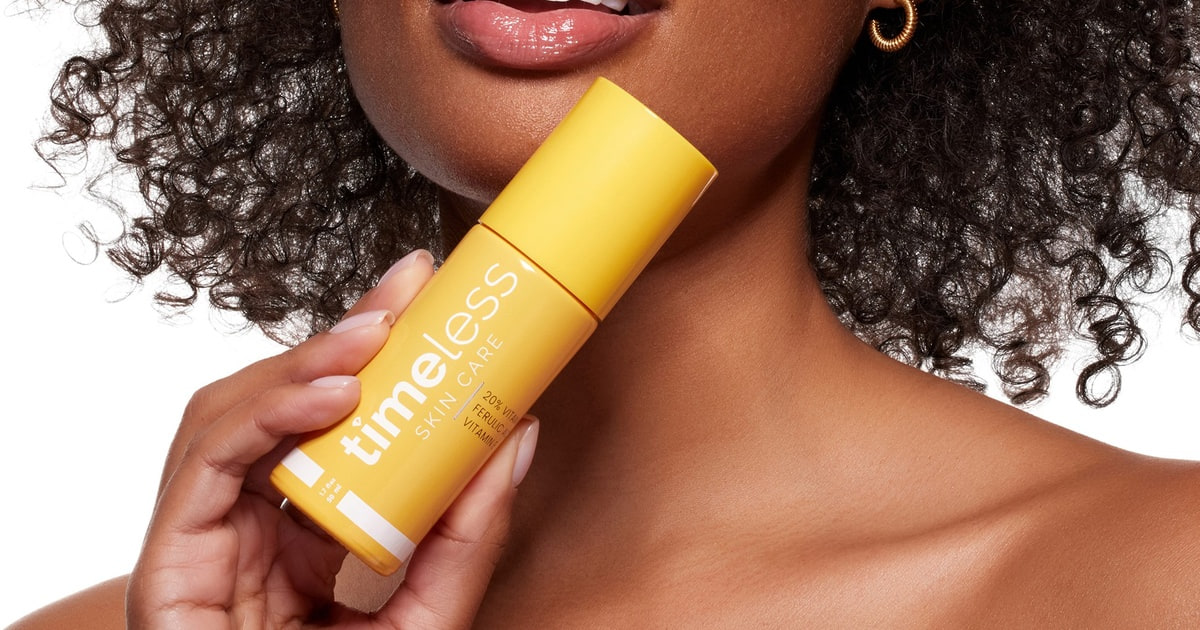
Timeless Skin Care Vitamin C Serum with
Twenty percent L-ascorbic acid with vitamin E and ferulic acid, fragrance-free, in a one-ounce bottle. It's the closest thing here to the formula dermatologists treat as the reference standard, and people who like it tend to rebuy it for years.
$24.56fromAmazonList priceThe ingredient list is the appeal. You get a high dose of L-ascorbic acid backed by vitamin E and ferulic acid, with no fragrance, parabens or dyes to complicate things. That's the same three-part structure behind the clinic-counter serum everyone else is copying, and this one costs a fraction of what those go for.
If you want visible brightening sooner rather than later, this is the concentration to reach for. A Byrdie tester panel found that L-ascorbic acid serums in the 15 to 20 percent range showed brightening in about four to six weeks, roughly half the time that derivative-based formulas needed at comparable strength. Twenty percent also sits right at the ceiling where added potency stops helping, so there's no reason to go higher.
The texture is watery and sinks in within a minute, which makes it easy to slot between cleanser and sunscreen. Owners with both oily and dry skin get along with it, and it doesn't ball up under mineral sunscreen the way thicker serums sometimes do. If you use two or three pumps every morning, one bottle is roughly a season.
Flaws but not dealbreakers
It smells. Fragrance-free high-dose vitamin C tends to have a faintly sulfurous, hot-dog-ish odor, and this one does. It fades within a minute or two on skin, but you'll notice it every morning.
Packaging is the real weak point. Owners regularly describe leaking bottles and pumps that don't behave, and a leaking vitamin C serum is a stained bathroom counter. Plenty of buyers keep it in the fridge, which both slows oxidation and gives you a place to stand it upright.
At 20 percent in a low-pH base, this stings some people. If you're rosacea-prone or you've reacted to vitamin C before, start with something gentler.
Budget pickOn sale
Gentler chemistry that trades speed for staying power
TruSkin Brightening Vitamin C Serum for Face
This uses sodium ascorbyl phosphate instead of raw L-ascorbic acid, with hyaluronic acid, vitamin E, aloe and jojoba alongside it. It's unscented, it doesn't sting, and it's the forgiving option if vitamin C has burned you before.
$34.99fromAmazonList priceSodium ascorbyl phosphate is the reason this one doesn't bite. It's a stable derivative that converts to L-ascorbic acid once it's on your skin, so it works at a friendlier pH and doesn't oxidize nearly as fast in the bottle. Research in the Journal of Cosmetic Dermatology also credits it with antibacterial activity, which is a small bonus if you break out.
The trade-off is patience. Byrdie's panel found derivative formulas took roughly twice as long as L-ascorbic acid to show the same brightening, so think three months rather than six weeks. Owners who stick with it mostly talk about softened dark spots and a general evening-out, not a dramatic before-and-after.
It's also the most comfortable serum here to actually wear. The hyaluronic acid, aloe and jojoba make it feel closer to a light hydrating layer than an acid treatment, which is genuinely useful in winter or if your skin runs dry. The bottle is generous, and because the vitamin C form is stable, taking a while to finish it isn't a problem.
Flaws but not dealbreakers
Some owners find sunscreen pills or flakes over it, especially if they apply SPF before the serum has fully sunk in. Give it a couple of minutes, and use less than you think you need.
The jojoba and aloe base can feel heavy on very oily skin. And plenty of people report no visible change at all — with a derivative at this strength, modest results are the realistic expectation.
Upgrade pick
Clinic-counter potency for skin that tolerates a low pH
Obagi Medical OBAGI PROFESSIONAL-C SERUM
Obagi sells this through dermatology offices, and it's 15% L-ascorbic acid formulated at a deliberately low pH. The version listed here is aimed at combination skin, and owners consistently say the bottle stays clear for months instead of going amber halfway through.
$130fromAmazonStability is the thing you're paying extra for, and it's not a trivial thing to pay for. The Derm Review compared more than forty serums and found only about thirty percent still held the sub-3.5 pH that L-ascorbic acid needs after six months sitting at room temperature. Owner feedback here skews heavily toward bottles that don't discolor, which is unusual in this category.
It's also the serum least likely to wreck your makeup. People who've bounced off other high-potency formulas because of pilling under foundation or sunscreen tend to land here. It absorbs cleanly, and a few drops covers a face, so a single bottle stretches across several months of daily use for many owners.
This makes the most sense if you have combination or thicker skin, a stubborn set of sun spots, and a dermatologist already nudging you toward medical-grade skincare. If your skin is calm and your goal is maintenance, the top pick does the same job for much less per bottle.
Flaws but not dealbreakers
It's the most expensive serum in this guide by a wide margin, and it comes in a small bottle. That's a real barrier if you're just trying vitamin C out.
Long-time buyers say the smell and packaging have shifted over the years and they don't love the change. And a genuinely low pH means a genuine sting on sensitive or freshly exfoliated skin — this isn't the one to experiment with if you react easily.
Who this is for
Buy a vitamin C serum if you want to fade post-acne marks and sun spots, even out your tone, or add antioxidant protection to a morning routine that already includes sunscreen. It's a good fit for first-timers, for people who've been putting off a proper routine, and for anyone who wants something with actual clinical backing rather than a nice smell. It rewards consistency, so pick the one you'll use every day.
Skip it, or talk to a dermatologist first, if you're treating stubborn melasma, if your barrier is currently irritated, or if you've had a reaction to a low-pH product before. This guide covers leave-on facial serums only — not moisturizers or cleansers with vitamin C tucked in, and not prescription pigment treatments. And no serum replaces daily sunscreen; without SPF, you're undoing the work every afternoon.
How we picked
Form of vitamin C: we split L-ascorbic acid formulas from stable derivatives, since one works faster and one lasts longer. Concentration and pH: we looked for 10 to 20 percent L-ascorbic acid formulated below pH 3.5, the range published research supports, rather than the biggest number on the box. Supporting antioxidants: formulas pairing vitamin C with vitamin E and ferulic acid got priority, because that combination multiplies the antioxidant effect. Stability and packaging: opaque bottles, airtight pumps, mix-it-yourself systems and sizes you can finish before oxidation sets in. Skin-type fit: fragrance-free ingredient lists and owner feedback themes around stinging, redness and pilling under sunscreen.
Other vitamin c serums worth considering
If you want a serum that's guaranteed fresh the day you start it: The Drunk Elephant C-Firma Fresh Day Serum - ($71.10) — Drunk Elephant ships C-Firma Fresh as separate powder and serum, and you combine them yourself before first use. That solves the oxidation problem at the source — nothing degrades on a warehouse shelf. Inside you get 15% L-ascorbic acid with 0.5% ferulic acid and vitamin E, no fragrance, silicones or essential oils. It's a smart pick if you travel a lot or go through serum slowly. What you give up: it costs more per ounce than anything else here, the mixing step is fiddly, the pump can spray if you're impatient, and it has the same faint vitamin C smell as its rivals.
If you have sensitive skin and want a whole brightening routine in one box: The Bundle of La Roche-Posay Pure 10% Vitamin ($70.48) — This La Roche-Posay bundle pairs a 10% pure vitamin C serum with hyaluronic acid alongside the brand's pure retinol serum. The lower vitamin C concentration is the point — it's a gentler entry if stronger formulas have left you red, and La Roche-Posay's pharmacy formulas are a common dermatologist suggestion for reactive skin. The catch is that you're buying two actives at once, and they belong at opposite ends of the day: vitamin C in the morning under sunscreen, retinol at night. If you only want the vitamin C, you're paying for a serum you may not use.
The competition
These are the remaining serums our research surfaced, not a map of everything on the market. Both are legitimate products; they just lost out to the picks on formula evidence, packaging or how much we could verify about the listing itself.
The Vitamin C Face Serum with Vitamin E ($54.95) — Advanced Skin Care's serum copies the reference formula closely: 15% L-ascorbic acid with vitamin E, ferulic acid and hyaluronic acid, in a two-ounce bottle that dwarfs most of the competition. Long-time buyers are enthusiastic, and it's aimed squarely at people who don't want to pay clinic-counter prices. Two things kept it out of the picks. That much serum is hard to finish before L-ascorbic acid oxidizes, and a noticeable slice of owner feedback describes itching, dryness, redness and irritation around the eye area. If you go through vitamin C quickly and your skin is not reactive, it's still a lot of a well-built formula.
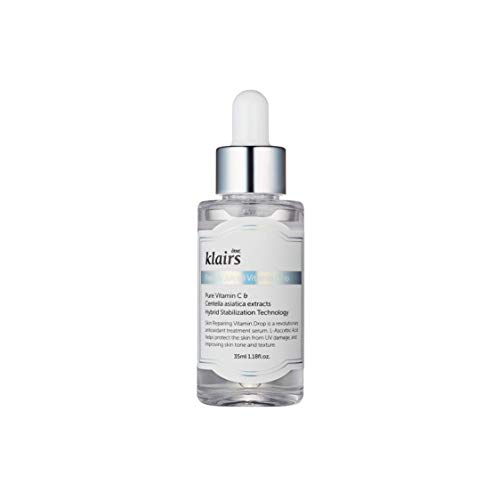
The AZAZ Klairs Freshly Juiced Vitamin C serum ($29.99) — The Klairs Freshly Juiced serum is a well-liked K-beauty formula built around a low 5% L-ascorbic acid concentration with hyaluronic acid, and that mildness is exactly right for skin that flinches at everything else. The problem is this particular listing. It's a third-party reseller entry with no ingredient details, no specs beyond the size, and almost no feedback to read, so there's no way to verify what arrives or how it's been stored. If you already know this formula suits you, buy it somewhere you can confirm the batch.
Storage and layering
Keep vitamin C in the dark and keep it cool. A closed cabinet is fine; the fridge is better, and plenty of owners store their L-ascorbic acid serums there specifically to slow oxidation. Watch the color. A fresh serum runs clear to pale straw, and once it goes orange or brown the vitamin C has degraded and it's no longer doing anything for you. Throw it out at that point. Use it in the morning on clean, dry skin, wait a minute for it to absorb, then moisturizer, then SPF 30 or higher — sunscreen is what turns a vitamin C habit into actual protection. Cap it tightly every time. Air is the enemy, and a dropper left open on the counter is a bottle you'll be replacing early.
Questions we get
What percentage of vitamin C is most effective?
For L-ascorbic acid, published research points to 10 to 20 percent as the effective range. Below that you're unlikely to see much; above it, Paula's Choice research indicates you get diminishing returns and a much higher chance of redness and irritation. If your skin is sensitive, start at the low end and work up.
What's the difference between L-ascorbic acid and derivatives like sodium ascorbyl phosphate?
L-ascorbic acid is pure vitamin C and by far the most researched form, but it needs a low pH to penetrate and it degrades quickly once exposed to air and light. Derivatives convert to vitamin C on your skin, so they're gentler and last far longer in the bottle. The catch is speed — a Byrdie panel found derivatives took about twice as long to produce the same brightening.
Should I use vitamin C in the morning or at night?
Morning, followed by broad-spectrum SPF 30 or higher. Vitamin C is an antioxidant, so it does the most good when it's on your skin during the hours you're exposed to UV and pollution. Applying it at night isn't harmful, you just get less out of it.
Can I use vitamin C with retinol or niacinamide?
Yes, but the easiest approach is to separate them. Put vitamin C on in the morning and retinol at night — stacking two strong actives in one sitting is the fastest route to a stinging, flaky face. Niacinamide alongside vitamin C is fine for most people despite the internet's warnings; if you notice flushing, move it to your evening routine.
Why did my serum turn orange, and can I still use it?
That color means the vitamin C has oxidized, usually from air, light or heat getting into the bottle. Oxidized vitamin C doesn't brighten anything, so there's no reason to keep using it. Toss it, and next time store the bottle in a dark cabinet or the fridge and cap it immediately after each use.
How long before dark spots start fading?
Give it two to three months of daily use before you judge. A Good Housekeeping Beauty Lab panel of 500 consumers found roughly three-quarters reported visibly brighter skin within about eight weeks, and clinical work on hyperpigmentation typically measures meaningful change at the twelve-week mark. Consistency matters more than concentration here.
Why you should trust us
For this guide:
- We read the published research on L-ascorbic acid concentration, formula pH, and the vitamin C, vitamin E and ferulic acid combination, then checked it against what each brand states on its own spec sheet.
- We compared ingredient lists, vitamin C forms, bottle sizes and packaging design across every serum in this guide.
- We read through owner feedback looking for repeated themes — early oxidation, smell, stinging, and pilling under sunscreen — rather than isolated complaints.
- We read owner reviews on every listing, weighted toward the critical ones, because that is where the recurring failures show up.
- We have a systematic way of automatically fetching the latest prices, so the numbers on this page stay current.
- This is a research-focused guide, so the team may not own every product listed — though we often do own the top winners, which gives us extra context for the recommendations.
- We don't accept free products, and the retailer commission never changes which product we recommend.
Sources
Best Vitamin C Serums of 2026 — Allure, Allure
Best Vitamin C Serums, According to Dermatologists — Byrdie, Byrdie
Vitamin C in Dermatology — Indian Dermatology Online Journal (Pullar et al.), National Institutes of Health / PubMed
Ferulic Acid and Vitamin C Combination Study — Journal of Investigative Dermatology, Journal of Investigative Dermatology
Best Vitamin C Serums — Good Housekeeping Beauty Lab, Good Housekeeping
Vitamin C Serum Reviews & Testing — Paula's Choice Research, Paula's Choice
Best Vitamin C Serums — Healthline Medically Reviewed, Healthline
Vitamin C Skincare Science — The Derm Review, The Derm Review
Best Vitamin C Serums for Every Skin Type — Women's Health, Women's Health
SkinCeuticals C E Ferulic Clinical Data — SkinCeuticals.com, SkinCeuticals
Best Vitamin C Serums — Vogue Beauty, Vogue
Drunk Elephant C-Firma Fresh — Sephora Consumer Reviews, Sephora
Amazon product listings and owner reviews for all 8 products
Manufacturer specification pages for each product
Some passages in this guide may be paraphrased with AI help. Prices are refreshed automatically.
More like this.
Continue exploring beauty reviews and recommendations.

The Best Anti-Aging Face Serums
A serum is the step in a routine where the actual chemistry happens. Cleanser, moisturizer and sunscreen mostly support the work a serum does. A good one…

The Best Retinol Serums
Retinol is the rare skincare ingredient with decades of published research behind it. It speeds up how fast your skin sheds and replaces cells, and over…

The Best Hair Growth Serums For Thinning Hair
Thinning hair rarely announces itself. You notice a wider part in a bathroom mirror, or a ponytail that's gone slack, or more strands than usual circling…

The Best Hair Growth Serums for Thinning Hair
Hair thinning shows up in ordinary moments. You notice more strands in the shower drain, or your part looks wider under bathroom lighting. Maybe your…
The Best Retinol Creams and Night Serums
Retinol is the closest thing over-the-counter skincare has to a sure thing. It speeds up how fast your skin sheds and rebuilds itself, which softens fine…

The Best Hyaluronic Acid Serums
Hyaluronic acid is a humectant, which is a roundabout way of saying it pulls water toward your skin and holds it there. That's the whole job. When it…