The Best Hair Growth Serums For Thinning Hair
Thinning hair rarely announces itself. You notice a wider part in a bathroom mirror, or a ponytail that's gone slack, or more strands than usual circling the drain. That's when most people start shopping, and it's also when the category gets confusing fast. Some bottles contain an FDA-approved drug. Others contain peptides, caffeine or botanical extracts that thicken the strands you already have. Those aren't the same thing, and knowing which problem you're solving matters more than any single ingredient list.
Here's the honest part: no serum works quickly, and none of them works for everyone. Hair cycles run three to six months, so you're committing to a bottle-after-bottle routine before you can judge anything. Owners who see real change usually describe six months of nightly use, not six weeks. Some people get scalp irritation or breakouts instead of results. And almost everything here is maintenance — stop applying, and you drift back toward where you started. Anyone promising faster is selling you something.
We looked at what published reviews, manufacturer specifications and owner feedback agree on, and we sorted these ten products by who they actually help. We think that the VEGAMOUR GRO+ Advanced Hair Serum is the best hair growth serum for most people, and that Women's Rogaine 5% Minoxidil Foam is the one to buy if you want the only over-the-counter option with FDA approval behind it.
Everything we recommend

Less shedding, no drug, and it disappears into your hair

The only one here with actual FDA approval behind it

Nine actives for a fraction of what the salon bottles cost

For stress and hormone thinning, if you'll pair it with the pills

A watery overnight treatment that never leaves residue
Prices as of Oct 22, 7:36 AM PT · Details
At a glance
| Product | Volume | Key Active | Price | |
|---|---|---|---|---|
| VEGAMOUR GRO+ Advanced Hair Serum for ImprovingTop pick | 1 fl oz | GROActive+ Complex | $78 |
 | OGX ProGrowth + Peptide Serum MistAlso consider | 6.5 fl oz | Peptides | $10.47 |
| The Ordinary Multi-Peptide Serum for Hair DensityBudget pick | 2 fl oz | Multi-Peptide | $24 |
| Women's Rogaine Hair Growth FoamAlso great | 2x 2.11 oz | Minoxidil 5% | $44.97 |
| Nioxin Night Density Rescue SerumRunner-up | 2.4 fl oz | Oxydine | $50 |
| Nutrafol Women's Hair SerumUpgrade pick | 1 fl oz | Ashwagandha Exosome | $49 |
 | KERASTASE Initialiste Advanced Scalp and Hair ConcentrateAlso consider | 2.2 fl oz | — | $66 |
 | DS Laboratories Revita Hair Thickening Shampoo andAlso in lineup | — | Caffeine, Biotin | $102.60 |
 | PURA D'OR Anti-Thinning Advanced Therapy Biotin ShampooAlso in lineup | 4oz Serum | DHT Blockers | Check price |
 | Shea Moisture Jamaican Black Castor Oil TreatmentAlso in lineup | 11.5 oz | Castor Oil | $9.89 |
Prices as of Oct 22, 7:36 AM PT · Details
How we picked
Evidence behind the actives. We gave the most weight to ingredients with published support — 5% minoxidil, REDENSYL, Procapil, CAPIXYL, BAICAPIL, Nanoxidil. Brand-run trials counted for less than independent literature, and we say which is which.
What owners actually report. We read through owner feedback looking for repeated themes rather than standout stories, and we paid particular attention to accounts from people six months or more into a routine.
Whether you'll stick with it. Texture, greasiness, scent and application time decide whether a serum gets used for the ninety days it needs. Anything that fights your styling routine loses.
Type of thinning targeted. DHT blockers, growth-phase drugs and fiber-strengthening peptides solve different problems. We sorted products by which kind of hair loss they're formulated for rather than ranking them on one scale.
Scalp tolerance. We flagged products where irritation, burning or breakouts come up repeatedly in owner feedback, since a serum you can't tolerate is worse than no serum at all.
Top pick
Less shedding, no drug, and it disappears into your hair
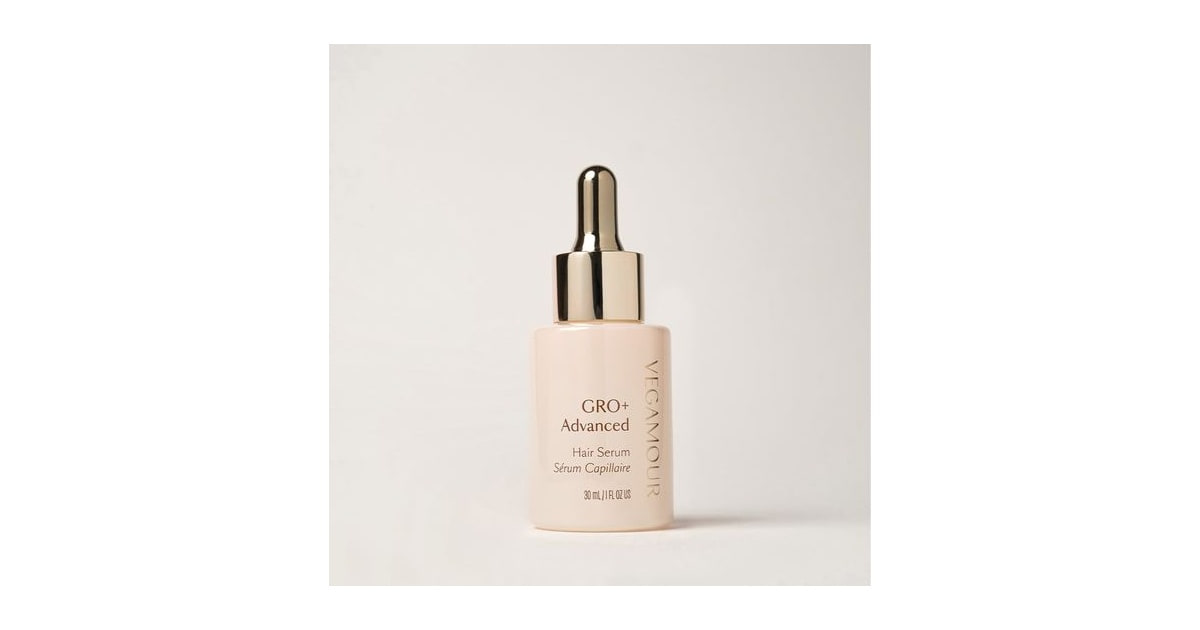
VEGAMOUR GRO+ Advanced Hair Serum for Improving
A lightweight daily serum built around plant actives instead of minoxidil. It's the easiest one here to actually stick with, which matters more than anything when you need months of consistency, and it works for people who can't or won't use a drug treatment.
$78fromAmazonPrices as of Oct 22, 7:36 AM PT · Details
It's the serum you'll still be using in month four. That sounds like faint praise, but adherence is the whole game with thinning hair. This one absorbs fast, doesn't leave your roots oily, and takes about ten seconds at night. Owners who like it describe using it before bed without thinking about it. Compare that to a routine that involves rinsing, waiting or restyling, and you can see why people quit those.
It skips minoxidil entirely, which opens it up to people the drug shuts out. Minoxidil isn't recommended during pregnancy or breastfeeding, and some people simply react badly to it. VEGAMOUR is vegan, cruelty-free and free of hormones, so it's a reasonable starting point if postpartum shedding is what brought you here. It's also formulated with dermatologist input, per the manufacturer, and made for both women and men.
The reported wins are about shedding, not regrowth — and that's the right expectation. Owners consistently describe less hair in the shower drain and a part line that looks less exposed after a few weeks of daily use. Several mention fuller temples. Fewer describe genuinely new hair in bare areas. If your hair is thinning diffusely rather than receding into a defined pattern, that's exactly the problem this addresses.
The GROActive+ complex is delivered in a liposomal carrier, which the brand says helps actives reach the scalp. Take delivery-technology claims with the appropriate grain of salt. What's verifiable is the texture: it's a gel-style serum, not an oil, and it doesn't sit on top of fine hair. Owners with very fine hair specifically note that it doesn't flatten their roots the way heavier scalp treatments do.
Flaws but not dealbreakers
A meaningful minority of owners get scalp irritation, and a few get breakouts. Reports of burning on application and small pimples across the scalp show up regularly enough that you should treat the first week as a trial. If your scalp reacts, stop — people who pushed through it generally didn't get results anyway. Patch-test behind your ear first if you're prone to sensitivity.
It's a one-month supply in a small bottle, and results need at least three months. So you're buying it repeatedly before you know if it's working, at a price that sits well above drugstore serums. That's a real commitment.
Use too much and your hair goes flat and oily. A few drops is the whole dose. Owners who over-apply describe greasy roots the next morning, which somewhat defeats the point of a lightweight formula.
Also great
The only one here with actual FDA approval behind it
Women's Rogaine Hair Growth Foam
Rogaine's 5% minoxidil foam is the evidence-based option for hereditary thinning in women, and it's the treatment dermatologists reach for first. It demands twice-the-diligence and comes with real caveats, but nothing else in this guide has decades of controlled research behind it.
$44.97fromAmazonPrices as of Oct 22, 7:36 AM PT · Details
Minoxidil is the one active ingredient here with a genuine clinical track record. It extends the growth phase of the hair cycle and widens follicles, and the American Academy of Dermatology treats topical minoxidil as first-line for hereditary female pattern hair loss. Rogaine invented it. If a dermatologist told you to try something topical, this is almost certainly what they meant.
It's the right choice when your thinning follows a pattern. Widening part, thinning crown, receding at the temples — that's androgenetic hair loss, and peptide serums mostly won't touch it. Owner accounts of long-term use here are unusually detailed and unusually positive, with people describing new growth at the temples after months of consistent application.
The foam is much easier to live with than the old liquid. People who used the dropper version describe greasy hair and burning scalps. The foam is unscented, dries fast, and you work it into the scalp with your fingertips. It also includes botanical extracts and emollients meant to keep the scalp from drying out, though dryness is still the most common complaint.
Two canisters cover four months, so you get a real trial period in one purchase. That's helpful in a category where three months is the minimum before judging anything. It also means less chance you'll lapse waiting on a reorder.
Flaws but not dealbreakers
Stop using it and you lose what you gained. Minoxidil is maintenance, not a cure. Shedding resumes within months of quitting, which means this is an indefinite commitment. Go in knowing that.
Shedding gets worse before it gets better. A paradoxical shed in the first two to four weeks is normal and expected — it's the cycle resetting — but it panics people into quitting right when they should hold on.
It's not for pregnancy or breastfeeding, and dry scalp is a common complaint. Several owners report flaking or irritation, and a few describe hair feeling stiff and heavy after application. Skip it entirely if you're pregnant or nursing and look at the minoxidil-free options instead.
Budget pick
Nine actives for a fraction of what the salon bottles cost
The Ordinary Multi-Peptide Serum for Hair Density
The Ordinary crams REDENSYL, Procapil, CAPIXYL, BAICAPIL, AnaGain and caffeine into one fragrance-free dropper bottle. Nothing else at this price comes close on ingredient density, and it's the sensible first serum if you're not ready to spend much.
$24fromAmazonPrices as of Oct 22, 7:36 AM PT · Details
You get more studied actives per bottle than anything else here. REDENSYL, Procapil and CAPIXYL are the peptide complexes that show up in serums costing several times as much. BAICAPIL has independent data behind it for increasing hair count and reducing loss versus control. Whether the combination outperforms any single one is unproven — but as a way to try peptides without much financial risk, it's hard to beat.
It's fragrance-free, alcohol-free and silicone-free, which matters if your scalp is touchy. The Ordinary's whole approach is minimal formulation, and that pays off on the scalp. There's no perfume to react to and nothing to build up. If other serums have stung or itched, this is the gentlest place to restart.
Owners report the most consistent wins on strength and thickness of existing hair. People describe two full bottles in and hair that feels denser and less breakage-prone, plus filled-in edges. New growth reports exist but are less common. Set your expectations around thicker, sturdier strands and you'll probably be satisfied.
The once-daily bedtime routine is genuinely easy. A few drops on a clean, dry scalp before sleep, and you're done. No rinsing, no restyling, no waiting.
Flaws but not dealbreakers
Some people's scalps get sensitive in the first couple of weeks. Owners describe tenderness and mild tingling early on, usually without visible redness, that settles down with continued use. Worth knowing so it doesn't surprise you.
The finish is slightly tacky, which fine or low-porosity hair will notice. Apply it before bed and it's a non-issue. Apply it in the morning and you may find your styling doesn't cooperate.
Reactions to it are genuinely split. Plenty of owners see nothing after months. Given the low price, that's a cheap experiment — but it's an experiment, not a sure thing, and there's no clinical trial on this specific blend.
Upgrade pick
For stress and hormone thinning, if you'll pair it with the pills
Nutrafol Women's Hair Serum
Nutrafol's serum targets stress- and hormone-driven thinning with Ashwagandha Exosome technology and Irish Moss peptides. It's expensive, and it's designed to work alongside the brand's oral supplements — but the owner accounts of long-term use are among the most convincing here.
$49fromAmazonPrices as of Oct 22, 7:36 AM PT · Details
It's built for the thinning that comes from stress, illness or hormonal change. Not the pattern kind. If your hair started falling out after a surgery, a hard year, a medication change or menopause, this is the formula aimed at your situation. The Synergen approach targets multiple contributing factors — cortisol, scalp inflammation, oxidative stress — rather than one pathway.
The long-term owner reports are unusually specific and unusually strong. People in their sixties and seventies describe getting an old hairline back after months of use. Others describe crops of new short hairs at six weeks. These are the accounts of people who stuck with it past the three-month mark, which is exactly the window the brand tells you to expect.
It's physician-formulated, vegan, and free of silicones, sulfates and synthetic fragrance. For a category full of heavily perfumed products, that's a real advantage if you're layering it with other treatments or you react to fragrance. It absorbs quickly and doesn't require a rinse.
Pairing it with Nutrafol's oral supplement is the version most satisfied owners describe. That's the honest read on the enthusiastic reviews — the people reporting the biggest changes are usually taking the pills too. If you're only going to do one, this serum alone is a partial version of the protocol.
Flaws but not dealbreakers
It's oilier than the listing suggests, and it can lift hair color. Owners report needing to wash their hair more often, and some describe the serum stripping color right at the roots where they apply it. If you color your hair, that's a genuine annoyance and possibly a dealbreaker.
The full protocol gets expensive fast. Serum plus supplements, indefinitely, is the most costly commitment in this guide by a wide margin.
Some owners see nothing after many months. There are detailed accounts of seven months with no regrowth and continued shedding. Given what the full routine costs, that's a painful outcome, and it's why we'd only steer you here if stress or hormones are clearly the cause.
Runner-up
A watery overnight treatment that never leaves residue
Nioxin Night Density Rescue Serum
Nioxin's Night Density Rescue is a leave-on serum you apply before bed and forget about. It's the most pleasant product here to use — it dries like water — and owner feedback on reduced shedding is remarkably consistent.
$50fromAmazonPrices as of Oct 22, 7:36 AM PT · Details
The texture is the selling point, and it's genuinely better than most. Owners describe it as the consistency of water that dries as fast as water, with no grease on hair, scalp or pillowcase. The scent is light. If previous serums left you with a slick pillow or a flat crown in the morning, this solves that specific problem.
Overnight use means eight hours of contact without disrupting your day. No rinse step, no styling conflict, nothing to work around. The formula uses Oxydine to neutralize free radicals and counter scalp surface oxidation, which the brand ties to reduced density. Manufacturer data cites a measurable increase in hair fiber diameter within a week.
Shedding reduction is the most repeated theme in owner feedback. People coming off GLP-1 medications, going through menopause, or dealing with stress shedding describe noticeably fewer hairs in the shower after roughly a month. That's faster feedback than most of the category offers, and it's the kind of early signal that helps you stay consistent.
It's a professional salon brand at a price well below the luxury bottles. Nioxin has been in thinning hair for a long time, and this sits comfortably between drugstore and salon tiers.
Flaws but not dealbreakers
It thickens what you have rather than growing what you've lost. Several thoughtful owners make this point directly: it reads as a scalp-support and cosmetic density product, not a regrowth treatment. If you're looking at bare scalp, this isn't the answer.
Nightly application is a lot of nights. Skip a few and the results reportedly fade. The routine only works if you're the kind of person who'll actually do it every night for months.
If you don't wash your hair often, buildup is possible. A leave-in applied nightly to an infrequently washed scalp adds up. Some owners note it doubles usefully as a dry shampoo, which tells you something about how it behaves between washes.
Who this is for
This guide is for anyone in the early to moderate stages of thinning — a part that's widening, a ponytail that's thinner than it was, more shedding than feels normal. If that's you, a topical serum is a reasonable first move, and the picks here cover the main causes: hereditary pattern loss, postpartum and stress shedding, hormonal thinning around menopause, and breakage that just looks like thinning. If you're pregnant or nursing, skip minoxidil and talk to your OB before starting anything.
This guide won't help much if you have bald patches, sudden patchy loss, scarring on the scalp, or advanced pattern baldness — those need a dermatologist, and possibly oral treatment, not a bottle from Amazon. We also don't cover oral supplements, prescription finasteride, laser caps or transplants. And we're covering topical products you apply yourself, which means a couple of the shampoo-and-conditioner systems here are included for context rather than as head-to-head serum comparisons.
How we picked
We built these picks from published reviews, manufacturer specifications and owner feedback, weighing five things. Evidence: actives with real literature behind them — minoxidil, REDENSYL, Procapil, CAPIXYL, BAICAPIL, Nanoxidil — outranked proprietary blends, and we distinguish brand-run trials from independent research. Owner themes: we looked for patterns across many accounts rather than dramatic single stories, favoring people well past the ninety-day mark. Livability: greasiness, scent, tackiness and application time decide whether you'll still be using it in month four, so a serum that fights your styling routine got marked down. Fit to cause: DHT blockers, growth-phase drugs and fiber-strengthening peptides target different problems, and we sorted accordingly instead of ranking everything on one line. Tolerance: repeated reports of burning, itching or scalp breakouts counted heavily against a product.
Other hair growth serums for thinning hair worth considering
If your hair is fine, fragile, or breaking off: The KERASTASE Initialiste Advanced Scalp and Hair Concentrate — Kérastase Initialiste is the salon-grade option, and it's the highest-regarded product in this lineup among the people who use it. It's a lightweight concentrate you apply to a towel-dried scalp about three times a week, and it strengthens the fiber to reduce breakage while adding real shine and softness. That distinction matters: a lot of what looks like thinning is actually strands snapping off mid-length from color, heat or chemical processing. Owners who've used it for years describe reduced fallout and thicker-feeling hair. One caveat worth heeding — at least one long-term user thought they'd grown new baby hairs and later realized they were looking at broken-off pieces. It's expensive for the bottle size, and it's a reinforcement product, not a regrowth treatment.
If you want thicker-looking hair today and heat protection too: The OGX ProGrowth + Peptide Serum Mist — The OGX ProGrowth + Peptide Serum Mist is the least expensive way into peptides, and it's a genuinely useful product — just not the same kind of product as the rest. It's a leave-in spray for damp hair, developed with trichologists, that plumps strands from root to tip and shields against heat up to 450°F. The thickening you see is cosmetic, from the fibers swelling, not follicle-level regrowth. But if you blow-dry or flat-iron regularly, breakage may be a bigger contributor to your thinning than anything happening at the root, and this addresses that on two fronts at once. The trade-off is precision: a mist can't be targeted at a specific thinning patch the way a dropper can, and the brand designs it as the last step in their full shampoo-and-conditioner system.
The competition
Here's what our research turned up, which isn't everything sold in this category — new formulas launch constantly, and plenty of them never get independent scrutiny. These are products worth knowing about that didn't earn a pick, either because they solve a narrower problem, because the evidence behind them is thinner than the marketing suggests, or because a pick simply does the same job better.
The DS Laboratories Revita Hair Thickening Shampoo and — The DS Laboratories Revita and Spectral.DNC-N bundle is the enthusiast choice, and it comes up often among people who couldn't tolerate minoxidil. Spectral uses Nanoxidil, a molecule structurally similar to minoxidil that the company positions as having a gentler side effect profile, alongside caffeine, biotin and antioxidants. The brand's own six-month study reports improved density in most participants. Two things kept it out of the picks. Nanoxidil doesn't have anything close to minoxidil's decades of independent safety data, and the listing itself states the products are for cosmetic use only and aren't intended to treat hair loss. It's also the priciest thing here and a three-piece kit rather than a bottle, so travel is a chore. Still a defensible pick if minoxidil irritated your scalp and you want something in that neighborhood.
The PURA D'OR Anti-Thinning Advanced Therapy Biotin Shampoo — PURA D'OR's Anti-Thinning Advanced Therapy set pairs a biotin shampoo and conditioner with a scalp serum, built around a proprietary blend of 17 DHT blockers including saw palmetto, nettle, pumpkin seed and black cumin seed oil. The logic is sound — DHT is the hormonal driver behind pattern loss in both men and women — and the brand's testing reports a high satisfaction rate over ninety days. The problem is the delivery method. Shampoo rinses off in a couple of minutes, and the evidence for topical saw palmetto is considerably weaker than for taking it orally. It's a fine daily routine if you want gentle, sulfate-free, DHT-minded washing, but we'd treat it as support alongside a serum rather than the thing doing the work.
The Shea Moisture Jamaican Black Castor Oil Treatment — SheaMoisture's Jamaican Black Castor Oil Treatment Masque isn't a growth serum at all, and it doesn't pretend to be. It's a deep conditioner for damaged or chemically processed hair, built on castor oil and shea butter, free of silicones, sulfates, parabens, phthalates and petrolatum. Used weekly, it restores moisture and elasticity, which reduces the breakage that makes textured and color-treated hair look thinner than it is. That's a real benefit and it's inexpensive. But it's a periodic treatment, not a daily scalp routine, and it does nothing at the follicle. If your hair is snapping rather than falling out at the root — a common story for anyone who colors, relaxes or heat-styles regularly — start here and add a serum on top.
How to use a hair serum and actually judge the results
Apply to a clean, dry scalp — not the lengths — and use less than you think. Most of these want a few drops massaged in with fingertips, and over-applying just makes your roots greasy without helping. Bedtime works best for leave-ins, since you're not fighting your styling. Then be patient in a structured way: photograph your part line and hairline in the same spot under the same light every thirty days, because day-to-day mirror checks will only make you anxious. Expect shedding to increase for the first two to four weeks with minoxidil and some peptide actives; that's the cycle resetting, not the product failing. Set a calendar reminder at ninety days before you decide anything. And if your scalp burns, itches or breaks out, stop — that's not a product that's going to work for you.
Questions we get
How long before I see anything?
Plan on ninety to a hundred and eighty days of daily use, because hair cycles run three to six months and nothing shortcuts that. Some people notice less shedding within four to eight weeks, which is a good early sign. Actual density changes take longer. If you quit at week six, you'll never know whether it was working.
Do these actually work, or is it mostly marketing?
Both, depending on the bottle. Ingredients like 5% minoxidil, REDENSYL and Nanoxidil have published research behind them for reducing shedding and improving density. Plenty of other products lean on cosmetic claims — thicker-looking, fuller-appearing — which describe strands that have been plumped, not follicles that have been reactivated. Read the ingredient list, not the front label.
What should I use for hormonal thinning after menopause?
Women's Rogaine 5% Minoxidil Foam is the first-line option dermatologists point to for postmenopausal pattern hair loss, and it's the only product here with FDA approval. If you'd rather avoid a drug, the Nutrafol Women's Hair Serum is built specifically around hormone- and stress-related causes, and owners in their sixties and seventies report good outcomes with it. Talk to your doctor if thinning came on suddenly, since thyroid and iron issues are common and treatable.
What's safe for postpartum shedding while I'm breastfeeding?
Minoxidil isn't recommended during pregnancy or breastfeeding, so skip Rogaine for now. The VEGAMOUR GRO+ serum and the OGX ProGrowth mist are both minoxidil-free and hormone-free, which makes them the more reasonable options in that window. Check with your OB or dermatologist before starting anything topical while nursing. It's also worth knowing that postpartum shedding usually resolves on its own within six to twelve months.
Can men use serums marketed to women?
Yes. Minoxidil-free formulas like VEGAMOUR and the OGX mist aren't hormone-specific and work the same way regardless of who's applying them. VEGAMOUR explicitly markets to both. For male pattern baldness driven by DHT, though, you'll get more out of a dedicated DHT-blocking routine or topical minoxidil than a general peptide serum.
Do I have to keep buying this forever?
With minoxidil, essentially yes — stop and shedding resumes within a few months, and you lose the gains. The peptide and botanical serums follow a similar logic, since they support an ongoing process rather than fixing something permanently. Factor the monthly cost into your decision, not just the first bottle. That's a big part of why we lean toward serums that are easy to live with.
Why you should trust us
For this guide:
- We read manufacturer specifications, ingredient lists and published clinical claims for all ten products, noting which trials were brand-sponsored and which were independent.
- We compared editorial recommendations from beauty and health publications with the themes that come up repeatedly in owner feedback, paying particular attention to accounts from people six months or more into a routine.
- We did not use, apply or measure any of these products ourselves.
- We read owner reviews on every listing, weighted toward the critical ones, because that is where the recurring failures show up.
- We have a systematic way of automatically fetching the latest prices, so the numbers on this page stay current.
- This is a research-focused guide, so the team may not own every product listed — though we often do own the top winners, which gives us extra context for the recommendations.
- We don't accept free products, and the retailer commission never changes which product we recommend.
Sources
Best Hair Growth Serums to Try in 2025: Tested and Reviewed, Healthline
The 17 Best Hair Growth Serums, Tested by Editors and Dermatologists, Byrdie
The 15 Best Hair Growth Serums That Actually Work in 2025, Good Housekeeping
The 17 Best Hair Growth Serums That Actually Help With Thinning Hair, Cosmopolitan
The 14 Best Hair Growth Products of 2025, Tested & Reviewed, Allure
Hair Loss: Who Gets It and Causes, American Academy of Dermatology
Minoxidil and Its Use in Hair Disorders: A Review, PubMed / NCBI
A Randomized, Double-Blind Controlled Study Evaluating 2% Redensyl vs. 5% Minoxidil, PubMed
Amazon product listings and owner reviews for all 10 products
Manufacturer specification pages for each product
Some passages in this guide may be paraphrased with AI help.
Product prices and availability are accurate as of the date/time indicated and are subject to change. Any price and availability information displayed on Amazon.com at the time of purchase will apply to the purchase of this product.
More like this.
Continue exploring beauty reviews and recommendations.

The Best Hair Growth Serums for Thinning Hair
Hair thinning shows up in ordinary moments. You notice more strands in the shower drain, or your part looks wider under bathroom lighting. Maybe your…

The Best Hair Growth Products and Treatments of 2026
Hair loss is common enough to be unremarkable and personal enough to feel like a crisis. Roughly 50 million men and 30 million women in the United States…

The Best Hyaluronic Acid Serums
Hyaluronic acid is a humectant, which is a roundabout way of saying it pulls water toward your skin and holds it there. That's the whole job. When it…
The Best Retinol Creams and Night Serums
Retinol is the closest thing over-the-counter skincare has to a sure thing. It speeds up how fast your skin sheds and rebuilds itself, which softens fine…

The Best Retinol Serums
Retinol is the rare skincare ingredient with decades of published research behind it. It speeds up how fast your skin sheds and replaces cells, and over…

The Best Anti-Aging Face Serums
A serum is the step in a routine where the actual chemistry happens. Cleanser, moisturizer and sunscreen mostly support the work a serum does. A good one…