The Best Snake Repellents for Your Yard
If you've ever found a snake coiled under the deck stairs, you know the feeling. Most yard snakes are harmless, but in copperhead, rattlesnake and cottonmouth country the stakes are real — several thousand venomous bites happen in the United States every year. Repellents are the easy first move. You shake granules along the foundation, the shed and the woodpile, and the treated band gives a snake a reason to turn around before it settles in. That's worth something for the parts of the yard where your kids and your dog actually spend time.
Here's the part the packaging won't tell you: no repellent keeps snakes out for certain. A peer-reviewed field study found naphthalene-based granules produced no statistically significant deterrence on timber rattlesnakes in outdoor trials, and the essential-oil products have even less controlled research behind them. Granules also wash away. A hard rain resets the barrier, and sun and heat break the oils down faster than you'd expect. The only near-certain fix is physical — quarter-inch hardware cloth, 30 inches tall, with a six-inch return buried and bent outward.
So treat granules as one layer. The other layers matter more than the bag does: mow the tall grass, clear the leaf litter and rock piles, stack firewood off the ground, and go after the mice, because snakes follow their food. Match the chemistry to your household, too. If a dog roams the yard unsupervised, naphthalene is the wrong call. We think that the Ortho Snake B Gon1 is the best snake repellent for most people, and that the Enviro Pro Snake Scram is the one to buy if you need to treat beds and landscaping.
Everything we recommend
A pet-safe perimeter treatment that doesn't stink up the yard

Plant-friendly granules for beds and borders, minus the odor

Big coverage and a real EPA registration, if you can stand the smell
At a glance
| Product | Coverage Area | Weight | Price | |
|---|---|---|---|---|
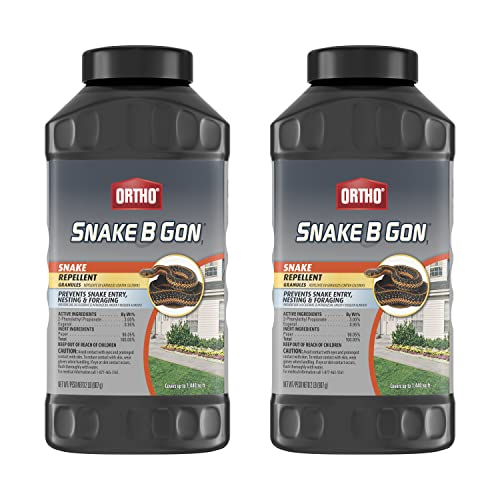
| Ortho Snake B Gon1 Repellent GranulesTop pick | 1,440 sq ft | 4 lbs | $20.57On sale |
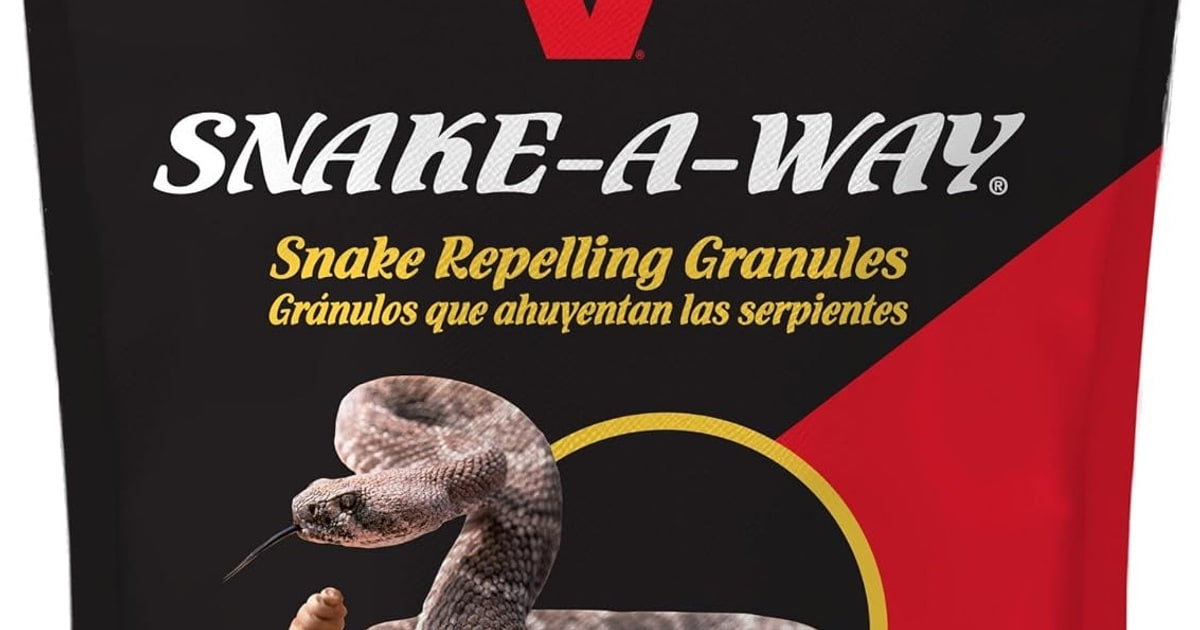
 | Dr. T's DT363 Snake-A-Way Snake Repelling GranulesAlso consider | — | 1.9 lbs | $20.69 |
| Enviro Pro 16003 Snake Scram Shaker BagRunner-up | — | 3.5 lbs | $26.55On sale |
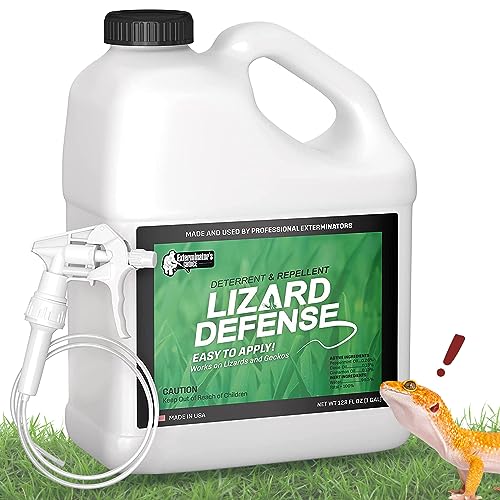 | Exterminators Choice Gecko & Lizard Defense SprayAlso in lineup | — | — | $44.98 |
 | Bonide # 875 4 lb Snake StopperAlso consider | — | 4 lbs | $132.93 |
 | T3-R Ultra Triple High Impact MiceAlso in lineup | — | — | $69.95 |
| Victor VP364B Snake-A-Way Outdoor Snake Repelling GranulesBudget pick | 1/2 acre | 4.28 lbs | $14.94On sale |
 | Harris Scorpion KillerAlso in lineup | — | 4.1 lbs | $14.82 |
How we picked
Active ingredients. We sorted the lineup by chemistry first, with essential oils on one side and naphthalene-sulfur blends on the other. That single split drives both how safe a product is around pets and whether you can stand to be near it.
Regulatory backing. We checked which formulas carry full EPA registration and which rest on the 25(b) minimum-risk exemption, since only registration involves submitting efficacy data for the claim.
Coverage per bag. We compared stated coverage against a realistic perimeter band rather than a whole lawn. Anything that couldn't ring a half-acre lot didn't qualify as a large-property option.
Reapplication burden. We read labels and owner feedback for how fast each formula washes out or bakes off, and treated anything needing weekly attention as impractical for most people.
Household safety. We gave weight to labels cleared for use around kids, pets and plants, and flagged the products that should stay at the fence line.
Top pickOn sale
A pet-safe perimeter treatment that doesn't stink up the yard
Ortho Snake B Gon1 Repellent Granules
The Ortho Snake B Gon1 lays a cinnamon-and-clove barrier around your house, shed and woodpile without leaving a mothball smell behind. It's the granule we'd hand to a family with a dog in the yard and kids in the grass.
$20.57fromAmazonList priceYou won't smell it after you put it down. That's most of the reason it works for a normal yard. Sulfur and naphthalene granules announce themselves from twenty feet away, which makes them useless near a back door or a patio. Ortho's formula is cinnamon oil and clove oil, so you can treat the walkway you actually walk on and then forget about it.
The actives are the mild ones, and that's the point. Cinnamon oil and clove oil are EPA 25(b) minimum-risk ingredients, which means the agency already recognizes them as low-hazard and doesn't require full pesticide registration. The label calls the product safe for people, pets and plants when you follow the directions. If you have a dog who noses through mulch, that's the column you want to be in.
Application is a ten-minute job. You shake the bottle side to side and lay a four- to six-inch band along the foundation, the garage slab, the shed, the woodpile and the patio edge. No spreader, no mixing, no gloves-and-mask routine. Each 2-pound bottle covers up to 1,440 square feet, and the pack gives you two of them.
The size fits a normal lot. Two bottles come to 2,880 square feet, which is plenty for a perimeter band around a suburban house plus the outbuildings. You're not broadcasting this across the lawn. You're drawing a line where snakes come in — along walls, under steps, around the woodpile — and used that way the coverage number goes further than it looks.
Flaws but not dealbreakers
Plan on redoing it every month. The label says roughly every 30 days, and heavy rain resets the clock immediately — anything over about an inch rinses the residue out of the soil. Sun and heat break the oils down too. If you buy one pack and expect it to hold through the hot months, you'll be disappointed, and that's the most common thread in owner feedback.
It can't go near anything you plan to eat. The label specifically excludes plants intended for consumption, so your tomato bed and herb border are off-limits. That's a real gap if the vegetable garden is exactly where you keep finding snakes. Bonide's blend is the one to run along those beds instead.
Big properties will burn through it. Past about half an acre you're buying pack after pack, and the coverage per bottle stops making sense. If your perimeter includes a barn, a fence line and a long driveway, count the linear feet before you order — the number usually surprises people. Victor's bag is the better shape for that job.
Runner-upOn sale
Plant-friendly granules for beds and borders, minus the odor
Enviro Pro 16003 Snake Scram Shaker Bag
Snake Scram is a plant-based shaker bag you can run along flower beds and shrub lines, which is exactly where our top pick's label tells you to stop. It gives up regulatory backing, but it's the friendlier choice for a landscaped yard with pets in it.
$26.55fromAmazonList priceYou can run this one right up against your landscaping. The label calls it safe around plants and beds, which is the one thing our top pick can't claim. So if the sightings are happening in the mulch by the hostas or along the shrub line, this is the bag that goes there. That's a common spot, because dense ground cover is where snakes like to sit and wait.
No naphthalene, no heavy sulfur load. Snake Scram uses a plant-based formula instead, so there's no mothball chemistry sitting on the ground where a dog puts its nose. In copperhead country, where the whole point of the treatment is keeping animals out of trouble, choosing the gentler formula isn't a compromise. It's the reason you're doing this in the first place.
The shaker bag is easier than a scoop and a bucket. Three and a half pounds is a lot of material for one bag, and the design lets you walk a border and lay an even line without measuring anything. Hit the spots that matter most: gate thresholds, the base of the fence, the steps, and wherever a pipe or vent enters the house.
Flaws but not dealbreakers
There's no EPA registration behind it. The formula leans on the minimum-risk exemption, so nobody submitted efficacy data to federal reviewers for the snake claim. That's not the same as saying it doesn't work — plenty of registered products have thin field records too. But if you want a regulatory paper trail, this isn't the bag that has one.
Plant oils fade fast in the sun. Expect to reapply every few weeks in dry heat, and right away after a hard rain. Owners who treat once and never come back generally find snakes right where they were. Set a recurring reminder on your phone, because the bag will outlast your attention span otherwise.
Budget pickOn sale
Big coverage and a real EPA registration, if you can stand the smell
Victor VP364B Snake-A-Way Outdoor Snake Repelling Granules
One 4-pound bag of Snake-A-Way treats the perimeter of a half acre, and it's the granule with an actual EPA registration behind its snake claims. The catch is a sulfur-and-naphthalene smell that belongs at the fence line, not on the patio.
$14.94fromAmazonList priceOne bag covers the perimeter of a half acre. Four pounds is enough to band a house, a shed, a cabin and a garden border and still have material left over. If your problem is a rural lot with outbuildings and a long fence line, this is the only product here sized for that job without stacking up packs of small bottles.
It's the one with a real registration behind the snake claim. Snake-A-Way is marketed as the only EPA-registered snake repellent, which means efficacy and safety data went to federal reviewers instead of resting on a minimum-risk exemption. That's the strongest regulatory footing in this category. It isn't proof the stuff works in your yard, but it's more than a label promise.
The granules go to work immediately. The scent temporarily disrupts a snake's olfactory organ, which is how it reads the ground in front of it, and the effect is to send it looking for cleaner air. Victor says one application lasts up to three months, though heavy rain still means going back out. In practice, most owners treat more often than that.
It belongs in the parts of the property you don't sit in. Barn perimeters, fence lines, the back of the woodpile, the skirting under a cabin. Keep it off the deck, out of the vegetable rows and away from the pond, and the smell mostly stays out of your life while the barrier still does its job.
Flaws but not dealbreakers
The smell is the trade. Sulfur at 28 percent and naphthalene at 7 percent add up to a mothball-and-rotten-egg note that hangs around, and it's the single most common complaint in owner feedback. Anywhere the wind carries it toward a window, a porch or a grill, you'll regret the application. Treat the far perimeter only.
Naphthalene is toxic if a pet eats it. These are regulated outdoor concentrations, not loose mothballs from a closet, but a dog that licks fresh granules is still a problem. Keep kids and animals off treated ground until it settles, and skip it entirely if your yard is unfenced. Don't put it near edible plants or water features either.
The evidence against rattlesnakes is thin. A peer-reviewed field study found naphthalene-based repellents produced no statistically significant deterrence on timber rattlesnakes in outdoor trials, and manufacturer claims skew toward garter snakes. If venomous species are your reason for buying, treat this as one layer and put your real effort into habitat and exclusion.
Who this is for
Buy a repellent if you're seeing snakes near the house — under the steps, along the foundation, in the woodpile — and you want those spots to be less appealing. It matters most across the Southeast, the Southwest, Appalachia and the Midwest, where copperheads, rattlesnakes and cottonmouths make a sighting more than a nuisance. It's also fair to buy one just so you're not startled on the way to the trash cans.
Skip it if snakes are already living in a crawl space or inside a wall. That's a job for a licensed wildlife removal professional, and granules won't push out an animal that has settled in. This guide covers granular and spray products you apply yourself around a yard perimeter. It doesn't cover exclusion fencing, trapping or professional services, though hardware cloth remains the only approach that comes close to a guarantee.
How we picked
Active ingredients: we split the lineup by chemistry, since essential oils and naphthalene-sulfur blends behave completely differently on safety and smell. Regulatory backing: we noted which products carry full EPA registration and which rest on the 25(b) minimum-risk exemption, and we don't pretend the exemption is the same thing. Coverage: we compared stated square footage against a realistic perimeter band instead of a whole lawn. Reapplication: we favored formulas that survive a few weeks of sun and one hard rain, because a barrier you never refresh isn't a barrier. Household safety: we gave weight to labels cleared for use around kids, pets and plants, and we say plainly which bags belong only at the fence line.
Other snake repellents for your yard worth considering
If you want to treat borders around vegetable beds: The Bonide # 875 4 lb Snake Stopper ($132.93) — Bonide's Snake Stopper uses cedar oil, cinnamon oil and clove oil, an OMRI-compatible blend that's appropriate along edible plantings. That's the one thing our top pick's label forbids, so if the snakes are showing up between the tomato rows and the compost pile, this is what goes there. Two cautions. The listing here is a bulk case of 88 units, not a single bag, so check the packaging before you check out. And like every oil-based granule, it needs refreshing every couple of weeks in dry heat and immediately after rain.
If you want the same registered chemistry in a smaller bag: The Dr. T's DT363 Snake-A-Way Snake Repelling Granules ($20.69) — Dr. T's DT363 is naphthalene at 7 percent and sulfur at 28 percent — the same dual-action approach as our budget pick, with the same EPA-registration pedigree and a claimed 91 percent repellent rate against garter snakes and rattlesnakes. It's a reasonable buy if you only need to treat one shed or a short stretch of fence. What you give up is ground: 1.75 pounds doesn't go far, so the coverage math turns against you quickly on a real property. The smell and the pet risk are identical to Victor's.
The competition
What follows is what our research surfaced, not a census of the category. Snake repellents sit on a crowded, lightly regulated shelf, and there are solar stakes and off-brand granules we simply didn't have enough grounded information to judge. The product below is here because it earns yard space — just not for the reason the search results imply.
The Exterminators Choice Gecko & Lizard Defense Spray ($44.98) — The Exterminators Choice Gecko & Lizard Defense Spray is a gallon of peppermint, clove and cinnamon oils in a trigger-sprayer jug, and the label is written for geckos and lizards, not snakes. That's why it isn't a pick: it makes no snake repellency claim, and we won't infer one from overlapping ingredients. It still does something granules can't. You can spray door thresholds, foundation cracks and crawl space vents where loose granules won't stay put, and the volume covers a long run of wall. The company says protection lasts up to about three weeks depending on weather. Buy it if you also have lizards and want a precision complement to a granular perimeter, not as the perimeter itself.
Application and upkeep
Lay granules in a continuous four- to six-inch band rather than a scatter, because a gap is a door. Treat the foundation, the garage and shed perimeters, the woodpile, gate thresholds and anywhere pipes or vents enter the house. Keep every formula away from ponds, birdbaths and vegetable rows unless the label specifically clears it. Then reapply on a schedule: every few weeks in dry heat, and right after any rain over about an inch, which is enough to rinse the residue out of the soil. And do the unglamorous half of the work. Mow the tall grass, pull the leaf litter and rock piles, get firewood up off the ground, and control the mice. Snakes follow food, and removing the food does more than any bag will.
Questions we get
Do snake repellents actually work, or are they a waste of money?
They give you partial deterrence, not a seal. A peer-reviewed field study found naphthalene-based repellents produced no statistically significant effect on timber rattlesnakes in outdoor trials, and essential-oil formulas have even less controlled research behind them. Use them as one layer alongside habitat cleanup and, where you need certainty, quarter-inch hardware cloth.
Are granular snake repellents safe for dogs and cats?
It depends entirely on the active ingredient. Essential-oil granules like the Ortho Snake B Gon1 and Enviro Pro Snake Scram are labeled safe around pets when used as directed. Naphthalene-and-sulfur formulas like Victor's and Dr. T's are toxic if an animal ingests enough, so they should only go where pets can't reach the granules. Read the full label before you open anything.
How often do I need to reapply?
Figure every two to four weeks in dry conditions, and immediately after any rainfall over about an inch. In a wet summer or a monsoon pattern, that can mean weekly for the band to stay meaningful. Oil-based formulas break down faster in intense heat and UV than the naphthalene-sulfur bags do.
Do mothballs keep snakes away?
Don't do it. Standard mothball products are registered only for moth control in enclosed clothing storage, so scattering them outdoors violates federal pesticide law and creates real inhalation and contact risk for kids and pets. If you want that chemistry, use an outdoor-registered formula like Victor's or Dr. T's, which carry regulated concentrations approved for perimeter use.
What's the difference between EPA-registered and EPA 25(b) exempt?
A registered product submitted efficacy and safety data that federal reviewers evaluated for the stated claims. A 25(b) exempt product uses ingredients the EPA has pre-recognized as minimum-risk — cinnamon, clove and cedar oils among them — and skips that review. Both are legal to sell. Registration means a stronger evidence record; exemption usually means gentler chemistry around your household.
What can I use near a vegetable garden?
Bonide's Snake Stopper, which blends cedar, cinnamon and clove oils and is OMRI-compatible for use around edible plantings. The Ortho label explicitly rules out plants intended for consumption, and naphthalene products should never go near food crops or water features. Apply along the bed borders rather than in the rows themselves.
Why you should trust us
For this guide:
- We read the label copy, active-ingredient percentages and stated coverage for every product in this lineup.
- We compared those claims against published field research on naphthalene-based repellents and extension guidance on habitat modification.
- We drew on recurring themes in owner feedback — odor, washout after rain and reapplication frequency — to decide which drawbacks were worth flagging.
- We read owner reviews on every listing, weighted toward the critical ones, because that is where the recurring failures show up.
- We have a systematic way of automatically fetching the latest prices, so the numbers on this page stay current.
- This is a research-focused guide, so the team may not own every product listed — though we often do own the top winners, which gives us extra context for the recommendations.
- We don't accept free products, and the retailer commission never changes which product we recommend.
Sources
Snake Repellents and Wildlife Damage Management — University of Nebraska-Lincoln Extension, University of Nebraska-Lincoln Extension
Venomous Snakes — NIOSH Workplace Safety and Health Topics, Centers for Disease Control and Prevention (CDC)
Minimum Risk Pesticides Under FIFRA Section 25(b) — Active Ingredient and Inert Ingredient Lists, U.S. Environmental Protection Agency (EPA)
Efficacy of Snake Repellents in Field Conditions — Journal of Wildlife Management, Journal of Wildlife Management (Wiley Online Library)
Snake Control for Florida Homeowners — Habitat Modification and Exclusion Methods, University of Florida IFAS Extension
Amazon product listings and owner reviews for all 8 products
Manufacturer specification pages for each product
Some passages in this guide may be paraphrased with AI help. Prices are refreshed automatically.
More like this.
Continue exploring lifestyle reviews and recommendations.

The Best Snake Bite First Aid Kits
Snakes bite about 7,000 to 8,000 people in the US every year, according to the CDC, and fewer than 10 of those people die - almost entirely because…

The Best Bug Repellents
A good bug repellent is the difference between sitting outside until the fireflies come out and going inside at seven. It's also, in tick country, a…

The Best Deer Repellents for Gardens
Deer don't browse politely. They work through a hosta bed overnight, snap the tops off daylilies, and strip a young arborvitae to the height they can…

The Best Mosquito Repellents for Outdoors
Mosquitoes decide how long you stay outside. A bite or two on the ankles during dinner on the deck, and everyone drifts indoors an hour early. The right…

The Best Animated Christmas Yard Decorations
A yard decoration works about forty nights a year, and it works hard. It sits out in wind, rain and road salt. It plugs into an outdoor outlet and stays…

The Best Inflatable Holiday Yard Decorations
An inflatable is the one decoration your neighbors can see from the street without slowing down. You plug in a cord, a fan spins up, and a flat nylon…