The Best Sunscreens for Outdoor Activities
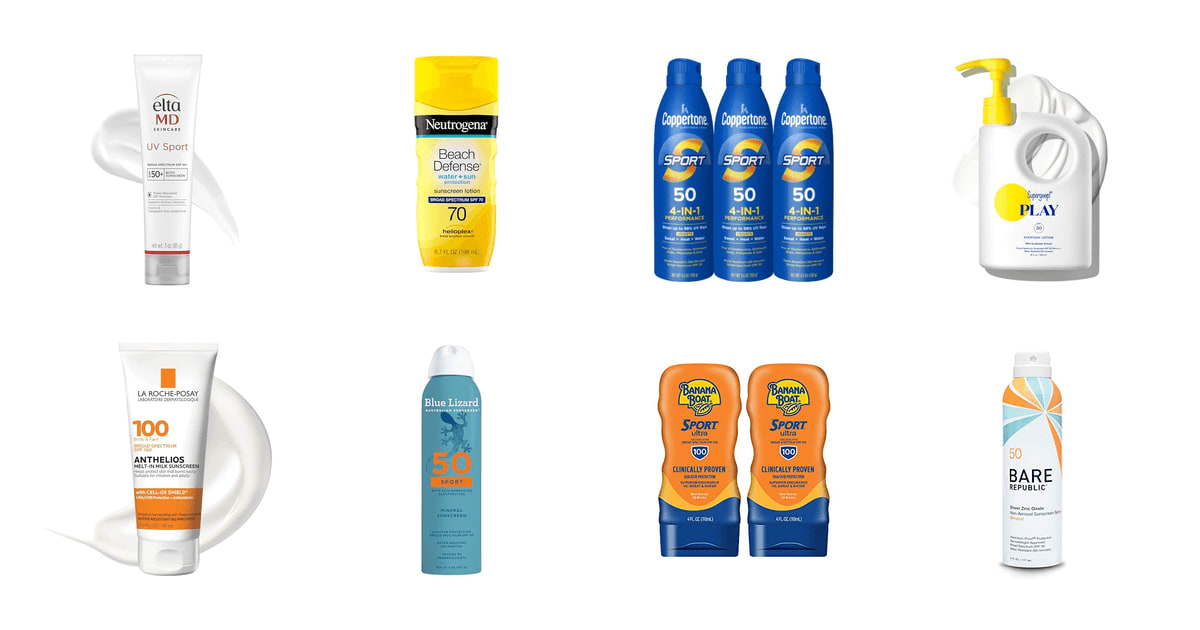
Sunscreen for a long day outside has a different job than the stuff you dab on before the commute. It has to survive sweat running down your forehead, a lake swim, a towel, and hours of friction from pack straps and jersey seams. It also has to not sting your eyes when you're breathing hard. And it has to feel good enough that you'll actually put more on at noon, because the two-hour reapplication rule is the part almost everyone skips. Formula texture matters as much as the number on the bottle.
Here's the uncomfortable part: none of these products protect you the way the label implies. Getting the SPF printed on the bottle takes roughly an ounce for your whole body — about a shot glass — and research consistently shows people use a quarter to half that. Apply light and your SPF 50 behaves more like SPF 15 or 25. Water resistance tops out at 80 minutes by law, and toweling off ends it early no matter what the bottle says. No formula here fixes a thin application.
The good news is that the differences that remain are real and easy to shop for. Mineral filters hold up better under long, direct sun. Sprays reach your own back. Big bottles make you less stingy. We think that the EltaMD UV Sport Sunscreen Lotion SPF 50 is the best sunscreen for outdoor activities for most people, and that the Neutrogena Beach Defense SPF 70 is the one to buy if you'd rather reapply generously than protect an expensive bottle.
Everything we recommend

Won't sting your eyes when you're working hard

The same 80 minutes of water resistance for far less

All-mineral protection that rubs in clear, in a spray

Maximum SPF for snow, altitude, and open water
At a glance
| Product | SPF | Water Resistant | Price | |
|---|---|---|---|---|
| EltaMD UV Sport Sunscreen Lotion SPF 50Top pick | SPF 50 | 80 Min | $32 |
| Neutrogena Sunscreen Lotion Beach Defense SPF 70Budget pick | SPF 70 | 80 Min | $9.88 |
 | Coppertone Sport Sunscreen Spray SPF 50Also consider | SPF 50 | 80 Min | $21.45 |
 | Supergoop! PLAY Everyday Lotion SPF 50 -Also consider | SPF 50 | 80 Min | $58 |
 | La Roche-Posay Anthelios Melt-In Milk Sunscreen SPFAlso consider | SPF 100 | 80 Min | $21.74On sale |
| BLUE LIZARD Sport Mineral Sunscreen Spray SPFAlso great | SPF 50+ | 80 Min | $16.29 |
| Banana Boat Sport Ultra SPF 100 SunscreenUpgrade pick | SPF 100 | 80 Min | $20.58 |
 | Bare Republic Mineral Sunscreen SPF 50 SunblockAlso in lineup | SPF 50 | — | $18.86 |
How we picked
Water and sweat resistance. We only considered products whose labeling claims the full 80-minute water resistance rating, the maximum the FDA allows. Anything rated for 40 minutes falls short of a real hike, swim, or match.
Filter chemistry. We compared active ingredients across every listing, favoring zinc oxide and titanium dioxide for photostability over long days and for reef-protected water. Chemical formulas had to at least skip oxybenzone and octinoxate.
Wearability. We weighted owner feedback about eye sting, greasiness, white cast, and residue on gear, because the formula you tolerate is the formula you'll reapply. Published reviews of active-use sunscreens pointed the same direction.
Volume and format. We looked at bottle size and applicator type against how much sunscreen a full day actually takes. Sprays earned points for solo back coverage; lotions earned them for face precision.
Reported reliability. We read owner feedback for repeat problems — clogged nozzles, dead pumps, formulas that burn — and let those patterns push products down rather than treating one-off complaints as noise.
Top pick
Won't sting your eyes when you're working hard
EltaMD UV Sport Sunscreen Lotion SPF 50
A zinc oxide sport lotion that holds up through 80 minutes of sweat or water and goes on wet or dry skin. It's fragrance-free, oil-free, and non-comedogenic, which makes it a rare sport sunscreen that sensitive and acne-prone skin can tolerate all season.
$32fromAmazonThe eye-sting problem is the one that actually makes people stop wearing sunscreen, and this formula solves it. Owners who wear goggles, contacts, or just sweat hard describe the same thing: it stays where you put it. If you've ever had to stop mid-run to blink out a burning film, you know why that's worth more than a couple of SPF points. Sunscreen you can wear through a hard effort is the sunscreen that protects you.
Zinc oxide is the other reason this one earns the top spot. Mineral filters are photostable, so they don't break down the way avobenzone-based formulas can under hours of direct sun. On a six-hour ridge hike or an all-day paddle, that matters more than the label number. Dermatologists recommend this one often enough that a striking share of owner feedback starts with some version of my derm told me to buy it.
You can put it on wet skin. That sounds minor until you're dripping at the edge of a pool with 80 minutes behind you, or trying to re-up on a sweaty forearm halfway up a climb. Most lotions pill and streak on damp skin. This one spreads, which means the noon reapplication actually happens instead of getting waved off.
It's also the pick for skin that reacts to everything. Fragrance-free, paraben-free, oil-free, non-comedogenic — the whole list. If drugstore sport formulas break you out along your hairline or under a helmet strap, this is the one to try first.
Flaws but not dealbreakers
It's expensive per ounce, and the bottle is small. Owners bring this up constantly, usually right before saying they bought it again anyway. If you're covering a family of four for a beach week, the math gets painful fast — buy something cheaper for the kids and save this for yourself.
A few owners notice a faint metallic smell once they start sweating. It's not strong, and most people never mention it. Zinc also feels a bit denser than a chemical lotion in humid heat, so if you hate any film on your skin at all, you'll notice it.
Budget pick
The same 80 minutes of water resistance for far less
Neutrogena Sunscreen Lotion Beach Defense SPF 70
An SPF 70 lotion with the full 80-minute water resistance rating, in a bottle big enough that you won't ration it. It's oil-free, absorbs fast, and skips oxybenzone and octinoxate, so it's fine for Hawaii beaches and most ocean days.
$9.88fromAmazonWhen a bottle costs little enough that you'll use it generously, it protects you better than a premium one you're stingy with. That's the whole argument for this pick. It's a big bottle, it's cheap per ounce, and it has the same 80-minute water resistance rating as everything else here. Slather it on. Do it again after lunch. That habit beats a thin coat of anything fancier.
Owners with darker skin repeatedly single it out for leaving no white cast, and people who dislike sunscreen smell say this one is mild. It absorbs quickly and doesn't leave the tacky finish that makes you avoid touching your phone. For a high-SPF drugstore lotion, that's better than you'd expect.
It's oxybenzone- and octinoxate-free, which clears Hawaii's rules and satisfies most beach restrictions you'll run into. That's not the same as reef-safe — it still uses chemical filters — but it's a meaningful step if you swim in the ocean and want to be careful without going full mineral.
The SPF 70 number gives you a small buffer against your own sloppy application. It's not a license to apply less. Think of it as insurance for the spots you rush: the tops of your ears, the back of your neck, the strip along your part.
Flaws but not dealbreakers
Chemical filters are less photostable than zinc. Over a long, uninterrupted day in strong sun, they degrade faster, which is exactly when you'd want the opposite. Reapply on schedule and it's a non-issue; treat it as morning armor and it isn't.
Stock on this listing has been thin at times. If you're buying for a specific trip, order early rather than counting on it being there the week you leave.
Also great
All-mineral protection that rubs in clear, in a spray
BLUE LIZARD Sport Mineral Sunscreen Spray SPF
A zinc oxide and titanium dioxide spray with no chemical filters at all, made for reef zones and reactive skin. It rubs in clear and skips fragrance, parabens, and drying alcohols, which is unusual for a mineral formula you can spray.
$16.29fromAmazonIf you snorkel, surf, or paddle where reef rules apply, this is the one to grab. Zinc oxide and titanium dioxide are the only filters that clear the strictest marine-protection standards, and this formula uses nothing else. Plenty of sunscreens advertise reef friendliness while still relying on chemical filters. This one doesn't have to hedge.
Mineral sunscreen usually loses athletes at the white-cast stage. This sprays on, rubs in, and disappears, which is why it works for people who'd never tolerate a thick mineral lotion under a wetsuit or a jersey. Owners who spend all day in direct sun — motorcyclists, sports photographers — report no burns as long as they apply thoroughly.
The fragrance-free, alcohol-free formula is a genuine advantage for reactive skin, and it's a reasonable choice for kids old enough for sunscreen. Parents who've cycled through irritating formulas tend to land on mineral for exactly this reason.
It carries the full 80-minute water resistance rating, so it's rated for the same immersion window as the lotions here. Just remember that rating ends when the towel comes out.
Flaws but not dealbreakers
You have to use more than you think, and you have to rub it in. This is the most consistent complaint owners have: people who applied a normal spray amount got burned, while people who doubled up and worked it in didn't. Mineral spray is unforgiving of a quick pass.
Nozzle failures come up often enough to mention. Some bottles stop spraying partway through or clog after a few uses, and a needle sometimes clears it. Ratings on this listing skew lower than the rest of the picks largely because of that, so check the sprayer before you pack it for a trip.
Upgrade pick
Maximum SPF for snow, altitude, and open water
Banana Boat Sport Ultra SPF 100 Sunscreen
An SPF 100 lotion rated for 80 minutes of water resistance, sold as a twin pack of small bottles. It's the pick for ski days, high-altitude hikes, and open-water swims, where reflective glare can roughly double the UV hitting your skin.
$20.58fromAmazonSnow and water bounce a large share of UV straight back at you, and UV intensity climbs about 4% per thousand feet of elevation. Above 8,000 feet — most ski days, plenty of summer hikes — you're taking meaningfully more than you would at the beach. That's the specific situation where jumping from SPF 50 to 100 stops being a marketing exercise and starts being useful.
The twin-pack format is quietly the best part. Two 4-ounce bottles means one lives in your pack and one stays in the car, or one goes in a jacket pocket for the lift line. Small bottles are the ones you actually carry, and sunscreen you're carrying is sunscreen you'll reapply.
The lotion is light and breathable rather than the heavy paste high-SPF products often are, and owners who burn instantly — the pale-and-freckled crowd — report getting through long sweaty bike rides and full sun days without color. Several parents use it for kids in summer football, which is about as demanding as sweat gets.
It has confirmed 80-minute water resistance, so it's rated for swimming and paddling and not just for dry-land sun. Between the SPF and the water rating, it covers the two hardest conditions in one bottle.
Flaws but not dealbreakers
A high number invites bad behavior. SPF 100 blocks 99% of UVB versus 98% at SPF 50 — a real but small gap — and it does nothing to extend how long the product stays on your skin. If the label talks you out of reapplying at two hours, you've made yourself less safe, not more.
It uses chemical filters, so it's not the bottle for a reef zone. A few owners also mention a slight shine on the skin, which is worth knowing if you're photographing anything or hate a glossy look.
The bottles are small. For a family covering full bodies twice a day, 8 ounces total disappears quickly.
Who this is for
This guide is for anyone spending real time outside: hikers, runners, cyclists, swimmers, paddlers, skiers, and the parents standing on the sideline of a Saturday tournament. If you're outside for more than half an hour and moving enough to sweat, you want a sport formula with the 80-minute water resistance rating, not a daily facial SPF. Everything here is a broad-spectrum SPF 50 or higher rated for that window.
It's not the guide for everyday city sunscreen, tinted face products, or anything for babies under six months, who should stay out of direct sun entirely. We also don't cover sun-protective clothing, which is honestly a better answer than sunscreen for your shoulders and arms if you're out all day. And if you burn in minutes or have a skin cancer history, treat any of this as a supplement to shade, a hat, and your dermatologist's advice — not a replacement.
How we picked
Water and sweat resistance: we limited the field to formulas whose labeling claims the full 80-minute rating, because 40 minutes doesn't cover a hike or a match. Filter chemistry: we compared active ingredients across every listing and favored zinc oxide and titanium dioxide for photostability and reef zones, while chemical formulas had to at least skip oxybenzone and octinoxate. Wearability: eye sting, greasiness, white cast, and residue on gear all count, since the bottle you can stand is the bottle you'll reapply. Volume and format: bottle size and applicator have to match how much a full day really takes. Reported reliability: repeated owner complaints about clogged nozzles and broken pumps pushed products down the list.
Other sunscreens for outdoor activities worth considering
If you want a big bottle and zero white cast: The Supergoop! PLAY Everyday Lotion SPF 50 - ($58) — Supergoop! PLAY Everyday is the smoothest-wearing lotion here for anyone who layers sunscreen under a helmet, a cap, or technical fabric. It absorbs fast, leaves no cast on any skin tone, and comes in an 18-ounce bottle, so per ounce it's not the extravagance the brand suggests. It's also gentler on daily-use skin than most sport formulas, with sunflower and rosemary extracts in the mix. What you give up is mineral photostability — despite the clean positioning, these are chemical filters — and a few owners find it slightly sticky on the body and heavy on the face. Some also find it plainly overpriced, which is fair.
If you want a spray you can buy by the case: The Coppertone Sport Sunscreen Spray SPF 50 ($21.45) — Coppertone Sport comes as three 5.5-ounce bottles, which is the practical answer for a family, a team, or anyone whose real problem is running out and skipping the reapplication. The continuous sprayer works upside down, so you can reach your own shoulders and upper back without a partner. It's oxybenzone- and octinoxate-free, rated for the full 80 minutes, and owners describe it as light and non-sticky. The trade-offs are the usual spray ones: wind steals product in exposed places, you still have to rub it in, and it's clumsy for careful face coverage. It also uses chemical filters, so it's not for reef water.
If you want maximum SPF in a texture you'll enjoy wearing: The La Roche-Posay Anthelios Melt-In Milk Sunscreen SPF ($21.74) — La Roche-Posay's Anthelios Melt-In Milk is SPF 100 that feels like moisturizer, which is a genuinely hard trick. It's oxybenzone- and octinoxate-free, water resistant for 80 minutes, formulated with panthenol for sensitive skin, and it wears cleanly under makeup — the reason people with very fair skin and burn histories keep repurchasing it. Against the Banana Boat twin pack, it costs considerably more per ounce for the same SPF, and this listing is a small travel size that won't last a multi-day trip. A few owners find the texture heavier than they expected. Choose it when comfort is what keeps you compliant.
The competition
These are the products our research surfaced in this category, not a complete map of what's on the shelf. Sunscreen listings shift constantly — formulas get reworked, sizes change, and packaging gets updated between production runs. Anything that didn't earn a pick or an also-consider slot is below, with the reason it lost out.
The Bare Republic Mineral Sunscreen SPF 50 Sunblock ($18.86) — Bare Republic's mineral spray has the right ingredient list for anyone who wants a non-nano zinc formula with no chemical filters, plus antioxidant oils and a vanilla coco scent that people either love or find cloying. It loses to BLUE LIZARD on the two things that decide a mineral spray. Owners report a heavy white cast that's hard to work in — the very problem a spray is supposed to solve — and clogged or broken nozzles come up repeatedly, sometimes early in the bottle. The listing copy also references SPF 30 in one place while the title says SPF 50, so check the label on what arrives. Buy it if reef-safe ingredients outrank finish and you don't mind the extra rubbing.
How to actually use this stuff
Use about an ounce — a full shot glass — for your whole body, and roughly two fingers' worth for your face and neck. That's far more than most people apply, and underapplication cuts your real protection by half or more, which no product here can compensate for. Put it on 15 minutes before you head out, then set a repeating two-hour timer on your phone. Reapply immediately after toweling off, no matter what the water resistance says, because the towel takes the sunscreen with it. With sprays, hold the nozzle close, go over each area twice, and rub it in by hand rather than trusting the mist. Spray into your palm before doing your face. And don't leave a bottle baking on a dashboard — sustained heat degrades the formula with no visible warning.
Questions we get
What SPF should I use for hiking, running, or cycling?
SPF 50 or higher for anything longer than about half an hour outside. SPF 50 blocks roughly 98% of UVB versus 97% for SPF 30, and that gap compounds across a four- to six-hour day. Go to SPF 100 for skiing, high-altitude hikes above 8,000 feet, or open water, where reflected UV can roughly double your dose.
How often do I reapply when I'm sweating hard?
Every two hours, or right after you towel off — whichever comes first. Even an 80-minute water-resistant formula loses meaningful protection once a towel drags across it. Carry a small bottle in your pack, jersey pocket, or hydration vest, because the reapplication you skip is almost always the one you weren't carrying anything for.
Mineral or chemical for outdoor sports?
Mineral filters — zinc oxide and titanium dioxide — sit on the skin and hold up better under hours of direct sun. They're also the only option accepted in reef-protected water. Chemical filters absorb faster and feel lighter, which for a lot of people means better compliance. Pick mineral for sensitive skin, reef zones, and very long exposures; pick chemical if a lighter feel is what gets you to wear it.
Is SPF 100 really better than SPF 50?
On paper, a little: 99% of UVB blocked versus 98%. The practical benefit shows up in high-glare situations like snow, altitude, and open water. The risk is behavioral — people read the big number as all-day coverage and skip the noon application. Reapplying SPF 50 every two hours beats one morning coat of SPF 100.
Does water-resistant sunscreen actually stay on while I swim?
It holds through its rated window and then it doesn't. The FDA standard is 40 or 80 minutes of immersion in controlled conditions, and 80 is the maximum any product can claim. Toweling off ends it early regardless. Nothing sold in the U.S. can be called waterproof anymore, and that's because none of it is.
Which one should I buy if I have sensitive or acne-prone skin?
Start with the EltaMD UV Sport — it's oil-free, fragrance-free, non-comedogenic, and zinc-based, which is about as low-risk as a sport formula gets. BLUE LIZARD's mineral spray is the other good option, since it skips fragrance, parabens, and drying alcohols. Avoid heavily scented formulas if your skin reacts, and patch test on your forearm before you commit a whole beach day to a new bottle.
Why you should trust us
For this guide:
- We compared the active ingredients, water-resistance ratings, and bottle sizes on every listing in this guide against each other and against FDA labeling rules.
- We read published reviews of active-use sunscreens along with independent SPF verification reporting, which has found that some products test below their label claims.
- We read through owner feedback for each product, looking for repeated themes — eye sting, white cast, nozzle failures, and how much product people had to use to avoid burning.
- We read owner reviews on every listing, weighted toward the critical ones, because that is where the recurring failures show up.
- We have a systematic way of automatically fetching the latest prices, so the numbers on this page stay current.
- This is a research-focused guide, so the team may not own every product listed — though we often do own the top winners, which gives us extra context for the recommendations.
- We don't accept free products, and the retailer commission never changes which product we recommend.
Sources
EWG's 2025 Guide to Sunscreens — Environmental Working Group: Fewer than 25% of approximately 1,850 U.S. SPF products met EWG safety and efficacy standards; only mineral filters (zinc oxide, titanium dioxide) classified as low-hazard, Environmental Working Group (EWG)
Sunscreen FAQs — American Academy of Dermatology: Recommends 1 oz for full-body coverage, reapplication every 2 hours or after swimming/sweating; notes underapplication reduces effective SPF substantially, American Academy of Dermatology (AAD)
Sunscreen Resource Center — Skin Cancer Foundation: Water and snow reflect up to 80% of UV radiation back at skin, effectively doubling UV dose for swimmers, paddleboarders, and winter athletes, Skin Cancer Foundation
Amazon product listings and owner reviews for all 8 products
Manufacturer specification pages for each product
Some passages in this guide may be paraphrased with AI help. Prices are refreshed automatically.
More like this.
Continue exploring lifestyle reviews and recommendations.

The Best Sunscreens for Sensitive Skin
If your skin flares at the wrong moisturizer, sunscreen is the hardest product to get right. You have to wear it every day, on the most reactive skin you…

The Best Face Sunscreens for Daily Wear
Face sunscreen only works if you actually put it on, and that comes down to how it feels. A formula that stings your eyes by lunch, or leaves a chalky…

The Best Sunscreens for Face and Body
Sunscreen only works if you actually wear it. That sounds obvious, but it's the whole game. The formula you like - the one that doesn't sting your eyes,…

The Best Mineral Sunscreens for Face
Sunscreen only works if you'll actually wear it. That's the whole game with a daily face SPF: it has to feel good enough that you reach for it on a gray…

The Best Sunscreens for Every Skin Type
Sunscreen only works if you actually wear it. That sounds obvious, but it's the whole ballgame. The American Academy of Dermatology says SPF 30 filters…

The Best Gas Grills for Outdoor Entertaining
A grill that's fine for two pork chops on a Tuesday falls apart when twelve people show up. You need enough grate space to get everything off at once,…