The Best Sunscreens for Every Skin Type
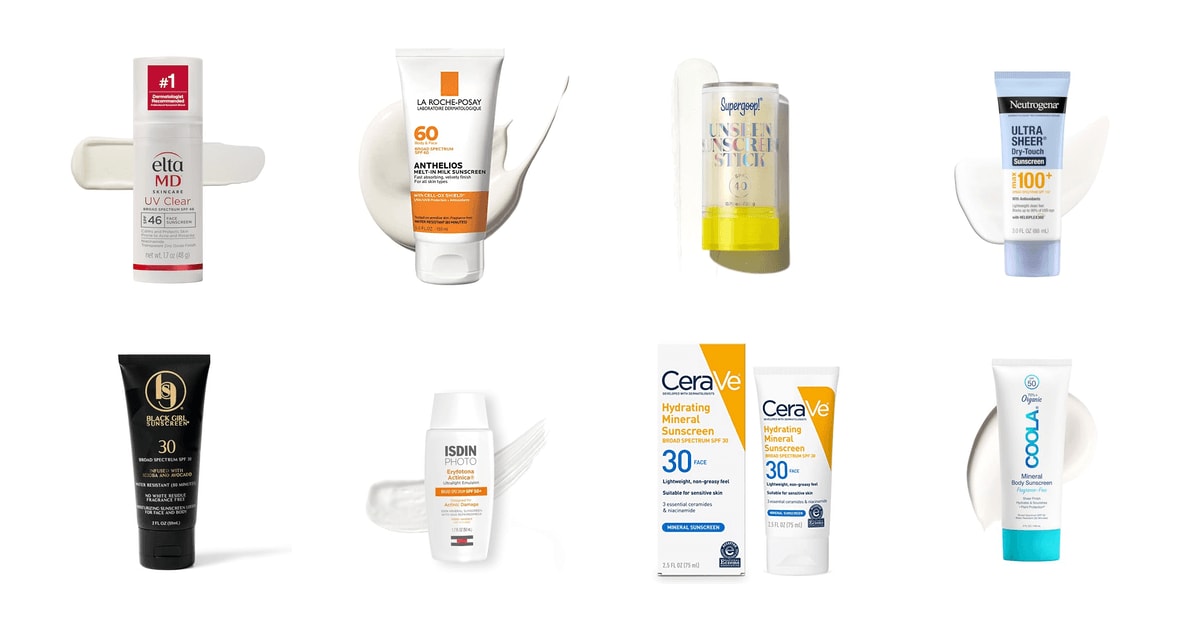
Sunscreen only works if you actually wear it. That sounds obvious, but it's the whole ballgame. The American Academy of Dermatology says SPF 30 filters about 97% of UVB rays and SPF 50 gets you to roughly 98% — a difference so small it's swamped by whether you reapplied at noon. Skin cancer is the most common cancer in the US, and about 1 in 5 Americans will develop it by age 70. So the sunscreen that wins is the one you'll reach for on a Tuesday morning without thinking about it.
Here's the honest problem: no sunscreen solves everything at once. Mineral formulas are gentle and reef-compliant, but zinc oxide is white, and on brown and deep skin tones that shows. Chemical filters disappear beautifully, but some people's skin stings or breaks out. And every single one of these needs reapplying every two hours, which nobody does. A Mintel survey found 61% of US shoppers would wear sunscreen more often if it didn't leave a white cast or greasy film — cosmetic feel is the number one barrier, not price.
We also can't get around the fact that most people underapply. The AAD's guidance is a full ounce — roughly a shot glass — for your whole body, and studies show people typically use a quarter to half of that. That alone drops your real-world protection far below the number on the bottle. We think that the La Roche-Posay Anthelios Melt-In Milk SPF 60 is the best sunscreen for most people, and that the EltaMD UV Clear SPF 46 is the one to buy if you have acne-prone, rosacea-prone or otherwise reactive facial skin.
Everything we recommend
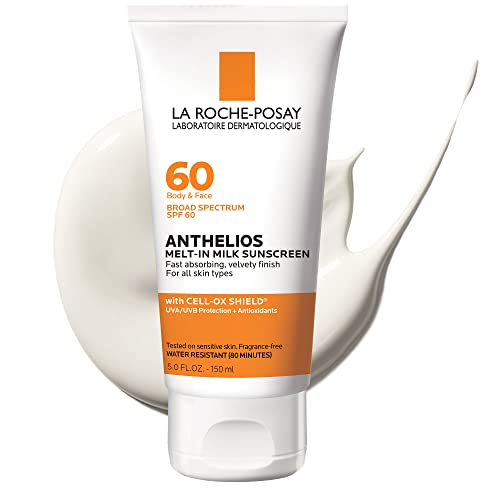
Works on your face and your legs, without the greasy film

The calm-down option for skin that reacts to everything

Zero white cast on deep skin, plus real moisture
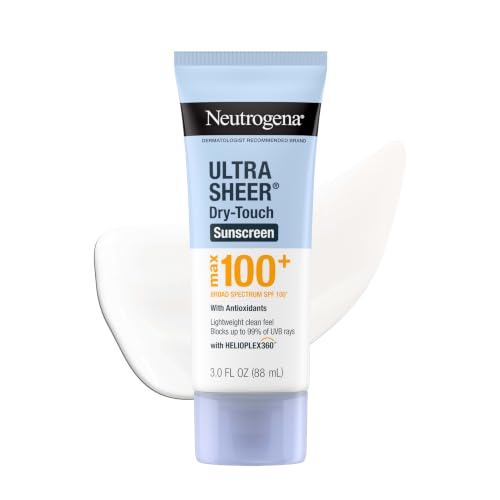
Drugstore price, matte finish, and the highest SPF here

The one to buy if a dermatologist has flagged sun damage
At a glance
| Product | SPF | Fl Oz | Price | |
|---|---|---|---|---|
| EltaMD UV Clear Untinted Face Sunscreen withAlso great | SPF 46 | 1.7 Fl Oz | $45 |
| La Roche-Posay Anthelios Melt-In Milk SPF 60Top pick | SPF 60 | 5 Fl Oz | $29.24On sale |
 | Supergoop! Unseen Sunscreen Face Stick SPF 40Also consider | SPF 40 | 0.7 Fl Oz | $27.20On sale |
| Neutrogena Ultra Sheer Dry Touch Sunscreen LotionBudget pick | SPF 100+ | 3 Fl Oz | $12.97On sale |
| Black Girl Sunscreen Original SPF 30 FaceAlso great | SPF 30 | 2 Fl Oz | $9.99 |
| ISDIN Eryfotona Actinica Mineral Face Sunscreen SPFUpgrade pick | SPF 50+ | 1.7 Fl Oz | $46 |
 | CeraVe Hydrating Mineral Sunscreen SPF 30 withAlso consider | SPF 30 | 2.5 Fl Oz | $13.97On sale |
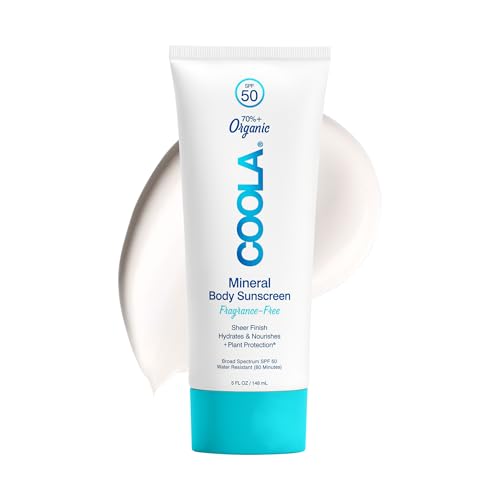 | COOLA Organic Mineral Sunscreen SPF 50 SunblockAlso in lineup | SPF 50 | 5 Fl Oz | $30On sale |
How we picked
Broad-spectrum protection. We required broad-spectrum UVA and UVB coverage at SPF 30 or higher, the threshold the American Academy of Dermatology recommends for everyone regardless of skin tone. We read spec sheets and FDA labeling rules to confirm each claim.
Cosmetic wearability. A Mintel survey found 61% of US consumers would wear sunscreen more consistently without white cast or greasy residue, so we weighted finish heavily. We looked for consistent themes in owner feedback about cast, pilling and shine across a range of skin tones.
Skin-type fit. We wanted the lineup to cover oily and acne-prone, dry, sensitive and rosacea-prone skin rather than picking one all-purpose formula. Non-comedogenic and fragrance-free labeling mattered for the sensitive and breakout-prone picks.
Water resistance. The FDA only permits 40- or 80-minute water resistance claims, and nothing may be called waterproof. For the outdoor and body picks we required a verified 80-minute rating on the label.
Reef and ingredient rules. NOAA research links oxybenzone to coral bleaching at concentrations as low as 62 parts per trillion, and Hawaii, Palau, the US Virgin Islands and Key West restrict it. We checked each formula against those bans.
Top pickOn sale
Works on your face and your legs, without the greasy film
La Roche-Posay Anthelios Melt-In Milk SPF 60
A high-SPF lotion that sinks in fast and doesn't leave a chalky film, so you can use one bottle for face, arms and legs. It's water resistant for 80 minutes, and it skips oxybenzone and octinoxate, which matters if you're headed somewhere with a reef ban.
$29.24fromAmazonList priceThis is the rare sunscreen that's genuinely good enough for both your face and the rest of you. Most people don't want to buy two bottles. Anthelios Melt-In Milk is broad-spectrum SPF 60 in a thin, milky lotion that absorbs in under a minute, so you can put it on your legs and get dressed. Owners with brown skin consistently report no visible cast, which is unusual for something this high in SPF.
The formula uses what La Roche-Posay calls Cell-Ox Shield — broad-spectrum UVA and UVB filters paired with antioxidants. It's rated water resistant for 80 minutes, the longest the FDA allows anyone to claim. Nothing can legally be called waterproof or sweatproof, so 80 minutes is the ceiling. That's enough for a swim, a long walk with the dog, or a soccer game in July.
It's also free of oxybenzone and octinoxate. Those are the two filters NOAA has flagged for coral bleaching, and they're banned in Hawaii, Palau, the US Virgin Islands and Key West. If you're packing for a beach trip to any of those places, this one clears customs and your conscience at the same time.
One thing worth knowing: the version sold in Europe includes Mexoryl XL, a photostable UVA filter the FDA hasn't approved here. The European bottle has a measurably broader UVA profile than the American one. The US formula is still excellent and still broad-spectrum. But if you've read about Anthelios online and expected something the US version doesn't have, that's why.
Flaws but not dealbreakers
It's a lotion, not a spray or a stick, so reapplying midday over makeup is awkward. You'll want a stick or powder for touch-ups if you wear foundation.
Some owners find it a touch dewy on very oily skin. It's not greasy, but it's not mattifying either — if you shine by lunch, the Neutrogena or the EltaMD will suit you better.
Also great
The calm-down option for skin that reacts to everything
EltaMD UV Clear Untinted Face Sunscreen with
An oil-free, fragrance-free SPF 46 built around transparent zinc oxide and niacinamide, aimed squarely at acne-prone, rosacea-prone and easily irritated faces. It's the sunscreen dermatologists have been handing out for years, and owner feedback backs up why.
$45fromAmazonIf your face breaks out or flushes red at the slightest provocation, this is where to start. UV Clear is oil-free and non-comedogenic, with no fragrance and no parabens. Owners with oily and combination skin report less shine through the day, not more — which is not what usually happens when you add a layer of anything to an oily face.
The niacinamide is the reason this earns its own spot rather than just being another gentle sunscreen. Niacinamide has real dermatology literature behind it for calming redness and easing post-inflammatory hyperpigmentation — the brown marks a pimple leaves behind after it heals. If you're fighting both acne and the dark spots acne leaves, you're getting two jobs from one bottle.
It uses transparent zinc oxide rather than the standard opaque kind, so it doesn't ghost the way most zinc sunscreens do. Owners across a range of skin tones report it disappearing. It also plays well with moisturizer and foundation on top, which is a common failure point — plenty of face sunscreens pill into little rolls the moment you layer over them.
The 1.7-ounce pump is TSA-friendly and small enough to live in a bag. That's a real advantage for a product you're supposed to reapply. The catch is that a bottle this size runs out quickly if you're using enough.
Flaws but not dealbreakers
It's a face-only product at a face-only size. Using it on your arms and shoulders would burn through bottles fast, so plan on a separate body sunscreen.
There's a tinted version too, and the untinted one is what we're describing here. If you want the slight color correction, make sure you're ordering the right variant — the listings look nearly identical.
Also great
Zero white cast on deep skin, plus real moisture
Black Girl Sunscreen Original SPF 30 Face
A chemical SPF 30 lotion built specifically so it dries clear on deep skin tones, with avocado oil, jojoba and cacao doing the moisturizing. It's fragrance-free and skips oxybenzone and octinoxate, so it's fine for reef-restricted destinations.
$9.99fromAmazonThe white cast problem is not a small annoyance. It's the single biggest reason people with melanin-rich skin skip sunscreen, and it's why this brand exists. Black Girl Sunscreen uses chemical filters only, with no zinc or titanium dioxide, so there's nothing in it that can go gray on your skin. Owners across a wide range of deep tones report it vanishing completely.
It's as much a moisturizer as a sunscreen, and that's deliberate. Avocado oil, jojoba oil, cacao and sunflower seed oil do the hydrating, and the finish is dewy rather than matte. If your skin runs dry, you can skip a step. If your skin runs oily, you'll probably want to blot — this isn't the one for a shiny T-zone.
It's SPF 30, which is the floor dermatologists recommend, not the ceiling. That's worth being clear-eyed about. Melanin does provide some inherent protection, estimated around SPF 13.4 in very dark skin, but it doesn't stop UVA-driven hyperpigmentation and it doesn't prevent skin cancer. SPF 30 with real reapplication beats SPF 50 you apply once and forget.
Despite the name, the formula isn't tone-specific in any chemical sense. It's a clear chemical sunscreen, so it goes on invisible on fair skin too. Plenty of light-skinned owners use it happily. The name describes who it was designed for, not who it's limited to.
Flaws but not dealbreakers
SPF 30 is the lowest number among our picks. For a full day at the beach or on the water, you'll want to step up to the Anthelios or the Coola.
The 2-ounce bottle is billed for face and body, but an ounce is the AAD's recommendation for a single full-body application. Buy the larger size if you're covering more than your face and neck.
Budget pickOn sale
Drugstore price, matte finish, and the highest SPF here
Neutrogena Ultra Sheer Dry Touch Sunscreen Lotion
Neutrogena's Ultra Sheer Dry-Touch in SPF 100+ costs a fraction of the boutique options and dries down to a genuinely matte finish. It's the practical choice if you have oily skin or you're buying sunscreen for a whole household.
$12.97fromAmazonList priceThe Dry-Touch finish is the reason to buy this one. It absorbs fast and leaves your skin feeling powdery rather than slick, which is a relief if you've spent summers hating how sunscreen feels. Owners with oily skin report it holding up without turning into a shine slick by noon. It's also formulated without oxybenzone, parabens, phthalates or dyes.
SPF 100+ sounds like a big jump from 50, and the marketing leans on that. The honest math: SPF 50 filters about 98% of UVB and SPF 100 gets you to roughly 99%. That last percentage point is real but small. Where a very high SPF actually helps is that most people underapply — if you're only putting on half the recommended amount, starting from a higher number leaves you with more cushion.
At a drugstore price, this is the one to buy in bulk and leave everywhere. Glove box, gym bag, kitchen drawer, kid's backpack. The best sunscreen is the one within arm's reach when you're already running late, and nobody rations a bottle that costs a fraction of the boutique ones.
It's dermatologist tested and includes antioxidants alongside the UV filters, which the brand pitches against blue light exposure. Treat that as a nice extra rather than a reason to buy. The core case here is a clean matte finish and very high SPF for very little money.
Flaws but not dealbreakers
It can sting if it migrates into your eyes, and owners mention this often. Keep it off the lash line, or use a stick around the eye area.
Applied heavily, it can leave some white residue — one owner with reddish-brown skin noted it shows up if you lay it on thick. Work it in properly and thin it out.
The 3-ounce travel bottle is small for body coverage. It's fine for a bag; buy a bigger bottle for beach days.
Upgrade pick
The one to buy if a dermatologist has flagged sun damage
ISDIN Eryfotona Actinica Mineral Face Sunscreen SPF
A 100% zinc oxide SPF 50+ fluid that's genuinely weightless and leaves no cast, plus Photolyase — a DNA-repair enzyme almost no other over-the-counter sunscreen includes. It's the most expensive option here and it's aimed at skin that already has damage.
$46fromAmazonEryfotona Actinica is one of the only over-the-counter sunscreens that tries to repair sun damage rather than just block it. It contains Photolyase, a plankton-derived enzyme that targets cyclobutane pyrimidine dimers — the main marker of UV-induced DNA damage. That's documented in dermatology literature and ISDIN's clinical data. No other sunscreen in this lineup does anything comparable.
If your dermatologist has mentioned actinic keratosis, precancerous spots or significant sun damage, this is the one to ask them about. It's also formulated for post-procedure skin — after a peel, a laser treatment, or anything that leaves your face raw and reactive. It's 100% mineral, so there's no chemical filter to sting compromised skin.
The texture is the surprise. Most 100% zinc formulas feel like spackle and look like it too. This one is a thin fluid emulsion that melts in and leaves nothing behind, even on fair skin. Owners who've tried the expensive mineral competition consistently rank it at or near the top for how it wears. Makeup goes over it without pilling.
It's FSA and HSA eligible, which takes some of the sting out of the price if you have either account. That's a small thing, but for a sunscreen you're meant to use daily and forever, it adds up.
Flaws but not dealbreakers
It's the priciest option here by a wide margin, and 1.7 ounces of face-only sunscreen doesn't last long at a proper application amount.
If your skin is healthy and you just want daily protection, you're paying a lot for a benefit you may not need. The EltaMD or the Anthelios will protect you just as well going forward.
A minority of owners find it doesn't agree with them despite the gentle formulation. Sensitive skin is unpredictable, and mineral doesn't automatically mean tolerable.
Who this is for
This guide is for anyone buying sunscreen for regular, everyday use — the bottle on your bathroom counter and the one in your bag. We've deliberately spread the picks across skin types, because the right sunscreen for oily acne-prone skin is a bad match for someone with dry, flaky, eczema-prone skin. If you know which camp you're in, skip to that pick. If you don't, start with the Anthelios; it suits the widest range of people.
We're not covering sprays, sunscreens made specifically for infants, tinted formulas that double as makeup, or prescription treatments. If you have a diagnosed skin condition, a history of skin cancer, or you're on medication that makes you photosensitive, talk to a dermatologist before you settle on a formula — several of these are commonly recommended in clinic, but that's not the same as advice for your particular skin.
How we picked
Protection: Every pick is broad spectrum at SPF 30 or higher, the AAD's floor for all skin tones, with UVA coverage confirmed on the label. Finish: Because cosmetic feel is the top reason people skip sunscreen, we weighted white cast, greasiness and how each formula sits under makeup as heavily as the SPF number. Skin type: We built the lineup to cover oily and acne-prone, dry, sensitive and rosacea-prone skin instead of pretending one formula fits all, leaning on non-comedogenic and fragrance-free labeling. Water resistance: For beach and outdoor use we required the FDA's 80-minute rating, the longest any sunscreen can legally claim. Ingredients: We checked every formula against the oxybenzone and octinoxate restrictions in Hawaii, Palau, the US Virgin Islands and Key West.
Other sunscreens for every skin type worth considering
If you want to reapply over makeup without wrecking it: The Supergoop! Unseen Sunscreen Face Stick SPF 40 ($27.20) — The Supergoop Unseen Sunscreen Face Stick is broad-spectrum SPF 40 in a twist-up format you swipe on without rubbing in. That's the whole point — reapplying a lotion over foundation smears it, and a stick doesn't. It's clear, non-comedogenic, and silica powders help knock down shine, so it doubles as a midday blot. Owners like it for kids too, since there's no mess on anyone's hands. What you give up is coverage per pass: getting a full, even layer from a stick takes more swipes than most people bother with, so treat it as a top-up rather than your only sunscreen. It's also small and expensive for the amount you get.
If you want a mineral formula that also repairs a damaged skin barrier: The CeraVe Hydrating Mineral Sunscreen SPF 30 with ($13.97) — CeraVe Hydrating Mineral Sunscreen SPF 30 pairs zinc oxide and titanium dioxide with hyaluronic acid and the three ceramides CeraVe builds everything around. It's oil-free, fragrance-free, non-comedogenic, and recognized by both the Skin Cancer Foundation and the National Eczema Association — a genuinely good combination if your skin is dry, flaky or eczema-prone, and it costs a fraction of the ISDIN. It's Hawaii-compliant too, with no oxybenzone or avobenzone. The trade-off is the one every 100% mineral sunscreen makes: it leaves a white cast. Owners with medium and deeper skin report needing a couple of minutes of real massaging to work it in, and some never get it fully invisible.
The competition
Here's what our research turned up beyond the picks. This isn't every sunscreen sold — it's the set we looked at closely for this guide, based on which formulas come up repeatedly in dermatology coverage and owner feedback. A product landing here doesn't mean it's bad; in most cases it means another pick does the same job with fewer compromises.
The COOLA Organic Mineral Sunscreen SPF 50 Sunblock ($30) — COOLA's Organic Mineral Sunscreen SPF 50 is a fragrance-free, vegan, non-nano zinc body lotion rated water resistant for 80 minutes and compliant with Hawaii's Act 104. On paper it's the ideal clean-beauty beach sunscreen, and owners who've taken it somewhere genuinely punishing — full days outdoors at altitude near the equator — report it holding up. The problem is spreadability. Owner feedback splits sharply here: some find the cast minimal after working it in, others describe a thick white sheen that never fully absorbs and transfers onto clothes. Non-nano zinc at SPF 50 in a body lotion is a hard formula to make invisible, and this one doesn't quite manage it. If you want mineral-only body coverage and you're fair-skinned enough that a slight cast doesn't read as chalky, it's a reasonable buy. Most people will be happier with the Anthelios, which absorbs cleanly and carries the same 80-minute rating.
How to actually use it
Almost everyone underapplies. The AAD's guidance is a full ounce — about a shot glass — to cover your whole body, and studies show most people use a quarter to half that, which drops your real protection well below the label number. For your face and neck alone, aim for roughly two finger-lengths of product. Put it on 15 minutes before you go out, and reapply every two hours, or right after swimming, sweating heavily or toweling off. Water resistance tops out at 80 minutes by law, so a morning application won't survive an afternoon in the pool. And don't skip cloudy days: up to 80% of UV rays get through cloud cover, so an overcast January walk still counts. Keep a bottle where you'll trip over it.
Questions we get
What SPF should I use on my face every day?
SPF 30 is the minimum dermatologists recommend, and it filters about 97% of UVB rays. Going up to SPF 50 gets you to roughly 98%, so the jump is real but modest. What matters far more is applying enough and reapplying every two hours when you're outside. Pick a number you're comfortable with, then focus on using it consistently.
Which sunscreens don't leave a white cast on deep skin tones?
Chemical sunscreens are your best bet, since they have no zinc or titanium dioxide to go gray. Black Girl Sunscreen was designed specifically for this and dries completely clear, and owners with brown skin consistently report no cast from the La Roche-Posay Anthelios either. If you prefer mineral, look for transparent zinc like the EltaMD uses, or a tinted formula that matches your skin instead of fighting it.
Is SPF 100 actually better than SPF 50, or is it marketing?
It's better, but only slightly — SPF 50 filters about 98% of UVB and SPF 100 gets to roughly 99%. Each step up the SPF ladder buys less than the last. Where high SPF genuinely helps is that most people apply only a quarter to half of the recommended amount, so a higher starting number leaves you more margin for error. It's not a substitute for reapplying.
Are mineral sunscreens better than chemical ones for sensitive skin?
Often, yes. Zinc oxide and titanium dioxide sit on the skin rather than absorbing into it, so they're less likely to sting or trigger a reaction, and they're the usual recommendation after a procedure or for rosacea. But sensitive skin is individual — some people react to mineral formulas and do fine with chemical ones. Both the EltaMD and the ISDIN use zinc and are formulated for reactive skin.
What sunscreen ingredients are banned in Hawaii?
Oxybenzone and octinoxate. NOAA research links oxybenzone to coral bleaching and endocrine disruption at concentrations as low as 62 parts per trillion, and Hawaii, Palau, the US Virgin Islands and Key West have all restricted it. Look for formulas that state they're free of both — the Anthelios, Black Girl Sunscreen, CeraVe and COOLA all qualify. Mineral sunscreens with non-nano zinc are generally the safest bet.
Do I need sunscreen in winter or when it's cloudy?
Yes. Up to 80% of UV rays penetrate cloud cover, so an overcast day still exposes you. UVA rays, the ones driving photoaging and hyperpigmentation, are fairly constant year-round and pass through window glass. If you sit by a window at work or drive a lot, that's real exposure. Daily face sunscreen is the habit worth building.
Why you should trust us
For this guide:
- We read spec sheets and FDA labeling rules for each formula, checking SPF claims, broad-spectrum status and the 40- or 80-minute water resistance ratings.
- We compared dermatology guidance from the American Academy of Dermatology and the Skin Cancer Foundation with NOAA's research on reef-toxic filters to set our ingredient thresholds.
- We reviewed themes across owner feedback for each product — particularly white cast on different skin tones, breakouts, stinging and how each formula wears under makeup.
- We read owner reviews on every listing, weighted toward the critical ones, because that is where the recurring failures show up.
- We have a systematic way of automatically fetching the latest prices, so the numbers on this page stay current.
- This is a research-focused guide, so the team may not own every product listed — though we often do own the top winners, which gives us extra context for the recommendations.
- We don't accept free products, and the retailer commission never changes which product we recommend.
Sources
Sunscreen FAQs — American Academy of Dermatology, American Academy of Dermatology
EWG's 2026 Guide to Sunscreens, Environmental Working Group (EWG)
Best Sunscreens — Wirecutter / The New York Times, Wirecutter
Best Sunscreens According to Dermatologists — Allure, Allure
Skin Cancer Facts & Statistics — Skin Cancer Foundation, Skin Cancer Foundation
Sunscreen: How to Help Protect Your Skin — U.S. Food & Drug Administration, U.S. Food & Drug Administration
Sunscreens and Coral Reefs — NOAA Ocean Service, National Oceanic and Atmospheric Administration (NOAA)
Best Sunscreen for Dark Skin Tones — Healthline, Healthline
Sunscreen Buying Guide — Consumer Reports, Consumer Reports
Best Sunscreens — Good Housekeeping Institute, Good Housekeeping
Amazon product listings and owner reviews for all 8 products
Manufacturer specification pages for each product
Some passages in this guide may be paraphrased with AI help. Prices are refreshed automatically.
More like this.
Continue exploring beauty reviews and recommendations.

The Best Sunscreens for Sensitive Skin
If your skin flares at the wrong moisturizer, sunscreen is the hardest product to get right. You have to wear it every day, on the most reactive skin you…

The Best Hair Dryers for Every Hair Type
A hair dryer is one of the few appliances you hold against your head, and you probably use it more days than not. That changes what matters. Weight,…

The Best Retinol Creams for Sensitive Skin
Retinol is the rare skincare ingredient with decades of clinical evidence behind it. It speeds up cell turnover, softens fine lines, and evens out tone…

The Best Body Lotions for Dry Skin
Dry skin isn't just a winter annoyance. It itches, it flakes on your shins, it cracks at the knuckles, and it turns black leggings into a lint trap. The…

The Best Moisturizers for Dry, Sensitive Skin
Dry, sensitive skin doesn't need a complicated routine. It needs the same boring cream, twice a day, especially right after a shower. A good moisturizer…

The Best Mineral Sunscreens for Face
Sunscreen only works if you'll actually wear it. That's the whole game with a daily face SPF: it has to feel good enough that you reach for it on a gray…