The Best Mineral Sunscreens for Face
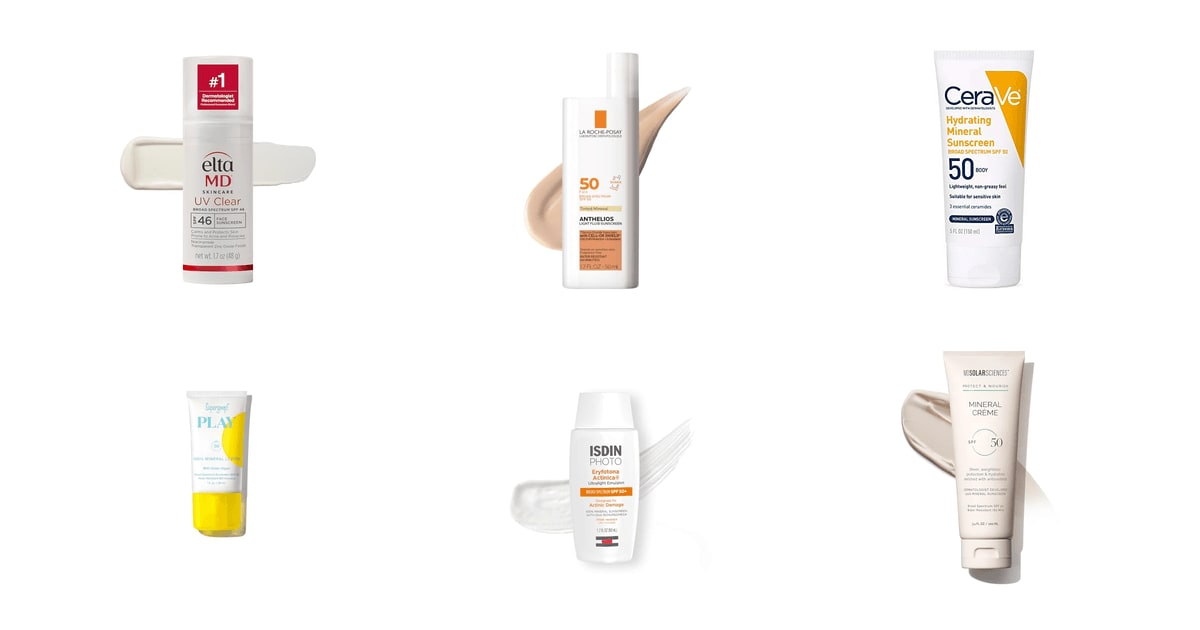
Sunscreen only works if you'll actually wear it. That's the whole game with a daily face SPF: it has to feel good enough that you reach for it on a gray Tuesday, not just at the beach. Mineral formulas make that easier for a lot of people. Zinc oxide and titanium dioxide sit on top of your skin and start working the second they're on, so there's no waiting around before you head out the door. They're also the only two sunscreen filters the FDA classifies as generally recognized as safe and effective.
No mineral sunscreen disappears on every skin tone. Physical filters are white by nature, and even finely milled formulas can leave a faint gray tinge — especially on deeper skin, and especially when you apply enough to get the SPF on the label. That's the other catch. Most people use a quarter to half the amount they should, which quietly cuts their protection roughly in half. A tint fixes the cast. Nothing fixes the fact that you have to put it on generously and put it on again.
So we focused on what makes a sunscreen wearable day after day: how it feels, whether it stings your eyes, whether it breaks you out, and what your face looks like an hour later. We leaned on dermatology guidance, manufacturer spec sheets and the themes that come up again and again in owner feedback. We think that the EltaMD UV Clear Broad-Spectrum SPF 46 is the best mineral face sunscreen for most people, and that the La Roche-Posay Anthelios Tinted Mineral Sunscreen SPF 50 is the one to buy if you want a tint that evens out your skin tone.
Everything we recommend

A featherlight zinc formula that suits skin prone to breakouts

A tint that evens your skin tone and blocks visible light

Barrier-repairing protection, if you'll work past the cast

Repair enzymes for skin that's already taken a lot of sun
At a glance
| Product | SPF | Mineral Filter | Price | |
|---|---|---|---|---|
| EltaMD UV Clear Untinted Face Sunscreen withTop pick | SPF 46 | Zinc Oxide | $45 |
| La Roche-Posay Anthelios Tinted Mineral Sunscreen forRunner-up | SPF 50 | Titanium Dioxide | $29.99On sale |
| CeraVe Hydrating Mineral Sunscreen SPF 50 FaceBudget pick | SPF 50 | — | $16.97On sale |
 | Supergoop! PLAY Mineral Lotion SPF 30 forAlso in lineup | SPF 30 | Zinc Oxide | $16 |
| ISDIN Eryfotona Actinica Mineral Face Sunscreen SPFUpgrade pick | SPF 50+ | Zinc Oxide | $46 |
 | MDSolarSciences Mineral Crème Sunscreen SPF 50Also consider | SPF 50 | — | $46 |
 | TATCHA Silken Pore Perfecting SunscreenAlso consider | SPF 35 | — | $72 |
How we picked
Filters and coverage. We favored zinc oxide, which absorbs and scatters across UVA 1, UVA 2 and UVB, over titanium-dioxide-only formulas that leave long-wave UVA thinly covered. Everything here is broad spectrum at SPF 30 or above, the AAD's daily-use floor.
Cast and shade range. We compared spec sheets for micronized or non-nano zinc, iron oxide tints and how many shades each line offers. Owner feedback about cast on medium and deep skin carried more weight than any marketing claim of invisibility.
Feel and wear. A daily sunscreen has to layer under moisturizer and makeup without pilling, stinging or turning greasy. We looked for recurring reports of good behavior under foundation and a finish that holds through a workday.
Skin compatibility. We prioritized fragrance-free, oil-free, non-comedogenic formulas, since fragrance is the usual trigger for stinging and flares. Recognition from the Skin Cancer Foundation or the National Eczema Association counted in a product's favor.
Extras that earn their place. Niacinamide, ceramides, antioxidants and photolyase all have published support behind them. We only counted them when the concentration or the clinical evidence was specific rather than decorative.
Top pick
A featherlight zinc formula that suits skin prone to breakouts
EltaMD UV Clear Untinted Face Sunscreen with
A thin, untinted zinc oxide fluid built for skin that breaks out easily. The niacinamide in it helps calm redness and blemishes over time, and the finish is dry enough that you can put makeup straight over it.
$45fromAmazonIf you only remember one name from this guide, make it this one. UV Clear is the sunscreen dermatologists have been handing out for years, and the reason is boring in the best way: it disappears. The texture is thin and a little slippy, it sinks in fast, and it skips the chalky film that turns people off mineral formulas. Owners with oily and acne-prone skin report it's one of the few they can wear daily without a breakout.
The niacinamide isn't just label decoration. Clinical work on topical niacinamide in the 4 to 5 percent range — the level used here — shows meaningful drops in inflammatory acne lesions and less oil on the surface of the skin. You won't notice any of that in a day. Over a few months of daily use, though, it's a genuine bonus in a product you were going to apply anyway.
By late afternoon, most sunscreens have either slid off or turned your forehead into a mirror. This one mostly stays put and stays flat. It's not a true matte finish, so if you're very oily you'll still want to blot. But it doesn't add shine, and it plays nicely with moisturizer underneath and foundation on top, which is more than a lot of zinc formulas manage.
It's also one of the gentler options here for reactive skin. It's fragrance-free, oil-free and non-comedogenic, and people with rosacea generally do well with it. Fragrance is the usual culprit when a sunscreen stings your eyes or flares your cheeks, and there isn't any. If your skin objects to almost everything, this is a safer bet than the richer, scented creams.
Flaws but not dealbreakers
The obvious gap is the tint, or rather the lack of one. Without iron oxides you get nothing against visible light, which matters if you're fighting melasma or the dark marks that linger for months after a breakout. If that's your main concern, a tinted formula does more work.
The bottle is small, and a proper face dose is about a quarter teaspoon, so you'll get through it faster than you'd like. The pump can sputter as it empties. And while most people see no cast at all, a few with deeper skin report a brief gray moment before it settles in.
Runner-upOn sale
A tint that evens your skin tone and blocks visible light
La Roche-Posay Anthelios Tinted Mineral Sunscreen for
A sheer, tinted mineral fluid that reads as skin rather than makeup. The iron oxides that give it color also block the visible light tied to melasma, so it does double duty on uneven tone, and the four shades get closer to a match than most tinted sunscreens manage.
$29.99fromAmazonList priceTinted mineral sunscreen is the fix for the white-cast problem, and this is the one to start with. The pigment cancels the chalk, and the finish lands between matte and glowy — closer to a light tinted moisturizer than a foundation. Plenty of owners skip foundation entirely on the days they wear it. Blending takes about ten seconds, which is the real test of a tinted SPF.
The tint does more than hide the cast. A study published in the Journal of the American Academy of Dermatology found that tinted sunscreens with iron oxides prevented visible-light-driven pigmentation far better than untinted mineral formulas. Ordinary indoor lighting and your screens sit in that part of the spectrum. If you have melasma, or marks that never quite fade, that's the strongest argument going for a tinted sunscreen.
Four shades isn't a foundation range, but it beats the single beige most tinted sunscreens offer. Match down rather than up if you're between two, since the formula sheers out as you work it in. If you're deeper than the darkest shade, this will read ashy on you, and one of the untinted picks here is the better route.
It's built for sensitive skin and the Skin Cancer Foundation recommends it, which is a reasonable proxy for gentleness if your skin flares easily. It also sits well under makeup, and that's not a given with mineral formulas — plenty of them pill the moment you put anything on top.
Flaws but not dealbreakers
The filter here is titanium dioxide, not zinc. Titanium dioxide handles UVB and short-wave UVA well, but it does much less against long-wave UVA 1, the range most associated with aging. The SPF 50 broad-spectrum label still means real protection. But if you want the more complete single filter, zinc is it.
It's the greasiest of our picks in the first minute, and it has a faint, slightly odd scent that some people notice and some never do. Give it a few minutes to set before you touch your face, or the tint will transfer onto your fingers and your collar.
Budget pickOn sale
Barrier-repairing protection, if you'll work past the cast
CeraVe Hydrating Mineral Sunscreen SPF 50 Face
A thick, ceramide-rich mineral cream that costs a fraction of the others and protects just as well. The trade-off is a real white cast, so plan on thin layers and a full minute of rubbing it in properly.
$16.97fromAmazonList priceCeraVe's mineral sunscreen does the two things a budget pick has to do. It protects — zinc oxide and titanium dioxide, broad spectrum, developed with dermatologists — and you can buy it at any drugstore without thinking about it. The ceramides are the bonus. They make up roughly half the lipid content of a healthy skin barrier, and ceramide formulas measurably improve water loss and barrier function within a few weeks.
If your skin is dry, flaky or recovering from something, this is the most comfortable pick here. It's a cream rather than a fluid, and it behaves like a moisturizer with SPF folded in. The National Eczema Association recommends it. There's no fragrance, no oil, and nothing that usually sets off compromised skin. On a cold, dry morning you may not need a separate moisturizer underneath at all.
You do have to work for the finish. Applied the way most people apply sunscreen — a big blob, rubbed twice — it goes on visibly white and stays that way. Thin layers, spread section by section and massaged in, get you most of the way there. The owners who love this one and the owners who returned it mostly differ in how patient they were.
Flaws but not dealbreakers
The cast is the headline problem, and it gets worse the deeper your skin tone. Fair skin can usually blend it out with some effort. Medium and deep skin often can't, at least not without makeup on top.
It's formulated for face and body, so it's heavier than a purpose-built face fluid. If you're oily, it'll read greasy by midday. And there's no tint here, which means no visible-light protection.
Upgrade pick
Repair enzymes for skin that's already taken a lot of sun
ISDIN Eryfotona Actinica Mineral Face Sunscreen SPF
An ultralight zinc emulsion that vanishes on contact and adds DNA-repair enzymes on top of the usual blocking. If you have real sun damage, precancerous spots, or a dermatologist keeping an eye on your skin, this is the one worth paying up for.
$46fromAmazonThis is the only sunscreen here that tries to undo damage rather than just prevent it. The photolyase enzymes target UV-induced DNA damage in skin cells. In a peer-reviewed clinical study, the formulation cut actinic keratosis counts by roughly half compared with an SPF-only control. That's an unusual thing for a sunscreen to claim, and it's backed by published work rather than a tagline.
The texture is the other reason people stay loyal to it. It's a watery emulsion that spreads thin and then simply isn't there — no tint, no cast, no film. It's 100 percent zinc oxide at SPF 50+, so you get the more complete mineral filter without the chalk that usually comes with it. Makeup goes over it cleanly.
Dermatologists reach for this after lasers, peels and microneedling, when skin is raw and every ingredient is a gamble. It's fragrance-free, non-comedogenic and calm enough for rosacea. It's also FSA and HSA eligible, which takes some of the sting out of what it costs.
Compared with our top pick, you're trading niacinamide for repair enzymes and paying more for the swap. If your main concern is acne, stick with the EltaMD. If it's decades of sun and a history of spots your dermatologist keeps freezing off, this is the better fit.
Flaws but not dealbreakers
It's the priciest option here, and you'll move through a bottle steadily if you apply a full dose every morning. The pump puts out a very thin fluid that can run down your hand if you're slow.
There's no tint, so it does nothing for visible light or for evening out your complexion. And the repair-enzyme benefit, real as the study is, matters most for people with existing damage. If you're in your twenties with clear skin, you're paying for something you may not need yet.
Who this is for
This guide is for anyone who wants a face sunscreen they'll wear every single day, and who prefers mineral filters — whether that's because your skin reacts to chemical filters, because you're pregnant or nursing and want to keep things simple, or because you like that zinc and titanium dioxide are the two filters the FDA has already signed off on. It's especially useful if you have sensitive, acne-prone or post-procedure skin, since mineral formulas tend to be the least irritating thing you can put on a compromised face.
It's not the right guide if you want a beach-day sunscreen for your whole body, or if your priority is the absolute lightest, most invisible texture regardless of filter type — chemical and hybrid formulas still win on cosmetic elegance, and Europe and Asia have options the FDA hasn't approved here. We also aren't covering sunscreen sticks, powders or setting sprays, which are useful for topping up but shouldn't be your first application of the day.
How we picked
Filters: we favored zinc oxide, the one mineral filter that covers UVA 1, UVA 2 and UVB, and required broad-spectrum SPF 30 at minimum. Cast: we compared micronized and non-nano formulations, iron oxide tints and shade ranges, and we weighted owner reports of cast on medium and deep skin heavily. Wear: a daily sunscreen has to layer under moisturizer and makeup without pilling or sliding, so we looked for consistent reports of good behavior through a full workday. Skin compatibility: fragrance-free, oil-free and non-comedogenic formulas came first, with extra credit for Skin Cancer Foundation and National Eczema Association recognition. Extras: niacinamide, ceramides, antioxidants and photolyase counted only where the concentration or the published evidence was specific.
Other mineral sunscreens for face worth considering
If you want a matte, pore-blurring finish: The MDSolarSciences Mineral Crème Sunscreen SPF 50 ($46) — MDSolarSciences Mineral Crème lays down the flattest finish of anything here. It uses micronized zinc oxide and titanium dioxide, holds up to 80 minutes of water resistance, and carries a genuinely useful antioxidant load — vitamin C, green tea and pomegranate. The velvety texture blurs texture and works as a primer, and the bottle is bigger than most face-only SPFs, so it lasts. The catch shows up on medium skin tones, where owners report a cast that doesn't fully disappear. It also feels rich going on before it settles, which oily skin may not love in July.
If you want the silkiest texture and a built-in primer: The TATCHA Silken Pore Perfecting Sunscreen ($72) — Tatcha's Silken Pore Perfecting Sunscreen feels better on the skin than anything else here — silk extract and Japanese wild rose give it a smooth, almost powdery slip that makes pores look softer. Owners with sensitive skin praise it for not stinging their eyes, and it takes makeup beautifully. Two things hold it back as a daily pick. It's SPF 35, the lowest in this group, and it costs far more per ounce than formulas with more protective extras. If texture is what keeps you from wearing sunscreen, that trade may be worth it.
The competition
Here's what else our research surfaced. This isn't every mineral sunscreen on the market — it's the products we looked at closely alongside the picks above and didn't recommend.
The Supergoop! PLAY Mineral Lotion SPF 30 for ($16) — Supergoop! PLAY Mineral Lotion SPF 30 is a non-nano zinc oxide lotion for face and body, with 80 minutes of water resistance and green algae, tucuma butter and vitamin E in the mix. It's a solid travel and reef-safe choice, and owners with reactive skin report it doesn't sting their eyes. But it's a body-first formula at the lowest SPF in this group, and it needs more rubbing than a dedicated face fluid before the cast clears. If you want one bottle for your face and your shoulders on vacation, it's a reasonable buy — just not the thing to wear under makeup every morning.
Application and reapplication
Getting the SPF on the label means applying about two milligrams per square centimeter of skin. For a face, that's roughly a quarter teaspoon, or a nickel-sized dot. Most people use a quarter to half that much, which quietly halves the protection they think they're getting. Measure it once so you know what it looks like in your palm. Mineral filters work the instant they're on, so there's no waiting before you leave. Reapply every two hours outdoors, and after 80 minutes of swimming or sweating with the water-resistant formulas. Indoors and away from windows, one morning application is fine for most people. If you wear makeup, a tinted mineral powder is the easiest way to top up without redoing your face.
Questions we get
What's the difference between mineral and chemical sunscreen?
Mineral sunscreens use zinc oxide or titanium dioxide, which sit on the skin's surface and reflect and absorb UV immediately. Chemical filters absorb into the skin and, in some cases, need 15 to 20 minutes before they're fully effective. The FDA currently classifies only zinc oxide and titanium dioxide as generally recognized as safe and effective; the other common filters are still under review. Both types protect you if you apply enough and reapply.
Will a mineral sunscreen leave a white cast on deeper skin?
It can, and it's the number one complaint about mineral formulas. Micronized and non-nano zinc reduce the problem a lot but don't always eliminate it. The reliable fix is a tinted formula with iron oxides, like the La Roche-Posay pick, which cancels the chalk and adds visible-light protection at the same time. If you're deeper than the darkest shade a brand offers, a sheer untinted fluid like the ISDIN or the EltaMD is usually a safer bet than a mismatched tint.
What SPF do I actually need for daily use?
SPF 30 is the American Academy of Dermatology's minimum for daily use, and it blocks roughly 97 percent of UVB. SPF 50 gets you to about 98 percent. That gap is small enough that it shouldn't drive your choice. How much you apply and how often you reapply matter far more than the number on the bottle.
Is zinc oxide or titanium dioxide better for your face?
Zinc oxide is the more complete single filter. It works across UVA 1, UVA 2 and UVB, while titanium dioxide covers UVB and short-wave UVA well but does little against long-wave UVA 1 — the range most associated with aging and pigmentation. Many formulas combine both, which is fine. If you're choosing one filter, choose zinc.
Can I wear mineral sunscreen under makeup?
Yes, and some of these work better than a dedicated primer. Let the sunscreen set for a couple of minutes before you apply anything over it, which prevents pilling. Thin fluids like the EltaMD and the ISDIN layer most cleanly; thicker creams like the CeraVe can move under foundation. Tinted formulas often let you skip foundation entirely.
Is mineral sunscreen better if you break out?
Often, yes. Mineral filters are less likely to sting or irritate, and the best face formulas are oil-free and non-comedogenic. The EltaMD adds niacinamide, which published clinical work links to fewer inflammatory acne lesions and less oil at the concentrations used here. Breakouts from sunscreen are more often about heavy, occlusive textures than about the filters themselves, so look for a light fluid rather than a rich cream.
Why you should trust us
For this guide:
- We read FDA guidance on sunscreen actives, AAD and Skin Cancer Foundation recommendations, and published clinical work on niacinamide, iron oxides, ceramides and photolyase enzymes.
- We compared manufacturer specifications for every product here — active filters, SPF, water resistance, shade range and formulation claims.
- We read through owner feedback looking for recurring themes rather than outliers, especially around white cast on different skin tones, irritation, and how each formula behaves under makeup.
- We read owner reviews on every listing, weighted toward the critical ones, because that is where the recurring failures show up.
- We have a systematic way of automatically fetching the latest prices, so the numbers on this page stay current.
- This is a research-focused guide, so the team may not own every product listed — though we often do own the top winners, which gives us extra context for the recommendations.
- We don't accept free products, and the retailer commission never changes which product we recommend.
Sources
Sunscreen FAQs – American Academy of Dermatology, American Academy of Dermatology (AAD)
EWG's Guide to Sunscreens – Environmental Working Group, Environmental Working Group (EWG)
The Best Sunscreens – Wirecutter (New York Times), Wirecutter
Best Mineral Sunscreens, Tested by Editors – Allure, Allure
Sunscreen Buying Guide & Ratings – Consumer Reports, Consumer Reports
Iron Oxides in Sunscreen Protect Against Visible Light – Journal of the American Academy of Dermatology, Journal of the American Academy of Dermatology (JAAD)
Photolyase Enzyme Reduces Actinic Keratoses – PubMed / NLM, PubMed / National Library of Medicine
Zinc Oxide vs. Titanium Dioxide UV Spectrum Coverage – Photochemistry and Photobiology, Photochemistry and Photobiology (peer-reviewed journal)
Niacinamide in Topical Dermatology – International Journal of Dermatology, PubMed / International Journal of Dermatology
Sunscreen: How to Help Protect Your Skin from the Sun – U.S. FDA, U.S. Food & Drug Administration
Best Face Sunscreens, Tested – Good Housekeeping Beauty Lab, Good Housekeeping Beauty Lab
Skin Cancer Facts & Statistics – Skin Cancer Foundation, Skin Cancer Foundation
Amazon product listings and owner reviews for all 7 products
Manufacturer specification pages for each product
Some passages in this guide may be paraphrased with AI help. Prices are refreshed automatically.
More like this.
Continue exploring beauty reviews and recommendations.

The Best Sunscreens for Face and Body
Sunscreen only works if you actually wear it. That sounds obvious, but it's the whole game. The formula you like - the one that doesn't sting your eyes,…

The Best Sunscreens for Every Skin Type
Sunscreen only works if you actually wear it. That sounds obvious, but it's the whole ballgame. The American Academy of Dermatology says SPF 30 filters…

The Best LED Face Masks and Red Light Therapy Devices
Red light therapy asks very little of you and gives back slowly. You put on a mask, sit still for a few minutes, and repeat that several times a week for…

The Best Anti-Aging Face Moisturizers
An anti-aging moisturizer does two jobs at once. It keeps your face comfortable all day, and it carries actives - retinol, peptides, niacinamide - that…

The Best Face Cleansers
Washing your face is the one skincare step almost everyone does, and it's the easiest one to get wrong. A cleanser that's too aggressive strips the oils…

The Best Anti-Aging Face Serums
A serum is the step in a routine where the actual chemistry happens. Cleanser, moisturizer and sunscreen mostly support the work a serum does. A good one…