The Best Anti-Aging Face Moisturizers
An anti-aging moisturizer does two jobs at once. It keeps your face comfortable all day, and it carries actives — retinol, peptides, niacinamide — that work slowly in the background. You'll use it twice a day for months, so the texture matters as much as the ingredient list. If it pills under makeup or leaves you shiny by noon, you'll quietly stop using it. And a cream sitting unused on a shelf does nothing at all. The best one is the one you reach for without thinking.
Here's the honest part: none of these creams erase a wrinkle. Topicals soften lines, smooth texture, and slow new damage. That's the whole promise. Hydration shows up within a day, peptide and niacinamide changes take a month or two, and retinol needs about three months before you'll see a real difference. Every product here also needs daily sunscreen to be worth much, since sun exposure drives most of the visible aging you're trying to fix. Anyone promising more is selling the story, not the science.
So choose for your skin and your routine, not for the label on the jar. If your face turns tight and flaky in dry air, you want a richer cream. If you're shiny by lunch, you want something lighter. If you've never used retinol, start low and go slow instead of buying the strongest thing you can find. We think that the Olay Regenerist Micro-Sculpting Cream is the best anti-aging face moisturizer for most people, and that the Clinique Smart Clinical Repair Wrinkle Correcting Cream is the one to buy if your skin reacts to almost everything.
Everything we recommend

Peptides and niacinamide in a cream you'll keep using
Allergy-tested and fragrance-free, for easily upset skin

Real retinol at the gentlest possible entry point
Nine peptides in a rich cream, if you'll pay for the formula

Daily sun protection and peptides in one morning step
At a glance
| Product | Net Volume | Key Active | Price | |
|---|---|---|---|---|
| Olay Face MoisturizerTop pick | 1.7 oz | Collagen Peptide | $21.96On sale |
| Neutrogena Retinol Face Moisturizer CreamBudget pick | 1 fl oz | Retinol | $20.88On sale |
 | RoC Retinol Correxion Line Smoothing Max HydrationAlso consider | 2.55 oz x2 | RoC Retinol | $49.97On sale |
| Paula's Choice RESIST Skin Restoring Moisturizer SPFAlso great | 2 fl oz | SPF 50 | $39 |
| Drunk Elephant Protini Polypeptide Cream - 50Upgrade pick | 1.69 oz | Signal Peptides | $72 |
 | Sunday Riley Auto Correct Brightening and DepuffingAlso consider | 0.5 fl oz | Caffeine | $65 |
| Clinique Smart Clinical Repair Wrinkle Correcting AntiRunner-up | 1.7 oz | Hyaluronic Acid | $78 |
 | Estée Lauder Advanced Night Repair Face SerumAlso consider | 1 fl oz | Hyaluronic Acid | $88 |
 | SkinMedica TNS Advanced+ Face SerumAlso consider | 1 fl oz | Peptide Serum | $295 |
 | La Mer Crème de la Mer MoisturizingAlso in lineup | 0.24 fl oz | — | $68.90 |
How we picked
Actives with evidence. We prioritized formulas built on retinol, peptides, niacinamide, hyaluronic acid or growth factors, since those have the strongest published research behind them. Anything whose main claim rested on a proprietary name rather than a known active moved down the list.
Texture and wear. We read owner feedback and published reviews looking for the same complaints over and over: pilling under makeup, greasy residue, or a finish so heavy people gave up. A cream has to be pleasant enough to use twice a day for months.
Fragrance and sensitivity. Fragrance is the most common trigger for stinging and redness in face creams, so we gave real weight to fragrance-free, allergy-tested formulas. We also checked whether a product was gentle enough to use alongside a retinol.
Packaging integrity. Retinol in particular degrades when it meets air and light, so tubes and pumps beat open jars. We noted where packaging works against the formula, even on products we still recommend.
Honest timelines. We compared each brand's own clinical claims against what the broader research says about how fast these ingredients work. Products promising overnight transformations lost ground to ones with realistic four- to twelve-week claims.
Top pickOn sale
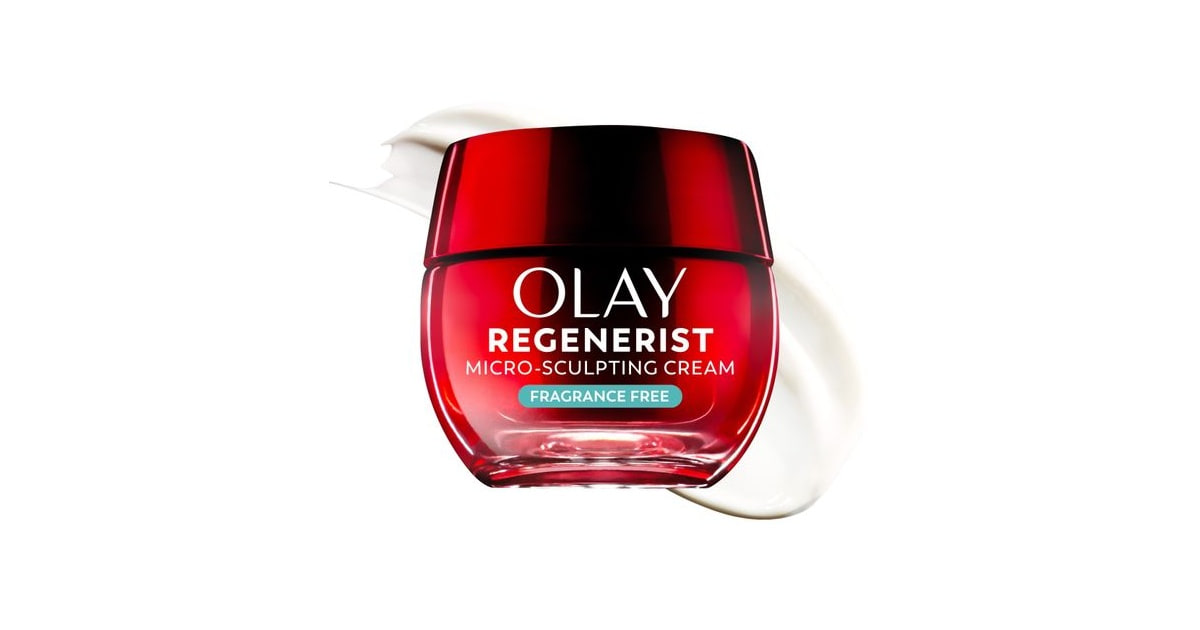
Peptides and niacinamide in a cream you'll keep using
Olay Face Moisturizer
The Olay Regenerist Micro-Sculpting Cream pairs a triple collagen peptide complex with niacinamide and hyaluronic acid in a fragrance-free cream that sinks in fast. It's the rare anti-aging cream that's genuinely pleasant to use twice a day, which is the part that actually gets you results.
$21.96fromAmazonList priceThe ingredient list does the work here, not the marketing. Olay combines a triple collagen peptide complex with niacinamide, pro-vitamin B5 and hyaluronic acid. Peptides signal your skin to support its own collagen. Niacinamide strengthens the barrier, which is why your face feels less tight and less reactive after a few weeks. It's the short list dermatologists keep pointing to, and you get it in one jar.
It's fragrance-free, and that solves a problem most people don't know they have. Fragrance is the single most common trigger for stinging, redness and low-grade irritation in face creams. Olay leaves it out, along with synthetic dyes, phthalates and parabens. So if your skin has turned on you before with no obvious culprit, this is a safe place to restart. You can also use it around a retinol routine without stacking irritation.
The texture is the reason people stick with it. It's a proper cream, but it absorbs quickly and doesn't leave a sticky film. That means you can put makeup over it in the morning without waiting around, and it won't slide onto your pillow at night. Owners consistently describe it as one of the few richer creams that doesn't feel like a mask, which matters when you're applying it twice a day for months.
You get real actives without stepping into the prestige tier. This costs a small fraction of what the medical-grade and department-store options in this guide ask, and the active story is not meaningfully thinner. Published reviews and blind consumer panels have put it at or near the top of drugstore anti-aging creams for years. If you want one product to carry your whole routine, this is the sensible default.
Flaws but not dealbreakers
The jar is the weak spot. Air and light degrade actives over time, and an open jar exposes the formula every single day. Peptides and niacinamide hold up better than retinol does, so this isn't a dealbreaker. Still, keep it out of a sunny bathroom window, close it properly, and don't dig around in it with wet fingers.
It's a real cream, and oily skin may find it heavy. If you're already shiny by mid-afternoon or prone to congestion along your forehead and chin, this can feel like too much during the day. Owners with combination skin often end up using it only at night. Try a thinner layer first before you write it off.
Runner-up
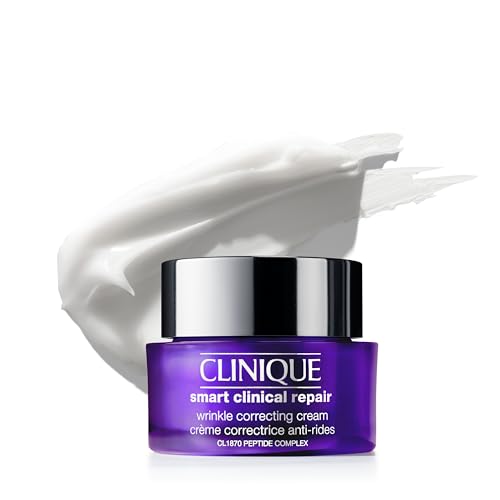
Allergy-tested and fragrance-free, for easily upset skin
Clinique Smart Clinical Repair Wrinkle Correcting Anti
Clinique's Smart Clinical Repair leans on hyaluronic acid and peptides in a fully fragrance-free, allergy-tested cream. It's the one to buy if your skin stings at the smallest provocation, or if you're recovering from a peel or a laser appointment and need something reliably boring.
$78fromAmazonFragrance-free here isn't a marketing line, it's the whole point. Clinique allergy-tests its formulas and leaves fragrance out completely. If you get that hot, prickly feeling around your nose from most creams, or you've been told you have rosacea, removing fragrance removes the usual suspect. It's also the cream to reach for after a procedure, when your barrier is already unhappy and anything perfumed feels like a bad idea.
The active pairing is sensible rather than aggressive. You get hyaluronic acid for hydration plus peptides to support skin strength, along with soybean seed extract. There's no retinol and no acid, so nothing here is going to pick a fight with your face. For reactive skin, that restraint is a feature. You can layer a gentler treatment underneath and let this be the calm final step.
It suits every skin type, which makes it easy to recommend blind. The finish is hydrating without turning greasy, so it works on dry skin in the morning and on normal skin at night. Clinique states that most users in its own testing saw lines and wrinkles look reduced. Editors at the major beauty titles have kept it on their lists year after year, which counts for something.
The brand's track record is the quiet reason to trust it. Clinique has built decades of formulating around dermatological input and allergy testing, and it shows in how few complaints there are about stinging or breakouts. If you've been burned by trendy formulas, that predictability is worth more than a novel ingredient. You know what you're getting every time you repurchase.
Flaws but not dealbreakers
The "Smart Technology" framing is marketing, not chemistry. The idea that the formula adapts to your skin's daily needs is a story wrapped around a solid but conventional hyaluronic acid and peptide base. The actives do the work. Judge it on those, and don't pay extra in your head for the branding.
It costs considerably more than the drugstore picks for a similar active story. You're paying for the counter, the packaging and the testing program. Those are real, but if your skin isn't especially sensitive, our top pick gets you to nearly the same place for much less.
Budget pickOn sale
Real retinol at the gentlest possible entry point
Neutrogena Retinol Face Moisturizer Cream
Neutrogena's Rapid Wrinkle Repair puts stabilized retinol and hyaluronic acid in a light night cream you can find almost anywhere. If you've never used retinol and don't want to commit to a prestige purchase to find out how your skin handles it, start here.
$20.88fromAmazonList priceRetinol has the deepest evidence base of anything you can buy without a prescription. Decades of peer-reviewed work back it up for smoothing lines and improving texture, because it speeds cell turnover and nudges collagen production directly. Neutrogena uses a stabilized retinol paired with hyaluronic acid, so you get the active without the full brunt of the dryness that usually comes with it.
It's the product dermatologists name when someone asks where to start. It's widely stocked, easy to replace, and formulated without parabens, mineral oil or dyes. The instructions are refreshingly simple: a pearl-sized amount at night, on a clean face and neck. That low barrier matters, because the main reason people fail with retinol is quitting in week two.
The texture is light, which is what you want at night. It sinks in rather than sitting on top, so it doesn't transfer to your pillowcase or make your face feel coated. If you already use a heavier moisturizer, you can put this on first and seal it in. Owners routinely note that it absorbs faster than richer retinol creams.
Nothing else here costs so little for a genuinely active formula. Consider this the trial run. If your skin tolerates it after a couple of months, you'll know retinol works for you and can decide whether to move up. If it doesn't, you've learned something important without much regret.
Flaws but not dealbreakers
The first two weeks can be rough. Dryness, tightness and small flakes around the nose and mouth are normal for retinol newcomers. Start with two or three nights a week, buffer it with a plain moisturizer on top, and build up. If your skin is still angry after a month, retinol at this strength probably isn't for you.
It isn't fragrance-free, and the bottle is small. Highly reactive or rosacea-prone skin is better served by our runner-up. And because the bottle is modest, you'll be replacing it more often than you would a big jar of cream, which chips away at the savings.
There's no sun protection in it, and retinol makes that more urgent. Retinol can leave your skin more sun-sensitive, so this is strictly a nighttime product and it only pays off if you're using sunscreen every morning.
Upgrade pick
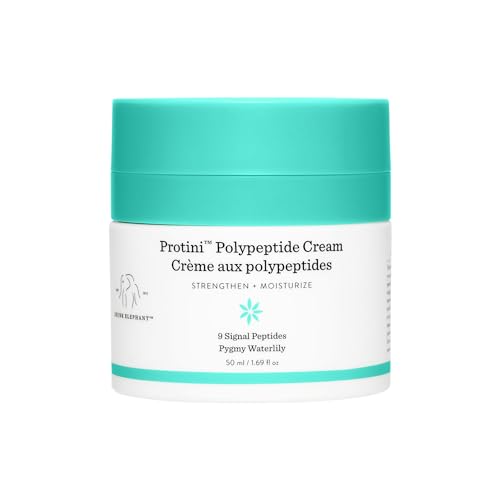
Nine peptides in a rich cream, if you'll pay for the formula
Drunk Elephant Protini Polypeptide Cream - 50
Drunk Elephant's Protini Polypeptide Cream stacks nine signal peptides with growth factors and amino acids in a fragrance-free, silicone-free base. It's the peptide cream to buy if you care about what's on the ingredient list and want firmness without adding another irritating active.
$72fromAmazonThe peptide load is the reason to buy this. Nine signal peptides, plus growth factors, amino acids and pygmy waterlily stem cell extract, all aimed at tone, texture and firmness. Peptides work by telling your skin to make more of its own structural proteins, which is a completely different route from retinol's turnover approach. That makes the two good partners rather than competitors in a routine.
The formula leaves out the usual troublemakers. No essential oils, no fragrance, no dyes, no silicones, no drying alcohols. If your skin has reacted badly to creams before and you couldn't work out why, that list of omissions is doing real work. It's also pH-balanced, so it plays nicely with acids and vitamin C serums layered underneath.
It feels rich but doesn't sit on your face. This is a substantial cream that still absorbs cleanly, with no greasy residue and no silicone slip. You can use it morning and night, and it works fine under makeup. Owners with dry, dehydrated skin describe it as the one cream that finally stopped the tightness without triggering breakouts.
It has held up to years of editorial scrutiny. Beauty editors have handed it awards repeatedly, and it's stayed on best-of lists long after the initial hype cooled. In a category full of one-season darlings, that consistency is a reasonable proxy for the formula actually delivering what it claims.
Flaws but not dealbreakers
You're paying a lot for a small jar. Cost per ounce is far above the drugstore creams here, and a 50 ml jar doesn't last long if you're using it twice a day on face and neck. Whether that's worth it depends on how much the clean formulation matters to you.
There's no retinol and no SPF, so it can't be your only product. This is one piece of a routine, not a complete one. Pair it with sunscreen in the morning and, if lines are your main concern, a retinol at night.
Also great
Daily sun protection and peptides in one morning step
Paula's Choice RESIST Skin Restoring Moisturizer SPF
Paula's Choice RESIST Skin Restoring Moisturizer SPF 50 combines mineral broad-spectrum protection with niacinamide, antioxidants and shea butter. If you keep skipping sunscreen because it's one step too many, folding it into your moisturizer is the fix that actually sticks.
$39fromAmazonSunscreen is the most effective anti-aging step you can take, and this makes it painless. Most of the lines, spots and slackness people want to treat come from cumulative UV exposure. Broad-spectrum SPF 50 prevents the damage instead of chasing it. Combining that with your morning moisturizer removes the excuse, which is why this earns a spot even though it isn't a wrinkle treatment.
It isn't just a sunscreen in disguise. Niacinamide strengthens the barrier, antioxidants including vitamins C and E help mop up free radicals that UV exposure generates, and shea butter keeps things comfortable. So the morning step is doing prevention and treatment at once. For dry or sensitive skin, that combination is much easier to live with than a standalone chemical sunscreen.
The mineral base suits skin that reacts to chemical filters. Paula's Choice leaves out fragrance entirely, which is consistent across its RESIST line. If chemical sunscreens sting your eyes or leave your face hot and pink, a mineral formula in a rich, moisturizing base is a much gentler daily option.
It wears well under makeup, which is the whole battle. Editors have singled it out for layering without pilling or turning greasy. A sunscreen you can put on and forget about is one you'll actually apply every single morning, and daily use beats occasional use of something more sophisticated.
Flaws but not dealbreakers
It can't replace a dedicated sunscreen for a day outdoors. Almost nobody applies moisturizer in the quantity needed to reach the labeled SPF, so your real-world protection is lower than the number suggests. For a hike, a beach day or a long stretch in the yard, use a proper sunscreen and reapply.
Mineral formulas are thick, and some skin tones will see a cast. This is a rich lotion with shea butter, so if you're oily it may be more than you want in warm weather. Deeper skin tones should expect some whitish tint that needs blending or a layer of makeup over it.
Who this is for
This guide is for anyone who wants a daily face cream that does more than hydrate — whether you're starting prevention early or dealing with lines that are already settled in. If your main concern is dryness alone, you don't need any of this; a plain ceramide moisturizer will serve you better and cost less. And if you have active acne, melasma or a diagnosed skin condition, see a dermatologist first. A prescription retinoid will outperform everything on this page.
We've stuck to leave-on facial products you can buy without a prescription: creams, a couple of treatment serums meant to go under a moisturizer, one dedicated eye cream, and one moisturizer with sunscreen built in. We haven't covered cleansers, toners, exfoliating acids, standalone sunscreens or in-office treatments. We also can't tell you which of these will suit your face specifically. Skin varies enough that a formula one person swears by will break out the next.
How we picked
We built the list around a handful of things that decide whether a cream is worth your counter space. Actives with evidence: retinol, peptides, niacinamide, hyaluronic acid and growth factors, backed by published research rather than a trademarked name. Texture and wear: it has to absorb, sit under makeup, and not feel like a coating, because that's what determines whether you keep using it. Fragrance and sensitivity: fragrance-free and allergy-tested formulas got preference, since fragrance causes most unexplained stinging. Packaging integrity: tubes and pumps protect actives that jars expose to air and light. Honest timelines: we favored brands whose claims match what the science actually supports over weeks and months, not overnight.
Other anti-aging face moisturizers worth considering
If you want retinol you can keep using for months: The RoC Retinol Correxion Line Smoothing Max Hydration ($49.97) — The RoC Retinol Correxion Line Smoothing Max Hydration Cream comes as a two-pack, so you get considerably more product per purchase than any single-tube retinol here. RoC has been a dermatologist staple since the early 1990s, and this Max Hydration version adds hyaluronic acid and glycerin specifically to blunt retinol's dryness. The brand's clinical claims cover firmness and fine lines over eight weeks. It's oil-free, non-comedogenic and paraben-free. The catch is that pure retinol still needs a careful two- to four-week ramp-up, and there's no sun protection in it, so a daytime sunscreen isn't optional. We'd steer retinol newcomers to our budget pick first and send experienced users here.
If you're pairing skincare with in-office procedures: The SkinMedica TNS Advanced+ Face Serum ($295) — SkinMedica TNS Advanced+ is the medical-grade option, and it has the deepest clinical file of anything in this lineup. Its two-chamber design keeps a next-generation growth factor blend separate from the peptide complex until you dispense, which helps stability. Peer-reviewed work on the TNS complex points to measurable improvements in wrinkle depth, tone and texture with consistent use, and plastic surgeons and dermatologists commonly build it into post-procedure protocols. It's also by far the most expensive product here, and it's easiest to obtain through physician and medical spa channels. Buy it if you're already investing in lasers or injectables and want your topicals to match. Otherwise it's overkill.
If you want a night serum to layer under your cream: The Estée Lauder Advanced Night Repair Face Serum ($88) — Estée Lauder Advanced Night Repair has been a fixture in prestige skincare for over four decades, and it's the brand's best-selling serum for a reason. The formula pairs a night peptide with hyaluronic acid and is built around circadian-rhythm research, targeting line reduction, firmness, even tone and hydration at once. It's free of synthetic fragrance, parabens, phthalates and sulfates. The texture is light and layers under any moisturizer without pilling. Two caveats: it's a serum rather than a moisturizer, so most people still need a cream on top, and it sits firmly in the prestige tier. If you already have a moisturizer you like, this slots in underneath.
If your main concern is puffy, shadowed under-eyes: The Sunday Riley Auto Correct Brightening and Depuffing ($65) — The Sunday Riley Auto Correct Brightening and Depuffing Eye Contour Cream is the only product here made specifically for the eye area, where skin is several times thinner than the rest of your face and shows fatigue first. Caffeine and Brazilian ginseng root extract target puffiness and dark circles, while horse chestnut and acmella oleracea address crow's feet. It's fragrance-free, sulfate-free and paraben-free. The trade-offs are the price for a small tube covering one small zone, and the patience required — results build over several weeks of twice-daily use. If your under-eyes are your least favorite feature, it's a reasonable add-on, not a replacement for a face cream.
The competition
This is what our research surfaced across the drugstore, department-store and medical-grade tiers, not a complete census of a category with hundreds of entries. The product below has plenty of admirers, and there's nothing wrong with it. It just lost on the specific grounds we cared about most: evidence behind the actives and what you get for the outlay.
The La Mer Crème de la Mer Moisturizing ($68.90) — La Mer Crème de la Mer is the most famous moisturizer in the world, and its reputation isn't entirely hype. The fermented Miracle Broth marine extract does hydrate deeply, and it genuinely calms skin that's dehydrated, wind-burned or otherwise irritated. But the peer-reviewed evidence for wrinkle reduction is thin compared with retinol, peptides or growth factors, and independent comparisons keep finding that far less expensive formulas do more on the measures people actually care about. The listing here is a trial size, which is honestly the smartest way to try it — full-size cost per ounce is in another league. The texture is also rich and occlusive, so oily and acne-prone skin should skip it. Buy it if you want the experience and the jar on your shelf, and go in knowing what you're paying for.
How to use these without wrecking your skin
Order matters more than people think. Put your thinnest, most active products on first — serums and retinol treatments — then seal everything in with your moisturizer as the last step. If you're using both retinol and a peptide cream, run the retinol every other night for the first month so your barrier can keep up, then increase from there. Expect some dryness early on; that's normal, not a sign it's failing. Keep jars closed and out of direct sun, since air and light degrade actives, and don't scoop with wet fingers. Above all, finish every morning with sunscreen. No cream in this guide can undo the damage you accumulate without it.
Questions we get
What's the best anti-aging moisturizer if I'm over 50?
Skin past 50 tends to be drier, with deeper lines and less bounce, so it can handle richer formulas and more actives at once. We'd use the Olay Regenerist Micro-Sculpting Cream as your daily moisturizer and layer Estée Lauder Advanced Night Repair underneath it at night. If you're also getting in-office treatments, ask your dermatologist whether SkinMedica TNS Advanced+ fits your protocol.
Which anti-aging moisturizers do dermatologists actually recommend?
They tend to recommend ingredients rather than brands, and the ingredient they name first is retinol — always paired with daily broad-spectrum sunscreen. Among the products here, Neutrogena Rapid Wrinkle Repair and RoC Retinol Correxion are the two most commonly suggested starting points. SkinMedica TNS Advanced+ is the option most often dispensed through physician offices.
Is retinol or are peptides better for wrinkles?
Retinol has the longer and stronger evidence base. It speeds cell turnover and stimulates collagen directly, which is why it shows up in nearly every dermatologist's advice. Peptides work differently, signaling your skin to produce more of its own collagen, and they're much gentler. The two mechanisms complement each other, so a common approach is retinol at night and a peptide cream during the day.
Can a moisturizer with SPF be my only sunscreen?
For an ordinary day of errands and a commute, something like the Paula's Choice RESIST SPF 50 is far better than nothing and much better than skipping it. But almost nobody applies moisturizer thickly enough to hit the SPF on the label, so your actual protection is lower than the number. For extended time outdoors, use a dedicated sunscreen and reapply every couple of hours.
How long before I see results?
Hydration and a plumper look show up within hours, but that's temporary. Niacinamide, peptide and antioxidant improvements generally become visible after four to eight weeks of consistent use. Retinol needs at least twelve weeks for measurable collagen change, and the biggest gains come after six months or more. Consistency beats potency here every time.
Should I avoid creams that come in jars?
Only if the active is unstable. Retinol degrades quickly when it meets air and light, so a tube or an airless pump is genuinely better for it. Peptides, niacinamide and hyaluronic acid are more forgiving, which is why we're comfortable recommending our top pick despite its jar. Keep any jar closed, out of sunlight, and away from wet fingers.
Why you should trust us
For this guide:
- We read published reviews and editor picks from major beauty and consumer publications alongside each brand's own clinical claims and full ingredient lists.
- We compared active ingredients, packaging formats and stated result timelines across all ten products in this lineup.
- We looked through owner feedback for complaints that recurred — pilling, greasiness, stinging and early retinol flaking — and weighted those patterns over isolated gripes.
- We read owner reviews on every listing, weighted toward the critical ones, because that is where the recurring failures show up.
- We have a systematic way of automatically fetching the latest prices, so the numbers on this page stay current.
- This is a research-focused guide, so the team may not own every product listed — though we often do own the top winners, which gives us extra context for the recommendations.
- We don't accept free products, and the retailer commission never changes which product we recommend.
Sources
Best Anti-Aging Moisturizers — Allure Beauty Awards 2025, Allure
Best Anti-Aging Face Creams, Tested by Editors — Good Housekeeping, Good Housekeeping
Best Anti-Aging Moisturizers — Consumer Reports 2025, Consumer Reports
Retinoids in the Treatment of Skin Aging — Clinics in Dermatology (PubMed), PubMed / Clinics in Dermatology
Photoaging and Sunscreen — American Academy of Dermatology, American Academy of Dermatology
Best Anti-Aging Moisturizers Dermatologists Actually Recommend — Verywell Health, Verywell Health
Best Anti-Aging Moisturizers — New York Times Wirecutter, NYT Wirecutter
Global Anti-Aging Skincare Market Report 2025–2030 — Grand View Research, Grand View Research
Amazon product listings and owner reviews for all 10 products
Manufacturer specification pages for each product
Some passages in this guide may be paraphrased with AI help. Prices are refreshed automatically.
More like this.
Continue exploring beauty reviews and recommendations.

The Best Anti-Aging Face Serums
A serum is the step in a routine where the actual chemistry happens. Cleanser, moisturizer and sunscreen mostly support the work a serum does. A good one…

The Best Tinted Moisturizers With SPF
A tinted moisturizer with SPF is the shortcut most people actually want on a weekday morning. One pump handles hydration, a little color correction, and…

The Best Moisturizers for Dry, Sensitive Skin
Dry, sensitive skin doesn't need a complicated routine. It needs the same boring cream, twice a day, especially right after a shower. A good moisturizer…

The Best Face Cleansers
Washing your face is the one skincare step almost everyone does, and it's the easiest one to get wrong. A cleanser that's too aggressive strips the oils…

The Best Mineral Sunscreens for Face
Sunscreen only works if you'll actually wear it. That's the whole game with a daily face SPF: it has to feel good enough that you reach for it on a gray…

The Best LED Face Masks and Red Light Therapy Devices
Red light therapy asks very little of you and gives back slowly. You put on a mask, sit still for a few minutes, and repeat that several times a week for…