The Best Tinted Moisturizers With SPF
A tinted moisturizer with SPF is the shortcut most people actually want on a weekday morning. One pump handles hydration, a little color correction, and sun protection, and you're out the door in under a minute. The good ones look like skin rather than makeup — they even out redness and dullness without settling into lines or sliding off by lunch. The bad ones pill under your fingers, oxidize orange, or leave a chalky gray film that shows up in every photo you take that day.
Here's the honest catch: almost nobody applies enough of one of these to get the SPF number on the label. Sunscreen testing uses roughly a quarter teaspoon for the face, and that's far more product than most people rub on as a tint. So treat the SPF here as insurance for incidental exposure — the walk to the car, the window seat, the errand run. For a beach day or a long hike, you want a dedicated sunscreen underneath or instead. No product in this category solves that.
Shade matching is the other unavoidable friction. Screens lie, undertones are hard to judge, and even a 30-shade range can miss you. We think that the ILIA Super Serum Skin Tint SPF 40 is the best tinted moisturizer with SPF for most people, and that the IT Cosmetics CC+ Cream SPF 50+ is the one to buy if you want higher sun protection and real coverage over redness and dark spots.
Everything we recommend

Skincare that happens to even you out, with real SPF

Higher SPF and much more coverage, if you want both

The gentlest option, and the one dermatologists keep naming

Buy it for the texture work, not just the tint

Most of the effect for a fraction of the outlay
At a glance
| Product | SPF | Coverage | Price | |
|---|---|---|---|---|
| ILIA - Super Serum Skin Tint SPFTop pick | SPF 40 | — | $48 |
 | Laura Mercier Tinted Moisturizer Light Revealer SPFAlso consider | SPF 25 | Sheer, Buildable | $54 |
| IT Cosmetics CC+ Cream with SPF 50+Runner-up | SPF 50+ | Full Coverage | $39 |
| EltaMD UV AOX Elements 100% Mineral TintedAlso great | SPF 50 | Medium Coverage | $46 |
 | bareMinerals Complexion Rescue Tinted Moisturizer for FaceAlso consider | SPF 30 | Sheer To Light | $24 |
 | NARS Pure Radiant Tinted Moisturizer SPF 30/PA+++Also consider | SPF 30 | — | $49.99 |
| Neutrogena Hydro Boost Hydrating Tint FoundationBudget pick | — | Sheer To Medium | $12.47 |
| Kosas Revealer Skin-Improving Foundation with SPF 25Upgrade pick | SPF 25 | Medium Coverage | $45 |
How we picked
SPF level and filters. The AAD's daily minimum of broad-spectrum SPF 30 was our bar, and we noted which products clear it and which fall short. We also tracked whether the filters are mineral, chemical or a blend, since that determines who can wear it comfortably.
Shade range and accuracy. We compared published shade counts and undertone breadth across the lineup, from ten shades up to thirty-plus. We weighted owner feedback about whether the online shade descriptions actually predict what shows up on the face.
Finish and skin type. We read owner reports on how each formula behaves after several hours on oily, dry, combination and mature skin. Settling into fine lines and mid-afternoon shine were the two failure modes that mattered most.
Skincare ingredients. We looked at what each formula includes beyond pigment and filters — hyaluronic acid, niacinamide, peptides, squalane, antioxidants — and whether the brand backs those claims with clinical or dermatological testing.
Editorial track record. We gave weight to products with sustained recognition from beauty publications and long-running retail demand, since a formula that holds up across years of coverage tends to hold up on faces.
Top pick
Skincare that happens to even you out, with real SPF
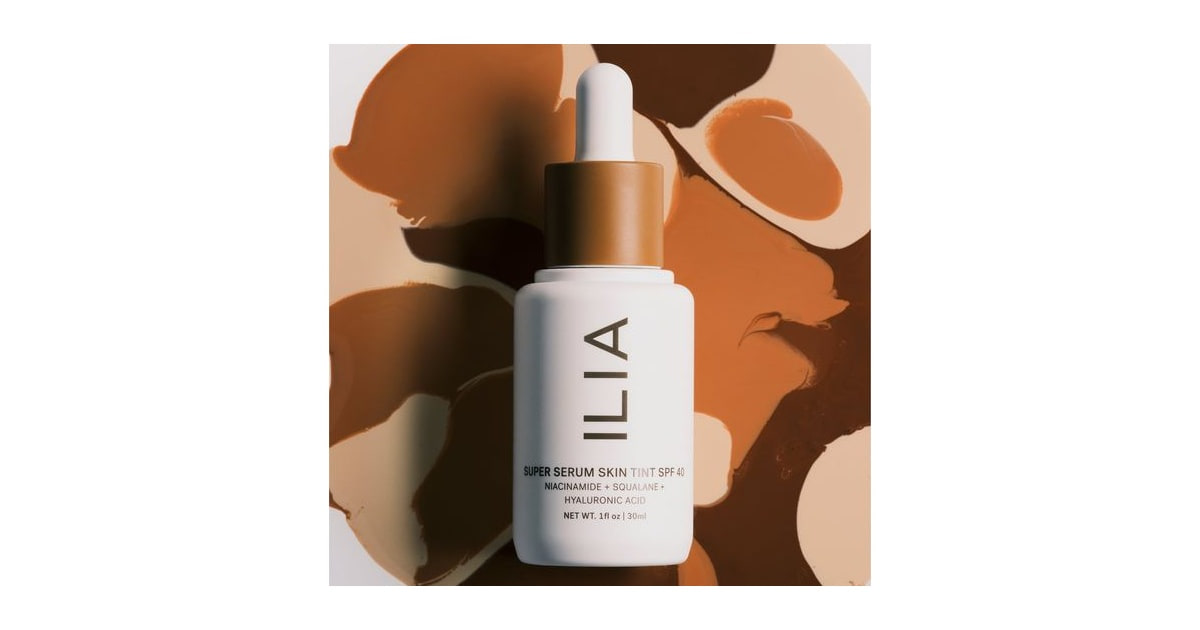
ILIA - Super Serum Skin Tint SPF
The Super Serum Skin Tint is a mineral SPF 40 in a serum body, so it feels like a hydrating step rather than makeup. It comes in 30 shades, it's fragrance-free and non-comedogenic, and it gives you a soft, lit-from-within evenness instead of coverage.
$48fromAmazonThis is the one that wins on feel. Most mineral SPFs announce themselves — thick, draggy, faintly gray. ILIA's is dispensed by dropper and spreads like a serum, which is why so many people who say they hate foundation end up wearing it daily. Hyaluronic acid and squalane do the hydrating work, and niacinamide is in there for tone and pores. You get an evened-out face that still reads as your face.
SPF 40 is the number that matters most here. The AAD recommends broad-spectrum SPF 30 or higher every single day, including cloudy ones, when up to 80% of UV still reaches your skin. ILIA clears that bar with room to spare, and because the filters are mineral, it's a reasonable choice if chemical sunscreens sting your eyes or flush your cheeks. The formula is fragrance-free and skips silicone and talc.
Thirty shades is a serious range, and owners consistently report that the color is true to what's shown online. ILIA's site has a matching tool that maps your shade in other brands to theirs, which cuts down on the guessing that ruins most online tint purchases. Some people still need a second bottle to land it. That's the category, not this product.
It also plays well with whatever you already do. If your skin runs dry, you can layer it over your usual moisturizer without pilling. If your T-zone runs oily, a light dusting of powder settles the shine. Coverage is sheer to light — enough to soften redness and even out tone, not enough to hide a healing blemish. Spot-conceal and move on.
Flaws but not dealbreakers
It's shiny. That's the point for a lot of people, but if you're oily by mid-afternoon this will make you shinier, and owners with combination skin say they need powder to keep it in check. It's also one of the most expensive options here, in a small bottle, so the cost per morning adds up faster than the price tag suggests.
A few owners mention a faint plant-ish smell on application even though there's no added fragrance. It fades quickly. And coverage genuinely is light — if you were hoping to skip concealer entirely, this isn't the formula that does it.
Runner-up
Higher SPF and much more coverage, if you want both
IT Cosmetics CC+ Cream with SPF 50+
The CC+ Cream is the pick when a sheer tint isn't enough. It's SPF 50+ broad-spectrum with buildable medium-to-full coverage, plus hyaluronic acid and niacinamide, and it camouflages redness, dark spots and under-eye circles without a separate color corrector.
$39fromAmazonWhere ILIA is a serum with a whisper of color, this is close to a foundation that happens to protect you. One pump gets you noticeably more coverage than anything else here, and two gets you nearly full. Owners with rosacea, acne scarring and stubborn redness reach for it specifically because the correcting pigments are built in. If your morning currently involves a green corrector and a foundation, this replaces both.
SPF 50+ is the real draw. The FDA's numbers put SPF 30 at roughly 97% of UVB blocked and SPF 50 at about 98% — a small gap on paper, but a useful cushion given that nobody applies enough. IT Cosmetics uses a mix of physical and chemical filters here, so it's not a mineral-only product, and the payoff is a higher SPF with no white cast at all.
It's built for skin that's showing some age. Owners in their fifties and beyond repeatedly note that it doesn't crawl into fine lines the way heavier bases do, which is the usual failure mode of full-coverage foundation on mature skin. Hyaluronic acid and vitamin E keep it from looking parched by afternoon. If your skin is very dry, a moisturizer underneath helps.
It also stays put. This is the formula people choose for a workday that runs into an evening, and it comes off with ordinary cleanser rather than requiring an oil step. Apply with a brush or a damp sponge if you want it lighter — fingers push it toward the fuller end of its range.
Flaws but not dealbreakers
The cool-toned shades are the weak spot. Owners who need a genuinely cool match report that the options skew yellow and run out fast, which is a real problem in a prestige-priced product. If you're very fair with pink undertones, check the range carefully before committing.
It's thicker than everything else in this guide. Used with a heavy hand it can look like makeup, and oily skin may find it too rich in summer. Also worth knowing: it's not a mineral formula, so if you're avoiding chemical UV filters entirely, the EltaMD or bareMinerals picks suit you better.
Also great
The gentlest option, and the one dermatologists keep naming
EltaMD UV AOX Elements 100% Mineral Tinted
EltaMD's UV AOX Elements is a 100% mineral tinted sunscreen at SPF 50, built for skin that reacts to everything. Hyaluronic acid, bisabolol and ginger root extract calm redness, and the tint cancels the white cast that usually makes mineral formulas unwearable.
$46fromAmazonIf your skin is reactive, start here. The AAD specifically points people with sensitive skin, rosacea, eczema or contact dermatitis toward zinc oxide and titanium dioxide, because mineral filters sit on the surface instead of absorbing into it. This is a mineral-only formula at SPF 50, and owners who use prescription topicals — tretinoin, acne medication — say it goes on without stinging. That's a low bar that a lot of sunscreens still fail.
The tint solves the problem that keeps people off mineral sunscreen. Zinc and titanium dioxide are white; on camera and in daylight, untinted versions look like a film. Here the color neutralizes the cast and gives you light-to-medium evening out as a bonus. Owners with melasma and dark spots use it as their whole base, which is what a dermatologist telling you to wear SPF 50 daily is actually hoping for.
It's also doing antioxidant work. The AOX version is built to buffer against environmental stressors including blue light and particulate matter, on top of UV. The texture is light and silky rather than greasy — a common surprise for anyone who last tried mineral sunscreen a decade ago. It layers under makeup fine if you want more coverage on top.
Long-time EltaMD buyers should know this is a reformulated line. Some owners who loved the previous tinted version report that the current one behaves differently on their skin. Most land on liking it anyway, but if you're repurchasing from memory, expect a slightly different product.
Flaws but not dealbreakers
The tint is one shade, and it's calibrated for light to light-medium skin. If you're medium-deep or deeper, this won't match you, and no amount of blending fixes a single-shade product. That's the main reason it's not our top pick.
Coverage is genuinely modest despite the medium-coverage claim on the box — several owners describe it as barely tinted. Treat it as a sunscreen that flatters, not a makeup replacement, and it'll meet your expectations.
Upgrade pick
Buy it for the texture work, not just the tint
Kosas Revealer Skin-Improving Foundation with SPF 25
Kosas Revealer is a medium-coverage SPF 25 foundation with peptides, niacinamide, squalane and caffeine formulated to improve skin over time. It's the pick if you want the coverage of a foundation, a natural non-cakey finish, and a clean ingredient list.
$45fromAmazonThis is the one that's trying to do something to your skin, not just sit on it. Kosas blends AHAs and peptides into the formula with the stated goal of smoothing texture over weeks of use — a claim that separates it from the moisturize-and-tint crowd. Whether you buy the long-term promise or not, the immediate result is a base that blurs pores and looks like skin rather than product.
The finish is the reason people stay. Coverage lands in medium territory, buildable from one pump to two, and it doesn't go cakey or stiff the way a lot of clean-beauty foundations do. Owners who have cycled through natural formulas describe the usual complaint — watery, slow-drying, thin — and say this one isn't that. It applies with fingers and stays put through a full day.
It suits oily and combination skin better than the dewier picks here. There's a brief greasy moment right after application, and then it settles into a natural, non-shiny finish. If the ILIA glow reads as too much on you by 2 p.m., this is the swap. It's also dermatologically tested, hypoallergenic and non-acnegenic, with no fragrance, silicones or talc.
The trade-off you're making is sun protection. SPF 25 sits below the AAD's daily minimum of 30, so this is the one pick here that doesn't clear that bar on its own. If you go this route, put a proper sunscreen underneath and treat the SPF as a small bonus.
Flaws but not dealbreakers
SPF 25 is the real limitation. It's not nothing, but it's below what dermatologists recommend for daily wear, and it's the weakest sun protection in this lineup. Anyone buying primarily for SPF should look at the CC+ Cream or EltaMD instead.
Shade matching online is rough. Owners report that the color on screen and the color on the box don't reliably predict what lands on their face, and at this price a miss stings. If there's a counter near you, match in person.
Budget pick
Most of the effect for a fraction of the outlay
Neutrogena Hydro Boost Hydrating Tint Foundation
Neutrogena's Hydro Boost tint is an oil-free, non-comedogenic water-gel formula with hyaluronic acid and SPF 30. It's sheer-to-medium, it doesn't sink into fine lines, and it costs a small fraction of what the prestige picks here do.
$12.47fromAmazonThis is the sanity check on the rest of this guide. It hits SPF 30 — the AAD's daily minimum — with hyaluronic acid for hydration and an oil-free, non-comedogenic base. Owners who've been buying prestige CC creams for years say they switched here on price and stayed on performance. It won't match the ILIA for finish, but the gap is much smaller than the gap in cost.
The water-gel texture is the appeal. It goes on thin and doesn't settle into fine lines or flake off over dry patches, which is the usual reason budget foundations get returned. Owners with dry, sensitive skin report it wears well in heat and humidity, and owners with oily skin get a workable result too. Coverage is sheer to buildable — enough to even you out, not enough to hide much.
It's also the easiest to actually find. This is stocked in ordinary drugstores, so you can look at the shades in person and repurchase without planning ahead. That matters more than it sounds: the sunscreen you keep buying is the one that protects you, and a landmark Australian study found daily sunscreen users had significantly lower melanoma rates than occasional users.
The shade range is where the budget shows. Ten shades is a third of what ILIA or Laura Mercier offer, and the coverage of undertones is correspondingly rougher. If you sit comfortably in the middle of the range, you'll be fine. If you don't, one of the wider-range picks is worth the money.
Flaws but not dealbreakers
The wand applicator is genuinely bad for a face product. It's built like a concealer, so most owners squeeze it onto fingers or a sponge instead, and a few describe the product as more concealer than foundation because of it.
It's shinier than the label suggests. Not a dealbreaker for dry skin — it reads as glow — but oily skin will want powder. And ten shades simply won't cover everyone.
Who this is for
Buy one of these if your current morning is moisturizer, then sunscreen, then some kind of base, and you'd like it to be one step. That's the whole pitch. It's also a good fit if you want to look evened-out without looking made up — for work calls, school pickup, the grocery run. Skincare-first shoppers, people whose skin flushes at chemical filters, and anyone who has quietly given up on foundation are the audiences these formulas were built for.
Skip this category if you need real coverage over active acne or significant pigmentation — a proper foundation with a separate sunscreen underneath will serve you better. Skip it, too, if you're buying primarily for sun protection during long outdoor days; nobody applies a tint thickly enough to get the labeled SPF. This guide covers face products that combine moisturizer, tint and SPF in one bottle. It doesn't cover untinted sunscreens, powders, setting sprays or full-coverage foundations without sun protection.
How we picked
SPF and filters: We treated broad-spectrum SPF 30 as the floor, per AAD guidance, and noted which formulas use mineral filters, chemical filters or a blend. Shade range: We compared published shade counts and undertone spread, and read owner feedback on whether online shade names actually land correctly. Finish and skin type: We looked for products that hold up after several hours without sliding off oily skin or gathering in fine lines on dry or mature skin. Skincare ingredients: Hyaluronic acid, niacinamide, peptides and antioxidants earned credit when the brand supports the claim with dermatological or clinical testing. Editorial track record: Sustained recognition from beauty publications and long-running retail demand broke ties between otherwise similar formulas.
Other tinted moisturizers with spf worth considering
If you want the widest, best-calibrated shade range: The Laura Mercier Tinted Moisturizer Light Revealer SPF ($54) — Laura Mercier's Light Revealer is the category's longtime reference point, and its shade range is the reason. It spans thirty shades with pearl blends tuned to each depth level, which is why beauty editors keep naming it. The finish is luminous and skin-blurring, it's fragrance-free and non-comedogenic, and it builds from ultra-sheer with a few pats. What you give up is sun protection: SPF 25 falls under the daily minimum, so you'll want sunscreen underneath. Oily skin should also be careful here — owners with naturally oily complexions report real slip within a couple of hours, even indoors.
If your skin is dry and you want a mineral formula: The bareMinerals Complexion Rescue Tinted Moisturizer for Face ($24) — The bareMinerals Complexion Rescue gel-cream is the softest landing for dry, mature skin in this lineup. Olive-derived squalane and hyaluronic acid carry the hydration, the SPF 30 is mineral-based, and the coverage builds from sheer to light with a dewy result that owners in their sixties, seventies and eighties consistently praise for not settling into lines. It's oil-free and skips synthetic fragrance, parabens and PEGs. The knocks are size and price — the bottle is small for what it costs, and a few owners find it less moisturizing than the name implies. Shade selection online is also hit-or-miss.
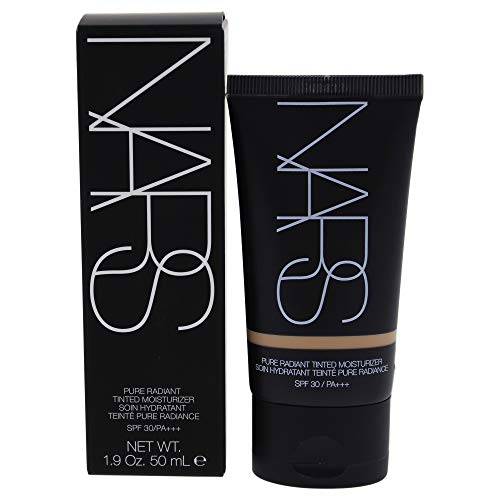
If you want the most natural, barely-there finish: The NARS Pure Radiant Tinted Moisturizer SPF 30/PA+++ ($49.99) — The NARS Pure Radiant Tinted Moisturizer is the no-makeup-makeup benchmark, and it's SPF 30 — enough to clear the daily minimum on its own, which the Laura Mercier and Kosas picks don't. Coverage is light and radiant rather than blurring, and it hydrates dry skin immediately while helping soften the look of dark spots. Owners with combination and oily skin get long wear from it, though most set it with powder. It's a smaller shade range than ILIA or Laura Mercier at twenty-four, and the listing details are thin, so shade-match carefully before buying online.
The competition
This section covers what our research surfaced, not everything sold in this category — new formulas and reformulations land constantly, and a guide this size can only follow the products that keep coming up in published reviews and owner feedback. Every product in this lineup is worth someone's money; the picks are the ones that fit the most people. The notes above and below explain who each remaining option actually suits.
Getting the most out of it
Apply this to clean skin after your usual serum, and give any moisturizer underneath a minute to sink in — layering wet on wet is what causes pilling. Use more than feels natural. Sunscreen protection scales with how much you put on, and a thin smear delivers a fraction of the SPF on the label. Warm the product between your fingers and press it in rather than rubbing, which keeps the coverage even and stops it from lifting off dry patches. If you're oily, powder your T-zone and leave the rest alone. Reapplication is the weak point of every product here: once you've got a face on, you can't easily reapply sunscreen underneath it, so use a powder or stick SPF for touch-ups on long days outside.
Questions we get
Can a tinted moisturizer with SPF replace my daily sunscreen?
For incidental exposure — commuting, errands, sitting near a window — a tint at SPF 30 or higher is reasonable protection. For anything longer outdoors, it isn't enough, mainly because almost nobody applies a tint at the thickness sunscreen testing uses. Layer a dedicated sunscreen underneath on those days. The Skin Cancer Foundation estimates 1 in 5 Americans will develop skin cancer by age 70, so it's not a corner worth cutting.
What SPF should a tinted moisturizer actually have?
SPF 30 is the AAD's recommended daily minimum, and we'd treat that as the floor. The FDA's figures put SPF 30 at roughly 97% of UVB blocked and SPF 50 at about 98%, so the big jump is from 15 to 30, not from 50 to 100. Because real-world application is always thinner than the label assumes, a higher number gives you useful margin. SPF 25 products aren't useless — they just need sunscreen underneath.
Is a mineral formula better than a chemical one?
Better for some people, not universally. The AAD specifically recommends zinc oxide and titanium dioxide for sensitive, rosacea-prone, eczema-prone or dermatitis-prone skin, because mineral filters sit on the surface and irritate less. Chemical filters absorb UV and tend to feel lighter with no cast. If your skin doesn't react to either, pick on finish and shade instead.
What's the difference between a tinted moisturizer and a BB or CC cream?
The lines are marketing more than chemistry. Tinted moisturizers lean sheerest and prioritize hydration; BB creams add a bit more coverage; CC creams focus on color correction and usually carry the most pigment and often the highest SPF. In practice, read the coverage description and SPF number rather than the category name.
Which of these works best on oily skin?
The Kosas Revealer is the best fit — it settles to a natural, non-shiny finish and holds up through a full day. The Neutrogena is a workable budget option if you set it with powder. Avoid the dewiest formulas, including the ILIA and the Laura Mercier, unless you're happy powdering your T-zone by midday.
Will these clog pores or cause breakouts?
Most of the products here are labeled non-comedogenic, and the Kosas is tested as non-acnegenic, so the formulas aren't designed to block pores. Breakouts from tinted SPF usually trace back to incomplete removal rather than the product itself. Cleanse properly at night — a double cleanse if you're wearing a mineral formula or a heavier CC cream. If a specific product consistently breaks you out, it's likely one ingredient, not the category.
What about deep skin tones?
Shade range is the deciding factor, and it varies enormously here. The ILIA and Laura Mercier each offer thirty shades with worked-out undertones, and the IT Cosmetics range extends deep, though owners report its cool options are limited. Single-shade products like the EltaMD tint are calibrated for light to light-medium skin and won't work. Buy from a retailer with an easy return policy the first time.
Why you should trust us
For this guide:
- We read manufacturer specifications and ingredient lists for every product here, along with published guidance from the American Academy of Dermatology, the FDA and the Skin Cancer Foundation on SPF levels and filter types.
- We reviewed published editorial coverage from beauty publications and compared recurring themes in owner feedback — shade accuracy, finish after several hours, and how each formula behaves on dry, oily and reactive skin.
- We did not use, apply or measure any of these products; every claim here comes from specifications, published reviews or reported owner experience.
- We read owner reviews on every listing, weighted toward the critical ones, because that is where the recurring failures show up.
- We have a systematic way of automatically fetching the latest prices, so the numbers on this page stay current.
- This is a research-focused guide, so the team may not own every product listed — though we often do own the top winners, which gives us extra context for the recommendations.
- We don't accept free products, and the retailer commission never changes which product we recommend.
Sources
Best Tinted Moisturizers of 2026 — Allure, Allure
The Best Tinted Moisturizers, According to Byrdie Editors and Dermatologists — Byrdie, Byrdie
Best Tinted Moisturizers With SPF — Vogue, Vogue
Best Tinted Moisturizers — Good Housekeeping Beauty Lab, Good Housekeeping
Best Tinted Moisturizers With SPF — Harper's Bazaar, Harper's Bazaar
Best Tinted Moisturizers — InStyle, InStyle
Best Tinted Moisturizers With SPF — Cosmopolitan, Cosmopolitan
Sunscreen FAQs — American Academy of Dermatology, American Academy of Dermatology (AAD)
How to Select a Sunscreen — American Academy of Dermatology, American Academy of Dermatology (AAD)
Skin Cancer Facts & Statistics — Skin Cancer Foundation, Skin Cancer Foundation
Sunscreen: How to Help Protect Your Skin from the Sun — FDA, U.S. Food & Drug Administration
EltaMD UV Elements Tinted Broad-Spectrum SPF 44 — Product Page, EltaMD
Amazon product listings and owner reviews for all 8 products
Manufacturer specification pages for each product
Some passages in this guide may be paraphrased with AI help. Prices are refreshed automatically.
More like this.
Continue exploring beauty reviews and recommendations.

The Best Anti-Aging Face Moisturizers
An anti-aging moisturizer does two jobs at once. It keeps your face comfortable all day, and it carries actives - retinol, peptides, niacinamide - that…

The Best Moisturizers for Dry, Sensitive Skin
Dry, sensitive skin doesn't need a complicated routine. It needs the same boring cream, twice a day, especially right after a shower. A good moisturizer…

The Best Retinol Creams for Sensitive Skin
Retinol is the rare skincare ingredient with decades of clinical evidence behind it. It speeds up cell turnover, softens fine lines, and evens out tone…

The Best CeraVe Skincare Products
CeraVe is the rare drugstore brand that dermatologists actually name out loud. The reason is boring in the best way: every core product is fragrance-free,…

The Best Olaplex Hair Products
Bleach, box dye, a flat iron on high - they all break the same thing. The bonds inside each strand that keep hair springy instead of straw-like. Olaplex…

The Best At-Home Skincare Devices
A good at-home skincare device does one thing for your evening: it makes five minutes at the bathroom mirror feel worth it. Microcurrent wands nudge…