The Best Trailer Wiring Harness Adapters
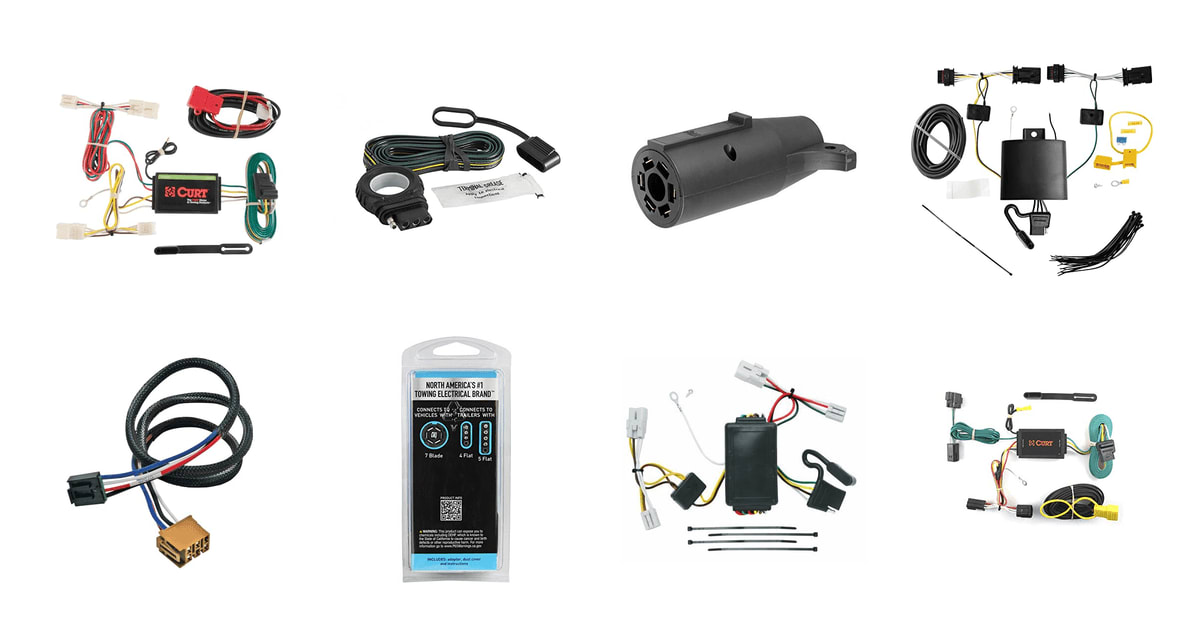
Trailer wiring is the part of towing nobody thinks about until the lights don't work. You hitch up the boat trailer at 5 a.m., flip on the turn signal, and nothing blinks. A good wiring harness or adapter fixes that gap between what your vehicle offers and what your trailer expects. The best ones plug straight into connectors that are already behind your taillights, so you never cut a wire. That matters for warranty, for resale, and for your own sanity when something needs troubleshooting later.
Here's the honest catch: there's no universal answer. Trailer wiring is a fitment problem first and a product-quality problem second. A harness that's flawless on a 2010 RAV4 is useless on a Ford Transit Connect, and an adapter that converts 7-blade to 4-flat won't help you if your trailer has electric brakes. Every product here does one specific job for one specific setup. You'll need to know your vehicle's outlet and your trailer's plug before any of this is useful.
We've sorted this lineup by job rather than by brand. If you're adding a 4-flat socket to a vehicle that doesn't have one, a T-connector is what you want. If your vehicle already has a 7-blade socket and your trailer doesn't match, you want an adapter. We think that the CURT 56165 is the best trailer wiring harness for most people, and that the Hopkins 47385 Multi-Tow is the one to buy if your truck already has a 7-blade outlet and you tow more than one trailer.
Everything we recommend

A no-splice 4-flat socket for vehicles that never had one

One adapter that covers both 4-flat and 5-flat trailers

The right fix when the trailer end is a 6-way round

A tougher 4-flat pigtail that's easier to unplug in the cold
At a glance
| Product | Connector Type | Weight | Price | |
|---|---|---|---|---|
| CURT 56165 Vehicle-Side Custom 4-Pin Trailer WiringTop pick | 4-Way Flat | 1.73 lbs | $66.16 |
| Hopkins Towing Solutions 48044 Endurance Easy-Pull 48"Budget pick | 4 Flat | 0.3 lbs | $20.39 |
| CURT 57260 7-Way RV Blade Vehicle-Side toRunner-up | 7-Way To 6-Way | 0.2 lbs | $13.49On sale |
 | TEKONSHA 118869 T-One T-Connector 4 Way FlatAlso consider | 4-Way Flat | 1.61 lbs | $127.27 |
 | Reese Towpower 78050 Brake Control Wiring HarnessAlso consider | — | 0.31 lbs | $27.73 |
| Hopkins Towing Solutions 47385 Multi-Tow 7 BladeAlso great | 7-Blade To 5/4 Flat | 0.15 lbs | $20.44 |
 | Draw-Tite 118473 T-One Connector for Hyundai SantaAlso in lineup | T-One Connector | 1 lb | $53.96 |
 | CURT 56090 Vehicle-Side Custom 4-Pin Trailer WiringAlso in lineup | 4-Way Flat | 1.61 lbs | $87.51 |
How we picked
No-splice installation. We favored T-connectors and passive adapters that plug into existing factory connectors over anything requiring cut wires. Spliced installs take two to three times longer according to etrailer.com installer data, and they're far harder to undo.
Vehicle-specific fitment. For anything that taps into vehicle wiring, we prioritized brands with real fitment databases. MotorTrend's comparison found universal splice harnesses triggered false dashboard warnings on modern CAN-bus vehicles where vehicle-specific parts did not.
Corrosion resistance. We looked for zinc-plated or corrosion-resistant contacts, dust covers, and grease compatibility. Salt-spray data cited by etrailer.com shows plated pins outlast bare steel by three to five times before resistance starts dimming lights.
Circuit coverage. We checked which circuits each product actually carries. A 4-flat handles running lights, brakes, and turn signals only; electric trailer brakes and 12V auxiliary power require 5-pin, 6-round, or 7-pin connections.
Owner-reported reliability. We read through owner feedback for recurring failure themes rather than one-off complaints, weighting patterns like broken pins, missing parts, and intermittent connections.
Top pick
A no-splice 4-flat socket for vehicles that never had one
CURT 56165 Vehicle-Side Custom 4-Pin Trailer Wiring
The CURT 56165 taps into the connectors already behind your taillights and gives you a 4-way flat socket for running lights, brake lights, and turn signals. No cutting, no splicing, and it's fully reversible if you sell the car.
$66.16fromAmazonIf your vehicle didn't come with a trailer plug, this is the cleanest way to add one. The 56165 plugs into the factory taillight connectors and adds a 4-flat socket without touching a single wire with a knife. Owners of RAV4s and similar crossovers describe the install as popping off interior trim, running the passenger-side lead, and clicking the T-connectors into place. That's the whole job.
CURT builds this with surface-mount circuitry rather than the older through-hole boards you'll find in cheap import converters. It's a small detail with a real payoff: fewer solder joints to shake loose in a fender well. One owner replaced a factory trailer module that had literally rattled itself to death after years of dangling in the wheel arch, and the CURT dropped in as a direct fix.
Fitment coverage is the real reason this brand keeps winning. CURT's own database claims its T-connector line covers over 98% of vehicles sold in North America from 2005 onward. That's the broadest plug-and-play catalog of any single wiring brand, which means the part number you look up is far more likely to actually exist for your car.
Vehicle-specific matters more than it used to. MotorTrend's towing accessories comparison found that vehicle-specific T-connectors from CURT, Hopkins, and Draw-Tite produced no instrument-cluster warnings or CAN-bus faults across six modern test vehicles, while generic splice-in harnesses threw false warnings on three of the same six. If your car is newer than about 2015, that's not a small difference.
Flaws but not dealbreakers
Plug-and-play doesn't mean five minutes. Most people report an hour or so once you count trim removal and routing the auxiliary power lead, and CURT's instructions often route that lead underneath the vehicle rather than through the cabin. Installer data compiled by etrailer.com puts T-connector installs at roughly 20 to 45 minutes, but that assumes you know where everything goes.
A handful of owners have received the wrong part for their vehicle or found a kit missing pieces, so check the fitment lookup against your exact year and trim before you open the bag. And this is a 4-flat harness only. If your trailer has electric brakes, you need a 7-pin setup and a brake controller instead.
Also great
One adapter that covers both 4-flat and 5-flat trailers
Hopkins Towing Solutions 47385 Multi-Tow 7 Blade
The Hopkins 47385 converts a factory 7-blade outlet into both a 4-flat and a 5-flat connector at the same time. If you borrow trailers, rent them, or own a boat trailer with surge brakes, this single part covers nearly everything.
$20.44fromAmazonMost new trucks and SUVs with a factory tow package come with a 7-blade socket, and most small trailers don't. That mismatch is exactly what this solves. The 47385 plugs into your 7-blade outlet and hangs two sockets off the back: a 4-flat for basic utility and boat trailers, and a 5-flat for trailers that need a reverse signal. You stop carrying a bag of adapters.
The 5-flat pin is the underrated part. Boat trailers with surge brakes use it to disengage the brakes when you back down a ramp — without it, the brakes fight you the whole way. Owners with bass boats and inertia-style trailer brakes point to this specific feature as the reason they bought it over a plain 4-flat adapter.
Nothing here needs power of its own. Car and Driver notes that passive 7-way to 4-flat adapters pass brake and turn signal circuits straight through, which covers the vast majority of utility, boat, and landscape trailers on US roads. There's no module, no fuse, no ground wire to find. You plug it in and you're done.
Build quality holds up. The housing is impact and corrosion resistant, the grip tabs make it easy to pull with cold hands, and dust covers are included for both sockets. Corrosion at the connector is the single most common cause of trailer lighting failure, so covers that actually stay put are worth more than they sound.
Flaws but not dealbreakers
The dust covers themselves are the recurring complaint. Owners report the cap can hang up on the ground pin and bend it if you're careless when uncapping, and the fix is a small trim of the cover — something you shouldn't have to do on a new part.
It also can't create circuits your truck doesn't already send. If your 7-blade outlet isn't wired for the brake or auxiliary pins, this adapter won't change that.
Runner-upOn sale
The right fix when the trailer end is a 6-way round
CURT 57260 7-Way RV Blade Vehicle-Side to
The CURT 57260 converts a vehicle's 7-way RV blade socket to a 6-way round trailer plug, including auxiliary power on the center pin. It's the adapter for older horse, stock, and utility trailers that never got upgraded.
$13.49fromAmazonList priceSix-way round connectors are still everywhere on older horse trailers, stock trailers, and equipment haulers. Your truck almost certainly has a 7-blade. This adapter bridges those two without rewiring anything on either end, and it carries the full set of circuits: taillights, brake lights, turn signals, electric trailer brakes, and auxiliary power through the center pin.
The connection is tight, and that's the whole point of an adapter. Owners consistently describe it as fitting snug with no wobble, which matters because a loose adapter is a dim-lights problem waiting to happen on a rough road. The housing is molded black plastic that won't rust or corrode, and the side grip tabs give you something to pull on.
Because it's passive, there's nothing to install. It stays in your glovebox or zip-tied near the hitch until you need it, and it costs a fraction of what rewiring a trailer's connector end would run you at a shop.
Flaws but not dealbreakers
Any hanging adapter adds a mechanical joint, and joints work loose. At least one owner towing a triaxle trailer with electric brakes over rough terrain reported intermittent dropouts that made the truck re-register the trailer. Zip-tying the adapter so it can't swing takes most of that risk away, but it's worth knowing before you rely on it off-pavement.
It also only solves the 6-way round case. If your trailer ends in a 4-flat or 5-flat, this isn't your part.
Budget pick
A tougher 4-flat pigtail that's easier to unplug in the cold
Hopkins Towing Solutions 48044 Endurance Easy-Pull 48"
The Hopkins 48044 is a 48-inch vehicle-side 4-flat connector with a finger-grip pull tab and corrosion-resistant terminals. It's the part you buy when your existing 4-flat pigtail is cracked, green, or impossible to separate.
$20.39fromAmazonSmall 4-flat plugs are miserable to pull apart. You end up yanking on the wires themselves, which is exactly how they fail. Hopkins put a through-hole finger grip on this one, and owners who've fought with standard connectors say it's the difference between a two-second disconnect and a wrestling match with cold, wet hands.
Corrosion is what actually kills trailer lights, not wear. Salt-spray data cited by etrailer.com shows zinc-plated and marine-grade contacts last three to five times longer than bare steel before oxidation starts dimming lights or causing intermittent faults. This connector uses corrosion-resistant terminals and ships with a dust cover and a packet of terminal grease — the two things Trailer Life recommends for every seasonal connection check.
At 48 inches, the lead is long enough to reach from a bumper-mounted junction to the hitch on most setups without an extension. And it's a replacement part, not a system, so there's no module to fail and no fitment lookup to get wrong.
Flaws but not dealbreakers
The four wires aren't jacketed in an outer sheath the way some competing connectors are. Owners have flagged this as the main downgrade — the individual conductors are exposed along the run, so you'll want to add split loom if the lead is going anywhere it can rub or catch.
This is also not a harness. It gives you a durable connector end, but it doesn't convert signals or add a socket to a vehicle that lacks one.
Who this is for
This guide is for anyone who needs to connect a trailer to a vehicle that isn't already set up for it, or that's set up with the wrong connector. That's first-time trailer owners, boat owners hooking a 4-pin trailer to a newer truck, and anyone who borrows or rents trailers with connectors that don't match their hitch. If you're comfortable removing interior trim panels and running a wire, the T-connector harnesses here are a 20-to-45-minute afternoon job. If you'd rather not touch the vehicle at all, the passive adapters need zero installation.
This isn't the guide for you if you're towing something heavy. Trailers over 3,000 lbs GVWR require functioning electric brakes under NHTSA rules and most state laws, which means a 5-pin or 7-pin connector plus a brake controller — a bigger project than a lighting adapter. We also don't cover trailer-side wiring kits, light bars, hitches, or brake controllers themselves. And nothing here is universal: every one of these products solves a specific connector mismatch on specific vehicles, so check fitment before you buy.
How we picked
We built this list around a handful of things that actually determine whether your trailer lights work in three years. Installation: we favored plug-in T-connectors and passive adapters that need no cutting, since spliced installs take two to three times as long and can't be undone cleanly. Fitment: for anything tapping vehicle wiring, vehicle-specific parts beat universal ones, because MotorTrend found generic splice harnesses throwing false dash warnings on modern CAN-bus vehicles where custom-fit parts stayed silent. Corrosion: plated contacts, dust covers, and grease compatibility, because etrailer.com's salt-spray data shows plated pins last three to five times longer than bare steel. Circuits: we noted exactly what each product carries, since a 4-flat can't run electric brakes no matter how well it's built. Reliability: we looked for repeated themes in owner feedback rather than isolated complaints.
Other trailer wiring harness adapters worth considering
If you want built-in circuit protection on a modern vehicle: The TEKONSHA 118869 T-One T-Connector 4 Way Flat ($127.27) — The Tekonsha 118869 T-One pairs a 4-flat T-connector with a circuit-protected ModuLite HD module, so a short in the trailer wiring is far less likely to reach your vehicle's fuse box. It's the pick that owners of EVs and other unusual electrical setups have had luck with — Tesla Model 3 owners report it working on both incandescent and LED trailer lights. But fitment reports are mixed on some later Teslas where the brake light wiring changed, requiring a connector swap to correct. It's also a slower install than the CURT: expect to drill a grommet and hunt for a 12V feed.
If you want a brake controller in an older GM truck: The Reese Towpower 78050 Brake Control Wiring Harness ($27.73) — The Reese Towpower 78050 isn't a lighting harness at all — it's the plug-in link between the factory brake-control connector on 2003–2007 GM trucks and SUVs and a Reese Towpower brake controller. Owners describe it as a ten-minute job that replaces an afternoon of tracing wires, and several report years of daily use without a hiccup. Buy it only if you already own or plan to buy a matching Reese controller, and confirm your vehicle is on the application list. It does nothing on its own.
The competition
Here's what our research surfaced, not a survey of everything sold. Trailer wiring is a fitment category with thousands of part numbers, and a harness we didn't cover may be the exact right one for your vehicle. These two are worth understanding mostly because they show how narrow some of these parts are.
The CURT 56090 Vehicle-Side Custom 4-Pin Trailer Wiring ($87.51) — The CURT 56090 is the same design as our top pick, just cut for select Ford Transit Connect vans. If you drive one, buy it — owners generally call it plug-and-play once you pop out a black bracket to get the plugs through. But the reports here are more mixed than on CURT's mainstream applications: routing is awkward, a couple of owners ended up cutting the harness to reach the driver-side light, and one had a ground pin snap off within a year. It lost to the 56165 only because that one covers far more vehicles.
The Draw-Tite 118473 T-One Connector for Hyundai Santa ($53.96) — The Draw-Tite 118473 is a T-One connector built specifically for the Hyundai Santa Fe and the Elantra Touring 5-door. Draw-Tite was one of the brands MotorTrend found produced no CAN-bus faults, and the one detailed owner account praises the connection quality and the fact that the module tucks out of sight in the cargo area. There's simply not enough feedback on this listing to recommend it broadly, and the install requires pulling inner trim. If you own one of those two Hyundais, it's a reasonable choice.
Installation and maintenance notes
Before you buy anything, go look at two things: the socket on your vehicle and the plug on your trailer. Count the pins and note whether they're flat blades or round posts. That five-minute check prevents most wrong-part returns. For a T-connector install, budget an hour rather than the twenty minutes the box implies, and have a trim tool and a socket set ready — the wire routing usually takes longer than the electrical work. Once it's in, add split loom over any wire that runs where it can rub. Trailer Life points to loose and corroded contacts as the root cause of most roadside lighting failures, so pack the pins with dielectric grease at least once a season and keep the dust cover on when nothing's hooked up. If your lights go dim under braking, suspect a bad ground before you suspect the harness.
Questions we get
What's the difference between a 4-pin and a 7-pin trailer connector?
A 4-pin flat carries three circuits plus a ground: running lights, brake lights, and turn signals. That's enough for most utility, boat, and landscape trailers. A 7-pin RV blade connector adds electric trailer brake output, 12V auxiliary power, and a reverse circuit, which is why it's the factory plug on most new full-size trucks with a tow package.
Can I use a 4-pin to 7-pin adapter without a brake controller?
You can, but the brake pin will be dead. An adapter only passes along circuits your vehicle already sends, and a 4-pin outlet has no brake signal to pass. If your trailer has electric brakes, you need a proper 7-pin connection and a brake controller installed in the vehicle.
Do I need a wiring harness if my truck already has a factory tow package?
Usually not — you likely have a working 7-blade socket already. What you may need is an adapter, since most small trailers use a 4-flat or 5-flat plug that won't fit a 7-blade outlet. A Multi-Tow style adapter solves that without touching the vehicle's wiring.
What's a T-connector harness, and does it require cutting wires?
A T-connector unplugs your factory taillight connectors, inserts itself in between, and plugs them back together — hence the T. Nothing gets cut or spliced. That's why it's the most reversible option and the safest one for a leased or soon-to-be-sold vehicle.
Why do my trailer turn signals flash too fast?
That's hyperflash, and LED trailer lights are usually the cause. LEDs draw roughly 10 to 20% of the current an incandescent bulb does, and on a vehicle without an LED-compatible flasher relay the turn-signal circuit speeds up to two to four times its normal rate. The fix is an LED-compatible relay or a resistor-based load equalizer, not a different harness.
Are trailer wiring adapters waterproof enough for rain and car washes?
The better ones handle weather fine, but no trailer connector is fully sealed once it's plugged in. Corrosion at the contacts is the leading cause of trailer lighting failure, so use the dust cover whenever nothing's connected and apply dielectric grease to the pins seasonally. Plated contacts help a lot; salt-spray data shows they last several times longer than bare steel.
Why you should trust us
For this guide:
- We compared manufacturer specifications, fitment databases, and listing documentation for every harness and adapter in this lineup.
- We read published technical references from SAE, etrailer.com, MotorTrend, Car and Driver, and Trailer Life on connector standards, corrosion, and CAN-bus compatibility.
- We reviewed owner feedback for each product looking for recurring failure themes rather than isolated complaints.
- We read owner reviews on every listing, weighted toward the critical ones, because that is where the recurring failures show up.
- We have a systematic way of automatically fetching the latest prices, so the numbers on this page stay current.
- This is a research-focused guide, so the team may not own every product listed — though we often do own the top winners, which gives us extra context for the recommendations.
- We don't accept free products, and the retailer commission never changes which product we recommend.
Sources
Trailer Wiring Connectors & Adapters — Complete Guide, etrailer.com
How to Install a Trailer Wiring Harness, Popular Mechanics
Best Trailer Wiring Harnesses — Tested and Reviewed, MotorTrend
Best Trailer Wiring Connectors for 2026, Car and Driver
Trailer Plug Types and Adapter Guide, RV.com
Trailer Wiring 101: Connector Types Explained, Trailer Life Magazine
SAE J2863 — Seven Conductor Electrical Connector for Truck-Trailer Jumper Cable, SAE International
CURT T-Connector Product Line Overview, CURT Manufacturing
Hopkins Towing Solutions Trailer Connector Catalog, Hopkins Towing Solutions
RV Industry Association 2025 Annual Industry Report, RV Industry Association (RVIA)
Federal Motor Vehicle Safety Standard 108 — Lamps, Reflective Devices, and Associated Equipment, NHTSA
Amazon product listings and owner reviews for all 8 products
Manufacturer specification pages for each product
Some passages in this guide may be paraphrased with AI help. Prices are refreshed automatically.
More like this.
Continue exploring electronics reviews and recommendations.

The Best Car Bluetooth and Aux Adapters
Most cars on the road still have a stereo that can't talk to your phone. If yours has an aux jack, a small receiver bridges that gap without touching your…

The Best USB Hubs And Multi-Port Adapters For Laptops
Your laptop probably has two USB-C ports, maybe three. One of them is busy charging. That leaves one port for a monitor, a mouse, a keyboard, an external…

The Best Wireless CarPlay Adapters
Every trip starts the same way. You get in, dig out the cable, plug the phone in, and wait for the screen to catch up. A wireless adapter kills that…

The Best Universal Travel Adapters
You land at midnight with a phone at 4 percent, a dead laptop, and a hotel room whose only free outlet sits behind the nightstand. That's the moment a…

The Best Trailer Hitch Locks
A trailer sitting in your driveway is one of the easiest things on your property to steal. Someone backs a truck up, drops your coupler onto a ball, and…

The Best Trailer Hitches and Towing Accessories
Towing gear is the rare purchase where the boring choice is the right one. A hitch bolts to your frame, sits in road salt and spray for years, and then…