The Best Trailer Hitches and Towing Accessories
Towing gear is the rare purchase where the boring choice is the right one. A hitch bolts to your frame, sits in road salt and spray for years, and then has to hold a few tons of trailer steady at highway speed. You don't want clever here. You want the right class rating for your load, a fit that matches your exact vehicle, and enough sway control that a passing semi doesn't set your trailer wagging. Get those three things right and towing stops being stressful.
Here's the honest catch: no hitch makes your vehicle tow more than it's rated to tow. A Class III receiver bolted to a crossover doesn't turn it into a pickup, and a 16,000-pound weight distribution kit can't fix a frame, transmission, or brake system that tops out at 5,000. Fit is also unforgiving. Most of these hitches are built for specific vehicles and model years, and a part that's close but not exact will fight you for an afternoon and still sit crooked. Check your owner's manual first, then the fit chart, then buy.
We think that the Curt 13195 Class 3 Trailer Hitch is the best trailer hitch for most people, and that the Equal-i-zer 4-point Sway Control Hitch is the one to buy if you're pulling a travel trailer heavy enough to push your vehicle around.
Everything we recommend
The safe default for most trucks, SUVs and crossovers

Weight distribution and sway control in one unit

Fifth-wheel towing without the 200-pound hitch in your bed

Tells you your tongue weight instead of making you guess
At a glance
| Product | Price | |
|---|---|---|
| Curt 13195 Class 3 Trailer HitchTop pick | $248.75 |
 | Draw-Tite 75054 Max-Frame Class III 2" ReceiverAlso consider | $232.92 |
| Equal-i-zer 4-point Sway Control HitchUpgrade pick | $711.48 |
| Andersen Hitches Gen 3 Ultimate 5th WheelAlso great | $1,154.98 |
 | B&W Trailer Hitches Turnoverball Gooseneck Center SectionAlso in lineup | $329 |
 | 90195 Universal Electric Trailer Brake Control ModuleAlso in lineup | $109.90 |
| Weigh Safe Aero Hitch - Adjustable TrailerAlso great | $199 |
How we picked
Ratings and certification. We read published specifications for gross trailer weight and tongue weight on every product here, and confirmed that each falls under the SAE J684 framework that requires fatigue testing beyond 100,000 cycles at rated load. Anything without a clearly published rating didn't make the list.
Vehicle fit coverage. Receiver hitches are only as good as their fit chart, so we compared manufacturer application databases and owner reports of real installs on specific vehicles and model years. Broad, accurate coverage counted heavily.
Sway and load control. For anything meant to pull a trailer over 5,000 pounds, we looked for weight distribution combined with genuine sway control, backed by manufacturer test data and long-running RV forum feedback rather than marketing claims alone.
Install and daily use. We weighed how much of the job a reasonably handy owner can do at home, using published instructions and owner accounts of hardware, bolt access, and how long installs actually took.
Corrosion and warranty. Towing hardware lives in road salt and spray, so we favored welded construction, powder-coat or A-coat finishes, and manufacturers that publish a lifetime or long-term warranty on the part.
Top pick
The safe default for most trucks, SUVs and crossovers
Curt 13195 Class 3 Trailer Hitch
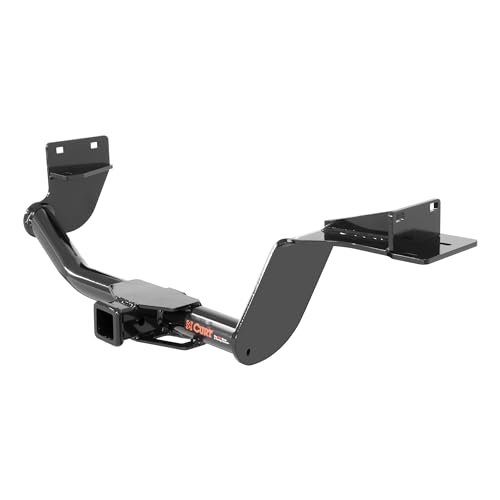
The Curt 13195 is a Class 3 receiver with a round main tube, a 2-inch opening, and a fit list that covers a huge range of vehicles. It's a bolt-in job for most people with a floor jack, a socket set, and a free Saturday.
$248.75fromAmazonFor most people, the hitch decision comes down to whether it fits your exact vehicle — and CURT wins that fight. The company's fit database covers more than 20,000 application-specific hitch SKUs, the broadest vehicle coverage of any aftermarket hitch maker in North America. That's not marketing fluff; it's the difference between bolting a hitch into existing frame holes in two hours and spending your weekend drilling. Owners of Kia Sorentos, Hyundai Santa Fes, and half a dozen other crossovers report the same thing: it lines up.
The 13195 is a receiver hitch, so it's the foundation, not the whole system. The ball and ball mount are sold separately, which sounds like a nickel-and-dime move but actually works in your favor. You pick the drop or rise that levels your particular trailer instead of paying for a ball mount that's wrong for your setup. Gross trailer weight and tongue weight ratings vary by application, so check the number for your vehicle, not the class.
Install is the part people worry about, and it shouldn't be. Owners consistently describe it as simple but not effortless — a few hours, better with a jack under the hitch to hold the weight while you start the bolts, and much better with someone handing you hardware. CURT's instructions get good marks, and there are walkthrough videos for most popular vehicles. If your exhaust hangers are rusted, budget extra time and some penetrating oil.
Build quality is the quiet reason this one keeps getting recommended. The steel is thick, the welds are clean, and the black finish holds up to weather. Like every Class I–V hitch sold in the US, it's built to the SAE J684 standard, which requires fatigue cycle testing beyond 100,000 cycles at rated load. CURT backs it with a limited lifetime warranty to the original purchaser, which matters for a part you'll leave bolted under a vehicle for a decade.
Flaws but not dealbreakers
Packaging is the recurring complaint. These ship as bare steel in thin cardboard, and boxes arrive torn with scuffed paint often enough that you should expect it. The damage is cosmetic and a can of touch-up paint fixes it, but check that the hardware bag is still inside the box before you start, because it sometimes isn't.
Amazon's fit checker isn't always right about this part. Several owners report being told it wouldn't fit their vehicle, buying it anyway, and having it bolt up perfectly. Cross-reference CURT's own fit guide rather than trusting the listing, and be ready to return it if you guess wrong.
The 13195 carries a limited lifetime warranty to the original purchaser.
Upgrade pick
Weight distribution and sway control in one unit
Equal-i-zer 4-point Sway Control Hitch
The Equal-i-zer 4-point handles weight distribution and sway control together, rated to 16,000 pounds gross trailer weight and 1,600 pounds tongue weight. If your travel trailer wanders when trucks pass, this is the fix.
$711.48fromAmazonOnce your trailer clears about 5,000 pounds behind a half-ton vehicle, a plain ball mount stops being enough. Weight is hanging off the back, the front of your tow vehicle gets light, and steering goes vague. A weight distribution hitch uses spring bars to push some of that tongue load back onto the front axle and the trailer axles. The Equal-i-zer does that job and adds sway control in the same hardware, so you're not bolting on separate friction bars.
The four-point design is what separates this from cheaper sway setups. Instead of one friction bar damping motion at a single point, four independent contact points resist the trailer's tendency to rotate around the ball. Equal-i-zer's own testing and long-running RV forum data both point to oscillation reductions above 90% versus a bare ball mount on loads between 6,000 and 14,000 pounds. Owners pulling 35-foot trailers in 40-mph crosswinds describe the same result in plainer terms: the trailer stays put.
It's rated well beyond what most people need, which is a good thing. At 16,000 pounds GTW and 1,600 pounds tongue weight, you're not running it near its ceiling with a typical 10,000-pound travel trailer, and headroom means the spring bars aren't working flat out on every trip. The kit includes a standard hitch shank. The 2-5/16-inch ball is not included, so add that to your order.
Setup takes patience the first time and about five minutes after that. You're setting bar tension, adjusting the ball height so the trailer sits level, and getting the L-brackets right. Owners who take an afternoon to dial it in report it stays dialed. Keep the friction surfaces greased per Equal-i-zer's guidance and it stays smooth.
Flaws but not dealbreakers
It's noisy. This is the single most consistent owner complaint, and it's inherent to how friction sway control works — metal sliding on metal at the brackets creates popping and groaning on turns and in parking lots. Grease reduces it. It doesn't eliminate it. Back the trailer at a sharp angle and you can pop a locking tab off a mount.
It's also heavy and awkward to move around, which is the tradeoff for steel construction at this rating. And weight distribution hitches are trailer-specific in ways that catch people out — the wrong tongue weight rating or an incompatible A-frame means it won't set up correctly. Returns on something this bulky get expensive, so confirm your trailer's numbers before you buy.
Also great
Fifth-wheel towing without the 200-pound hitch in your bed
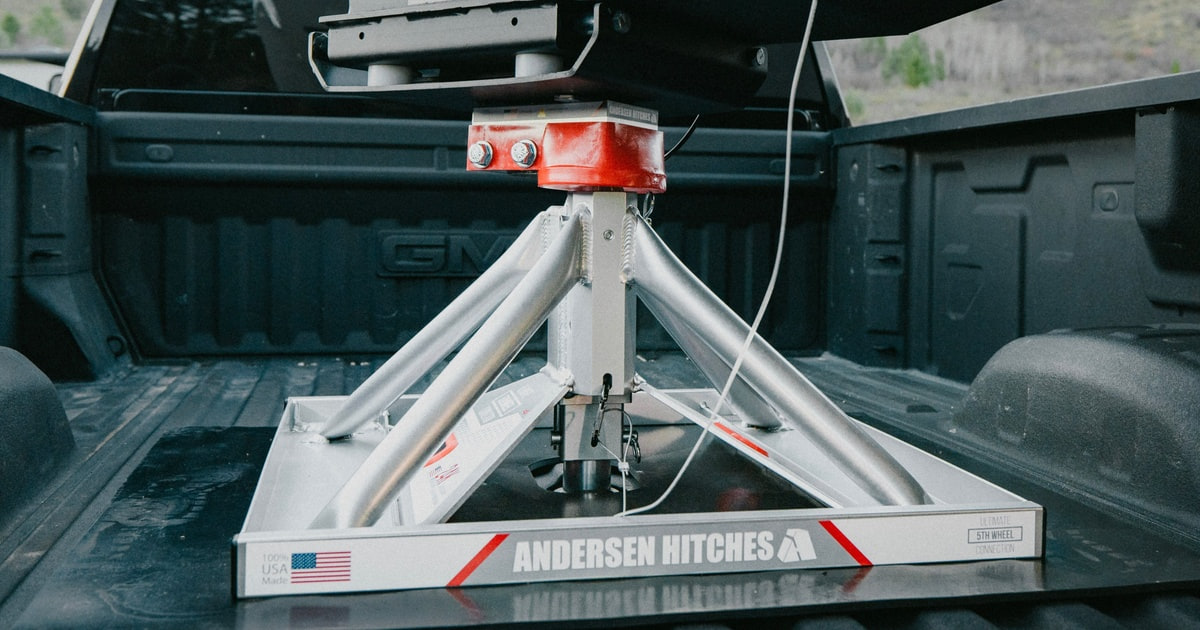
Andersen Hitches Gen 3 Ultimate 5th Wheel
The Andersen Gen 3 Ultimate connects a fifth-wheel trailer to a gooseneck ball, rated to 24,000 pounds GTWR and 4,500 pounds tongue weight. One person can lift it in or out of the bed in a few minutes.
$1,154.98fromAmazonThe whole point of this hitch is that you can pick it up. Traditional fifth-wheel hitches are hundred-plus-pound steel assemblies that live in your truck bed whether you're towing or not, and getting one out is a two-person job with a lot of swearing. Andersen builds this one from aluminum, and owners routinely install or pull it alone in under five minutes. If your truck also hauls mulch, plywood, and dirt bikes, that's the difference between a usable bed and a permanently occupied one.
It mounts to a gooseneck ball rather than bed rails, and it's SAE certified at 24,000 pounds gross trailer weight with 4,500 pounds of tongue weight. Two height settings — 17-9/16 or 19-9/16 inches from the bed to the top of the ball mount — cover most truck and trailer combinations. The base has a 3-1/4-inch offset, which keeps it stable without eating much bed space.
The remote latch cable is the feature you'll appreciate on a rainy night. You connect and disconnect from outside the bed instead of climbing over the tailgate in the dark. Owners hauling 12,000-pound fifth wheels across the country describe the hookup as smooth and the ride as steady, which is the combination you want from a hitch you'll use dozens of times a season.
One thing to be clear about: this is an adapter, not a complete system. You need a gooseneck ball in your truck bed already, either factory-installed or from an aftermarket underbed kit. Some owners find the Andersen ball insert doesn't match a factory hole and use their truck's original ball instead, which works fine.
Flaws but not dealbreakers
It only makes sense if you already have, or plan to install, a gooseneck ball. Adding an underbed gooseneck system to a truck that doesn't have one is real money and real labor, and at that point a conventional rail-mount fifth-wheel hitch may pencil out better.
Aluminum doesn't have steel's reputation for taking abuse, and while the SAE certification and the rating say otherwise, some longtime towers stay skeptical. There's also a ceiling here — at 24,000 pounds GTWR it's plenty for most fifth wheels, but heavy equipment haulers will want a dedicated gooseneck setup with more headroom.
Also great
Tells you your tongue weight instead of making you guess
Weigh Safe Aero Hitch - Adjustable Trailer
The Weigh Safe Aero is an adjustable ball mount with a hydraulic scale in the shank, so you read tongue weight right at the hitch. It handles a 6-inch drop or 7-inch rise in 1-inch steps and is rated to 12,500 pounds GTW.
$199fromAmazonTongue weight is the number almost everyone gets wrong. It should sit between 10 and 15% of gross trailer weight per NHTSA guidance — for a 10,000-pound trailer, that's 1,000 to 1,500 pounds. Too little and the trailer sways. Too much and your front end goes light and steering gets vague. Consumer Reports found that 68% of first-time towing buyers underestimate tongue weight by more than 15%, and NHTSA ties improper loading directly to sway crashes.
This ball mount takes the guesswork out by putting a scale where the load actually is. The shank contains a hydraulic gauge that reads tongue weight as the trailer settles onto the ball. Owners who checked it against certified scales report it tracking closely, including when they added known weight to the coupler and watched the gauge move to match. You reload the front of the trailer, look at the dial, and you know.
The adjustability is the second reason to buy it. A 6-inch drop and 7-inch rise, adjustable in 1-inch increments, covers a wide spread of trailer heights without buying three different ball mounts. Getting the trailer level matters more than people realize — a nose-high trailer shifts weight off the tongue and invites sway, and a nose-low one loads it up. The 12,500-pound GTW rating covers most bumper-pull travel trailers and boats.
It's built heavy, which is both a compliment and a warning. At around 19 pounds it's more than a plain ball mount, and owners consistently describe the steel and finish as solid. That heft is part of why the scale mechanism stays accurate under real load.
Flaws but not dealbreakers
The scale is a mechanical part in a harsh environment, and some owners report it failing. Weigh Safe covers it under a limited lifetime warranty and handles repairs, including free return shipping in the first year, but you may be without the hitch for a stretch. Treat the gauge as a helpful instrument, not something to trust blindly forever.
The ball sits in a cup rather than being a plain fixed ball, and a few owners have found coupling and uncoupling fussier than expected because of it. Wrong-size shipments also come up — check that the drop you received matches the drop you ordered before you install it.
Weigh Safe covers the Aero with a limited lifetime warranty.
Who this is for
This guide is for anyone bolting a towing setup together themselves — the crossover owner adding a bike rack receiver, the boat owner making seasonal runs to the ramp, the family that just bought a travel trailer and needs the whole chain from receiver to sway control. If you're pulling under about 3,500 pounds behind a vehicle rated for it, a good Class 3 receiver and a decent ball mount is genuinely all you need. If you're over 5,000 pounds behind a half-ton, weight distribution stops being optional.
Skip this if your vehicle isn't rated to tow what you're planning to tow. The hitch is almost never the limiting factor — your drivetrain, cooling, and brakes are, and no hardware here changes those numbers. We also stayed away from commercial-duty and heavy-equipment setups, wiring harnesses, and trailer brake wiring itself. And if you're towing more than about 3,000 pounds, check your state's brake controller law before anything else; 37 states require a controller above that threshold, and another 10 set it at 1,500 pounds.
How we picked
Ratings and certification: every pick publishes clear gross trailer weight and tongue weight numbers and falls under the SAE J684 standard, which requires fatigue testing past 100,000 cycles at rated load. Vehicle fit: for receiver hitches we compared manufacturer application databases and owner accounts of real installs, because a hitch that doesn't line up with your frame holes is worthless no matter how strong it is. Sway and load control: anything meant for trailers over 5,000 pounds had to combine weight distribution with real sway control, supported by manufacturer test data and years of RV forum feedback. Install and daily use: we favored parts a handy owner can bolt in over a weekend, and hitches that don't punish you every time you hook up. Corrosion and warranty: welded construction, a finish that survives road salt, and a published lifetime or long-term warranty on a part you'll leave under your vehicle for a decade.
Other trailer hitches and towing accessories worth considering
If you want a factory-installed look on an SUV or van: The Draw-Tite 75054 Max-Frame Class III 2" Receiver ($232.92) — The Draw-Tite 75054 Max-Frame is a Class III hitch with a 2-inch receiver, all-welded construction, and an all-frame attachment that tucks tight to the body. Draw-Tite says the fully-welded box-tubing frame runs about 20% stiffer than comparable roll-formed hitches, which means less receiver deflection under tongue weight. It's rated to 3,500 pounds weight-carrying and 5,000 pounds weight-distributing, and it's built per vehicle and model year. Owners like how clean it looks installed. The reason it isn't the top pick is coverage — CURT's application list is far broader, so the Draw-Tite is the better buy only when it specifically fits your vehicle.
The competition
Here's what else our research turned up. This isn't the entire towing market — it's the set of products we looked at closely enough to have an opinion about, and a couple of them are worth buying for the right person.
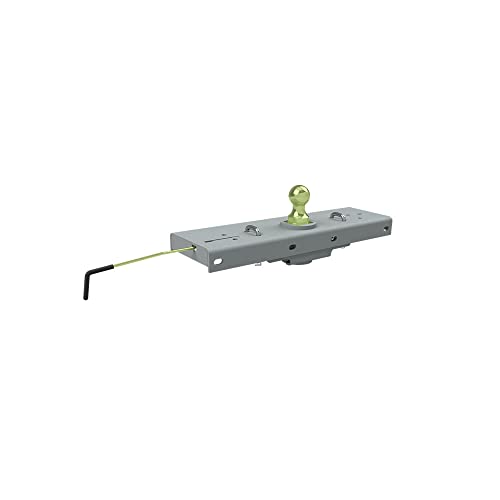
The B&W Trailer Hitches Turnoverball Gooseneck Center Section ($329) — The B&W Turnoverball center section (GNRC800) is the heart of one of the most respected gooseneck systems on the market — the ball flips over and stores flush so your truck bed stays flat and usable. B&W's Turnoverball line tops out at ratings no other consumer underbed gooseneck matches. But this listing is the center section only, not a complete hitch, and several buyers ordered it thinking otherwise and had to order the vehicle-specific mounting kit separately. If you already have the frame-mounted portion and need to replace a seized or worn center section, it's exactly what you want, and it's American-made with a limited lifetime warranty. If you're starting from nothing, buy the complete kit for your truck instead.
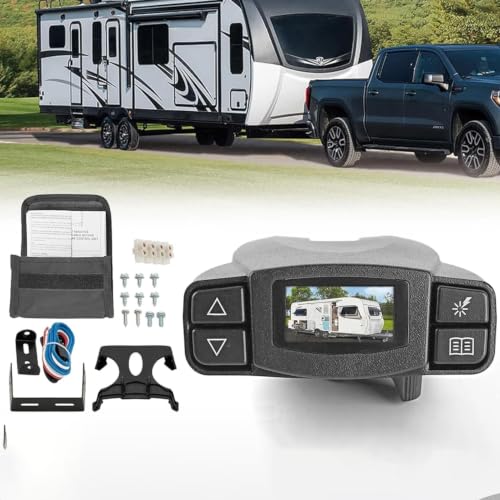
The 90195 Universal Electric Trailer Brake Control Module ($109.90) — This BUDHIUH controller is an aftermarket module sold as a replacement for the Tekonsha P3, with proportional braking, a color LCD, storage for five trailer profiles, support for 1 to 4 axles, and mounting hardware for dash or steering column. On paper it's the same feature set for less money. In practice we can't recommend it over the genuine Tekonsha, which uses a 3-axis accelerometer to apply braking force within about 2% of optimal and has a long, documented track record in the RV world. A brake controller is the part that stops several thousand pounds of trailer behind you in an emergency, and this listing has no meaningful owner feedback history to lean on. Buy the real P3.
Installation and maintenance notes
Before you order anything, find your vehicle's tow rating in the owner's manual and treat it as the hard ceiling — the hitch class doesn't override it. When your receiver arrives, open the box and confirm the hardware bag is there before you crawl under the car, because it goes missing in shipping often enough to ruin a Saturday. Support the hitch with a floor jack while you start the bolts, and hit rusted exhaust hanger bolts with penetrating oil the night before. Torque everything to spec with an actual torque wrench, not by feel. After that, the maintenance is simple: rinse road salt off the hitch and ball mount at the end of winter, touch up paint chips before they turn into rust, grease the ball and any friction sway surfaces, and re-check bolt torque after your first long trip and once a season after that.
Questions we get
What hitch class do I need for my truck or SUV?
Match the class to your trailer's loaded weight, then confirm your vehicle is rated for it. Class 3 with a 2-inch receiver covers most people — small campers, boats, and utility trailers into the mid-thousands. Class 4 and 5 are for heavy travel trailers and equipment. Remember that the vehicle's rating, not the hitch's, is the real limit.
Do I need a weight distribution hitch for a 5,000-pound trailer?
Behind a half-ton truck or an SUV, yes — 5,000 pounds is right at the threshold where a plain ball mount starts letting the trailer push the vehicle around. Weight distribution moves load back onto the front axle so steering and braking stay predictable. Behind a three-quarter-ton or larger truck you have more margin, but sway control still helps in wind and truck traffic.
How do I calculate correct tongue weight for my trailer?
Aim for 10 to 15% of the trailer's gross weight sitting on the ball. For a 10,000-pound trailer that's 1,000 to 1,500 pounds. You can figure it at a public scale by weighing the rig with the tongue on and off the ball, or skip the math with a scale-equipped ball mount like the Weigh Safe. Too little tongue weight causes sway; too much lifts your front end.
Do I need a brake controller for a 3,500-pound travel trailer?
Almost certainly, and it's probably the law where you live. Thirty-seven states require a brake controller for trailers over 3,000 pounds, and another 10 set the line at 1,500. Your trailer also needs electric brakes for a controller to do anything, so check both before your first trip.
Can I install a trailer hitch myself or do I need a professional?
Most bolt-on receiver hitches are a home job if you have a socket set, a torque wrench, and a floor jack. Plan on a few hours, and get a second pair of hands for lifting. Weight distribution and fifth-wheel setups are more involved — the hardware bolts on fine, but dialing in bar tension and trailer level takes patience. Underbed gooseneck installs are worth paying for.
Are gooseneck hitches better than fifth-wheel hitches for horse trailers?
It depends on your coupler. Goosenecks use a ball and leave your bed flat when the ball is removed, which is why livestock and equipment haulers like them. Fifth wheels use a larger plate that spreads pin weight across the bed rails — MotorTrend's comparative analysis found that lets you carry 15 to 25% more pin weight than an equivalent gooseneck ball. Match the hitch to whatever your trailer's coupler requires.
Why you should trust us
For this guide:
- We read manufacturer specification sheets and published weight ratings for every product here, along with SAE J684 certification requirements and NHTSA towing guidance on tongue weight.
- We compared vehicle fit databases from CURT and Draw-Tite and reviewed reporting from Consumer Reports, MotorTrend, and Trailer Life on brake controllers, sway control, and gooseneck versus fifth-wheel setups.
- We reviewed recurring themes in owner feedback — install difficulty, packaging damage, noise from friction sway control, and long-term durability — to shape the flaws sections.
- We read owner reviews on every listing, weighted toward the critical ones, because that is where the recurring failures show up.
- We have a systematic way of automatically fetching the latest prices, so the numbers on this page stay current.
- This is a research-focused guide, so the team may not own every product listed — though we often do own the top winners, which gives us extra context for the recommendations.
- We don't accept free products, and the retailer commission never changes which product we recommend.
Sources
Best Trailer Hitches 2026 — Wirecutter (NYT), Wirecutter
Towing Safety: Tongue Weight and Sway Control Guidelines — NHTSA, NHTSA
SAE J684: Trailer Couplings, Hitches, and Safety Chains — Full Standard, SAE International
Best Weight Distribution Hitches: Long-Term Road Test — Trailer Life Magazine, Trailer Life
Best Trailer Brake Controllers Tested — Car and Driver, Car and Driver
Trailer Hitch Classes Explained — Popular Mechanics, Popular Mechanics
Fifth Wheel vs. Gooseneck Hitches: Comparative Towing Analysis — MotorTrend, MotorTrend
Trailer Brake Controller Laws by State — Trailer Life, Trailer Life
B&W Turnoverball Gooseneck Hitch Official Spec Sheet, B&W Trailer Hitches
CURT Hitch Application Guide and Installation Resources, CURT Manufacturing
Why Tongue Weight Accuracy Matters — Weigh Safe Research, Weigh Safe
RV Towing Guide: Weight Distribution Systems Explained — RV Magazine, RV Magazine
Amazon product listings and owner reviews for all 7 products
Manufacturer specification pages for each product
Some passages in this guide may be paraphrased with AI help. Prices are refreshed automatically.
More like this.
Continue exploring electronics reviews and recommendations.

The Best Trailer Hitch Cargo Carriers
Every road trip has the same moment. The trunk is full, there's still a cooler and a folding chair on the driveway, and someone in the back seat is about…

The Best Trailer Hitch Locks
A trailer sitting in your driveway is one of the easiest things on your property to steal. Someone backs a truck up, drops your coupler onto a ball, and…

The Best Trail Mountain Bike Accessories
The bike you already own is probably fine. What's holding you back on a wet descent or a ride that runs long is usually smaller and cheaper than a new…

The Best Hitch-Mounted Bike Racks
A hitch rack is the difference between a bike trip you look forward to and one you dread. Roof racks mean lifting a 30-pound bike over your head in a…

The Best Tow Straps and Kinetic Recovery Ropes
Getting stuck is rarely dramatic. You back down a boat ramp that's slicker than it looked, or you pull onto a soft shoulder in the rain, and suddenly your…

The Best Truck Towing Mirrors
The first time you pull a trailer that's wider than your truck, you notice the problem immediately. Your factory mirrors show you the side of the trailer…