The Best Turntables for Budget Vinyl Listening
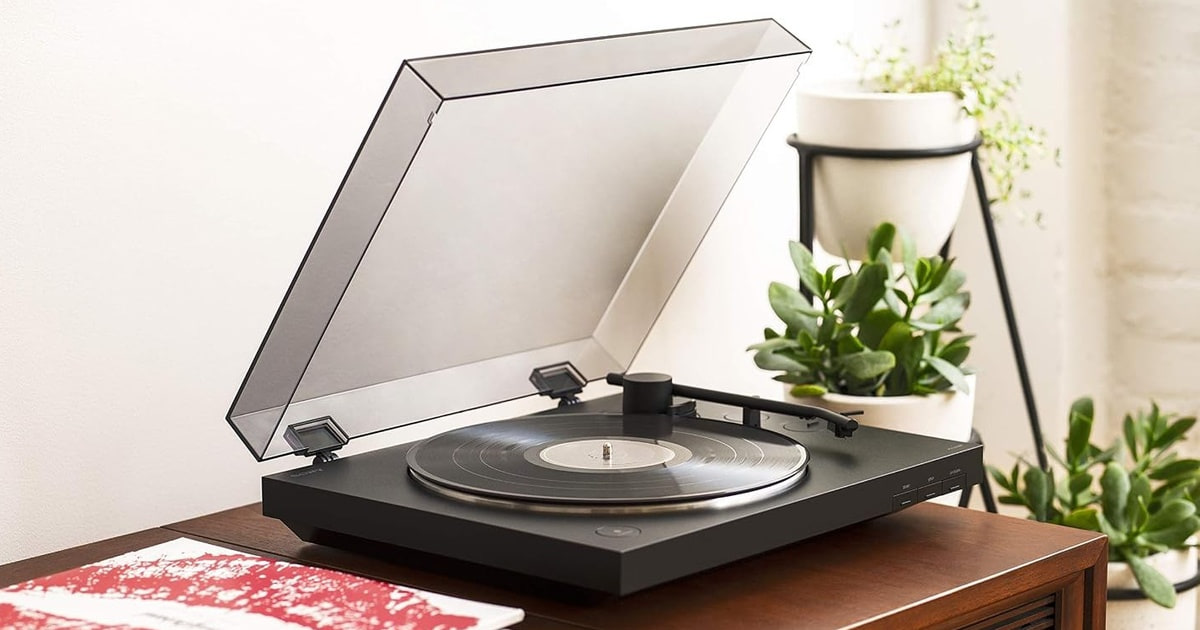
Vinyl asks something of you that streaming doesn't. You get up, flip the record, set the needle down. That ritual is most of the appeal, and a good budget turntable makes it easy instead of fussy. What you actually want from one is boring reliability: a platter that holds speed, a tonearm that rides the groove without digging into it, and a way to get sound out of the thing without buying a receiver first. Get those three right and the records do the rest.
Here's the honest caveat. Nothing in this price range sounds like a serious hi-fi rig, and no amount of marketing copy changes that. Sound & Vision measured wow-and-flutter on entry-level belt-drive turntables at roughly 0.25 percent, versus under 0.1 percent on turntables that cost twice as much. You'll hear that as a faint softness on sustained piano notes. Budget cartridges also track heavier than expensive ones, so records wear a little faster. These are real trade-offs, not dealbreakers.
The bigger risk is the suitcase player. Consumer Reports found some all-in-one units apply five or more grams of tracking force, roughly double what cartridge makers recommend, and that grinds down a record over repeated plays. Skip those entirely and buy a real belt-drive deck instead. We think that the Audio-Technica AT-LP60X is the best budget turntable for most people, and that the Audio-Technica AT-LP60XBT is the one to buy if you want to send music to a Bluetooth speaker.
Everything we recommend

The easiest way to start, with nothing to set up wrong

Same deck, but it talks to your Bluetooth speaker
Better sound and a real upgrade path, if you'll do the setup

Automatic, wireless, and it can digitize your records
Audiophile bones and an acrylic platter, minus the conveniences
Prices as of Oct 25, 6:48 AM PT · Details
At a glance
| Product | Platter | Wireless output | Price | |
|---|---|---|---|---|
| Audio-Technica AT-LP60X-BK Fully Automatic Belt-Drive Stereo TurntableTop pick | Die-cast aluminum | — | $178 |
| Audio-Technica AT-LP60XBT-BK Fully Automatic Wireless Belt-Drive StereoAlso great | Die-cast aluminum | — | Check price |
| Sony PS-LX310BT Belt Drive Turntable: Fully AutomaticRunner-up | — | Bluetooth | $448 |
| Fluance RT80 Classic High Fidelity Vinyl TurntableUpgrade pick | Aluminum | — | $249.99 |
| U-Turn Audio - Orbit PlusAlso great | Grooved acrylic | — | $399 |
 | Victrola Hi-Res Carbon - 2-Speed Turntable withAlso in lineup | — | — | $249.99 |
 | 1 BY ONE High Fidelity Belt DriveAlso in lineup | — | Bluetooth | $169.98On sale |
 | Crosley C6B-WA Record PlayerAlso consider | Steel | Bluetooth | $174.95 |
Prices as of Oct 25, 6:48 AM PT · Details
How we picked
Drive and speed. We limited the guide to real belt-drive decks, since published measurements consistently show them handling motor vibration better than the direct-drive mechanisms used in cheap all-in-ones. Speed accuracy near 0.1 percent, as RTINGS measured on the AT-LP60X, was the bar we wanted a top pick to clear.
Tracking force. Consumer Reports found some suitcase turntables press down with five or more grams, roughly double what cartridge makers recommend. We favored decks with either a factory-set light force or an adjustable counterweight that lets you set it yourself.
Getting sound out. For buyers with no receiver, a built-in phono preamp or Bluetooth output changes whether the turntable is usable at all. We noted which decks include one, which include both, and which make you buy a separate box.
Upgrade path. We checked spec sheets for whether the cartridge sits on a standard mount you can replace, or is integrated into the headshell. That single detail decides whether the turntable can grow with you or has to be replaced outright.
Build and damping. Platter material and plinth mass came from manufacturer specifications, and we weighted aluminum and acrylic platters over plastic. Owner feedback about rumble and skipping helped confirm which cabinets actually control vibration.
Top pick
The easiest way to start, with nothing to set up wrong
Audio-Technica AT-LP60X-BK Fully Automatic Belt-Drive Stereo Turntable
The AT-LP60X is fully automatic, so you press one button and the tonearm handles itself. It's belt-driven with a die-cast aluminum platter, and review outlets have recommended it for years because it does the basics well and stays out of your way.
$178fromAmazonPrices as of Oct 25, 6:48 AM PT · Details
If you've never owned a turntable, this is the one to start with. There's no counterweight to balance, no anti-skate dial to fiddle with, no stylus alignment. You put the record on, pick 33 or 45, and press start. The tonearm lifts, drops, plays the side, then returns and shuts off on its own. That last part matters more than it sounds. Fall asleep with a record on and the needle isn't grinding in the runout groove all night.
Speed stability is where cheap turntables usually fall apart, and this one holds up. RTINGS measured the AT-LP60X's speed accuracy within 0.1 percent of the target 33⅓ RPM. In practice you just don't notice the platter, which is the whole point. Audio-Technica also puts the AC adapter outside the chassis instead of inside it, which keeps power-supply hum out of the signal. Small design choice, audible result.
The die-cast aluminum platter does real work here. Plastic platters ring when the motor vibrates through them, and that ringing sneaks into the sound as a hazy quality on quiet passages. Aluminum is heavier and deader. Audio-Technica also redesigned the tonearm base and headshell on this generation to cut resonance further. You're not getting audiophile isolation, but you're getting more than the shape of the thing suggests.
Owners keep this deck around for years, which is the strongest signal a budget product can send. Feedback themes point at the same things over and over: it works out of the box, it doesn't drift, and the tonearm doesn't skate across records. It's also compact at about 14 inches wide, so it fits on a bookshelf or a dresser without dominating the room.
Flaws but not dealbreakers
The cartridge isn't upgradable in any meaningful way. You can swap the stylus when it wears out, but the whole cartridge is integrated into the headshell, so the usual first upgrade path is closed to you. If you think you'll want a better cartridge in a year, buy the Fluance RT80 instead.
There's no counterweight and no anti-skate adjustment, which is exactly why setup is so easy and also why you have zero control over tracking force. That's fine for casual listening. It's frustrating if you get curious and want to dial things in.
You'll need powered speakers or an amplifier. The built-in preamp gets you a line-level signal, but there's no Bluetooth on this model and nothing to plug headphones into directly.
Also great
Same deck, but it talks to your Bluetooth speaker
Audio-Technica AT-LP60XBT-BK Fully Automatic Wireless Belt-Drive Stereo
The AT-LP60XBT is the LP60X with a Bluetooth transmitter added. If your speakers are wireless and you'd rather not run RCA cables across an apartment, this solves that problem without giving up the automatic tonearm or the aluminum platter.
Check priceatAmazonPrices as of Oct 25, 6:48 AM PT · Details
Most people buying a first turntable already own a Bluetooth speaker, and that's the whole argument for this model. You pair it once and the record plays through whatever you've already got. Audio-Technica specifies the Bluetooth range at up to 33 feet, or 10 meters, with aptX and AAC codec support. That covers a normal apartment. The RCA outputs are still there too, so you're not locked into wireless.
The aptX support is the part that makes this worth doing. Plain Bluetooth audio compresses hard and smears detail, which is a rough thing to do to a format people buy for its warmth. AptX is gentler about it. You need a speaker or headphones that support aptX on the receiving end, and plenty of budget speakers don't, so check before you assume you're getting the better codec.
Mechanically this is the LP60X. Same fully automatic operation, same anti-resonance die-cast aluminum platter, same two speeds. Everything we like about the top pick carries over intact. You're paying for the radio, not for a different turntable, which is a clean way to make the decision.
Owner feedback on Bluetooth pairing is mixed in a specific way worth knowing. Pairing to speakers and headphones generally goes fine, sometimes after a couple of tries. Pairing to devices that expect two-way Bluetooth, like a laptop or a PC, often doesn't work at all, because this deck only transmits.
Flaws but not dealbreakers
Bluetooth adds latency, so if you're watching something on a screen while a record plays it doesn't matter, but the wireless signal will never be as clean as a wire. Purists should use the RCA outputs and treat Bluetooth as a convenience.
The pairing quirks are real. Owners consistently report that the transmitter refuses to connect with dual-direction Bluetooth devices such as computers and some boombox-style systems. If your target speaker is unusual, verify it takes a Bluetooth audio input before you buy.
It shares the top pick's ceiling. Non-upgradable integrated cartridge, no counterweight, no anti-skate.
Upgrade pick
Better sound and a real upgrade path, if you'll do the setup
Fluance RT80 Classic High Fidelity Vinyl Turntable
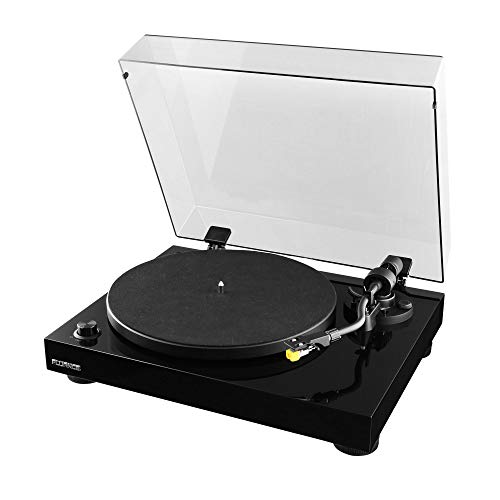
The Fluance RT80 is a manual belt-drive deck with an Audio-Technica AT91 cartridge, an S-shaped aluminum tonearm and an adjustable counterweight. It's the point where a turntable stops being an appliance and starts being something you can tune and improve.
$249.99fromAmazonPrices as of Oct 25, 6:48 AM PT · Details
This is the first deck here that rewards you for paying attention. The counterweight and the balanced S-type tonearm mean you set tracking force yourself instead of accepting whatever the factory chose. Fluance ships the AT91 cartridge, which tracks at 3.5 to 4.0 grams and uses a diamond-tipped stylus. Dial it in properly and you get more detail out of a record than any automatic deck in this guide will give you.
The cabinet is the underrated part. It's engineered MDF with isolation feet, an aluminum platter and a rubber mat, and the whole assembly weighs close to 10 pounds. Weight fights vibration. If you live above a busy street or your speakers sit on the same shelf as the turntable, that mass keeps footsteps and bass from turning into a rumble through the stylus.
You get a built-in Texas Instruments preamp, a ground terminal and gold-plated RCA outputs, so it plugs straight into powered speakers or a receiver with no extra box. That's a genuinely useful combination at this level. Plenty of better-sounding turntables make you buy a separate phono stage before you hear anything, which quietly raises the real cost.
The upgrade path is what makes this worth stretching for. The cartridge sits on a standard mount, so when you outgrow the AT91 you replace it rather than replacing the turntable. RTINGS points at tracking force, speed stability and vibration isolation as the three factors that most predict how a budget turntable sounds, and the RT80 gives you a hand in all three.
Flaws but not dealbreakers
It's fully manual. You cue the tonearm down yourself and you lift it off at the end of the side, and there's no auto-stop safety net. Most people adapt in a week, but if you're buying this for a teenager or as a gift for someone who wants zero involvement, the automatic decks are the safer call.
Setup takes real effort the first time. Balancing the counterweight is not hard, but it is unfamiliar, and getting it wrong means either poor tracking or unnecessary record wear. Follow the manual carefully.
It's noticeably larger and heavier than the Audio-Technica decks, so measure your shelf before ordering.
Runner-up
Automatic, wireless, and it can digitize your records
Sony PS-LX310BT Belt Drive Turntable: Fully Automatic
The Sony PS-LX310BT is a fully automatic belt-drive deck with Bluetooth, a switchable phono preamp with three gain settings and a USB output. It does more things than the Audio-Technica decks, and it's built with the solidity you'd expect from Sony.
$448fromAmazonPrices as of Oct 25, 6:48 AM PT · Details
The three gain settings are the feature nobody advertises well and everybody should want. Cartridges and speakers vary a lot in sensitivity, and a fixed-output preamp either leaves you turning the volume knob to the ceiling or clipping at nine o'clock. Sony lets you match the output to your gear. It also has a rear toggle that switches the built-in phono preamp off, so you can feed a proper phono stage later without buying a new turntable.
USB output is the other reason to pick this one. You can rip records to MP3 on a computer, which matters if you're rebuilding a collection of out-of-print records that never made it to streaming. That old regional pressing you can't find anywhere online becomes something you can put on your phone. It's a niche feature that's exactly right for the people who need it.
Operation is one-touch, the same as the Audio-Technica decks. Auto start, auto stop, auto return. The 45 RPM adapter tucks into a slot under the deck instead of getting lost in a drawer, which sounds trivial until the third time you're hunting for one. RCA cables come in the box.
At about 17 inches wide it's the broadest deck of the automatic bunch, and roughly 8 pounds. The extra footprint buys a steadier chassis, but it also means you should check your shelf depth. It's a piece of furniture more than a gadget.
Flaws but not dealbreakers
It's harder to find in stock than the Audio-Technica models, and the lineup around it moves less. If availability matters for a gift deadline, the AT-LP60X is the safer order.
Like the other automatic decks, the tonearm gives you no counterweight or anti-skate control, so there's no tuning to be done. What you buy is what you get.
The USB ripping software experience is basic. It works, but expect to do your own track splitting and tagging rather than getting a polished one-click transfer.
Also great
Audiophile bones and an acrylic platter, minus the conveniences
U-Turn Audio - Orbit Plus
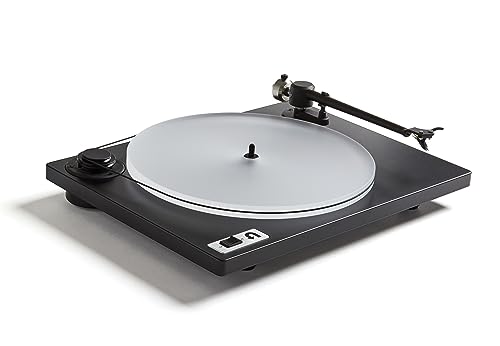
The U-Turn Orbit Plus pairs a grooved acrylic platter with an Ortofon OM5E elliptical cartridge and a precision gimbal tonearm. It sounds cleaner than anything else here, and it drops nearly every convenience feature to get there.
$399fromAmazonPrices as of Oct 25, 6:48 AM PT · Details
The acrylic platter is the headline and it earns the attention. Acrylic has a resonant character close to vinyl itself, so instead of ringing under the record it damps it. What Hi-Fi? gave the Orbit Basic a five-star rating and pointed at exactly that platter as the reason it beats plastic-platter decks at similar prices. The Plus version adds a grooved acrylic platter for better speed consistency.
The tonearm is the real hardware difference. U-Turn's OA3 gimbal arm uses a one-piece magnesium armtube with internal anti-skate and an adjustable counterweight. Gimbal bearings hold the stylus steadier through a warped record than the simpler arms on automatic decks. Paired with the Ortofon OM5E and its elliptical diamond stylus, you get more of what's actually in the groove.
Then the trade-offs land. PCMag notes the Orbit Basic ships without a dust cover or a built-in preamp as standard equipment, and that carries over to how U-Turn configures these decks. You'll need an external phono preamp or an amplifier with a phono input, and you'll want to budget for a cover if you have pets or a dusty apartment.
Speed changes are manual too. You move the belt between pulleys by hand to switch from 33 to 45, which takes about ten seconds and a little care. Fine if you play albums. Mildly annoying if you're a singles collector flipping between speeds all evening.
Flaws but not dealbreakers
No built-in preamp means the sticker isn't the whole cost. Add a phono stage or an amplifier with phono inputs before you can hear a single record.
No dust cover as standard, no automatic anything, and manual belt-swapping for speed changes. This is a deck that expects you to be interested in turntables, not just in records.
It's the newest model here with the thinnest owner-feedback record, so there's less long-term reliability history to lean on than the Audio-Technica decks have.
Who this is for
This guide is for you if you're buying your first turntable, replacing a suitcase player you've soured on, or shopping for a gift. It's also for apartment dwellers who want records playing through a Bluetooth speaker without a rack of components. If you already own a receiver with a phono input, you have more options than most people here and should look hardest at the manual decks. Vinyl sales have grown for 18 straight years according to the RIAA, so you're joining a large and well-supplied hobby.
You should not buy from this guide if you already own a decent turntable and want a real step up. The gains you'd get are small and the money is better spent on a cartridge upgrade or a proper phono stage. We've also stayed away from suitcase-style all-in-ones and portable players, which is a deliberate exclusion rather than an oversight. If you're set on one, at least confirm it has an adjustable counterweight before you put a record you care about on it.
How we picked
We built the shortlist around five things. Drive and speed: belt-drive only, with speed accuracy close to the 0.1 percent RTINGS measured on the AT-LP60X. Tracking force: either a light factory setting or an adjustable counterweight, since Consumer Reports found some all-in-ones pressing down at five-plus grams against the 2 to 3 grams cartridge makers recommend. Getting sound out: a built-in phono preamp, Bluetooth, or ideally both, because most first-time buyers own powered speakers and nothing else. Upgrade path: a standard-mount cartridge you can replace beats one glued into the headshell. Build and damping: aluminum or acrylic platters over plastic, and enough plinth mass to keep footsteps out of the groove.
Other turntables for budget vinyl listening worth considering
If you want vintage looks with modern guts: The Crosley C6B-WA Record Player — The Crosley C6B is the company's answer to years of complaints about its suitcase players. It's a full-size external belt-drive deck with an aluminum tonearm, a cueing lever, an adjustable counterweight and anti-skate control, plus a pre-mounted moving-magnet Audio-Technica cartridge. Crosley added those tracking controls to its C6 line specifically to fix the tracking-force problem older models had. It also has Bluetooth output and a switchable preamp, so it plugs into almost anything. What it gives up is refinement. The steel platter isn't as inert as aluminum or acrylic, and owner feedback is more mixed than for the Audio-Technica decks. But if you like the walnut-and-vintage look and want it done properly, this is the honest version of that.
The competition
These are the turntables our research surfaced alongside the picks, not a survey of everything for sale. Budget turntables turn over constantly and every brand runs a half-dozen near-identical variants. If a model you're considering isn't here, that doesn't mean it's bad. It means the published reviews and specifications we worked from didn't put it in front of us.
The Victrola Hi-Res Carbon - 2-Speed Turntable with — The Victrola Hi-Res Carbon is the most ambitious deck in this group on paper. You get a carbon fiber tonearm with a removable headshell, an Ortofon 2M Red cartridge, aptX Adaptive Bluetooth and a veneered MDF plinth. That's a genuinely strong parts list, and it's the only turntable here that streams to Sonos systems, which TechRadar reports it does with under 100 milliseconds of latency. The problem is that owner feedback runs distinctly worse than for anything else we looked at, with a pattern of complaints rather than isolated bad luck. If multi-room streaming to Sonos speakers is the whole reason you're buying, it's the only deck that does it. Otherwise the U-Turn Orbit Plus gets you comparable sound from a more settled product.
The 1 BY ONE High Fidelity Belt Drive — The 1 BY ONE belt-drive turntable is the all-in-one done about as well as an all-in-one can be. It has a real belt drive, a magnetic cartridge with an Audio-Technica diamond stylus, an adjustable counterweight, built-in speakers and a built-in amplifier, plus Bluetooth in both directions so it can also play music from your phone. In a dorm room where there's no space for separate speakers, that combination is hard to argue with. But built-in speakers sit on the same chassis as the stylus, and that's a vibration problem no cabinet at this price fully solves. Buy it if you want one box and nothing else, and understand you're trading sound quality for it.
Setup and care
Put the turntable on something solid and level, away from your speakers if you can manage it. A wobbly shelf turns into audible rumble, and speakers on the same surface feed bass right back into the stylus. Check level with a phone app before you play anything. If your deck has a counterweight, set tracking force to whatever the cartridge maker specifies and no more. Heavier isn't safer, it just wears grooves faster. Brush records with an antistatic brush before each side, and wipe the stylus with a soft brush from back to front, never side to side. Plan on replacing the stylus every few hundred hours of playing. A worn stylus is the single fastest way to damage a collection, and it's cheap to swap.
Questions we get
Do cheap turntables damage vinyl records?
Some do, and the culprit is tracking force. Consumer Reports found certain suitcase-style all-in-ones pressing down with five or more grams when cartridge makers recommend two to three. That extra weight grinds down groove walls over repeated plays. A proper belt-drive deck with either a light factory setting or an adjustable counterweight won't hurt your records.
What's the difference between belt-drive and direct-drive turntables?
In a belt-drive turntable a rubber belt connects the motor to the platter, which isolates motor vibration from the record. Direct-drive spins the platter straight off the motor, which gives faster startup and steadier speed under load, and that's why DJs use it. At budget prices belt-drive generally wins, because cheap direct-drive motors put more noise into the platter than the design's speed advantage is worth.
Do I need a separate phono preamp?
It depends on the deck. The Audio-Technica AT-LP60X, the Sony PS-LX310BT, the Fluance RT80 and the Crosley C6B all have built-in preamps, so you can plug them straight into powered speakers. The U-Turn Orbit Plus requires an external preamp or an amplifier with a phono input. Budget for that before you buy it.
Can I connect a budget turntable directly to regular speakers?
Not to passive speakers, no. Passive speakers need an amplifier between them and the source, and no turntable here has one built in except the 1 BY ONE. Powered or active speakers are different, because the amplifier is inside the speaker, so a turntable with a built-in preamp plugs right in. Check whether your speakers have a power cord.
Which one is easiest to upgrade later with a better cartridge?
The Fluance RT80 and the U-Turn Orbit Plus. Both use standard cartridge mounts and adjustable counterweights, so you can swap in a better cartridge and set tracking force to match it. The Audio-Technica AT-LP60X and AT-LP60XBT use integrated headshell cartridges where you can replace the stylus but not the cartridge itself.
What's the best option for a college dorm room?
If you have room for a separate speaker, the Audio-Technica AT-LP60XBT is the pick, because Bluetooth means no cables running across a small room. If you have room for nothing at all, the 1 BY ONE has speakers built in and works as a single box. Just know that built-in speakers vibrate the same chassis the stylus sits on.
Why you should trust us
For this guide:
- We read published measurements and reviews from RTINGS, What Hi-Fi?, Consumer Reports, Sound & Vision, TechRadar and PCMag covering speed accuracy, tracking force and platter materials.
- We compared manufacturer specifications from Audio-Technica, Sony, Fluance, U-Turn, Victrola and Crosley on cartridges, drive systems, preamps and Bluetooth codecs.
- We reviewed recurring themes in owner feedback, particularly around Bluetooth pairing behavior and long-term reliability.
- We read owner reviews on every listing, weighted toward the critical ones, because that is where the recurring failures show up.
- We have a systematic way of automatically fetching the latest prices, so the numbers on this page stay current.
- This is a research-focused guide, so the team may not own every product listed — though we often do own the top winners, which gives us extra context for the recommendations.
- We don't accept free products, and the retailer commission never changes which product we recommend.
Sources
Best Turntables for 2026 - Wirecutter, Wirecutter
Audio-Technica AT-LP60X Review, RTINGS.com
Fluance RT80 Review, Fluance
Best Cheap Turntables 2026 - What Hi-Fi?, What Hi-Fi?
Turntable Buying Guide - Consumer Reports, Consumer Reports
Sony PS-LX310BT Specifications, Sony
Victrola Stream Carbon Review, TechRadar
Best Budget Turntables - Sound & Vision, Sound & Vision
Crosley C6A Turntable Details, Crosley
How We Test Turntables - RTINGS.com, RTINGS.com
Audio-Technica AT-LP60XBT Product Page, Audio-Technica
Vinyl Sales Data 2025 - RIAA, RIAA
Amazon product listings and owner reviews for all 8 products
Manufacturer specification pages for each product
Some passages in this guide may be paraphrased with AI help.
Product prices and availability are accurate as of the date/time indicated and are subject to change. Any price and availability information displayed on Amazon.com at the time of purchase will apply to the purchase of this product.
More like this.
Continue exploring electronics reviews and recommendations.

The Best Turntables for Beginners
A turntable is one of the few gadgets you still operate with your hands. You choose a record, set it down, drop the needle, and then you're committed to…

The Best Vinyl Car Wrap Films
A color change used to mean a paint booth, a week without your car, and a bill that made you wince. Vinyl changed that. You can wrap a hood in an…

The Best Budget Mechanical Keyboards
A mechanical keyboard is one of the few upgrades you feel every single minute you're at a desk. The keys have a defined bottom, a consistent weight, and a…

The Best Budget Noise Canceling Headphones
Noise canceling headphones earn their keep in the boring parts of your day. The bus that idles for ten minutes. The open-plan office where someone always…

The Best Budget Pieces for the Old Money Look
The old money look isn't really about money. It's about a handful of quiet signals - natural fabrics, clean lines, no visible logos, a color palette that…

The Best Mechanic Tool Sets for Your Home Garage
The first time a socket doesn't fit, you learn what a tool set is really for. Most home garage work is unglamorous - an oil change, a set of brake pads, a…