The Best Mushroom Coffee
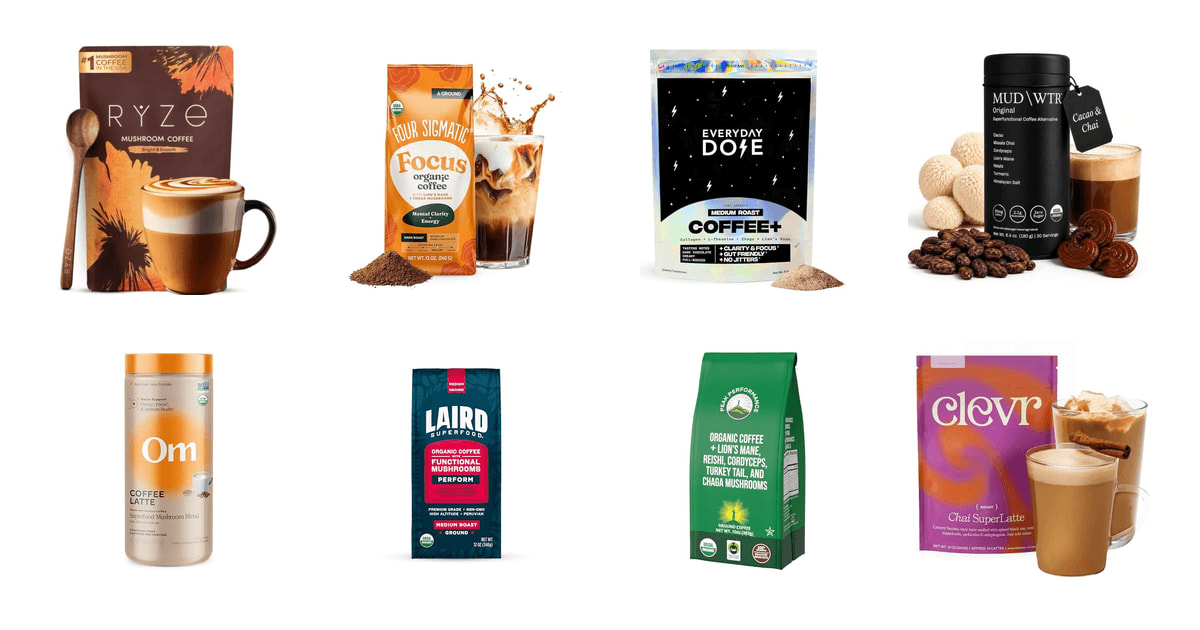
Mushroom coffee is a morning ritual with the volume turned down. Most blends pair coffee with hot-water extracts of lion's mane, chaga, reishi or cordyceps, and they land somewhere around 40 to 70 mg of caffeine per cup — compared with 95 to 200 mg in a standard drip cup, according to Healthline. That's the whole pitch. You still get a warm mug and something that tastes like coffee, but you're less likely to end up wired at 10 a.m. and flattened by 2 p.m. If jitters or reflux have been pushing you away from coffee, this is the category worth a look.
Here's the honest part. Almost nothing here is dosed the way the research is. Cleveland Clinic notes that human trials generally use 1 to 3 g of concentrated extract daily, while a typical single-serve packet delivers 200 to 500 mg. Forbes Health dietitians suggest looking for at least 30% beta-glucan content as a potency benchmark — and most mainstream labels don't print that number at all. So treat these as a gentler coffee you happen to enjoy, not as medicine. If you want the doses used in studies, you'll need a separate extract.
We also can't promise you'll feel a difference. The evidence for lion's mane is real but narrow: a double-blind trial in Phytotherapy Research found 3 g a day improved cognitive scores in adults with mild impairment, and the gains faded once people stopped. That's a long way from a scoop in your mug. We think that the RYZE Organic Mushroom Coffee is the best mushroom coffee for most people, and that the Four Sigmatic Organic Focus Mushroom Ground Coffee is the one to buy if you'd rather brew real grounds in your drip machine.
Everything we recommend

The easiest swap, with the most mushrooms in the scoop

Real ground coffee, if you'd rather not switch to powder

Smoother lift for people who get anxious on coffee

For quitting coffee entirely, not just cutting back
At a glance
| Product | Key Mushrooms | Roast Level | Price | |
|---|---|---|---|---|
| RYZE Organic Mushroom CoffeeTop pick | 6 Mushroom Blend | Medium Roast | $44.99 |
| Four Sigmatic Organic Focus Mushroom Ground CoffeeRunner-up | Lion's Mane & Chaga | Dark Roast | $16.31On sale |
| Everyday Dose Bold Medium Roast Mushroom CoffeeAlso great | — | Medium Roast | $39.99 |
| MUDWTR Original Mushroom Coffee AlternativeBudget pick | — | — | $49.99 |
 | OM MUSHROOM SUPERFOOD Coffee Latte BlendAlso consider | Lion's Mane & Cordyceps | — | $33.99On sale |
 | Laird Superfood Peruvian Medium Roast Coffee withAlso consider | 3 Mushroom Blend | Medium Roast | $14.39 |
 | USDA Organic Low Acid Mushroom Coffee withAlso in lineup | 3 Mushroom Blend | — | $20.95 |
 | Clevr Chai Tea LatteAlso in lineup | Lion's Mane & Reishi | — | $29 |
How we picked
Dose transparency. We compared label disclosures across every blend for total mushroom milligrams per serving and, where stated, beta-glucan content. Forbes Health dietitians point to 30% beta-glucan as a potency benchmark, so we noted which brands publish it and which stay quiet.
Extraction method. Hot-water and dual extracts concentrate the active compounds; raw mycelium grown on grain largely doesn't. We favored blends that state fruiting-body sourcing or dual extraction on the label.
Caffeine per serving. We checked stated caffeine against the 95 to 200 mg in a standard drip cup so you can tell a genuine step-down from a coffee with extras. Anything near a full cup got flagged as such.
Taste and mixing. We read owner feedback themes across thousands of reviews, weighting two complaints heavily: mushroom aftertaste and sediment that won't dissolve. Blends with repeated grit complaints dropped.
Certifications. USDA organic and third-party lab testing are the practical safeguards against mislabeling in a lightly regulated category. We noted which brands carry them.
Top pick
The easiest swap, with the most mushrooms in the scoop
RYZE Organic Mushroom Coffee
RYZE is an instant powder with 2,000 mg of six organic mushrooms per serving, and it dissolves without clumping in hot or cold liquid. It tastes mild enough that most people stop noticing the mushrooms after a few days.
$44.99fromAmazonRYZE gets the two things right that most blends fumble: dose and mixability. Each serving carries 2,000 mg of cordyceps, reishi, king trumpet, shiitake, turkey tail and lion's mane — the top of the range for a coffee blend, and enough that you're not just paying for a rumor. It's certified USDA organic, made with whole mushrooms rather than isolated pieces, and there's no added sweetener hiding the taste.
The flavor question is the one everybody asks first, and owner feedback here is unusually consistent: it doesn't taste like mushrooms. People describe it as mild, a little nutty, easy to drink black. Several report mixing a spoonful into regular coffee or a protein shake without the flavor fighting anything. If you've been burned by a gritty, swampy blend before, this is the one most likely to change your mind.
You mix it with a spoon and it's done. No brewer, no filter, no grounds to dump. That matters more than it sounds — the whole reason to switch is that your morning routine survives intact, and a powder that needs a frother and three minutes of coaxing gets abandoned by week two. RYZE stirs into hot water, iced milk, oat milk, whatever you already reach for.
At roughly 48 mg of caffeine, you get about half a regular cup. That's the sweet spot for most people trying to dial back: enough to feel awake, not enough to set off the shakes. Owners frequently mention drinking it in the afternoon without wrecking their sleep, which is not something you can say about a second drip coffee.
Flaws but not dealbreakers
RYZE doesn't disclose beta-glucan content on the label, which is the single clearest marker of extract potency. It also doesn't specify per-mushroom milligrams inside that 2,000 mg blend — so the lion's mane share could be modest. Nearly every competitor has the same gap, but it's worth knowing what you're not being told.
It's one of the pricier options per serving, and owners say so regularly. Some also report a noticeable adjustment period with digestion in the first week — usually settling, but not always. Start with a smaller scoop if your stomach is easily annoyed.
RYZE does not publish a warranty term for this product.
Runner-upOn sale
Real ground coffee, if you'd rather not switch to powder
Four Sigmatic Organic Focus Mushroom Ground Coffee
Four Sigmatic is dark-roast Honduran ground coffee with 250 mg each of lion's mane and chaga per serving. You brew it in your drip machine, French press or pour-over exactly like the bag it's replacing.
$16.31fromAmazonList priceIf you like your coffee ritual — the grinder noise, the pour, the smell filling the kitchen — an instant powder is a downgrade no matter how good it tastes. Four Sigmatic keeps all of it. This is single-origin, specialty-grade ground coffee from Marcala, Honduras, grown at 5,500 feet, with the mushroom extracts blended in. Your drip machine doesn't know the difference.
The taste is the strongest argument here. Owner feedback lands on the same point over and over: it tastes like good dark roast, full-bodied and low in bitterness, with no earthy aftertaste. Several people mention serving it to skeptical spouses who didn't notice anything unusual. If mushroom flavor is your dealbreaker, this is the safest bag on the shelf.
Four Sigmatic has been doing this since 2012, longer than anyone else on this list, and it has the longest consumer track record by a wide margin. That history matters in a category where formulas change quietly and brands appear overnight. The company is also unusually direct about the fruiting-body-versus-mycelium distinction that separates real extracts from filler.
The 250 mg each of lion's mane and chaga is transparent — you know exactly what you're getting, which is more than most labels offer. It's also well below RYZE's total. That's a fair trade if you value knowing the number over maximizing it.
Flaws but not dealbreakers
Caffeine is closer to a regular cup than most of this list, since it's mostly coffee with extracts added. If cutting caffeine is your main goal, this isn't the sharpest tool here — look at MUD\WTR or Everyday Dose instead.
You need a brewer, which rules it out for office desks, hotel rooms and camping. And a handful of owners report the coffee not sitting well with their digestion, though that's a common thread across the whole category.
Also great
Smoother lift for people who get anxious on coffee
Everyday Dose Bold Medium Roast Mushroom Coffee
Everyday Dose adds L-theanine and grass-fed collagen to a low-acid coffee extract with lion's mane and chaga. The L-theanine takes the edge off caffeine, which makes this the calmest-feeling cup on the list.
$39.99fromAmazonL-theanine is the reason to pick this one. It's an amino acid that pairs with caffeine to smooth out the spike, and it's the ingredient most often credited when people say a coffee gives them focus without the buzzing feeling. Everyday Dose builds it into the formula alongside the mushrooms. If regular coffee makes your chest tight or your hands unsteady, this addresses that directly.
The mushrooms here are fruiting body and double-extracted, not mycelium grown on grain. That distinction matters more than most marketing claims. Research in the International Journal of Molecular Sciences points to different active compounds in the two parts of the mushroom, and dual-extraction products pull from both. Everyday Dose is one of the few blends that states its method plainly.
It also contains grass-fed collagen, which is either a bonus or a dealbreaker depending on your diet. It thickens the cup into something closer to a latte, and it means this isn't vegan. Owners consistently describe it as rich and creamy with a splash of oat milk, and the low-acid coffee extract seems to be gentler on sensitive stomachs than a standard brew.
The listing puts caffeine at 90 mg per serving — a recent bump upward, and roughly a full cup's worth. Combined with the L-theanine, that reads as steady rather than sharp. Just don't buy this expecting the lowest-caffeine option here; it isn't.
Flaws but not dealbreakers
The collagen rules it out if you're vegan or vegetarian, and there's no dairy-free version of this particular blend.
Caffeine is higher than the category average, which undercuts it as a step-down option. And it's an instant powder, so you're trading the brewing ritual for convenience.
Budget pick
For quitting coffee entirely, not just cutting back
MUDWTR Original Mushroom Coffee Alternative
MUD\WTR is a masala chai and cacao blend with lion's mane, chaga, reishi and cordyceps, and only about 35 mg of caffeine from black tea. It's the cleanest break from coffee here — and it tastes nothing like it.
$49.99fromAmazonThis isn't coffee and doesn't pretend to be. MUD\WTR is built on masala chai and cacao, with roughly a seventh of the caffeine in a strong drip cup. That's the point. If you're trying to get off coffee rather than moderate it, a near-identical substitute keeps the craving alive; a genuinely different drink resets the habit. Several owners describe alternating days with regular coffee as an off-ramp.
The flavor is polarizing, and you should know that going in. People who like it call it a cross between hot cocoa and a chai latte — warm, spiced, a little savory. People who don't say it tastes overwhelmingly of turmeric and cinnamon. Ratings for this one skew lower than the rest of the list, and taste is almost always the reason. This is the pick most worth trying in a small size first.
How you make it decides whether you like it. Mixed with plain hot water it's thin and muddy; the brand's own instructions call for hot water plus an equal measure of milk, and owner feedback is emphatic that skipping the milk ruins it. A frother helps. So does a spoonful of honey. Follow the recipe and it's a different drink entirely.
Four functional mushrooms and no coffee at all means no acid, which matters if reflux is what drove you here. It's also the option with the least caffeine of any actual mushroom drink in this guide, short of the brand's caffeine-free turmeric version.
Flaws but not dealbreakers
It doesn't stay mixed. Owners repeatedly describe sediment at the bottom of the mug, and even a frother doesn't fully solve it. You'll be stirring mid-cup.
The taste failure rate is real — a meaningful share of buyers simply can't get past the spice profile. And if you actually want coffee flavor in the morning, this will disappoint you every single day.
Who this is for
Buy mushroom coffee if regular coffee has started costing you more than it gives — jitters by mid-morning, an afternoon crash, reflux, or sleep that never quite recovers. It's also a reasonable pick if you're simply curious about functional foods and want a low-stakes way in. Mintel found that 42% of US coffee drinkers aged 25 to 40 were interested in trying it, up from 27% three years earlier, so you're not alone in wondering.
Skip it if you're chasing the clinical doses. Cleveland Clinic notes that trials use 1 to 3 g of concentrated extract daily, and a single serving here gives you a fraction of that — you'd want a standalone extract instead. Skip it too if you need a hard caffeine hit to function; nothing here matches a double espresso. This guide covers coffee-and-mushroom blends and coffee alternatives sold as a morning drink. It doesn't cover mushroom capsules, tinctures or standalone extract powders, and none of it is medical advice. If you're pregnant, nursing or on medication, ask your doctor first.
How we picked
We weighed five things. Dose transparency: how many milligrams of mushroom per serving, and whether the brand publishes beta-glucan content — Forbes Health dietitians treat 30% as the potency benchmark, and most labels stay silent on it. Extraction method: hot-water or dual extracts of fruiting bodies concentrate the actives; mycelium grown on grain mostly doesn't, so stated sourcing counted. Caffeine: we compared each serving against the 95 to 200 mg in standard drip coffee to separate a real step-down from a coffee with extras. Taste and mixing: owner feedback themes told us which blends leave grit in the mug and which hide the earthiness. Certifications: USDA organic and third-party testing are the practical guardrails in a lightly regulated category.
Other mushroom coffee worth considering
If you want the beta-glucan number printed on the label: The OM MUSHROOM SUPERFOOD Coffee Latte Blend ($33.99) — Om is the rare blend that tells you. Each serving lists 2,000 mg of organic mushroom powder with 400 mg of beta-glucans — a 20% figure, below the 30% Forbes Health benchmark, but at least you can do the math. It's USDA organic, non-GMO and third-party lab tested, grown and milled in Southern California. The catch is flavor: it's a concentrated latte powder that needs 6 to 8 ounces of milk to taste right, and owners who came from a stronger coffee blend often find the coffee note faint. Some longtime buyers have also flagged a formula change they weren't happy about.
If you want to buy it at the grocery store: The Laird Superfood Peruvian Medium Roast Coffee with ($14.39) — Laird Superfood is Peruvian medium-roast ground coffee with chaga, lion's mane and cordyceps, and it's stocked widely enough that you can grab a bag on a normal shopping trip. Owner feedback is strong and consistent on taste — smooth, well-rounded, no bitterness, no mushroom note. It brews fine in drip, pour-over or espresso. What it gives up is dosing detail: the listing names the three mushrooms but not the milligrams, so you're trusting the brand more than the label. A good, easy entry point rather than a potency play.
The competition
This is what our research surfaced, not a census of the market. Mushroom coffee is a fast-moving category with new brands appearing constantly, and we focused on blends with enough published information and owner feedback to say something useful. Here's what didn't make the picks.
The USDA Organic Low Acid Mushroom Coffee with ($20.95) — Peak Performance Organic Mushroom Coffee is USDA organic, fair trade, single-origin Guatemalan ground coffee infused with lion's mane, reishi, cordyceps, turkey tail and chaga — a five-mushroom lineup at a competitive per-serving cost. Owners praise the low acidity and the total absence of mushroom smell or taste. It lost to Four Sigmatic on two counts: no disclosed milligrams for the mushroom content, and a much smaller pool of owner feedback to draw conclusions from. A few reviewers also find the flavor flat compared with other blends. Worth a look if low acid is your priority and you like the donation-match program.
The Clevr Chai Tea Latte ($29) — Clevr Chai SuperLatte is the specialty pick that isn't really coffee. It's an oat-and-coconut-milk-based chai powder with lion's mane, reishi, ashwagandha and probiotics, sweetened with monk fruit, and it froths into something genuinely café-like without any added milk. Owners who like it love the convenience. But feedback splits sharply — a real share find the mushroom taste comes through harsh and the chai spice underpowered, and the powder can clump. It's also among the most expensive per serving here. Choose it if you want a barista-style latte with adaptogens and don't care about coffee flavor at all.
How to get the best cup
Start with half a serving for the first few days. The most common complaint across every brand in this category is digestive — usually mild, usually temporary, and usually avoidable by ramping up slowly. For instant powders, add a splash of liquid first and stir that into a paste before topping up the mug; it's the single best trick against clumping and sediment. Hot water dissolves better than cold, and a handheld frother beats a spoon by a wide margin. Milk or oat milk isn't optional with the chai-style blends — they're formulated for it and taste thin without. Store the bag or canister sealed and away from the stove, since these powders pull moisture readily and cake up. And if you're stacking it with a separate extract, take them at the same time each day; the Phytotherapy Research trial saw benefits fade once daily use stopped.
Questions we get
Is mushroom coffee actually good for you, or is it just a wellness trend?
It's some of both. There's real human evidence behind individual mushrooms — a meta-analysis of 26 randomized trials in Advances in Nutrition found mushroom beta-glucans reduced IL-6 and TNF-α inflammatory markers versus placebo. But those studies used concentrated doses, and a coffee scoop gives you far less. The reliable benefit is simpler: less caffeine, so fewer jitters.
Does mushroom coffee taste like mushrooms?
Usually not, and that surprises most first-time buyers. Coffee-based blends like Four Sigmatic and Laird taste like normal coffee because they're mostly coffee. The non-coffee blends are where flavor gets divisive — MUD\WTR tastes strongly of chai spice and cacao, and Clevr's chai reads as earthy to some people.
How much caffeine is in mushroom coffee compared to regular coffee?
Most blends run 40 to 70 mg per serving, against 95 to 200 mg in a standard drip cup, per Healthline. That's roughly 50 to 80% less. But it varies a lot by product — MUD\WTR sits near 35 mg while Everyday Dose lists 90 mg, so check the label rather than assuming.
What's the best mushroom coffee for focus and mental clarity?
Look for lion's mane, which is the most studied mushroom for cognition. A double-blind trial in Phytotherapy Research found 3 g daily improved cognitive scores in adults with mild impairment over 16 weeks. Everyday Dose pairs lion's mane with L-theanine for a calmer kind of alertness, and RYZE gives you the largest total mushroom dose. Neither reaches the study amount on its own.
Can you drink mushroom coffee every day without side effects?
Most people can, and daily use is how these products are meant to work. The common issue is digestive adjustment in the first week or two — start with a half serving. If you're pregnant, nursing, taking blood thinners or immune-modulating medication, talk to your doctor first, since reishi and turkey tail act on immune pathways.
Is MUD\WTR the same thing as mushroom coffee?
Not quite. MUD\WTR contains no coffee at all — its caffeine comes from black tea, and the flavor is masala chai and cacao. It's a coffee alternative rather than a coffee blend. That makes it better for quitting coffee outright and worse if you actually want coffee flavor.
Why you should trust us
For this guide:
- We compared the published labels, ingredient disclosures and stated caffeine amounts for every blend in this guide against one another.
- We read peer-reviewed research on lion's mane, chaga, cordyceps, reishi and turkey tail, along with dosing guidance from Cleveland Clinic and Forbes Health.
- We reviewed recurring themes in owner feedback across thousands of reviews, paying particular attention to taste complaints, mixing problems and digestive reactions.
- We read owner reviews on every listing, weighted toward the critical ones, because that is where the recurring failures show up.
- We have a systematic way of automatically fetching the latest prices, so the numbers on this page stay current.
- This is a research-focused guide, so the team may not own every product listed — though we often do own the top winners, which gives us extra context for the recommendations.
- We don't accept free products, and the retailer commission never changes which product we recommend.
Sources
Lion's Mane Mushroom – Research Summary and Evidence Overview, Examine.com
Improving effects of Yamabushitake (Hericium erinaceus) on mild cognitive impairment, Phytotherapy Research / PubMed
Mushroom Coffee: Is It Worth the Hype?, Healthline
Best Mushroom Coffee: Reviewed by a Registered Dietitian, Forbes Health
Functional Mushroom Market Size, Share & Trends Analysis Report, 2024–2030, Grand View Research
Is Mushroom Coffee Good for You? A Dietitian Explains, Cleveland Clinic
Chaga Mushroom (Inonotus obliquus) – Antioxidant Properties and Research, Examine.com
Cordyceps Supplementation and Athletic Performance, Examine.com
Turkey Tail Polysaccharides and Immune Function in Breast Cancer Survivors, ISRN Oncology / PubMed Central
Hericium erinaceus and NGF Synthesis: Neurological Mechanisms, International Journal of Molecular Sciences / PubMed Central
Beta-Glucan Supplementation and Inflammatory Biomarkers: A Meta-Analysis, Advances in Nutrition / PubMed
Mintel US Functional Beverage Consumer Trends Report 2025, Mintel
Amazon product listings and owner reviews for all 8 products
Manufacturer specification pages for each product
Some passages in this guide may be paraphrased with AI help. Prices are refreshed automatically.
More like this.
Continue exploring health reviews and recommendations.

The Best Pour-Over Coffee Kettles
A gooseneck kettle is the one piece of coffee gear that changes your cup immediately. The narrow spout slows the water down so you can wet the grounds…

The Best Cold Brew Coffee Makers
Cold brew asks one thing of you that morning coffee doesn't: a little planning the night before. Get that part right and the payoff is real. Coarse…

The Best Reusable Water Bottles and Coffee Cups
A reusable bottle only helps if you actually carry it. That comes down to small things: a lid you can open one-handed at a red light, a base that drops…

The Best Gifts for Coffee Lovers
Coffee is a daily ritual, which is why it's such good gift territory. The person you're shopping for already makes coffee every morning - you're not…

The Best Large Coffee Urns for Parties and Gatherings
Coffee at a party is a logistics problem before it's a taste problem. You need 60 cups ready at the same moment, hot two hours later, and pourable by a…

The Best Coffee Makers
Your coffee maker is the appliance you use most and think about least. It runs every single morning, usually before you're awake enough to troubleshoot…