The Best Pour-Over Coffee Kettles
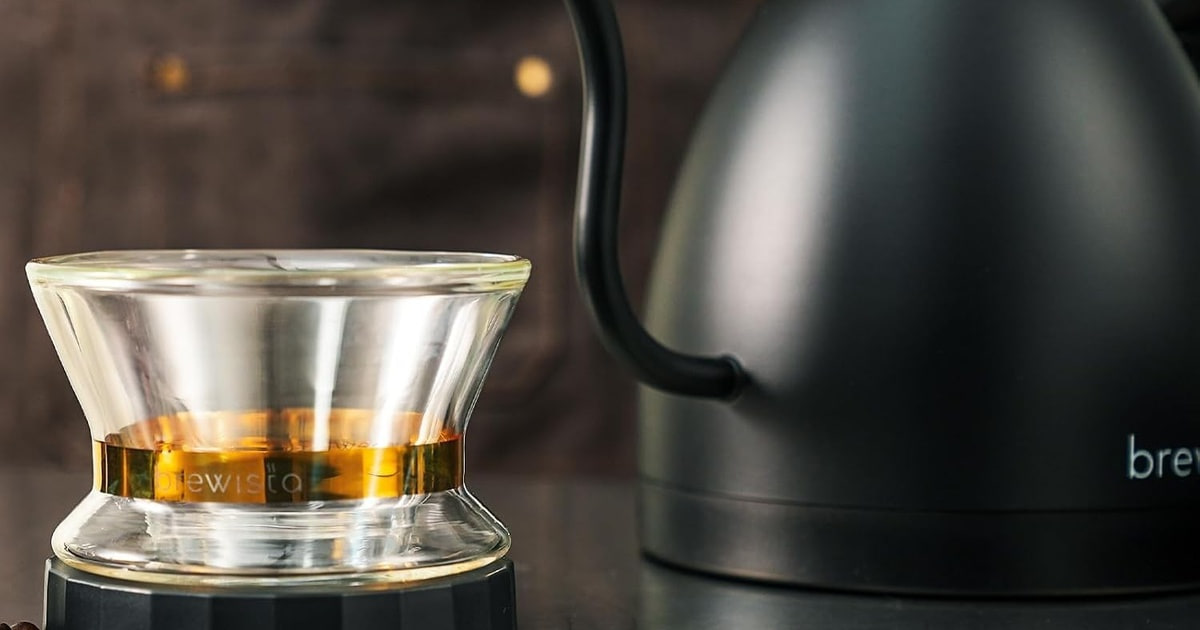
A gooseneck kettle is the one piece of coffee gear that changes your cup immediately. The narrow spout slows the water down so you can wet the grounds evenly instead of blasting a hole through the middle of the bed. America's Test Kitchen calls spout design the single biggest factor in getting a controlled, even pour, ahead of every other feature. You'll notice it on the first brew. The water lands where you aim it, the grounds bloom evenly, and the coffee stops tasting harsh on one sip and thin on the next.
Temperature is the other half, and this is where the category gets expensive. The Specialty Coffee Association recommends brewing between 195 and 205 degrees Fahrenheit. Go hotter and Perfect Daily Grind reports you risk bitter, astringent coffee. Go cooler and it turns sour and flat. Serious Eats found that brewers eyeballing a stovetop kettle overshot by as much as 15 degrees. So a plain kettle needs a thermometer, and a kettle that holds a temperature costs two to four times more, according to Consumer Reports.
None of these kettles will make bad coffee taste good. Grind size and bean freshness still matter more. What a good kettle buys you is repeatability, so a brew you liked on Tuesday is the brew you get on Saturday. We think that the Fellow Stagg EKG Pro is the best pour-over kettle for most people, and that the Cosori Gooseneck Electric Kettle is the one to buy if you want real temperature control without spending premium money.
Everything we recommend
The most controlled pour and the steadiest temperature

Real temperature control for a fraction of the money

Barista-style control with an easier hand feel

The same brewing precision, dressed for the counter
Prices as of Oct 25, 6:48 AM PT · Details
At a glance
| Product | Capacity | Temp control | Price | |
|---|---|---|---|---|
| Fellow Stagg EKG Pro Gooseneck Electric KettleTop pick | 0.9 L | To-the-degree | $179.95 |
| Fellow Stagg EKG Pro Studio Gooseneck ElectricUpgrade pick | 0.9 L | To-the-degree | $229.95 |
 | Bonavita Cosmopolitan 1.0L Gooseneck Electric KettleAlso consider | 1.0 L | 140-208°F, 1-degree | $129.99 |
 | Hario V60 Buono Electric Drip KettleAlso in lineup | 1.3 qt | — | $96.50 |
 | OXO Brew Adjustable Temperature KettleAlso in lineup | 1.8 qt | 104-212°F | $117.95 |
| Cosori Gooseneck Electric Kettle with Temperature ControlBudget pick | 0.8 L | 5 presets, ±5°F | $69.99 |
 | WILLOW Glass Gooseneck Electric KettleAlso consider | 1 L | 100-212°F, 5 presets | $62.47 |
| Brewista Artisan Electric Gooseneck KettleRunner-up | 1 L | 1-degree adjustments | Check price |
Prices as of Oct 25, 6:48 AM PT · Details
How we picked
Spout and pour control. We prioritized narrow, tapered gooseneck spouts, since America's Test Kitchen rates spout design as the biggest factor in an even pour. Kettles with wide or short spouts dropped down the list regardless of their other features.
Temperature accuracy. We looked for kettles that can sit anywhere in the Specialty Coffee Association's recommended 195 to 205 degree window and stay there. Published testing of Fellow's kettles showing a 1-degree hold set the bar; a 5-degree tolerance was our floor.
Capacity and footprint. We weighted 0.8 to 1 liter as the sweet spot, based on the fact that a single pour-over uses well under half a liter. We also read owner feedback for complaints about base size on small counters.
Handle and balance. Spec sheets and manufacturer notes on counterweighting told us which kettles were designed for three-minute pours. Owner reports of wrist fatigue confirmed which ones weren't.
Heat time and hold. We compared stated wattage and boil times, from 900 watts up to 1200, alongside keep-warm durations ranging from 30 minutes to two hours.
Top pick
The most controlled pour and the steadiest temperature
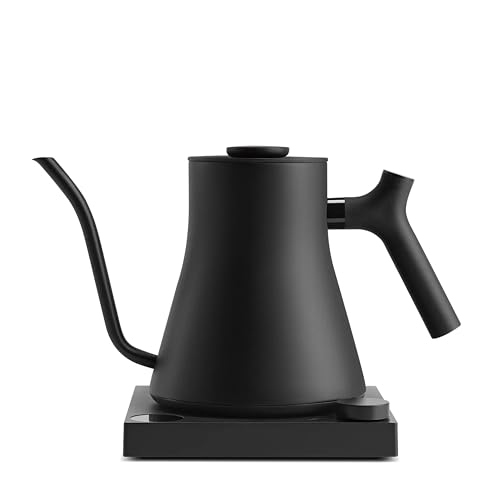
Fellow Stagg EKG Pro Gooseneck Electric Kettle
The Stagg EKG Pro pairs a genuinely precise gooseneck spout with to-the-degree temperature control and a brew timer built into the display. It's the kettle to buy if you brew pour-over most mornings and want the same cup every time.
$179.95fromAmazonPrices as of Oct 25, 6:48 AM PT · Details
The spout is the reason to buy this kettle. It's narrow, it's long, and it starts pouring the instant you tip it rather than dumping a slug of water and then trickling. That matters most during the bloom, when you're trying to wet 20 grams of grounds with 40 grams of water and nothing more. You can draw slow circles for a full minute without your wrist fighting you. Owners who've come from cheaper gooseneck kettles consistently point to this as the upgrade they felt.
Fellow lists 1-degree Fahrenheit adjustments across a 135 to 212 degree range, which covers everything from delicate green tea to a full boil. Wirecutter's testers found the earlier EKG+ held its set temperature within a single degree through a five-minute pour. That's the whole argument for an electric kettle in one sentence. You set 205, you get 205, and you get it again tomorrow.
The brew timer is a small thing that turns out to matter. Pour-over recipes are written in seconds, not just grams, and a four-minute total brew time is a common target. Having the stopwatch on the kettle means you're not fumbling for your phone with a hot kettle in your other hand. The high-resolution LCD is readable from a normal standing position at the counter, not just from directly overhead.
The build feels like a piece of equipment, not an appliance. At about four and a quarter pounds it's heavy for a 0.9-liter kettle, and that's deliberate. The weight sits low and back, so a full kettle doesn't tip forward as you pour. The matte black finish shows fingerprints if you care about that. Nobody has ever complained that it feels flimsy.
Flaws but not dealbreakers
It's the most expensive kettle in this guide by a wide margin, and the gap buys you refinement rather than capability. The Cosori also hits your target temperature and also holds it. The Fellow just does it with a better spout and a nicer screen.
At 0.9 liters it's small. If you're brewing two large mugs plus a cup of tea, you'll refill mid-session. That's fine for one or two people and annoying for a household of four.
The matte finish scratches, and the base takes up real estate on a small counter. It's also a fussy thing to hand-wash around, since you can't submerge the body.
Budget pick
Real temperature control for a fraction of the money
Cosori Gooseneck Electric Kettle with Temperature Control
The Cosori gives you five one-touch presets, a keep-warm hold, and a counterbalanced handle in a 0.8-liter body. It costs a small fraction of the Fellow and gets you most of the way to the same cup of coffee.
$69.99fromAmazonPrices as of Oct 25, 6:48 AM PT · Details
This is the kettle we'd hand to someone brewing their first pour-over. The five presets mean you press one button for coffee and another for green tea, with no menu to learn. Cosori says the hold function keeps water within 5 degrees Fahrenheit of your target for up to an hour. That's a wider band than the Fellow's single degree, but it still lands you inside the Specialty Coffee Association's 195 to 205 range, which is the part that actually shows up in the cup.
The handle is counterbalanced, and you feel it during a slow pour. A gooseneck kettle wants to rotate forward as you tip it, and cheaper kettles let it. This one resists just enough that you can hold a thin stream steady through a full 45-second circle without bracing your forearm on the counter. Brewista built a similar counterweight into its handle for exactly this reason.
The interior, lid, and spout are food-grade 304 stainless steel, so there's no plastic sitting in hot water and no plastic taste in the first few brews. That's not a given at this price. It also means you can descale it with vinegar without worrying about what you're descaling.
At 0.8 liters it's the smallest kettle here, which suits a single-serve habit and a cramped apartment counter. If you brew one V60 in the morning and nothing else, you'll never wish it were bigger.
Flaws but not dealbreakers
The 5-degree tolerance is the honest trade-off. If you're chasing a specific light-roast recipe where two degrees changes the acidity, you'll want the Fellow or the Brewista instead.
The keep-warm tops out at one hour, shorter than the Willow's two hours and the Bonavita's stated hold. And the ready tone beeps three times by default, which is charming for a week and less so after that. You can turn it off by holding the hold button for eight seconds.
The spout is good, not great. It's noticeably wider at the tip than the Fellow's, so your minimum flow rate is a little higher. New brewers won't notice. People coming from a Stagg will.
Runner-up
Barista-style control with an easier hand feel
Brewista Artisan Electric Gooseneck Kettle
The Brewista Artisan offers 1-degree adjustments, a flash-boil setting, and a handle designed around long, slow pours. It's the pick if your wrist gets tired holding a kettle steady for three minutes.
Check priceatAmazonPrices as of Oct 25, 6:48 AM PT · Details
Brewista designed the handle on its Smart Pour line with a counterweight specifically to cut wrist strain during slow circular pours lasting three minutes or more, and the Artisan carries that thinking forward. If you brew large batches or do several cups back to back, that's not a marketing detail. It's the difference between a controlled finish and a shaky one on your last pour.
The 1-degree LCD control puts this in the same precision tier as the Fellow. You get the same ability to sit at 202 for a medium roast and drop to 195 for something delicate. The flash-boil setting shortens the wait when you just want hot water and don't care about the last few degrees. There's an integrated timer too, so you can track your brew without a second device.
One liter is a useful size. It's enough for two full pour-overs plus a bit of headroom, which covers most two-person mornings without a refill. The all-black stainless body is unfussy and hides water spots better than glass.
Owner feedback skews positive on pour control and on how quickly it gets to temperature. The recurring gripe is size: this is a physically large kettle with a wide base, and it eats counter space.
Flaws but not dealbreakers
It's big. At roughly 15 inches long including the base and spout, it needs a dedicated spot, and it doesn't tuck under a low cabinet easily.
It also weighs about four and a half pounds empty. The counterweighted handle makes that manageable during a pour, but lifting it on and off the base repeatedly is more work than the Cosori.
The control layout is less obvious than the Fellow's or the Cosori's presets. Expect to read the manual once.
Upgrade pick
The same brewing precision, dressed for the counter
Fellow Stagg EKG Pro Studio Gooseneck Electric
The Stagg EKG Pro Studio adds a glass base, walnut accents, and a full-color display to the same precision spout and to-the-degree control. Buy it if the kettle is going to live out on the counter and you want it to look like it belongs there.
$229.95fromAmazonPrices as of Oct 25, 6:48 AM PT · Details
Functionally, this is the EKG Pro with better clothes. You get the same precision gooseneck, the same to-the-degree control, the same brew stopwatch. What changes is the glass base, the metal accents, and the walnut handle and lid pull. If you've already decided to spend Fellow money, the question is only whether the materials are worth the step up.
The full-color display does earn part of its keep. It's easier to read at a glance than a monochrome screen, and the menus are genuinely navigable. You can schedule a boil so the water's ready when you come downstairs, set a hold temperature, adjust for altitude, silence the chime, and switch between Fahrenheit and Celsius. Guide Mode preloads temperatures for different coffee styles and teas, which is useful if you're still learning what 195 versus 205 does.
Altitude adjustment sounds like a gimmick until you live somewhere high. Water boils below 212 as you climb, and a kettle that doesn't know that will sit there heating toward a number it can't reach. Fellow lets you tell it where you are.
The maximum fill line is marked inside the body, and Fellow is direct about not exceeding it. Overfill a gooseneck kettle and hot water can push out of the spout while it heats. It's worth knowing before your first fill.
Flaws but not dealbreakers
You're paying a meaningful premium over the standard EKG Pro for materials and a nicer screen, not for better coffee. The water comes out the same.
Glass and walnut mean more careful cleaning. The base wipes down easily enough, but it shows dust and dried splashes in a way matte black doesn't.
It carries the same 0.9-liter capacity limit as the Pro, so a bigger household still refills.
Who this is for
Buy one of these if you already brew pour-over with a standard kettle and you're tired of guessing. You'll feel the difference on the first bloom, and you'll stop having mornings where the coffee is inexplicably bitter. It's also a genuinely good gift for someone who grinds their own beans, since the kettle is usually the last thing people upgrade. If you drink a lot of tea too, a variable-temperature model earns its keep twice over, because green tea wants around 175 and black tea wants closer to boiling.
Skip this if you brew with an automatic drip machine, a French press, or an espresso machine. Those don't need a controlled stream, and a regular kettle plus a thermometer will do fine. This guide covers electric gooseneck kettles only, so we're not weighing stovetop models, whistling kettles, or kettles without a gooseneck spout. And if you're brewing for a crowd, none of these are large enough. Look at a 1.5-liter or larger kettle instead, and accept the loss of pour control.
How we picked
We ranked these on five things. Spout: a narrow, tapered gooseneck that starts pouring the moment you tip it, since that's what controls saturation. Temperature: the ability to hold anywhere in the 195-to-205 range recommended by the Specialty Coffee Association, with tighter tolerances scoring higher. Capacity: 0.8 to 1 liter, enough for two brews without a refill and small enough to lift comfortably. Balance: a handle that resists rotating forward through a slow pour, ideally counterweighted. Heat and hold: boil times in the three-to-seven-minute range and a keep-warm function that lasts long enough to finish a brew without a reheat.
Other pour-over coffee kettles worth considering
If you want a full liter and a fast boil: The Bonavita Cosmopolitan 1.0L Gooseneck Electric Kettle — The Bonavita Cosmopolitan runs 1200 watts and reaches a boil in about five minutes, with 1-degree accuracy from 140 to 208 degrees and six presets on a glass touch panel. Bonavita rates the temperature hold at up to 60 minutes. It's built from 304 stainless steel and it's light, around two and a quarter pounds empty, which makes it easy on the wrist. What you give up is the refinement of the Fellow's spout and the depth of its controls. The touch panel also means no tactile feedback, so you'll be looking down at the base rather than at your brew.
If you want to watch the water: The WILLOW Glass Gooseneck Electric Kettle — The Willow is a glass-bodied 1-liter kettle with five presets, any temperature from 100 to 212 degrees, and a 1200-watt base that Willow says reaches a boil in three to five minutes. The standout feature is the keep-warm, which runs up to two hours, longer than anything else here. Glass lets you see the fill level and the water heating, which some people love. It also shows every mineral deposit, so you'll descale it more often. The narrow body is a plus on a tight counter, and the packaging is made from recycled materials if that matters to you.
The competition
These are the other kettles our research surfaced, not a survey of everything sold. Each one lost to a pick for a specific reason, and a couple of them might still be right for you.
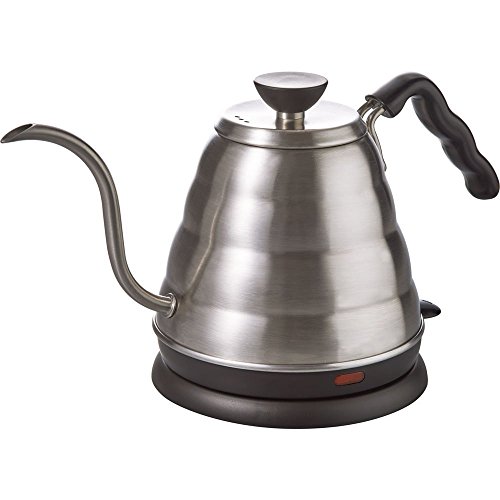
The Hario V60 Buono Electric Drip Kettle — The Hario V60 Buono Electric is the kettle that a lot of pour-over people learned on, and its slim spout is still one of the best-shaped in the category. But it's a simple kettle: 900 watts, a stainless body with a polypropylene lid plate, and no variable temperature control at all. It boils, and that's it. That means you're back to a separate thermometer and the 15-degree overshoot problem Serious Eats documented. Buy it if you already own a good thermometer and you want the classic Hario spout above everything else.
The OXO Brew Adjustable Temperature Kettle — The OXO Brew Adjustable Temperature Kettle is a well-designed appliance that isn't really a pour-over kettle. It holds 1.8 quarts in borosilicate glass with measuring marks, heats from 104 to 212 degrees, holds temperature for up to 30 minutes, and includes a removable stainless filter for loose tea. OXO highlights the digital screen as a way to reduce brewing errors for beginners, and that's fair. The problem is the spout, which is a conventional pouring spout rather than a gooseneck. You can't control the stream the way pour-over needs. It's a strong choice if tea is your main use and coffee is occasional.
Care and maintenance
Descale every month or two, sooner if you have hard water. Fill the kettle about halfway with equal parts white vinegar and water, heat it to around 180 degrees, let it sit for 20 minutes, then dump it and rinse three or four times. Scale builds up fastest around the heating element at the bottom, and once it's thick your kettle takes longer to reach temperature and holds it less accurately. Never submerge the body of an electric kettle or run it through the dishwasher, since the base contains the electronics. Wipe the outside with a damp cloth. For the gooseneck itself, run hot water through the spout after descaling, because that thin tube is exactly where mineral flakes like to lodge. Empty the kettle when you're done rather than leaving water sitting in it overnight.
Questions we get
Do I really need a gooseneck kettle for pour-over coffee?
If you want consistent coffee, yes. America's Test Kitchen rates spout design as the single biggest factor in getting a controlled, even pour compared with a standard kettle spout. A regular kettle dumps water too fast and channels straight through the coffee bed, so some grounds over-extract while others barely get wet. You can make drinkable coffee without one, but you can't make the same cup twice.
What temperature should water be for pour-over coffee?
The Specialty Coffee Association recommends 195 to 205 degrees Fahrenheit, or about 90.5 to 96 Celsius. Perfect Daily Grind reports that going above 205 pushes coffee toward bitter and astringent, while going below 195 leaves it sour and flat. Most people land around 200 for a medium roast and go a few degrees hotter for a light one. Darker roasts often taste better a bit cooler.
Are variable temperature kettles worth it over a plain one?
For pour-over, usually. Consumer Reports notes that electric gooseneck kettles cost two to four times what comparable stovetop models do, but they remove the need for a separate thermometer. Serious Eats found that brewers judging a stovetop kettle by eye overshot their target by as much as 15 degrees. That's enough to move you out of the recommended range entirely.
What size kettle do I need for single-cup brewing?
A 0.8-liter kettle is plenty. A single pour-over typically uses 300 to 400 milliliters of water, so even the smallest kettle here gives you room to spare. Go up to a liter if you regularly brew two cups back to back or if you also make tea. Above that, the kettle gets heavy enough that slow pouring becomes work.
How long does an electric gooseneck kettle take to heat water?
It depends on wattage and how full it is. A 1200-watt kettle like the Bonavita or the Willow reaches a boil in roughly three to six minutes with a full load. Bonavita rates its variable-temperature gooseneck at six to seven minutes for 34 ounces. Heating to a pour-over temperature rather than a full boil is faster, since you're stopping short of 212.
What's a good budget alternative to the Fellow Stagg?
The Cosori is our budget pick for this reason. You get five temperature presets, a one-hour keep-warm that holds within about 5 degrees of your target, and a counterbalanced handle, all in a stainless-lined 0.8-liter body. It doesn't match the Fellow's 1-degree precision or its spout taper. For most people brewing one or two cups a morning, it gets you the same coffee.
Why you should trust us
For this guide:
- We read manufacturer spec sheets for every kettle in this guide, comparing stated temperature ranges, wattage, capacity and keep-warm durations side by side.
- We drew on published reviews and brewing guidance from the Specialty Coffee Association, America's Test Kitchen, Serious Eats, Wirecutter, Consumer Reports and Perfect Daily Grind to set our thresholds for temperature accuracy and spout design.
- We reviewed recurring themes in owner feedback for each model, particularly complaints about pour control, counter footprint and long-term durability.
- We read owner reviews on every listing, weighted toward the critical ones, because that is where the recurring failures show up.
- We have a systematic way of automatically fetching the latest prices, so the numbers on this page stay current.
- This is a research-focused guide, so the team may not own every product listed — though we often do own the top winners, which gives us extra context for the recommendations.
- We don't accept free products, and the retailer commission never changes which product we recommend.
Sources
Best Pour-Over Coffee Kettles - Wirecutter, Wirecutter
Fellow Stagg EKG+ Review, Fellow
Bonavita Variable Temperature Gooseneck Kettle Product Specs, Bonavita
Best Coffee Kettles Tested 2025 - America's Test Kitchen, America's Test Kitchen
Water Temperature and Coffee Extraction - Specialty Coffee Association, Specialty Coffee Association (SCA)
Best Pour-Over Kettles of 2025 - Serious Eats, Serious Eats
Hario V60 Buono Kettle Specifications, Hario
Gooseneck Kettle Buying Guide - Consumer Reports, Consumer Reports
OXO Brew Adjustable Temperature Kettle Review, OXO
Best Electric Gooseneck Kettles Tested - The Spruce Eats, The Spruce Eats
How Water Temperature Affects Coffee Flavor - Perfect Daily Grind, Perfect Daily Grind
Brewista Smart Pour Kettle Professional Review, Brewista
Amazon product listings and owner reviews for all 8 products
Manufacturer specification pages for each product
Some passages in this guide may be paraphrased with AI help.
Product prices and availability are accurate as of the date/time indicated and are subject to change. Any price and availability information displayed on Amazon.com at the time of purchase will apply to the purchase of this product.
More like this.
Continue exploring home reviews and recommendations.

The Best Electric Kettles
A kettle is one of the few appliances you touch before you're fully awake. You fill it, press a button, and it either gets out of your way or it doesn't.…

The Best Reusable Water Bottles and Coffee Cups
A reusable bottle only helps if you actually carry it. That comes down to small things: a lid you can open one-handed at a red light, a base that drops…

The Best Coffee Makers of 2026
Your coffee maker is the appliance you use most and think about least. It runs every single morning, usually before you're awake enough to troubleshoot…

The Best Coffee Grinders
Your grinder shapes your coffee more than your brewer does. Grind size and evenness control how fast water pulls flavor out of the beans, so a pile of…

The Best Large Coffee Urns for Parties and Gatherings
Coffee at a party is a logistics problem before it's a taste problem. You need 60 cups ready at the same moment, hot two hours later, and pourable by a…

The Best Crawl Space Vapor Barriers
A crawl space is the part of your house you never look at, and it's where moisture problems start. Damp soil gives off water vapor around the clock, and…