The Best Cold Brew Coffee Makers
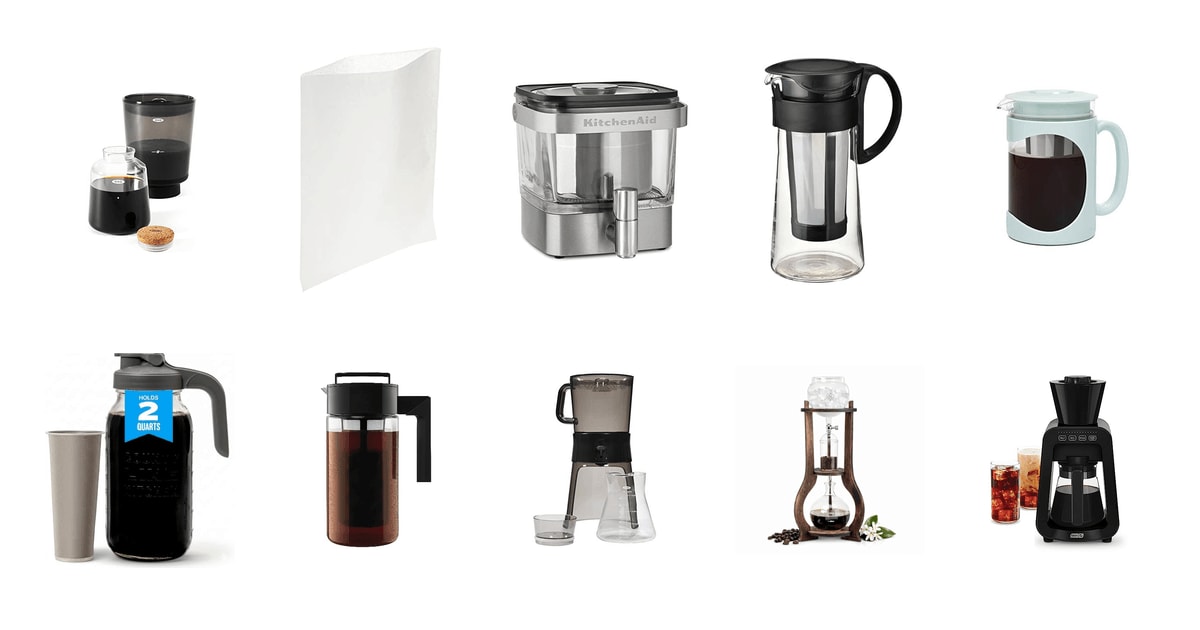
Cold brew asks one thing of you that morning coffee doesn't: a little planning the night before. Get that part right and the payoff is real. Coarse grounds sit in cold water for most of a day, and what comes out is sweeter, rounder and much gentler on a touchy stomach than hot coffee poured over ice. The maker itself is doing simple work. It holds the grounds, keeps them soaked, and then gets them out of your coffee without making a mess of the counter.
Here's the honest part. Nearly every one of these is a jar with a filter in it, and none of them fully solve the two problems owners keep running into. Fine particles slip past mesh filters and settle at the bottom of the cup, no matter whose name is on the carafe. And seals leak. Owners of several models here describe drips around the base ring or the release valve after months of daily use. Cold brew is forgiving. The hardware is fussier than the marketing suggests.
So the choice really comes down to how much you drink, how much sediment bothers you, and whether you'd rather store the concentrate in the same thing you brewed it in. The rest is packaging. We think that the OXO Good Grips Cold Brew Coffee Maker 32 oz is the best cold brew coffee maker for most people, and that the County Line Kitchen Glass Cold Brew Coffee Maker 64 oz is the one to buy if you're brewing for a whole household.
Everything we recommend
Even saturation and a clean pour, without the usual mess

More coffee per batch, in a jar you can pour straight from
A big glass carafe with almost no learning curve

Brew it, seal it, and store it in the fridge door
At a glance
| Product | Capacity | Filter Type | Price | |
|---|---|---|---|---|
 | OXO Brew Compact Cold Brew Coffee MakerAlso consider | 24 oz | — | $39.95 |
 | Toddy Cold Brew System - Paper FilterAlso in lineup | — | Paper Filter | $51.52 |
 | KitchenAid 28 oz Cold Brew Coffee MakerAlso in lineup | 28 oz | Stainless Steel Steeper | $99.95On sale |
 | Hario "Mizudashi" Cold Brew Coffee PotAlso in lineup | 600 ml | — | $16.40On sale |
| Primula Burke Deluxe Cold Brew Iced CoffeeBudget pick | 1.6 qt | Removable Mesh Filter | $11.99On sale |
| County Line Kitchen Glass Cold Brew CoffeeRunner-up | 64 oz | — | $26.99On sale |
| Takeya Patented Deluxe Cold Brew Coffee MakerAlso great | 1 qt | — | $24.98 |
| OXO Good Grips Cold Brew Coffee MakerTop pick | 32 oz | Reusable Mesh Filter | $49.99On sale |
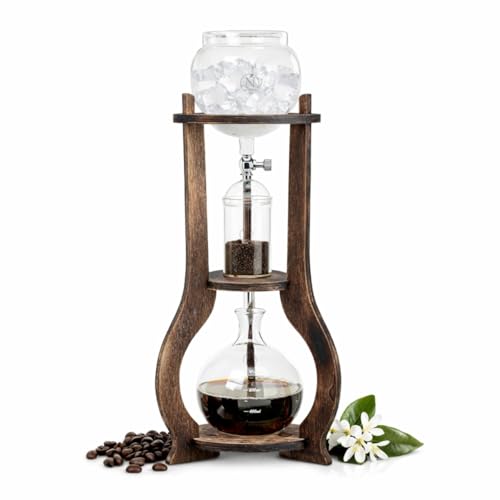 | Nispira Iced Coffee Cold Brew Drip TowerAlso consider | 600 ml | Reusable Filter Glass | $104.99 |
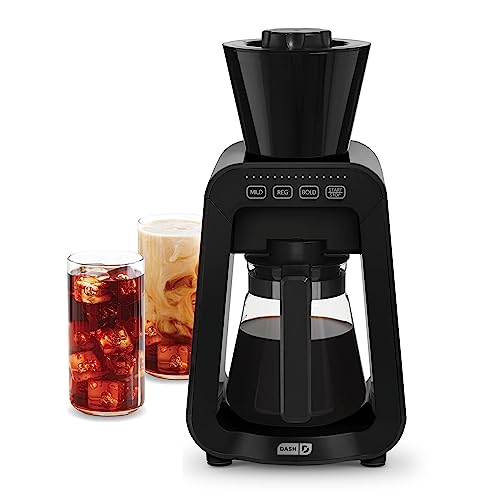 | DASH Rapid Cold Brew Maker with VacuPress™Also consider | 40 oz | Reusable Filter | $116.99On sale |
How we picked
Even extraction. Uneven saturation is the reason a lot of first batches taste harsh, so we favored designs that get every ground wet at the same time. Published reviews of immersion brewers consistently flag dry pockets as the difference between a good batch and a bitter one.
Filtration and sediment. We read owner feedback across every model for mentions of silt, sludge and gritty last sips. Mesh-only brewers all pass some fines; we noted which ones owners felt the need to re-filter through paper.
Sealing and storage. Concentrate keeps roughly two weeks in an airtight container and much less in an open one. We gave credit to brewers whose lids seal well enough to skip decanting, and we tracked leak complaints closely.
Cleaning. Coffee oils turn stubborn fast, so we looked for wide mouths, removable baskets and dishwasher-safe parts. Narrow chambers and multi-piece assemblies drew the most complaints in owner feedback.
Capacity that fits. We matched brewing volume to real households, from a single drinker who brews twice a week to a family emptying a pitcher every few days. Specs list concentrate volume, which is roughly half of what you'll actually drink.
Top pickOn sale
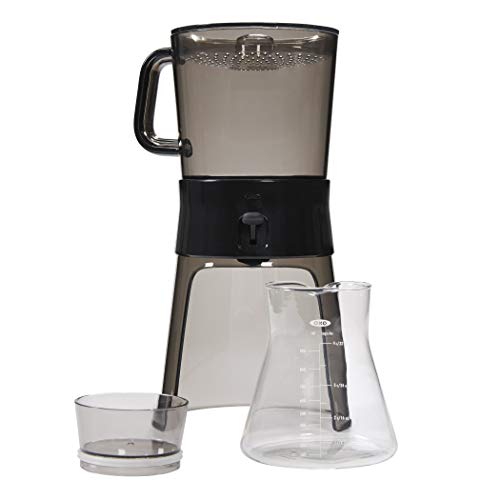
Even saturation and a clean pour, without the usual mess
OXO Good Grips Cold Brew Coffee Maker
The OXO's perforated rainmaker lid spreads water across the grounds instead of drilling a hole through the middle of them. A brew-release switch drains the concentrate into the glass carafe when you're ready, and it shuts off the moment you lift the carafe away.
$49.99fromAmazonList priceThe rainmaker lid is the one design feature here that actually changes what's in your cup. Pour water into a plain jar of grounds and it carves a channel down the center, leaving dry pockets around the edges that never really steep. You taste that as a thin, sharp batch. The OXO's lid spreads the pour across the whole bed at once, and published reviews of immersion brewers routinely single it out for how evenly it saturates.
Then there's the release switch, which sounds like a gimmick until you've used a brewer without one. You set the brewing chamber on the carafe, flip the switch, and gravity does the draining while you make breakfast. Pull the carafe off mid-pour and the flow stops on its own. No tipping a heavy jar over a strainer, no grounds sliding into the coffee at the last second.
You get about 32 oz of concentrate per batch, which OXO rates at up to 14 drinks once you cut it with water or milk. For one person that's most of a week. For two it's a few days. Owners who brew daily tend to say the same thing: the batch size is the reason they stopped buying bottled concentrate, because the math stops making sense once you're brewing at home.
Cleanup is about as easy as it gets for a brewer with moving parts. The mesh filter is stainless and reusable, so there's nothing to buy on an ongoing basis, and it goes in the dishwasher along with the carafe. Rinse the grounds out of the brewing chamber right after you drain it and the whole job takes a minute. Let it sit overnight and the coffee oils get stubborn.
Flaws but not dealbreakers
It's plastic, and it costs more than glass brewers that make perfectly good cold brew. You're paying for the lid and the switch, not the materials. If neither of those solves a problem you actually have, a simple glass carafe will get you most of the way there for a lot less.
Leaks come up often enough in owner feedback to mention. The usual complaint is seepage where the brewing chamber screws onto the base, sometimes at the spring-loaded release. Seating the parts squarely and snugging the ring fixes it for most people, and OXO has a reputation for replacing units that keep dripping. It's still an annoyance on a brewer at this price.
It's tall. Assembled, it needs real vertical clearance, so it isn't the one to steep inside a packed refrigerator. Most owners brew it on the counter and move the carafe to the fridge afterward.
Runner-upOn sale
More coffee per batch, in a jar you can pour straight from
County Line Kitchen Glass Cold Brew Coffee
This is a heavy two-quart glass jar with a stainless mesh filter, a flip-cap spout and a lid that actually seals. You brew, store and serve from the same vessel, which is why it's the simplest option for a household that goes through cold brew quickly.
$26.99fromAmazonList priceTwo quarts is a lot of coffee. At a standard concentrate ratio you're looking at roughly a week of mornings for one person, or a weekend for a family who all drink it. That matters more than it sounds, because the real friction in home cold brew isn't the brewing — it's remembering to start another batch. Bigger batches mean you think about it less.
The lid is what separates this from a mason jar and a nut-milk bag. It seals well enough to lay the jar down without losing anything, and the flip cap lets you pour a glass without pulling the filter out or tilting the whole thing over your wrist. There's a handle, too, which you'll want, because a full two-quart glass jar is genuinely heavy.
Glass is the right material for this job. It doesn't hold onto coffee oils or last night's onions the way plastic does, the mouth is wide enough to get a hand and a sponge inside, and you can see exactly how much is left. Owner feedback on this one skews unusually positive for a category where leaks and cracks are common complaints.
One small thing worth knowing: there's a rubber gasket that sits between the filter and the lid, and it does the sealing work. Owners who've had this for years mention keeping track of it during cleaning. Lose it and the lid stops being leak-proof.
Flaws but not dealbreakers
The filter is mesh and nothing else, so fines make it through. Most owners report a bit of sludge at the bottom of the jar by the end of a batch. If you drink your cold brew black and notice grit, you'll want to pour through a paper filter afterward, which adds a step the Toddy-style systems don't need.
It's big, and it's glass. A full jar is awkward to lift one-handed and unforgiving if you knock it against the sink. For one person who drinks a cup a day, this is more brewer than you need.
Budget pickOn sale
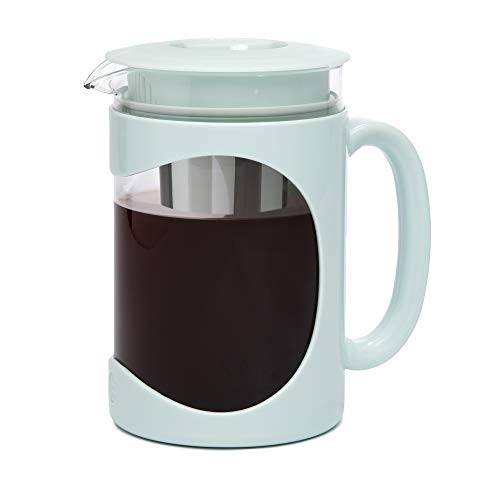
A big glass carafe with almost no learning curve
Primula Burke Deluxe Cold Brew Iced Coffee
The Primula is a plain glass carafe with a removable stainless mesh basket, and it holds far more than most inexpensive brewers. Fill the basket, pour cold water over it, leave it overnight, and lift the basket out in the morning. That's the entire process.
$11.99fromAmazonList priceCapacity is the surprise here. Most inexpensive brewers top out around a quart; this one holds 1.6 quarts, which is roughly six cups of finished coffee. If you drink one cold brew a day, a Sunday-night batch covers most of the working week. That's a lot of usefulness from the least expensive purpose-built brewer in this guide.
There's nothing to learn and nothing to line up. The filter basket drops in, the lid sits on top, and the whole thing fits in a refrigerator door or on a shelf while it steeps. Owner feedback is remarkably consistent on this point — people who'd never made cold brew before get a drinkable batch on the first try, which isn't true of every brewer here.
It's also the low-risk way to find out whether cold brew agrees with you. Plenty of people switch because hot coffee bothers their stomach, and cold brew is meaningfully less acidic. If it turns out you don't care for it, you've spent very little and you still own a glass carafe with a strainer. If you love it, the Primula will keep doing the job for years.
Flaws but not dealbreakers
Mesh-only filtration means fines. Owners who care about clarity describe having to pour the finished coffee through a paper filter to get rid of the silt, which undoes some of the convenience. This is the trade-off you accept at this end of the category.
The handle and lid are plastic on an otherwise glass carafe, and they feel it. Nothing about that affects the coffee, but it's the part people mention when they wish the whole thing were nicer.
Also great
Brew it, seal it, and store it in the fridge door
Takeya Patented Deluxe Cold Brew Coffee Maker
The Takeya is a shatter-resistant pitcher with a fine mesh basket and a twist-lock lid that seals airtight. You brew about a quart of concentrate, pull the basket, and the same container becomes your storage pitcher — no decanting, no second jar.
$24.98fromAmazonMost brewers forget about what happens after the coffee is made. The Takeya doesn't. Twist the lid shut and it's genuinely airtight, so the concentrate keeps well for around two weeks in the refrigerator instead of going flat in a loosely covered jar. You never pour it into something else, which is one less container to wash and one less chance to spill.
The Tritan body is the other reason to pick it. It's light, it won't shatter in a crowded fridge door, and it stands up to hot water if you'd rather brew a hot pot with the same basket. Anyone who's dropped a full glass carafe on a tile floor will understand the appeal. The silicone handle doesn't slip when your hands are wet, either.
A quart works out to about four servings of finished coffee. That's the sweet spot for one person who drinks cold brew a few times a week, or for keeping a small backup batch going alongside a bigger brewer. It's common enough for owners to keep two in rotation so there's always one steeping.
The mesh here is fine by category standards, and owners who've compared it against basket-style brewers say sediment is less of an issue than they expected. It's not paper-and-felt clean. But you can pour a glass without gritty last sips, which is more than some mesh brewers manage.
Flaws but not dealbreakers
The filter basket is tall and narrow, and loading it is fiddly. You end up spooning grounds in rather than pouring, and getting the spent grounds back out means knocking and rinsing. It's the single most common complaint from people who otherwise love this thing.
It's plastic, which some people simply don't want for coffee, and a quart isn't much if more than one person is drinking. For a household, step up to the County Line Kitchen jar.
Who this is for
Buy one of these if you're drinking cold brew often enough that bottled concentrate has started to feel silly, or if hot coffee bothers your stomach and you want a gentler option at home. You don't need special equipment beyond a coarse grind. If you drink cold brew twice a summer, a mason jar and a strainer will do fine, and you won't miss the flip caps and release valves.
This guide covers home brewers for cold water extraction — immersion pitchers, one slow-drip tower and one electric rapid brewer. It doesn't cover commercial batch systems, iced-coffee machines that brew hot and chill, or the beans themselves. And a note on scale: everything here tops out at two quarts. If you're brewing for an office, you're looking at a different class of equipment.
How we picked
Even extraction: we favored designs that soak every ground at once, since dry pockets are the usual cause of a bitter first batch. Filtration: we compared filter types and read owner feedback for mentions of silt, since every mesh-only brewer passes some fines. Sealing and storage: concentrate keeps about two weeks sealed and much less otherwise, so airtight lids earned credit and leak complaints counted against. Cleaning: wide mouths, removable baskets and dishwasher-safe parts beat narrow chambers you need a bottle brush to reach. Capacity: we matched listed concentrate volume to how much people actually drink, which is roughly double the number on the box.
Other cold brew coffee makers worth considering
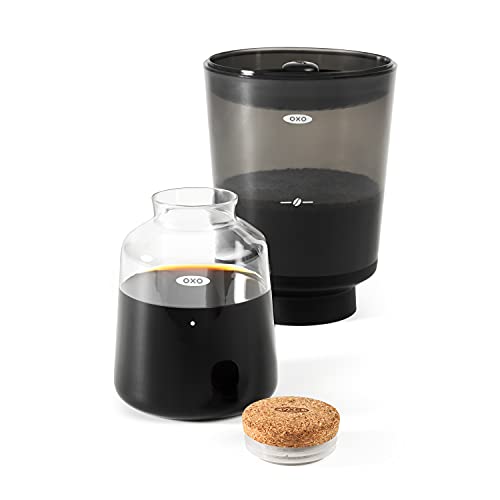
If you want the rainmaker lid in a smaller package: The OXO Brew Compact Cold Brew Coffee Maker ($39.95) — The OXO Brew Compact uses the same even-saturation top as our top pick, and draining starts on its own when you set the brewer on the carafe. The brewing chamber holds 24 oz and yields about 16 oz of concentrate, or seven drinks — right for one person, tight for two. What you give up is batch size and the manual release switch, and owners report the same occasional seepage around the base ring. What you gain is a footprint small enough to steep on a refrigerator shelf, which the full-size OXO can't do.
If you can't plan a day ahead: The DASH Rapid Cold Brew Maker with VacuPress™ ($116.99) — The DASH Rapid is the only maker here that skips the overnight wait entirely. Its VacuPress system pushes cold water through the grounds and fills a 40 oz glass carafe in under nine minutes, with mild, regular and bold settings to adjust strength without touching your grind. It's also the most expensive thing in this guide by a wide margin, it needs counter space and an outlet, and pressure extraction won't give you quite the depth of a long steep. If your mornings never include yesterday's planning, that trade might be worth it.
If brewing is the hobby, not the chore: The Nispira Iced Coffee Cold Brew Drip Tower ($104.99) — The Nispira tower drips cold water through a bed of grounds one drop at a time over three to eight hours, and the result is a more layered, noticeably sweeter cup than immersion brewing produces. An adjustable stainless valve sets the drip rate, and the wooden frame and glassware look the part on a counter. But you have to dial that valve in, and dialing takes a few batches to get right. It's also not set-and-forget — you're checking on it during the brew, not sleeping through it.
The competition
This is what our research surfaced in a crowded category, not a map of everything you can buy. Cold brew makers turn over constantly, and plenty of decent jars-with-filters never make a shortlist. The two below are worth knowing about — one lost on complexity, the other on size.
The KitchenAid 28 oz Cold Brew Coffee Maker ($99.95) — The KitchenAid KCM4212 is the best-looking brewer here, with thick glass, a reusable stainless steeper and fill-level marks that take the guesswork out of your first few batches. Owners praise how solid it feels and how fine the filter is. It lost on fuss: there are more parts than anything else in this guide, disassembly for cleaning is awkward, and a small washer in the plug has to be seated correctly or the whole thing leaks in the refrigerator — which several owners discovered the hard way after taking it apart to wash. At 28 oz it's also on the small side. Choose it if you want a permanent stainless steeper and no consumables, and you don't mind a careful cleaning routine.
The Hario "Mizudashi" Cold Brew Coffee Pot ($16.40) — The Hario Mizudashi is a lovely piece of borosilicate glass — slim, dishwasher safe including the filter, and narrow enough to stand in a refrigerator door. For one person who wants two days of coffee at a time, it works nicely. But 600 ml is small, and the filter basket limits how much coffee you can pack in, so owners who want a true concentrate rather than a ready-to-drink brew often find their batches come out weak. It also ships with Japanese instructions, which sends some buyers hunting online. Get it if you value the glass and the footprint over volume.
Grind, cleaning and storage
Grind coarse — think raw sugar, not table salt. Fine grounds over-extract in cold water and turn harsh no matter how you adjust the steep, and they're the number one reason a first batch tastes wrong. Rinse the filter basket as soon as you dump the grounds, because coffee oils get sticky within hours and mesh is miserable to scrub once they set. Anything dishwasher safe should go in the dishwasher regularly; a rinse alone leaves residue that dulls the next batch. Keep an eye on gaskets and washers, since they're small, easy to lose during cleaning, and the difference between a sealed lid and a puddle in the refrigerator. Store concentrate sealed and it'll hold up around two weeks. Once diluted, drink it within a few days.
Questions we get
How long does cold brew take to make at home?
Immersion brewers need 12 to 24 hours in the refrigerator, and most people settle around 18 to 20. The Nispira drip tower runs three to eight hours but wants some attention while it works. The DASH Rapid is the only option here that finishes in under nine minutes.
What coffee-to-water ratio should I use?
Start at 1:4 by weight for concentrate, then cut it roughly one-to-one with water or milk when you pour. Go to 1:3 if you like it stronger. If you'd rather skip the dilution step and drink it straight from the carafe, brew at about 1:8 instead.
Coarse grind or fine?
Always coarse, about the texture of raw sugar. Fine grounds over-extract in cold water and produce a bitter, astringent brew no matter how you adjust the steep time. Pre-ground coffee labeled for French press or cold brew works fine. Fresh from a burr grinder is better, but it isn't a requirement.
How long does homemade cold brew keep?
Sealed concentrate holds up about two weeks in the refrigerator, which is why an airtight lid like the Takeya's is worth something. In an open or loosely covered container, expect flavor to fade within five to seven days. Once you've diluted it, drink it within three or four days.
Is cold brew really easier on the stomach than iced coffee?
Generally yes. Cold brew is markedly less acidic than hot-brewed coffee, while iced coffee is just hot coffee poured over ice and keeps all of its acidity. People with reflux or a sensitive stomach often notice the difference. Cold brew also carries more caffeine per ounce before you dilute it, so go easy at first.
Can't I just use a mason jar and cheesecloth?
You can, and the coffee will be legitimate. The catch is filtration — cheesecloth takes multiple messy passes and still leaves sediment. A dedicated brewer gives you a fitted basket, a lid that seals and something you can pour from without a strainer in the sink. For what an entry-level brewer costs, that's a reasonable trade.
Why you should trust us
For this guide:
- We read the manufacturer specifications and listing details for every brewer here, comparing filter types, brewing volumes, materials and how each one seals.
- We reviewed published coverage of cold brew methods to understand why filtration and even saturation drive most of the difference between batches.
- We read through owner feedback for each model, looking for repeated failure modes — leaking base rings, lost gaskets, sediment and awkward cleaning — rather than one-off complaints.
- We read owner reviews on every listing, weighted toward the critical ones, because that is where the recurring failures show up.
- We have a systematic way of automatically fetching the latest prices, so the numbers on this page stay current.
- This is a research-focused guide, so the team may not own every product listed — though we often do own the top winners, which gives us extra context for the recommendations.
- We don't accept free products, and the retailer commission never changes which product we recommend.
Sources
The Best Cold Brew Coffee Makers — Wirecutter (NYTimes), Wirecutter
Best Cold Brew Coffee Makers, Tested and Reviewed — Serious Eats, Serious Eats
Best Cold Brew Coffee Makers — Good Housekeeping Institute, Good Housekeeping
Best Cold Brew Coffee Makers, Reviewed — Reviewed (USA Today), Reviewed (USA Today)
Best Cold Brew Coffee Makers — Bon Appétit, Bon Appétit
Amazon product listings and owner reviews for all 10 products
Manufacturer specification pages for each product
Some passages in this guide may be paraphrased with AI help. Prices are refreshed automatically.
More like this.
Continue exploring home reviews and recommendations.

The Best Coffee Makers
Your coffee maker is the appliance you use most and think about least. It runs every single morning, usually before you're awake enough to troubleshoot…

The Best Pour-Over Coffee Kettles
A gooseneck kettle is the one piece of coffee gear that changes your cup immediately. The narrow spout slows the water down so you can wet the grounds…

The Best Coffee Grinders
Your grinder shapes your coffee more than your brewer does. Grind size and evenness control how fast water pulls flavor out of the beans, so a pile of…

The Best Mushroom Coffee
Mushroom coffee is a morning ritual with the volume turned down. Most blends pair coffee with hot-water extracts of lion's mane, chaga, reishi or…

The Best Gifts for Coffee Lovers
Coffee is a daily ritual, which is why it's such good gift territory. The person you're shopping for already makes coffee every morning - you're not…

The Best Large Coffee Urns for Parties and Gatherings
Coffee at a party is a logistics problem before it's a taste problem. You need 60 cups ready at the same moment, hot two hours later, and pourable by a…