The Best Automatic Dog Feeders
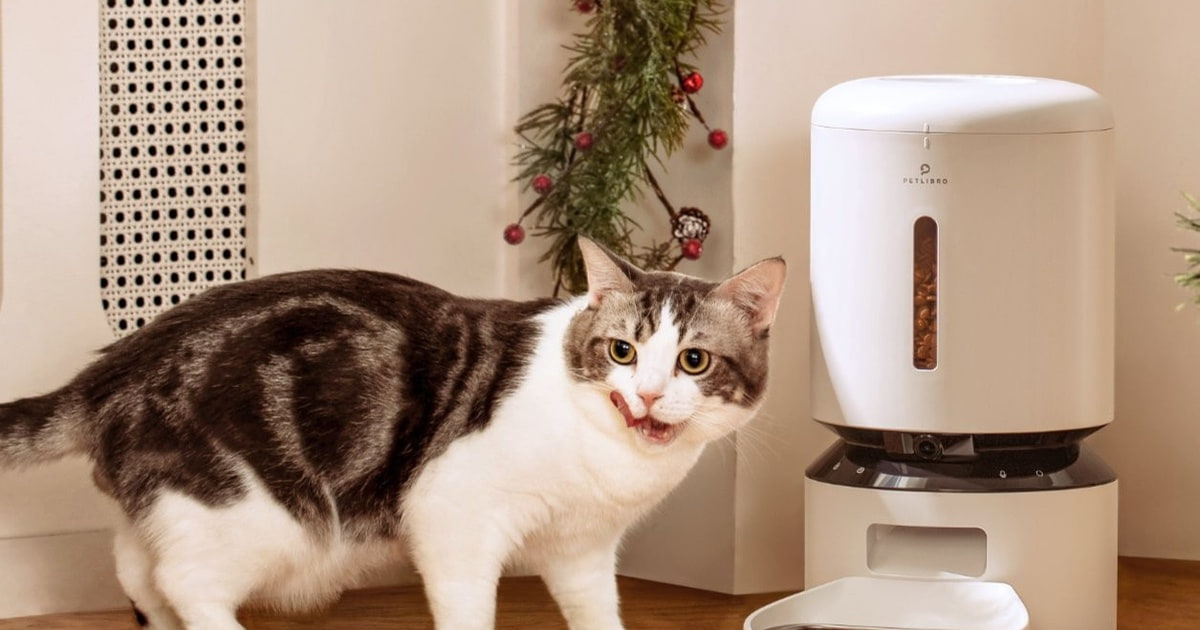
Your dog knows when dinner is late. A feeder that runs on a schedule takes that pressure off you — the meeting that runs long, the flight that boards at six, the Saturday you'd like to sleep in. And for a dog on a weight plan, a diabetic dog, or a deep-chested breed at risk of bloat, steady mealtimes aren't a convenience. They're part of the treatment. A good feeder drops the same amount of kibble at the same time, every time, whether you're home or not.
No feeder does everything, though. Every one of these handles dry kibble only — wet and raw food gum up the mechanism and spoil fast, so that's a different category entirely. Augers jam on odd-shaped kibble and crumbs, plastic hoppers pick up scratches, and a power cut stops most units cold unless you've put backup batteries in. None of them can tell you whether your dog actually ate, either, unless there's a camera pointed at the bowl. A feeder covers meals. It doesn't cover emergencies.
So the choice comes down to how much you travel, how big your dog is, and whether you want your phone involved at all. Wi-Fi models let you shift a meal from the airport and warn you before the hopper runs dry. Timer models just work, with no router in the picture. We think that the PETLIBRO 5G WiFi Automatic Dog Food Dispenser is the best automatic dog feeder for most people, and that the PetSafe Smart Feed is the one to buy if you want a stainless steel bowl and a lid your dog can't pry open.
Everything we recommend

Dual-band Wi-Fi and low-food alerts, without the camera

Stainless steel and a locking lid, if 2.4 GHz suits your router

The most meal slots per day, on a lighter plastic build

Anti-jam dispensing and a big hopper, if you can pay for it
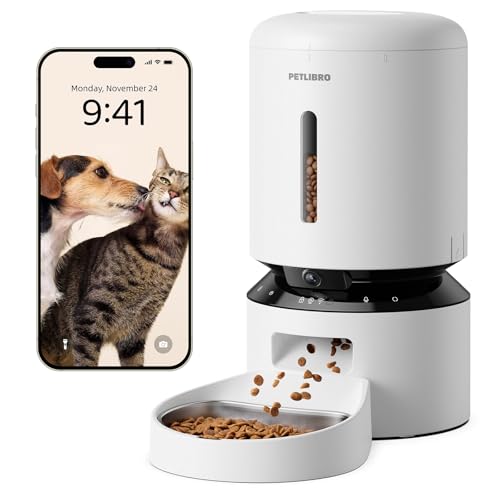
Eyes on the bowl, on the same reliable feeder platform
Prices as of Oct 22, 7:36 AM PT · Details
At a glance
| Product | Capacity | Connectivity | Price | |
|---|---|---|---|---|
| PETLIBRO Automatic Cat FeederTop pick | 5L | 5G/2.4G WiFi | $71.99On sale |
| PetSafe Smart Feed Automatic Dog & CatRunner-up | Large Capacity | 2.4GHz WiFi | $120.99 |
| WOPET 6L Automatic Cat FeederBudget pick | 6L | 2.4GHz WiFi | $79.99 |
 | Furbo Mini 360° [New] 2K QHD PetAlso in lineup | 10 Treats | 2.4GHz WiFi | $99 |
 | PETLIBRO Upgraded RFID Collar Tag for OneAlso in lineup | — | — | $14.99 |
 | SureFeed Microchip Pet Feeder Connect - RequiresAlso consider | 13.5 fl oz | Requires Hub | $194.86 |
 | PETKIT YUMSHARE DUAL-HOPPER Automatic Pet Feeder andAlso consider | — | 2.4GHz WiFi | Check price |
 | DOGNESS 9L Dog Feeders for Large DogsAlso consider | 9L | — | Check price |
 | Arf Pets Automatic Pet Feeder Food DispenserAlso in lineup | — | — | $82.99 |
| Feeder-Robot by WhiskerUpgrade pick | 32 cups | — | $299 |
| PETLIBRO Automatic Cat Feeder with CameraAlso great | 5L | 5G/2.4G WiFi | $139.99 |
Prices as of Oct 22, 7:36 AM PT · Details
How we picked
Jam resistance. We looked at how each feeder moves kibble — auger, rotor or drum — because clogging is the failure owners report most often. Anti-jam hardware and a blockage alert both counted in a product's favor.
Hopper capacity. We matched stated hopper volume against realistic daily intake by dog size, using manufacturer specs. Anything under 5L struck us as too small for a medium or large dog to go more than a couple of days.
Network and power. Dual-band Wi-Fi earned points because 2.4GHz-only feeders cause pairing trouble on modern mesh routers, a recurring theme in owner feedback. We also checked whether each unit has battery backup for outages.
Portion precision. We favored feeders that dispense in small, stated increments — a twelfth of a cup, an eighth of a cup, or by the gram — over vague small, medium and large settings that can't support a weight or diabetes plan.
Cleaning and materials. Stainless steel bowls and dishwasher-safe parts made a difference, since plastic scratches and holds bacteria. We also noted which units come apart easily enough to clear kibble dust from the mechanism.
Top pickOn sale
Dual-band Wi-Fi and low-food alerts, without the camera
PETLIBRO Automatic Cat Feeder
A 5L app-controlled feeder that pairs with 5GHz and 2.4GHz networks, schedules up to 10 meals a day in small increments, and pings your phone when the hopper gets low or the chute jams. It's the one we'd hand to most dog owners.
$71.99fromAmazonList pricePrices as of Oct 22, 7:36 AM PT · Details
It connects on the first try, whichever band your router prefers. Most feeders in this range are 2.4GHz only, which means digging into your router's admin page to split the network before the app will even see the unit. This one takes both 5GHz and 2.4GHz. If you live in an apartment where the 2.4GHz band is a traffic jam of neighbors' devices, that's the difference between a five-minute setup and an hour of frustration.
The scheduling is fine-grained enough for a vet's instructions. You get up to 10 meals a day, 1 to 48 portions each, at a twelfth of a cup per portion. That covers a puppy eating four small meals, a dog on a calorie-restricted plan, and everything between. You can also check the feeding log to confirm each meal actually went out, which beats guessing from how much is left in the bowl.
The alerts are what you'll appreciate a month in. An infrared sensor watches the chute, and your phone gets a notification when food runs low, kibble jams, or the battery gets weak. The indicator on the unit turns red too. Give it two weeks of logs and you'll know exactly how long a full hopper lasts your dog, with enough warning to order more before anyone misses a meal.
The hopper is built to keep kibble from going stale. There's a desiccant bag, a sealing strip, and a twist-lock lid, plus a rotor in the tank base that keeps a determined nose from fishing out extra food. The bowl is food-grade stainless steel rather than plastic, which matters if your dog has sensitive skin — plastic picks up micro-scratches and the bacteria that live in them.
Flaws but not dealbreakers
Five liters isn't much for a big dog. A 70-pound dog eating three and a half cups a day empties this in two or three days. That's fine for a work trip. It's not enough for a long weekend away unless someone's stopping by, and it means refilling more often than you'd like at home.
There's no camera. You get logs, not pictures, so you'll know food was dispensed but not that your dog ate it. If seeing the bowl matters to you, the camera version of this feeder is the same platform with a lens added.
Backup batteries aren't included. Buy them and install them anyway, even if the unit stays plugged in. A feeder without battery backup simply stops during an outage, and that's the failure mode that actually costs your dog a meal.
Runner-up
Stainless steel and a locking lid, if 2.4 GHz suits your router
PetSafe Smart Feed Automatic Dog & Cat
PetSafe's feeder trades spec-sheet flash for hardware you can feel: a stainless steel bowl, dishwasher-safe parts, and a genuinely pet-proof lid. It schedules up to 12 meals a day through the My PetSafe app, with refill reminders and low-food alerts.
$120.99fromAmazonPrices as of Oct 22, 7:36 AM PT · Details
The stainless steel bowl is the reason to buy this one. Plastic bowls scratch, and those scratches hold bacteria that no amount of rinsing gets out. Some dogs react to it around the muzzle. Stainless doesn't have that problem, and it goes straight in the dishwasher when it starts looking cloudy. Several other parts are dishwasher-safe too, which cuts your weekly maintenance down to loading a rack.
The locking lid actually stops a determined dog. Plenty of feeders call their lid pet-proof and mean it holds against a curious cat. If your dog has already learned to flip a lid with his nose and help himself to three days of kibble at once, this is the barrier that ends that habit. Combine it with a corner placement and you've solved most raiding problems.
Twelve meals a day is more schedule than most dogs need, and that's the point. You can split a puppy's food into small frequent portions, or set two meals and forget it. The app handles remote feeding when you're running late, sends low-food alerts, and reminds you to refill. It's competent rather than clever, which is what you want from something that controls your dog's dinner.
PetSafe has been at this a long time. The company's been making pet hardware for decades, and its products turn up regularly in vet and trainer recommendations. That's not a spec, but it does mean parts, support and replacement bowls are easy to come by years after you buy — which is more than you can say for a lot of the cheaper feeders that appear and vanish.
Flaws but not dealbreakers
It's 2.4GHz only. On a modern mesh router that steers everything to 5GHz or hides the bands behind one name, pairing can be genuinely annoying. You may have to temporarily split your SSID to get through setup. Once it's connected it stays connected, but the first half hour can test your patience.
The app is the weak link. My PetSafe does the job — schedules, alerts, remote feeding — without the polish or the granularity of PETLIBRO's app. And it costs more than dual-band competitors that do more on paper. You're paying for the bowl and the lid, not the software.
Budget pick
The most meal slots per day, on a lighter plastic build
WOPET 6L Automatic Cat Feeder
The WOPET 6L undercuts most Wi-Fi feeders while offering a bigger hopper and up to 15 meals a day. You give up build quality and app polish, but the core job — food in the bowl, on time, adjustable from your phone — gets done.
$79.99fromAmazonPrices as of Oct 22, 7:36 AM PT · Details
Fifteen meals a day is unusual at any price, let alone this one. If your vet wants small portions spread across the day — common for diabetic dogs, dogs recovering from surgery, or dogs prone to bloat — most feeders cap you at four. This doesn't. Portion sizes go from 1 to 50 per meal and it handles kibble from 2 to 15mm, so odd-shaped food is less of a gamble.
Six liters buys you an extra day or two between refills. That's a real step up from the 5L hoppers most competitors ship at this level. For a medium dog eating two cups a day, you're looking at closer to a week than a weekend. If you travel occasionally and don't want to think about it, that margin is worth more than a slicker app.
The safety lock covers the two things dogs do to feeders. The container and lid both lock, which stops the nose-under-the-lid trick and makes the unit harder to tip over and crack open. Plenty of pricier feeders skip this. The sealed container also keeps out air, moisture and pantry pests, so kibble at the bottom of the hopper tastes like the kibble at the top.
You can hand the app to your partner or a house sitter. Multiple people can manage feeding tasks from the same account, and the app pushes a notification when the tank runs low. There's a 10-second voice recording that plays at mealtime too, which is more useful than it sounds for a dog that ignores a mechanical clunk from the next room.
Flaws but not dealbreakers
It's 2.4GHz only, and the app is basic. The same router headache applies here as with the PetSafe. WOpet Life works, but it's short on the detail and reliability of PETLIBRO's app, and it's the part of a cheap feeder most likely to frustrate you long after the hardware has settled in.
The plastic feels light. Pick it up next to the PetSafe or the Feeder-Robot and the difference is obvious. A big, pushy dog will move this around more easily, so put it in a corner on a rubber mat. Backup power runs on three D batteries you'll need to buy separately.
Upgrade pick
Anti-jam dispensing and a big hopper, if you can pay for it
Feeder-Robot by Whisker
Whisker's feeder uses a rotating drum instead of an auger, which is the mechanism most jams come from. The 32-cup hopper runs for a week or more, and the app tells you if a meal fails to drop.
$299fromAmazonPrices as of Oct 22, 7:36 AM PT · Details
The dispensing mechanism is the whole argument. Auger feeders push kibble out with a spinning screw, and screws bind on broken pieces and irregular shapes. The Feeder-Robot pre-portions food into chambers and drops them. If you've come home to a full bowl and an empty schedule log before, this is the feeder that fixes that, and it's why owners who've been burned once tend to end up here.
Thirty-two cups is a week or more for most dogs. Refilling becomes something you do on a schedule instead of something you worry about. For frequent travelers that changes the calculation entirely — you're not asking a neighbor to top up a hopper, just to check that your dog is fine. It takes dry or semi-moist kibble, dispensing in eighth-cup steps.
Food backup detection is the safety net nothing else here has. If a meal doesn't clear the mechanism, the app tells you rather than letting you find out at the end of the day. There's also a gravity mode you can fall back on, which keeps food flowing even if the scheduling goes sideways. Belt and suspenders, and worth it for a device you leave unattended.
The app is the most polished in this group. Whisker built its reputation on the Litter-Robot, and it shows: clean scheduling, a full feeding history, and household sharing so more than one person can feed the dog without arguing about whether someone already did. Small pet-tech companies rarely get software this steady, and app quality is what you live with for years.
Flaws but not dealbreakers
It maxes out at half a cup per dispense and eight feedings a day. A giant breed eating four or five cups daily needs you to stack multiple scheduled drops to get there. Workable, but fussier than it should be at this level.
It's the most expensive feeder here by a wide margin. If your current feeder has never jammed and your dog eats round, uniform kibble, you'll struggle to feel where the money went. The engineering is real. Whether you need it depends entirely on whether jamming has ever cost you a meal.
The Feeder-Robot comes with Whisker's WhiskerCare one-year warranty, with an extended plan available separately.
Also great
Eyes on the bowl, on the same reliable feeder platform
PETLIBRO Automatic Cat Feeder with Camera
This is the top pick with a real camera bolted on: 1080p video at a 145-degree angle, night vision, and two-way audio. Add a blockage sensor and dual-band Wi-Fi and you've got one device instead of two.
$139.99fromAmazonPrices as of Oct 22, 7:36 AM PT · Details
The camera is a proper module, not a webcam afterthought. You get 1080p at 145 degrees, which covers the bowl and the surrounding floor without the fishbowl distortion cheap wide lenses produce. Infrared night vision switches on by itself, so a dog eating at five in the morning in a dark kitchen still shows up clearly. Video saves to a microSD card you supply.
Two-way audio turns a check-in into an interaction. You can call your dog to the bowl in your own voice, or just say something when the motion alert tells you he's pacing the kitchen at noon. There's also the recorded meal call — up to 10 seconds, played up to five times — for the days you're not free to pick up the phone.
It inherits the dual-band Wi-Fi that makes the top pick easy to live with. Same 5GHz and 2.4GHz support, same 10 meals a day, 1 to 50 portions per meal. If you already know you want the PETLIBRO platform and the only question is whether to add a camera, nothing else about the feeding side changes.
The blockage sensor is the practical extra. Cameras tell you what happened; the blockage alert tells you before it becomes a problem. If kibble wedges in the chute, you get a push notification while there's still time to call someone, rather than piecing it together from an empty bowl when you get home.
Flaws but not dealbreakers
You pay a clear premium over the camera-less version. If you already own a pet camera you like, that money is wasted — buy the plain feeder instead. The microSD card for video storage isn't included either, and it supports cards up to 256GB.
It's a single tray, single hopper unit. That rules it out for multi-dog homes where one dog inhales his food and moves on to the other's, and for dogs on a mixed diet that needs two kinds of kibble kept apart.
Who this is for
Buy one of these if your schedule doesn't reliably match your dog's, or if a vet has put your dog on a fixed feeding plan for weight, diabetes or bloat risk. They're also worth it if you travel for a night or two at a time and would rather not ask a neighbor to come by twice a day. The payoff is consistency: the same portion at the same time, with none of the drift that creeps in when you're eyeballing a scoop while a dog stares at you.
Skip them if you feed wet or raw food — nothing here is designed for it, and none of it is safe sitting out. Skip them too if your dog is a serious resource guarder or you're gone for more than three days at a stretch, since a feeder handles meals and nothing else. This guide covers dry-kibble dispensers for dogs, including a couple of camera-equipped models. It doesn't cover refrigerated feeders, water fountains sold on their own, or slow-feed bowls.
How we picked
We ranked these on the things that decide whether a feeder is still working a year in. Jam resistance: how the mechanism moves kibble, and whether it warns you when food doesn't drop. Capacity: enough hopper volume that a medium or large dog goes days, not hours, between refills. Connectivity and power: dual-band Wi-Fi so pairing doesn't fight your router, plus battery backup for outages. Portion precision: stated increments small enough to follow a vet's plan. Cleaning: stainless bowls and parts that come apart, since kibble dust in the mechanism is what starts most jams.
Other automatic dog feeders worth considering
If you want a hopper that lasts a week: The DOGNESS 9L Dog Feeders for Large Dogs — The DOGNESS 9L holds nearly twice what our top pick does, which is the difference between refilling every third day and refilling once a week for a 70-pound dog. It runs on plug-in power with battery backup, so a storm that takes out the street doesn't take out dinner. What you give up is everything smart: no Wi-Fi, no app, no feeding log, no remote adjustments, and a cap of four meals a day. For a dog on a standard morning-and-evening routine, that's not much of a loss.
If you're feeding two pets different food: The SureFeed Microchip Pet Feeder Connect - Requires — The SureFeed Microchip Pet Feeder Connect reads your pet's implanted microchip and keeps the lid shut for anyone else, which is the only thing that actually stops food theft in a two-dog house. Integrated scales portion to within a gram, guided by LEDs in the app, and the app tracks how long and how often your pet eats — a change there often shows up before any other symptom. Two catches: the hub is required for app features and sold separately, and the bowl holds only 13.5 fluid ounces, so it isn't a multi-day unattended solution.
If you want a feeder, a camera and a fountain in one go: The PETKIT YUMSHARE DUAL-HOPPER Automatic Pet Feeder and — The PETKIT YUMSHARE bundles a dual-hopper feeder with a 1080p camera and the EVERSWEET 3 PRO stainless steel fountain. The two hoppers run separate schedules, so this is the pick for a dog transitioning between foods or on a mixed prescription. Camera-based food-level detection spots kibble stacking up uneaten, and the app flags low food, blockages, outages and Wi-Fi drops. It's the most complex setup here, it's 2.4GHz only, the desiccant bags are an ongoing cost, and cloud video storage needs a paid subscription.
The competition
These are the other products our research turned up, not a survey of everything for sale. Both are worth knowing about — one is a perfectly good feeder that lost on flexibility, and the other isn't really a feeder at all.
The Arf Pets Automatic Pet Feeder Food Dispenser — The Arf Pets Automatic Pet Feeder is the cleanest offline option here. A backlit LCD makes programming obvious, the magnetic lock lid keeps noses out between meals, and audible alarms at each feeding teach your dog to show up on time instead of hovering anxiously. It runs on three D batteries or a DC cable. It lost to our picks on flexibility: four meals a day, 24ml portions that add up slowly for a big dog, and no app, logs or alerts of any kind. It also holds less than the DOGNESS while costing more. Choose it if you want simple and compact, and your kitchen is short on counter space.
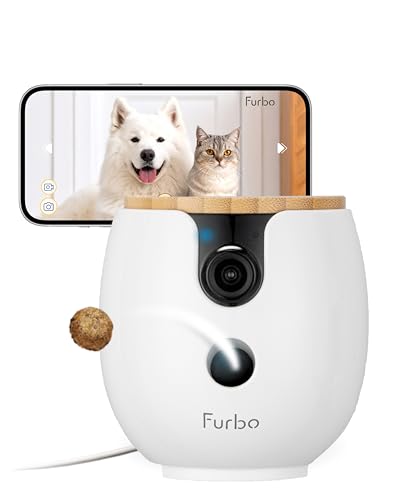
The Furbo Mini 360° [New] 2K QHD Pet — The Furbo Mini 360° is a treat-tossing camera, not a meal feeder, so it never competed for a pick. As a camera it's the best thing here: 2K resolution, 360-degree pan, 8x zoom, auto-tracking that keeps your dog in frame as he wanders, color night vision, and two-way audio. The barking sensor pushes an alert the moment your dog starts up, so you can talk him down before a neighbor complains. It holds about 10 small training treats, and the advanced AI alerts move to a paid Furbo Nanny plan after the trial. Get it alongside a real feeder if separation anxiety is the problem you're solving.
Care and maintenance
Wash the bowl every day or two, the same as a bowl you fill by hand — kibble leaves a greasy film, and that film is what starts the smell. Every week or two, empty the hopper and wipe out the dust that settles at the bottom. That dust packs into the auger and causes most jams. Once a month, take the dispensing mechanism apart and check for broken kibble wedged in the gaps. Stainless bowls go in the dishwasher; check the manual before you put plastic parts in there. Swap the desiccant pouch when it stops feeling dry, sooner in a humid house. And install backup batteries even when the unit is plugged in.
Questions we get
Are automatic feeders safe to use while I'm away for several days?
Yes, if you size the hopper to the trip and prepare for an outage. Install backup batteries, pick a model with low-food alerts, and top the hopper off the morning you leave. For anything over three days, still have a neighbor or sitter check in — a feeder handles meals, not water, not a torn nail, not a dog who's decided to stop eating.
Can these handle wet or raw food?
No. Auger and gravity mechanisms are built for dry kibble, and wet food clogs them within hours while spoiling at room temperature. The PETKIT YUMSHARE's second hopper can take semi-moist food for short stretches, but not for an unattended day. Raw feeding needs a refrigerated feeder, which is a different product category entirely.
What happens if the Wi-Fi or the power goes out?
Wi-Fi outages are the mild case: most connected feeders store the schedule locally and keep dispensing without internet, you just lose remote control and alerts. Power is the real risk, because a feeder without battery backup stops dead. The DOGNESS 9L is built around dual power. For everything else, put the batteries in even though the unit is plugged in.
How do I stop my dog from breaking into the feeder?
Start with the hardware — the PetSafe has a pet-proof locking lid and the WOPET locks both the container and the lid. Then work on placement: a corner limits tipping angles, and a rubber mat stops the unit sliding across tile. For a big, determined dog, a heavier unit like the Feeder-Robot resists a shove better than a lightweight plastic one.
Can one feeder serve two dogs on different diets?
Not a standard one. Whichever dog gets there first eats, and the feeder has no way to know or care. The realistic answers are the SureFeed, which keeps its lid closed for any pet whose microchip isn't enrolled, or simply buying one feeder per dog and placing them apart. For dogs on different prescriptions, separate feeders are the only approach that reliably works.
Are these a good idea for puppies or senior dogs?
Yes, but match the model to the plan. Puppies eat several small meals a day, so you want a feeder that supports 10 or more — the PETLIBRO Granary and the WOPET both do, while four-meal timers don't. Seniors on weight management benefit from precise portions, which is where the SureFeed's gram-level scale earns its keep. Check the minimum dispense size against your vet's instructions before you buy.
Why you should trust us
For this guide:
- We read the manufacturer specifications and listing details for all eleven feeders, comparing hopper volume, dispensing increments, meal limits, Wi-Fi bands and backup power.
- We reviewed published coverage of automatic feeders and recurring themes in owner feedback, particularly around jamming, router pairing trouble and app reliability after updates.
- We did not use, install or measure any of these products, and every claim here traces back to a specification, a published review or reported owner experience.
- We read owner reviews on every listing, weighted toward the critical ones, because that is where the recurring failures show up.
- We have a systematic way of automatically fetching the latest prices, so the numbers on this page stay current.
- This is a research-focused guide, so the team may not own every product listed — though we often do own the top winners, which gives us extra context for the recommendations.
- We don't accept free products, and the retailer commission never changes which product we recommend.
Sources
Best Automatic Dog Feeders — The Spruce Pets, The Spruce Pets
Best Automatic Pet Feeders Tested by Vets — Forbes Vetted, Forbes Vetted
Best Automatic Cat and Dog Feeders — Good Housekeeping, Good Housekeeping
Smart Pet Feeders Review 2026 — CNET, CNET
Automatic Dog Feeder Buying Guide — American Kennel Club, American Kennel Club
Amazon product listings and owner reviews for all 11 products
Manufacturer specification pages for each product
Some passages in this guide may be paraphrased with AI help.
Product prices and availability are accurate as of the date/time indicated and are subject to change. Any price and availability information displayed on Amazon.com at the time of purchase will apply to the purchase of this product.
More like this.
Continue exploring pet reviews and recommendations.

The Best Automatic Pet Feeders
Feeding a pet on a schedule sounds simple until your life stops cooperating. You get stuck in traffic, a meeting runs long, or you're gone for two nights.…

The Best Automatic Pet Feeders
Feeding on a schedule sounds like a small thing until you're the one doing it. A cat who wakes you at five. A dog who needs a midday meal you're never…

The Best Automatic Pet Feeders
An automatic feeder earns its spot on the kitchen floor the first morning you don't get woken at 5 a.m. It also helps if you work long shifts, your cat's…

The Best Automatic Cat Feeders
An automatic feeder solves a small problem you deal with every single day. Your cat wants breakfast at 5 a.m. You want to sleep. A feeder handles the…

The Best Elevated Dog Bowls and Feeding Stations
Feeding a dog is a floor-level job, and for plenty of dogs that's fine. But if your dog is tall, stiff in the shoulders, or simply old, dropping the head…

The Best Slow Feeder Dog Bowls
If your dog inhales a meal in twenty seconds, you already know the sound: a frantic clatter, then silence, then maybe a puddle on the rug. Fast eating…