The Best Bike Lights
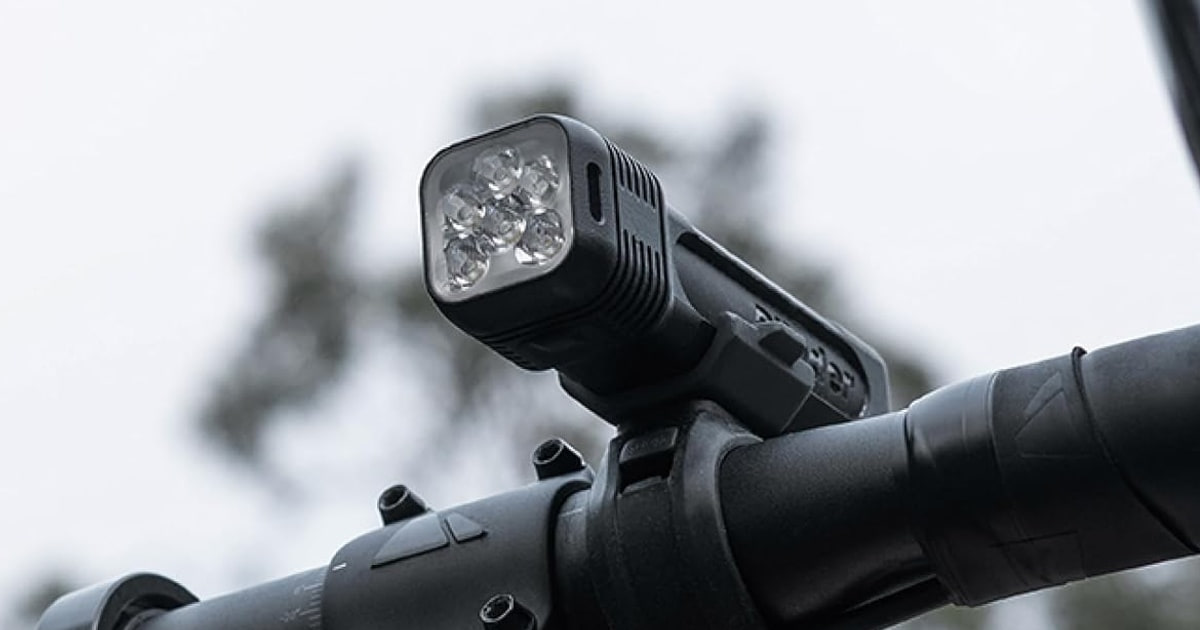
A bike light does two jobs, and they pull in opposite directions. One is seeing: throwing enough light down the road to catch a pothole at speed. The other is being seen, which is mostly about flash patterns and side visibility in daytime traffic. Most riders need both. If you commute on lit streets, 800 to 1200 lumens up front is plenty. If you ride gravel or singletrack after dark, you'll want more, and you'll want a battery that outlasts the ride home.
No light here does everything well. Big output means short runtime, and the brightest settings on almost every one of these lasts an hour or two. Manufacturers quote their cheeriest numbers from the dimmest flash modes, so read the fine print. Mounts are the other weak spot. Rubber straps stretch, hard mounts crack, and aero bars defeat both. Lumen claims aren't standardized either, unless a light is FL1 tested, so two 1000 lumen lights can look nothing alike on a dark road.
We read manufacturer spec sheets, published beam and runtime testing from cycling outlets, and owner feedback about mounts and water intrusion. Then we sorted the lineup by who it's actually for: commuters on lit streets, road riders who want to know what's behind them, and anyone who just wants a set that clips on and charges over USB-C. We think that the NiteRider Lumina OLED Boost 1200 is the best bike light for most people, and that the Cygolite Metro 1100 Pro is the one to buy if you ride through wet winters.
Everything we recommend
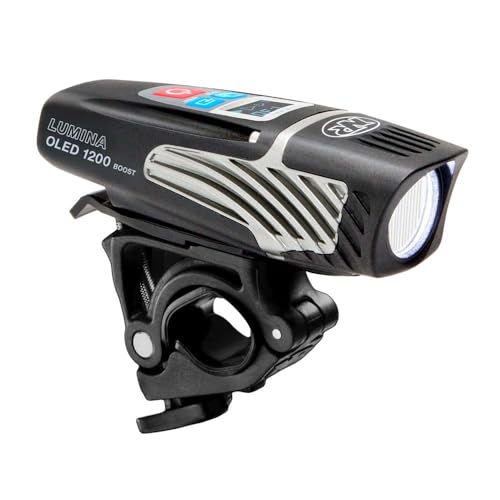
Enough light for most rides, with a screen that says how much is left

Slightly less light, but it's sealed against real weather

A featherweight front and rear set for lit city streets

The most even beam here, if you'll pay for the optics

Rear radar and a camera, for roads without bike lanes
Prices as of Oct 25, 6:48 AM PT · Details
At a glance
| Product | Lumens | Water rating | Price | |
|---|---|---|---|---|
| NiteRider Lumina OLED Boost 1200 Bike LightTop pick | 1200 | IP64 | $91.94 |
| Cygolite Metro 1100 Pro Lumen Bike LightRunner-up | 1100 | IP67 | $50.99 |
| Garmin Varia RCT715Also great | — | — | $370.95 |
| Knog Blinder 1300 Bike LightUpgrade pick | 1300 | — | $109.99 |
 | LEZYNE Micro Drive 800+ LED Bike LightAlso consider | 800 front / 300 rear | IPX7 | $104.99 |
| MagicShine URBO COMBO Bike Lights Front andBudget pick | 300 front / 50 rear | IPX6 | $35.99 |
 | Blackburn Dayblazer Front Bicycle LightAlso in lineup | 1500 | IP-67 | $109.95 |
Prices as of Oct 25, 6:48 AM PT · Details
How we picked
Output and beam. We looked for measured output rather than marketing numbers, favoring lights that cite FL1 or ANSI testing. Published beam pattern comparisons from cycling outlets mattered more to us than the lumen figure on the box.
Runtime you can trust. We compared manufacturer runtime claims against independent runtime checks, and we treated a light as honest when the two lined up. Anything under an hour at max output was hard to recommend.
Weather sealing. We treated the IEC ingress standard as the bar: IPX7 or IP67 means full submersion in a meter of water for 30 minutes, while IPX4 only means splash resistance. Wet climate riders should insist on the former.
Mount and charging. We favored quick release or hard mounts that fit common bar sizes without tools, and USB-C over proprietary or micro-USB ports. Owner feedback about slipping mounts and failing charge ports counted against a light.
Daytime conspicuity. FHWA and IIHS research supports flashing daytime lights for making riders easier to spot, so we required a real daytime flash mode. Side visibility lenses were a tiebreaker for city riding.
Top pick
Enough light for most rides, with a screen that says how much is left
NiteRider Lumina OLED Boost 1200 Bike Light
The Lumina OLED Boost 1200 covers a wider range of riding than anything else here. It's bright enough for an unlit bike path and restrained enough for a lit commute, and the OLED screen shows the mode and the minutes of battery you have left, which takes the guesswork out of a long ride home.
$91.94fromAmazonPrices as of Oct 25, 6:48 AM PT · Details
This is the rare light that suits a dark trail and a lit commute. NiteRider rates it at 1200 lumens in boost, which you trigger with a double tap. The collimator lens spreads that light wide instead of punching a narrow hole down the road, so you can see the curb and the pothole at the same time. Nine modes let you dial it back when you don't need all of it.
The OLED screen sounds like a gimmick until you're 20 minutes from home in the dark. It shows the mode, the battery level and the runtime you have left in minutes, rather than a green dot that turns red at some unknown point. You stop rationing brightness out of anxiety. That one change makes the light easier to actually use.
Output claims in this category are mostly marketing. NiteRider says this light is FL1 tested, the standard that requires measured lumens and runtime instead of a number pulled off the LED's datasheet. Blackburn cites the same ANSI standard. It's a small thing, but it means the 1200 figure and the roughly 90 minute boost runtime came from a measurement rather than a hope.
Use the flash modes in daylight, because that's where a lot of riders get hit. FHWA research on bicycle safety finds that daytime running lights improve how well drivers see cyclists, and IIHS work on vulnerable road users finds that drivers detect flashing lights faster than steady ones. Daytime modes are part of the nine, and NiteRider rates the lowest flash setting past 40 hours. Leave it running on the morning commute.
Flaws but not dealbreakers
The IP64 rating is the weak spot. That's dust tight and splash resistant, which covers rain on the road. It isn't the same as the IP67 seal on the Cygolite or the IPX7 on the Lezyne set, which under the IEC standard are certified for full submersion in a meter of water for 30 minutes. If you ride through standing water or hose your bike off in the driveway, that gap matters.
The listing calls the charging USB rechargeable with a fast IntelliCharge system, but it never says USB-C. If you've standardized your bag on one cable, check the port before you commit. It's also one of the chunkier lights here at about four and a half inches long, and boost mode empties it in roughly an hour and a half.
Runner-up
Slightly less light, but it's sealed against real weather
Cygolite Metro 1100 Pro Lumen Bike Light
The Metro 1100 Pro is rated IP67, which covers submersion and not just splashes, so it's the light we'd put on a bike that lives outside. It gives up 200 lumens to our top pick and has no display, but the side lenses and the DayLightning flash make it hard for a driver to miss.
$50.99fromAmazonPrices as of Oct 25, 6:48 AM PT · Details
IP67 is the number to look at. Under the IEC standard, that means the light survives full submersion in a meter of water for half an hour, not just a passing splash. Plenty of budget lights stop at IPX4, which only promises to shrug off spray from any direction. If you ride winters in the Pacific Northwest, or you lock the bike outside all day at work, that's the difference between a light that lasts and one that fogs.
The side cutouts are the underrated part. Cycling Weekly's side visibility check found the Metro's side lenses visible from a 90 degree angle at roughly 50 meters in low light, better than lights with no dedicated side lens. That's the angle that matters at intersections. A driver rolling out of a side street sees you from the side or doesn't see you at all.
Road.cc's runtime check on the 1100 lumen Metro came in around two hours on boost, close to what Cygolite claims. That's honest for this class. Nine modes include SteadyPulse, which pulses to catch a driver's eye while a steady beam underneath keeps lighting the road, and DayLightning, a hard strobe meant to stand out in bright sun.
It weighs 150 grams and clamps on with a hard mount instead of a rubber strap, so it doesn't creep or wobble when you hit a seam in the pavement. The trade is that hard mounts are fussier about odd bar shapes. There's a low battery indicator too, and a transport lock so the light doesn't run itself flat in your bag.
Flaws but not dealbreakers
Out of the box the light flashes rapidly and won't switch on normally, because it ships in lock mode. Cygolite puts the fix in its first listing bullet: hold the power button for six seconds. It's still an easy thing to mistake for a defect, and it's a strange first impression for a light this good.
On paper it's 200 lumens shy of our top pick, and there's no display to tell you what's left in the battery. The listing promises fast USB recharging without saying USB-C, so check the port if that matters to you.
Budget pick
A featherweight front and rear set for lit city streets
MagicShine URBO COMBO Bike Lights Front and
The URBO combo puts a 300 lumen headlight and a 50 lumen tail light on your bike in one purchase, and the pair weighs 77 grams together. The front beam has a car style cut off, and the tail light flares to full brightness when its sensor picks up that you're slowing.
$35.99fromAmazonPrices as of Oct 25, 6:48 AM PT · Details
It's a complete front and rear set, and the whole thing weighs 77 grams. The headlight runs 300 lumens at 48 grams, and the tail light adds 260 degrees of visibility at 29 grams. Quarter turn mounts snap on in seconds with no tools. If your commute is lit streets and your real worry is being seen, this covers both ends of the bike at once.
The front beam has a cut off, like a car's low beam. It throws light on the pavement instead of into the eyes of the person riding toward you, which is the decent thing to do on a crowded path. The tail light has a brake sensor, so it burns full brightness the moment you scrub speed. Drivers behind you get roughly the cue they'd get from a car.
Runtime is the surprise. Magicshine rates the tail light at up to 82 hours in eco flash and the front at up to 14.5 hours in flash, from a 900 mAh and a 600 mAh cell. USB-C fills the front in about two hours and the rear in about 90 minutes, and both have a battery indicator. For a normal week of commuting, you charge on Sunday and forget them.
Flaws but not dealbreakers
300 lumens is a be seen light, not a see with light. On an unlit path or a country road you'd be riding faster than you can see, which is how people find potholes the hard way. Keep this set for streets with working streetlights, and buy something in the four figure lumen range if any part of your route goes properly dark.
IPX6 handles heavy rain and road spray, not submersion, so it's a step below the Cygolite and the Lezyne set on sealing. Tiny lights are also easy to leave on a rack or lose in a bag, though the one button lockout at least keeps them from draining in there.
Upgrade pick
The most even beam here, if you'll pay for the optics
Knog Blinder 1300 Bike Light
The Blinder 1300 puts out an unusually even spread of light, so the edges of your beam don't drop off into blackness on a fast descent. It charges over USB-C, runs two hours at full output, and the mount takes it above or below the handlebar.
$109.99fromAmazonPrices as of Oct 25, 6:48 AM PT · Details
The beam is the whole reason to buy it. Cycling Weekly's beam pattern testing rated the Blinder 1300 among the top performers for even flood coverage, with less of the dark fringe that narrower throw lights leave at the edges. On the road that means the world doesn't fall off a cliff just outside your beam. Knog quotes useful light up to 393 feet ahead of you.
It charges over USB-C, which is now the standard worth insisting on. OutdoorGearLab's charging comparisons found USB-C lights in this lumen class refilled from empty roughly 30 to 40 percent faster than comparable micro-USB models. That's the difference between topping up over a lunch break and not quite getting there. Six preset modes keep the button presses simple.
Runtime lands where 1300 lumens says it should: two hours at full brightness, and up to 120 hours on eco flash. The mount holds it over or under the bar, which helps if your cockpit is already crowded with a computer and a bell. Under the bar also keeps the light out of your sightline, and it looks less like a floodlight bolted to your bike.
Flaws but not dealbreakers
Knog doesn't publish a water resistance rating in this listing, which is an odd omission for a light this ambitious. Cygolite and Blackburn both state IP67. If you ride in real weather, an unknown seal is worth weighing against a certified one.
Two hours at full output is short, and there's no external battery option listed to stretch it. Owner feedback is thin so far compared with the long running Cygolite and NiteRider models, so there's less of a track record on how the mount and the seals hold up after a couple of winters.
Also great
Rear radar and a camera, for roads without bike lanes
Garmin Varia RCT715
The Varia RCT715 is a tail light with radar and a 1080p camera built in. It tells you about cars coming up behind before you can hear them, and it saves video automatically if something happens, which is why road riders on shoulderless highways swear by it.
$370.95fromAmazonPrices as of Oct 25, 6:48 AM PT · Details
Radar changes what you know about the road behind you. The RCT715 watches for vehicles closing from behind and pushes an alert to an Edge computer, a compatible Garmin watch, or the Varia app on your phone. Garmin rates detection at 140 meters. DC Rainmaker's testing reported vehicles picked up as far out as 240 meters, which at typical road speeds works out to roughly 8 to 10 seconds of warning.
That warning is worth the most on the roads that scare you. Two lane highways with no shoulder, where a car appears without a sound until it's already on you. You ride the same line you always did. You just stop guessing, and you stop swiveling your head every 15 seconds. If your routes have real bike lanes, you'll get less out of it.
The camera is what separates this from the plainer Varia units. It records 1080p at 30 fps, or 720p if you want the battery to stretch over a longer ride, and it saves the footage from before, during and after an incident automatically. Three modes let you run it always on, lights and radar only, or camera on radar trigger. If you've ever been buzzed and had nothing to show for it, that's the appeal.
Flaws but not dealbreakers
It's a tail light only, so you still need a headlight, and it's the most expensive item in this guide on its own. Plan on two purchases rather than one.
Running the camera eats battery, which is exactly why Garmin builds in modes that keep it asleep until the radar wakes it. The unit is also bulky for a tail light and mounts to the seatpost, so an aero post or a saddlebag will fight it for room. Radar can't see a car that's already alongside you either, so it adds to shoulder checks rather than replacing them.
Who this is for
This guide is for anyone who rides a bike on roads or paths where cars, dogs and potholes exist. That's commuters riding home in the dark, road cyclists who want a tail light drivers notice, and gravel or mountain riders heading out after sunset. If you ride only in daylight on a separated trail, you can skip most of this and buy a small flash light for the rear, since it costs you nothing and drivers still cross those paths.
We're covering handlebar and seatpost lights that recharge over USB. We aren't covering dynamo hubs, helmet lights sold as headlamps, or the high output battery pack systems that trail racers use, which need a separate buying conversation. If your route is genuinely unlit singletrack, the picks here will get you started but a dedicated 1500 lumen or brighter trail system with an external battery is the better long term answer.
How we picked
Output and beam: we favored lights that cite FL1 or ANSI measurement over lights that just print a big number, and we leaned on published beam pattern comparisons to judge how evenly that light lands. Runtime: manufacturer claims had to hold up against independent runtime checks, and anything that died in under an hour at max output was a hard sell. Weather sealing: IP67 and IPX7 mean submersion under the IEC standard, while IPX4 means splashes, and wet climate riders should pay for the former. Mount and charging: we wanted tool free mounts that fit normal bars and USB-C rather than a cable you'll lose. Daytime conspicuity: FHWA and IIHS research backs flashing daytime lights, so a real day flash mode was required, and side lenses broke ties.
Other bike lights worth considering
If you want a matched front and rear set that shrugs off a downpour: The LEZYNE Micro Drive 800+ LED Bike Light — The Lezyne Micro Drive 800+ pairs an eight LED, 800 lumen headlight in a CNC aluminum body with the Strip Drive 300+ tail light, and the whole set is tested to IPX7. That's submersion grade sealing on both ends, which the Magicshine combo can't match. The rear unit uses ten LEDs and a lens that spreads light across 270 degrees, and Lezyne rates it at 80 hours. The front works with GoPro style mounts and with Lezyne's external power pack if you need longer nights. What you give up is front end punch, since 800 lumens sits below every other headlight in this guide, and there's very little owner feedback on this set to lean on.
The competition
This is what our research surfaced, not a survey of everything for sale. Bike lights turn over quickly and plenty of decent ones simply weren't in the lineup we looked at.
The Blackburn Dayblazer Front Bicycle Light — The Blackburn Dayblazer 1500 has the highest headline output here and the best mounting story, with an action camera style bracket that fits bars from 25.4 to 35 mm and clamps to most helmets, which frees up bar space for a computer. It's IP-67 submersible, it meets the ANSI FL-1 standard, and its Blitz daytime mode is built for exactly the conspicuity that FHWA and IIHS research supports. It lost to our picks because the listing states no runtime at all, so there's no way to know what 1500 lumens costs you in battery, and owner feedback on this version is scarce. If you want a helmet light or you have no bar space left, it's still worth a look.
Care and mounting
Charge your lights before you store them, and top them up every couple of months if the bike hangs unused, since lithium cells hate sitting empty. Keep the charge port flap seated. Most water gets in through an open port rather than through the housing, which is why an IP rating means nothing if the cover is flipped up. Wipe road grit off the lens with a damp cloth instead of a dry sleeve, or you'll haze the optic. Check the mount every few weeks, because straps stretch and hard mounts work loose. And aim the beam slightly down. A headlight pointed at the horizon blinds everyone coming the other way and lights up almost nothing you're about to ride over.
Questions we get
How many lumens do I need for a bike light at night?
On lit city streets, 800 to 1200 lumens up front is enough to actually see with. Unlit paths, gravel and singletrack push that toward 1500 and above, because otherwise you're riding faster than your beam. Beam shape matters as much as the number, so a wide even flood at 1000 lumens often beats a narrow 1500 lumen spot.
Do I legally need both a front and a rear bike light?
BikeRadar's commuter roundup notes that most U.S. states require a white front light and a red rear reflector or light visible from at least 500 feet when you ride at night. Some states accept a reflector at the back, others want an actual light. Check your state's code, and run a rear light either way, because a reflector only works once headlights are already pointed at you.
Are radar rear lights like the Garmin Varia worth it?
On roads without bike lanes, yes. DC Rainmaker's testing found the RCT715 picking up approaching vehicles as far out as 240 meters, which is roughly 8 to 10 seconds of warning at road speeds. That's most useful on rural two lane roads where you can't hear a car until it's close. If you ride protected lanes and city streets, the extra cost buys you much less.
What's the difference between a flood beam and a spot beam?
A flood spreads light wide and close, so you see the curb, the gutter and the pothole to your left. A spot throws a tight column far down the road, which helps at speed but leaves your peripheral vision dark. Commuters and gravel riders generally want flood or a hybrid pattern. Fast road descenders get more from throw.
What water rating do I need for rain?
IPX4 only means the light resists splashing from any direction, which covers a light drizzle. IPX7 and IP67 are certified under the IEC standard for full submersion in one meter of water for 30 minutes. If you ride through winter, park outside, or hose your bike down, pay for the higher rating. Either way, close the charge port cover, because that's where water usually gets in.
Does USB-C charging actually matter?
It does, for two reasons. OutdoorGearLab's charging comparisons found USB-C lights refilling from empty roughly 30 to 40 percent faster than comparable micro-USB models in the same lumen class. And it's the same cable as your phone and your headphones, so you stop carrying a special one. Avoid anything with a proprietary charging plug.
Why you should trust us
For this guide:
- We read the manufacturer spec sheets and the FL1 or ANSI output claims for every light in this guide.
- We compared published beam pattern, runtime and side visibility work from Cycling Weekly, Road.cc, OutdoorGearLab, BikeRadar and DC Rainmaker.
- We weighed owner feedback themes about slipping mounts, water intrusion and charge port failures, and we checked conspicuity research from FHWA and IIHS.
- We read owner reviews on every listing, weighted toward the critical ones, because that is where the recurring failures show up.
- We have a systematic way of automatically fetching the latest prices, so the numbers on this page stay current.
- This is a research-focused guide, so the team may not own every product listed — though we often do own the top winners, which gives us extra context for the recommendations.
- We don't accept free products, and the retailer commission never changes which product we recommend.
Sources
The Best Bike Lights for 2026 - DC Rainmaker, DC Rainmaker
Bike Light Buying Guide - BikeRadar, BikeRadar
Best Bike Lights, Tested - Cycling Weekly, Cycling Weekly
NiteRider Lumina 1200 Boost Technical Specifications, NiteRider (manufacturer)
Garmin Varia RCT715 Radar Tail Light Overview, Garmin (manufacturer)
Bicycle Lighting Standards and Conspicuity Research, IIHS
Best Bike Lights Tested in Real Commuting Conditions - Road.cc, Road.cc
How Daytime Running Lights Reduce Cyclist Collisions - Federal Highway Administration, FHWA
Cygolite Metro Plus 1100 Product Specs, Cygolite (manufacturer)
Best Bike Lights for Commuters and Road Cyclists - Outdoor Gear Lab, OutdoorGearLab
IPX Water Resistance Ratings Explained, International Electrotechnical Commission (IEC)
Amazon product listings and owner reviews for all 7 products
Manufacturer specification pages for each product
Some passages in this guide may be paraphrased with AI help.
Product prices and availability are accurate as of the date/time indicated and are subject to change. Any price and availability information displayed on Amazon.com at the time of purchase will apply to the purchase of this product.
More like this.
Continue exploring electronics reviews and recommendations.

The Best Bike Computers
A bike computer earns its spot on your stem by answering the questions your phone handles badly. How far to the next turn? How hard are you actually…

The Best Commuter E-Bike Accessories of 2026
A commuter e-bike gets you to work. The gear bolted to it decides whether the ride is pleasant or grim. You're out in traffic at speeds a regular bike…

The Best E-Bike Accessories and Upgrades
An e-bike changes what you ask of your gear. The bike is heavier, faster, and worth more than the commuter you probably owned before, and that shifts what…

The Best Electric Bike Conversion Kits
Most bikes sitting in American garages are perfectly good bikes. They just don't get ridden, because the hill between you and the office feels steeper on…

The Best Hitch-Mounted Bike Racks
A hitch rack is the difference between a bike trip you look forward to and one you dread. Roof racks mean lifting a 30-pound bike over your head in a…

The Best Trail Mountain Bike Accessories
The bike you already own is probably fine. What's holding you back on a wet descent or a ride that runs long is usually smaller and cheaper than a new…