The Best Electric Bike Conversion Kits
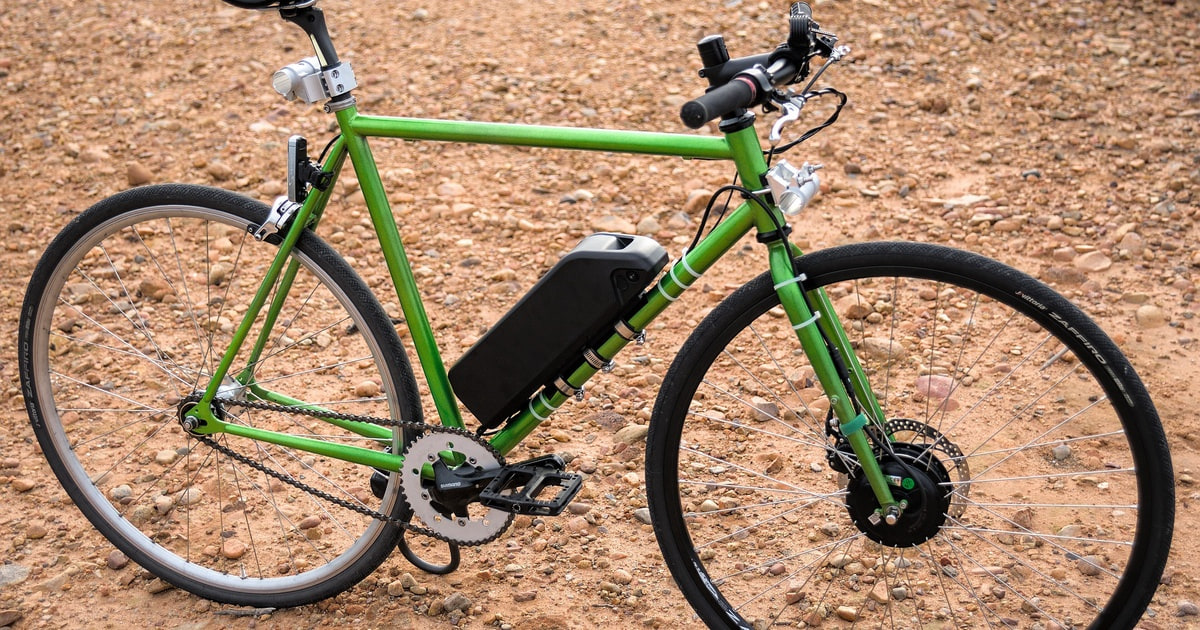
Most bikes sitting in American garages are perfectly good bikes. They just don't get ridden, because the hill between you and the office feels steeper on a Tuesday morning than it did on Saturday. A conversion kit fixes that for a fraction of what a new e-bike costs, and you keep the frame you already like. You keep your rack, your fenders, your saddle, and the fit you spent years dialing in. That's the whole appeal, and it's a real one.
But none of these kits are plug-and-play, no matter what the box says. You'll be running wires along your down tube, zip-tying a controller somewhere it won't rattle, and reading a manual that was clearly translated in a hurry. Batteries are almost always sold separately, and they're the expensive half of the project. Support is thin across the whole category, so if a display dies in month four, you're likely shopping for a replacement part rather than getting one shipped to you.
We looked at mid-drive kits that thread into your bottom bracket and hub kits that swap in as a whole wheel, across the power levels most riders actually buy. If you climb real hills, haul groceries, or ride a bike with a lot of gears you want to keep using, a mid-drive is worth the extra install time. If you want power this weekend with basic tools, a rear hub wheel is hard to beat. We think that the BAFANG Mid Drive Kit is the best electric bike conversion kit for most people, and that the Voilamart 29IN Rear Hub Motor Wheel Kit is the one to buy if you want the simplest possible install.
Everything we recommend

Real hill-climbing torque, if you'll spend an afternoon wrenching

The simplest path to power, with the weight in your back wheel

Maximum torque for cargo hauling and genuinely brutal grades

Assist that scales with your legs, not just your cadence
Prices as of Oct 25, 6:48 AM PT · Details
At a glance
| Product | Motor type | Stated motor power | Price | |
|---|---|---|---|---|
| Bafang 1000W Mid Drive KitUpgrade pick | Mid-drive | 1000W, 48V | $599 |
| BAFANG Mid Drive Kit 1000W 750W 500WTop pick | Mid-drive (BBS02B/HD) | 500W / 750W / 1000W | $377.99 |
 | 26-Inch Electric Bike Conversion KitAlso in lineup | Rear hub motor | 1000W, 48V | $140 |
| TSDZ2B 48V 500W Mid Drive Motor EbikeAlso great | Mid-drive | 500W, 48V | $539 |
| Voilamart 29IN 48V Electric Bicycle Conversion KitBudget pick | Rear hub motor | 750W default, 1500W max | $729.89 |
Prices as of Oct 25, 6:48 AM PT · Details
How we picked
Legal power rating. We compared each kit's continuous power rating against the 750W federal ceiling for street-legal low-speed e-bikes. Kits that only hit their advertised number in an off-road mode had to say so clearly on the listing.
Motor type and climbing. We weighed mid-drives against hub motors using published reviews and manufacturer torque figures. Mid-drives use your gears on climbs, so they earned an edge for hilly commutes and cargo duty.
Assist quality. Torque-sensing kits scored higher than cadence-only kits because power tracks your effort instead of just detecting motion. Spec sheets and published reviews of sensor response informed that ranking.
Install realism. We looked at what each kit actually requires: bottom bracket standards, dropout width, brake type, and included hardware. Kits that ship a complete harness and matching brake components beat ones that assume you'll source parts.
Weight and handling. We tracked stated kit weight and where it lands on the bike. Rear hub kits add rotational weight to one wheel, which reviewers consistently note changes handling more than a centered mid-drive does.
Top pick
Real hill-climbing torque, if you'll spend an afternoon wrenching
BAFANG Mid Drive Kit 1000W 750W 500W
This Bafang mid-drive replaces your bottom bracket and drives the chain, so the motor uses every gear on your bike. You pick the power level at checkout, from a street-legal 500W up to a 1000W version rated at 160 N·m of torque.
$377.99fromAmazonPrices as of Oct 25, 6:48 AM PT · Details
A mid-drive motor gets to use your gears, and that changes everything on a climb. A hub motor spins at one fixed ratio no matter how steep the road gets. This one pushes the chain, so when you shift down, the motor drops into an easier gear right along with you. On a long grade with a loaded rack, that's the difference between a motor that pulls steadily and one that bogs down and gets hot.
The power tiers matter more than they look. Bafang lists this kit at 500W with 100 N·m, 750W with 120 N·m, and 1000W with 160 N·m. US federal rules cap street-legal low-speed e-bikes at 750W of continuous power, per the Consumer Product Safety Commission, so the 500W and 750W versions are the ones to choose if you ride on public roads and paths. The 1000W is a lot of motor for private land.
The newer CAN-protocol version lets you change settings without a programming cable. That used to mean buying a sketchy USB dongle and finding a Windows laptop. Now you adjust parameters through a compatible display, so you can dial back the throttle, soften the assist levels, or set a speed limit that matches your local rules. If you tinker at all, you'll use this more than you expect.
You get a genuinely complete box: motor, chainring, crank arms, thumb throttle, brake levers or sensors, speed sensor, a waterproof harness, a headlight, and a crank extractor. Bafang has been selling this platform long enough that there's a video for whatever your bike does wrong halfway through. Owner feedback for this listing skews positive on the hardware and mixed on the paperwork, which matches the category.
Flaws but not dealbreakers
The compatibility list is narrower than it sounds. You need a JIS-standard bottom bracket in the right width, a chain drive, and disc brakes. Rim-brake bikes, internally geared hubs, and press-fit bottom brackets are out. Measure your shell before you order, not after.
Installation is the real cost here. Pulling a bottom bracket takes specific tools and roughly three to five hours if it's your first time, versus one to two for a hub wheel. And mid-drives put all their force through your chain and cassette, so expect to replace those parts sooner than you used to.
Budget pick
The simplest path to power, with the weight in your back wheel
Voilamart 29IN 48V Electric Bicycle Conversion Kit
Voilamart builds the motor into a complete 29-inch rear wheel, so most of the install is swapping a wheel and routing wires. A switch in the harness takes it from a 750W road-legal setup to full 1500W off-road output.
$729.89fromAmazonPrices as of Oct 25, 6:48 AM PT · Details
If you've ever fixed a flat, you've already done most of this job. The motor arrives laced into an aluminum double-wall rim, so you pull your old rear wheel, drop this one into the 135mm dropouts, mount the controller bag, and connect the throttle, brake levers, and pedal-assist sensor. Plan on an afternoon rather than a weekend. There's no bottom bracket to disassemble and no chainline to fuss with.
The dual-power wiring is smarter than most kits at this level. Out of the box it's restricted to 750W and 24 mph, which keeps it in line with the federal 750W ceiling for street use. Disconnect the blue cable and it opens up to 1500W and a claimed 34 mph, which belongs on private property. Having that choice as a plug rather than a firmware menu is refreshingly honest.
Voilamart also sells this in a version made for hydraulic brakes, which solves a problem that trips up a lot of first-time converters. Cheap kits usually include mechanical brake levers with cutoff switches and assume you'll swap yours. If your bike has hydraulics, that's a non-starter. Buying the matching variant means you keep your brakes and still get the motor cutoff when you grab a lever.
The rim is rated to hold 330 pounds, the listing cites CE and EN15194 approval, and the LCD shows speed, battery level, and assist level. None of that is exotic. But it's the set of basics that budget hub kits most often skip, and it's why this is the kit we'd hand to someone converting a commuter for the first time.
Flaws but not dealbreakers
This kit is heavy. It's the heaviest thing here at roughly 29 pounds, and nearly all of that lands on one wheel. You'll feel it when you lift the bike onto a rack, and you'll feel it when the back end takes a moment longer to change direction.
A gearless hub motor also has one fixed ratio, so steep grades from a dead stop are its weakest moment. And this listing is 29-inch only with 135mm spacing, which rules out most road bikes and anything with a thru-axle. Owner feedback on this listing is sparse, so you're leaning on the brand's track record more than on a deep pile of reports.
Upgrade pick
Maximum torque for cargo hauling and genuinely brutal grades
Bafang 1000W Mid Drive Kit
This is the 1000W BBSHD, Bafang's big mid-drive, bundled with the 500C color display and no battery. It's the kit people reach for when a longtail cargo bike full of kids has to climb something serious.
$599fromAmazonPrices as of Oct 25, 6:48 AM PT · Details
The BBSHD exists for loads that make other kits give up. Published reviews put its torque as high as 160 N·m, which is at the top of what consumer conversion kits produce. On a cargo bike with two children and a week of groceries, that's the difference between grinding up a grade and simply riding up it. It's also why this platform has such a devoted following among people who tow trailers.
You get the 500C display in the box, which is a color unit with a clearer readout than the monochrome screens most kits ship. Everything else is standard BBSHD: it replaces the bottom bracket, drives the chain through its own chainring, and works with the same enormous library of aftermarket parts, mounting plates, and firmware guides that has built up around this motor over the years.
At about 18 pounds for the kit, this is heavy for a mid-drive, but the weight sits low and centered at the crank rather than out at the wheel. Cycling coverage of the category consistently notes that centrally mounted motors change a bike's handling less than hub motors do. On a heavy bike carrying heavy things, that centered mass is worth more than the number on the shipping label.
The catch worth stating up front: 1000W is above the 750W continuous limit the Consumer Product Safety Commission uses to define a street-legal low-speed electric bicycle. Plenty of riders run these on private roads, trails where local rules allow it, or dialed down in software. Check your state and city rules before you buy, because this one isn't ambiguous.
Flaws but not dealbreakers
No battery is included, and a motor this hungry wants a big pack. Budget for a high-capacity 48V battery and a mount, because pairing a 1000W motor with a small battery gets you a short, disappointing ride.
This is the most demanding install here. You'll need bottom bracket tools, a crank puller, and patience with a wiring harness that has more connectors than you'd like. Owner feedback on this listing is thin and somewhat mixed, mostly around shipping and documentation rather than the motor itself.
All that torque goes through your chain, cassette, and derailleur. If your drivetrain is already worn, it won't survive long behind a BBSHD. Plan on replacing it as part of the project.
Also great
Assist that scales with your legs, not just your cadence
TSDZ2B 48V 500W Mid Drive Motor Ebike
The TSDZ2B is one of the few affordable mid-drives with a true torque sensor, so power rises and falls with how hard you're actually pushing. It's rated at 500W, which keeps it comfortably inside US street-legal limits.
$539fromAmazonPrices as of Oct 25, 6:48 AM PT · Details
Most budget kits use a cadence sensor, which only knows whether your pedals are turning. Push hard or spin lazily and you get the same shove. A torque sensor measures force instead, and Grin Technologies puts the response time of systems like this around 100 milliseconds. The practical result is that the bike feels like your legs got stronger, not like something is pushing you from behind.
If you ride in traffic, that difference is a safety feature, not a luxury. Cadence assist tends to surge a half-second after you start pedaling, which is exactly the wrong moment when you're pulling away from a light next to a car. This kit ramps with your effort, so starts are predictable. Riders with limited leg strength tend to prefer this behavior too, because the assist meets them rather than overwhelming them.
The B revision adds a second clutch on the main gear, so the motor disengages from the chain when you're not using assist. Coasting or riding with the battery off feels closer to a normal bike than it does on older versions. At roughly 12 pounds it's also the lightest mid-drive here, and it fits standard 68 to 73mm bottom brackets.
There's a real community behind this motor. Open-source firmware projects have grown up around the TSDZ2 platform, which means you can change how the assist curves behave rather than living with the factory tuning. That's a niche pleasure. But if you're the sort of person who converts a bike in the first place, you may well end up there.
Flaws but not dealbreakers
At 500W this is the least powerful mid-drive here, and it shows on very steep pitches with a loaded bike. It's plenty for a commuter on rolling terrain and not the kit for a cargo hauler in a hilly city.
The included VLCD5 display is basic, with a small monochrome readout and no app connection. Like the Bafang kits, it also requires disc brakes and a chain drivetrain. Owner feedback on this listing is the most mixed of our picks, mostly on quality control and getting help when a part arrives wrong, so buy it expecting to solve some problems yourself.
Who this is for
Buy a conversion kit if you already own a bike you like and want to ride it more. That's the honest case for the whole category. It's the right call if your commute has a hill that keeps beating you, if you haul kids or cargo, if you have knee trouble or reduced leg strength and want assist that meets you halfway, or if you'd simply rather electrify a good frame than buy another bike. You should also be comfortable turning wrenches, or willing to pay a shop for an hour or two of labor.
Skip it if your bike is worn out or was cheap to begin with, because a motor punishes tired drivetrains and weak brakes. Skip it too if you want a warranty covering the whole machine, or a bike that looks factory-built. This guide covers motor kits that convert a standard adult bicycle, both mid-drive and rear hub. We're not covering complete e-bikes, batteries sold on their own, or the small mounting accessories that these kits sometimes need.
How we picked
Legal power: we checked each kit's continuous rating against the 750W federal limit for street-legal low-speed e-bikes, and flagged kits that only reach their headline wattage off-road. Climbing: mid-drives use your existing gears and hold an efficient motor speed on grades, so they beat single-ratio hub motors on hills and with cargo. Assist feel: torque sensors that scale power with your pedaling effort ranked above cadence sensors that only detect motion. Install: we favored kits with a complete harness, the right brake hardware, and clear bottom bracket or dropout requirements, and we counted a bottom bracket swap as roughly three to five hours against one to two for a hub wheel. Weight: we noted how much each kit adds and where it sits, since weight at the rear wheel changes handling more than weight at the crank.
The competition
Here's what else our research turned up in this category. It isn't every kit on the market, and the conversion world in particular has a long tail of listings that appear and vanish. These are the ones worth a sentence.
The 26-Inch Electric Bike Conversion Kit — This Jeaieaiu 26-inch rear hub kit covers the same ground as our budget pick and comes well equipped, with a thumb throttle, a pedal-assist sensor, power-cutoff brake levers, and a waterproof controller bag. Its 1000W gearless motor is rated at 45 N·m and a 33 mph top speed, and the 36-spoke wheel is rated to 265 pounds. It lost out because 45 N·m is modest for climbing, there's no built-in street-legal power mode, and the listing has drawn very few owner reports so far. It's still a reasonable choice if your bike takes 26-inch wheels with 135mm rear spacing, which our 29-inch budget pick can't help you with.
Installation notes
Measure before you order. Check your bottom bracket width and standard for a mid-drive, and your rear dropout spacing and wheel size for a hub kit. Confirm you have disc brakes if the kit demands them. Once you're building, use a torque arm on any hub motor: the axle wants to spin in the dropout, and aluminum frames give way faster than steel. Route wires along the frame with real zip ties, leave slack at the fork and rear triangle so nothing pulls when you steer or the suspension moves, and keep connectors pointing down so water drains away. After your first ride, go back around and check that every bolt is still tight. Then recheck the motor mounting hardware after a week of riding.
Questions we get
Are electric bike conversion kits worth it?
If you already own a decent bike, yes. A kit costs a fraction of a comparable factory e-bike and lets you keep the fit and accessories you're used to. The trade is your time, a bike that looks converted, and no single company standing behind the whole machine. If your bike is worn out or has weak brakes, put that money toward a complete e-bike instead.
Is a hub motor or a mid-drive better?
Hub motors are easier. You swap a wheel, route wires, and ride, usually in one to two hours. Mid-drives take three to five hours because you're replacing the bottom bracket, but the motor drives the chain and uses your gears, so it climbs much better and keeps the weight centered. Flat commute means hub motor. Hills or cargo means mid-drive.
Are conversion kits legal on roads and bike paths?
It depends on the power rating and your local rules. Federal law caps street-legal low-speed electric bicycles at 750W of continuous power and 20 mph on motor power alone, and most states use a three-class system on top of that. Class 3 pedal assist up to 28 mph is recognized in most states, though many trails still ban it. Kits advertised at 1000W or more are above the federal line, so check your city and state rules before you ride one on public roads.
How long does installation take?
A rear hub kit typically takes one to two hours with basic hand tools if you've changed a wheel before. A mid-drive bottom bracket swap runs three to five hours the first time, and you'll need a crank puller and a bottom bracket tool. Budget more time than you think for wire routing and mounting the controller, which is the fiddly part in both cases.
Can I convert any bike?
No. Mid-drive kits generally need a standard JIS bottom bracket in a specific width, a chain drivetrain, and disc brakes, which rules out rim-brake bikes, belt drives, and internally geared hubs. Hub kits need a matching wheel size and dropout spacing, usually 135mm. Full-suspension frames, carbon frames, and thru-axle bikes are difficult or unwise to convert. Measure your bike before you order anything.
What size battery do I need for a 20-mile commute?
Capacity in amp-hours predicts range far better than motor wattage does. A 750W motor with a large pack will out-ride a 1000W motor with a small one, every time. For a 20-mile round trip with hills and a headwind, a 48V pack in the mid-teens of amp-hours is a safe target. Buy more capacity than you think you need, since cold weather and heavy throttle use both cut range.
What's the difference between a torque sensor and a cadence sensor?
A cadence sensor only knows whether your pedals are turning, so it delivers the same assist whether you're pushing hard or spinning lightly. A torque sensor measures how much force you're applying and scales power to match, responding in roughly a tenth of a second. Torque sensing feels like your legs got stronger. Cadence sensing feels like something switched on behind you, usually a beat late.
Why you should trust us
For this guide:
- We read manufacturer spec sheets and listing details for every kit here, comparing stated torque, continuous power ratings, weight, and compatibility requirements side by side.
- We drew on published coverage from outlets including Electric Bike Report, Electrek, Bicycling Magazine, and Cycling Weekly, plus technical documentation from Grin Technologies, to understand how mid-drives, hub motors, and torque-sensing systems differ in practice.
- We checked power and speed claims against US Consumer Product Safety Commission rules and PeopleForBikes class definitions, and we read recurring themes in owner feedback that shaped the flaws and caveats in each write-up.
- We read owner reviews on every listing, weighted toward the critical ones, because that is where the recurring failures show up.
- We have a systematic way of automatically fetching the latest prices, so the numbers on this page stay current.
- This is a research-focused guide, so the team may not own every product listed — though we often do own the top winners, which gives us extra context for the recommendations.
- We don't accept free products, and the retailer commission never changes which product we recommend.
Sources
Bafang BBSHD Mid-Drive Motor Kit Review, Electric Bike Report
Bafang BBS02B 750W Mid-Drive Kit Review, Electric Bike Report
Swytch Kit Review: Convert Any Bike to Electric, Electric Bike Report
TSDZ2 Torque Sensor Mid-Drive Motor Documentation, ebikes.ca (Grin Technologies)
Grin Technologies All Axle Motor Kit, ebikes.ca (Grin Technologies)
Bimotal Elevate: A Clip-On E-Bike Motor That Doesn't Require Wheel Removal, Electrek
Best Electric Bike Conversion Kits, Tested, Electric Bike Report
Federal E-Bike Classification and Power Limit Standards, PeopleForBikes
CPSC 16 CFR 1512.2 Low-Speed Electric Bicycle Requirements, U.S. Consumer Product Safety Commission
How to Convert a Regular Bike to Electric: Full Guide, Cycling Weekly
Hub Motor vs Mid-Drive Motor: Which Is Right for You?, Bicycling Magazine
Voilamart Electric Bike Conversion Kit Product Specifications, Voilamart
Amazon product listings and owner reviews for all 5 products
Manufacturer specification pages for each product
Some passages in this guide may be paraphrased with AI help.
Product prices and availability are accurate as of the date/time indicated and are subject to change. Any price and availability information displayed on Amazon.com at the time of purchase will apply to the purchase of this product.
More like this.
Continue exploring electronics reviews and recommendations.

The Best Bike Lights
A bike light does two jobs, and they pull in opposite directions. One is seeing: throwing enough light down the road to catch a pothole at speed. The…

The Best Commuter E-Bike Accessories of 2026
A commuter e-bike gets you to work. The gear bolted to it decides whether the ride is pleasant or grim. You're out in traffic at speeds a regular bike…

The Best Bike Computers
A bike computer earns its spot on your stem by answering the questions your phone handles badly. How far to the next turn? How hard are you actually…

The Best E-Bike Accessories and Upgrades
An e-bike changes what you ask of your gear. The bike is heavier, faster, and worth more than the commuter you probably owned before, and that shifts what…

The Best Hitch-Mounted Bike Racks
A hitch rack is the difference between a bike trip you look forward to and one you dread. Roof racks mean lifting a 30-pound bike over your head in a…

The Best Trail Mountain Bike Accessories
The bike you already own is probably fine. What's holding you back on a wet descent or a ride that runs long is usually smaller and cheaper than a new…