The Best Camping Lanterns
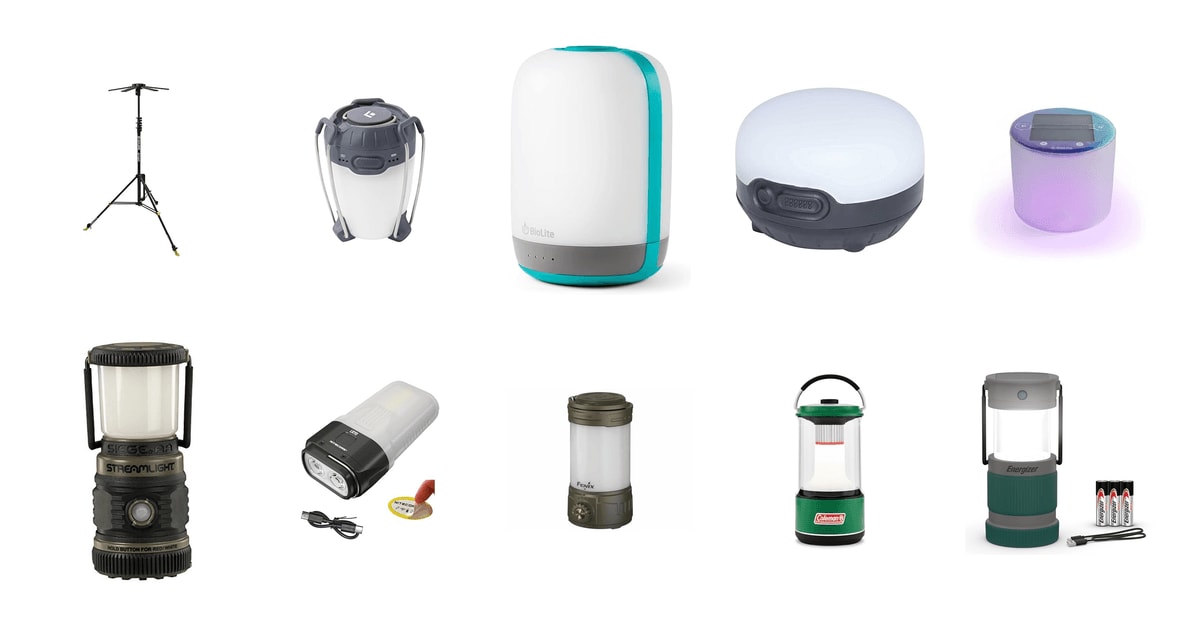
A camping lantern is the thing you reach for when the sun drops and you still need to find the tent stakes, stir the chili, or read a few pages before bed. Good light makes a campsite feel like a place instead of a dark patch of dirt. What you actually want is soft, even light you can dim, a body that survives being knocked off a picnic table, and enough runtime that you're not babysitting a charge cable. Brightness matters less than you'd think. Control matters more.
Here's the honest part: no lantern does everything. The bright ones are heavy and drain fast at full output. The featherweight ones can't light more than a tent. Solar models need a full day of real sun, not a shady campsite, and the manufacturer runtime numbers you see on the box almost always come from the dimmest setting nobody actually uses. Water resistance ratings vary wildly across this group too, from splash-only to fully submersible, and the label rarely makes that obvious.
We looked at what published reviews, manufacturer spec sheets and owner feedback say about each of these lanterns, then sorted them by the kind of trip they suit. We think that the Black Diamond Apollo Lantern is the best camping lantern for most people, and that the Nitecore LR70 is the one to buy if you want a single light bright enough for a whole group site that can also top off your phone.
Everything we recommend

Warm, dimmable light that folds flat and charges by cable

Floodlight brightness plus a phone charger, if you'll carry it
Nearly weightless tent light for people counting grams

Three ways to power it, so it's never quite dead
At a glance
| Product | Brightness | Runtime | Price | |
|---|---|---|---|---|
 | Goal Zero SkylightAlso in lineup | 6000 Lumens | 250 hours | $399.95 |
| Black Diamond Apollo LanternTop pick | 225 lumens | — | $37.88On sale |
 | BioLite Alpenglow Multicolor USB Lantern with RechargeableAlso consider | 500 lumens | 200h LO | $79.95 |
| BLACK DIAMOND Moji R+ Rechargeable LanternAlso great | 200 Lumens | — | $49.95 |
 | BioLite Luci Original Solar Inflatable Camping LanternAlso consider | — | 9 hours | $29.95 |
 | Streamlight 44941 Siege AA 200-Lumen Lantern withAlso consider | 200-Lumen | — | $32.49 |
| Nitecore LR70 Lantern FlashlightUpgrade pick | 3000 Lumen | 600 hours | $79.95 |
 | Fenix CL26R Pro Camping LanternAlso consider | 650 lumens | 408 hours | $79.95 |
 | Coleman 1000L LED Lantern with Enhanced BatteryAlso in lineup | 1000 lumens | — | $42.99On sale |
| Energizer S-500 Hybrid Power Camping LanternBudget pick | 500 lumens | — | $19.99 |
How we picked
Usable brightness. We compared manufacturer lumen figures against the actual job each lantern is meant to do, from a solo tent to a group site. A high peak number only counted if the light also dims well, since most camp lighting happens far below maximum.
Runtime you can trust. We read spec sheets closely to see which setting each runtime figure describes, because low-mode numbers are often ten times the high-mode ones. We favored lanterns with at least a long weekend of realistic mid-level use per charge or set of batteries.
Power source fit. We treated rechargeable, disposable-battery and solar models as answers to different trips rather than ranking them against each other. What mattered was whether the power source matches where you'll be when the light runs down.
Weather and durability. We checked ingress ratings and impact claims across every listing, separating splash-only IPX4 models from submersible IPX7 and IP67 designs. Owner feedback on hinges, switches and battery doors helped flag which bodies hold up past the first season.
Weight and packing. We compared listed weights and collapsed dimensions, since a lantern's real-world usefulness depends on whether you're willing to carry it. Under about five ounces earns a place in a backpack; anything heavier belongs in a car.
Top pickOn sale
Warm, dimmable light that folds flat and charges by cable
Black Diamond Apollo Lantern
The Apollo is a collapsible rechargeable lantern with quad-power LEDs and folding legs that let you stand it, hang it, or hook it overhead. It's bright enough for a tent or a picnic table and dim enough to read by, which covers most of what you'll actually do at camp.
$37.88fromAmazonList priceIt nails the brightness range most campers actually use. The Apollo puts out 225 lumens at full tilt, which sounds modest next to the 3000-lumen units here. But 225 lumens fills a four-person tent or a table where you're chopping onions. More importantly, it dims smoothly all the way down, so you can set it to a soft glow that doesn't blind whoever's sitting across from you.
The folding legs and double hang hook mean you'll always find a spot for it. Prop it on uneven ground and the legs steady it. Fold them in and it collapses flat for the gear bin. The double-hook loop clips onto a tent ridgeline or a branch, which is where you want a lantern anyway — light coming from above throws fewer harsh shadows than light sitting on a table.
It charges from a cable, so there are no batteries to buy or forget. The internal lithium-ion battery recharges from USB, and published runtime figures for the dimmed setting stretch well past a long weekend. If you're camping within a day or two of your car, a charger, or a power bank, that's all the range you need.
Black Diamond builds gear that people keep for years. The Apollo comes from a company that mostly makes climbing and headlamp gear, and it shows in the hinges and the housing. Owners of Black Diamond lighting tend to report the same thing across models — the parts that move still move after a few seasons of being tossed in a duffel.
Flaws but not dealbreakers
It won't light up a big group site. At 225 lumens, the Apollo lights a table, a tent, or a small circle of camp chairs. If you're feeding a dozen people at a pavilion or setting up a communal cook area, you'll want something in the 650-to-3000-lumen range instead, or two of these.
There's no power-bank output. Some lanterns here will charge your phone. This one only takes power in. If you want a light that doubles as a battery, look at the Nitecore or the Fenix.
It costs more than a basic battery lantern that's brighter on paper. You're paying for the folding design, the dimming and the build, not for raw lumens. If maximum output per dollar is the goal, a D-cell lantern beats it easily.
Upgrade pick
Floodlight brightness plus a phone charger, if you'll carry it
Nitecore LR70 Lantern Flashlight
The Nitecore LR70 is a three-in-one lantern, flashlight and power bank that hits 3000 lumens in flashlight mode and includes a red night-vision setting. It's the one to get if you want a single light that covers a whole group site and keeps your phone alive.
$79.95fromAmazonIt's the brightest and most flexible light here. In flashlight mode the LR70 reaches 3000 lumens with a beam that throws over 300 yards, which is genuinely useful when someone wanders off toward the pit toilet. Switch to lantern mode and it settles down to 400 lumens of area light. One device covers both jobs, so you can leave the headlamp in the car.
It charges your phone, which changes what you pack. The USB-C port does QC/PD fast charging for phones, tablets, watches and earbuds. If you're already carrying a power bank for a weekend trip, this replaces it. That's a real weight and clutter savings, not a spec-sheet nicety.
The runtime numbers are serious at the low end. Nitecore rates it up to 600 hours on a charge at its dimmest setting and around 7 hours in red lantern mode. You won't see 600 hours in practice because nobody runs a lantern that dim all night, but the reserve is there for a multi-night trip without a recharge.
It's rated IP67 and airline-approved. The IP67 rating means dust-tight and able to survive being dropped in a puddle, and it's tested to a one-meter impact. The UN38.3 airline certification matters if you fly to your trips — plenty of high-capacity lights get pulled at security or can't legally go in a carry-on.
Flaws but not dealbreakers
Full power eats the battery fast. The headline 3000 lumens is a burst figure, not a setting you camp on. Run it near maximum and you'll be recharging within hours, so plan on using the mid modes for anything longer than showing someone the way back to camp.
It's dense for its size and priced like a premium tool. At roughly ten ounces it's noticeably heavier than an ultralight lantern, and it's one of the more expensive lights in this guide. For a solo backpacker counting grams, that's the wrong trade.
The interface takes a minute to learn. Between flashlight mode, lantern mode, red light and the charging function, there are more button behaviors here than on a simple dimmer. Owners of multi-mode Nitecore lights commonly mention fumbling through modes in the dark before it becomes muscle memory.
Also great
Nearly weightless tent light for people counting grams
BLACK DIAMOND Moji R+ Rechargeable Lantern
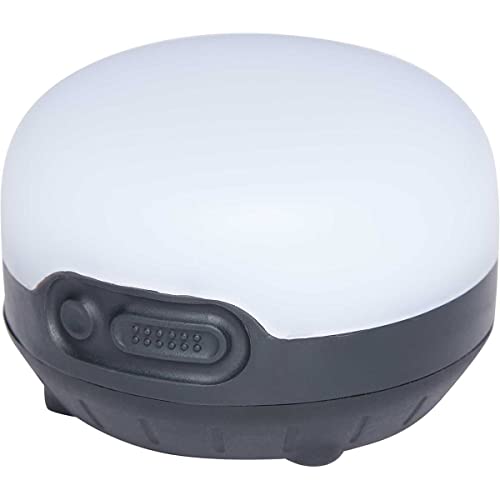
The Moji R+ weighs under three ounces, collapses to about the thickness of a finger, and still puts out 200 lumens of warm, dimmable light. For backpackers and van dwellers, it's the lantern you'll actually bring instead of leaving at home.
$49.95fromAmazonIt's small enough that you stop thinking about it. The Moji R+ is roughly the footprint of a deck of cards and weighs about 2.75 ounces. That's the whole pitch. A lantern you leave behind because it's bulky lights nothing, and this one disappears into a side pocket next to your snacks.
Two hundred lumens is plenty inside a tent. It's warm light rather than the blue-white glare a lot of small LEDs throw, and it dims continuously with one button. You can set it bright enough to sort gear or low enough that your tentmate can sleep while you finish a chapter.
The collapsible double-hook loop hangs it where you need it. Clip it to a tent ridgeline, a branch, or a gear line inside a van and the light comes from overhead. That's the difference between a lit tent and a lantern shining directly in your face from the floor.
The 1500 mAh internal battery recharges from a cable. No disposables, no dead AAs rattling in a bag. For weekend trips it'll go the whole time on a charge, and it tops up from a laptop or a power bank at the trailhead.
Flaws but not dealbreakers
It charges over micro-USB. Every other rechargeable lantern here has moved to USB-C. That means a second cable in your kit for one small item, which is exactly the kind of annoyance that leads to a dead lantern on night two.
Runtime is short compared with bigger lights. Small body, small battery. It's fine for a two- or three-night trip, but on a week-long route you'll want a solar backup or a way to recharge.
The charge indicator is basic. There's an LED signal rather than a real percentage readout, so you're guessing at how much you've got left. Owners of compact Black Diamond lights often note that it's easy to misjudge remaining charge and get caught short.
Budget pick
Three ways to power it, so it's never quite dead
Energizer S-500 Hybrid Power Camping Lantern
The Energizer S-500 runs on its rechargeable battery, a solar panel, or three AA cells, and it hits 500 lumens on high. It's the sensible cheap choice for casual campers and the one to stash in a closet for the next power outage.
$19.99fromAmazonThree power sources means one forgotten cable doesn't end your night. Charge the internal lithium-ion battery from USB before you leave. If it runs down, the solar panel tops it up. If the weekend is overcast, drop in three AAs. That redundancy is worth more on a real trip than any single spec on the box.
Five hundred lumens is a lot of light for the money. On high, running off the rechargeable battery, it throws 360-degree area light that covers a family-sized campsite. That puts it ahead of several pricier lanterns here on raw output, and there are high, low and night-light modes so you can dial it back.
It collapses and has a handle and a bottom hook. Push it down for storage and it takes up a fraction of a bin. The carry handle makes it easy to walk to the bathhouse, and the hook underneath lets you hang it over a table for overhead light.
It's the most sensible emergency-kit lantern here. A light that runs on AAs when everything else is dead, recharges from the sun, and doesn't cost much is exactly what you want in a hall closet. Keep it with the batteries and you've covered a multi-day outage.
Flaws but not dealbreakers
The build doesn't match the premium lanterns. The plastics feel lighter and the switch has less of a positive click than on a Fenix or a Black Diamond. It'll take normal campground use, but it's not the one to throw in a truck bed for a season.
The solar panel is small and slow. It's a trickle top-up, not a real charging method. In full desert sun over a long day it helps; under trees or clouds it barely registers, so treat solar as backup rather than your plan.
AA mode is dimmer and shorter than the rechargeable mode. The 500-lumen figure is quoted for the lithium battery. On alkalines you get less output and less runtime, which is fine for emergencies but worth knowing before you count on it.
Who this is for
This guide is for anyone who needs light at a campsite, in a tent, on a patio, or during a power outage — car campers, weekend backpackers, van travelers and people building an emergency kit. If you camp a few times a year and want one light that handles most of it, the top pick will do the job. If you're outfitting a group site, an overlanding rig, or a job site, the brighter options here make more sense, and you may want two lanterns rather than one giant one.
We're covering portable LED lanterns, not headlamps, flashlights, string lights or fuel-burning lanterns. If you specifically want the old-school hiss and glow of a propane or liquid-fuel lantern, none of these will scratch that itch. And if your only real need is hands-free light for walking or cooking, buy a headlamp first and a lantern second — they solve different problems, and most campers end up owning both.
How we picked
Usable brightness: we weighed each lantern's lumen figure against the space it's meant to light, and gave credit for smooth dimming rather than peak output alone. Runtime: we checked which mode each manufacturer's runtime figure refers to, since low-mode numbers can be ten times the high-mode ones, and looked for at least a long weekend of realistic use. Power source: we matched rechargeable, AA, D-cell and solar models to the kinds of trips where each one makes sense instead of ranking them head to head. Weather and durability: we compared ingress and impact ratings across listings and used owner feedback themes on hinges, switches and battery doors to flag weak bodies. Weight and packing: we compared listed weights and collapsed sizes, because the best lantern is the one you'll actually carry.
Other camping lanterns worth considering
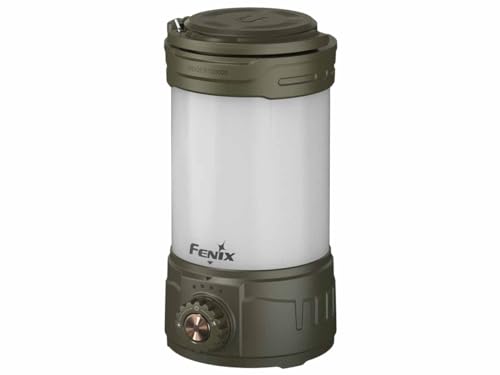
If you want more brightness in a palm-sized body: The Fenix CL26R Pro Camping Lantern ($79.95) — The Fenix CL26R Pro puts 650 lumens and an IP66 rating into something you can wrap one hand around, with seven white modes, two red modes and a rated 408 hours at its lowest setting. It charges over USB-C and has a USB-A port to top off a phone, which the Apollo doesn't. The rotary toggle is genuinely nice to use in the dark. What you give up is the Apollo's folding legs and flat-packing shape, and the smaller battery means less reserve than the Nitecore when you're running it hard.
If you want a light that works anywhere on earth: The Streamlight 44941 Siege AA 200-Lumen Lantern with ($32.49) — The Streamlight Siege AA runs on three AA alkalines, which you can buy at any gas station between here and the trailhead. It's IPX7 waterproof to a meter, it floats, and it's tested to a two-meter drop, so it handles genuinely rough treatment better than most rechargeables. The dedicated red LED preserves night vision for stargazing or hunting, and there's an SOS mode. At 200 lumens it won't light a group site, and you'll be buying batteries forever, but for remote trips longer than a week it's the one that keeps working.
If you want light with no cables at all: The BioLite Luci Original Solar Inflatable Camping Lantern ($29.95) — The BioLite Luci Original inflates to a soft glowing orb, weighs about 4.4 ounces, and collapses to roughly an inch thick. It charges from its own solar panel and runs up to nine hours per charge, with nine color modes if you want the campsite to look festive. The IP67 rating and 150-pound crush resistance make it a genuinely rugged little thing that floats. It's not a primary light — output is modest and full solar charging takes most of a sunny day — but as a packable backup or a kayaking light it's hard to beat.
If you want color and a nicer quality of light: The BioLite Alpenglow Multicolor USB Lantern with Rechargeable ($79.95) — The BioLite AlpenGlow 500 does full-spectrum color with a shake-to-change gesture, and its ChromaReal LEDs render colors more accurately than typical camp LEDs, which actually matters when you're checking whether the chicken is done. It runs 5 hours on high and a claimed 200 hours on low, and a USB-A port lets it charge your phone. The trade is that color modes cut effective white brightness, and the IPX4 rating means splashes only. For backyard hangs and glamping it's the most fun light here.
The competition
These are the lanterns our research surfaced alongside the picks, not a survey of everything on the market. Each one is a reasonable light with a specific reason it didn't take a top spot, and a specific kind of buyer who might still want it.
The Goal Zero Skylight ($399.95) — The Goal Zero Skylight isn't really a camping lantern — it's a portable telescoping work light that raises a 6,000-lumen head anywhere from 4 to 12 feet and covers about 300 feet of ground with a warm 3250K tone. It's superb for tailgates, backyard parties, overlanding basecamps and job sites, and it comes with a hard carrying case. It lost to our picks on practicality: it weighs over 14 pounds, stands nearly four feet long packed, and its internal battery only runs the lowest setting for about 8 hours, so it really wants a Yeti power station to do its job. If you already own Goal Zero gear and light large areas regularly, it's excellent. For a tent, it's absurd.
The Coleman 1000L LED Lantern with Enhanced Battery ($42.99) — The Coleman 1000L is the brightest battery lantern here at 1,000 lumens, with four modes, water and impact resistance to two meters, and BatteryGuard technology that prevents corrosion and drain during long storage. It's a proven family car-camping light you can find at almost any big-box store. It loses to our picks on convenience — it runs on D cells, which are bulky, pricier per unit and less common than AAs, and at over a pound with no USB port it's the least flexible option here. Still, if you want maximum brightness with zero charging to manage and you don't mind buying batteries, it's a sound choice for a group site.
Care and storage
Lithium batteries hate two things: sitting empty for months and roasting in a hot car. If you're storing a rechargeable lantern through the off-season, top it to roughly half charge and keep it indoors, then recharge it before your first trip rather than after your last. For AA and D-cell models, pull the batteries out before long storage even if the lantern claims corrosion protection, since a leaking cell can ruin the contacts. Rinse salt or grit off the housing with fresh water and let it dry fully before packing, and make sure charging ports are dry before you plug in. Check the gasket around the battery door now and then — a cracked seal is how a waterproof lantern quietly stops being waterproof.
Questions we get
How many lumens do I actually need?
For a tent or personal use, 100 to 200 lumens is plenty and won't blind anyone. For a family campsite or a shared cooking area, 500 to 1,000 lumens covers it comfortably. Above that you're into base camp and work site territory, which is more light than most campers will ever want.
What's the best camping lantern for backpacking?
The Black Diamond Moji R+ is the one to carry. It weighs under three ounces, collapses to about a finger's thickness, and still gives you 200 dimmable lumens from a rechargeable battery. If you want to skip cables entirely, the BioLite Luci is a solar alternative that packs even flatter.
Are rechargeable lanterns better than battery-powered ones?
For most people, yes — rechargeables are more convenient and you're not buying alkalines forever. But on remote trips where there's no outlet or power bank for a week, a AA model like the Streamlight Siege is more dependable. The Energizer S-500 splits the difference by accepting both.
What water resistance rating do I need?
IPX4 handles splashes and light rain, which covers most campground weather. If you expect heavy sustained rain, stream crossings or paddling, look for IP66 like the Fenix CL26R Pro, or IP67 and IPX7 like the BioLite Luci, Nitecore LR70 and Streamlight Siege, which survive brief submersion. Note that a high rating protects the housing, not an open charging port.
Can a camping lantern charge my phone?
Some can. The Nitecore LR70, Fenix CL26R Pro and BioLite AlpenGlow all have output ports for topping off a phone or earbuds. Most other lanterns, including the Black Diamond Apollo and Moji R+, only take power in, so check for an output port specifically if that matters to you.
Why does my lantern die so much faster than the box says?
Because the headline runtime is almost always measured on the lowest setting. A lantern rated for 200 hours on low might manage 5 hours on high, and most people camp somewhere in between. Read the spec sheet for the mode you'll actually use, and assume real runtime lands closer to the middle figure.
Why you should trust us
For this guide:
- We read the manufacturer spec sheets and listing details for every lantern here, paying particular attention to which brightness mode each runtime claim refers to.
- We compared published reviews and owner feedback themes across these models, focusing on recurring complaints about hinges, charge indicators, battery doors and solar charging speed.
- We cross-checked ingress protection and impact ratings between listings so that weather claims in this guide match what the manufacturers actually specify.
- We read owner reviews on every listing, weighted toward the critical ones, because that is where the recurring failures show up.
- We have a systematic way of automatically fetching the latest prices, so the numbers on this page stay current.
- This is a research-focused guide, so the team may not own every product listed — though we often do own the top winners, which gives us extra context for the recommendations.
- We don't accept free products, and the retailer commission never changes which product we recommend.
Sources
Best Camping Lanterns – OutdoorGearLab, OutdoorGearLab
How to Choose a Camping Lantern – REI Expert Advice, REI
Best Camping Lanterns – Wirecutter (NYT), Wirecutter
Best Camping Lanterns – Backpacker Magazine, Backpacker Magazine
Best Camping Lanterns – Outside Magazine, Outside Magazine
Best Camping Lanterns – Switchback Travel, Switchback Travel
Best Camping Lanterns – Gear Junkie, Gear Junkie
Goal Zero Skylight Product Specifications, Goal Zero
Amazon product listings and owner reviews for all 10 products
Manufacturer specification pages for each product
Some passages in this guide may be paraphrased with AI help. Prices are refreshed automatically.
More like this.
Continue exploring lifestyle reviews and recommendations.

The Best Portable Camping Stoves
A camping stove is the difference between a hot dinner and a cold bag of trail mix. It's also one of the few pieces of gear you'll use every single day of…

The Best Portable Camping Toilets
A camping toilet earns its keep at 2 a.m., when it's raining and the campground bathroom is a quarter mile away. That's really the whole pitch. You want…

The Best Sleeping Bags for Camping and Backpacking
A sleeping bag is the one piece of camping gear you notice at 3 a.m. When it's right, you don't think about it at all. When it's wrong, you spend the…

The Best Gifts For Campers And RV Owners
Camping gear gets used hard and gets replaced slowly. That's what makes it good gift territory. The person on your list probably has a tent and a stove…

The Best Cold Weather Camping Sleeping Bags
A cold night in a tent isn't dangerous so much as it's miserable. You wake at 2 a.m. with cold feet, pull the drawcord tighter, and then lie there doing…

The Best Camping Tents
A tent is the one piece of gear you can't fake your way through. If it leaks, you don't sleep. If it takes 40 minutes to pitch in the dark, you'll dread…