The Best Charcuterie Boards and Serving Sets
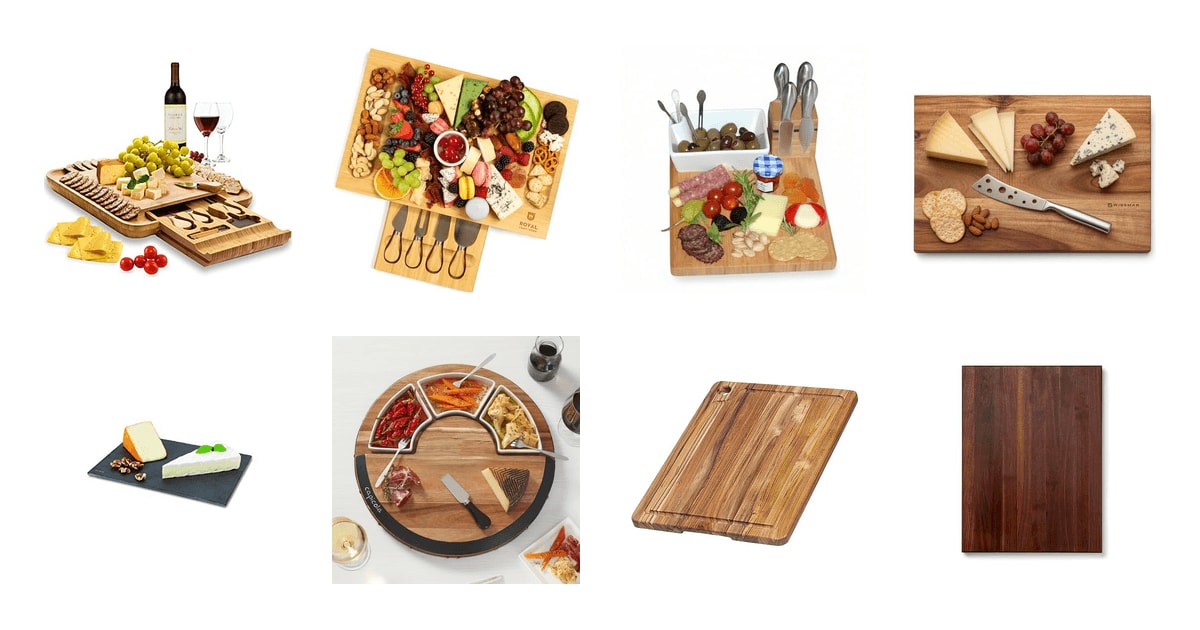
A charcuterie board earns its keep on the nights you don't want to cook. You put out some cheese, a few slices of salami, olives, a handful of grapes, and suddenly you're hosting. The board itself does more work than you'd think. Size decides whether eight people can reach in without knocking a wedge of brie onto the rug. Material decides whether it still looks good in five years or turns gray and splintery. And the little stuff — knives, small bowls, chalk labels — decides whether you're scrambling through drawers while guests wait.
Here's the honest part: no board does everything. Wood looks warm and takes a knife well, but it's hand-wash only and needs oil a few times a year, and if you forget, it cracks. Marble and slate stay cool for soft cheeses, but they're heavy, chip easily in shipping, and dull knives fast. Big gift sets with hidden drawers are wonderful to open and fussy to clean, because every hinge and compartment is another place crumbs hide. You're picking which compromise you can live with, not finding a board without one.
We also want to be clear about scope. Most of these are serving pieces first, and a few are serious cutting boards that happen to look great with cheese on them. If you want one slab that preps dinner on weeknights and holds prosciutto on Saturday, that narrows things considerably. We think that the Royal Craft Wood Premium Bamboo Charcuterie Board Set is the best charcuterie board for most people, and that the Bambüsi Charcuterie Boards Gift Set is the one to buy if you're mainly shopping for a gift.
Everything we recommend

Enough room for a real spread, with the tools built in

The one that looks like you spent more, with everything tucked inside

Teak that resists moisture without constant oiling

A serious block for people who host a crowd

Good-looking acacia and a decent knife, not much else
At a glance
| Product | Board Size | Material | Price | |
|---|---|---|---|---|
| Bambüsi Charcuterie Boards Gift Set - CharcuterieRunner-up | 13.5"L x 13.5"W | Bamboo | $17.75 |
| ROYAL CRAFT WOOD Premium Bamboo Charcuterie BoardTop pick | 16.5" x 11" | Bamboo | $36.96On sale |
 | Picnic at Ascot Original Bamboo Cheese BoardAlso in lineup | 12" x 9" | Bamboo | $62.99 |
| Swissmar Acacia Cheese Board SetBudget pick | 15" x 10" | Acacia Wood | $64.95 |
 | Boska Wooden Serving Cheese Board - SmallAlso consider | 7.78" x 11.1" | Slate | $24.98 |
 | Wine Enthusiast Barrel-Inspired Acacia Wood Swivel CheeseAlso consider | 15.75" diameter | Acacia Wood | $99.99 |
| Teakhaus Teak Cutting Board - Rectangle EdgeUpgrade pick | 16" x 12" | Teak | $38.87On sale |
| John Boos Block WAL-R02 Walnut Wood EdgeAlso great | 24" x 18" | Walnut | $326.95 |
How we picked
Size for the crowd. Good Housekeeping Institute testing sets 144 square inches as the minimum for serving six to eight people, and Epicurious portioning guidance puts a group of twelve at roughly 200 square inches. Boards well under that only made sense as small-gathering picks.
Material and upkeep. We compared Janka hardness figures and published wood-science guidance on moisture resistance for bamboo, acacia, walnut and teak. We favored materials whose real-world maintenance load — oiling frequency, hand-washing rules — matches how often people actually entertain.
Thickness and warping. Serious Eats recommends at least an inch of thickness to resist warping under a loaded spread and repeated washing. We treated anything thinner as a caution and looked for owner reports of cupping or seam failure.
Food-safety credentials. NSF/ANSI 51 certification is the food-service benchmark for food-zone surfaces, and we noted which boards carry it. We also looked for perimeter juice grooves, which Food Network Kitchen has flagged as a cross-contamination safeguard flat boards lack.
What's in the box. For gift and entertaining sets, we weighed the usefulness of included knives, bowls and chalk labels against how much they complicate cleaning. Storage compartments earn their place only if they don't trap crumbs.
Top pickOn sale
Enough room for a real spread, with the tools built in
ROYAL CRAFT WOOD Premium Bamboo Charcuterie Board
This bamboo board runs 16.5 by 11 inches, so a full meat-and-cheese layout for six to eight people fits without stacking. The set includes serving utensils and side bowls, and it's heavy enough to stay put when someone digs into the hard cheese.
$36.96fromAmazonList priceThe surface area is the reason to buy it. Good Housekeeping Institute testing across more than 15 boards landed on 144 square inches as the floor for serving a full meat, cheese, fruit and cracker spread to six or eight guests. This one clears that with room to spare. In practice that means your salami rosettes aren't crowding the crackers, and people can actually reach past each other.
At roughly five pounds, it doesn't slide around. That sounds minor until you've watched a lighter board skid across a counter while someone saws at an aged gouda. The weight also signals what it's made of — bamboo laminated thick enough to resist the warping that plagues thinner boards. Serious Eats recommends at least an inch of thickness for exactly this reason, and thin boards under three-quarters of an inch tend to cup once they get wet.
Owners consistently report that the set arrives looking more expensive than it is, which is why it turns up so often as a wedding and housewarming gift. The utensils are included rather than sold separately, and the side bowls hold olives or nuts without taking up board space. If you're the person who hosts three or four times a year and doesn't want to assemble a collection piece by piece, this covers it in one box.
Bamboo also has a hardness argument in its favor. The Wood Database puts bamboo at roughly 1,380 lbf on the Janka scale, above walnut at 1,010 and cherry at 950. So it shrugs off the light knife work a cheese board actually sees. Just don't confuse that with being indestructible — bamboo is technically a grass, and its fibers can splinter along the grain when the seal wears thin.
Flaws but not dealbreakers
Bamboo needs oil, and this board is no exception. Skip it for a year and you'll see the surface dry out and the seams tighten up. Wirecutter's long-term testing found that hand-washed, monthly-oiled boards held more than 90% of their finish after two years, while the same boards run through a dishwasher cracked and warped inside six months. Treat that as a rule, not a suggestion.
Some owners have found it smaller than they pictured. It's a good size for six to eight, but a twelve-person holiday spread will crowd it — Epicurious portioning guidance suggests around 200 square inches of usable surface for a group that size. If you regularly host big, look at the John Boos board instead.
The board is a laminate of bamboo strips, and any glued-up board can fail at a seam if it's soaked or left wet. Wipe it dry rather than letting it air-dry face down.
Royal Craft Wood backs the set with a one-year warranty and a money-back guarantee.
Runner-up
The one that looks like you spent more, with everything tucked inside
Bambüsi Charcuterie Boards Gift Set - Charcuterie
A 13.5-inch square bamboo board with a hidden drawer holding cheese knives, slate labels, a marker and a carrying bag. It's the most giftable set here, and the perimeter groove keeps crackers and nuts from sliding off.
$17.75fromAmazonThe drawer is the whole trick. You pull it out and there are the knives, the chalk labels, the marker — no hunting through a utensil drawer while people stand around. It also travels well, because everything lives inside the board and the set comes with a bag. That's a genuinely nice thing to hand someone at a bridal shower.
The groove around the perimeter does real work. It gives you a channel for crackers, nuts or dried fruit so they don't slide off the edge, and it keeps meat juices from running onto the table during assembly. Food Network Kitchen testers have flagged juice grooves as a meaningful cross-contamination safeguard, and flat decorative boards simply don't have that.
The chalk labels matter more than they sound. If you've got a guest avoiding dairy or pork, labeling each item saves everyone an awkward interrogation. Bon Appétit editors have pointed to labeling as a real accessibility feature for hosts, not just a styling flourish, and this set gives you the slates and the marker in the box.
At 13.5 inches square it's about 182 square inches — comfortable for six, workable for eight. Owners describe it as the right size to make a presentation without dominating a small table. If you entertain in an apartment, that restraint is a feature.
Flaws but not dealbreakers
The drawer and hardware add failure points. A few owners report warping or the board starting to come apart after washing, and a moving part is always harder to keep dry than a solid slab. Wipe it, don't soak it, and never let water sit in the drawer channel.
Bamboo picks up color from berries. Strawberry and blueberry juice can leave marks, though owners note that a coat of cutting board oil pulls most of it back out and deepens the grain in the process.
The included bamboo knives are fine for soft cheese and spreads. They aren't going to get through a hard aged cheddar, so keep a real knife nearby.
Upgrade pickOn sale
Teak that resists moisture without constant oiling
Teakhaus Teak Cutting Board - Rectangle Edge
A 16-by-12-inch edge-grain teak board with a juice canal and a corner hanging hole. Teak's natural silica and oil content make it more moisture-resistant than walnut or bamboo, so it needs less babysitting over the years.
$38.87fromAmazonList priceTeak is the low-maintenance hardwood. Its high natural silica and oil content resist moisture without the frequent re-oiling that walnut and bamboo demand, which is a real durability advantage in a kitchen that gets used. You still oil it — every board here needs that — but you'll do it less often and forgive yourself faster when you forget.
The juice canal is cut into the surface, so it works as a serving board and a carving board. If you're slicing a flank steak or a roast chicken to add to the spread, the juices go somewhere other than your counter. That dual role is why this one earns a spot for people who don't want a board that only comes out for parties.
Teakhaus boards carry FSC certification, which verifies the plantation teak comes from responsibly managed forests. If sustainability factors into what you buy for the kitchen, that's a credential you can check rather than a claim you have to take on faith. The board also has no coatings or plastic components — it's just wood.
At half an inch thick it's genuinely light for its footprint, which owners appreciate when they're carrying it out to a patio table loaded with food. The tradeoff is that it's thinner than the inch Serious Eats recommends for warp resistance, so it needs a bit more care about staying dry than a thick block does.
Flaws but not dealbreakers
Several owners report it arrives dry and slightly rough, and they're right to. Give it a coat of mineral oil before the first use. It'll darken, smooth out and look like the photos — but you shouldn't have to do finishing work on a new board, and it's fair to be annoyed.
Quality control isn't perfect. Some buyers have received boards with a rougher finish or thinner stock than expected. Inspect it when it lands.
It's hand-wash only, like every wooden board here. No dishwasher, ever.
Also great
A serious block for people who host a crowd
John Boos Block WAL-R02 Walnut Wood Edge
A 24-by-18-inch walnut block, an inch and a half thick and reversible, from a company that has made butcher blocks in Illinois since 1887. It's the only board here with enough room for a twelve-person spread.
$326.95fromAmazonIf you host big, size stops being negotiable. Epicurious portioning guidance puts a twelve-person spread at roughly 200 square inches of usable surface once you allow two to three ounces of meat and cheese per guest. This board has more than double that. Nobody stacks, nobody reaches over anyone, and there's still room for a bowl of olives at the corner.
John Boos holds NSF/ANSI 51 certification, the food-service industry's benchmark for food-zone surface safety. That's not marketing language — it's the standard commercial kitchens are held to. Combined with the inch-and-a-half edge-grain construction, it's the board here you'd most expect to outlast the rest.
It's reversible, with recessed finger grips on both sides. So you can prep on one face and serve on the other, or just flip it when one side starts showing wear. Owners who use it daily describe it as the board that replaced everything else on the counter, which is a reasonable outcome given the footprint.
The walnut is softer than teak or bamboo — around 1,010 lbf on the Janka scale — and that's deliberate. Softer wood is kinder to knife edges. If you own knives you care about, this is the surface that treats them best.
Flaws but not dealbreakers
It weighs nearly sixteen pounds. Moving it from counter to table is a two-hand job, and it isn't going to a picnic. If you want portability, look elsewhere in this guide.
Quality control draws real complaints. Some owners report boards arriving dusty, with visible finish flaws, or needing an exchange. It's a natural-wood product with grain variation baked in, but a board at this level should show up ready to oil, not ready to inspect.
It arrives dry and thirsty. Plan on oiling it generously before first use and about monthly after, and buy the board cream separately — it isn't included.
Budget pick
Good-looking acacia and a decent knife, not much else
Swissmar Acacia Cheese Board Set
A 15-by-10-inch acacia board with a birch accent and one stainless cheese knife with a pointed tip and blade holes. There's a non-slip pad underneath, and acacia's natural tannins mean you only oil it a couple of times a year.
$64.95fromAmazonAcacia is the quiet workhorse of serving boards. Its natural tannins give it water resistance comparable to teak, and Food & Wine notes it needs oiling only two or three times a year under normal entertaining use — much less than walnut or maple. For a board that lives in a cabinet between dinner parties, that's the right maintenance profile.
The included knife is better than the usual freebie. It has a pointed tip for cutting through rinds and holes in the blade so soft cheese doesn't cling to it. That's a purpose-built cheese knife, not a butter spreader with a logo on it. Owners generally find it sharp out of the box, though a couple note it's thin and won't survive many sharpenings.
The non-slip pad on the underside is a small thing that matters. Boards this light tend to travel across a counter when you press down on a firm cheese, and the pad mostly solves that. At 15 by 10 inches you get 150 square inches, which clears the Good Housekeeping threshold for a six-to-eight-person spread.
Flaws but not dealbreakers
It's thin — about an inch — and light enough that it can still shift on a slick surface even with the pad. Owners describe it as noticeably lighter than a comparable teak board.
You get a board and a knife. No bowls, no labels, no second utensil. If you want a set that arrives ready to host, this isn't it.
Hand wash only, and it wants a periodic conditioning with mineral or butcher block oil.
Who this is for
Buy one of these if you host — dinner parties, wine nights, a Thanksgiving appetizer table — and you're tired of arranging cheese on a dinner plate. Buy one if you need a gift that looks generous and gets used: a housewarming, a wedding, a bridal shower. The complete sets with knives and labels are the easy answer there, because your recipient doesn't have to buy anything else to start using it. If you already own a good wooden cutting board and just want more surface area, the two big hardwood boards here are the upgrade, and the sets are mostly redundant.
Skip these if you want something you can throw in the dishwasher. Every wooden board in this guide is hand-wash only, and the one slate board is dishwasher safe but fragile in transit. We're covering boards and serving sets, not cheese knives sold on their own, board oil, or the acrylic and melamine platters that show up in the same searches. And a note on cross-contamination: if you're plating raw meat, use a separate board. These are for cured and cooked food.
How we picked
We ranked these on the things that decide whether a board gets used or shoved in a cabinet. Size: at least 144 square inches for six to eight guests, closer to 200 for a dozen, using published serving-capacity and portioning guidance. Material: we compared hardness ratings and moisture resistance across bamboo, acacia, walnut and teak, and weighed each against how often you'd have to oil it. Thickness: an inch is the recommended floor for resisting warp under a wet, loaded board. Safety: NSF certification and perimeter juice grooves, where they exist. Accessories: knives, bowls and labels count for gift sets — but only if they don't turn cleanup into a chore. Weight: heavy stays put, light travels, and you should know which one you're buying.
Other charcuterie boards and serving sets worth considering
If you want a cool surface and chalk labels: The Boska Wooden Serving Cheese Board - Small ($24.98) — Slate stays cooler than wood, which helps with brie, camembert and burrata — soft cheeses lose texture and flavor when they sit warm for long. Marble runs roughly 10 to 15 degrees below room temperature for the same reason, and slate behaves similarly. This Boska board is thin machine-cut slate with anti-slip feet, it doesn't absorb odors, and it's dishwasher safe, which no wooden board here can claim. You write cheese names right on it with chalk. The catch is fragility: a meaningful number of owners report it arriving cracked or shattered, sometimes twice. It's also small at roughly 11 by 8 inches — a supporting player next to a bigger board, not the main event.
If you want the most accessories in one package: The Wine Enthusiast Barrel-Inspired Acacia Wood Swivel Cheese ($99.99) — This Wine Enthusiast board is a 15.75-inch acacia round with a swivel top that rotates open to reveal 4 cheese knives, 4 forks, 3 ceramic bowls and 3 chalkboard markers, held shut by a magnetic closure. The chalkboard edge runs around the perimeter for labeling, which is a nicer execution than loose slate tags. Acacia means light maintenance, and the round shape works well when guests circle a coffee table. We're cautious recommending it as a pick because it's new enough that there's little owner feedback to draw on, and swivel mechanisms with magnets are the sort of thing that either holds up for years or loosens fast. It's hand-wash only.
The competition
These are the boards our research surfaced, not a census of everything sold. A category this crowded has hundreds of listings, many of them the same factory board under different names. Here's the one that didn't make a pick and why.
The Picnic at Ascot Original Bamboo Cheese Board ($62.99) — The Picnic at Ascot Original is a nicely thought-out small set — a 12-by-9-inch bamboo board with four dishwasher-safe tools held by magnets on a bamboo block, a ceramic dish, cocktail sticks and cheese markers, plus a lifetime warranty from a company that's been doing this for over 25 years. The magnetic tool block is a genuinely clever bit of design. But it lost to our picks on two counts. At 108 square inches it falls under the 144-square-inch threshold for a six-to-eight-person spread, so it's really a board for two to four. And the ceramic bowl seems to have a hard time surviving shipping, with several owners reporting it arriving broken. Choose it if you entertain in small numbers and want a compact, well-made set with a warranty behind it.
Care and maintenance
Wash wooden boards by hand with warm soapy water, then dry them standing on edge so both faces get air. Never put one in the dishwasher — Wirecutter's long-term testing found identical boards that went through a dishwasher cracked and warped within six months, while hand-washed, monthly-oiled boards held more than 90% of their finish after two years. Oil monthly for walnut and bamboo, two or three times a year for acacia and teak, using food-grade mineral oil or a butcher block conditioner. For odors or after serving cured meat, scrub with coarse salt and half a lemon, rinse and dry. Watch the knife grooves over time: the USDA advises replacing a wooden board once the cuts are too deep to sanitize, typically after five to seven years of heavy use or ten to fifteen years of occasional entertaining.
Questions we get
What size charcuterie board do I need to feed 8 to 10 people?
Plan on at least 144 square inches — that's a 12-by-12-inch board — as the minimum for a full meat, cheese, fruit and cracker spread for six to eight guests. For ten or more, you want closer to 200 square inches so nothing has to be stacked. Standard portioning runs two to three ounces each of cured meat and cheese per person, and that adds up faster than you'd expect.
Is bamboo or walnut better for a charcuterie board?
Bamboo is harder — roughly 1,380 lbf on the Janka scale versus about 1,010 for walnut — so it resists scarring better and usually costs less. Walnut is softer, which is gentler on knife edges, and it's a true hardwood rather than a grass, so it doesn't splinter along the grain the way an unsealed bamboo board can. For serving only, bamboo is fine. If the board also preps dinner and you own good knives, walnut.
Can wooden charcuterie boards go in the dishwasher?
No. The combination of prolonged soaking and high heat is what cracks and warps wooden boards, and long-term testing has shown that damage appearing within six months. Hand wash with warm soapy water, dry immediately, and stand the board on edge rather than laying it flat. The one exception in this guide is the slate board, which is dishwasher safe.
Are marble and slate boards better than wood for serving cheese?
For soft cheeses, yes. Marble holds roughly 10 to 15 degrees below room temperature, and slate behaves similarly, which keeps brie, camembert and burrata from going slack and losing flavor as they sit. Stone also doesn't absorb odors. The tradeoffs are weight, fragility in shipping, and the fact that stone dulls knife edges quickly.
How often do you need to oil a wooden charcuterie board?
It depends on the wood. Walnut and bamboo want oil about once a month with normal use. Acacia and teak have natural oils and tannins that resist moisture, so two or three times a year is usually enough. The board will tell you — when the surface looks dry, pale or chalky, it's time.
What's the difference between a charcuterie board and a cutting board?
Mostly intent. A cutting board is thick, food-safe and built to take knife work; a charcuterie board is often thinner and styled for presentation. Plenty of boards do both, and the two thick hardwood boards in this guide are cutting boards that serve beautifully. Just don't prep raw meat on a board you'll later use for serving — use a separate one for that.
Why you should trust us
For this guide:
- We read manufacturer specifications, published testing from Good Housekeeping, Serious Eats, Food & Wine, Food Network Kitchen and Wirecutter, plus wood-science data on hardness and moisture resistance.
- We reviewed USDA food-safety guidance on wooden board replacement and NSF/ANSI 51 certification to understand which food-safety claims are verifiable.
- We read through owner feedback across all eight listings, looking for repeated themes — shipping damage, warping, finish quality — rather than individual complaints.
- We read owner reviews on every listing, weighted toward the critical ones, because that is where the recurring failures show up.
- We have a systematic way of automatically fetching the latest prices, so the numbers on this page stay current.
- This is a research-focused guide, so the team may not own every product listed — though we often do own the top winners, which gives us extra context for the recommendations.
- We don't accept free products, and the retailer commission never changes which product we recommend.
Sources
The Best Cheese Boards — Wirecutter (NYT), Wirecutter
Best Charcuterie Boards, Tested by Food Network Kitchen, Food Network Kitchen
The Best Cheese Boards, Tested — Good Housekeeping Institute, Good Housekeeping
Best Charcuterie Boards — Epicurious, Epicurious
Best Charcuterie Boards — The Spruce Eats, The Spruce Eats
The Best Cheese Boards — Serious Eats, Serious Eats
Best Charcuterie Boards for Every Budget — Food & Wine, Food & Wine
Cutting Boards and Food Safety — USDA FSIS, USDA Food Safety and Inspection Service
The Best Cheese Boards — Bon Appétit, Bon Appétit
John Boos & Co. — NSF Certification & Product Specs, John Boos & Co.
FSC Certification — Teakhaus Sustainability, Teakhaus / Forest Stewardship Council
Amazon product listings and owner reviews for all 8 products
Manufacturer specification pages for each product
Some passages in this guide may be paraphrased with AI help. Prices are refreshed automatically.
More like this.
Continue exploring home reviews and recommendations.

The Best Cutting Boards
A cutting board is the one tool you touch every single time you cook. It takes the beating your knives would otherwise give your countertop, and it…

The Best Ironing Boards
An ironing board is one of those things you don't think about until you're fighting one. The legs skate on tile. The cover slides as you push into a…

The Best Wood Cutting Boards
A wood cutting board is the one tool on your counter that touches almost every meal. The good ones are heavy enough to stay put when you rock a knife…

The Best Off-Road Recovery Boards
Getting stuck isn't really an if. Drop a tire into a sand wash, sink into spring mud on a forest road, or spin out on a snowed-in trailhead approach, and…

The Best Cutting Boards
The cutting board is the surface you touch most in a kitchen, and it's usually the one you think about least. It sits under every onion, every chicken…

The Best Truck Nerf Bars And Running Boards
A modern half-ton truck sits high enough that climbing in becomes a small daily workout. Add a lift kit and it's a real one. Nerf bars and running boards…