The Best Ironing Boards
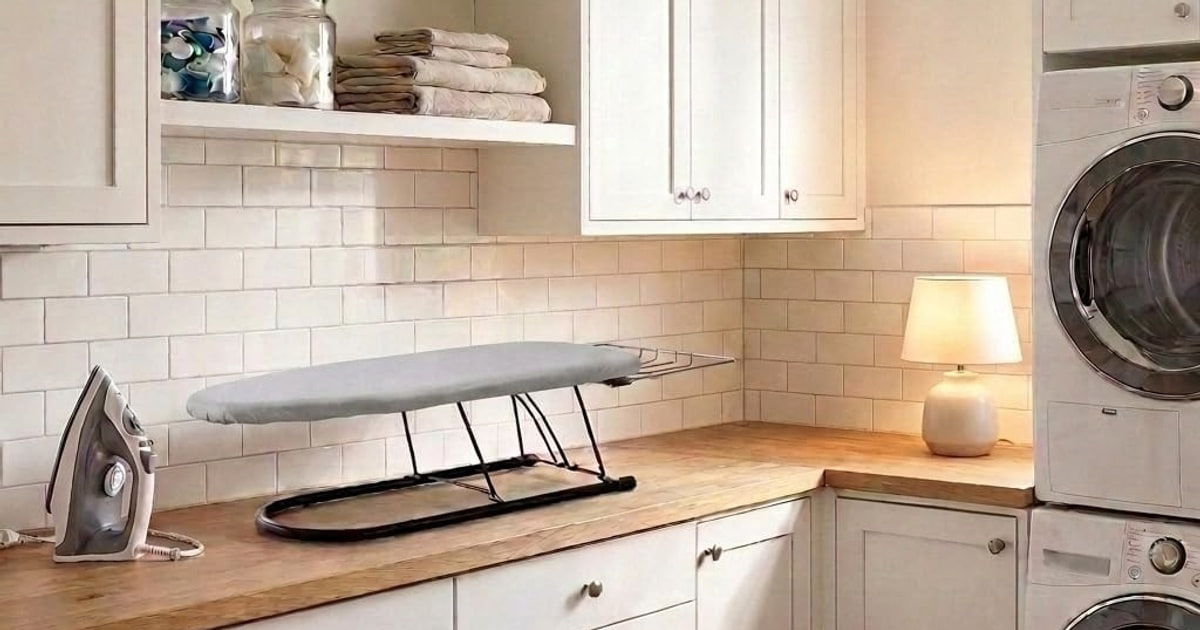
An ironing board is one of those things you don't think about until you're fighting one. The legs skate on tile. The cover slides as you push into a collar. The whole top shivers every time you lean on a stubborn crease. A good board just stands there and takes it. It opens in one motion, locks at the height you want, and gives you enough room to lay a shirt flat without half of it hanging off the end.
Here's the honest part. No ironing board is pleasant to store. Even the compact ones are long, awkward, and about as easy to carry as a ladder. The covers all wear out, usually well before the frame does, and the padding underneath flattens first. Every board with telescoping legs has some give at its tallest setting, too. You're picking how little wobble you can live with, not whether it wobbles at all.
So the decision comes down to a few practical things. How wide is the top, how solid do the legs feel under a heavy iron, does the height suit you, and where does the thing go when you're done? Steam matters as well, since a mesh top lets it pass through the fabric instead of pooling underneath. We think that the Brabantia Comfort Ironing Board is the best ironing board for most people, and that the Duwee Deluxe Ironing Board is the one to buy if you press a lot of sheets and tablecloths.
Everything we recommend

The steadiest frame here, if you're willing to pay up

A wider, vented top, if you don't mind the extra weight

Narrow and light, for closets that can't take a full-size board
Prices as of Oct 25, 6:48 AM PT · Details
At a glance
| Product | Board size | Height range | Price | |
|---|---|---|---|---|
| Brabantia Comfort Ironing Board with Solid SteamTop pick | 49 x 15 in | 27.2-37.8 in | Check price |
 | Household Essentials Tabletop Ironing BoardAlso in lineup | 30 x 12 in tabletop | 8.5 in tall | $43.97 |
 | Leifheit Ironing Table AirBoard Premium M PlusAlso consider | 120 x 38 cm | — | $262.64 |
| Bartnelli Compact Ironing BoardBudget pick | 13 x 43 in | Adjustable | $59.99 |
| Duwee 18"x48" Deluxe Ironing Board with RetractableRunner-up | 18 x 48 in | 27.7-38.4 in | $89.99 |
Prices as of Oct 25, 6:48 AM PT · Details
How we picked
Frame stability. We favored four-leg frames with a locking hinge or cross-brace, following Good Housekeeping's finding that these hold steadier under a heavy iron than tripod designs. Leg gauge and non-slip feet mattered more to us than any other spec.
Surface size and shape. Better Homes & Gardens recommends boards over 15 inches wide for sheets and tablecloths, so we treated that as the line between a general-purpose board and a compact one. Wirecutter's testers also found a wide, pointed nose cuts down on repositioning shirt collars and sleeves.
Height range. Real Simple's experts suggest setting the surface at hip level while standing, which rules out fixed-height boards for most households. We looked for a stated range that covers both standing work and seated pressing at a table.
Steam handling. The Spruce's reviewers noted mesh tops let steam pass through instead of pooling on the surface, which shortens drying time after pressing. We checked each spec sheet for a perforated or mesh top, especially for readers with steam generator irons.
Storage and covers. We compared folded thickness and weight, since a board you can't put away easily is a board you won't use. We also noted which boards use a standard 54-inch Size B cover, which This Old House recommends because replacements are easy to find.
Top pick
The steadiest frame here, if you're willing to pay up
Brabantia Comfort Ironing Board with Solid Steam
The Brabantia Comfort is a medium, 49-by-15-inch board on a four-legged steel frame that stays put while you work. It adjusts from roughly 27 to 38 inches, holds a steam iron on a solid rest that suits either hand, and locks shut so it can't fold on you.
Check priceatAmazonPrices as of Oct 25, 6:48 AM PT · Details
The frame is the reason to buy this one. Four legs instead of three, roughly inch-thick steel tubing, and non-slip caps on the feet. Good Housekeeping's testers found that four-leg boards with a locking hinge or cross-brace hold noticeably steadier under a heavy iron than tripod designs. That's the difference you notice when you lean into a waistband or a stack of pleats and the top doesn't shift under your hand.
The surface is 49 by 15 inches, which is enough to lay a dress shirt down and press most of the back without dragging it around. The cover is Fairtrade cotton with a foam layer underneath, and a cord binder plus a stretch system pulls it tight at the edges. A cover that stays taut matters more than it sounds. Loose fabric bunches ahead of the iron and presses new wrinkles into what you just finished.
Getting the height right will do more for your back than any amount of padding. Real Simple's home experts suggest setting the surface at hip level while you stand, and this board's 27.2 to 37.8 inch range covers most people comfortably. Drop it to the bottom of that range and you can sit at a sewing table with it. If you and someone else in the house are different heights, the adjustment is quick enough that neither of you has to compromise.
The small stuff is thought through. The iron rest is solid rather than a wire cage, it works whether you're left- or right-handed, and it takes irons up to about 6 inches. A child lock keeps the board from snapping closed, and a transport lock holds it shut while you carry it. Folded, it's about 3 inches thick, so it slides behind a door or into the gap beside a washer.
Flaws but not dealbreakers
It's the most expensive board here by a wide margin, and it's not light. At 14.5 pounds, hauling it up a flight of stairs every week gets old. If your board lives in a closet on another floor, that weight is worth thinking about.
The cotton cover is smooth and well-fitted, but it isn't vented. Steam sits on the surface instead of passing through, so heavy steam sessions leave the pad damp for a while. If you run a steam generator station, the Leifheit below is built for that. And at 15 inches wide, this is a medium board. Better Homes & Gardens notes that boards over 15 inches are generally preferred for big flat items, so king sheets and long tablecloths still need repositioning.
Brabantia backs this board with a 10-year warranty.
Runner-up
A wider, vented top, if you don't mind the extra weight
Duwee 18"x48" Deluxe Ironing Board with Retractable
The Duwee gives you an 18-by-48-inch steel mesh top, so steam passes through the cover instead of soaking into the pad. You also get seven height settings, chunky 2-by-1-inch legs, a silicone rest big enough for a steam station, and a small sleeve board.
$89.99fromAmazonPrices as of Oct 25, 6:48 AM PT · Details
Three extra inches of width sounds like nothing until you're pressing a queen sheet. At 18 inches across, this top lets you work a wide panel of fabric in one pass instead of shuffling it every few strokes. Better Homes & Gardens' buying guide points to that same 15-inch threshold for large flat items, and this board clears it easily. Quilters and anyone who irons drapes will feel the difference immediately.
The mesh top is the other reason to pick this board. The steel surface is perforated, so steam moves through the fabric and evaporates rather than pooling underneath. The Spruce's reviewers noted the same thing about mesh boards: garments come off drier and need less hanging time before they go in the closet. Pair it with a 10 mm felt pad and a cotton cover and you get a firm, breathable surface that suits a heavy iron.
Seven height levels run from 27.7 to 38.4 inches, with a lock at each stop. That's a genuinely wide range. Set it high and you can stand upright through a stack of shirts. Set it low and you can iron sitting on the sofa, which is a real luxury during a long session. The 2-by-1-inch legs are noticeably beefier than the round tubing on most boards in this range.
A few extras here earn their keep. The sleeve board handles cuffs and shirt sleeves without pressing a crease into the second layer. The silicone rest is large enough for an iron station rather than just a travel iron, and it has dents molded in for a water cup. There's a chrome hanger for finished shirts, protective caps on the feet, and a locking system that keeps the board shut in storage.
Flaws but not dealbreakers
This is the heaviest board here at about 17.6 pounds. That mass is exactly why it doesn't wobble, but it also means moving it between rooms is a two-hand job. If you set up and break down every single time you iron, that gets tiring.
The 18-by-48-inch top isn't a standard 54-inch Size B, so replacement covers are harder to find on a store shelf. This Old House recommends buying a board in a common cover size for exactly this reason, since a fresh cover extends a board's life well past the original padding. Plan on ordering a replacement rather than grabbing one locally.
Budget pick
Narrow and light, for closets that can't take a full-size board
Bartnelli Compact Ironing Board
The Bartnelli is a 13-by-43-inch board that weighs about 8 pounds, so you can pull it out one-handed and put it back without a fight. You still get adjustable height, a four-layer cover and pad, a steel frame, and a hanger and silicone iron mat in the box.
$59.99fromAmazonPrices as of Oct 25, 6:48 AM PT · Details
Most people who say they hate ironing actually hate the setup. A full-size board is heavy, long, and lives somewhere inconvenient. This one is 8 pounds and 43 inches, and the folding mechanism opens and closes smoothly enough that you'll use it for a single shirt on a weekday morning. That alone makes it a better board than a wider one you never bother to take out.
For an apartment or a shared laundry closet, the small footprint is the whole point. Apartment Therapy makes the case for space-saving ironing setups in homes under about 700 square feet, and a narrow folding board is the practical version of that idea when you can't drill into a wall. It slides into gaps a 54-inch board won't fit, and the alloy steel frame still feels solid enough for everyday pressing.
The cover is a four-layer construction over the frame, which spreads heat more evenly than a thin single-layer cover. Height adjusts across several settings, so you can match it to your hips instead of hunching. Bartnelli throws in a hanger for finished garments and a silicone mat you can rest a hot iron on, which is genuinely useful on a board this narrow.
Flaws but not dealbreakers
Thirteen inches is narrow. A dress shirt hangs off both sides, and anything sheet-sized means constant repositioning. Good Housekeeping's testers found the same pattern with compact boards generally: they save space, but you move the garment far more often. If you iron for a family of five, buy a wider board and find the storage space.
The listing doesn't give a height range in inches, only that the legs adjust. If you're much taller or shorter than average, you're buying on faith. The 13-by-43-inch top is also an odd size for replacement covers, so stick with the one it comes with as long as you can.
Who this is for
Buy a new board if yours rocks when you press hard, if the cover is scorched or torn, or if the padding has gone flat enough that you can feel the frame through it. A fresh cover fixes the last two problems on a good frame, so check that first. If you iron a few shirts a week, a 15-inch medium board is plenty. If you press sheets, tablecloths or quilt tops, go wider and expect to give up storage space for it.
This guide covers freestanding folding boards and tabletop boards. It doesn't cover built-in wall-mounted cabinets, which need hardware and a stud, and it doesn't cover replacement covers or iron storage racks, though a couple turned up in our lineup and we've flagged them below. If you already own a board you like and it just feels tired, a new cover and pad in the right size is the cheaper move.
How we picked
We built this guide from spec sheets, published reviews and owner feedback, and weighted a few things heavily. Stability: four legs with a locking hinge or cross-brace, since Good Housekeeping found those hold steadier under a heavy iron than tripods. Surface: at least 15 inches of width for general-purpose use, per Better Homes & Gardens, with a pointed nose for collars and sleeves. Height: an adjustable range that puts the top at your hip while standing, which Real Simple recommends for avoiding back and shoulder strain. Steam: a mesh or perforated top if you own a steam generator, because The Spruce's reviewers found steam passes through rather than pooling. Storage and covers: folded thickness, weight, and whether replacement covers come in a standard size.
Other ironing boards worth considering
If you iron with a steam generator station: The Leifheit Ironing Table AirBoard Premium M Plus — The Leifheit AirBoard Premium M Plus is built around a perforated steel mesh top that the company engineered specifically for steam generator irons, which push far more steam than a standard iron. The top is 120 by 38 cm, roughly 47 by 15 inches, and the whole board weighs about 10 pounds, which is light for that size. What you give up is information and flexibility. The listing says little about the height range or the iron rest, and the metric cover size means replacements come from Leifheit rather than the standard rack at a store. It's also narrower than the Duwee, so big flat items still need a few extra passes.
The competition
Here's what else our research surfaced. This isn't every ironing board on the market, just the rest of the lineup we looked at closely, along with what each one does and who it might still suit.
The Household Essentials Tabletop Ironing Board — The Household Essentials Tabletop Ironing Board is a 30-by-12-inch oval that sits on a counter or table, with an iron rest, a cotton cover, and a door hang so it stores flat against a wall. At about 5 pounds it's the easiest board here to put away. It didn't make a pick because Good Housekeeping's testers found tabletop boards make you reposition larger garments constantly, and 12 inches of width means even a T-shirt overhangs. But if you're in a dorm room, an RV or a studio with no floor to spare, or you press quilt blocks beside a sewing machine, this is the sensible choice.
Care and cover replacement
Your cover will wear out long before the frame does. Watch for scorch marks, shiny patches and thinning spots, since all three transfer onto whatever you're pressing. Most cotton covers can be washed, but put them back on slightly damp so they shrink tight as they dry. If the pad underneath has flattened, replace it too. A firm surface means fewer passes to flatten a wrinkle, which is what Consumer Reports' laundry guidance points to as the real time saver. Buy replacements in your board's stated size, and check the leg locks every few months. A hinge that no longer clicks firmly into place is the first sign of the wobble that makes people give up on a board.
Questions we get
What's the best ironing board for a small apartment?
A narrow folding board like the Bartnelli is the practical answer for most renters, since it stores in gaps a full-size board won't fit and weighs little enough to move one-handed. If you have no floor space at all, a tabletop board that hangs on a door is the next step down. Apartment Therapy makes the case for eliminating the board's footprint entirely in homes under about 700 square feet, but built-in wall units need hardware and a landlord's blessing.
Do wider ironing boards actually make ironing faster?
Yes, for large items. Better Homes & Gardens recommends boards over 15 inches wide for sheets, tablecloths and drapes, because you can work a full panel without shuffling it every few strokes. For shirts and trousers, the shape matters more than the width. Wirecutter's testers found a wide, pointed nose cuts down on repositioning around collars and sleeves compared with a squared-off end.
What's the ideal height for an ironing board?
Real Simple's home experts recommend setting the surface at hip level while you're standing. Too low and you hunch, which is what wrecks your shoulders and lower back over a long session. Too high and you lose leverage on stubborn creases. Any board with a stated range like 27 to 38 inches will cover most adults, and dropping to the bottom of that range lets you iron seated.
Can I use a regular ironing board with a steam generator iron?
You can, but a mesh top works much better. Steam generators push far more steam than a standard iron, and on a solid cotton surface that moisture pools under the fabric instead of escaping. The Spruce's reviewers found mesh tops let steam pass through, so garments come off drier. Also check that the iron rest is large enough to hold the station itself, not just a small iron.
How often should I replace my ironing board cover?
Replace it when you see scorching, shiny worn patches or tears, or when you can feel the frame through the padding. With regular weekly pressing that's often every year or two. This Old House suggests buying a board that takes a standard 54-inch Size B cover for exactly this reason, since easy replacements keep a good frame useful for many more years.
How do I stop my ironing board from wobbling?
First check that the leg lock is fully engaged at the height you've chosen, since a partially seated hinge is the usual culprit. Then look at the feet, because worn or missing non-slip caps let the legs skate on tile and hardwood. If the frame itself flexes, that's structural. Good Housekeeping found four-leg frames with a cross-brace or locking hinge noticeably steadier than tripod designs, so a wobbly tripod may simply need replacing.
Why you should trust us
For this guide:
- We read published ironing board reviews and buying guidance from Wirecutter, Good Housekeeping, The Spruce, Real Simple, Better Homes & Gardens, This Old House, Apartment Therapy and Consumer Reports.
- We compared manufacturer specifications for frame construction, surface size, height range, cover material and folded dimensions across every board in this lineup.
- We read through owner feedback for recurring themes, particularly wobble at full height, cover wear and how easily each board stores.
- We read owner reviews on every listing, weighted toward the critical ones, because that is where the recurring failures show up.
- We have a systematic way of automatically fetching the latest prices, so the numbers on this page stay current.
- This is a research-focused guide, so the team may not own every product listed — though we often do own the top winners, which gives us extra context for the recommendations.
- We don't accept free products, and the retailer commission never changes which product we recommend.
Sources
The Best Ironing Board - Wirecutter, Wirecutter
Good Housekeeping Institute: Best Ironing Boards Tested, Good Housekeeping
Best Ironing Boards, According to Cleaning Experts - Real Simple, Real Simple
The 8 Best Ironing Boards of 2026 - The Spruce, The Spruce
How to Choose the Right Ironing Board - Better Homes & Gardens, Better Homes & Gardens
Space-Saving Wall-Mounted Ironing Boards - Apartment Therapy, Apartment Therapy
Brabantia Ironing Board Product Specifications, Brabantia (Manufacturer)
Leifheit AirBoard Technology Overview, Leifheit (Manufacturer)
Ironing Board Safety and Ergonomics Guidance - This Old House, This Old House
Ironing Equipment Buying Guide - Consumer Reports, Consumer Reports
Amazon product listings and owner reviews for all 5 products
Manufacturer specification pages for each product
Some passages in this guide may be paraphrased with AI help.
Product prices and availability are accurate as of the date/time indicated and are subject to change. Any price and availability information displayed on Amazon.com at the time of purchase will apply to the purchase of this product.
More like this.
Continue exploring home reviews and recommendations.

The Best Cast Iron Skillets
A cast iron skillet is the rare pan you buy once. It doesn't peel, it doesn't warp under a hot burner, and it doesn't need replacing every three years…

The Best Hair Straighteners and Flat Irons
A flat iron is one of the few beauty tools you press directly against your hair, at temperature, over and over. So the things that matter are boring ones.…

The Best Curling Irons
A curling iron sits on your bathroom counter and gets maybe eight minutes of your morning. In that time it has to heat up, hold a steady temperature, and…

The Best Cutting Boards
A cutting board is the one tool you touch every single time you cook. It takes the beating your knives would otherwise give your countertop, and it…

The Best Wood Cutting Boards
A wood cutting board is the one tool on your counter that touches almost every meal. The good ones are heavy enough to stay put when you rock a knife…

The Best Charcuterie Boards and Serving Sets
A charcuterie board earns its keep on the nights you don't want to cook. You put out some cheese, a few slices of salami, olives, a handful of grapes, and…